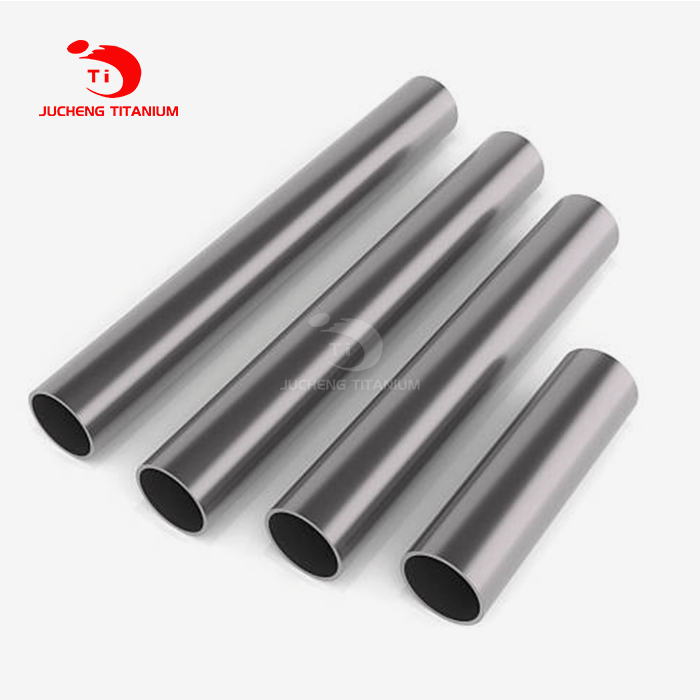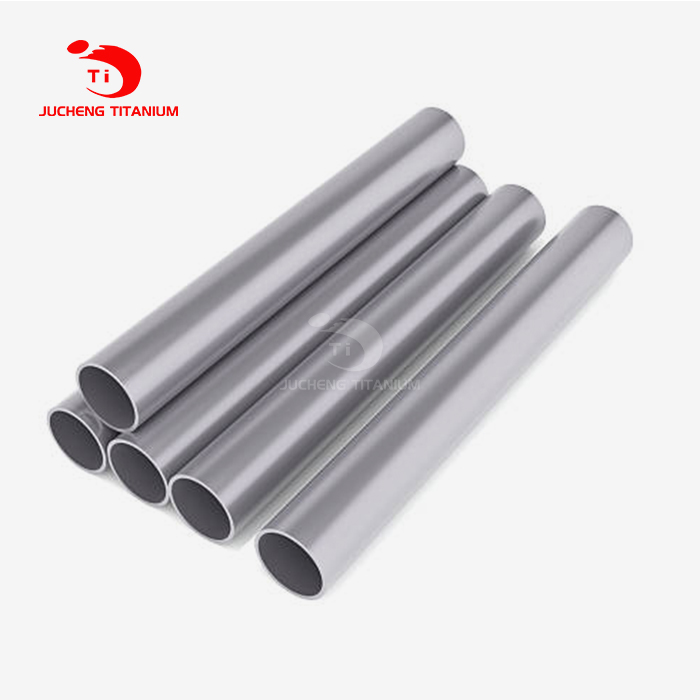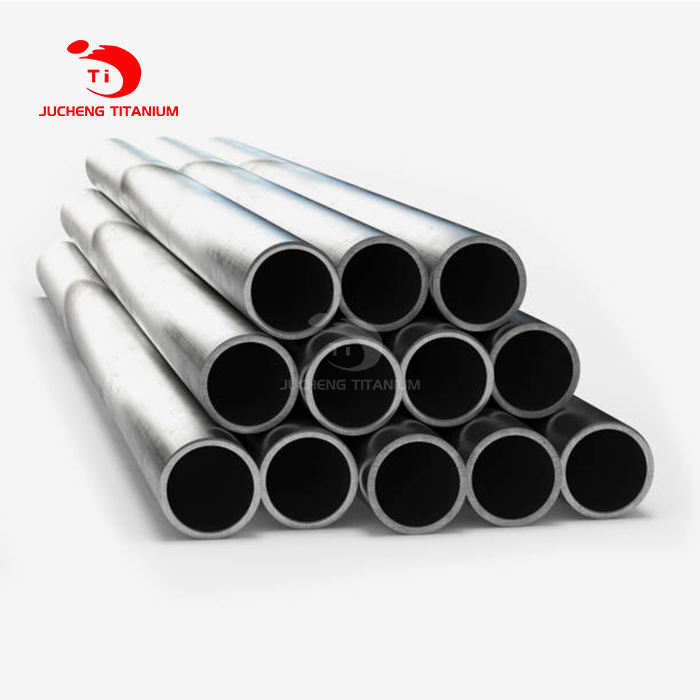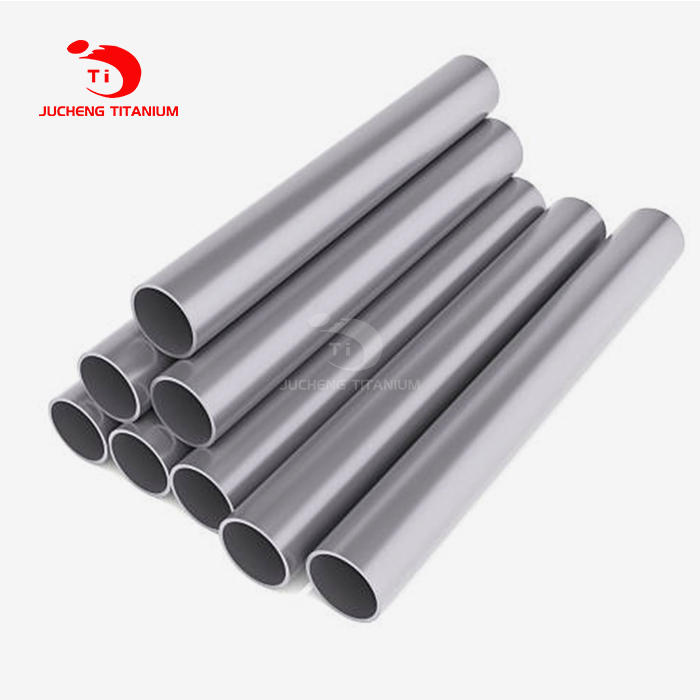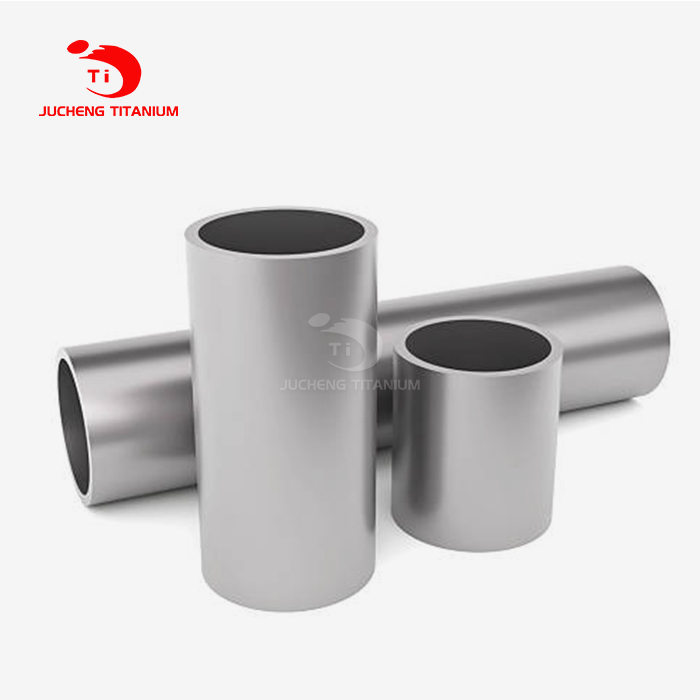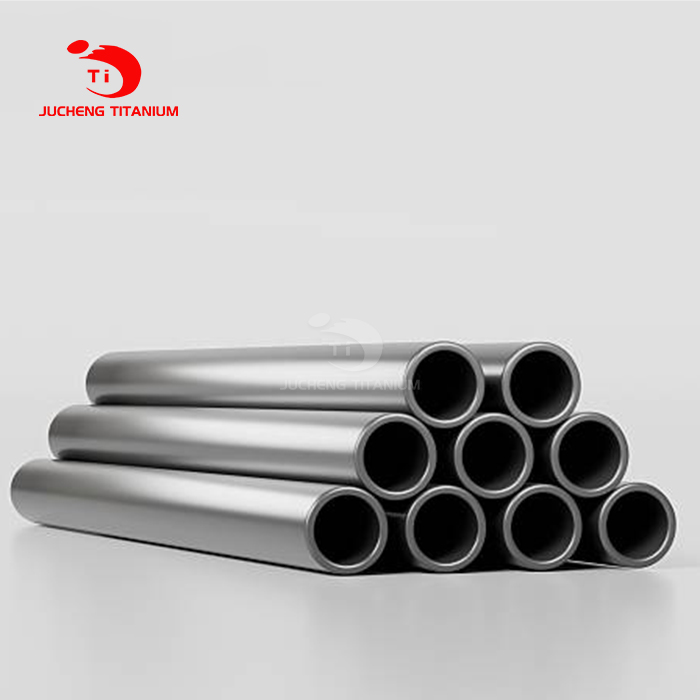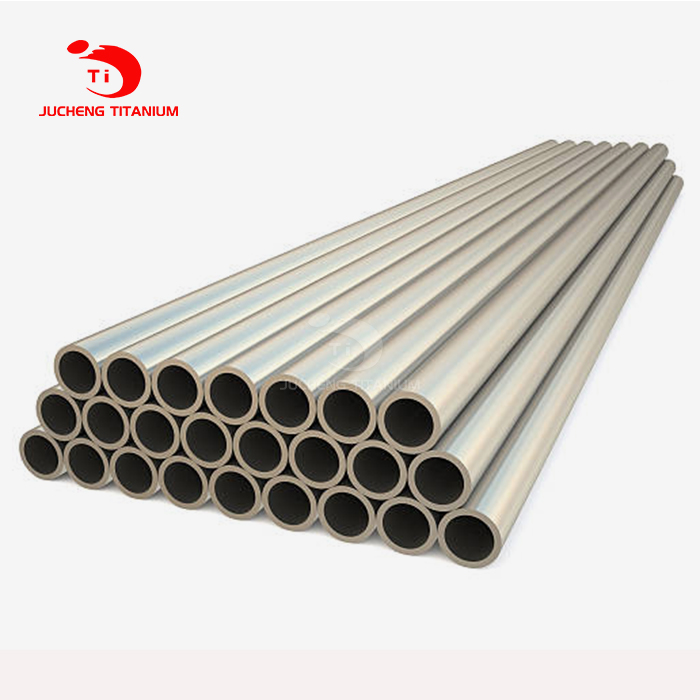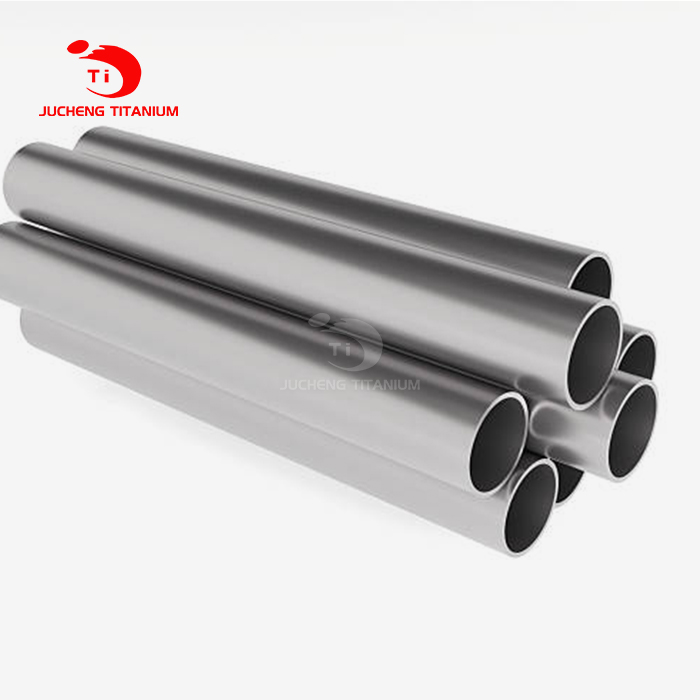

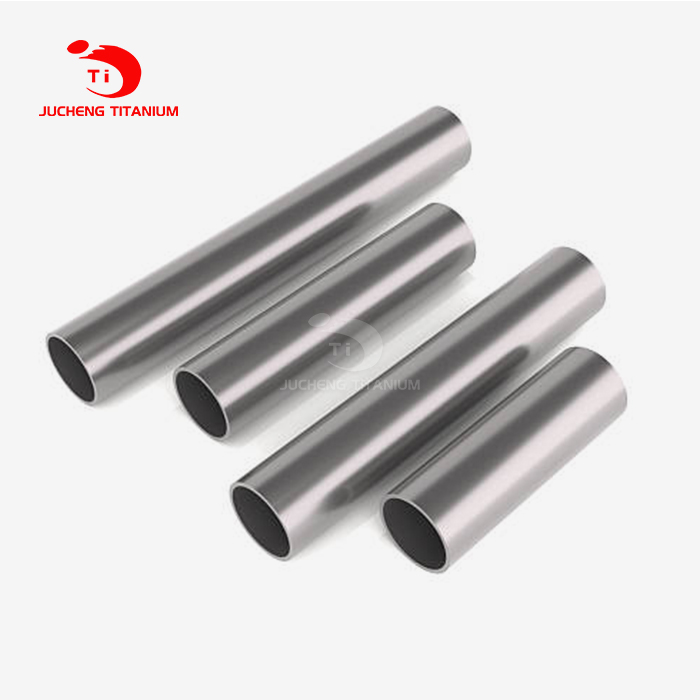
welded titanium tubes
2.Size: OD6–OD1020mm, WT 0.5mm–12mm, Length ≤ 6000mm, or customized
3.Standard: ASTM B862,ASME SB862
4.Type:Round
5.Processing Method: Titanium plate cutting,-rolling-Automatic Welded P+T
6.State: Annealed
7.Surface Treatment: Polished, Sandblasted, Machined,Pickling
- Product Description
Welded Titanium Tubes - Superior Corrosion Resistance for Industrial Applications
Baoji Jucheng Titanium Industry Co., Ltd. delivers enterprise-grade welded titanium tubes manufactured to ASTM B862 and ASME SB862 standards. Our production facility, which has over 20 years of experience in titanium fabrication, has 3,000 tons of titanium in stock all year round, guaranteeing prompt delivery. Our tubes come in grades Gr1, Gr2, Gr5, Gr7, Gr9, and Gr12, with wall thicknesses ranging from 0.5 to 12 mm and exterior diameters ranging from 6 to 1020 mm. In order to achieve dimensional tolerances within ±10% and guarantee that the mechanical properties of the weld zone are the same as those of the base metal, each tube is subjected to precision automatic welding and annealing treatment. With the support of four invention patents and forty-one utility model patents, we produce more than five hundred pieces of titanium equipment each year.
 |  |  |  |
What Makes Our Welded Titanium Tubes Different
Our tubes have outstanding specific strength and a low density of 4.51 g/cm³. This allows you to have a lightweight solution without sacrificing structural soundness.
Automatic welding, roll-forming, and titanium plate cutting are used in the production process. Compared to seamless alternatives, this guarantees better concentricity and consistent wall thickness.
A self-regenerating titanium dioxide (TiO2) passive film forms in each tube. In situations with oxidizing acids, moist chlorine, and saltwater, this protective layer provides corrosion resistance.
Our heat treatment procedure ensures that the heat-affected zone and weld seam match the microstructure of the base metal. The entire tube has uniform corrosion resistance, tensile strength, and ductility.
Technical Specifications
Parameter | Specification |
Grade | Gr1, Gr2, Gr5, Gr7, Gr9, Gr12 |
Outer Diameter | 6mm – 1020mm |
Wall Thickness | 0.5mm – 12mm |
Length | Up to 6000mm (customizable) |
Standards | ASTM B862, ASME SB862 |
Type | Round |
Processing Method | Plate cutting → Roll-forming → Automatic Welding + Heat Treatment |
State | Annealed |
Surface Treatment | Polished, Sandblasted, Machined, Pickling |
Density | 4.51 g/cm³ |
Melting Point | 1668°C |
 |  |  |
 |  |  |
 |  |  |  |
Key Applications Across Industries
Power Generation Systems: Our welded titanium tubes are the industry standard for seawater-cooled surface condensers in nuclear and thermal power plants. They can withstand erosion-corrosion and microbiologically caused corrosion, which can deteriorate copper-nickel alloys.
Desalination Plants: Multi-Stage Flash (MSF) and Multiple Effect Distillation (MED) systems use our thin-wall tubes in their evaporator heat recovery sections. The 0.5 to 0.7 mm wall thickness increases thermal exchange efficiency while reducing material costs. They can withstand high temperatures and high concentrations of salinity, and they live for thirty years.
Chemical Processing Equipment: PTA (Purified Terephthalic Acid), chlor-alkali, and urea synthesis all require our tubes. Stress corrosion cracking of stainless steel is caused by oxidizing acids, acetic acid, and moist chlorine gas.
Marine Engineering: Shipboard systems and offshore installations benefit from the increased corrosion resistance in high-velocity seawater environments.
Medical and Food Processing: Because of their biocompatibility and ease of sterilization, these tubes are ideal for pharmaceutical production and hygienic processing lines.
 |  |  |
 |  |  |
Why Partner With Baoji Jucheng Titanium
In China's Titanium Valley, you have access to 120,000 square meters of cutting-edge manufacturing facilities. Precision machining facilities, non-destructive testing systems, and titanium melting equipment are all part of our automated manufacturing lines.
We guarantee ongoing innovation through our R&D collaborations with Northwest University, Tsinghua University, and Northwest Nonferrous Metals Research Institute. New material discovery and process optimization are fueled by this partnership.
We keep over 3,000 tons of inventory in all grades. This entails secure supply chains for continuous operations and quicker reaction times for your critical tasks.
Every stage of production is subjected to rigorous testing by our quality control staff. We make sure every batch satisfies your precise requirements, from raw material inspection to final product verification.

FAQ
Q: What distinguishes seamless titanium tubes from welded ones?
A: Welded tubes provide better dimensional consistency, particularly in terms of concentricity and homogeneity of wall thickness. Welds with mechanical qualities that match the base metal are produced by our automated welding process, which is followed by heat treatment. In comparison to many seamless alternatives, this leads to improved heat transfer coefficients and predictable flow dynamics.
Q: What grade is best for applications involving seawater?
A: For the majority of marine conditions, Grade 2 offers the industry-standard ratio of strength to ductility. Consider Grade 7 (palladium-alloyed) or Grade 12 (nickel-molybdenum alloyed) for improved resistance in highly corrosive environments with reducing acids.
Q: Can tube lengths longer than 6000mm be customized?
A: In accordance with your technical drawings and application specifications, we do offer tailored solutions. To choose the best dimensions and processing techniques, our technical staff collaborates closely with you.
Q: What surface treatments for heat exchanger tubes would you suggest?
A: The pickling process guarantees the consistent formation of the passive oxide layer and eliminates surface impurities. We provide polishing to reach particular surface roughness values that boost thermal conductivity for applications needing improved cleanliness.
Q: How is the quality of the weld ensured?
A: We use real-time monitoring systems in conjunction with inline automatic welding. Heat treatment after the weld removes any remaining tension and encourages recrystallization. To confirm weld integrity, each batch is put through non-destructive testing, such as eddy current testing and ultrasonic examination.
Get Your Custom Solution Today
Ready to specify your welded titanium tubes requirements? Our technical team is available to discuss your project parameters and recommend the optimal grade and dimensions for your application.
Contact us at s4@juchengti.com to receive detailed specifications, delivery timelines, and pricing for your titanium tube requirements.