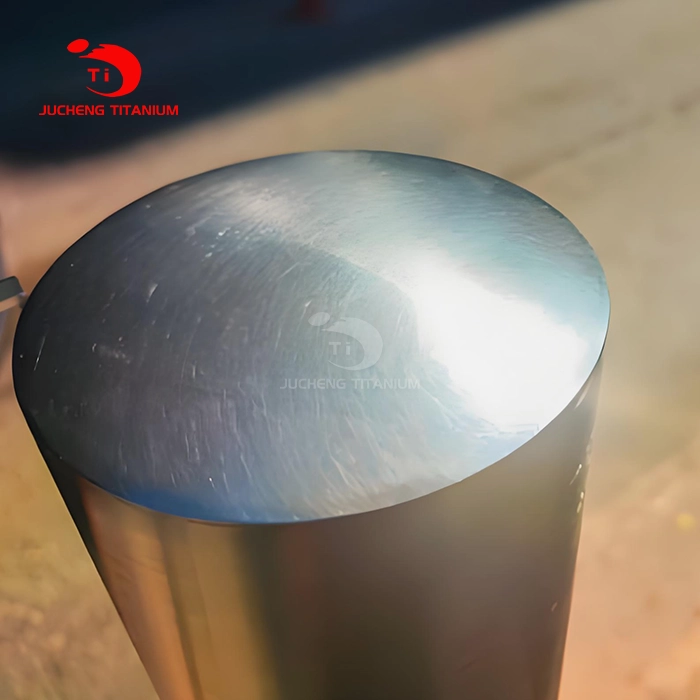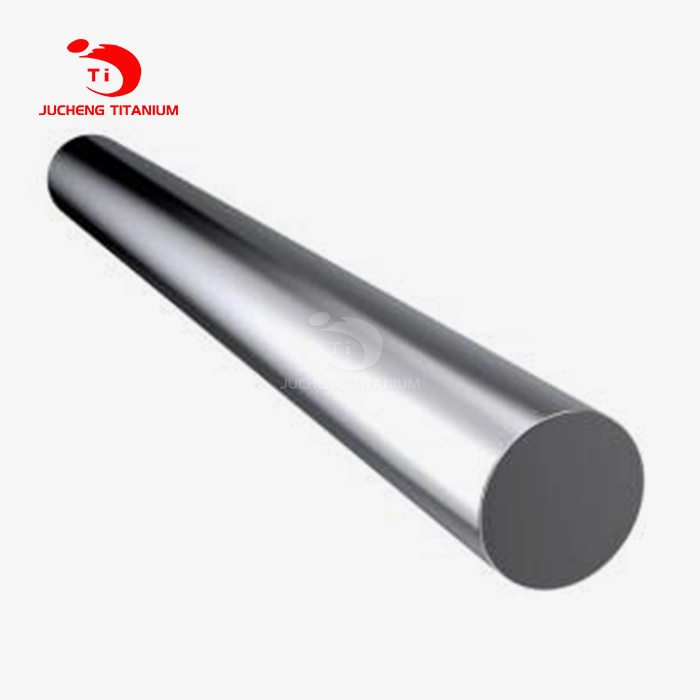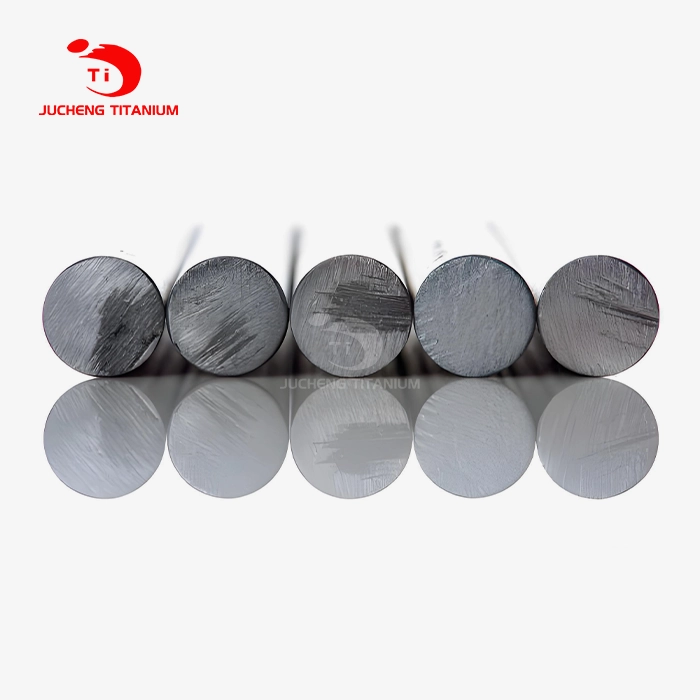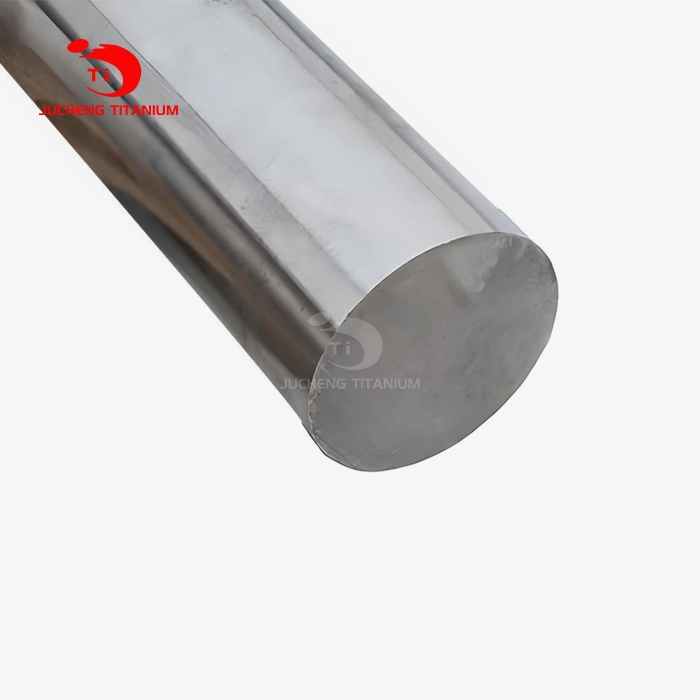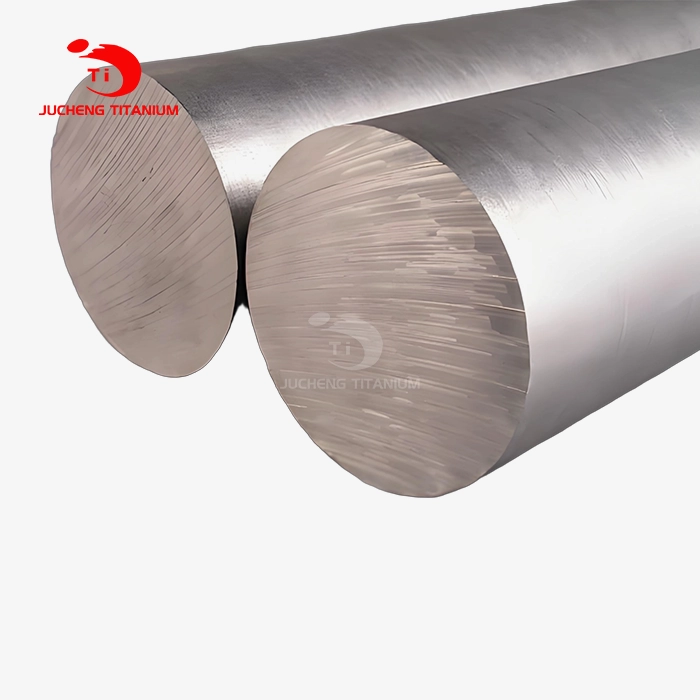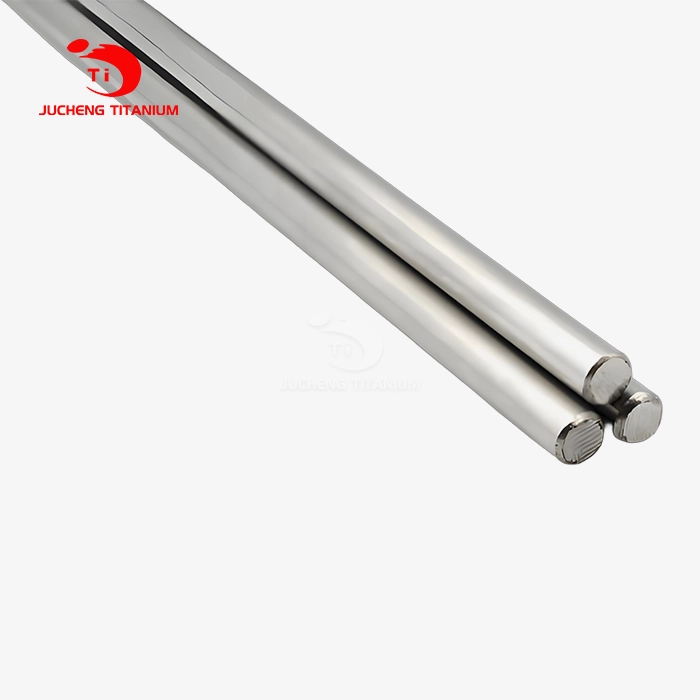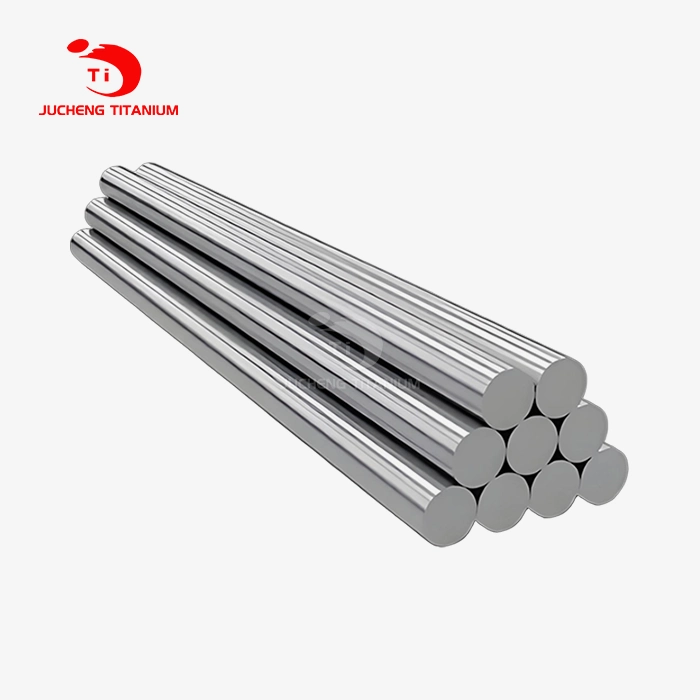

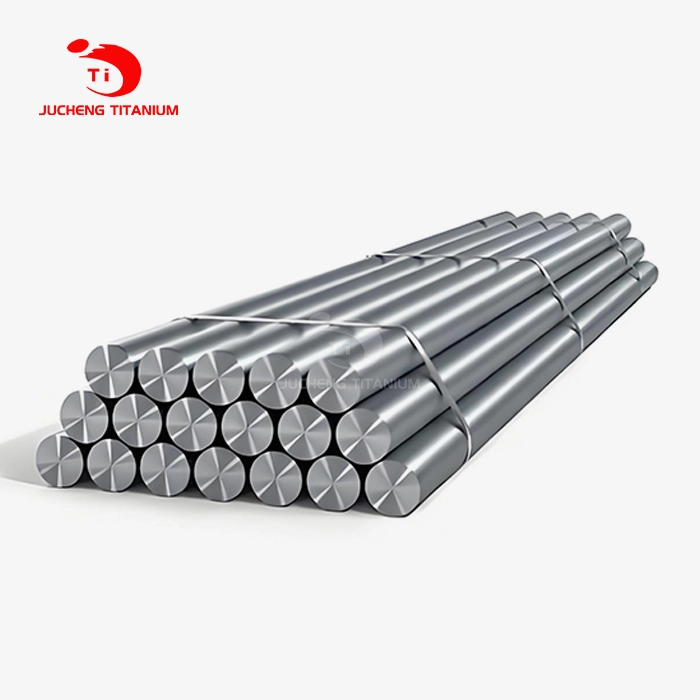
grade 5 titanium filler rod
2.Size: Diameter Φ6–Φ450mm, Length ≤ 6000mm (or customized up to 12000mm)
3.Standard: ASTM B348, ASME SB348, AMS
4928, AMS 6931, ASTM F136, ISO 5832-3
4.Type: Round bar
5.Processing Method: Vacuum melting → Forging → Hot rolling / Rotary forging → Centerless grinding / Turning → Straightening → Surface treatment
6.State: Annealed
7.Surface Treatment: Polished (bright), Turned (peeled), Centerless grinding, Sandblasted, Pickled
- Product Description
Grade 5 Titanium Filler Rod: Professional Welding Solution for High-Performance Applications
Baoji Jucheng Titanium Industry Co., Ltd., rooted in China's Titanium Valley with over 20 years of manufacturing expertise, delivers enterprise-grade grade 5 titanium filler rod engineered to AWS A5.16 ERTi-5 specifications. Our filler rods achieve tensile strength of 895 MPa and yield strength of 828 MPa, precisely matching Ti-6Al-4V base metal chemistry with 6% aluminum and 4% vanadium composition. Manufactured through vacuum melting and multi-stage purification processes, these rods maintain oxygen content below 0.20% and hydrogen below 0.015%, ensuring weld integrity in aerospace and critical applications. With approximately 3,000 tons of titanium inventory and production capacity exceeding 500 equipment sets annually, we guarantee fast delivery and consistent quality backed by 4 invention patents and 41 utility model patents.
 |  |  |  |
What Is Grade 5 Titanium Filler Rod?
The welding consumable for Ti-6Al-4V alloy systems is a rod, which is categorized as ERTi-5 (UNS R56400) under AWS A5.16. About 90% of this alpha-beta titanium alloy is titanium, with 4% vanadium serving as a beta stabilizer and 6% aluminum serving as an alpha stabilizer.
In high-stress situations, the rod solves important welding problems. It offers much greater tensile strength and better fatigue resistance than Commercially Pure (CP) fillers. During welding, nitrogen, oxygen, and hydrogen contamination can be avoided with proper inert gas shielding.
In the heat-affected zone, your weld joints retain localized ductility without developing brittle phases. Because of this, the filler is perfect for heat-treatable alloys that need to have uniform mechanical characteristics across the welded structure.
Technical Specifications
Parameter | Value |
Standard | AWS A5.16 (ERTi-5), AMS 4928, ASTM B348 |
Chemical Composition | Ti-6Al-4V (Al: 5.5-6.75%, V: 3.5-4.5%) |
Tensile Strength | ≥895 MPa (130 ksi) |
Yield Strength | ≥828 MPa (120 ksi) |
Oxygen Content | <0.20% |
Nitrogen Content | <0.05% |
Hydrogen Content | <0.015% |
Diameter Range | Φ1.0mm – Φ6.0mm (customizable) |
Length | Up to 1000mm (standard) |
Surface Treatment | Vacuum annealed, acid cleaned |
Operating Temperature | Up to 400°C (750°F) |
 |  |  |
 |  |  |
Core Advantages of Our Filler Rods
Precision Chemical Control
Our grade 5 titanium filler rod undergoes strict interstitial element management. Oxygen remains below 0.20%, nitrogen under 0.05%, and hydrogen beneath 0.015%. This control prevents weld embrittlement and ensures long-term joint reliability.
Superior Mechanical Performance
You receive ultimate tensile strength exceeding 895 MPa and yield strength around 828 MPa. The deposited weld metal exhibits excellent elongation, allowing significant plastic deformation before failure in demanding applications.
Heat Treatment Compatibility
As an alpha-beta alloy, the weld metal responds effectively to solution treating and aging (STA). You can optimize mechanical properties post-weld to match specific application requirements.
Exceptional Corrosion Resistance
The filler rod demonstrates outstanding resistance to seawater and chloride environments. Your welded joints withstand chloride stress corrosion cracking in offshore and marine applications.
Thermal Stability
Welds maintain structural integrity at temperatures up to 400°C. Low thermal expansion characteristics reduce stress buildup during thermal cycling in high-performance systems.
 |  |  |  |
Industry Applications
Aviation & Aerospace
The filler rod performs exceptionally well when TIG welding structural airframe elements, compressor blades, and turbine engine components. Your welds are resistant to creep failure even under dynamic loading and prolonged temperatures between 350°C and 400°C.
Automotive & Motorsport
essential for producing titanium suspension and exhaust systems when weight reduction is important. In high-performance racing conditions, welded joints are subjected to intense vibrational strain and thermal cycling.
Marine and Oil and Gas
Our rod, which is used in subsea manifolds and offshore drilling risers, guarantees the durability of pressurized connections. In deep-sea environments, the welds withstand chloride stress corrosion cracking.
Medical Devices
Ideal for welding implanted devices and surgical tools. The biocompatible composition satisfies strict patient safety requirements set by the medical industry.
 |  |  |
 |  |  |

FAQ
Q: Is it possible to weld Grade 2 (CP) titanium using a rod?
A: It is physically feasible, even if it is generally not advised for everyday use.
Stress points develop when Grade 2 and Grade 5 filler metal are welded together, resulting in a weld bead that is significantly harder and less flexible than the original metal.Always utilize filler metal that is compatible with the base metal, unless a design expressly requires different qualities.
Q: What degree of purity of shielding gas is required?
A: 99.999% (5N) pure argon or helium must be used.
Oxidation, which tints the weld blue or purple, can be caused by even the tiniest amount of air.Because of this, the joint becomes brittle and could not meet AWS D1.9 inspection requirements.
Q: What makes ERTi-5 different from ERTi-5ELI?
A: ERTi-5 is the typical aerospace grade.
Because ERTi-5ELI (Extra Low Interstitial) has tighter iron and oxygen concentration limitations, it is more flexible and resistant to breakage.It is particularly crucial for cryogenic containers or vital medical implants.
Q: What causes the weld pool to fracture immediately after welding?
A: Contamination or solidification cracking are probably the cause of this.
It frequently results from inadequate shielding gas covering or unclean filler wire.Make sure the rod is handled with gloves and cleaned with acetone before welding.
Q: How should the filler rod be stored?
A: Store it in a regulated, low-humidity environment.
Surface moisture can allow hydrogen to enter the weld even though titanium does not corrode like steel.Until it is needed, keep it in its original, sealed container.
Contact Us
Ready to enhance your welding projects with grade 5 titanium filler rod? Our technical team at Baoji Jucheng Titanium Industry Co., Ltd. stands ready to support your specific requirements. Contact us at s4@juchengti.com for technical specifications, quotations, or custom solutions.