
The Rising Importance of Titanium Composite Materials in Modern Industrial Applications
Titanium composite materials—such as titanium–steel composite plates, titanium–copper composite tubes, and titanium–nickel layered structures—are becoming increasingly critical in industries that require both corrosion resistance and structural strength. These advanced materials integrate the advantages of titanium with the mechanical or thermal properties of other metals, enabling cost-effective solutions for challenging industrial environments.
Why Titanium Composite Materials Are Gaining Popularity
Balanced Performance and Cost Efficiency
Pure titanium offers excellent corrosion resistance but is more expensive than common alloys. Composite designs allow users to retain the corrosion-resistant surface of titanium while relying on a lower-cost metal for mechanical strength, significantly reducing material costs.Enhanced Corrosion Protection
In highly corrosive environments—such as sulfuric acid, seawater, chloride-containing solutions, and high-temperature chemical processes—titanium composite materials maintain the same protective oxide film performance as pure titanium, ensuring long-term durability.High Structural Strength and Pressure Resistance
When titanium is bonded with carbon steel, stainless steel, or copper alloys, the resulting composite exhibits high tensile strength and excellent pressure resistance, making it ideal for reactors, heat exchangers, pipelines, and pressure vessels.Wider Application Range
Titanium composite materials are now widely used in:
- Petrochemical storage tanks and heat exchangers
- Hydrometallurgical systems for copper, nickel, cobalt, and zinc
- Seawater desalination equipment
- Power station condensers
- Anti-corrosion pipelines and pressure vessels
- Marine engineering structures
Typical Industrial Applications
- Titanium–Steel Composite Plates: Frequently used for reactors, towers, and storage vessels in chemical and petrochemical plants.
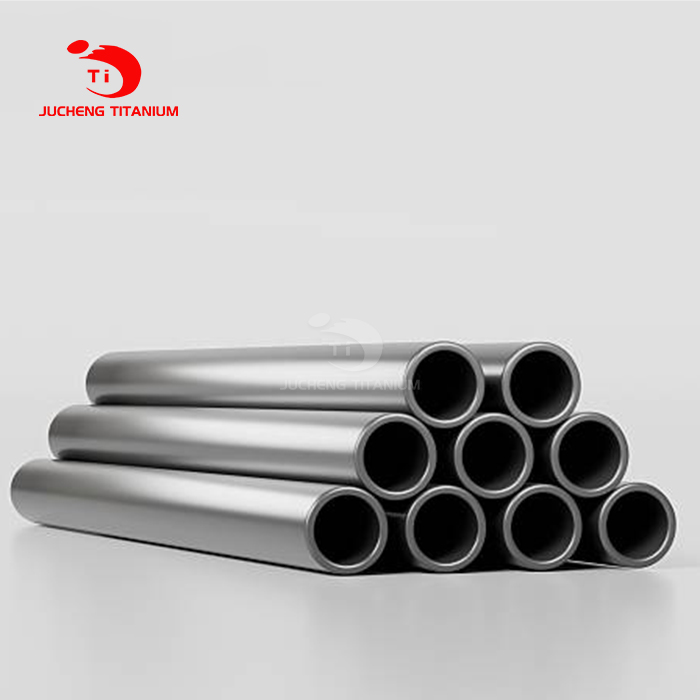
- Titanium–Copper Composite Tubes: Ideal for heat transfer applications that require excellent conductivity and corrosion resistance, such as refinery condensers.
- Titanium–Nickel Composites: Used in specialized aerospace and marine systems requiring fatigue resistance and thermal stability.
Baoji Jucheng Titanium Industry’s Role in Advancing Composite Technology
Baoji Jucheng Titanium Industry has made notable progress in titanium composite engineering, successfully supplying titanium-based composite tubes to leading petrochemical facilities such as Luoyang Petrochemical. These products demonstrate stable performance in long-term, high-temperature, and high-corrosion environments. The company continues to invest in advanced bonding technologies, large-scale welding techniques, and precision machining capabilities to meet increasing global demand.
With the coming online of the Titanium Valley Rare Metal High-End Equipment Manufacturing Industrial Park, Jucheng Titanium is positioned to further expand production capacity and accelerate innovation in composite titanium materials—helping industries worldwide achieve enhanced reliability, efficiency, and safety.