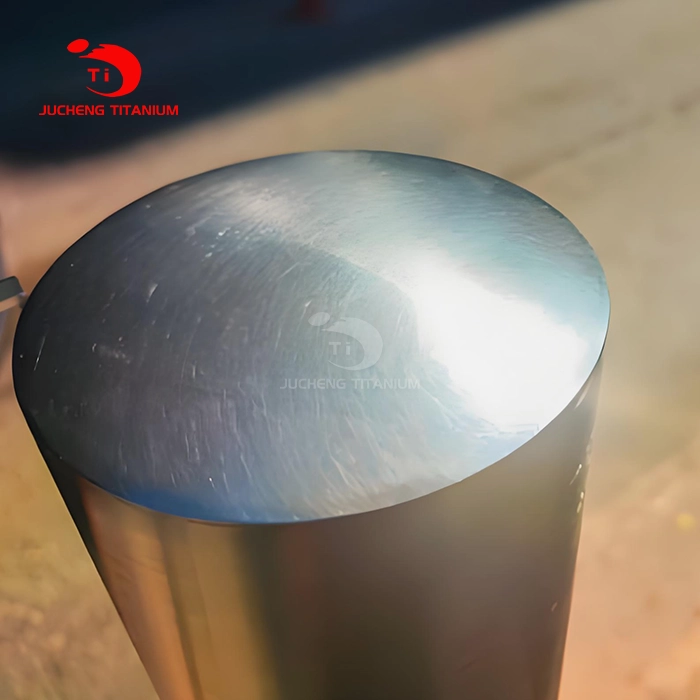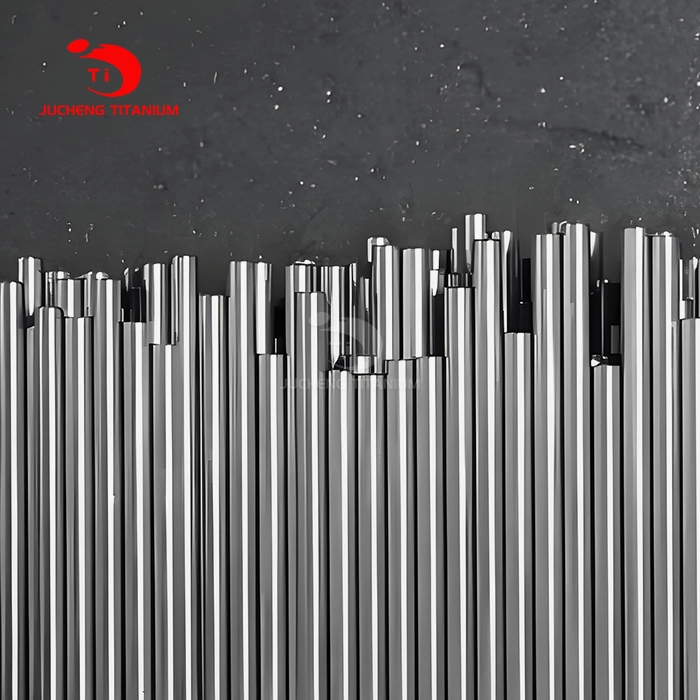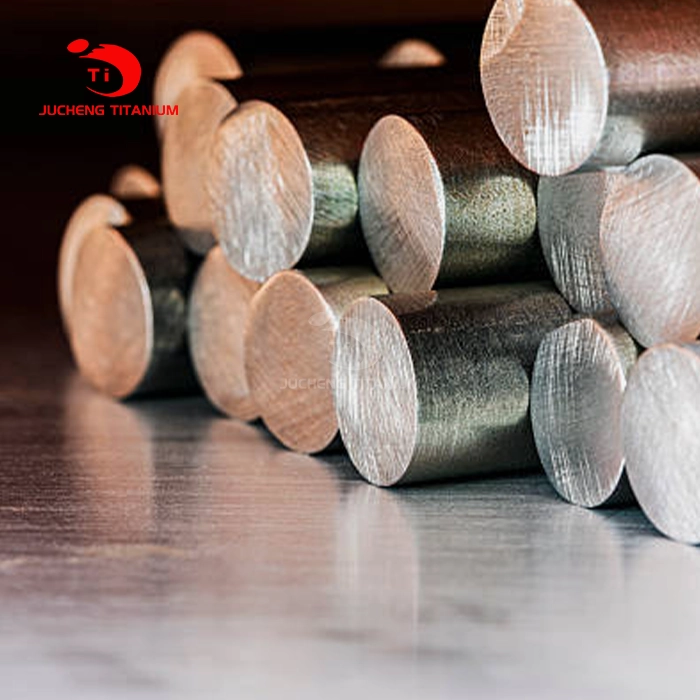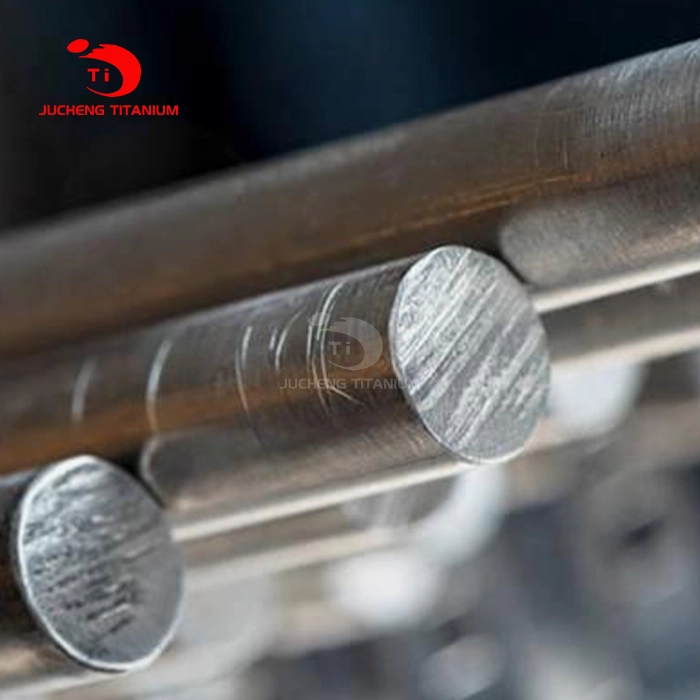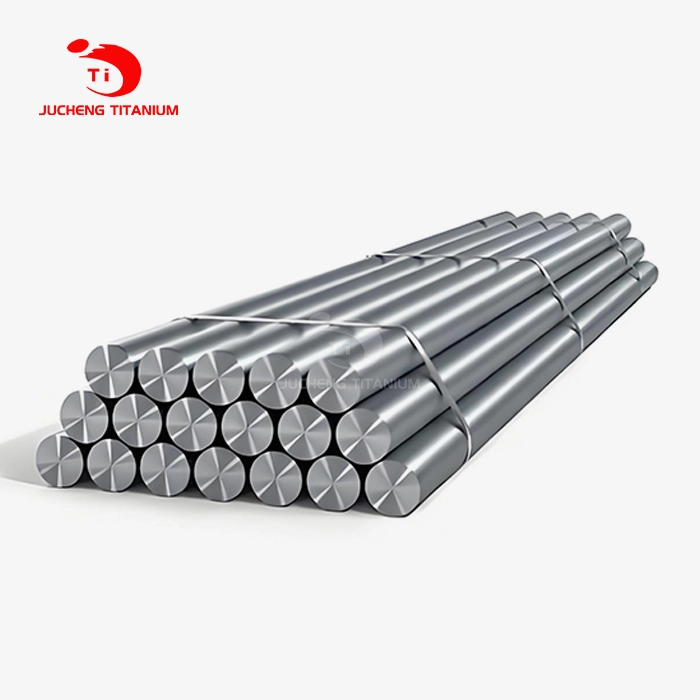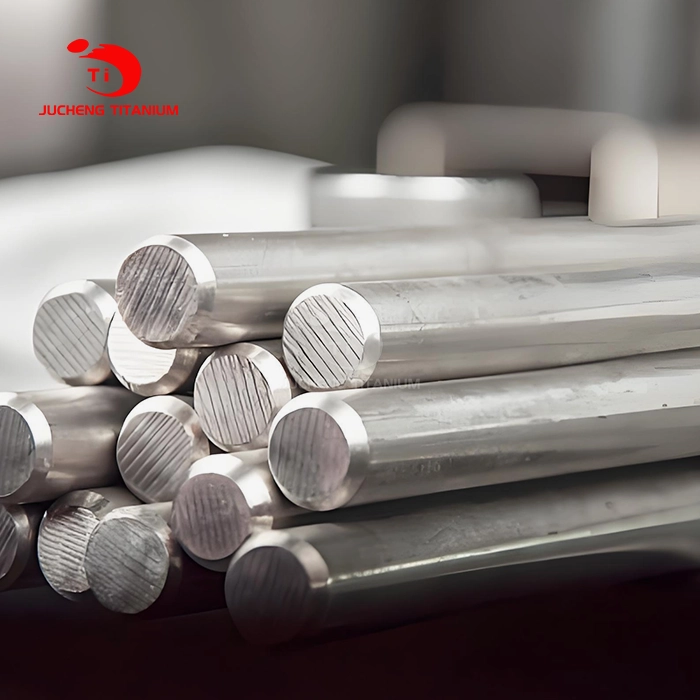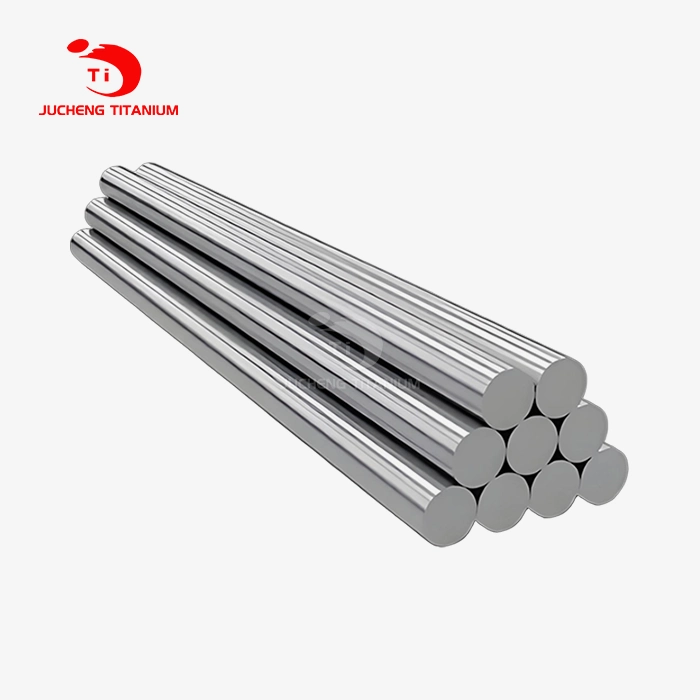

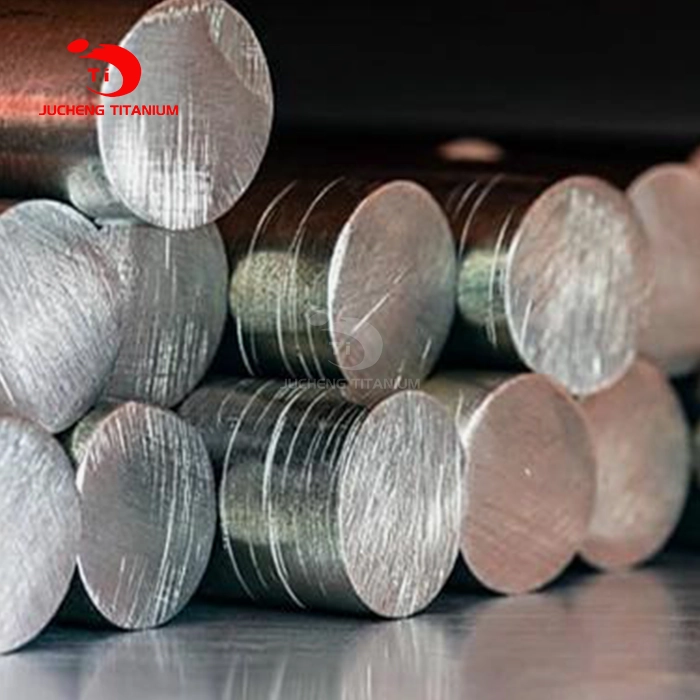
grade 5 titanium bars
2.Size: Diameter Φ6–Φ450mm, Length ≤ 6000mm (or customized up to 12000mm)
3.Standard: ASTM B348, ASME SB348, AMS
4928, AMS 6931, ASTM F136, ISO 5832-3
4.Type: Round bar
5.Processing Method: Vacuum melting → Forging → Hot rolling / Rotary forging → Centerless grinding / Turning → Straightening → Surface treatment
6.State: Annealed
7.Surface Treatment: Polished (bright), Turned (peeled), Centerless grinding, Sandblasted, Pickled
- Product Description
Grade 5 Titanium Bars: High-Performance Ti-6Al-4V Alloy for Critical Engineering Applications
Baoji Jucheng Titanium Industry Co., Ltd.is a specialized manufacturer based in China's Titanium Valley.They produce grade 5 titanium bars that meet the standards of ASTM B348 and AMS 4928.With over 20 years of experience in titanium manufacturing and an annual production capacity of more than 500 sets of titanium equipment, the company keeps a steady inventory of around 3,000 tons of titanium throughout the year.This helps them deliver quickly for urgent projects.Their Ti-6Al-4V alloy bars are used in high-pressure chemical systems, marine hardware, and aircraft parts because they have excellent mechanical strength.The bars can be up to 6,000mm long, with custom lengths available up to 12,000mm.They have diameters ranging from Φ6mm to Φ450mm.The yield strength is 828 MPa, and the minimum tensile strength is 895 MPa.
 |  |  |  |
What Makes Grade 5 Titanium Bars the Industry Standard?
Titanium bars, also known as Ti-6Al-4V, are the most widely used titanium alloy worldwide. The material, which is 40% lighter than conventional stainless steel, achieves an impressive strength-to-weight ratio with 6% aluminum and 4% vanadium.
Compared to commercially pure titanium grades, bars exhibit superior fatigue resistance and fracture toughness. As a result, they are ideal for the cyclical loading conditions found in airplane landing gear, offshore drilling equipment, and helicopter rotors. The alloy maintains structural integrity at temperatures as high as 400°C and resists creep deformation under extreme heat conditions.
For your applications, materials that combine corrosion resistance and mechanical reliability are advantageous. Whether you are manufacturing medical prostheses, hydraulic actuators, or pump shafts, these bars provide dependable performance across a range of working conditions.
Technical Specifications
Parameter | Value |
Grades Available | Gr5 (Ti-6Al-4V), Gr23 (Ti-6Al-4V ELI) |
Diameter Range | Φ6mm – Φ450mm |
Length | Standard ≤ 6,000mm, Custom up to 12,000mm |
Tensile Strength | ≥ 895 MPa (130 ksi) |
Yield Strength | ≥ 828 MPa (120 ksi) |
Density | 4.43 g/cm³ |
Standards | ASTM B348, ASME SB348, AMS 4928, AMS 6931, ASTM F136, ISO 5832-3 |
Processing Method | Vacuum Melting → Forging → Hot Rolling/Rotary Forging → Centerless Grinding/Turning |
Condition | Annealed |
Surface Finish | Polished, Turned, Centerless Ground, Pickled, Sandblasted |
Key Advantages for Your Operations
Superior Strength-to-Weight Efficiency
These bars provide structural strength similar to alloy steel at a quarter of the weight, weighing only 4.43 g/cm³. Your assemblies get lighter, which lowers foundation loads in industrial machines and increases fuel efficiency in flight applications.
Increased Resistance to Corrosion
The aluminum presence creates a durable passive oxide layer that guards against exposure to seawater, acidic environments, and chloride assault. Equipment used in chemical processing and marine conditions will have a longer service life without expensive protective coatings.
Demonstrated Production Dependability
Tight dimensional tolerances are guaranteed by our production technique, which has 41 utility model patents and 4 invention patents. By achieving h8–h9 precision, centerless grinding cuts down on secondary machining time and material waste.
Quick Supply Chain Reaction
Standard sizes can be shipped the same week thanks to our 3,000-ton inventory. You keep your production schedules on track by avoiding project delays brought on by lengthy lead periods.
 |  |  |  |
Primary Applications Across Industries
Defense & Aerospace
The high-temperature stability and stress endurance these bars offer are essential for structural aircraft parts, turbine blades, fasteners, and rocket motor cases.
Manufacturing of Medical Devices
The biocompatibility of grade 5 titanium bars, especially the ELI form that satisfies ASTM F136 criteria, is advantageous for dental tools, orthopedic implants, and surgical instruments.
Extraction of Oil and Gas
Because of the material's remarkable chemical resistance, downhole drilling instruments, wellhead components, and pressure vessels can tolerate corrosive brine and hydrogen sulfide environments.
Engineering for the Sea
Heat exchanger tubes, submersible housings, and propeller shafts all function dependably in saltwater without experiencing galvanic corrosion problems.
 |  |  |
 |  |  |
Processing Capabilities You Can Trust
Vacuum melting is the first step in our integrated manufacturing cycle, which guarantees little interstitial contamination. Grain structure is refined over several forging cycles, and accurate diameters are then achieved using hot rolling or rotary forging.
Mirror-finish surfaces appropriate for fatigue-critical applications are produced by centerless grinding. For common machining stock, turned finishes offer affordable options. You choose the surface treatment that best suits your end-use needs, such as polished, pickled, or sandblasted.
Every batch has uniform mechanical qualities thanks to heat treatment in furnaces with regulated atmospheres. You may be confident in material traceability since dimensional inspection and ultrasonic testing confirm conformity prior to shipment.

FAQ
Q: Why does Grade 5 titanium bar cost more than Grade 2?
A: More intricate processing is needed due to the alloy presence (vanadium and aluminum). The limited ductility of the material necessitates specialist equipment, and hot working at high temperatures raises energy expenses. But when your application calls for load-bearing capacity, the strength benefits make the investment worthwhile.
Q: Is it possible to bend titanium bars?
A: The high spring-back and low elongation make cold bending unfeasible. It becomes necessary to use large-radius draw-bending equipment or hot bend at 650–800°C. Forging from billet stock is frequently more cost-effective for complicated designs.
Q: What distinguishes Grade 23 bars from Grade 5 bars?
A: Iron and oxygen concentration are restricted to more stringent levels in Grade 23 (ELI, or Extra Low Interstitial). Surgical implants and cryogenic services require it because it increases fracture toughness and ductility. For industrial structural applications where ultimate tensile strength is crucial, Standard Grade 5 is appropriate.
Q: What is the best way to machine these bars?
A: Make use of sharp-edged carbide tools. To avoid work hardening, maintain modest cutting speeds (60–80 SFM) with high feed rates. Galling is reduced by using high-pressure soluble oil for flood cooling. The material work-hardens quickly, therefore never allow the tool to rub without cutting.
Q: Do you offer certifications for materials?
A: Yes. Mill test reports including mechanical characteristics, chemical composition, and heat treatment records are included with every shipment. Compliance with your quality control systems is ensured by traceability to raw material batch numbers.
Contact Us for Your Titanium Bar Requirements
Whether you need standard stock sizes or custom-length grade 5 titanium bars, our technical team provides application-specific recommendations. Reach out to us at s4@juchengti.com with your specifications, and we'll respond with detailed quotations and delivery timelines tailored to your project needs.