



6Al-4V titanium sheet hot rolling and precision cold rolling
When engineers and procurement managers search for high-performance titanium plate materials, the 6Al-4V titanium sheet consistently appears at the top of the specification list. Known as Grade 5, this alpha-beta alloy combines 6% aluminum and 4% vanadium to deliver a tensile strength of 895 MPa with a density of just 4.43 g/cm³—roughly 42% lighter than equivalent steel. The manufacturing route—hot rolling versus precision cold rolling—directly determines microstructure, surface finish, and dimensional tolerance, which means choosing the right process is just as important as choosing the alloy itself.
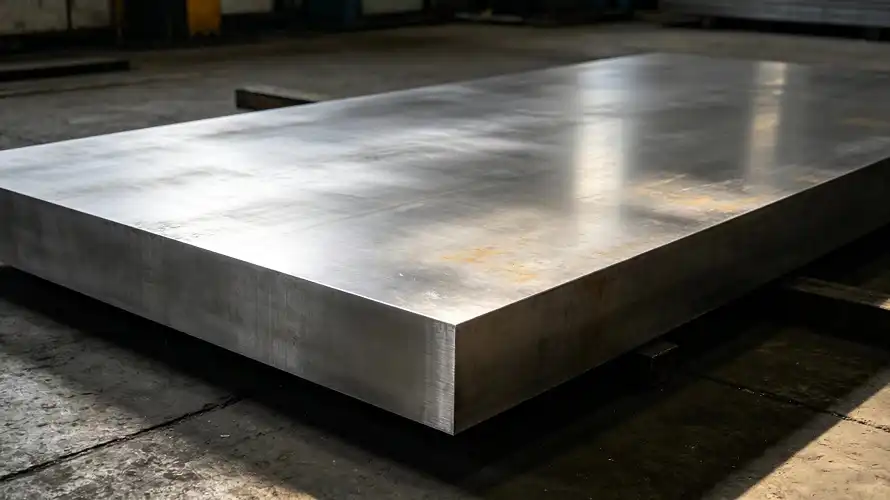

Understanding 6Al-4V Titanium Sheet and Rolling Processes
Alloy Composition and Core Mechanical Properties
The rules that govern Ti-6Al-4V come from ASTM B265, AMS 4911, and ASME SB265. This material has a minimum yield strength of 828 MPa, which is the same as 120 ksi. About 10% of its length can be stretched, and its elastic value of 113.8 GPa is very close to that of cortical bone. So, it can be used for things like surgical fixation plates and the walls of aeroplanes. Even though the temperature changes in a way that would make metal or stainless steel parts bend, the sizes don't change because 8.6 µm/m·degree Celsius is a very low coefficient of thermal expansion.

What Hot Rolling Does to the Microstructure
When the titanium billet is hot-rolled at temperatures above the beta-transus temperature (about 995 degrees Celsius for Ti-6Al-4V), its shape changes and it eventually hits the alpha-beta field. The process breaks down the cast grain structures, improves the equiaxed alpha-beta matrix, and increases the dynamic strength needed for heavy structural elements. Jucheng Titanium makes sheets of hot-rolled Grade 5 titanium. The sheets are between 4 mm and 80 mm thick, 950 mm wide to 2,500 mm long, and 950 mm thick to 80 mm wide. Most people who work with industrial and aircraft materials need fabrics in this size range.
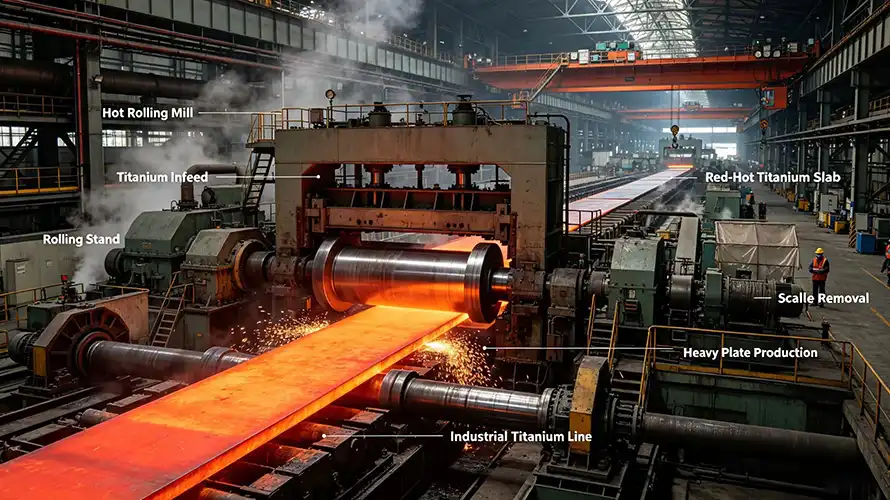
What Precision Cold Rolling Adds
The thickness is reduced below the gauge for hot rolling at room temperature when precision cold rolling is performed. In addition to making the surface smoother and more uniform, this also helps to tighten the tolerances for size. Work-hardening is a process that makes objects a little bit more durable and improves their ability to withstand wear and tear on the surface. When parts require to have a tight thickness tolerance or a clean surface finish, cold rolling is preferable to hot rolling alone. Cold rolling is also superior to hot rolling. As an example, there are medical implant blanks.
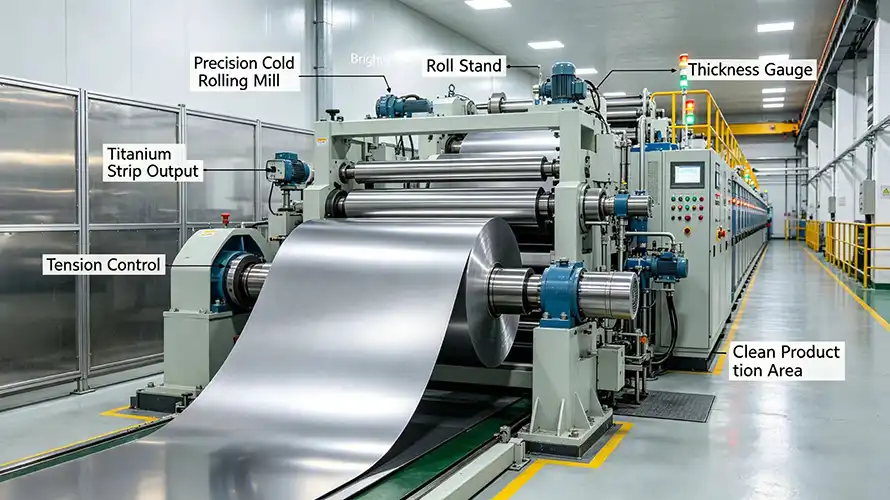
Performance Comparison: Hot Rolling vs Precision Cold Rolling
Mechanical Properties Side by Side
According to the American Society of Mechanical Engineers (AMazxsS) 4911, hot-rolled Grade 5 sheet must have a minimum elongation of 10%, a yield of at least 828 MPa, and a UTS of at least 895 MPa. When the precision cold-rolled sheet is supplied in the annealed form after being treated, it regains its ductility while maintaining a reduced thickness restriction (typically ±0.05 mm, as opposed to ±0.15 mm for the conventional hot-rolled product). This distinction is significant when it comes to the next step in the process, which is the determination of modifications for CNC machining.
Surface Finish and Corrosion Resistance
After acid cleaning and leveling, hot-rolled 6Al-4V titanium sheet has a smooth, flat surface that can be used for most structural and chemical processes. Cold-rolled sheet has a smoother, brighter surface that makes it less likely for cracks to start on the surface. This is why it is preferred for aerospace skins and medical device blanks that need to be resistant to fatigue. The native oxide layer of the alloy stays intact during both processes. This keeps it resistant to chloride-induced stress corrosion cracking, which is a typical way for stainless steel to break in chemical and marine settings.
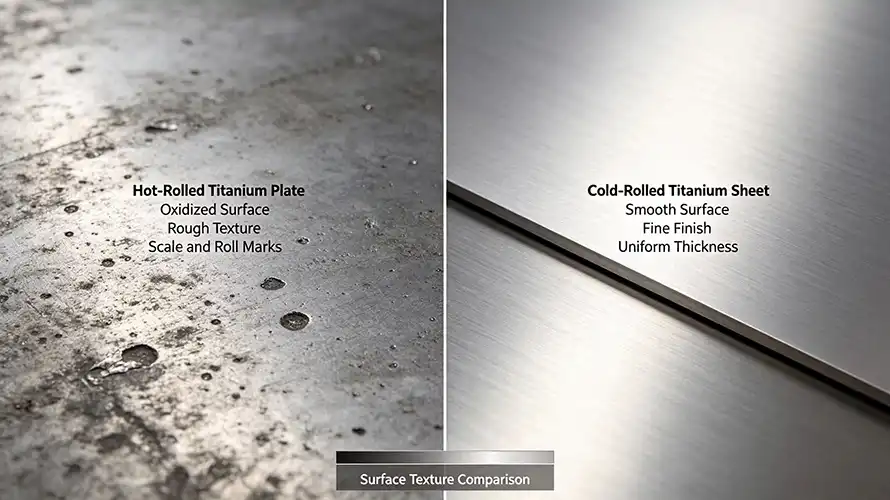
Industry-Specific Use Cases
In the real world, the two procedures are used in quite distinct contexts. In the majority of cases, the program split will look something like this:
- In applications where thickness homogeneity over broad regions is of the utmost importance, such as airframe bulkheads, wing spar webs, pressure vessel shells, chemical reactor walls, offshore pressure housings, and heat exchanger tube sheets, hot-rolled Ti-6Al-4V plate with sheets ranging from 4 to 80 millimetres is used.
- Turbocharger engine nacelle skins, trauma fixation plates, deep-sea sensor housings, and OEM stamped components are all examples of applications that need precision cold-rolled sheet (thinner gauges). Surface quality and tight tolerances are the primary factors that determine the specification.
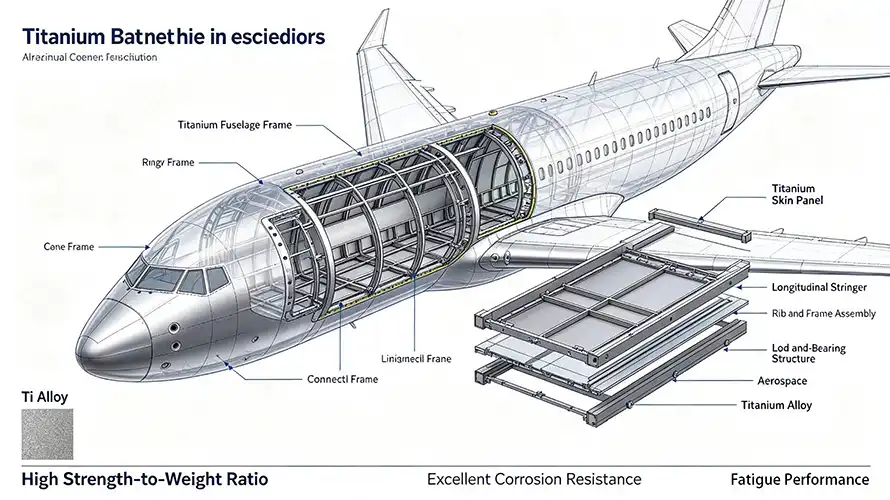
In situations where procurement teams are aware of these distinctions, they are able to avoid over-specifying and overpaying for a finish level that the application does not truly need.
Selecting the Right 6Al-4V Titanium Sheet for Your Application
Thickness, Tolerance, and Grade Selection
A variety of sheets, including Grade 1, 2, 4, 5 (6Al-4V), 7, 9, and 12 sheets, are available for purchase from Jucheng Titanium. This allows customers to choose the sheets that best meet their requirements for rust prevention and strength. If you want a tensile strength that is more than 800 MPa, Grade 5 is the material that you should go for. In the event that the design merely requires rust resistance and the ability to be welded, Grade 2 is a more cost-effective and simpler material to deal with. When it comes to dimensions, the typical range for thickness is between 4 and 80 millimetres, for widths between 950 and 2,500 millimetres, and for lengths up to 10,000 millimetres. Sizes that are not standard may be manufactured upon request.
How It Compares to Stainless Steel and Aluminum
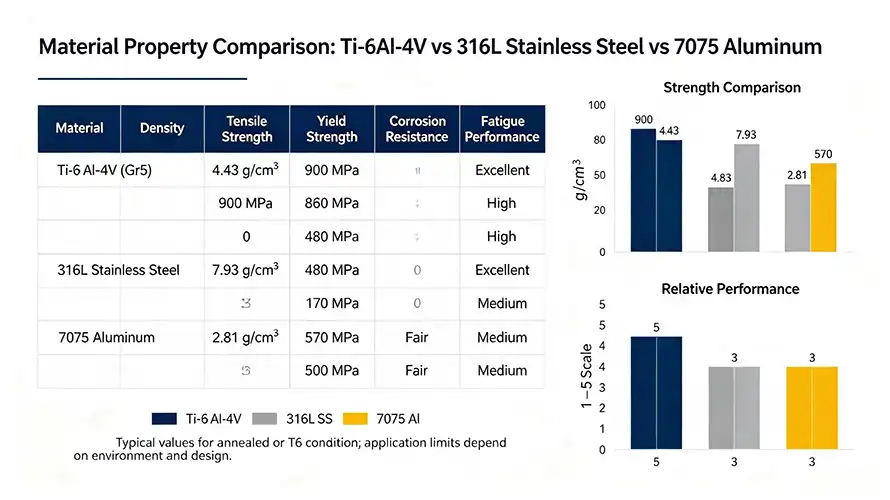
The tensile strength of Ti-6Al-4V is comparable to or even better than that of 316L stainless steel, despite the fact that Ti-6Al-4V weighs 4.43 grams per cubic centimetre. Titanium metal is more resistant to corrosion than 7075-T6 aluminium and maintains its form up to 400 degrees Celsius. This is far higher than the true service ceiling for aluminium, which is around 150 degrees Celsius. When it comes to aviation and offshore structures, where both weight and environmental endurance are crucial, these differences immediately translate to a longer service life and reduced lifecycle cost across the whole structure's lifespan.
Supplier Certification and Delivery Factors
Any reliable source for 6Al-4V titanium sheet should offer full material tracking, mill test records, and make sure they follow ASTM B265, AMS 4911, ASTM F67, and ASME SB265. Jucheng Titanium has a national high-tech company certification, 4 idea patents, and 41 utility model patents. They also keep about 3,000 tons of titanium in stock all year so they can serve quickly. This level of stock depth greatly lowers the risk to the supply chain for long-term aerospace or defense contracts.
Optimizing Performance Through Proper Heat Treatment and Post-Processing
Annealing, Stress Relieving, and STA
All of the sheets of Jucheng Titanium Grade 5 are sent out in the annealed condition, which offers the optimal combination of strength and formability for the majority of the manufacturing procedures that are to come. If you want a sheet that is more robust, you may solution treat and age it (STA) in order to increase the ultimate tensile strength (UTS) to around 1,100 MPa. Stress relieving at temperatures ranging from 480 to 600 degrees Celsius eliminates any residual strains that were produced as a result of shaping or welding without significantly altering the substructure.

Surface Treatments: Pickling, Polishing, and Machining
During the standard surface treatment cycle, which consists of rolling, annealing, levelling, acid pickling, and surface finishing, the oxygen-rich "alpha case" layer that develops as a result of high-temperature processing is eliminated. A region that is hard and fragile, known as the alpha case, may be the beginning of fractures. It must be eliminated in order to fulfill the requirements for fatigue-critical components. Depending on the intended use, Jucheng provides a variety of styles, including acid-pickled, machined, and polished. In this manner, purchasers are able to get materials that are capable of being immediately put into production without the need for any further surface treatment.
Welding and Fabrication Considerations
It is possible to weld Ti-6Al-4V; however, the weld pool and the heat-affected zone must be completely filled with argon or helium in order to prevent oxygen and nitrogen from entering the metal, which would immediately cause it to become weaker. The metal is made more durable after being subjected to stress reduction at 540 degrees Celsius for two hours. From the very beginning of the purchasing process, these requirements must be included in the production specifications in order to prevent costly rework.
Procurement Best Practices for 6Al-4V Titanium Sheet
Understanding Lead Times and Minimum Quantities
Due to the fact that they are already in stock, hot-rolled plates of standard size are sent out more quickly. Because they are dependent on the rolling plan, plates with a custom width or accurate cold-rolled gauges need a longer wait time than other types of gauges. With blanket purchase agreements, which lock in pricing and reserve production capacity, buyers who make recurring purchases may save money and take advantage of the benefits of these arrangements. When it comes to avoiding price surges on the spot market, this is a frequent method that firms that deal in aviation and chemical equipment use.
Evaluating Suppliers on Certification and Capacity
A supplier should have third-party mill test reports that can be linked to the heat number, proof that they follow AMS 4911 or ASTM B265, proof that they have exported to the US and European markets in the past, and the technical know-how to provide custom thicknesses and OEM-branded packaging in order to be considered for the purchase of Ti-6Al-4V. As a result of Jucheng Titanium's ability to fulfill the OEM/ODM requirements of trading businesses and distributors, the company has successfully sent items to Southeast Asia, Europe, and North America.
Cost Efficiency Through Bulk Ordering
The price of titanium is determined by the amount of raw sponge that is purchased as well as the amount that is rolled. When you purchase in regular widths and thicknesses rather than entirely unique sizes, the cost per kilogram is often 8–15% lower than when you order in complete unique sizes. The cost of setting up a production run may be reduced by merging many line items into a single production run when special sizes are really required. The fact that Jucheng maintains a stock of 3,000 tonnes means that regular sizes may be purchased at stock prices immediately, eliminating the need to wait for the production process to be completed.
Conclusion
You can choose between hot-rolled and precision cold-rolled 6Al-4V titanium sheet based on the thickness range, tolerances, and surface finish you need for your purpose. Precision cold rolling is best for tight-tolerance, surface-sensitive jobs, while hot rolling is best for big industrial and structural work. When done according to AMS 4911 or ASTM B265, both processes give Grade 5 titanium the mechanical properties that make it the best choice for use in aerospace, chemical processing, medicine, and marine engineering. Checking with your supplier about the rolling condition, surface treatment, and heat treatment state before placing an order will help you avoid costly material rejections and schedule delays.

FAQ
1. What is the difference between 6Al-4V and Grade 23 (6Al-4V ELI)?
In Grade 23, there is less oxygen, nitrogen, and iron in the spaces between the grains. Because of this, it's more flexible and less likely to break, so it's usually used for cryogenic gear and medical devices that are put in the body. Space structures and tools for work that don't need to be as clean as ELI should use Standard Grade 5.
2. Can the sheet be welded in a fabrication shop?
Yes, but inert gas must completely surround the weld pool and heat-affected zone. Pollution with oxygen or nitrogen makes things weaker right away. Post-weld stress relief at around 540°C makes the metal stiff again, which is good for most structural uses.
3. What surface treatments does Jucheng Titanium offer?
Jucheng sells sheets that have been cut, polished, and put in acid to pickle them. When steel is hot-rolled, an alpha case layer forms. This layer needs to be taken off by acid cleaning. This is an important step for parts in aeroplanes and hospitals that are easily worn down.
4. What is the maximum service temperature for Grade 5 sheet?
Ti-6Al-4V is still useful mechanically up to about 400°C (750°F). Over that temperature, oxidation speeds up, and creep strength goes down, so places that get hot need metals like Ti-6242.
Request a Quote from Jucheng Titanium — Your Trusted 6Al-4V Titanium Sheet Supplier
Since its founding in Baoji, China, more than 20 years ago, Jucheng Titanium has served aerospace, industrial, and medical clients in North America and beyond with 6Al-4V titanium sheet. We have 3,000 tons of stock on hand, can roll to your specifications, and are fully certified by ASTM B265 and AMS 4911. This means we can meet all of your needs, from standard stock sizes to fully custom ones. Get in touch with our technical sales team right away to talk about your project needs and get a fair price. Email address: s4@juchengti.com.

References
1. ASTM International. ASTM B265: Standard Specification for Titanium and Titanium Alloy Strip, Sheet, and Foil. ASTM International, 2020.
2. SAE International. AMS 4911: Titanium Alloy Sheet, Strip, and Plate, 6Al-4V, Annealed. SAE International, 2015.
3. Lütjering, G., & Williams, J. C. Titanium (2nd ed.). Springer, 2007.
4. Boyer, R., Welsch, G., & Collings, E. W. Materials Properties Handbook: Titanium Alloys. ASM International, 1994.
5. Peters, M., Hemptenmacher, J., Kumpfert, J., & Leyens, C. "Structure and Properties of Titanium and Titanium Alloys." Titanium and Titanium Alloys, Wiley-VCH, 2003.
6. Rack, H. J., & Qazi, J. I. "Titanium Alloys for Biomedical Applications." Materials Science and Engineering: C, Elsevier, 2006.