
6Al4V Titanium Plate vs Stainless Steel: Which Performs Better?
When deciding between titanium alloy and stainless steel for critical applications, the 6Al4V Titanium Plate consistently outperforms in environments demanding superior strength-to-weight ratios, corrosion resistance, and long-term durability. While stainless steel remains cost-effective for general industrial use, Grade 5 titanium delivers unmatched performance in aerospace, medical, and chemical processing sectors where material failure carries significant consequences. Understanding these distinctions enables procurement professionals to optimize both performance outcomes and lifecycle costs.

Material Composition and Mechanical Properties
What Makes 6Al4V Titanium Different?
The most common titanium metal used around the world is Ti-6Al-4V, which is classed as Grade 5 titanium by ASTM B265. It is made up of 90% titanium, 6% aluminum, and 4% vanadium, which forms an alpha-beta dual-phase structure that solves the engineering problem of getting high strength without too much weight. Vanadium stabilizes the beta phase, which makes the metal more flexible and better at responding to heat treatment. Aluminum stabilizes the alpha phase, which raises the tensile strength and lowers the mass. This carefully balanced chemistry gives the material a density of 4.43 g/cm³, which is almost half that of stainless steel. In the annealed state, it still has a tensile strength of 895–930 MPa.

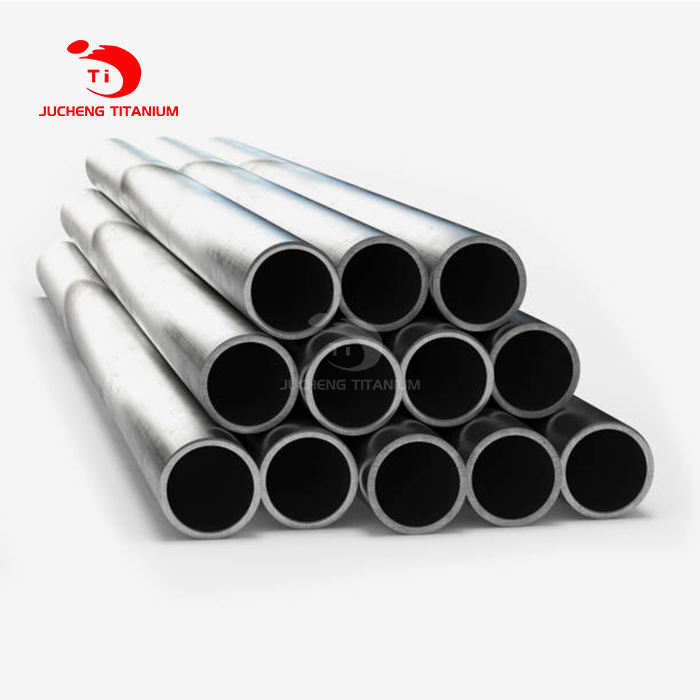
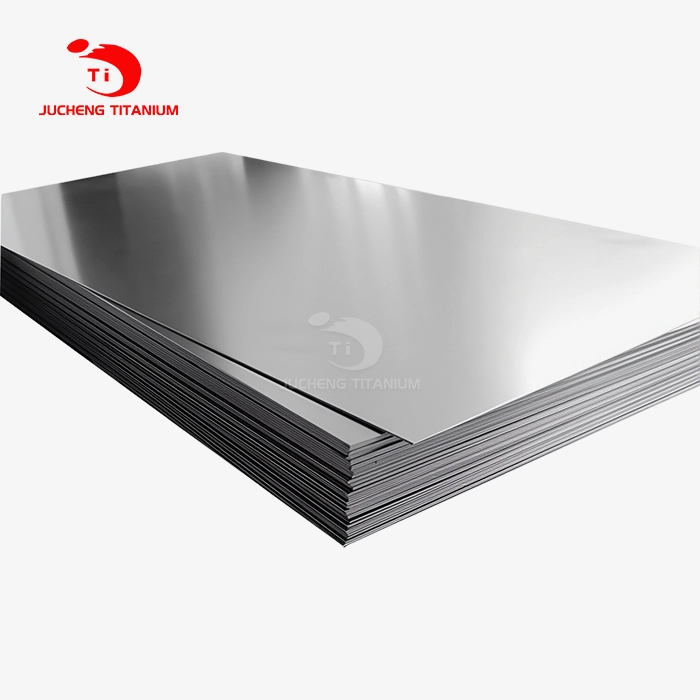
To get the best microstructure, the material goes through hot rolling, annealing, leveling, pickling, and surface finishing steps. When you anneal something the right way, you get rid of any remaining pressures and stop the formation of alpha-case, a layer of brittle oxygen that lowers wear performance. We make 6Al4V Titanium Plates at Jucheng Titanium that are between 4 mm and 80 mm thick and up to 2500 mm wide. These plates meet the standards set by AMS 4911 and ASME SB265 and are used in aircraft and pressure vessels.

Stainless Steel Composition and Characteristics
Grades of stainless steel like 304 and 316 depend on chromium content (18–20%) to create a passive oxide layer that stops corrosion. Grade 316 adds molybdenum to make it more resistant to chloride pitting, which means it can be used in marine settings. However, stainless steel's density of about 7.9 g/cm³ means that it is much heavier than other materials. This is a big problem in situations where weight directly affects fuel efficiency or structural load calculations. Austenitic stainless steels are very good at being welded and shaped, but they don't have the strength benefits that make titanium alloys indispensable in designs where weight is important.

The ways that these things can be treated with heat are very different. Solution annealing is usually used to restore corrosion resistance in stainless steel after welding. On the other hand, Grade 5 titanium can be treated with a solution and aged to reach ultimate tensile strengths of over 1100 MPa. Because they can be heated and cooled, titanium alloys can be used for parts that need different mechanical properties.
Performance Comparison: 6Al4V Titanium Plate vs Stainless Steel
Strength and Fatigue Resistance
6Al4V Titanium Plates have very high fatigue strength even when they are loaded and unloaded many times, which is common in aerospace structures. This material can stand up to millions of stress cycles without cracking, which is why aircraft bulkheads, landing gear supports, and firewall systems need to be strong. The alloy's modulus of elasticity is about 113 GPa, which is between aluminum and steel. This makes it good for distributing stress.

The tensile strength of stainless steel is pretty good. In its heated state, Grade 316 can hit about 515 MPa. But because it is denser than titanium, its specific strength—the ratio of strength to weight that is important in transportation and aerospace—is not as good. When compared parts of similar strength, titanium parts weigh about 43% less than stainless steel parts. This means that more fuel is saved and more cargo can be carried.
Corrosion Resistance in Extreme Environments
Titanium's natural oxide layer grows back right away after being damaged, making it a better material for defense in chloride-rich, acidic, and oxidizing conditions. Titanium is resistant to stress corrosion cracking and crevice corrosion, which makes it a good material for chemical processing equipment that works with sour gas (H₂S), seawater, and strong acids. Offshore platforms and underwater shafts made of Grade 5 titanium need five to seven times less upkeep than similar products made of stainless steel.

Even though 316 stainless steel works well in moderate chloride exposures, it can still get pitting and crevice corrosion in still seawater or when it is insulated. Chemical companies that switched from stainless steel heat exchangers to titanium units say that corrosion-related problems no longer cause unexpected shutdowns. Our experience selling 6Al4V Titanium Plate tools to hydrometallurgy operations backs this up—clients get uninterrupted operations, which makes the higher original investment worth it.
Fabrication and Welding Considerations
Because stainless steel is so common and has standard welding needs, it is easy to make with standard industrial tools. Most manufacturing shops have the skills and tools to work with stainless steel, which cuts down on lead times and labor costs.
Titanium welding needs a neutral gas covering (usually argon) on both the weld face and the root side to keep the metal from getting contaminated or weak. Controlled environments and specialized training make fabrication more complicated. But companies like Jucheng Titanium have improved these methods over the past 20 years by keeping strict quality controls and using ultrasound testing according to AMS 2631 to find flaws below the surface. Our ability to make over 500 sets of titanium equipment every year shows that complexity can be handled with the right skills and tools.

Cost Analysis and Procurement Considerations
Initial Investment vs Lifecycle Value
6Al4V Titanium Plates usually cost three to five times as much as similar plates made of stainless steel. This high initial cost is due to the limited availability of raw materials, the difficulty of extracting them, and the unique needs of producing them. This difference is taken into account by aerospace purchase budgets, which look at the total cost of ownership instead of just the acquisition price.
Lifecycle analysis shows that titanium's longer service life and low maintenance needs often make up for its higher prices. Titanium chemical reactors last 15 to 20 years before they need to be replaced, while stainless steel units in the same corrosive environments only last 5 to 8 years. Return on investment calculations are better when there is no downtime, fewer replacements, and lower maintenance labor costs. When we send titanium heat exchangers to petroleum plants, the clients know that the extra cost is worth it because the longevity means that the equipment will work reliably.
Supplier Reliability and Lead Times
Because stainless steel is a product, it is easy to get from a lot of different suppliers, and common sizes usually have lead times of two to four weeks. This level of depth in the supply chain gives buyers more options for less important applications or needs that come up quickly.
To get titanium, you have to work with specific sources that can meet strict certification standards. Jucheng Titanium keeps about 3,000 tons of stock in different grades (Gr1, Gr2, Gr4, Gr5, Gr7, Gr9, Gr12), which lets them deliver faster than the 8–12 weeks that are usual in the industry. As a National High-Tech Enterprise with 4 invention patents and 41 utility model patents, we have the technical depth to provide consistent quality. Manufacturers of aerospace and medical devices like how reliable this is when they have to make sure that materials can be tracked and that they meet approval requirements.

Buying plans should take into account the ability to change the amount of an order. Titanium suppliers, like us, can make plates up to 10,000 mm long and with custom widths. They can also make smaller batches for research institutions, while sellers of regular steel often have minimum order numbers that are too high for the project.
Application-Specific Suitability: Choosing the Right Material
Aerospace and High-Performance Engineering
Grade 5 titanium is used by companies that make aircraft parts when reducing weight directly improves fuel economy and carrying capacity. One kilogram saved in the structure of the plane adds up over thousands of flight hours to real practical savings that can be seen. Because the alloy can keep its mechanical properties at high temperatures (up to 400°C), it can be used in places where stainless steel would lose its strength, like in engine parts and exhaust systems.
Defense contractors like titanium because it is clear to radar and not magnetic, and it can also be used for other purposes besides building structures. Working with aerospace material distributors makes sure that the material we supply meets the requirements of AMS 4911. The material can be tracked and has mill test results that confirm its chemical make-up and mechanical qualities.
Medical Device Manufacturing
Because it meets certain biocompatibility standards, 6Al4V Titanium Plate, especially the ELI (Extra Low Interstitial) version, is the standard for orthopedic instruments and surgical implants. The material's modulus of flexibility is similar to that of human bone, which lowers the stress shielding effects that make implants come free. Titanium is used for cranial plates, spinal fusion devices, and joint replacement parts because it is biocompatible, strong, and doesn't rust in body fluids.

Material clarity and surface finish quality are very important when buying medical devices. Our polished and acid-pickled surface treatments are medical-grade, and our quality inspection team looks at the microstructure to get rid of alpha-case flaws. Stainless steel can still be used for non-implantable tools when cost is more important than biocompatibility.
Chemical Processing and Industrial Applications
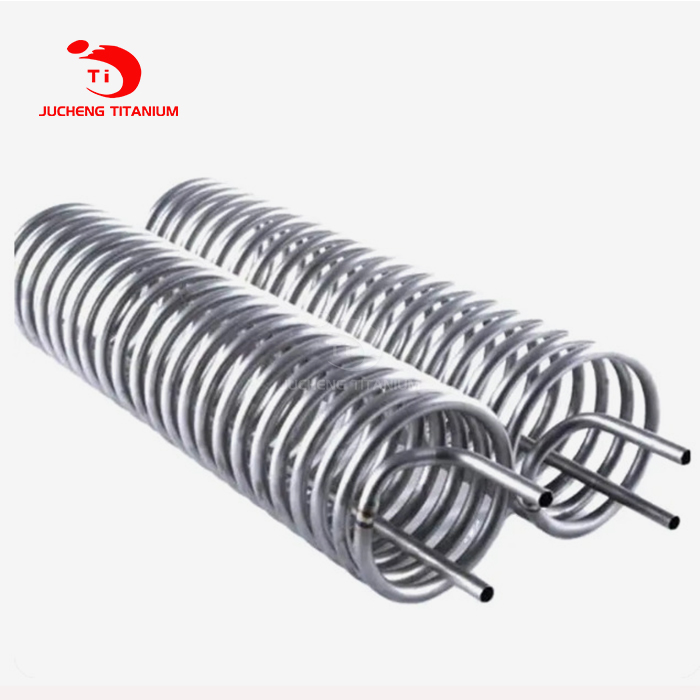
Titanium is used by companies that make petrochemical equipment for heat exchanges, reactors, and condenser systems that are in contact with process streams that are acidic. Jucheng Titanium made the biggest titanium spiral plate heat exchanger in China and gave it to WUGANG Group. This shows that we can make complicated things. Titanium doesn't crack when exposed to chloride stress-induced rust in sour service settings, which is especially helpful for offshore oil and gas processing.
Stainless steel is often used in industrial machinery and power generation equipment where moderate corrosion resistance is enough and lower-cost materials perform better than more expensive ones. Applications that are good for stainless steel include steam condensers in traditional power plants and structural parts in food processing plants. The choice depends on whether the costs of corrosion-related downtime are high enough to support the higher price of titanium. This estimate is becoming more and more in favor of titanium as operating reliability becomes more important.

Decision-Making Framework for Procurement Managers
Evaluating Core Performance Metrics
The choice of material should come after an organized analysis of the needs of the individual application. The evaluation of mechanical performance includes the necessary tensile strength, the expected number of fatigue cycles, and the temperature ranges for operation. Titanium is the best material to use when reducing weight will have system-level benefits that are greater than the cost of the material.
When testing for corrosion protection, certain chemical conditions, temperatures, and concentration levels must be taken into account. Stainless steel is good at resisting corrosion from air and mild chemicals. Titanium, on the other hand, is needed in chloride-, acidic-, or high-temperature environments where failure of the material could have safety or environmental effects.
Certification Standards and Quality Assurance
Material approval is very strict for medical and aerospace uses. As needed for the end use, procurement specs should refer to ASTM B265, ASTM F67, AMS 4911, or ASME SB265 standards. When a supplier is qualified, they should show that they can do ultrasonic testing, chemical makeup analysis according to AMS standards, and microstructure study to find flaws that could be very bad.
The fact that Jucheng Titanium has been named a new "little giant" and specialized national-level business shows how committed we are to quality systems and constant improvement. We stay up to date on new metallurgical knowledge and processing techniques thanks to our partnerships with the Northwest Institute for Nonferrous Metal Research and our work with Tsinghua University.
Total Cost of Ownership Considerations
Lifecycle cost models should be made by procurement managers. These models should include the price of the material, the cost of making it, the cost of installation, the expected service life, how often it needs to be maintained, and the cost of replacing it. Titanium is a more expensive material, but longer repair intervals and no more corrosion-related problems make the lifetime economics better in harsh environments.
Getting rid of risks is an important factor in material selection that is often overlooked. When process equipment breaks down in chemical plants or aircraft parts break, the effects are much worse than differences in the cost of materials. Titanium has been shown to be reliable in important applications, which lowers the risk and justifies the higher price when operational continuity is crucial.
Conclusion
When you compare the performance of 6Al4V Titanium Plate to stainless steel, it's easy to see when each material is best used. In aircraft, medical, and corrosive chemical processing settings, grade 5 titanium is worth the extra cost because it has higher specific strength, better corrosion protection, and longer service life. For general industrial uses where extreme performance is not needed, stainless steel is still a good value. When making purchases, people should weigh the original cost against the long-term value, and they should think about what would happen if something went wrong. The choice of material depends on whether the needs of the application put less weight, resistance to corrosion, and long-term dependability ahead of saving money at first.
FAQ
1. What is the main advantage of 6Al4V titanium over stainless steel?
The best thing about it is that it has a great ratio of strength to weight. Grade 5 titanium is as strong as or stronger than stainless steel while being about 56% lighter. This makes it an essential material for aircraft use where reducing mass directly improves fuel economy and payload capacity. Titanium also doesn't rust in chloride or acidic environments, so it doesn't need to be maintained as often as stainless steel does in harsh chemical environments.
2. Can stainless steel substitute for titanium in any applications?
Stainless steel works well in situations where some resistance to rust is enough, and weight is not an issue. Stainless steel is often used successfully in building structures, machinery for processing food, and general industrial machinery. But using stainless steel instead of titanium in aircraft structures, medical devices, or chemical processing that is very corrosive usually leads to poor performance or failure before its time.
3. How does fabrication difficulty affect material choice?
Titanium welding needs special inert gas protection and trained workers, which makes the process more complicated and costs more than regular stainless steel welding. But skilled makers like Jucheng Titanium have been improving these methods for decades, making them easier to use. Titanium's longer service life and better performance in important uses usually make up for the higher cost of fabrication.
Partner with a Trusted 6Al4V Titanium Plate Supplier
Choosing the right material is only half the battle. Working with an experienced 6Al4V Titanium Plate maker is the other half that guarantees your specs will be carried out correctly. Jucheng Titanium has been handling titanium materials for more than 20 years, has 45 patents, and is a national-level specialized business. Our 3,000-ton inventory of grades Gr1 through Gr12 makes it possible to quickly deliver custom sizes. Our strict quality controls, which include ultrasonic testing and microstructure analysis, make sure that the material is safe for use in aerospace, medicine, and chemical processing. We make more than 500 sets of titanium tools every year and have strong relationships with places like the Northwest Institute for Nonferrous Metal Research to make sure that every product is based on the latest metallurgical knowledge. Get in touch with our expert team at s4@juchengti.com to talk about your 6Al4V Titanium Plate needs and find out how our reliable supply chain and custom manufacturing services can help your important projects.

References
1. Boyer, R., Welsch, G., & Collings, E.W. (1994). Materials Properties Handbook: Titanium Alloys. ASM International.
2. Donachie, M.J. (2000). Titanium: A Technical Guide (2nd ed.). ASM International.
3. Schutz, R.W. & Watkins, H.B. (1998). Recent developments in titanium alloy application in the energy industry. Materials Science and Engineering: A, 243(1-2), 305-315.
4. Lutjering, G. & Williams, J.C. (2007). Titanium (2nd ed.). Springer-Verlag Berlin Heidelberg.
5. American Society for Testing and Materials. (2021). ASTM B265-20a: Standard Specification for Titanium and Titanium Alloy Strip, Sheet, and Plate. ASTM International.
6. Peters, M., Kumpfert, J., Ward, C.H., & Leyens, C. (2003). Titanium alloys for aerospace applications. Advanced Engineering Materials, 5(6), 419-427.