



Gr2 titanium plate vs Gr5 plate: which suits your project?
One of the most important choices that must be made throughout any titanium procurement cycle is whether to go with a GR2 titanium plate or a GR5 titanium plate. Grade 2 titanium is a commercially pure grade of titanium that offers superior corrosion resistance and outstanding cold formability at a more affordable price. Grade 5, also known as Ti-6Al-4V, is an alpha-beta alloy that has a much greater tensile strength. It is ideal for use in settings that include load-bearing and high temperatures. There is no grade that is inherently better than the other; the grade that is best for your project is solely determined by the mechanical requirements, environmental exposure, and financial constraints. In order to help you make an informed decision, this document provides a breakdown of both grades.
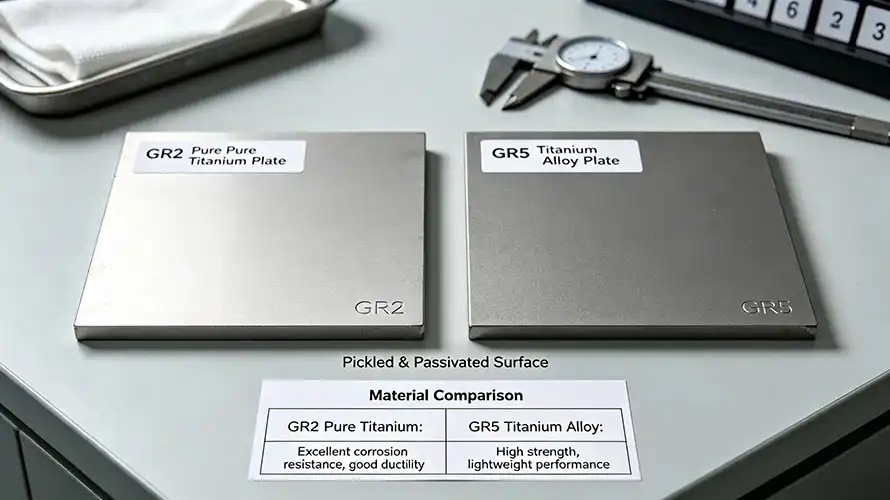

Understanding GR2 and GR5 Titanium Plates
What Makes GR2 Titanium Commercially Pure?
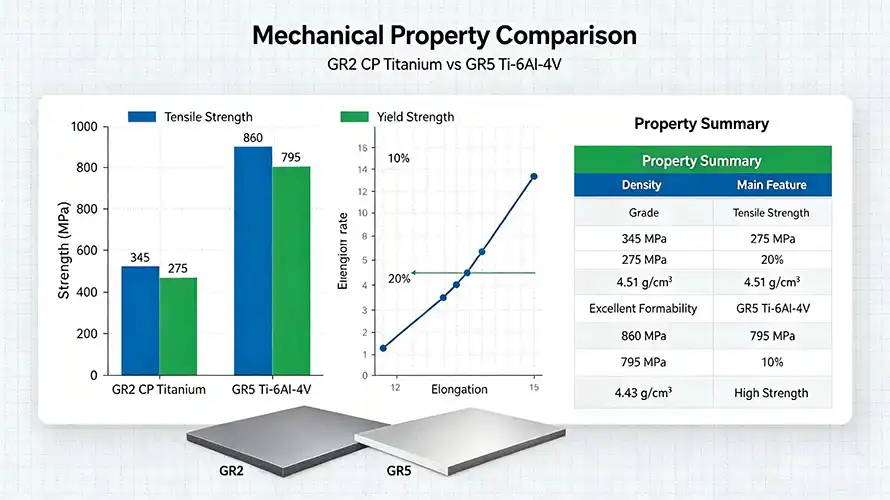
Grade 2 titanium is included in the category of commercially pure (CP) titanium grades. In other words, titanium is the primary component, and the greatest amount of oxygen and iron that it contains is just 0.25% and 0.30 percent, respectively. The ability of GR2 to be cold-formed and flexible is due to the alpha-phase architecture that it has. Its density is about 4.51 grams per cubic centimetre, and its minimum tensile strength is 345 megapascals. It weighs about forty-five percent less than carbon steel and does not break when exposed to chloride, which is an issue that 304/316 stainless steel often encounters in severe conditions.
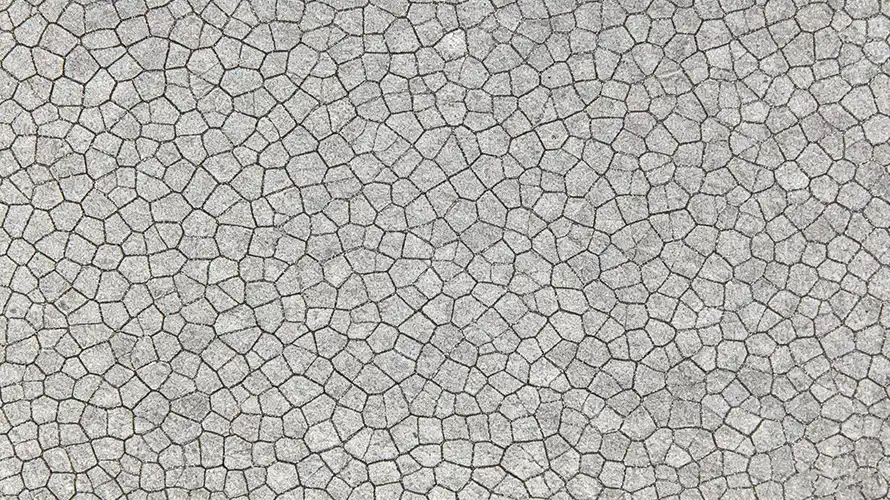
What Defines GR5 (Ti-6Al-4V) as an Alloy?
Titanium grade 5 has a microstructure that is composed of 4 percent vanadium and 6 percent aluminium. The minimum tensile strength is increased to around 895 MPa as a result of this alpha-beta configuration. Because of this alloying, wear resistance and efficiency are significantly improved at high temperatures up to about 315 degrees Celsius. On the other hand, the additional alloying elements cause it to be less flexible and more difficult to cold form than GR2. It is estimated by the International Titanium Association that GR5 is the most prevalent kind of titanium metal in the world, accounting for around fifty percent of the total titanium that is used worldwide.
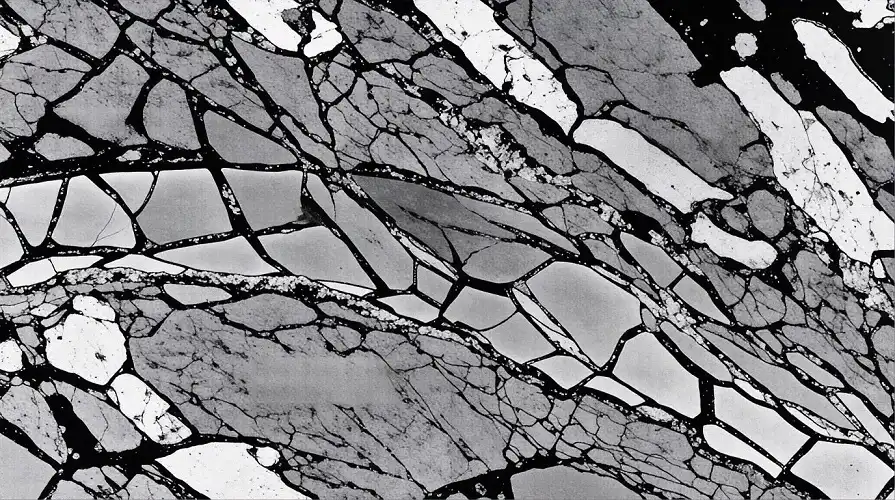
Key Chemical and Physical Properties at a Glance
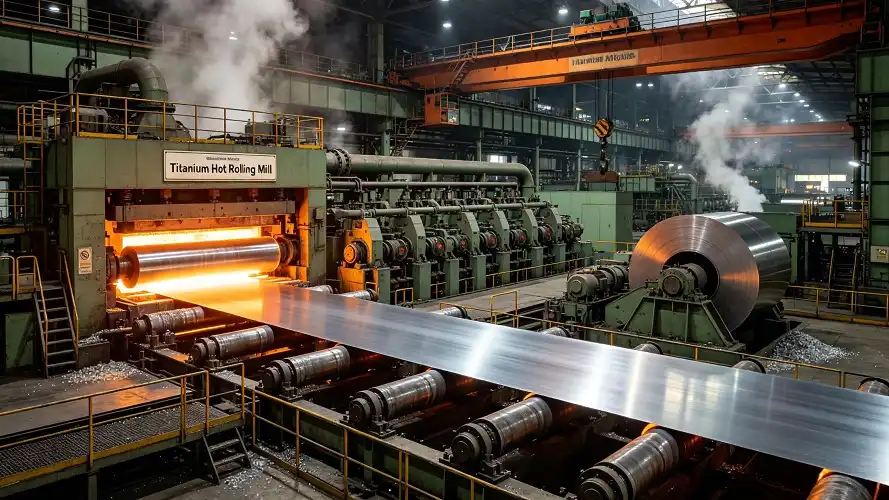
However, according to ASTM B265 and ASME SB265, both grades are acceptable. AMS 4911 and ASTM F67 requirements are adhered to in the production of hot-rolled plates, which are also manufactured by Jucheng Titanium. The plates are available in a range of dimensions, including lengths of up to 10,000 millimetres, widths of 950 millimetres to 2,500 millimetres, and thicknesses ranging from 4 millimetres to 80 millimetres. It is possible to modify either grade to meet the requirements of a particular project. Their surfaces may be polished, machined, or acid-pickled, and they are available in an annealed form when they are first purchased. In addition, the product line includes grades such as Gr1, Gr4, Gr7, Gr9, and Gr12, which provide procurement teams with alternatives for satisfying a variety of corrosion and strength requirements.
Side-by-Side Comparison: GR2 vs GR5 Titanium Plates
Mechanical Performance Metrics
It is possible to measure and understand the difference in results between the two grades for GR2 titanium plate. GR2 has a yield strength of about 275 MPa and a stretch of 20%, which makes it perfect for projects that need to draw, bend, or weld a lot of material. GR5 has a yield strength of about 828 MPa and an elongation of about 10%. It gives up some formability for better structural performance. GR5 is by far the better choice for designs that need to take into account fatigue cycles, impact loads, or high stress concentrations.
Corrosion Resistance and Environmental Suitability
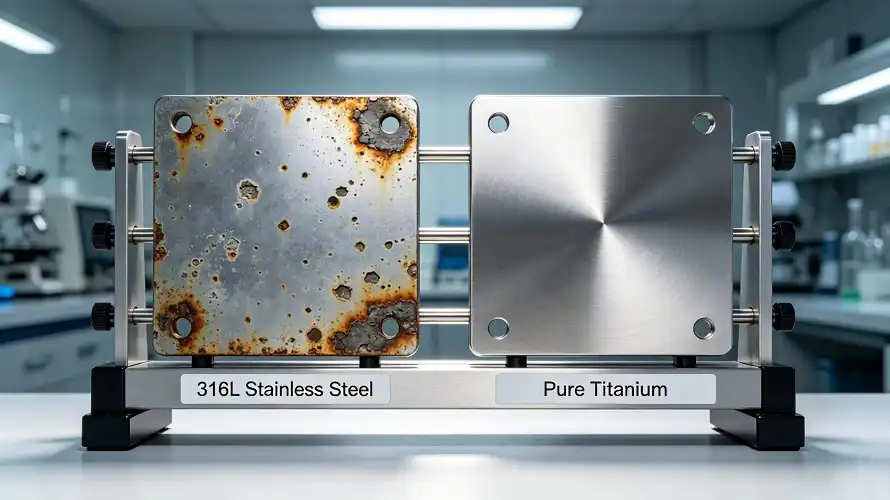
At temperatures up to 260°C, GR2 doesn't rust in seawater, which is 10–20 times better than 304/316 austenitic stainless steels in marine and chemical processing settings. It doesn't rust or pit in chloride- or oxidizing-rich environments, and it doesn't crack from stress corrosion. Even though GR5 is still resistant to corrosion, it puts mechanical performance ahead of chemical durability. When there are strong reducing acids or wet chlorine atmospheres, GR2 is still the best material because its passive oxide layer grows back quickly after being damaged.
Weldability, Machinability, and Cost Factors
GR2 is easy to weld with TIG or MIG processes while being strictly shielded with argon or helium, and for most uses, it doesn't need to be heated after the weld. Welding GR5 is possible, but it needs more precise process controls and stress-relief cooling after it is made. When it comes to price, GR2 has a lower raw material price per kilogram, which is a big deal for big chemical or sea infrastructure projects. There is a premium for GR5, but it is only worth it when the engineering design really needs its mechanical qualities.

Application-Based Recommendations: Match Titanium Grade to Your Project Needs
When to Specify GR5 Titanium Plate
When strength-to-weight ratio is the most important factor in design, GR5 is the best choice for aerospace structure parts, aircraft engine brackets, military equipment parts, and high-performance sports goods. Manufacturers of aircraft parts and defense contractors who have to follow strict ASTM and AMS 4911 standards often choose GR5 because it has the best fatigue performance under cyclic loading of any commercially pure grade. GR5 gives your engineering team the structural stability they need for projects with high dynamic loads or high working temperatures.

When GR2 Titanium Plate Is the Right Call
GR2's biggest market is chemical processing equipment, like reactors, heat exchangers, pipelines, and cladding. Because it is biocompatible, it is also the most common choice for medical implant substrates and surgical tool parts that must meet ASTM F67 standards. GR2's ability to resist corrosion is important for marine engineering systems that are exposed to salt water, offshore oil and gas hardware, and electrochemical applications like titanium anode plates. In situations where long service life in corrosive conditions is more important than raw mechanical strength, GR2 is the best choice.

Cost-Benefit Perspective for Procurement Teams
Choosing the right grade from the start saves a lot of money on material changes in the middle of a job. The lower unit cost of GR2 and its better ability to be shaped mean that less work is needed to make it, which has a direct effect on the total cost of the project. The more expensive GR5 material can be justified by the fact that its strength lets designers cut down on wall thickness or part count, which saves weight and time during assembly in aerospace or industrial machinery. When comparing the two types for long-term projects, procurement teams should look at the total cost of ownership, not just the price per kilogram.
Procurement Insights for Buying GR2 and GR5 Titanium Plates
Certifications and Standards to Require
Depending on your needs, you should always ask for mill test reports (MTRs) and certificates of conformance that reference ASTM B265, AMS 4911, ASTM F67, or ASME SB265. At the supplier level, ISO 9001 certification makes sure that quality control methods are written down. For medical or aerospace uses, it is necessary to be able to track the material from the melt to the finished plate. Reliable suppliers of GR2 titanium plates and manufacturers of Gr5 plates keep full heat-number records and can give you third-party inspection reports if you ask.
Customization Options and Lead Times
Rolling, annealing, levelling, pickling, and giving a smooth finish are some of the processes that Jucheng Titanium uses to process plates of both standard and bespoke sizes. Over the course of the whole year, the factory maintains a stockpile of around 3,000 tonnes of titanium. Gram 1, Gram 2, Gram 4, Gram 5, Gram 7, Gram 9, and Gram 12 are the grades that are held in stock. When it comes to urgent demands, this makes shipment times much shorter. The original equipment manufacturer (OEM) branding, one-of-a-kind packaging, and dimension tolerances that are tailored to the project may be obtained by distributors and trade firms that are required to make daily bulk purchases.
Avoiding Price-Driven Material Substitution
Accepting a grade that is incorrectly recognised or of inferior purity in order to save money up front is one of the most costly errors that can be made in the procurement process. It is common practice to do a ferroxyl test in order to detect the presence of iron on the surface of high-purity titanium plates. The presence of iron on the surface causes the passive oxide layer to become more fragile and accelerates the process of localised corrosion. X-ray diffraction (XRF) or inductively coupled plasma (ICP) analysis should always be used to examine the chemical composition of a titanium plate before it is put through a crucial production step.

How to Identify Genuine GR2 Titanium Plates and Avoid Common Pitfalls
Verification Methods for Material Integrity
Request complete chemical composition reports that demonstrate that the oxygen content is less than 0.25% and the iron content is less than 0.30% for GR2, or that the amounts of aluminium and vanadium are within the range that is permitted for GR5. It is essential that each and every shipment be accompanied by evidence of mechanical testing, which should include tensile strength, yield strength, and elongation. Before actually submitting the item to a laboratory for verification, it is still a good idea to physically inspect the surface condition, the quality of the edges, and the accuracy of the measurements.
Storage, Handling, and Supplier Qualification
Plates made of titanium should be stored apart from surfaces made of iron and steel in order to prevent them from being galvanically polluted. Utilise clean nylon ropes or handling equipment designed specifically for titanium in order to transport it. A supplier's export history, manufacturing capacity, records of third-party audits, and the speed with which they reply to technical queries should all be taken into consideration when selecting a supplier. When compared to a trading intermediary who has not been vetted, a supplier that has more than twenty years of expertise processing titanium and intellectual property that has been vetted, such as registered patents in alloy processing, has a much lower risk of procurement.
Conclusion
GR2 titanium plate and GR5 each have their own place in the industry material decision process. For chemical, naval, and medical uses, GR2 is the best because it doesn't rust, can be shaped easily, and is cheap. GR5 gives aircraft and defense structure parts the mechanical strength they need. Instead of choosing the most common option, the most reliable way to complete a job is to match the grade to the specific technical need. Jucheng Titanium offers both grades, with full certification support and a range of sizes to choose from.
FAQ
1. Can GR2 and GR5 titanium plates be used interchangeably?
Actually, their chemical and mechanical characteristics are rather distinct from one another. GR2 is an excellent choice for applications that need robustness and resistance to rust. In environments where there is a great deal of stress and fatigue, GR5 is exclusively used. In the event that you replace one component with another without first contacting an engineer, the component may not function properly.
2. What certifications should I request from a titanium plate supplier?
Enquire about adherence to the standards ASTM B265, ASTM F67 (for medical applications), AMS 4911 (for space applications), and ASME SB265 (for pressure tanks). It is necessary to fulfill fundamental standards such as mill test reports that include heat-number tracking and ISO 9001 certification for any supplier.
3. Is GR5 always more expensive than GR2?
Yes, the addition of alloying to GR5 results in an increase in the cost of the raw materials used in its production. However, due to the fact that it is more robust, it could be feasible to develop smaller components. As a result, the overall quantity of material that is utilised would be reduced, and the cost difference between each component might be reduced as a result.
4. Which grade is better for heat exchangers?
Because of its superior resistance to chloride-containing process fluids and cooling water, Gr2 titanium plate is often used for the production of heat exchanger shell plates and tubes. In addition to this, it is simpler to form and join.
Get the Right Titanium Plate for Your Project — Contact Jucheng Titanium
Since 2004, Jucheng Titanium has sold GR2 titanium plate, GR5 titanium plate, and other grades of titanium to customers in North America and other places. These customers are in the aerospace, chemical, medical, and industrial fields. We are a proven Gr. 2 titanium plate manufacturer that can meet your exact needs. We have 3,000 tons of inventory in stock, full ASTM/AMS/ASME certification support, and the ability to make plates to your specifications. To get a price right away, email your images or questions to s4@juchengti.com.

References
1. ASTM International. ASTM B265: Standard Specification for Titanium and Titanium Alloy Strip, Sheet, and Plate. ASTM International, 2020.
2. International Titanium Association. Titanium: The Metal of Choice. ITA Industry Report, 2019.
3. Boyer, R., Welsch, G., & Collings, E. W. Materials Properties Handbook: Titanium Alloys. ASM International, 1994.
4. Donachie, M. J. Titanium: A Technical Guide, 2nd Edition. ASM International, 2000.
5. Schutz, R. W., & Thomas, D. E. "Corrosion of Titanium and Titanium Alloys." ASM Handbook, Volume 13: Corrosion. ASM International, 1987.
6. Peters, M., Kumpfert, J., Ward, C. H., & Leyens, C. "Titanium Alloys for Aerospace Applications." Advanced Engineering Materials, Vol. 5, No. 6, 2003.