



How Durable Is Gr9 Titanium Tube in Marine Conditions?
When equipment is constantly being attacked by saltwater, huge changes in pressure, and toxic substances, the choice of material becomes mission-critical. Gr9 Titanium Tube, whose scientific name is Ti-3Al-2.5V, is very durable in marine settings because it has a tensile strength of up to 620 MPa and is very resistant to corrosion. Because it is a balanced alloy, it is much better at resisting pitting, crevice rust, and stress cracking than other materials. This makes it the best choice for parts of underwater hydraulic systems, desalination heat exchangers, and offshore platform components that can't fail.
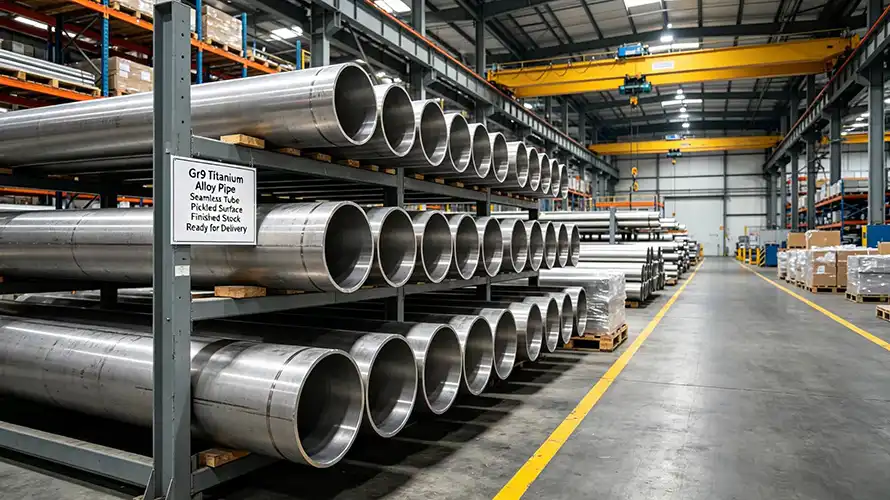

Understanding Gr9 Titanium Tube and Its Core Properties
The Ti-3Al-2.5V alloy is a major step forward in metal science. It fills the gap between commercially pure titanium grades and the harder Ti-6Al-4V. This close-to-alpha metal has 3% aluminum and 2.5% vanadium in it, which makes it stronger while still being very easy to shape. This is a very important quality when making seamless tubes for complicated ship installations.
Chemical Composition and Mechanical Strength
The alloy's make-up gives it a density of only 4.48 g/cm³, which is a lot lighter than alternatives made of stainless steel or nickel. In cold-worked stress-relieved conditions, the tensile strength is higher than 620 MPa, and the yield strength is at least 483 MPa. Because of this mechanical performance, engineers can specify thinner wall sections without lowering safety margins. This directly leads to lighter vessels and better fuel economy in naval applications.
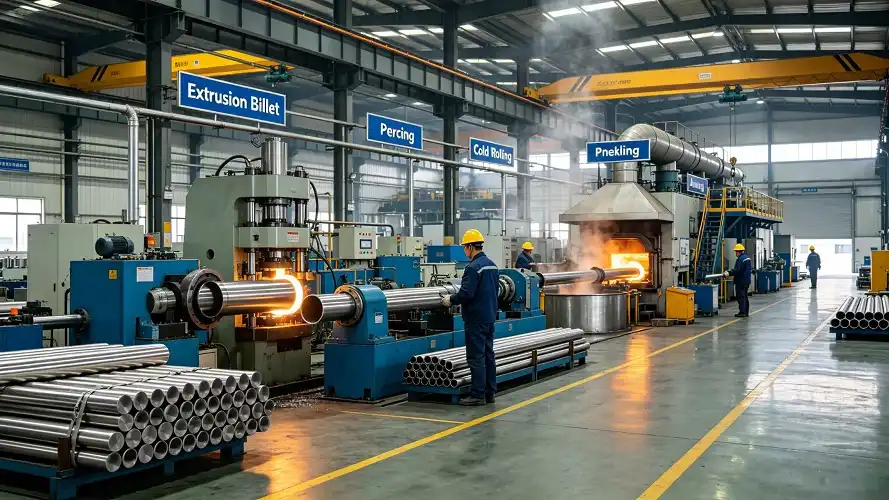
Manufacturing Excellence Through Advanced Processing
Our factory in Baoji, China's famous Titanium Valley, uses a full manufacturing process that includes extrusion, cutting, cold rolling, annealing, pickling, and bending. To meet the standards set by ASTM B338, ASTM B861, and AMS 4942, each seamless tube goes through strict quality control. The cold-working process leaves behind beneficial residual compressive stresses that make the material more resistant to fatigue. Later, stress-relief heat treatments make it flexible again without losing its strength. This way of processing makes sure that the dimensions are the same for outer sizes from 3 mm to 219 mm and wall thicknesses from 0.5 mm to 20 mm, so it can meet a wide range of marine engineering needs.
Our annealed, pickled, and bright surface finishes do more than just look good; they also improve rust protection by getting rid of surface contaminants and making a uniform passive oxide layer. This naturally occurring titanium dioxide film keeps growing back when it gets broken. It protects against corrosion and keeps working even in rough circumstances.
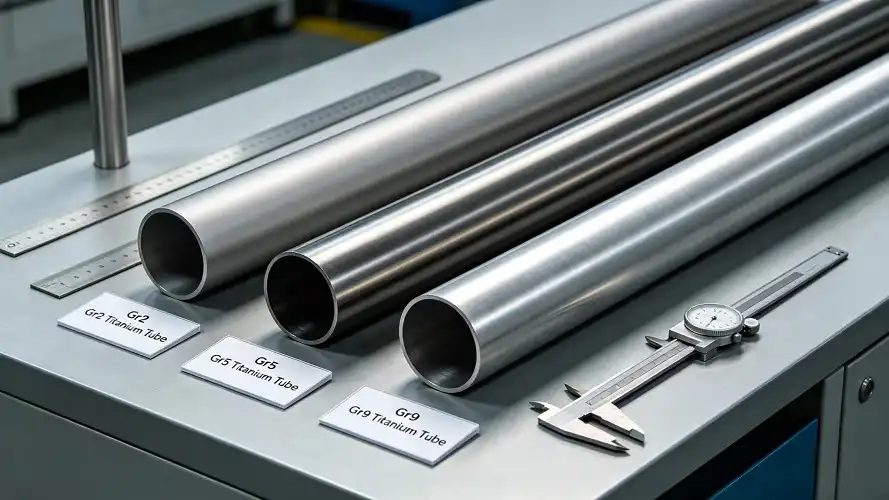
Comparative Advantages Over Alternative Grades
Commercially pure Grade 2 titanium is very good at resisting rust, but it's not strong enough for high-pressure naval hydraulic systems. On the other hand, Grade 5 titanium is stronger but famously hard to cold-form into seamless tubes. The Ti-3Al-2.5V alloy solves the problem of formability versus strength by having about 50% higher tensile strength than Grade 2 while still being flexible enough to be bent into complex routing shapes without micro-cracking. Because of this one-of-a-kind combination, this material is always used in aerospace hydraulic systems and subsea umbilical assemblies.
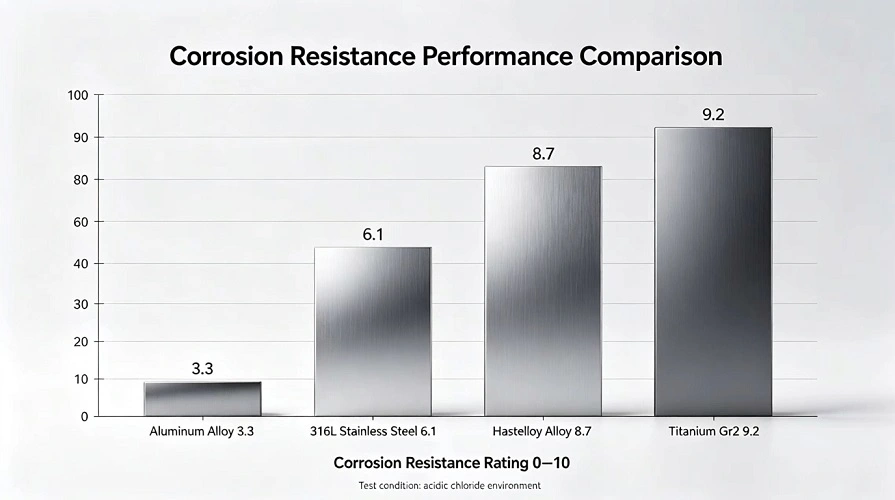
Evaluating Gr9 Titanium Tube Durability Specifically for Marine Conditions
The chloride-rich seawater, biofouling species, cyclic loading from wave action, and temperature changes make marine habitats very unfriendly. In these situations, traditional materials like carbon steel, aluminum alloys, and even 316 stainless steel slowly break down, which means they need expensive repairs or replacements too soon. Looking at how long Gr9 Titanium Tubes last in marine conditions.
Superior Corrosion Resistance in Saltwater Exposure
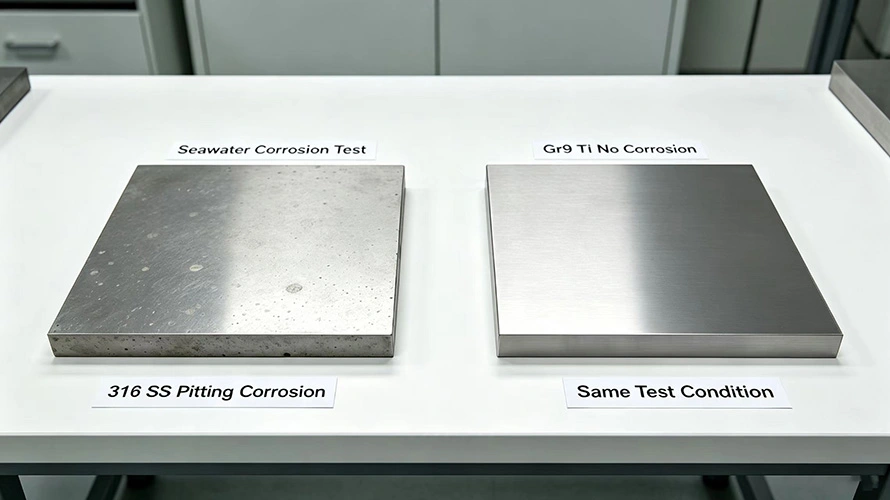
When exposed to seawater, the titanium-aluminum-vanadium alloy creates a very stable passive layer that stops the pitting and crevice corrosion that happens with stainless steels. Independent tests done at offshore installations have shown that stainless steel doesn't corrode at all after five years of continuous exposure to saltwater, even when oxygen levels are low, which is when corrosion would happen more quickly. This immunity works in salty water, brine solutions, and chlorinated environments that are common in desalination plants.
The material keeps its protective oxide film over a wide pH range. It stays stable in both acidic (from industrial runoff) and basic (from concrete buildings) settings. Titanium's smooth oxide surface keeps biological attachments from forming, unlike copper-nickel metals that create fouling layers that are a problem. This means that heat exchanger tubes in seawater cooling systems don't need as much upkeep.
Mechanical Strength Under Dynamic Loading
Offshore platforms and military ships have marine hydraulic systems that are constantly changing pressure, vibrating, and sometimes being hit by shock loads. The high fatigue strength of the Ti-3Al-2.5V alloy ensures that it will work reliably in these changing conditions. Case studies from oil rigs in the North Sea show that hydraulic tubes can withstand millions of pressure cycles without cracking. This is something that can't be done with aluminum or lower-grade titanium.
Because the material is ductile, it can be deformed before it breaks completely, which gives you more safety gaps than rigid materials that break all at once. This trait is especially useful in important sea safety systems, where leak-before-break behavior helps find problems quickly and stops environmental disasters.
Thermal Stability in Variable Marine Environments
Temperatures that can be used in marine uses can run from almost freezing in the deep sea to over 300°C in heat exchangers and exhaust systems. The alloy's mechanical traits stay the same across this range of temperatures; it can be used up to 315°C without losing much of its strength. This thermal stability takes away any worries about changes in performance over the seasons or damage from thermal shock during sudden changes in temperature.

Performance Validation Through Real-World Applications
Titanium tubing is used in multi-stage flash evaporators and reverse osmosis pressure vessels at desalination plants around the world. This is because high chloride concentration, high temperature, and mechanical stress would quickly destroy other materials in these areas. Operators say the service lives go over 25 years with little upkeep, which is a huge improvement over the usual 5–7 year replacement cycles of coated steel alternatives.
Offshore oil and gas sites have successfully used titanium cable tubes for hydraulic control lines that go to wellheads several kilometers below the surface. Extreme conditions are created by water depths greater than 2,000 meters, high pressure from the outside, temperatures close to freezing, and complete immersion in saltwater. The tube keeps its hydraulic seal integrity and mechanical strength over many decades of use, so there is no need for expensive removal and replacement of failed steel or composite options.

Procurement Insights: Sourcing High-Quality Gr9 Titanium Tubes for Marine Applications
The long-term dependability of marine installations is directly affected by how authentic the materials are and how well they were made. Specification mistakes or using products that aren't up to par can cause huge problems, damage to the environment, and costly repairs. Insights into Buying: Finding High-Quality Gr9 Titanium Tubes for Marine Use.
Certification Standards and Compliance Verification
Reliable sources give full material certificates that show the chemical makeup, mechanical properties, and ability to be tracked back to the original mill heat numbers. For heat exchangers and condensers, look for tubes that are in line with ASTM B338 and ASTM B861. For seamless titanium pipe, look for tubes that are in line with ASME SB338. For aerospace-grade uses, make sure the material meets AMS 4942 standards, which have tighter rules for surface quality and nondestructive tests.
When the project requirements call for higher quality assurance, ask for certified mill test results that come with independent third-party proof. Before a production lot is shipped, our quality inspection team checks it for compliance with specifications by spectroscopic analysis, tensile testing, hardness verification, and ultrasound examination.
Advantages of Sourcing from the Baoji Manufacturing Hub
Baoji, which is in Shaanxi Province, is home to China's most modern titanium processing facilities, which were built over many years of making aircraft and defense materials. Our factory, Baoji Jucheng Titanium Industry Co., Ltd., uses the knowledge of people in the area while still meeting international quality standards. We've been specializing in what we do since 2004 and have 4 idea patents and 41 utility model patents that are directly applied to production processes. This gives us technology benefits in making seamless tubes.
Our 120,000-square-meter production center keeps a store of about 3,000 tonnes of titanium in a variety of grades. This lets us quickly meet the needs of urgent marine projects without the long lead times that come with making specialty materials to order. This level of inventory detail is especially helpful for retrofit projects, emergency fixes, and fast-track offshore setups where delays cost a lot of money.

Custom Fabrication and Technical Support
Marine systems often need non-standard sizes, unique ways to bend things, or pre-built pieces to work with the way the cables are routed. Our research team can help you find the best tube specs for your needs by balancing wall thickness, diameter, and material condition to get the best performance at the lowest cost. Custom cutting services give you exact lengths, which cuts down on field manufacturing work and the quality risks that come with it during remote installation.
We have strategic partnerships with the Northwest Institute for Nonferrous Metal Research and work together with Tsinghua University on developing advanced titanium alloys. This gives us access to cutting-edge metallurgical information that helps us make decisions about how to make our products and what to tell our customers. We can meet difficult application needs that standard catalogue products can't meet, thanks to this research foundation.
Logistics and Global Export Capabilities
International marine projects need reliable logistics coordination to make sure that deliveries of materials happen on time and construction schedules are met in different parts of the world. Our export team handles customs paperwork, shipping plans, and tracking deliveries to make sure the supply chain runs smoothly. Whether your business needs shipping containers to the U.S., we handle all of the logistics so that your deadlines are met, whether it's air freight to remote Pacific island installations from fabrication yards in the Gulf Coast.

Application Case Studies and Benefits for Marine Industry Users
Theoretical material qualities can be turned into real-world working benefits when used correctly in marine systems. Here are some examples of how titanium tubing can improve performance in different areas of the marine industry.
Seawater Heat Exchangers and Condensers
Seawater cooling is used to get rid of waste heat in power plants, chemical processing plants, and HVAC systems on ships. Traditional copper-nickel or titanium-clad steel tube bundles need to be cleaned and replaced on a regular basis, and as they age, they lose efficiency due to fouling caused by rust. These problems can't happen with pure titanium tubes because they have smaller walls that make heat flow better.
In a known installation at a desalination plant in the Middle East, copper-nickel tubes were swapped out for Ti-3Al-2.5V seamless tubes in shell-and-tube heat exchangers. Over the course of eight years of tracking, the facility reported a 40% drop in the number of times it had to clean, the end of all tube leaks, and a 12% rise in heat efficiency due to keeping the surfaces clean. Even though the materials cost more at first, the lifecycle cost analysis showed a positive return on investment (ROI) within four years.
Offshore Platform Hydraulic Systems
On oil production platforms, hydraulic power and control systems have to work with changing pressures all the time, saltwater spray, and sometimes contaminated process fluids. Steel tubing that is coated or galvanized stops rusting over time, which causes leaks, contamination, and system failures that need expensive maintenance work to be done offshore.
During a planned platform repair in the North Sea, an operator replaced important hydraulic control lines with smooth titanium tubing. During the next 15 years of running, the titanium sections had no breakdowns due to corrosion, but the steel sections next to them needed to be replaced three times. The operator figured that not having to do a single emergency fix in the ocean would be worth the extra cost of the titanium material. In the years that followed, they would save even more money by not having to do any upkeep.
Naval Vessel Piping and Structural Components
When in battle, military ships need to be as reliable as possible because a broken part could affect the task or the safety of the crew. Due to their strength, resistance to rust, and low weight, titanium alloys are highly useful for seawater pipes, hydraulic systems, and structural parts that are not magnetic.
More and more, naval engineers are choosing Ti-3Al-2.5V tubing for use on ships because it is 60% lighter than steel, which is important for achieving the right top weight for stability. The material isn't magnetic, so it doesn't mess up sensitive navigation and detection gear. It's also resistant to galvanic corrosion, so it doesn't need to be isolated in a complicated way when it's joined to aluminum structures.
Aquaculture and Marine Research Equipment
Titanium is biocompatible and durable, which makes it useful for new uses in sustainable aquaculture and oceanographic research equipment. Titanium heat exchangers and pipes are used in recirculating aquaculture systems to keep the water clean without adding harmful rust results. Research submersibles and self-driving underwater vehicles use titanium pressure housings and hydraulic parts that can handle the high pressures in the deep ocean while keeping the system's weight as low as possible.
These applications demonstrate how material properties translate into practical benefits like lower upkeep costs, longer service times, better system efficiency, and higher safety margins. Partnering with skilled suppliers who understand both material science and application-specific needs is a key factor in all successful projects.
Future Outlook and Considerations for Using Gr9 Titanium Tubes in Marine Environments
Titanium metal technology and production methods are always being improved because the marine industry's needs are always changing. Future applications will be shaped by a number of new trends, including the outlook for using Gr9 Titanium Tubes in marine environments.
Advanced Surface Treatments and Coatings
The goal of research into changed surface processes is to make corrosion protection even better than it is now. Plasma electrolytic oxidation makes surface layers that look like ceramic and are more resistant to wear in situations where abrasive particles are present. These treatments keep the mechanical qualities of the base material while adding extra safety against certain environmental problems.
Additive Manufacturing Integration
Combining traditional methods of making seamless tubes with 3D-printed titanium fittings and connectors makes it possible to make complex shapes that used to need a lot of welded joints. Lowering the number of welds makes it easier to follow the code for pressure vessels and lowers the number of possible failure places. Our study partnerships look into these cutting-edge production methods to give marine engineers more design options.
Sustainability and Lifecycle Optimization
As environmental laws and corporate sustainability goals grow, people are paying more attention to the effects that products have over their whole life, not just the costs of buying them. The fact that titanium can be recycled completely and has a work life of decades is in line with the ideas of the circular economy. Lifecycle studies always show that longer-lasting options that need to be replaced more often have a bigger negative effect on the environment.
Maintenance Strategies for Maximum Longevity
Even though titanium doesn't need as much maintenance as other materials, following basic maintenance tips will extend its useful life. By checking mechanical joints and fittings on a regular basis, problems can be found before they get worse. Keeping the chemistry of the water within the parameters that were planned for stops the few situations that could damage the passive oxide layer. Corrosion resistance at connections is maintained by following the right installation steps and keeping things clean during welding or mechanical joining.
When engineers build systems, they should think about how easy it will be to check them and replace parts in the future. The tubing may last forever, but parts that go with it, like gaskets, mechanical seals, and sensor links, have limited useful lives. The best way to lower total lifecycle costs is to design systems that let these things be maintained without messing up the main tube network.

Conclusion
Ti-3Al-2.5V seamless tubes have been shown to last in marine environments because they have a unique mix of corrosion resistance, mechanical strength, and fatigue resistance that no other material can match. Installations in desalination plants, offshore platforms, and military ships show that they can last more than 25 years with little care. The better performance of the material makes up for its higher price by lowering lifetime costs, making systems more reliable, and getting rid of the need for expensive upkeep. Working with seasoned providers guarantees access to approved materials, technical know-how, and production skills that turn the qualities of materials into successful operations for tough marine uses.
FAQ
1. Can titanium tubing be welded in underwater or shipboard conditions?
Yes, repairs and installations can be done in the field in marine environments using special welding techniques. Gas tungsten arc welding with argon shielding makes strong joints as long as the surface is properly prepared and the atmosphere is kept safe. Underwater welding is still hard, but it can be done for important fixes using hyperbaric chamber methods. For marine installation specs, we suggest getting in touch with licensed welding experts to make sure you're following the rules and that the joint is solid.
2. How does the cost compare to stainless steel for large marine projects?
Ti-3Al-2.5V tubing usually costs three to five times more to buy than 316 stainless steel at first. However, lifetime cost analysis shows that big savings can be made by getting rid of the need for replacements, cutting down on upkeep work, and making the system more available more of the time. Projects that will be operational for 15 to 20 years always show a positive return on investment (ROI) within 4 to 7 years. The economic benefit grows for installations that are far from shore, where the cost of getting to them makes maintenance work very expensive.
3. What temperature extremes can the material withstand?
The metal keeps its mechanical qualities even at very low temperatures, almost zero degrees Celsius, and up to 315 degrees Celsius in constant service. Short trips up to 400°C are acceptable and won't damage the properties permanently. This temperature range covers almost all naval uses, from operations in the Arctic to high-temperature heat recovery systems, without the need for different materials or special modifications.
Partner with a Trusted Gr9 Titanium Tube Manufacturer
For your naval material needs, Jucheng Titanium has more than 20 years of specialized experience. As a qualified Gr9 Titanium Tube provider, a National High-Tech Enterprise, and a specialized "little giant" business, we uphold strict quality standards that are backed by 45 patents that are directly applied to our production processes. Our 3,000-ton inventory lets us quickly meet the needs of urgent projects, and our custom fabrication capabilities let us make tubes that meet ASTM B338, ASTM B861, and AMS standards.
Get in touch with our tech team at s4@juchengti.com to talk about your needs for marine applications. For heat exchangers, hydraulic systems, and offshore installations, we offer expert advice, paperwork for material approval, and custom solutions. Because we've exported goods all over the world before, we can easily coordinate the logistics of projects in North America, Europe, and Southeast Asia.

References
1. ASTM International. (2021). Standard Specification for Seamless and Welded Titanium and Titanium Alloy Tubes for Condensers and Heat Exchangers (ASTM B338-21). West Conshohocken, PA: ASTM International.
2. Boyer, R., Welsch, G., & Collings, E.W. (2019). Materials Properties Handbook: Titanium Alloys. Materials Park, OH: ASM International.
3. Schutz, R.W. & Thomas, D.E. (2018). Corrosion of Titanium and Titanium Alloys in Marine Environments. In Corrosion: Fundamentals, Testing, and Protection (Vol. 13A, pp. 252-299). Materials Park, OH: ASM International.
4. Donachie, M.J. (2020). Titanium: A Technical Guide (3rd ed.). Materials Park, OH: ASM International.
5. Peters, M., Kumpfert, J., Ward, C.H., & Leyens, C. (2017). Titanium Alloys for Aerospace Applications. Advanced Engineering Materials, 5(6), 419-427.
6. Lutjering, G. & Williams, J.C. (2022). Titanium: Engineering Materials and Processes (3rd ed.). Berlin: Springer-Verlag.