



Titanium grade 7 plate MTC and chemistry: full inspection
When procurement teams are looking for certified titanium materials, there is one issue that comes up over and over again: how can you verify that you are truly purchasing what you are looking for? For titanium grade 7 plate, also known as UNS R52400 or Ti-0.2Pd, this issue has significant weight in terms of both cost and safety considerations. The mechanical strength of this alpha-phase alloy is comparable to that of Grade 2, but it contains between 0.12% and 0.25 percent palladium, which causes its corrosion potential to move into the passive area. Because of this one addition, it is the most corrosion-resistant commercially pure titanium grade that is currently available. This is especially true in situations with reducing acid, a condition in which regular CP titanium degrades very quickly. The best way to safeguard that investment is to conduct a comprehensive inspection that is supported by a validated Mill Test Certificate (MTC).
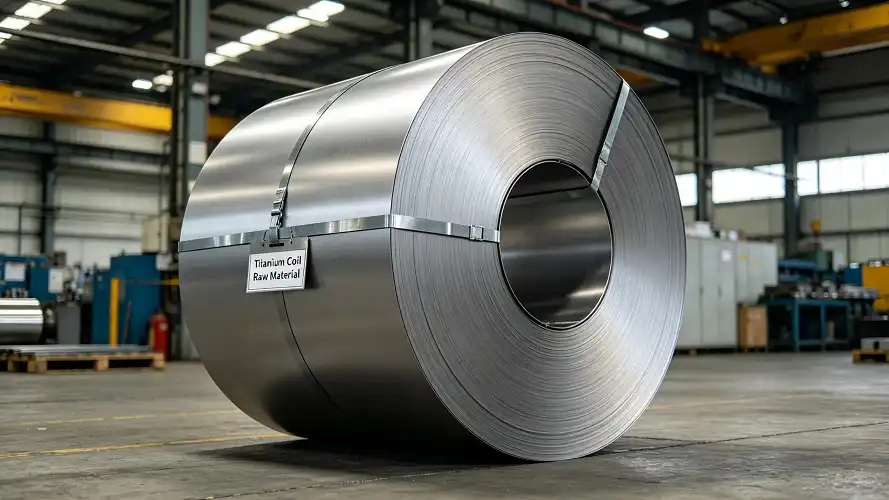
Understanding Titanium Grade 7 Plate – Composition and Properties
Chemical Composition
According to ASTM B265, the following substances are permitted in Grade 7 (UNS R52400): palladium 0.12–0.25%, iron ≤0.30%, oxygen ≤0.25%, carbon ≤0.08%, nitrogen ≤0.03%, and hydrogen ≤0.015%. Titanium is used to maintain the equilibrium of these chemicals. The quantity of palladium present in the metal is the most essential figure to verify since it is the factor that dictates not only how well it functions but also how much it costs. As long as the change is less than 0.12% Pd, the plate is almost identical to Grade 2 in terms of its composition.
Mechanical Properties
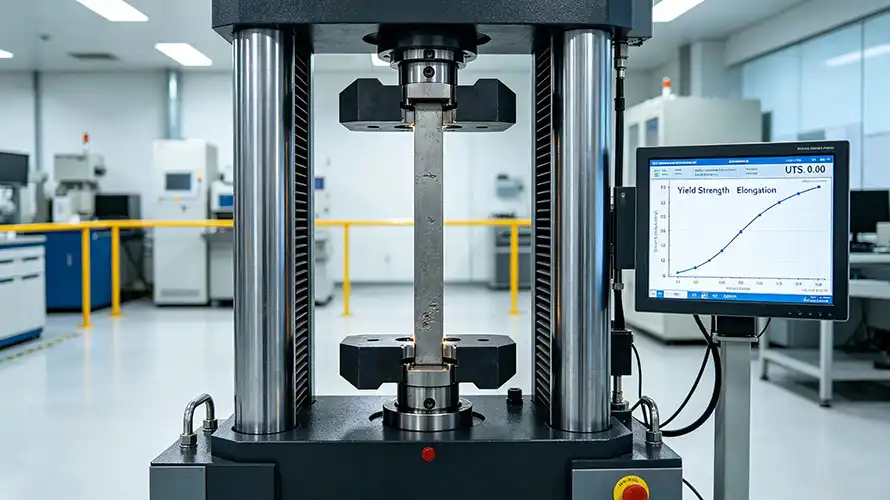
For instance, according to ASTM B265, the Ultimate Tensile Strength must be at least 345 MPa, the Yield Strength (0.2% offset) must be at least 275 MPa, and the Elongation must be at least 20%. All of these requirements must be met and exceeded. The density is about 4.51 grams per cubic centimetre. According to the technical definition, these figures are identical to those of Grade 2, which indicates that the incorporation of palladium results in improved resistance to corrosion without compromising the metal's capacity to be shaped or welded. The fabricators who build heat exchangers or pressure tank linings will find this to be a significant advantage.
Thermal and Corrosion Performance
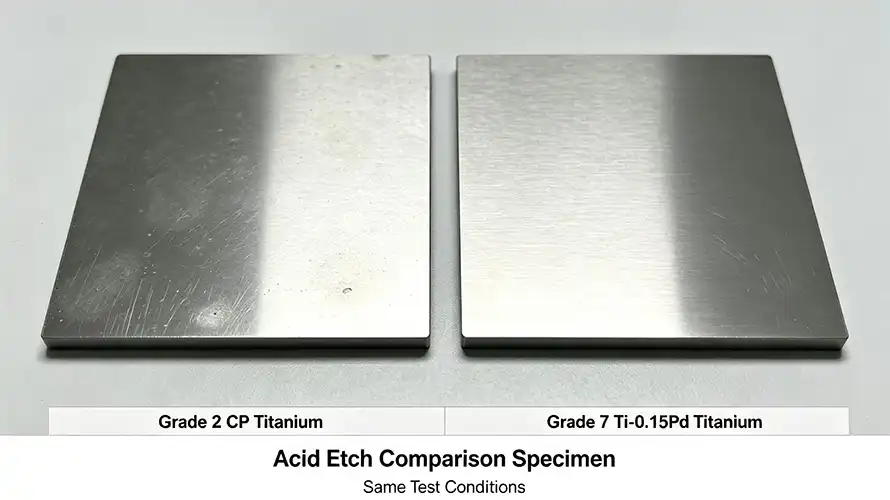
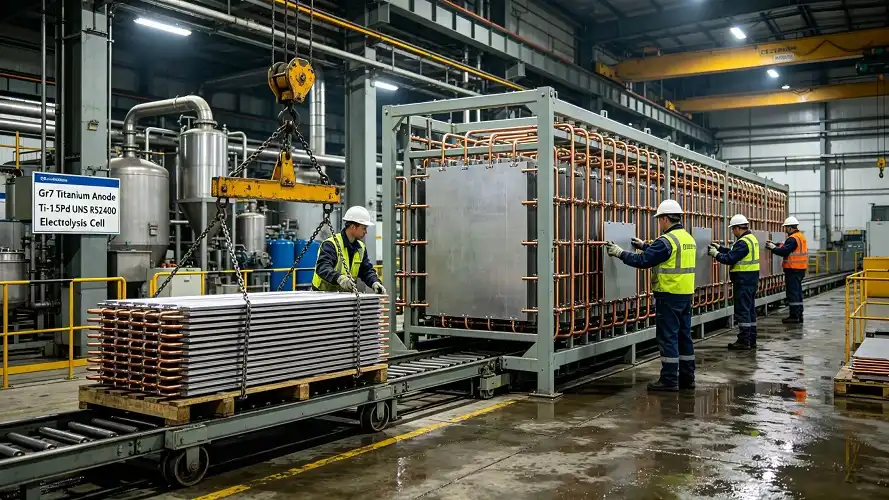
For grade 7, it functions reliably up to about 260 degrees Celsius (500 degrees Fahrenheit). Above 300 degrees Celsius causes an increase in oxidation rates, and the behaviour of creep has to be investigated under load. When combined with hot, diluted hydrochloric or sulphuric acid, which is a chloride medium with a low pH and a high temperature, Grade 7 does not corrode or pit as quickly as Grade 2 would. This is one of the reasons why Grade 7 is superior to Grade 2. In light of these characteristics, it is the material of choice for the production of chemical processing tanks, distillation components, and electrodes for hydrometallurgy equipment.
Full Inspection and the Importance of MTC for Titanium Grade 7 Plate
What an MTC Must Contain
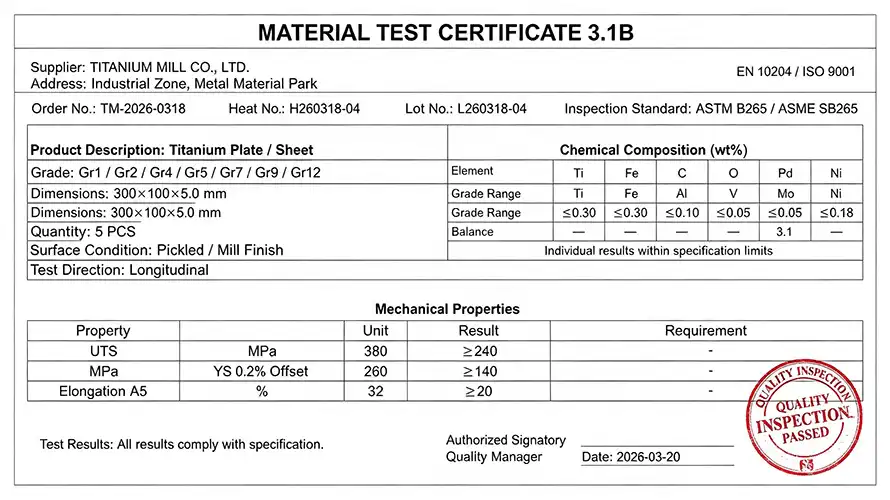
A valid MTC for titanium grade 7 plate should have the heat/lot number, the material standard (ASTM B265, AMS 4911, or ASME SB265), the stated chemical composition along with real test results, mechanical test data, and the signature of a quality representative from the mill. From the raw sponge to the finished plate, the document makes it possible to track. Without it, there is no way to check if what the supplier says is true and what the material actually has.
Key Inspection Tests
A complete inspection program should consist of five tests, which are the most critical components. This is what each one demonstrates:
- Verifies that the palladium concentration is precisely within 0.12% and 0.25%. This may be done by either ICP or OES chemical analysis. There are two approaches that are considered to be acceptable: inductively coupled plasma (ICP) and optical emission spectroscopy (OES). The Grade 7 plate is the sole method to differentiate itself from the Grade 2 plate, which is more affordable. This test is non-negotiable.
- Confirms that the ultimate tensile strength (UTS) is at least 345 MPa and the yield strength is at least 275 MPa at room temperature, therefore meeting the mechanical standards of ASTM B265.
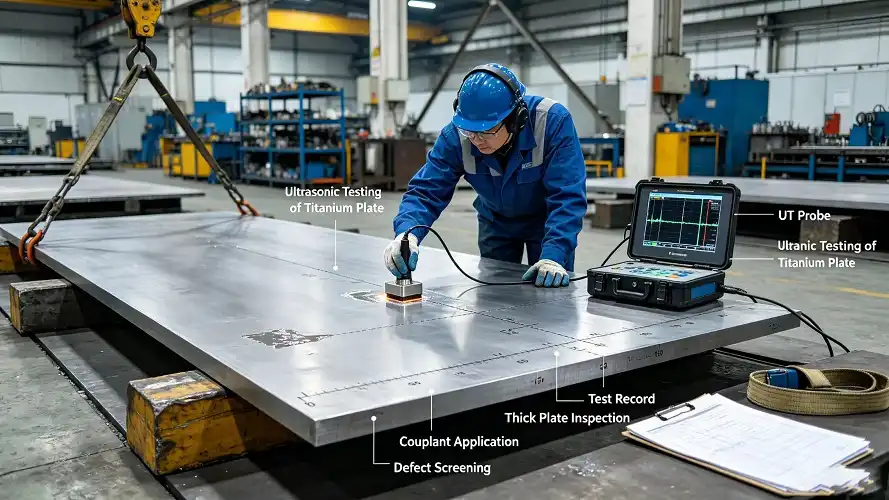
- Ultrasonic Testing (UT): This kind of testing is carried out in accordance with AMS 2631 or ASTM B898 Class A/B in order to identify any internal laminations, voids, or inclusions that may jeopardise the integrity of the pressure vessel.
- Examination of the Microstructure: Metallographic study reveals the lack of alpha-case, which is a brittle oxygen-enriched surface layer that arises as a result of inappropriate annealing. It also validates that the alpha grain structure is homogeneous and equiaxed.
- Surface Inspection and Ferroxyl Test: Visual and tactile inspections for pickling residues, scale, and iron contamination as part of the surface inspection process. An examination with ferroxyl verifies that the surface does not contain any embedded iron particles, which would cause localised corrosion if it were to be put into operation.
When all of these tests are combined, they demonstrate to procurement managers that the plate they get is compatible with the MTC that is now in their possession.
How to Read MTC Data Correctly
Compare the MTC's heat number to the mark that is stamped or stenciled on the plate. Make sure that the Pd range given is between 0.12% and 0.25%, not just "palladium present." Make sure that the test standard given meets the requirements for your buy. It is not valid if the MTC says "ASTM B265 Grade 7," but the Pd test says "0.09%." If you don't know the source mill, ask a third party to re-test it.
Comparing Titanium Grade 7 Plate with Other Grades and Materials
Grade 7 vs. Grades 2, 12, and 5
Grade 2 is technically the same as Grade 7, but it doesn't have palladium, so it doesn't work in reducing acid. Grade 12 (Ti-0.3Mo-0.8Ni) is cheaper than Grade 7 and has better resistance to crevice corrosion. However, it can't compete with Grade 7 in settings with a lot of reducing agents. Grade 5 (Ti-6Al-4V) is much stronger than Grade 7 (UTS ~950 MPa), but it is not as resistant to rust in low-pH environments and is much harder to shape and bond. Grade 7 is in a unique situation for chemical processing jobs that need both formability and acid protection.
Grade 7 vs. Stainless Steel
In places with a lot of salt or reducing acids, 316L stainless steel corrodes so quickly that the equipment needs to be replaced every three to five years. In the same setting, Grade 7 Ti plate usually lasts longer than 20 years. Even though titanium costs more at first, it usually ends up being cheaper in the long run when downtime and new work are taken into account. Compared to steel, it saves about 43% of weight, and it also means that big fabrications don't need as much structural support.
Selecting the Right Grade by Industry
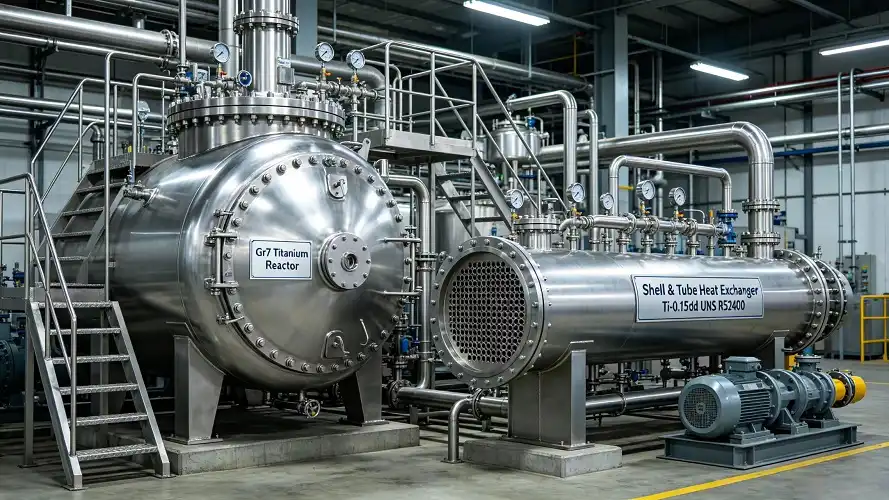
The right material choice depends on the chemicals that will be used and the amount of force that will be put on it. Titanium grade 7 plate is best for chemical reactors and electrolysis, which have a high chance of crevice corrosion. Grade 5 is for aerospace structural parts that are put under a lot of mechanical stress. Grade 2 is cheaper and works well in slightly corrosive settings. Marine heat exchangers made of Grade 12 have a cost-performance ratio that is in the middle. By matching the grade to the real service conditions, you can avoid both over-specifying and failing too soon.
Procurement Insights – Buying Titanium Grade 7 Plate with Confidence
Sourcing and Supplier Evaluation
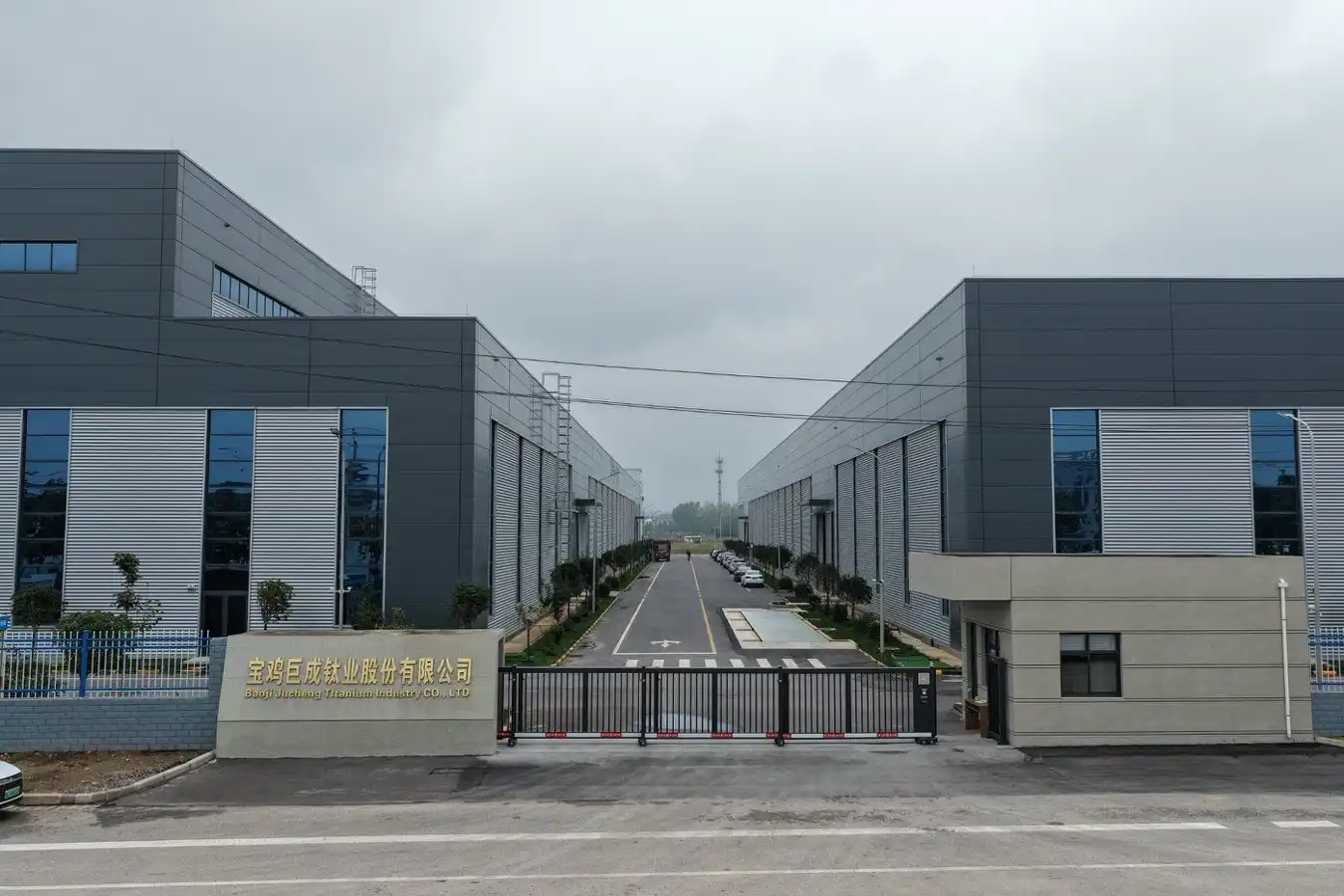
Genuine Grade 7 plates should be purchased from a vendor that is able to provide verification of complete mill tracing, records of third-party inspections, and export documentation. The majority of the world's titanium processing capacity is located in Baoji, China, which is often referred to as "China's Titanium Valley." For more than twenty years, Jucheng Titanium, which has its headquarters in Baoji, has been working with and manufacturing titanium. It has four innovation patents and forty-one utility model patents, and it maintains a supply of around three thousand tonnes of titanium throughout the whole year, which allows it to provide products in a timely manner.
Product Specifications Available
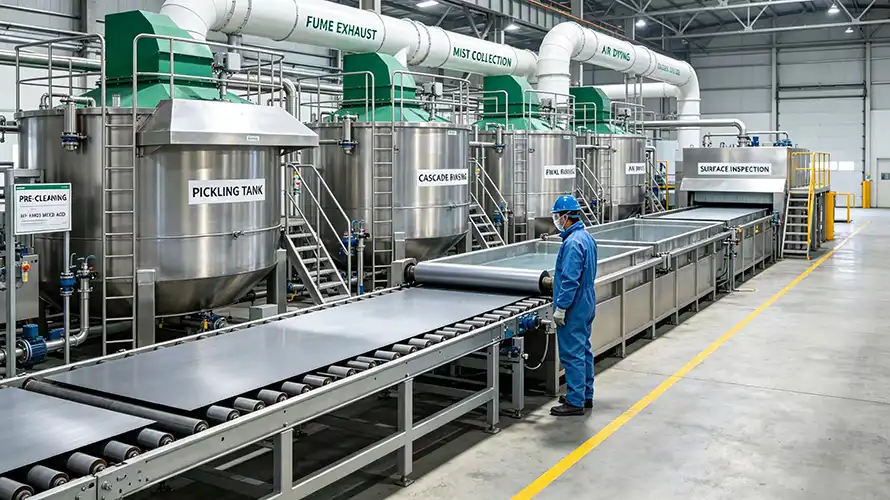
As well as Grade 7 plates, Jucheng Titanium also offers Grade 1, Grade 2, Grade 4, Grade 5, Grade 9, and Grade 12 plates. The plates are available in a variety of dimensions, including widths ranging from 950 mm to 2,500 mm, thicknesses ranging from 4 mm to 80 mm, and lengths reaching up to 10,000 mm. It is also possible to customise the sizes. Rolling, annealing, levelling, pickling, and finishing on the exterior are all processes that are performed on each plate. All plates are hot-rolled, and they arrive already annealed. In terms of the surface, you have the option of selecting a polished, machined, or acid-pickled finish. Each of the following standards, namely ASTM B265, AMS 4911, ASME SB265, and ASTM F67, is acceptable for application.
Ordering Process
In order to get a written estimate, you need to provide specifics on the grade, thickness, breadth, length, standard, and surface quality that you want. It is recommended that you get a sample of the MTC from an earlier heat before placing a bulk purchase so that you may evaluate the quality of the papers. Be sure that you are aware of the lead time, the minimum order size, and the criteria for packing, particularly with regard to exports that need seaworthy boxes.
Quality Assurance and Certifications to Look For
Applicable Standards and Certifications
In the realm of Grade 7 plate, the primary material standards that are used are ASTM B265 for sheet, strip, and plate, ASME SB265 for applications involving pressure vessels, and AMS 4911 for aerospace applications. In the event that they are questioned, suppliers should be able to demonstrate that their goods have been approved for quality control by ISO 9001 and have been certified to EN 10204 Type 3.1 or 3.2. The addition of a third-party evaluation by SGS, Bureau Veritas, or another organization of a similar kind provides an additional layer of protection for international acquisitions.
Evaluating Supplier Reliability
A trustworthy vendor will provide you with written evidence of the findings of their quality audit, provide you with a list of clients that you can check out, and allow a third party to evaluate the items before they are dispatched. Tsinghua University and the Northwest Institute for Nonferrous Metal Research are two of the organisations that Jucheng Titanium collaborates with to assist with the analysis of materials and the management of quality control. They have a market share of more than 70 percent in the hydrometallurgy industry for titanium anode plates, which demonstrates that they are capable of producing high-quality goods on a large scale despite their continuous production.
Conclusion
Titanium grade 7 plate offers a practical combination of Grade 2-level mechanical performance and significantly improved corrosion resistance in reducing and acidic environments. For procurement teams, however, selecting the correct grade requires more than comparing specifications or prices. Verifying the 0.12%–0.25% palladium content, matching the heat number to the MTC, and confirming chemical and mechanical test results are essential steps for preventing material substitution and performance risks. By choosing a supplier with traceable mill documentation, applicable ASTM/ASME standards, and reliable third-party inspection support, buyers can secure Grade 7 plate that meets both project specifications and long-term service requirements.
Frequently Asked Questions
1. What is the difference between Grade 7 and Grade 2 titanium plate?
Both grades share nearly identical mechanical properties. The key difference is that Grade 7 contains 0.12%–0.25% palladium, which extends its corrosion resistance into reducing acid environments where Grade 2 would fail. Grade 2 is the cost-effective option for mild environments; Grade 7 is specified when crevice corrosion risk is present.
2. What filler metal should I use when welding Grade 7 plate?
Use ERTi-7 filler wire per AWS A5.16. Using Grade 2 filler dilutes the palladium in the weld bead, creating a localized weak point for corrosion attack — exactly the failure mode Grade 7 is designed to prevent.
3. How do I verify palladium content in a received plate?
ICP (Inductively Coupled Plasma) or OES (Optical Emission Spectroscopy) testing are the accepted methods. PMI (Positive Material Identification) portable XRF units can provide a field screening result, but lab-based ICP is recommended for procurement acceptance.
4. Is Grade 7 plate approved for pressure vessel use?
Yes. ASME SB265 covers Grade 7 for boiler and pressure vessel applications under the ASME BPVC. Confirm the MTC cites the correct ASME standard if your application requires it.
Request a Certified Quote from Jucheng Titanium — Your Trusted Grade 7 Plate Supplier
The mechanical features of both grades are almost the same. The main difference is that titanium grade 7 plate has 0.12% to 0.25% palladium in it, which makes it more resistant to corrosion in reducing acidic conditions where Grade 2 would fail. For mild settings, Grade 2 is the most cost-effective choice. When there is a chance of crevice corrosion, Grade 7 is chosen. For Grade 7 plate specifications, MTCs, samples, or a certified quote, contact Jucheng Titanium at s4@juchengti.com.
References
1. ASTM International. ASTM B265: Standard Specification for Titanium and Titanium Alloy Strip, Sheet, and Plate. ASTM International, 2020.
2. ASM International. Titanium: A Technical Guide, 2nd Edition. ASM International, 2000.
3. Schutz, R.W., and Watkins, H.B. "Recent Developments in Titanium Alloy Application in the Energy Industry." Materials Science and Engineering: A, 1998.
4. SAE International. AMS 4911: Titanium Alloy Sheet, Strip, and Plate. SAE International, 2015.
5. Donachie, M.J. Titanium: A Technical Guide. ASM International, 2000.
6. ASME. ASME Boiler and Pressure Vessel Code, Section II, Part B: Nonferrous Material Specifications (SB-265). ASME, 2021.