
Titanium Grade 5 Seamless Tube for High-Temperature Equipment
Titanium grade 5 seamless tube is the go-to material for engineers and supply managers when they need to solve challenging high-temperature industry problems. This Ti-6Al-4V alloy tubing has the best mix of strength, resistance to corrosion, and thermal stability. It doesn't have the problems that come with welded joints. These seamless tubes are made using precise extrusion and cold rolling techniques. They keep their shape even when under a lot of pressure and heat cycling. This makes them indispensable in hydraulic systems for spacecraft, chemical heat exchangers, and power generation equipment, where failure is not an option.
Understanding Titanium Grade 5 Seamless Tube
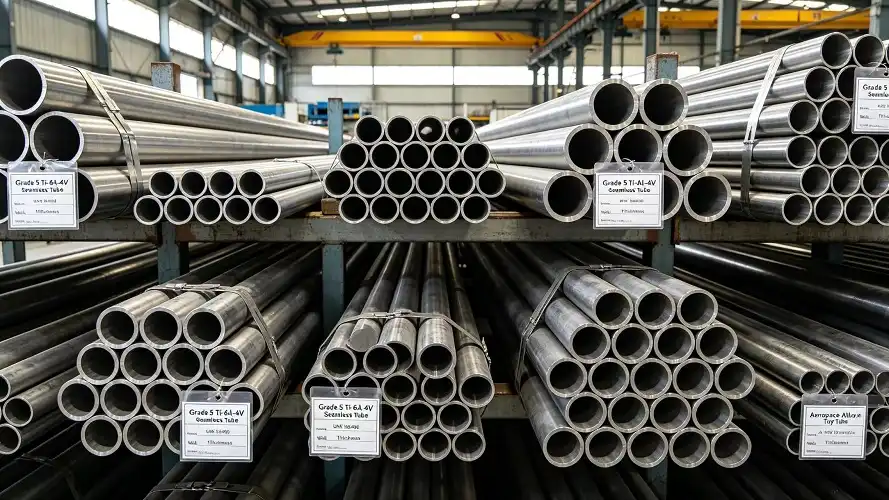
Titanium grade 5 seamless tube is the best titanium metal tubing available today. With 6% aluminium and 4% vanadium mixed in with the titanium, this Ti-6Al-4V alloy has much better mechanical qualities than pure titanium types that are sold in stores, and it also doesn't rust. The seamless construction gets rid of longitudinal weld gaps, which are common places for stress to build up and failure to happen in situations with high pressure and frequent temperature changes.
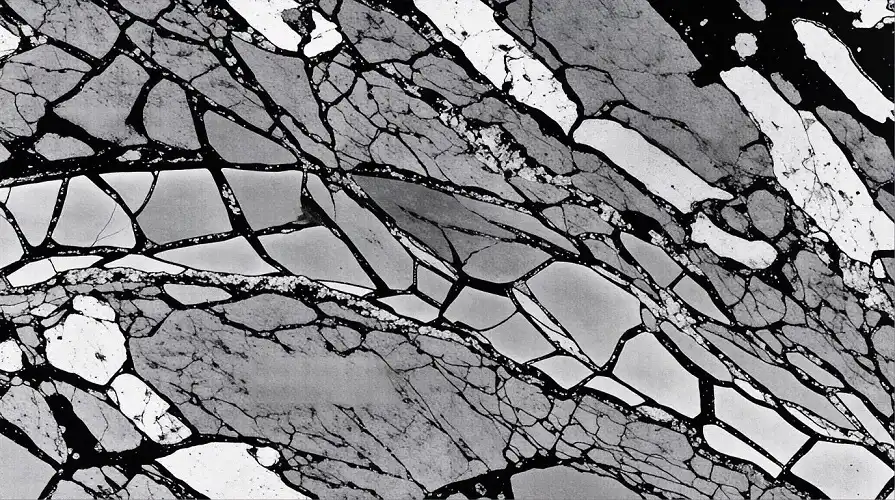
Chemical Composition and Alloy Science
The aluminium in grade 5 titanium does more than one thing. Overall density goes down, tensile strength goes up a lot, and the alpha phase transition temperature goes up. Vanadium is a beta binder that makes materials more flexible and lets heat treatments change the substructure. The amount of oxygen in the material is kept below 0.20% to prevent it from hardening and weakening too much. This exact mix of elements, confirmed by spectroscopic analysis, ensures that all output batches work the same way.
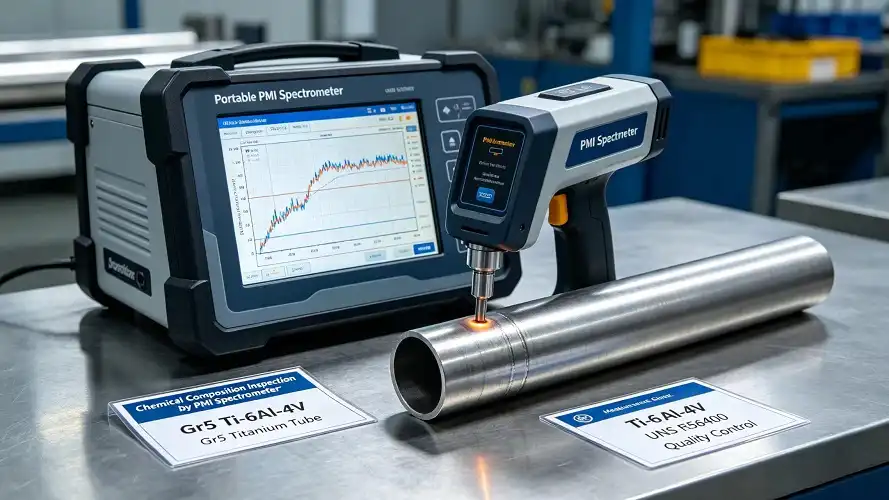
Manufacturing Process and Quality Standards
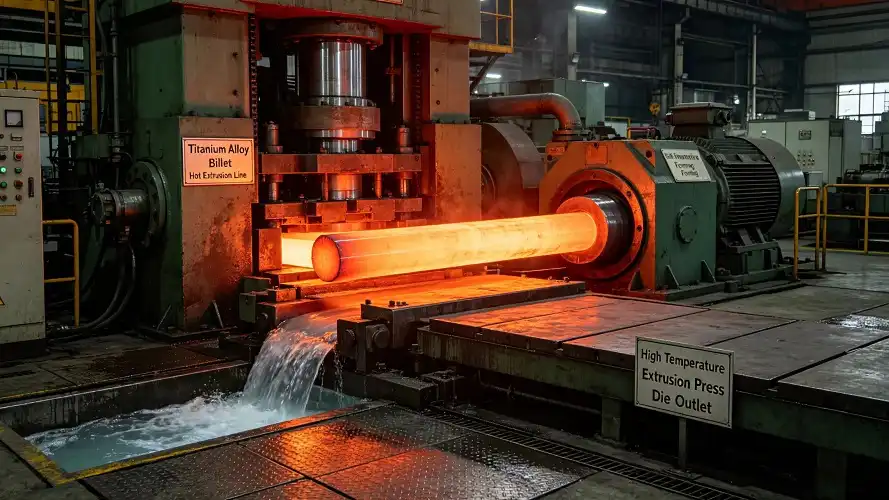
At Jucheng Titanium, we start the production process by carefully controlling the temperatures between 870°C and 980°C while hot extruding grade 5 titanium billets. The extruded tubes are then pierced to make sure the wall thickness is the same all the way through, and they are cold rolled to make sure they are the right size. At 700–790°C, annealing reduces leftover stresses and improves the microstructure. Acid pickling gets rid of surface oxides to show a clean, metal-sound surface. Following ASTM B861 and ASME SB338 standards at every step of the production process makes sure that the tubes meet international aircraft and industry standards. Sizes run from OD3 to OD219 mm, and wall thicknesses are between 0.5 and 20 mm. Custom sizes can also be made to fit specific project needs.
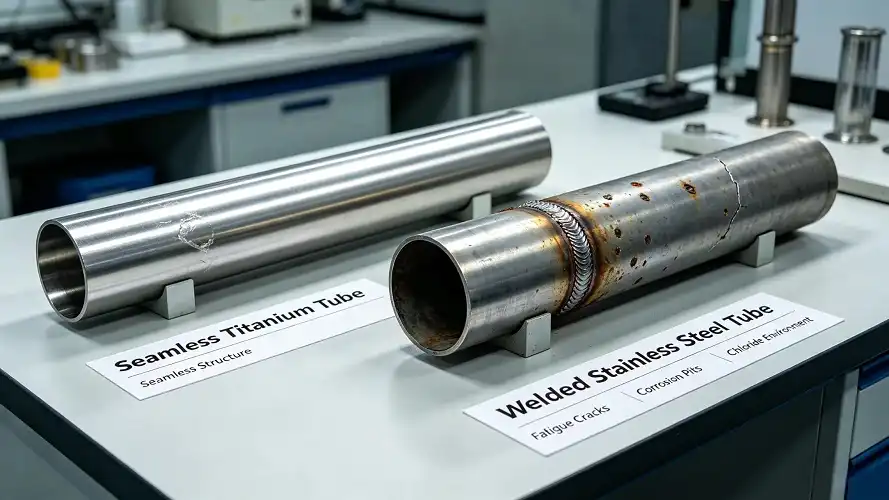
When there are pressure spikes or temperature differences, the difference between smooth and welded becomes very important. Even after a post-weld heat treatment, welded tubes still have microstructural differences in heat-affected areas that can cause stress cracks when they are loaded and unloaded over and over again. Seamless construction gives the tube wall a regular grain structure, which gets rid of this weakness and makes it last longer in harsh settings.
Performance Advantages of Titanium Grade 5 in High-Temperature Applications
At temperatures between 350°C and 400°C, titanium grade 5 seamless tubes keep working reliably. This is at a temperature range where many stainless steels start to oxidise and lose strength quickly. The alloy creates a protected layer of titanium dioxide that stays solid and stuck on even after being heated and cooled many times. This stops the component from corroding over time, which shortens its life.
Mechanical Strength Under Thermal Stress
The tensile strength is always higher than 895 MPa, and the yield strength is higher than 828 MPa, even after being exposed to high temperatures for a long time. This ability to keep its strength is very important in aircraft hydraulic lines that work at system pressures of 3000 to 5000 psi, because a tube burst could cause the control system to fail completely. The 113.8 GPa elastic modulus of the material makes it rigid enough to keep it from deflecting too much, and the 4.43 g/cm³ density makes the whole system lighter, which is very important in aircraft and racing uses.
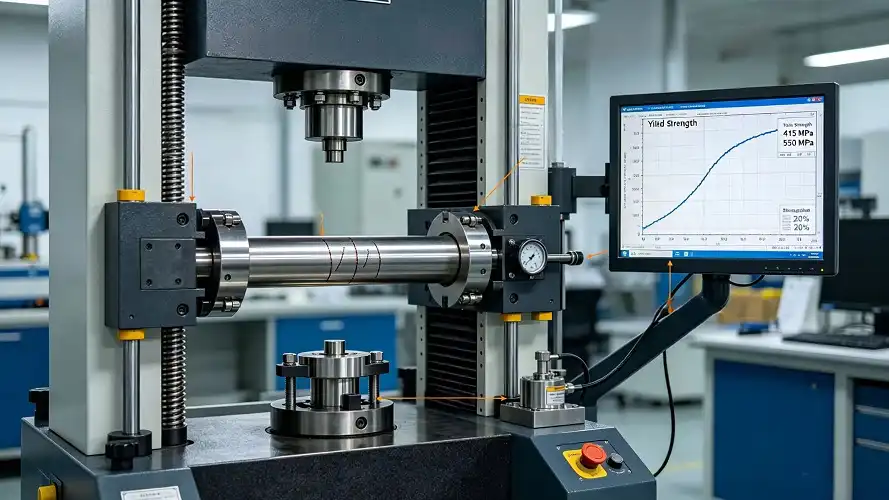
Another important benefit is that it doesn't cause fatigue. Laboratory tests show that grade 5 seamless tubes can survive more than a million stress cycles at 60% of their maximum tensile strength. This is much better than welded tubes, which crack more quickly because of the weld zone inclusions and microstructural discontinuities. This fatigue resilience is especially helpful for chemical handling equipment that has to deal with changes in pressure and sudden changes in temperature.
Corrosion Resistance in Aggressive Environments
In chemical plants, chlorides, acids, and reactive compounds are common things that damage high-temperature equipment. Titanium grade 5 doesn't react with most of these substances, so the wall thickness and mechanical qualities stay the same. Stainless steel 316L, on the other hand, would split or crack due to stress corrosion. The smooth construction gets rid of the cracks that come with weld beads, which lowers the risk of rusting even more in certain areas. We use heat treatment methods that improve the spread of the alpha and beta phases, which makes the material more resistant to rust and stronger at the same time.
Comparative Assessment: Titanium Grade 5 Seamless Tubes vs Alternatives
To choose the right materials for tubes, you need to know the pros and cons of each alloy and production method. Titanium grade 5 seamless tubes are in a certain performance area because they are strong, light, and resistant to rust.
Grade 5 Versus Other Titanium Alloys
Commercially pure grades, such as Grade 2, are better at resisting rust and are easier to shape cold, but they aren't strong enough for high-pressure uses. With a tensile strength of about 345 MPa, Grade 2 tubes need thicker walls to get the same pressure values, which takes away any weight benefits. Grade 9, which has 3% aluminium and 2.5% vanadium, is an average choice with average strength and better formability than grade 5. However, it is not good enough for uses that need the highest strength-to-weight ratios.
Medical device makers sometimes pick Grade 23, which is an extra-low interstitial version of Grade 5, for internal parts that need to be very flexible and hard to break. For medical tools and high-temperature sterilisation gear, on the other hand, standard grade 5 seamless tubes work better mechanically and are biocompatible enough.
Titanium Versus Stainless Steel and Nickel Alloys
Because it costs less, stainless steel 316L is still often used in chemical equipment. But at 8.0 g/cm³, its density is almost twice that of titanium, which makes it hard to build with and install. More importantly, chloride-containing conditions above 60°C make austenitic stainless steels more likely to crack from stress corrosion, but titanium doesn't get damaged. Nickel-based metals, such as Inconel 625, are very strong at high temperatures and don't rust. However, they have very high densities (8.4 g/cm³) and cost a lot more than titanium. Titanium's higher cost is justified by its long lifespan value in weight-sensitive uses in aircraft and offshore platforms.
The argument over whether something is smooth or welded goes beyond titanium and includes all high-performance metals. Fusion welding can cause metallurgical inconsistencies that can't be fixed with seamless construction. This is especially important for aircraft uses where qualification testing and tracking standards make welded parts very expensive. Our seamless tubes come with full material certifications that can be tracked back to the original mill heat numbers. This meets the standards for AS9100 and NADCAP audits.
Procurement Guide for Titanium Grade 5 Seamless Tubes
When looking for titanium grade 5 seamless tubes strategically, you need to pay attention to what the suppliers can do, how long the wait times are, and the total cost, which goes beyond the initial price.
Evaluating Supplier Qualifications
Reputable makers keep licenses that show they know how to control quality. ISO 9001 is a general standard for quality systems, while AS9100 is more focused on the needs of the aerospace industry, covering things like configuration control and tracking. Our factory in Baoji, which is known as China's Titanium Valley, has these certificates and is recognised as a national-level specialised business. We've been processing titanium for more than 20 years and have come up with our own techniques that improve yield rates and the accuracy of dimensions. Customers benefit from these techniques because they help us offer lower prices and shorter wait times.
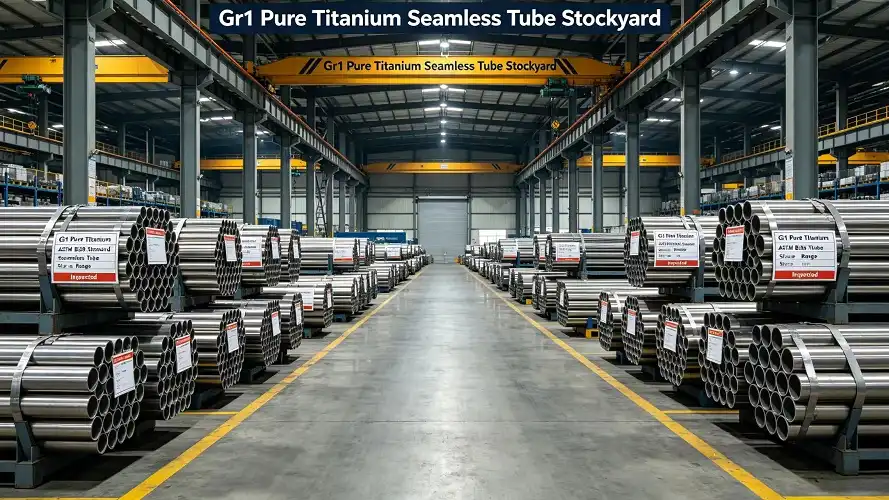
Delivery times are greatly affected by the amount of inventory that can be held. We keep about 3,000 tons of titanium in stock, which lets us fill pressing orders within days instead of the usual 6 to 12 weeks that mills need. This ability to respond quickly is useful when equipment breaks down, and new parts need to be sent out quickly or when project deadlines get squished out of the blue.
Direct Manufacturing Versus Distribution Channels
When you buy directly from makers like Jucheng Titanium, you avoid the markups that distributors add on top of the price, and you can get technical help throughout the whole process. Our expert team helps you choose the right material, looks over your application needs, and suggests the best tube specs based on how it will be used. Working directly with production sites makes it easier to handle calls for custom sizes, whether they are for odd shapes or exact lengths.
Distributors are helpful for buyers who need small amounts of standard sizes or who would rather have packages of multiple materials bundled together. But direct connections with manufacturers are very helpful for big projects, custom specifications, and uses that need material test results. Minimum order numbers depend on the size and specifications of the item. We can handle research quantities for developing prototypes and offer large savings for production orders.
Pricing Dynamics and Long-Term Value
The prices of raw titanium material change based on supply and demand around the world. This makes the final product costs less stable at times. For projects that last more than one year, budget certainty is provided by long-term supply deals with price changes based on public indices. Lifecycle costs are more than just the original buying price. In acidic service, grade 5 seamless tubes often last two to three times longer than stainless steel options. This means they don't need to be replaced as often, and the costs associated with unplanned downtime are lower. The lighter equipment means less support for the structure is needed, and, in aerospace uses, better fuel economy over the life of the equipment.
Case Studies and Application Examples in High-Temperature Equipment
Installing titanium grade 5 seamless tubes in the real world shows how useful they are in many different fields.
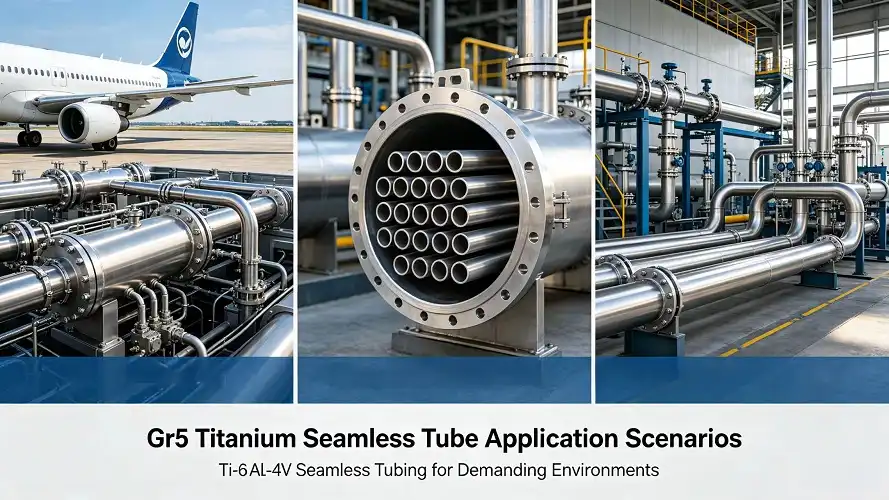
Aerospace Hydraulic Systems
In systems for controlling surface actuation, a major aeroplane maker switched from stainless steel hydraulic lines to our seamless grade 5 tubes. Each plane's range and cargo ability got better because it lost 45% of its weight. More importantly, the seamless tubes got rid of the leaks that happened a lot with welded tube setups because the join porosity caused pressure loss over time. After five years of use and millions of flight hours, checks showed no signs of wear, cracking, or corrosion, proving that the choice of materials was the right one.
Chemical Process Heat Exchangers
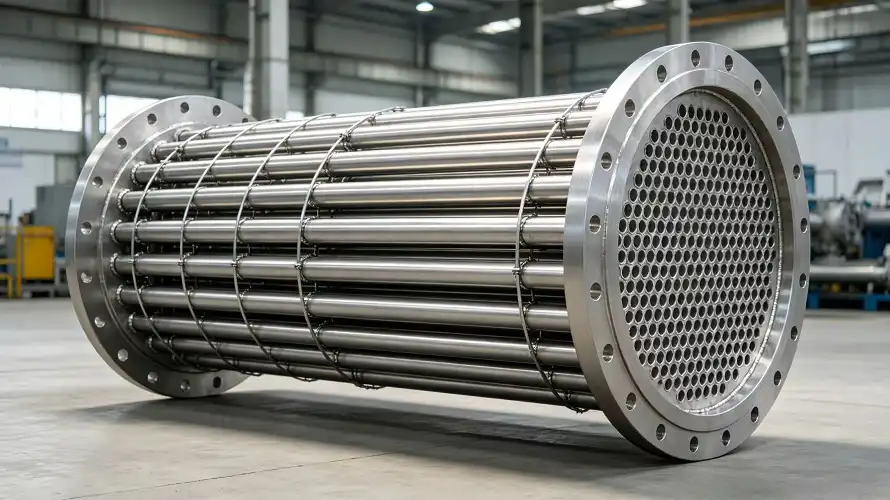
A petrochemical plant that works with sour crude oil streams asked us to supply new heat exchanger tube bundles made of our grade 5 seamless tubes. The aggressive hydrogen sulphide environment at high temperatures had caused older stainless steel tubes to break too soon through sulphide stress cracks. Because titanium doesn't fail in this way, repair times were pushed from 18 months to over five years, which greatly reduced production stops. Because the fitting went so well, titanium tubes were ordered for more than one process unit.
Power Generation Applications
High-temperature brines with chlorides and dissolved gases make the working conditions at geothermal power plants very difficult. In these setups, seamless grade 5 tubes are used as instrument lines, sample systems, and small heat exchanger cores. When combined, thermal stability and rust resistance make it possible for safe operation in temperatures up to 300°C and pH levels ranging from 2 to 11. New concentrated solar power plants are using titanium tubes in heat transfer systems more and more, even though the working fluid temperatures are getting close to the material's service limits.
These applications share common requirements that grade 5 seamless tubes uniquely satisfy: simultaneous demands for strength, corrosion-resistant titanium pipe, low weight, and long-term dependability in places where upkeep is hard to get to or not possible at all. New technologies, such as additive manufacturing, show promise for making complicated titanium shapes, but for cheaply making circular parts, seamless tube extrusion is still the best choice.
Conclusion
Titanium grade 5 seamless tubes work better than any other material in harsh environments with high temperatures, high pressures, and corrosion, where a broken part could have serious effects. Its makeup of Ti-6Al-4V gives it great strength-to-weight ratios and keeps its corrosion protection in a wide range of chemical conditions. Seamless construction gets rid of the problems that come with welds, so the product lasts longer and is more reliable than soldered options. Strategic buying from experienced makers guarantees the quality of the materials, that they meet all certification requirements, and that you will get the expert help you need for mission-critical apps. As the aircraft, chemical processing, and energy generation industries continue to push the limits of performance, smooth grade 5 titanium tubing is still the best choice for tough jobs where other materials fail.
FAQ
1. What temperature range can grade 5 seamless tubes withstand?
Grade 5 titanium can be used continuously at temperatures between 350°C and 400°C without losing its structural integrity or tensile qualities. Short trips up to 500°C are fine, but long-term contact at this temperature speeds up the warping process. Specialised high-temperature titanium alloys may be needed for applications that involve higher temperatures.
2. How does seamless construction improve tube performance compared to welded tubes?
Seamless tubes don't have a lengthwise weld line, which could be a place where a failure starts. Welded tubes have metallurgical defects in heat-affected areas where the grain structure is different from the base material. This causes stress clusters when pressure is applied or the temperature is changed. Titanium grade 5 seamless tubes have the same qualities all the way through the wall, which increases their wear life and pressure capacity.
3. Can grade 5 seamless tubes be bent or formed after manufacturing?
Because Grade 5 is not as flexible as widely pure titanium grades, it is hard to bend cold without breaking. For bending, you usually use large radii, which are typicallye usually three to five times the width of the tube, or hot-forming methods. Our engineering team can help you decide on the right making parameters or give you tubes that are already bent to your exact specs.
4. What certifications should buyers verify when sourcing these tubes?
Each shipment should come with a material test record that lists the chemical makeup, mechanical qualities, and heat treatment conditions. For aerospace uses, you need AMS 4942 or a standard that is the same or similar, with full tracking to the original mill heats. Compliance with ASTM B861 is enough for most industry uses. Quality standards for suppliers, such as ISO 9001 and AS9100, give you even more peace of mind.
Partner With a Trusted Titanium Grade 5 Seamless Tube Supplier
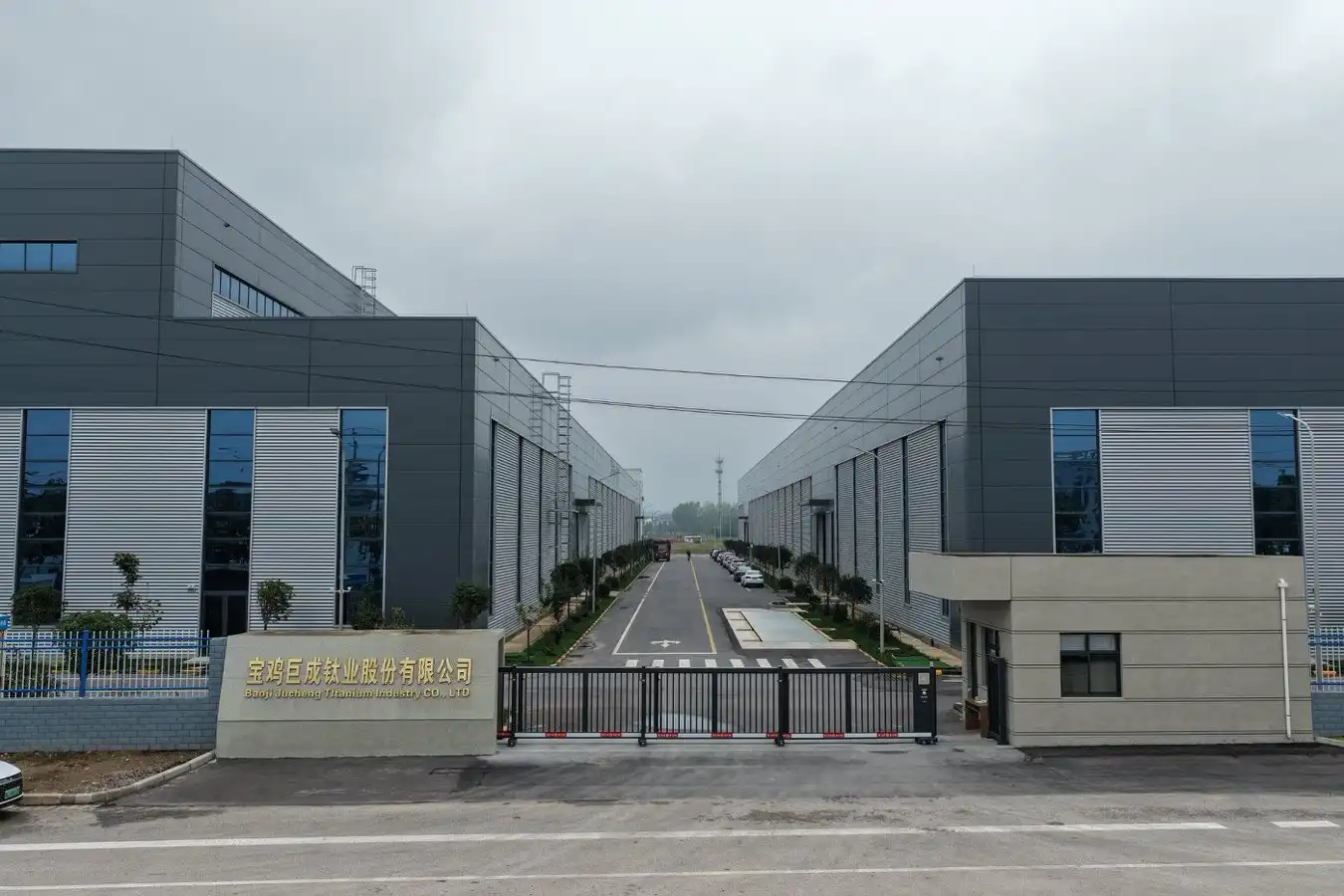
Jucheng Titanium can help you with your most difficult high-temperature equipment jobs because they have 20 years of experience handling titanium. As a nationally known high-tech company and specialised business at the national level, we maintain strict quality control throughout the entire manufacturing process, from checking the raw materials to performing the final inspection. Our building is 120,000 square metres and has high-tech cold rolling and extrusion equipment that makes titanium grade 5 seamless tubes that always meet ASTM B861, AMS 4942, and ASME SB338 standards. With a stock of about 3,000 tons of titanium, we can quickly meet both immediate replacement needs and planned projects. From helping clients choose the right materials to making sure they are installed correctly, our engineering team works together with clients to make sure that hydraulic systems in aircraft, tools used in chemical processing, and power generation all work at their best. Contact our specialists at s4@juchengti.com to discuss your requirements and find out how our custom manufacturing can meet your unique shipping, certification, and size needs.
References
1. American Society for Testing and Materials. "ASTM B861: Standard Specification for Titanium and Titanium Alloy Seamless Pipe." ASTM International, 2019.
2. Boyer, R., Welsch, G., and Collings, E.W. "Materials Properties Handbook: Titanium Alloys." ASM International, Materials Park, Ohio, 1994.
3. Donachie, Matthew J. "Titanium: A Technical Guide, 2nd Edition." ASM International, 2000.
4. Lütjering, Gerd, and Williams, James C. "Titanium, 2nd Edition: Engineering Materials and Processes." Springer-Verlag, Berlin, 2007.
5. SAE International. AMS 4942: Titanium Alloy, Seamless Tubing 6Al-4V, Annealed. SAE Aerospace Material Specification, 2018.
6. Schutz, R.W., and Watkins, H.B. "Recent Developments in Titanium Alloy Application in the Energy Industry. " Materials Science and Engineering A, Vol. 243, 1998.