
Titanium Sheet Weight Calculation Formula Guide
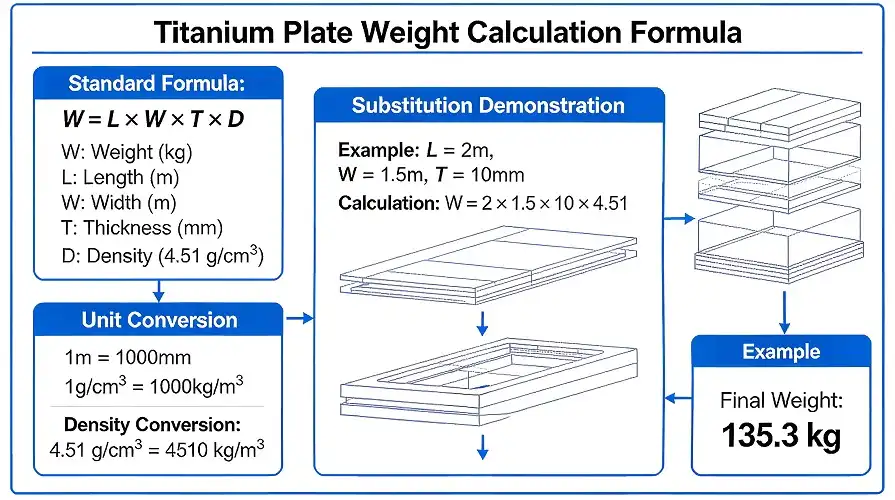
It is very important to get the weight of CP titanium sheet right when planning purchases, making budgets for transportation, and specifying materials in industries like aircraft, chemical processing, and industrial manufacturing. Weight (kg) = Density (g/cm³) × Length (m) × Width (m) × Thickness (mm) × 1000. This is the standard formula. Titanium that is sold commercially has a density of 4.51 g/cm³, but this can be a little different between grades because of the amount of oxygen and iron in them. When buying, managers understand this figure; they can accurately predict costs, make the best use of shipment loads, and avoid costly material shortages or overstocks during big projects.
Understanding the Basics of CP Titanium Sheets
What Defines Commercially Pure Titanium Sheets?
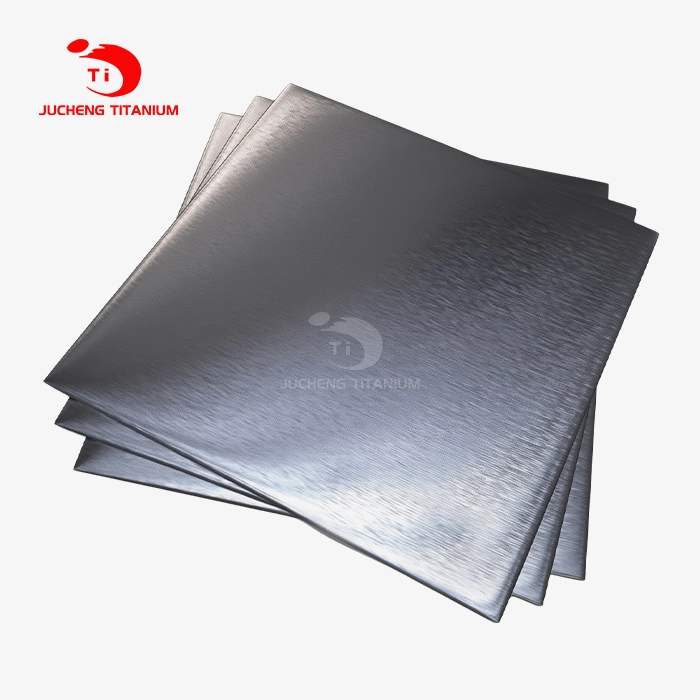
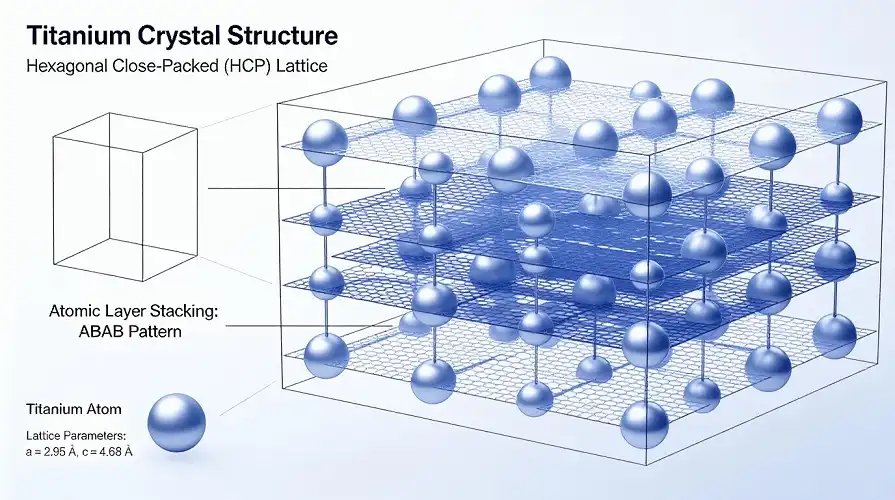
Pure titanium sheets for sale are flat-rolled, unalloyed titanium goods that have a single-phase alpha microstructure. Unlike alloyed titanium like Ti-6Al-4V (Grade 5), CP titanium sheet puts excellent resistance to rust, shapeability, and flexibility ahead of high tensile strength. The material's purity, which is mostly determined by how much oxygen, iron, nitrogen, and carbon are present, has a direct effect on both its mass and its mechanical features. This makes CP titanium sheet perfect for uses that need chemical stability in harsh conditions, such as seawater that is high in chloride, nitric acid, or high temperatures where oxygen is being released.
Common Grades and Their Composition
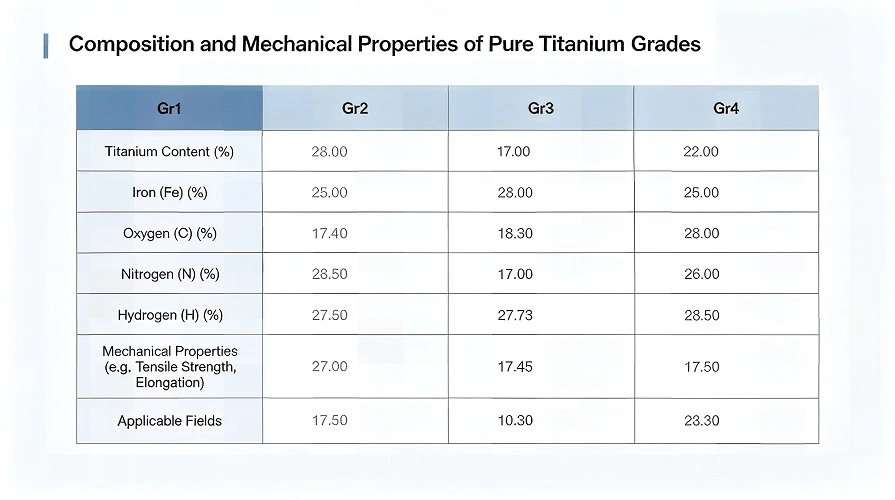
The most common grades are Gr1, Gr2, Gr4, and Gr7, which are all different based on the amount of intermediate elements they contain. The lowest amount of oxygen in Grade 1 is below 0.18%, which makes it better for cold shaping and makes it softer enough for deep drawing. Grade 2 is often called the "workhorse" of the industry because it has a slightly higher yield strength (about 275 MPa) and good flexibility because the oxygen content is reduced to 0.25%. Grade 4 is stronger because it has more intermediate content, and Grade 7 has palladium added to it to make it more resistant to reducing acids. Grade 5 (Ti-6Al-4V) is an alpha-beta alloy that has vanadium and aluminum added to it. It is much stronger than CP grades but not as resistant to rust.
How Material Properties Influence Weight and Density
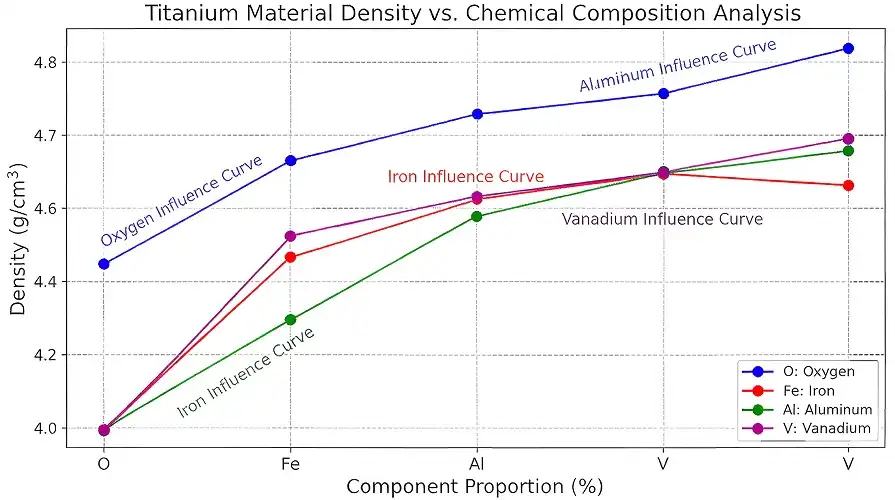
The density of CP titanium sheet stays pretty fixed across grades, staying around 4.51 g/cm³. However, there are small changes that can happen depending on the exact makeup and how it is processed thermally and mechanically. Oxygen presence does two things: it makes the material stronger through solid solution stiffening, but it also makes it less flexible. Conditions of heat treatment, especially annealing temperatures and cooling rates, can change grain structure and residual stress in very small ways. However, these changes rarely affect mass density more than a few percent. People who work in procurement should know that grade choice has a big effect on mechanical performance, formability, and corrosion behavior in service settings, but density stays the same for weight estimates.
Titanium Sheet Weight Calculation Formula and Application
Breaking Down the Core Formula
Weight (kg) = Density × Volume is the basic math for figuring out the weight of a CP titanium sheet. For a flat sheet, this means that the weight (kg) is equal to 4.51 g/cm³ times the length (m) times the width (m) times the thickness (mm) times 1000. This formula works with metric values and takes into account density measured in grams per cubic centimeter. Precision is very important. Engineers have to make sure that the measures they use match the real sizes of the material after it has been processed, since hot-rolled goods can have tolerances that can cause variations. Thicknesses usually run from 4mm to 80mm, widths from 950mm to 2500mm, and lengths up to 10,000mm. Customization is possible to meet the needs of each project.
Practical Industry Applications
Think about a company that makes parts for airplanes that needs to find a Grade 2 CP titanium sheet that is 2000 mm long, 1200 mm wide, and 6 mm thick. Putting it all together, 4.51 x 2.0 x 1.2 x 6 x 1000 = 65.0 kg. The procurement team can confidently figure out freight costs, decide what handling tools they need, and plan their budget for material prices when they have accurate weight estimates. Chemical processing companies that order large-format sheets for reactor lining also benefit. For example, a 2500mm × 1500mm × 10mm panel weighs about 169.1 kg, which helps them figure out how much of a crane they need and how to plan their installation. Marine engineering projects that need corrosion-resistant plating can predict the total tonnage of materials across multiple parts. This makes shipping planning easier and lowers the risk of supply chain uncertainty.
Unit Conversion and Measurement Standards
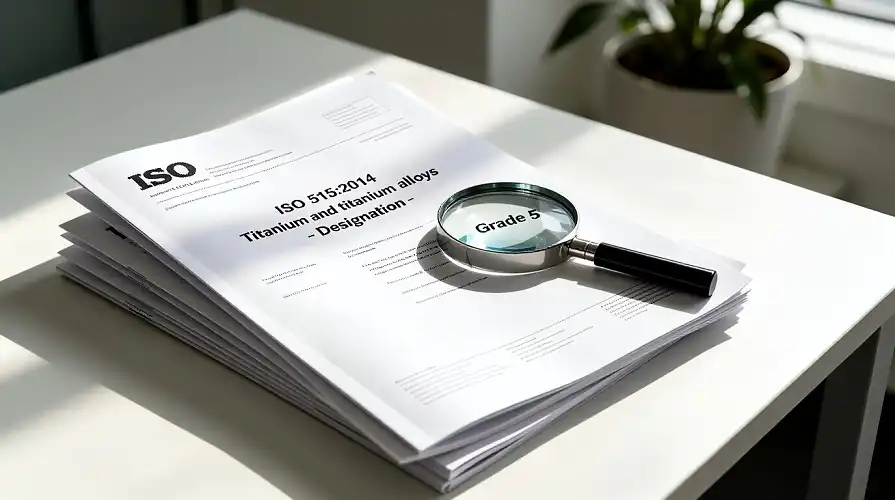
The mechanical qualities and size limits for CP titanium sheet are set by international standards such as ASTM B265, ASTM F67, AMS 4911, and ASME SB265. To avoid expensive mistakes in calculations, procurement papers should clearly list measurement units. For example, mixing imperial and metric systems often leads to mistakes. When sellers say the width in inches instead of millimeters, conversion factors must always be used. Knowing how to read the standard thickness charts that makers put out helps buyers choose easily available sizes instead of custom sizes, which cuts down on costs and wait times. The surface of hot-rolled sheets is usually a little rougher than the surface of cold-rolled sheets, but acid pickling, sanding, and grinding can be used to get the desired surface qualities.
Comparing CP Titanium Sheet with Other Materials for Weight Considerations
Weight Differences Between Titanium Grades
Even though Grade 5 titanium metal is almost twice as strong as Grade 2, it has the same density of 4.43 g/cm³, making it only slightly lighter than cp grades. The change in weight between a Grade 2 and a Grade 5 sheet of the same size is still very small, usually less than 2%. When choosing between these materials, mechanical needs and rust conditions are more important than weight reduction for a CP titanium sheet. With the addition of palladium, Grade 7 doesn't change much in density, even though it is more resistant to reducing acids. This makes it the best choice for chemical processing tasks where durability is more important than weight.
Titanium Versus Stainless Steel and Other Alloys
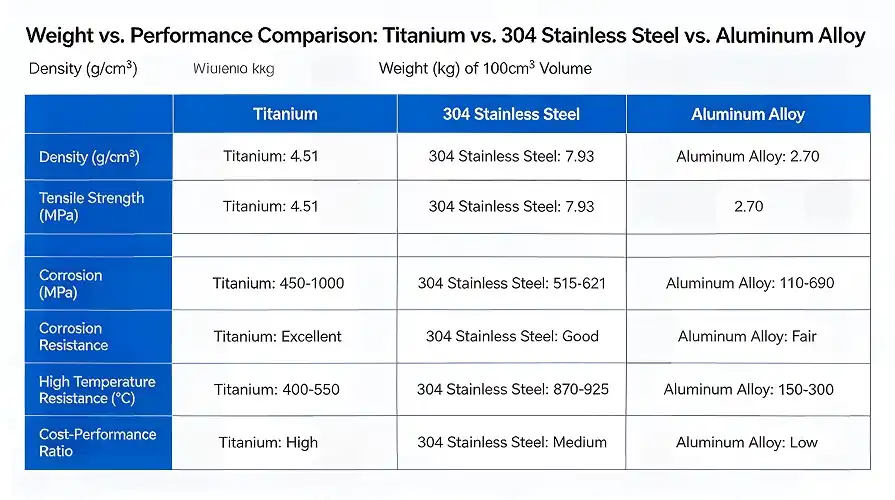
When you compare CP titanium sheet to 316L stainless steel, you can see that titanium is much lighter. Titanium has a density of 4.51 g/cm³, while stainless steel has a density of 8.0 g/cm³. This means that for the same size, titanium is 44% lighter. This decrease immediately leads to lower transportation costs, fewer support needs for structures, and better fuel economy in aerospace uses. While aluminum metals are lighter (about 2.7 g/cm³), they aren't as good at resisting corrosion and working well at high temperatures, which is why CP titanium sheet is better for harsh conditions. Copper-nickel metals are often used in naval heat exchangers, but they are much heavier (8.9 g/cm³) and can't resist chloride stress corrosion cracking like titanium can.
Performance Trade-offs and Cost Implications
When choosing a material, it's not enough to just look at its weight; you also need to think about its lifetime costs, upkeep intervals, and operating reliability. When you bond a titanium layer to carbon steel supports, you get titanium-clad plates, which are a middle ground that protects against corrosion while using less material than a solid titanium building. When procurement experts are looking at different options, they have to compare the original costs of materials with the costs of equipment breakdowns, replacement cycles, and downtime. A chemical reactor lined with Grade 2 CP titanium sheet might cost more up front than one made of stainless steel, but it won't need to be replaced as often because of rust, so it has a lower total cost of ownership over a longer period of time.
Procurement Insights: Sourcing and Ordering CP Titanium Sheets Based on Weight
Optimizing Bulk Orders Through Accurate Weight Estimation
Accurate weight estimates are the basis of buying strategies that save money. When buyers order more than one CP titanium sheet, the packages are combined, which lowers the cost of freight per unit through economies of scale. When a dealer buys 50 sheets that are 2000 mm x 1000 mm x 8 mm and weigh a total of 3,608 kg, they can negotiate better shipping rates and make handling the sheets easier. Customized sizes need careful planning, as lead times for non-standard sizes can go up to 18 months, depending on how busy the mill is making things. Keeping in touch with suppliers who keep a lot of titanium on hand (like facilities that store 3,000 tons of titanium all year) gives you access to rapid supply for projects that need to be done right away. This lets you balance the need for customization with the need for quick delivery.
Evaluating Supplier Certifications and Quality Assurance
When you buy CP titanium sheet, you have to make sure that the material has the right certifications, test results, and meets standards like ASTM B265 and ASME SB265. Reliable providers give full tracking paperwork, such as certificates for dimensional checking, chemical composition analysis, and mechanical property tests. Purchasing managers should give more weight to sellers who have well-established quality management systems, preferably ones that are ISO 9001 certified and have experience working with companies that make aerospace, defense, or medical devices. Companies that have been handling titanium for more than 20 years can help buyers choose the right material by giving them professional advice on things like grade comparisons, surface treatment choices (polished, machined, acid pickled), and the effects of different processing methods (rolling, annealing, leveling).
Logistics Considerations for Heavy Sheet Materials
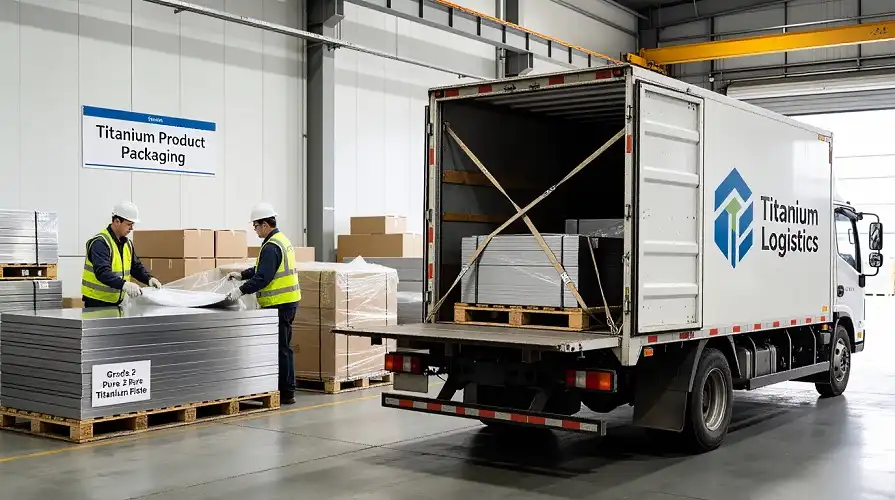
Transportation issues have a big effect on the total cost of purchase, especially for sheets that are thicker than 50 mm. A single 2500mm x 1500mm x 80mm Grade 2 panel is about 1,353 kg, so it needs special tools to move and stronger packing to keep it from getting damaged in shipping. International shipping adds another layer of complexity. Ocean freight costs are directly related to bulk weight, which encourages buyers to place the largest orders possible. Trucking laws in the United States set weight limits that affect how loads are arranged. Logistics are handled by experienced sellers who offer consolidated packages, custom crating, and delivery times that work with the buyer's ability to receive. Creating long-term relationships with makers that keep their North American distribution networks up and running cuts down on wait times and makes it easier to file paperwork across borders.
Technical Tips and Best Practices for Handling CP Titanium Sheets
Processing Effects on Material Properties
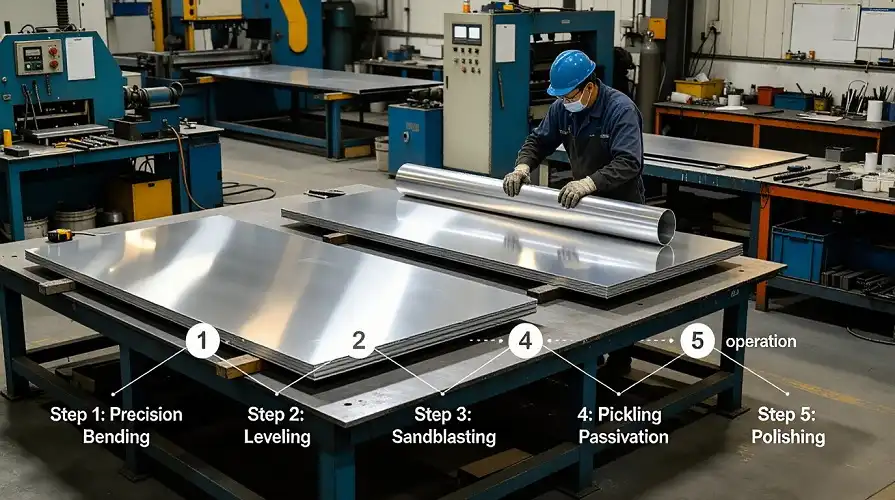
To avoid oxygen, nitrogen, and hydrogen from getting into the air while welding CP titanium sheet, which weakens the welds and lowers their resistance to rust, strict atmospheric control is needed. Argon gas protection on both the weld face and the root side keeps the metal pure during fusion. After cold forming, heat treatment, usually stress-relief annealing at 480°C to 595°C, gets rid of any remaining stresses that could cause breakdowns through delayed breaking or stress corrosion. Machining makes a lot of heat, so you need sharp cutting tools, enough cooling flow, and slower cutting speeds than when you're cutting steel. Acid pickling is a surface finishing method used to get rid of scale on hot-rolled sheets. Mechanical polishing creates mirror finishes for uses that need to look good or be easier to clean, like in pharmacy equipment.
Application-Specific Material Selection Guidelines
Marine settings benefit from Grade 7's palladium content when it comes to reducing acids, but Grade 2 is fine for most uses in waters with acidic conditions. Titanium is used in automotive exhaust systems because it is light and doesn't oxidize at high temperatures. Thinner sizes (4mm to 6mm) are usually specified to reduce weight even more. Chemical processing companies that line reactors with CP titanium sheet, like bigger sections (12mm to 25mm), because they are more resistant to changes in internal pressure and sudden changes in temperature. Medical device makers expect full material certifications that can be traced back to specific mill heats and safe grades with strict purity controls. By knowing these details, buying teams can choose the right grades, sizes, and processing states for the situations they want to use them in.
Maintaining Material Integrity Through Fabrication
When cold forming CP titanium sheet, you need to think about the bend radius in relation to the thickness. For Grade 2, the minimum radius is usually three times the thickness of the material, but Grade 1 is more flexible and can handle smaller turns. Too much cold work can make the material too hard, which could mean that it's stronger than what's acceptable and less easy to shape in later steps. Fabricators should keep track of the total pressure and use annealing processes in between when needed. The way you store something is important because titanium easily takes in hydrogen in damp places with chlorides, which can weaken it. Good inventory management keeps things dry and free of contamination, protecting their qualities from the time they are delivered until they are installed. Quality control checks make sure that the dimensions are within the allowed range, the surface is finished to the right standards, and there are no flaws like laminations or gaps that could weaken the structure.
Conclusion
Learning how to figure out the weight of titanium sheets gives buying workers in the aerospace, chemical processing, and industrial manufacturing sectors the tools they need to find the best materials, keep costs down, and make sure their project plans are accurate. The simple formula—multiplying density by dimensional volume—is useful for getting started, but to be good at buying a CP titanium sheet, you need to know more about grade selection, source qualifications, and handling issues. When you compare CP titanium sheet to other materials, you'll see that it has significant weight benefits and lifecycle value propositions that make up for higher original investments through longer service life and less maintenance. When you work with experienced manufacturers that offer full technical support, strong quality systems, and flexible customization options, you can turn buying materials from a transactional activity into a strategic advantage that gives you a competitive edge through better product performance and dependability.
FAQ
1. How do I calculate the CP titanium sheet weight using only dimensions?
Add up the sheet's length (meters), width (meters), and thickness (millimeters). Then, multiply by 4.51 (density in grams per centimeter squared) and by 1000 to get the weight in kilos. Before you do the math for a CP titanium sheet, make sure that all of your numbers are in the same units.
2. Which CP titanium grade balances weight and corrosion resistance best?
The best mix for most industrial uses is Grade 2, which has good formability and modest strength while also being resistant to corrosion in oxidizing conditions. Because its bulk is the same as other CP grades, Grades 1, 2, and 4 all have the same weight.
3. Does heat treatment alter CP titanium sheet density?
The grain structure and internal stress states change during annealing and stress-relief methods, but the solid density doesn't change much. When using the normal 4.51 g/cm³, weight estimates are always correct, even if the material has been thermally processed before.
4. Can custom dimensions affect material availability and lead time?
For sizes that aren't common, mill-direct production runs are needed, which can take anywhere from weeks to 18 months. If buyers want items quickly, they should choose sizes that match what manufacturers already have in stock or keep smart material backups.
Partner with Jucheng Titanium for Precision CP Titanium Sheet Supply
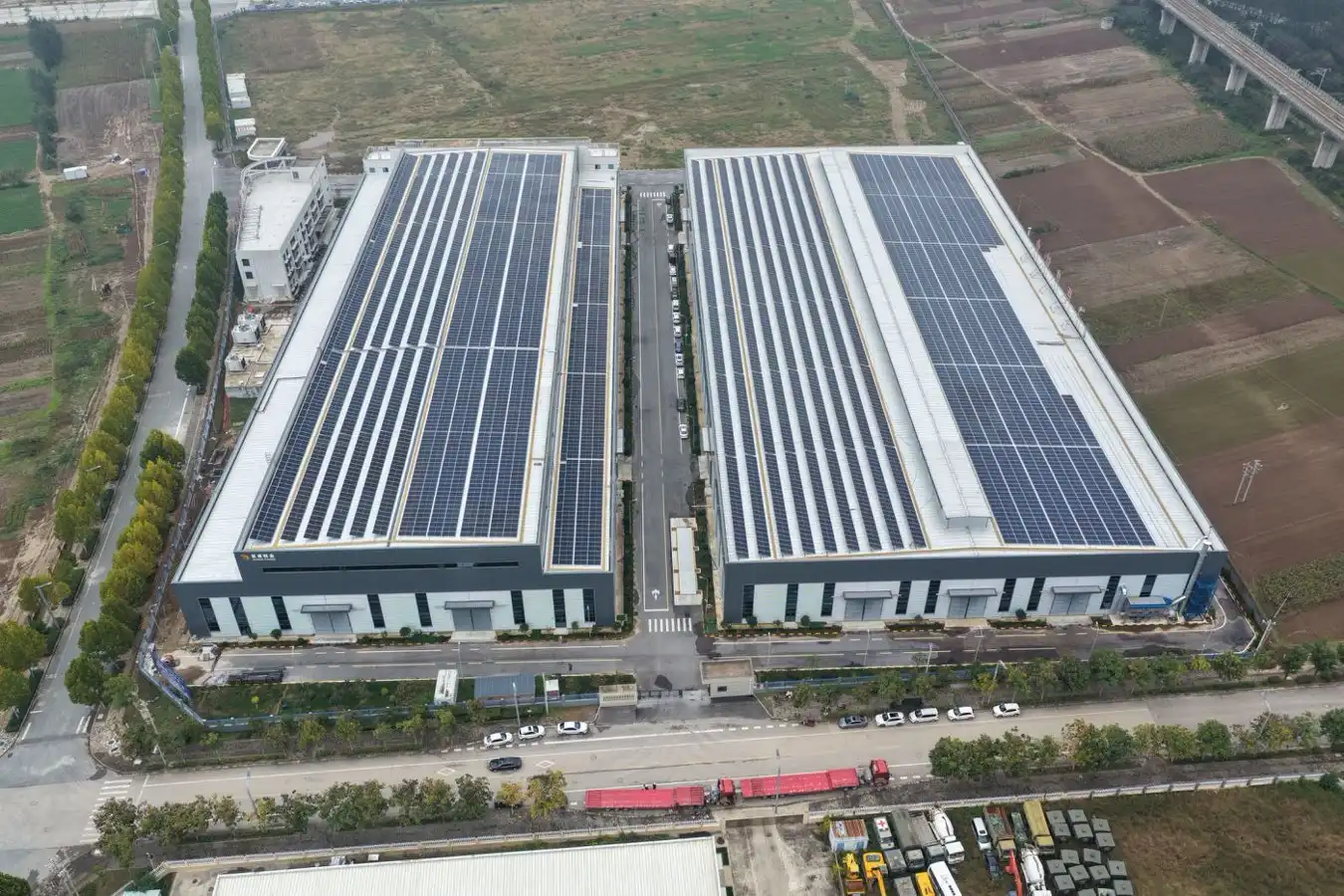
To get the best deals on CP titanium sheet, you need to find a provider with strong scientific knowledge, certified quality systems, and helpful customer service. Baoji Jucheng Titanium Industry Co., Ltd. is a national high-tech company that has been handling titanium for more than 20 years. They keep 3,000 tons of product in grades Gr1, Gr2, Gr4, Gr5, Gr7, Gr9, and Gr12 ready to ship right away. The hot-rolled sheets we sell meet the standards set by ASTM B265, ASTM F67, AMS 4911, and ASME SB265. They come in widths of up to 2500mm and thicknesses ranging from 4mm to 80mm. Our engineering team can help you with thorough weight calculations, material certifications, and suggestions based on your particular needs, whether you need standard sizes or fully customized shapes with polished, machined, or acid-pickled finishes. Get in touch with s4@juchengti.com to talk about your needs with a reputable CP titanium sheet maker who offers low prices, full technical support, and dependable international shipping.
References
1. Boyer, R., Welsch, G., & Collings, E.W. (1994). Materials Properties Handbook: Titanium Alloys. ASM International.
2. Donachie, M.J. (2000). Titanium: A Technical Guide (2nd ed.). ASM International.
3. ASTM International. (2020). ASTM B265-20: Standard Specification for Titanium and Titanium Alloy Strip, Sheet, and Plate. West Conshohocken, PA.
4. Schutz, R.W., & Thomas, D.E. (1987). Corrosion of Titanium and Titanium Alloys. Metals Handbook (9th ed., Vol. 13). ASM International.
5. Peters, M., Kumpfert, J., Word, C.H., & Leyens, C. (2003). Titanium Alloys for Aerospace Applications. Advanced Engineering Materials, 5(6), 419-427.
6. Lutjering, G., & Williams, J.C. (2007). Titanium (2nd ed.). Springer-Verlag Berlin Heidelberg.