
What are the dye-penetrant testing methods for titanium rods?
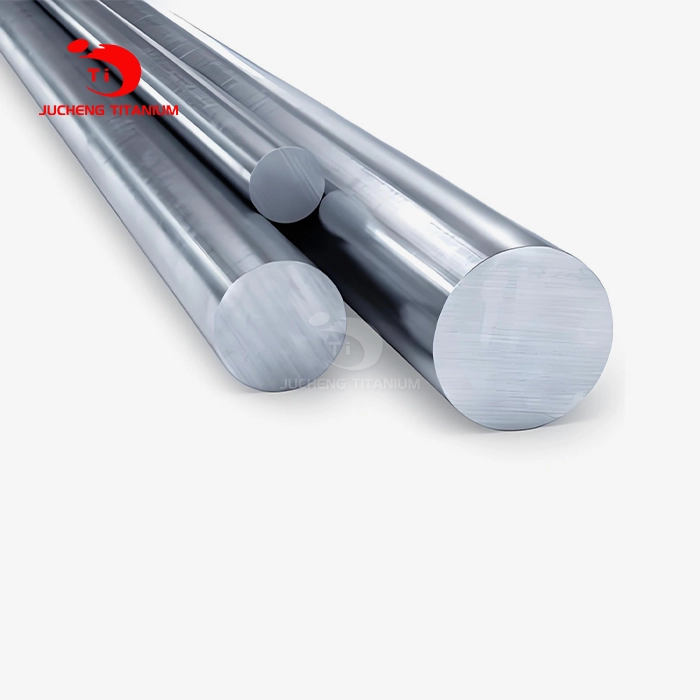
For finding surface cracks in titanium rods, dye-penetrant testing (DPT) is one of the most effective non-destructive testing (NDT) methods. For this method, a liquid penetrant is put on the rod's surface and allowed to seep into any cracks, holes, or other flaws that allow the rod to be opened up. After getting rid of any extra penetrant and adding a developer, flaws can be seen in the right setting. The method works especially well for checking the surface integrity of titanium rods used in chemical processing, aircraft, and medicine. The dependability and safety of the parts depend on the surface integrity.
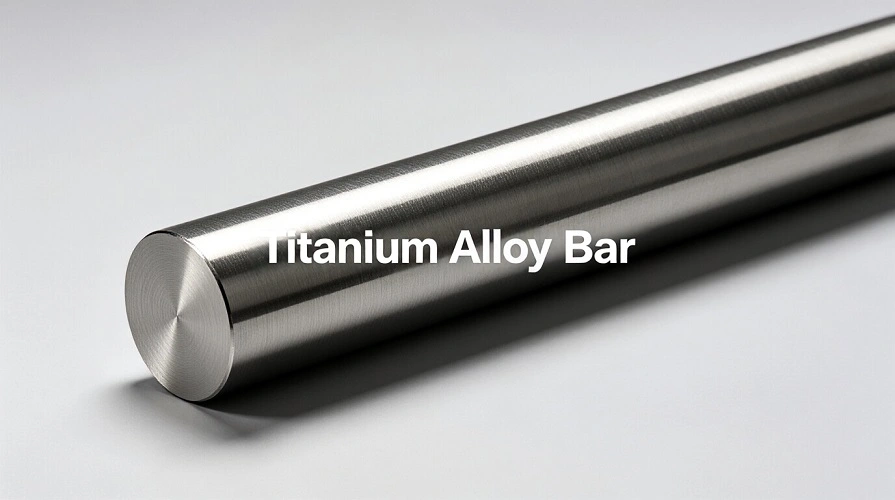
Understanding Dye-Penetrant Testing and Its Relevance to Titanium Rods
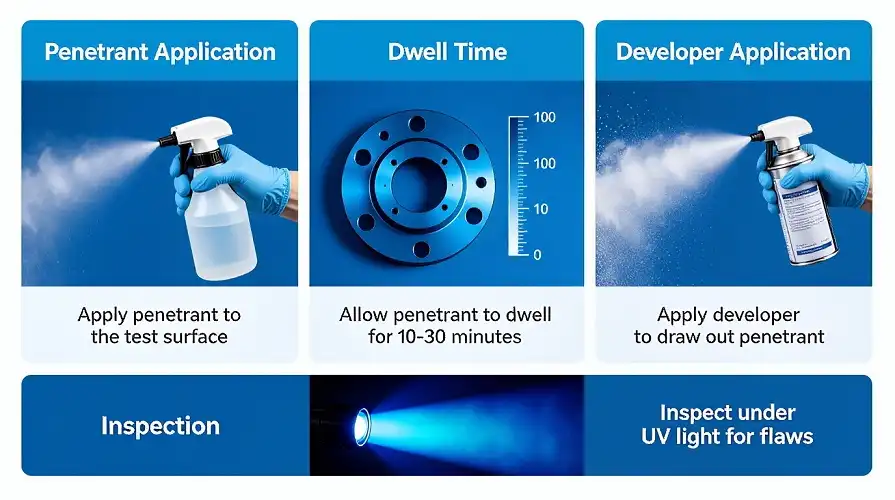
For surface fault detection, dye-penetrant testing (DPT) is simple yet effective. A noticeably coloured or fluorescent liquid penetrant is applied to the titanium rod after cleaning it. Unnoticed fractures and inclusions are penetrated by this penetrant. After enough dwell time, surplus penetrant is removed, and a developer is used to disclose faults.
DPT is ideal for checking titanium rods owing to their specific problems. Although corrosion-resistant, titanium's inert oxide coating can mask tiny surface flaws during visual examinations. Forging and grinding can cause minor structural defects. DPT accentuates these surface imperfections, making them visible.
DPT excels with titanium inspection compared to other NDT technologies. Ultrasonic testing is costly and requires specialised equipment and qualified experts to detect internal abnormalities. Titanium is non-magnetic, magnetic particle testing is worthless, and radiographic testing is unsafe and regulated. For surface flaw detection, DPT is best because of its efficiency and usability.
Different titanium grades react differently to DPT. Grade 2 titanium, which is flexible and corrosion-resistant, has a strong penetrant interaction. Grade 5 (Ti-6Al-4V), used in aerospace, may need altered dwell periods due to its microstructure. Medical equipment requires the strictest inspection standards, grade 23 (Ti-6Al-4V ELI). Understanding grade-specific features ensures testing meets application and performance criteria.
The Main Dye-Penetrant Testing Methods for Titanium Rods
There are different types of dye-penetrant testing, and each has its own benefits based on the needs of the inspection, the surroundings, and how sensitive the defects need to be found. You need to know how each technique works in different situations and how it fits with industry standards like ASTM E165 and ISO 3452 in order to choose the right one.
Visible Dye Penetrant Testing
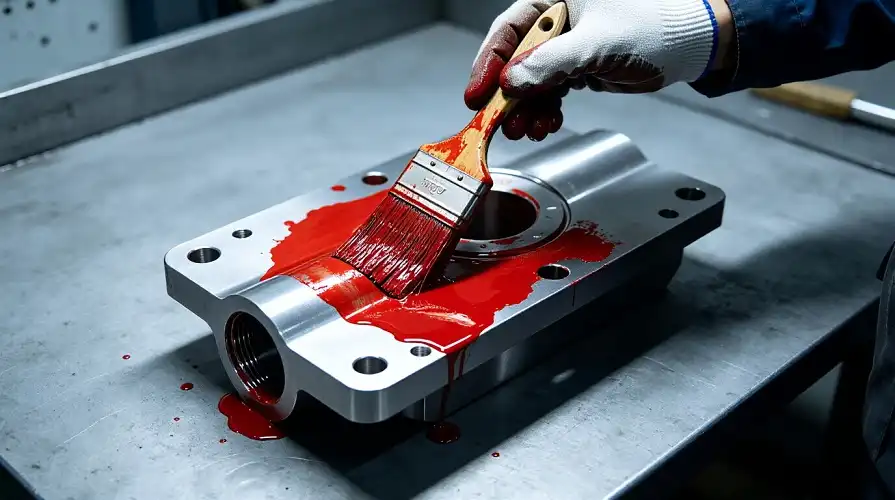
In visible dye penetrant tests, a highly colored penetrant (usually red) is used that stands out against the white developer background. This method only needs normal white light to work, which makes it the easiest to use for regular checks. Manufacturing companies like this method because it is easy to use—it doesn't need any special tools, and inspectors can work in regular lighting. The method works well for finding bigger flaws on the surface and doing initial quality checks on titanium rods that will be used in a wide range of industrial settings. However, visible dye testing isn't always able to find very small cracks or tiny flaws that might not be seen even if the right method is used.
Fluorescent Dye Penetrant Testing
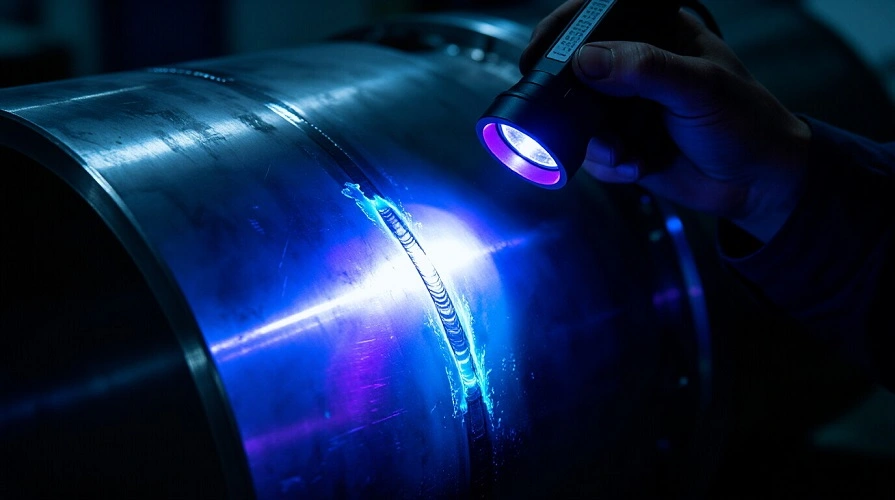
Compared to visible dye approaches, fluorescent penetrant testing is more sensitive. This approach uses penetrants containing fluorescent compounds that emit visible light when exposed to UV radiation. The vivid yellow-green lines against the black backdrop allow inspectors to identify defects as small as a few micrometres. Most aerospace industries utilise light penetrant testing to inspect titanium rods for tiny surface imperfections that might create difficulties. This procedure is frequently used by medical equipment producers to examine surgical poles, where even small defects are dangerous. Inspectors must use UV light and operate in darkened places because sensors are more sensitive, complicating testing.
Water-Washable vs. Solvent-Removable Penetrants
Inspectors must choose between visible and brilliant penetrants and water- or solvent-washable formulations. Water-washable penetrants can be removed with a water spray due to their emulsifying agents. This accelerates examination and reduces chemical handling. The procedure works effectively for inspecting large volumes of smooth-sided titanium rods. To remove excess solvent-removable penetrant, use a different solvent. This increases removal control. Over-washing is less probable with controlled removal. Overwashing can remove penetrant from defects and generate false positives. Chemical processing equipment manufacturers evaluate titanium rods for corrosion in severe environments with solvent-removable penetrants. Extra procedures are needed to ensure no flaws are detected.
Post-Emulsifiable Penetrants
Post-emulsifiable penetrants are ideal for critical activities. These penetrants don't combine with water without lubrication. Longer stay durations and regulated removal provide you with sensitivity. Using an emulsifier and washing with water allows testers precise control over when to remove the penetrant, making flaws simpler to spot and lowering false positives. Because they need the greatest detection accuracy, aerospace part producers commonly request post-emulsifiable systems for titanium rods that satisfy AMS 4928 or AMS 6931 requirements.
Step-by-Step Dye-Penetrant Testing Procedure for Titanium Rods
To do dye-penetrant testing correctly, you need to follow a regular process that makes sure you get consistent, accurate results every time. Each step is very important for finding flaws, and if you skip some or use the wrong method, the whole review can go wrong.
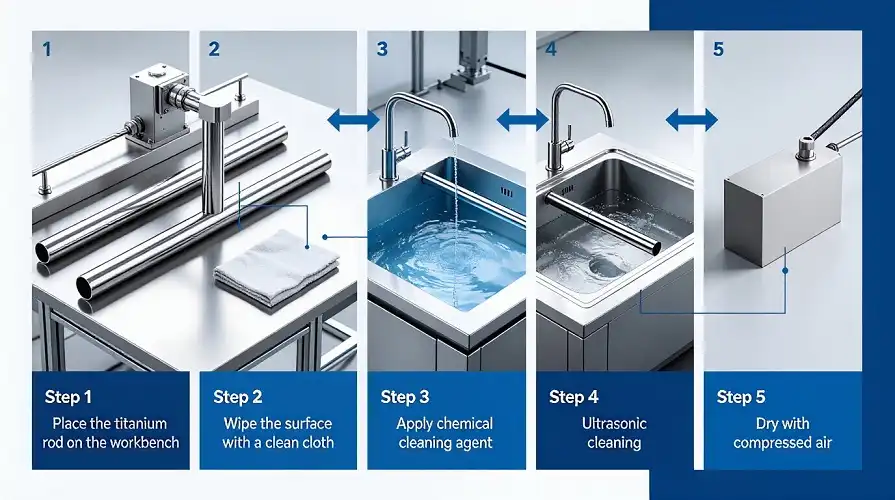
Surface Preparation and Cleaning
Preparing the surface is the first step in doing a good job with penetrant tests. Oils, greases, protective coats, scale, or welding leftovers can get in the way of penetrant getting into flaws. This can cause false negatives that let bad rods pass inspection. When titanium rods are made through casting, hot rolling, or centerless grinding, they may have leftovers from these methods. The cleaning process needs to get rid of all the dirt and grime without hurting the passive oxide layer on the titanium or adding new surface marks that could be mistaken for flaws. Solvent degreasing, alkaline cleaning, and mist degreasing are all acceptable ways to clean. Most of the time, mechanical cleaning methods like wire brushing are not used because they can fill in surface cracks or give false signals. After being cleaned, rods need to be dried completely, since water can stop penetrants from getting into flaws. Cleaning titanium rods that meet the strict requirements set by ASTM B348 or ASME SB348 should follow the steps outlined in these standards.
Penetrant Application and Dwell Time
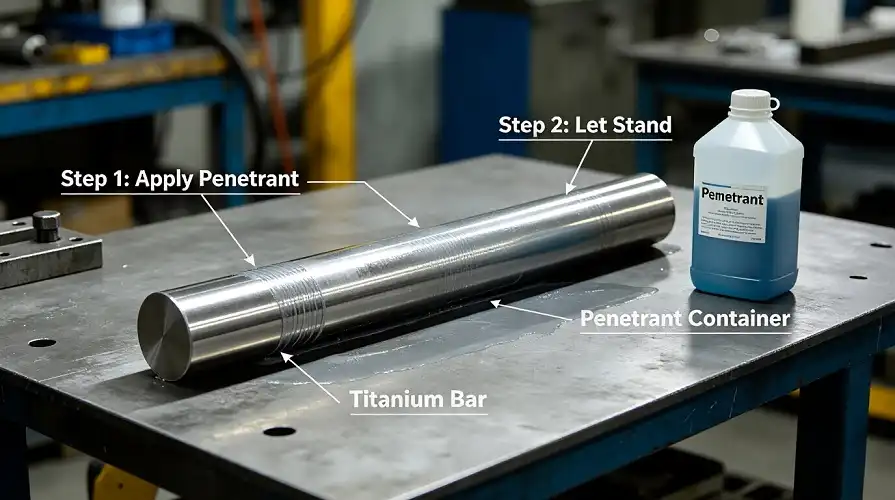
Once the surface is ready, the penetrant coating can begin. The penetrant can be used in a number of ways, such as by washing, brushing, or immersing the rod, based on the size of the inspection area. It is important to cover the whole surface; any gaps mean that the area hasn't been checked, which means that problems could hide there. The penetrant needs enough time to settle on the top of the defect before it can break through through capillary action. Dwell time is affected by several things, such as the type of penetrant used, the material's specs, the types of defects that are expected, and the temperature of the area. Dwell times for titanium rods are usually between 10 and 30 minutes, but longer times may be needed in some situations. Grade 5 titanium rods with widths bigger than 100 mm might need longer rest times to make sure the penetrant gets to the depths of any possible flaws. One of the most common reasons why flaws are missed in production settings is that inspectors are tempted to rush the process because of tight deadlines.
Excess Penetrant Removal
A careful method is needed to get rid of the extra penetrant without washing out the penetrant that is stuck in flaws. The way to remove the penetrant must match the type of penetrant. For example, water-washable penetrants can be taken off with a gentle water spray, while solvent-removable penetrants need to be taken off by soaking a clean cloth in solvent and wiping the surface gently. Over-washing is a constant risk that can wash the penetrant off of flaws, which can lead to false rejections. When you under-wash, you leave behind too much penetrant, which causes background noise that hides real signals and leads to false positives. Because titanium rods are shaped like cylinders, it's important to make sure that all of their sides are properly cleaned. This is especially important when checking large-diameter rods, where some areas might not get enough care. At this point, good lighting helps inspectors make sure that enough of the extra penetrant has been washed away without cleaning too much.
Developer Application and Inspection
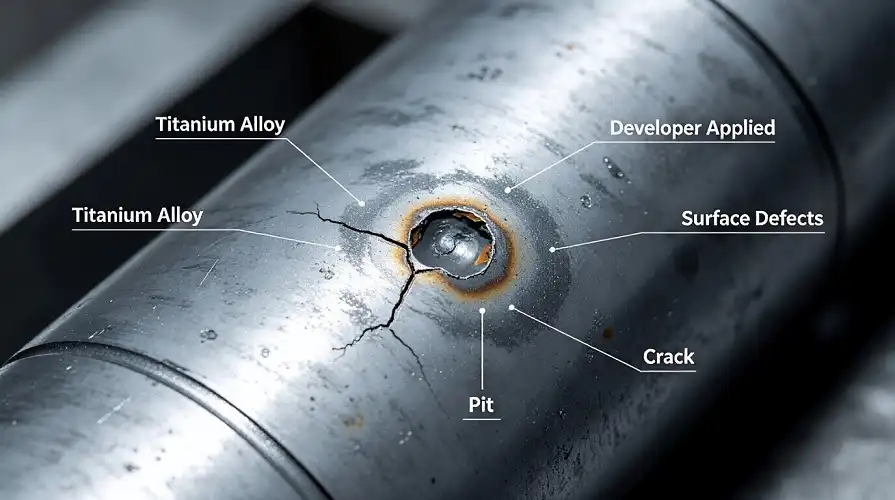
The developer application pulls penetrant out of flaws, making obvious signs that show where the flaws are. There are different kinds of developers, such as dry powder, water-soluble, water-suspensible, solvent-suspended, and wet developers that are not water-based. Depending on the inspection situation, each type has its own benefits. For fluorescent penetrant testing under UV light, dry powder developers work well. For both visible and fluorescent uses, non-aqueous developers work very well. The developer is put on the whole viewing surface in a thin, even layer. During development, which usually takes between 10 and 60 minutes, the penetrant is drawn from flaws into the developer layer, making marks that are bigger than the defects themselves. Because of this amplification effect, trained testers can see even small problems.
Defect Interpretation and Documentation
In the last step, a careful review is done under the right lighting—white light for visible penetrant tests or UV light for fluorescent tests. Inspectors carefully look over the whole rod surface and write down any signs they see. Inspectors have to tell the difference between relevant indications (which are real flaws), non-relevant indications (which are products of the inspection process), and false indications (which can be caused by things like a rough surface texture). Acceptance criteria should include relevant standards, like ASTM E165 for the testing process, as well as standards that are specific to the material, like ASTM F136 for medical-grade titanium rods. Indication places, sizes, and types, as well as photos of important finds, should all be included in the documentation. This paperwork has several uses: it keeps quality records so that rods can be tracked, it collects data to help the process get better, and it can be used as proof in talks with suppliers about quality when getting titanium rods from outside sources.
Best Practices and Procurement Tips for Reliable Dye-Penetrant Testing of Titanium Rods
Achieving consistent and accurate dye-penetrant test results for titanium rods requires attention to various factors beyond standard procedures. Companies dedicated to quality have developed methods to minimise variability and enhance defect detection.
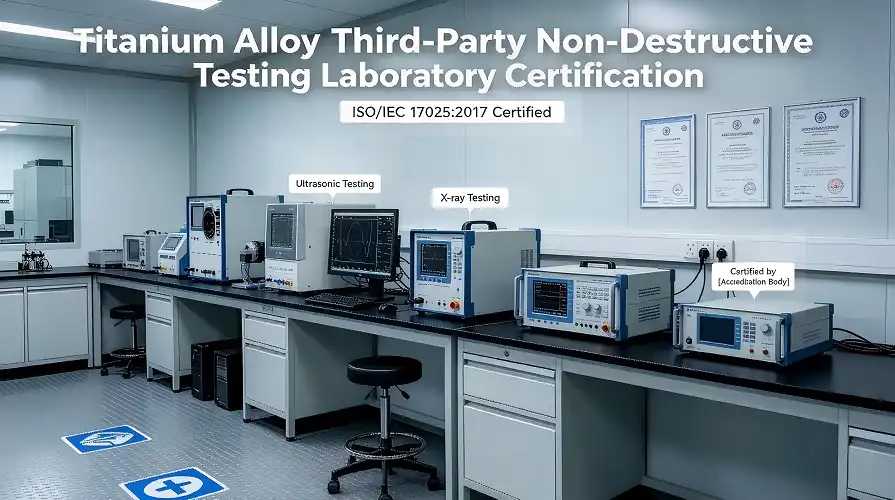
When sourcing titanium rods, it's crucial to select suppliers with a proven track record in nondestructive testing (NDT). Look for vendors that operate certified testing labs, employ qualified inspectors, and maintain documented processes. Requesting third-party certifications, such as ISO 13485 for medical devices or Nadcap for aerospace applications, can further assure the integrity of their quality systems. Visiting supplier facilities allows for firsthand observation of their testing, maintenance, and inspector training practices.
Adhering to appropriate industry standards is also essential. ASTM E165 provides foundational guidance for liquid penetrant testing applicable across various sectors. Specific standards like ASTM B348 for titanium bar stock, ASTM F136 for surgical implants, and AMS 4928 for aerospace-grade Ti-6Al-4V rods delineate material requirements and review protocols. Procurement specifications should clearly outline relevant standards, with suppliers expected to present compliance test results.
Tailoring inspection methods to the specific type and application of titanium enhances both quality and cost-effectiveness. For example, medical-grade titanium necessitates sensitive fluorescent penetrant testing due to stringent biocompatibility requirements, while aerospace applications may permit certain defect types.
Striking a balance between thorough testing and an efficient supply chain is critical. Allowing adequate time for inspections helps maintain quality, preventing rushed processes that could compromise results. Establishing long-term relationships with qualified suppliers can facilitate smoother transactions, reducing the need for extensive inspections upon delivery. Maintaining a well-stocked inventory also enables suppliers to meet urgent demands without sacrificing quality.
Conclusion
Dye-penetrant testing is the best and cheapest approach to identify faults in medical, military, and industrial titanium rods. When procurement professionals understand visible and bright procedures, how to follow the proper protocols, and how DPT interacts with other NDT techniques, they may make sensible quality assurance decisions. Businesses that rely on surface uniformity for part performance and safety need the simple, proven solution. Buyers may receive titanium rods that satisfy rigorous quality requirements and keep the supply chain moving smoothly by engaging with suppliers who have demonstrated NDT knowledge, follow industry standards, and customise inspection procedures for varied material grades and purposes. When dye-penetrant testing is done properly, materials will operate properly throughout their use. This improves practicality and reduces failure.
FAQ
Q1: Can dye-penetrant testing detect internal defects in titanium rods?
Dye-penetrant testing is only able to find breaks in the surface of titanium rods. It can't find internal flaws like holes, inclusions, or laminations that are below the surface. To make signs, the penetrant has to get into the flaws through surface holes. In addition to surface methods, ultrasound testing or x-ray examination should be used for full quality assurance that looks inside the item.
Q2: How do different titanium grades affect penetrant testing accuracy?
Titanium grade influences the surface's hardness, the width of the oxide layer, and its microstructure, all of which can change how a penetrant works. Commercially pure grades like Grade 2 usually have a constant penetrant reaction. However, higher-strength metals like Grade 5 (Ti-6Al-4V) may need different dwell times because their surface energy is different. Because it is used in so many important ways and can have very bad effects if flaws are missed, medical-grade Grade 23 needs the strictest checking conditions.
Q3: What environmental and safety protocols are necessary during penetrant testing?
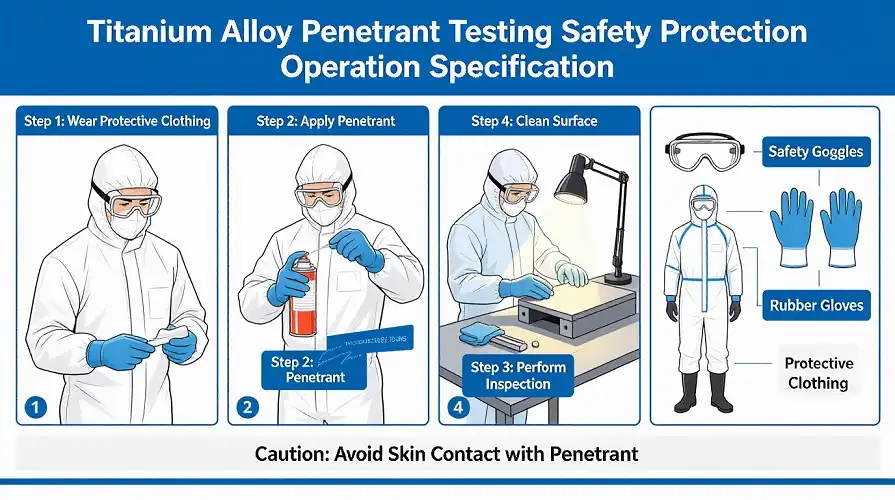
For penetrant tests to work, there needs to be enough air flow because many of the penetrants and liquids contain volatile organic compounds. When inspectors work with poisons, they should wear the right safety gear, like gloves and eye protection. UV lights used for fluorescent penetrant screening give off ultraviolet radiation, which means you need to protect your eyes and skin while using them. According to environmental rules, the right way to get rid of waste includes used penetrants, chemicals, and dirty wipes.
Partner with Baoji Jucheng Titanium Industry for Certified Quality Assurance
Choosing the right supplier for titanium rods subjected to rigorous dye-penetrant testing is crucial for your business. Baoji Jucheng Titanium Industry Co., Ltd. brings over 20 years of expertise in manufacturing and quality assurance. Located in China’s Titanium Valley, our facility maintains a robust inventory of around 3,000 tons, including commercially pure grades (Grade 1–4), aerospace alloys (Grade 5 Ti-6Al-4V), corrosion-resistant variants (Grades 7, 9, 12), and medical-grade materials (Grade 23 Ti-6Al-4V ELI), ensuring prompt delivery without compromising inspection standards.
Every titanium rod undergoes thorough non-destructive testing compliant with ASTM B348, ASME SB348, AMS 4928, and ISO 5832-3, accompanied by comprehensive documentation. Recognised as a National High-Tech Enterprise, we hold multiple patents that enhance our production processes. Our quality management team enforces strict protocols throughout production, from forging to final surface treatment, ensuring material integrity for critical applications.
Our engineering team is ready to help you with technical questions and come up with unique solutions, whether you need precision-ground rods for medical implants, high-strength bars for flight parts, or corrosion-resistant stock for chemical processing equipment. Get in touch with us right away at s4@juchengti.com to talk about your unique needs, ask for material certifications, or get cheap quotes. As a reliable supplier of titanium rods to chemical processing companies, aerospace manufacturers, and medical device makers across North America, we're dedicated to providing you with certified quality, quick technical support, and consistent delivery times that keep your operations running smoothly.
References
1. American Society for Testing and Materials. (2021). ASTM E165-18: Standard Practice for Liquid Penetrant Examination for General Industry. West Conshohocken, PA: ASTM International.
2. International Organization for Standardization. (2013). ISO 3452-1: Non-destructive Testing—Penetrant Testing—Part 1: General Principles. Geneva, Switzerland: ISO.
3. American Society for Testing and Materials. (2020). ASTM B348-19: Standard Specification for Titanium and Titanium Alloy Bars and Billets. West Conshohocken, PA: ASTM International.
4. SAE International. (2019). AMS 2644: Inspection Material, Penetrant. Warrendale, PA: SAE Aerospace Material Specification.
5. Bray, Don E., and Stanley, Roderic K. (1997). Nondestructive Evaluation: A Tool in Design, Manufacturing, and Service, Revised Edition. Boca Raton, FL: CRC Press.
6. Boyer, Rodney, Welsch, Gerhard, and Collings, E.W. (1994). Materials Properties Handbook: Titanium Alloys. Materials Park, OH: ASM International.