



4mm Titanium Sheet vs Thicker Plate: Which Is Better for Your Project?
When engineers and procurement managers question whether a 4mm titanium sheet or a thicker plate is better for their project, there isn't a one-size-fits-all response. The proper selection relies on the load requirements, environmental exposure, production technique, and budget. Built from a 4mm sheet of titanium, it has an outstanding strength-to-weight ratio of around 4.51 g/cm3 density, excellent for weight-conscious projects. 6mm and above. Thicker plates provide more structural stiffness for demanding load-bearing applications. Knowing where each kind shines is the key to wiser material selection.
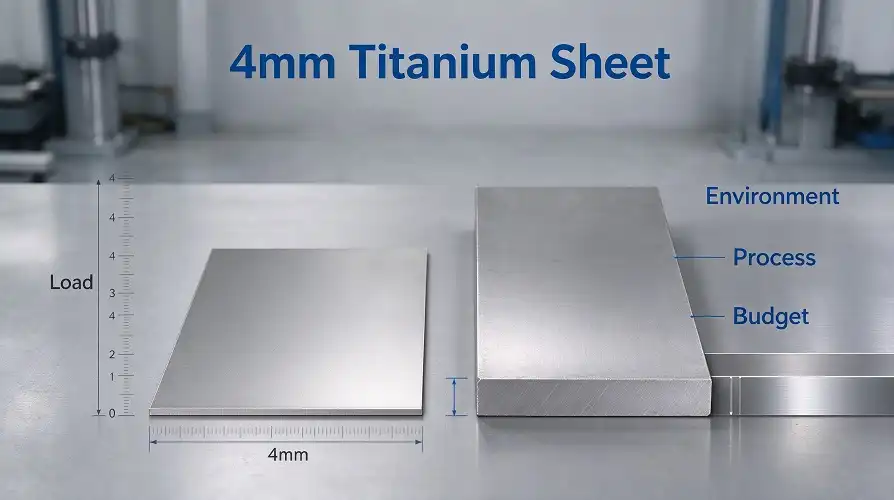
Understanding 4mm Titanium Sheet and Thicker Plates
Specifications, Grades, and Key Dimensions
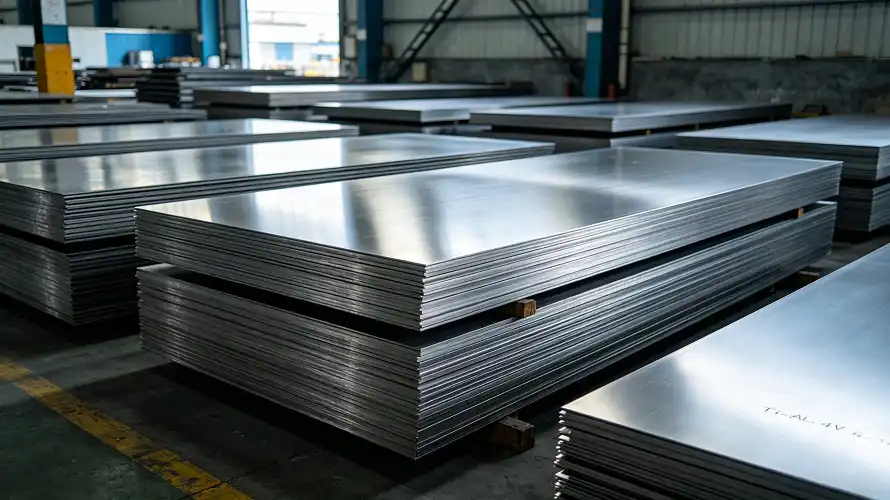
It’s helpful to have a 4mm titanium sheet since it’s in between a thin-gauge sheet and a thick plate. Produced via hot rolling, heating, levelling, pickling, and finishing the surface. This leads to a flat product that is steady in size and consistent in its operation. Jucheng Titanium offers titanium flat products in a wide variety of sizes: 4 mm to 80 mm thick, 950 mm to 2500 mm wide, and up to 10,000 mm long. Custom sizes available on request. Available grades include Gr1, Gr2, Gr4, Gr5, Gr7, Gr9 and Gr12 in compliance with ASTM B265, ASTM F67, AMS 4911 and ASME SB265.

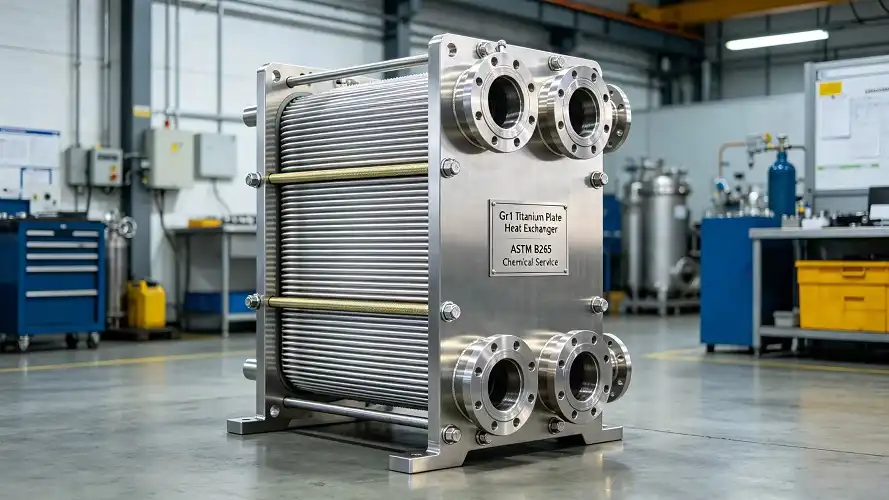
Grade 2 titanium is a reasonably pure titanium and is best suited for applications where corrosion is an issue, such as tubular sheets of heat exchangers, chemical laboratories, and naval systems. Grade 5 has a tensile strength of more than 895 MPa, which makes it a strong candidate for defence parts and aircraft structural brackets. Thicker plates have the identical designations as far as grades go, but their cross-sectional weight and rolling characteristics cause them to behave differently.

How Does Thickness Change Material Behavior?
Titanium performance in machining, welding, or forming is closely linked to its thickness. It is 4mm thick and is flexible enough to be shaped on a press brake and cut on a CNC laser without splitting. But thicker plates need more aggressive welding settings, larger tools, and longer cut cycles. Good weldability is maintained for both groups with adequate shielding procedures, although control of distortion is more crucial for the lower gauges.
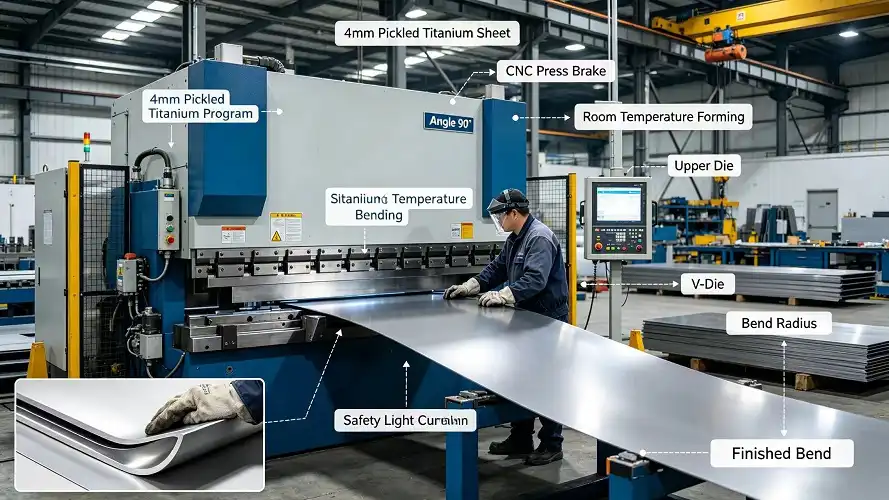
Performance Comparison: Strength, Durability, and Corrosion Resistance
Tensile Strength and Structural Integrity Across Thickness
The mechanical gap between a 4mm sheet and a 20mm plate is not as easy as looking at the thickness. Grade 2 titanium sheet at 4mm thick has a minimum tensile strength of 345 MPa and a minimum yield strength of 275 MPa, and is strong enough for heat exchanger parts and liners for pressure vessels. At the same gauge, Grade 5 possesses a yield strength of more than 828 MPa, the same as high-alloy steel but only 56% as heavy. Thicker plates of Grade 5 are preferred for structural frames, underwater hull sections, and heavy reactor bodies. This is because they provide stronger cross-sectional resistance to bending and stress.
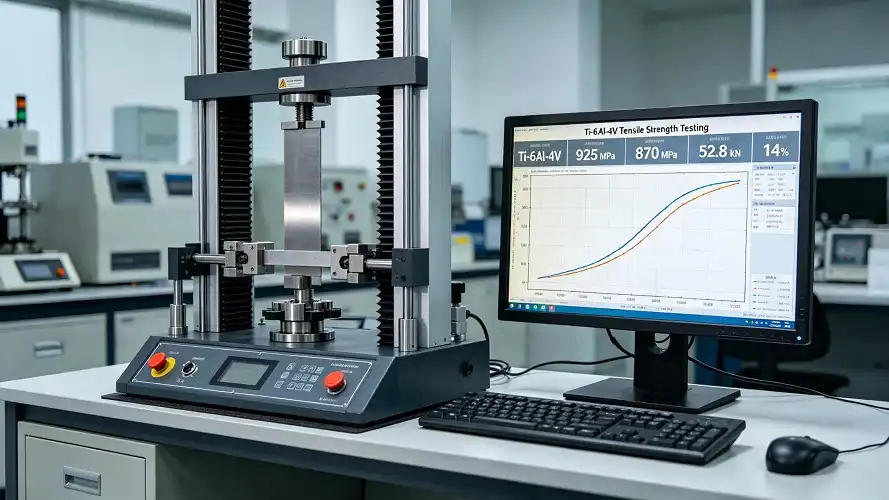
Both kinds are heat-treated primarily by annealing to remove any residual stresses arising from rolling and to restore the flexibility of the materials. When annealed, the mechanical characteristics of 4mm titanium sheet are uniform throughout. This is critical in precision machining and in fatigue-sensitive aeronautical constructions. During heating, the thicker plates are less likely to rip lamellae during welding.
Corrosion Resistance Over the Long Term
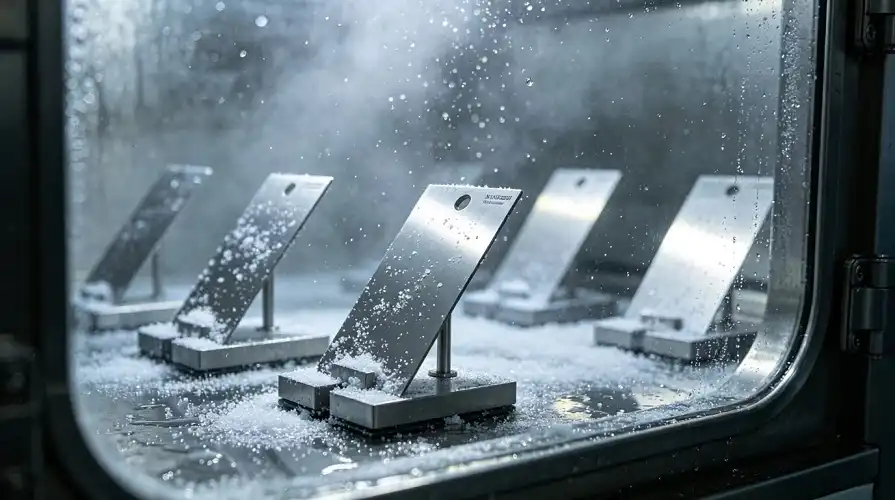
Titanium has a naturally occurring oxide film that is self-healing and prevents chloride stress corrosion cracking, which is a common cause of failure in stainless steel and copper-nickel metals in chemical and marine environments. No matter the width, this is true. However, thick plates are better able to withstand rust in demanding service circumstances when wear and tear is significant. This is beneficial for the slurry systems in hydrometallurgy and on offshore oil rigs. A 4mm titanium sheet in either Grade 2 or Grade 7 has been tested and verified to survive 10 to 20 years with no visible wall loss for typical chemical processing and desalination jobs.
Application-Based Decision Making: When to Choose a 4 mm Sheet or a Thicker Plate?
It's not a guessing exercise to match the right titanium gauge to the right application; it follows technical logic that is shaped by load, surroundings, and fabrication limitations. Here are some situations in which each choice really shines:
- Aerospace firewalls and bulkheads: A 4mm titanium sheet in Grade 5 withstands burn-through temperatures up to 600°C, resists vibrational fatigue in engine nacelles, and reduces aircraft weight — advantages that aluminum cannot match above 150°C. Its gauge supports precision forming into complex contoured panels.
- Chemical process vessel liners: Grade 2 or Grade 7 titanium at 4mm serves as a robust barrier against wet chlorine, sulfuric acid, and aggressive brine in chlor-alkali and hydrometallurgy plants. The thickness is sufficient to absorb thermal cycling stresses without warping over long service cycles.
- Heavy structural and load-bearing applications: Thicker plates — typically 12mm to 40mm — are the correct choice for reactor shell bodies, subsea equipment housings rated for depths beyond 1,000 meters, and defense structural frames where cross-sectional rigidity and impact resistance are non-negotiable.
- Marine heat exchanger tube sheets: At 4mm, titanium provides adequate material for tube expansion joints and withstands differential pressures up to 20 bar, while resisting crevice corrosion in seawater environments that would compromise copper-nickel alternatives within months.
Also, the costs of fabrication play a part. It costs more to ship heavier plates because they need more raw materials, take longer to machine, and require more time. If the mechanical performance of 4mm titanium sheet is good enough for the job, picking the lighter gauge will cut the total cost of production by a large amount.
Procurement and Cost Analysis for 4mm Titanium Sheets and Thicker Plates
Pricing Trends and Market Positioning
Titanium flat goods are paid by the kilogram, and width is one of the main factors that affects the price. When it comes to price per unit, Grade 2 titanium sheet at 4mm is usually cheaper than Grade 5 and a lot cheaper than comparable sizes in 12mm-plus plate because it has less material. Distributors and equipment makers can get better unit prices and shorter wait times when they buy in bulk and make sure the specs are always the same.
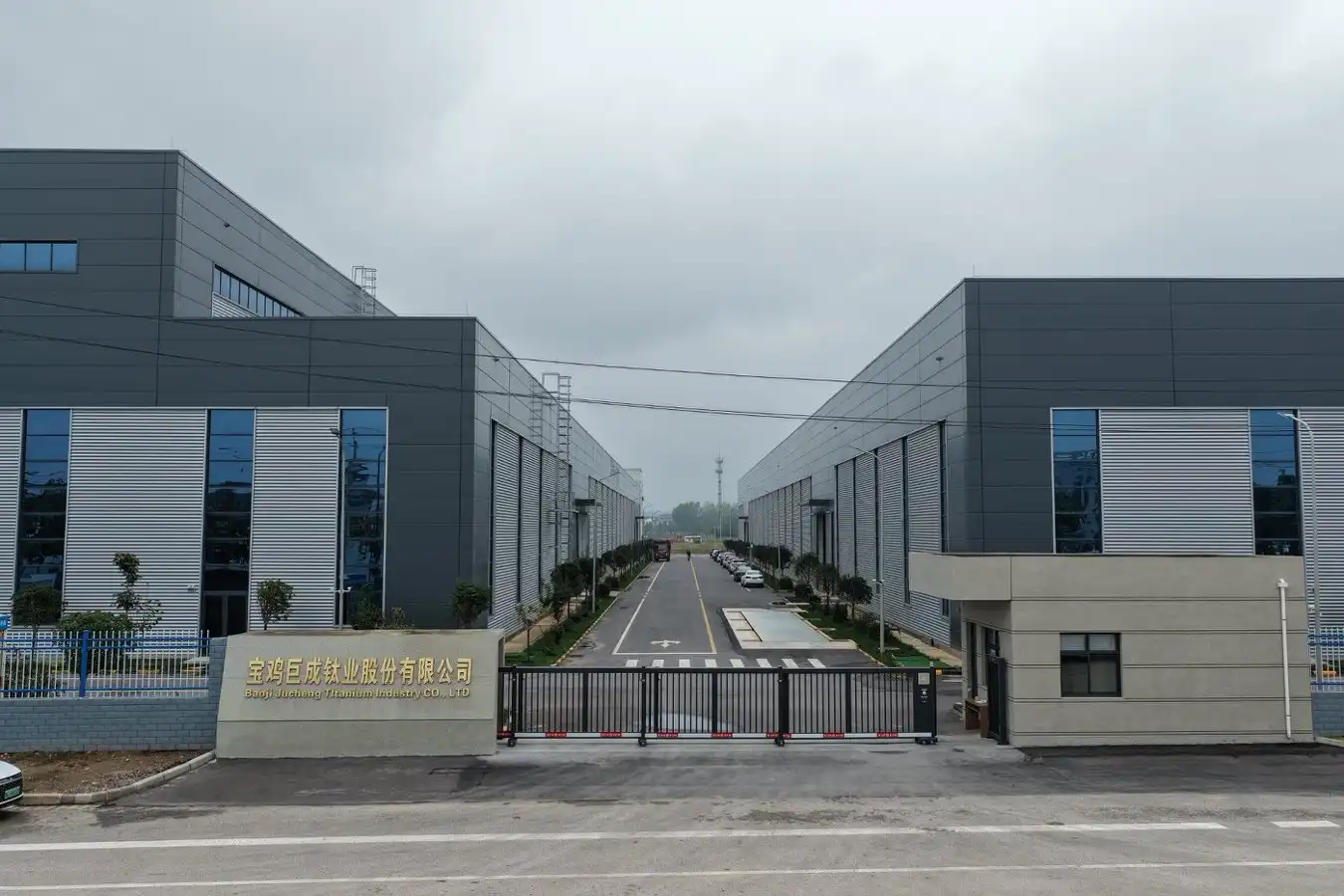
Some of the biggest producers in the world are TIMET, ATI Metals, VSMPO-AVISMA, and processors in Baoji, China's Titanium Valley, which provides more than half of the world's processed titanium. Jucheng Titanium keeps about 3,000 tons of titanium in stock all year long. This lets them quickly ship titanium for urgent projects without the long lead times that come with project-specific mill orders.
Smart Ordering Practices for B2B Buyers
When buying titanium flat products, people in charge of procurement should ask for mill test reports, make sure the products meet ASTM B265 or AMS 4911 standards, and check the different surface treatment choices, such as polished, machined, or acid-pickled, based on what needs to be done next. It is common practice to ask for samples of a material before committing to buying it in bulk, and it is also strongly suggested that new suppliers do the same.
Practical Recommendations for Selecting Titanium Sheet Thickness
In the end, there are four things that determine which gauge is best: the load capacity, the chemical exposure, the difficulty of the process, and the total cost of ownership. A 4mm titanium sheet can be used for most industrial purposes, from chemical liners to aircraft panels, because it is easy to shape and doesn't cost as much. When design calls for structural strength, impact load protection, or an extended corrosion limit, thicker plates are required.
Getting things from a source that offers unique processing, certified material traceability, and technical help greatly lowers the risk of buying things. You have to get certifications like ASTM B265 and AMS 4911 in order to get approvals for aerospace, defense, and chemical processing.
Conclusion
You can choose between a 4mm titanium sheet and a thicker plate, but neither is clearly better than the other. Each is used for a different scientific reason. Thin-gauge titanium at 4mm works great in uses that care about weight, rust, and accuracy. When stiffness and impact protection are very important, thicker plates are used to carry structural loads. The most effective way to get performance and value is to match the gauge to the application and buy from a certified, experienced source. For more than 20 years, Jucheng Titanium has helped clients in the aircraft, chemical, marine, and industrial fields make this very choice.

FAQ
1. What is the difference between a titanium sheet and a titanium plate?
The distinction is primarily dimensional. In ASTM B265, products under a specified thickness threshold are classified as sheets, while thicker products qualify as plates. At 4mm, the product sits at this boundary, offering characteristics of both — structural rigidity and cold formability. The functional difference matters most during fabrication, where sheets allow tighter bend radii and plates offer superior through-thickness strength.
2. Which titanium grade is best for chemical processing applications?
Grade 2 and Grade 7 are the most widely specified for chemical environments. Grade 7 contains palladium additions that enhance resistance to reducing acids, making it preferable for sulfuric acid service. Grade 2 handles oxidizing environments, seawater, and chloride-rich conditions exceptionally well.
3. Can a 4mm titanium sheet be welded to thicker plate sections?
Yes. Titanium is fully weldable using TIG processes with proper argon shielding. Transitional weld joints between 4mm sheet and thicker plate sections are routinely used in pressure vessels and heat exchanger fabrication, provided the joint design accounts for thickness mismatch.
4. What surface treatments are available for titanium flat products?
Standard surface treatment options include polished, machined, and acid-pickled finishes, each suited to different downstream applications — polished for medical and food-grade use, acid-pickled for welded structures, and machined for precision-tolerance components.
Partner with Jucheng Titanium for Your Next Project
Jucheng Titanium delivers certified 4mm titanium sheet and custom-thickness plate across Gr1 through Gr12 grades, compliant with ASTM B265, AMS 4911, and ASME SB265. With 3,000 tons in stock, 20+ years of processing expertise, and full custom fabrication capability, we serve aerospace, chemical, and industrial clients across North America. Contact our technical team today at s4@juchengti.com to request a quote from a trusted 4mm titanium sheet supplier.
References
1. ASTM International. ASTM B265: Standard Specification for Titanium and Titanium Alloy Strip, Sheet, and Plate. ASTM International, 2021.
2. SAE International. AMS 4911: Titanium Alloy Sheet, Strip, and Plate, 6Al-4V, Annealed. SAE International, 2020.
3. Donachie, Matthew J. Titanium: A Technical Guide. 2nd ed. ASM International, 2000.
4. Boyer, Rodney R., Gerhard Welsch, and E.W. Collings. Materials Properties Handbook: Titanium Alloys. ASM International, 1994.
5. Peters, Manfred, and Christoph Leyens. Titanium and Titanium Alloys: Fundamentals and Applications. Wiley-VCH, 2003.
6. Schutz, Robert W., and Daniel E. Thomas. "Corrosion of Titanium and Titanium Alloys." ASM Handbook, Volume 13: Corrosion. ASM International, 1987.