



7 reasons engineers choose Gr 5 titanium plate for builds
When engineers face a material decision that directly affects build performance, weight, and service life, Ti-6Al-4V — commonly called gr 5 titanium plate — consistently rises to the top of the shortlist. Representing roughly 50% of global titanium consumption, this alpha-beta alloy delivers a tensile strength minimum of 895 MPa while weighing approximately 44% less than equivalent steel sections. Whether you are sourcing for aerospace frames, chemical reactors, or medical implants, the seven reasons below explain why this alloy has become the industry benchmark for demanding builds.


Superior Mechanical Properties That Enhance Build Performance
High Strength-to-Weight Ratio
Gr. 5 titanium (Ti-6Al-4V) has a minimum yield strength of 828 MPa (120 ksi), despite the fact that it weighs just 4.43 grams per cubic centimetre when measured. Because of this, engineers are able to reduce the weight of components without compromising their ability to support loads. When compared to stainless steel, which is around 75% heavier even though it has the same cross-section, this is a significant benefit.
Fatigue and Hardness Balance
The fatigue strength of the annealed plate is robust enough to bear cyclic stresses in locations such as aircraft panels and spinning equipment. The plate has a hardness of around 30–36 HRC. This equilibrium between the material's hardness and elongation, which must be at least 10%, prevents the material from breaking readily in circumstances in which it is vibrated a great deal.
Comparison With Other Titanium Grades
When compared to Grade 5, commercially pure titanium of Grade 2 is significantly simpler to form, but it only has about half of the tensile strength of Grade 5. Ti-6Al-4V is the sole material that will work for a build or construction project that requires both a sturdy structure and a minimum amount of weight.

Outstanding Corrosion Resistance for Long-Term Durability
Chemistry Behind the Protection
3.5 to 4.5 percent of the metal contains vanadium, while 5.5 to 6.75 percent of the metal is aluminium. Because of these additions, both the alpha and beta phases are strengthened, which results in the formation of an inactive oxide coating that may mend itself when it is scratched. In environments that have a high concentration of chloride or acid, stainless steel and Inconel are unable to replicate this property to its full extent.
Performance in Harsh Environments
On offshore oil platforms and chemical processing facilities, the cost of replacing equipment that rust may amount to millions of dollars per year. It is feasible for Grade 5 titanium plate to maintain its form in situations such as saltwater, mild acids, and oxidising chloride solutions. These are all conditions that cause carbon and low-alloy steels to wear down more rapidly than other substances.
Reduced Lifecycle Maintenance Cost
Because the protective oxide layer may renew itself, the amount of time required for maintenance is much longer. When making purchases, teams take into consideration the entire cost of ownership; the reduced cost of downtime and part replacement immediately compensates for the greater price of the materials at the beginning of the process.

Versatile Applications Across Industry Sectors
The fact that Ti-6Al-4V plate is used in so many different fields shows how useful its properties are in real-life engineering. Here are three main areas of use where it has been shown to work:
- Aerospace and Defense: Airframe structural panels, wing skin sections, and compressor blades are all made of gr 5 titanium plate. Due to its ability to keep its shape up to about 400°C (752°F), it can be used for parts close to engines, where aluminum would soften, and steel would add too much weight.
- Titanium plate of grade 5 is routinely used in the construction of aircraft structural panels, wing skin sections, and compressor blades in the aerospace and defence industries. In engine-adjacent components, where aluminium would become brittle and steel would add an excessive amount of weight, it is ideal for use because of its capacity to preserve structural integrity up to roughly 400 degrees Celsius (752 degrees Fahrenheit).
- In the field of medical technology, implant-grade titanium will be governed by ISO 5832-3 and ASTM F67. In orthopaedic plates, spinal fixation devices, and maxillofacial implants, the modulus of elasticity of grade 5 is very similar to that of cortical bone, which is around 110 GPa. This limits the amount of stress shielding that occurs. Because it is non-toxic and non-allergenic, it is beneficial to osseointegration over the long run.
- Titanium's resistance to crevice corrosion at extreme pressures is essential for the marine and chemical processing industries. Pressure hulls for deep-sea submersibles and heat exchanger tube sheets in petrochemical facilities are two examples of applications that depend on titanium. In situations with low oxygen levels and high salinity, it delivers superior performance over duplex stainless steel.
In the realm of medical technology, the standards ISO 5832-3 and ASTM F67 regulate the use of titanium that is suitable for implants. Approximately 110 gigapascals (GPa) is the modulus of elasticity of Grade 5, which is comparable to that of cortical bone. Because of this, orthopaedic plates, spinal fixation devices, and maxillofacial implants do not need to be protected against stress as much as they would otherwise be. Non-toxicity and non-allergenicity are two characteristics that provide credence to the concept of long-term osseointegration.

Advanced Manufacturing and Heat Treatment Processes
Hot Rolling and Annealing
Steel plates of Grade 5 are manufactured by Jucheng Titanium by the process of hot rolling, followed by total cooling, levelling, treating, and polishing the surface. This procedure eliminates any tension that may still be there, makes the surface flatter, and smooths it out so that it may be machined or coated further. It is possible to have thicknesses ranging from 4 mm to 80 mm, widths ranging from 950 mm to 2,500 mm, and lengths becoming as high as 10,000 mm. Additionally, they may be made to conform to the plans of the project.
Solution Treating and Aging (STA)
The heat treatment known as solution treating and ageing (STA) is effective on grade 5 titanium plate, although it is not applicable to commercially pure grades. The tensile strength may be increased to more than 1,100 MPa with the use of STA in circumstances when annealing is not sufficient. Bolt stock, landing gear pieces, and high-load structural bracing are all good examples of applications for this concept.
Certification and Traceability
For each and every plate, there are comprehensive material test results that can be tracked back to ASTM B265, AMS 4911, and ASME SB265. Options for surface treatment, such as polishing, milling, or acid pickling, are selected with consideration given to what will be used in the future. Because of this, purchasing teams are guaranteed to get precisely what their quality systems need.

Cost-Effectiveness and Supply Chain Reliability in B2B Procurement
Grade 5 titanium costs more per kilogram than either aluminum or carbon steel. But when engineers figure out the lifecycle cost, which includes replacements due to corrosion, unplanned downtime, and weight penalties that make fuel use go up, the math usually works out in favor of titanium. In a petroleum plant, avoiding just one heat exchanger repair can pay for years of higher material costs.
Jucheng Titanium keeps about 3,000 metric tons of different types of titanium in stock, such as Gr1, Gr2, Gr4, Gr5, Gr7, gr 5 titanium plate, and Gr12. This lets them deliver quickly, which lowers the risk of delays to projects. For bulk buyers and wholesalers, stable inventory means steady wait times and fewer problems in the supply chain. This is especially important when demand is high and spot market prices go up.

Tailored Solutions for Specialized Engineering Requirements
Custom Sizing and OEM Production
The majority of structures may be completed using normal mill measures; nevertheless, non-standard blanks are required for some objects, such as large-diameter heat exchanger tube sheets or aeroplane bulkheads. Jucheng Titanium is able to produce bespoke sizes according to the specifications that are supplied by clients, and they are able to manage both small trial runs and large production quantities.
Surface Treatment Options
There are a few other post-processing alternatives available, including acid pickling (which provides a surface that is free of oxides), mechanical polishing (which is particularly useful for components that will be in contact with food or medication), and cutting to very precise tolerances. For areas where wear is an issue, anodising and passivation are two processes that may make the surface even more resistant to corrosion and less likely to rust.
Technical Collaboration
Jucheng Titanium has a significant amount of engineering expertise that cannot be matched by other suppliers that are just engaged in trade. They have four patents for inventions, forty-one patents for utility models, and active research relationships with Tsinghua University and the Northwest Institute for Nonferrous Metal Research. More than simply a list, procurement professionals may also get assistance with specifications. This is in addition to the list they already have.

Sustainability and Future-Proofing Engineering Builds
Energy Efficiency Gains
The low density of titanium results in a direct reduction in the weight of the structures that make up automobiles, aeroplanes, and bases in the ocean. According to the International Titanium Association, the use of titanium in aerospace projects results in a significant reduction in the quantity of fuel that is used over the course of an airplane's lifetime. The economic and environmental benefits of this are abundantly evident.
High Recyclability
Scrap titanium has a high recovery value and can be melted down again without losing a significant amount of its qualities or characteristics. As a result of this cyclical flow of materials, many original equipment manufacturers (OEMs) in the United States and Europe now incorporate green targets as part of their criteria for suppliers.
Additive Manufacturing Readiness
The use of plate and bar cut-offs as feedstock for Ti-6Al-4V processes such as powder-bed fusion and directed energy deposition is becoming more common. If engineers continue to utilise Grade 5 plate on a regular basis, they will be prepared to adopt additive processes when hybrid manufacturing becomes more prevalent in the fabrication of medical equipment and aeroplanes.
Conclusion
There is no marketing behind gr 5 titanium plate's top spot; it has a minimum tensile strength of 895 MPa, self-renewing corrosion protection, biocompatibility, heat treatability, and a recyclable profile that meets today's sustainability standards. Ti-6Al-4V is used in more industrial situations than any other metal, from space frames to chemical reactors to spinal implants. It's a good investment for buying teams in all types of projects and industries because it comes from a recognized source, can be processed to order, and lasts a long time.
FAQ
1. How does gr 5 titanium plate behave during welding?
It's easy to weld with TIG or plasma as long as there is a strict argon protective gas environment on both sides of the joint zone. Without inert gas protection, oxygen and nitrogen in the air weaken the weld bead. When used in structures, post-weld heating is suggested.
2. Can the plate be heat treated after delivery?
Yes, solution treatment and aging (STA) can make the tensile strength higher than 1,100 MPa.
3. Is Grade 5 suitable for cryogenic service?
The ELI (Extra Low Interstitial) variant, Ti-6Al-4V ELI, is best for environments below zero degrees Celsius because its lower interstitial content makes it easier to shape at those temperatures without losing much strength.
4. How does it differ from Grade 2 titanium?
Grade 2 titanium is pure enough for commercial use and can be shaped very well, but it has about half the tensile strength of Grade 5. Grade 5 gives up some of its formability but gains almost twice as much mechanical strength, which makes it better for structural and load-bearing parts.
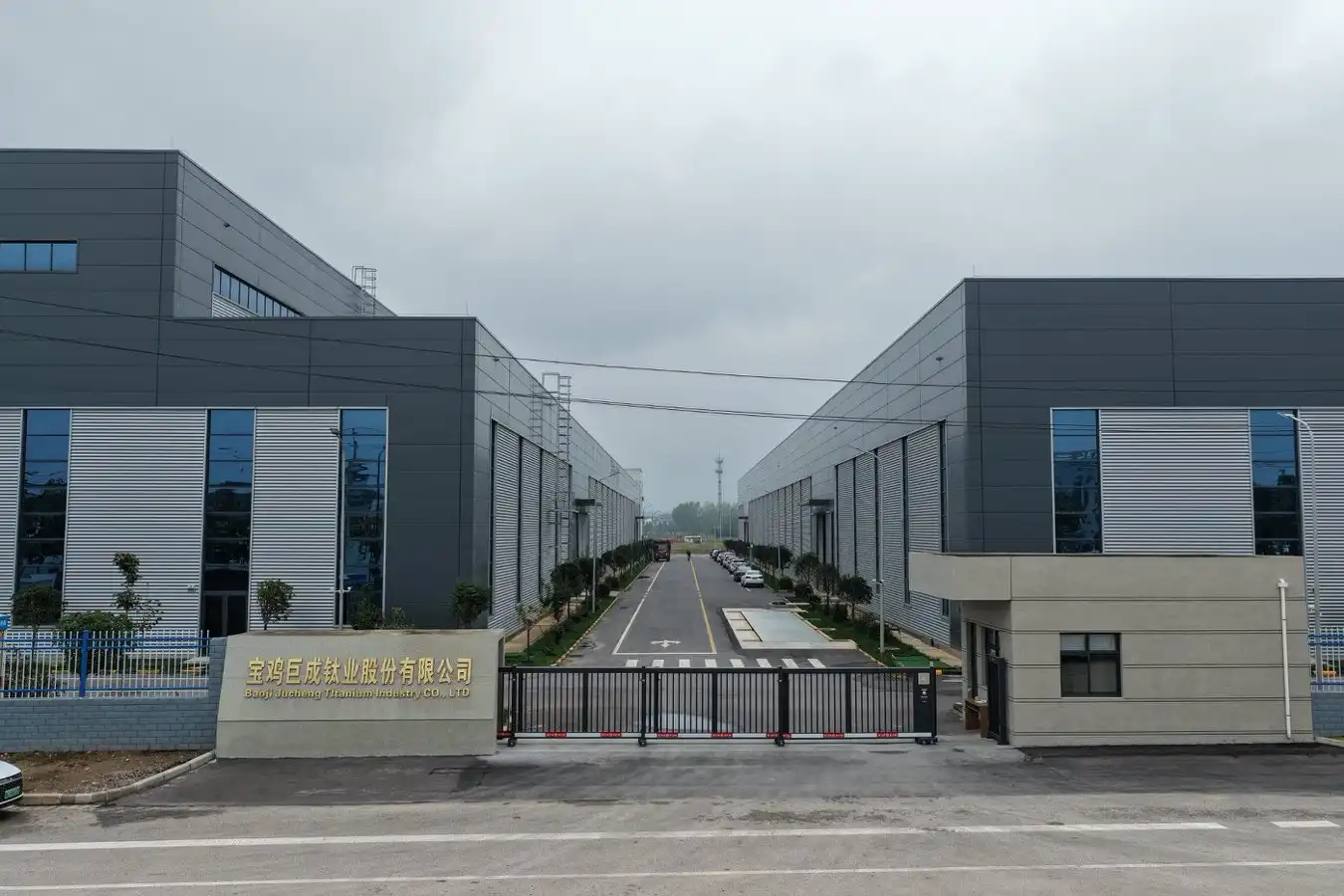
Request a Quote from Jucheng Titanium — Gr 5 Titanium Plate Supplier
For more than 20 years, Jucheng Titanium has sold certified gr 5 titanium plate Ti-6Al-4V) to companies in North America that work in aerospace, chemicals, and medicine. We are ready to help you with your next job because we have 3,000 tons of stock, can cut to any size, and are fully certified by ASTM B265 and AMS 4911. To get prices and details, please email our team at s4@juchengti.com.
References
1. ASTM International. ASTM B265: Standard Specification for Titanium and Titanium Alloy Strip, Sheet, and Plate. ASTM International, 2020.
2. ASM International. Titanium: A Technical Guide. ASM International, 2000.
3. Donachie, Matthew J. Titanium: A Technical Guide, 2nd Edition. ASM International, 2000.
4. International Titanium Association. Titanium in the Aerospace Industry. International Titanium Association, 2019.
5. Lutjering, G., and Williams, J.C. Titanium (Engineering Materials and Processes), 2nd Edition. Springer, 2007.
6. Boyer, R., Welsch, G., and Collings, E.W. Materials Properties Handbook: Titanium Alloys. ASM International, 1994.