



ASTM Standards for Titanium Sheet Roll Procurement
When sourcing a titanium sheet roll for industrial applications, ASTM standards define the baseline for quality, safety, and performance. ASTM B265 governs strip, sheet, and plate forms of titanium and titanium alloys, specifying chemical composition limits, mechanical property requirements, and permissible dimensional tolerances. For procurement teams in aerospace, chemical processing, or medical manufacturing, referencing these specifications during vendor qualification reduces material rejection rates and customs delays. Understanding which grade and standard apply to your application is the first step toward a compliant, cost-efficient purchase.
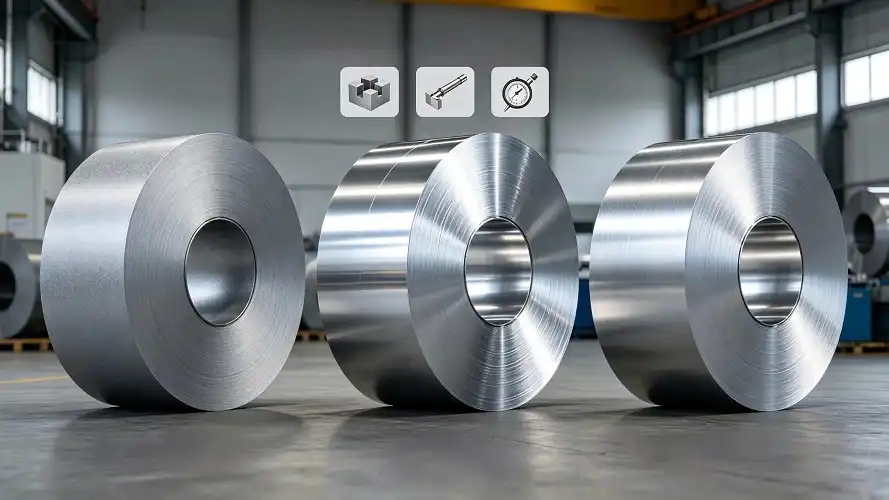
Understanding ASTM Standards for Titanium Sheet Rolls
More than 100 countries have decided to follow the science rules that ASTM International makes public. For flat-rolled titanium items like sheets and strips, ASTM B265, ASME SB265, AMS 4911, ASTM F67, and ASTM F136 are the specs that matter. Every single one is made for a certain kind of use.
What ASTM B265 Covers
What should strip, sheet, and plate made of titanium and titanium alloy be made of? ASTM B265 says. It says what kinds of chemicals can be used in each grade and what the minimum tensile and yield strengths, extension limits, and bend test standards are. People who buy it will know exactly what kind of surface state they are getting because it lists the possible surface states, such as annealed, pickled, or bright.
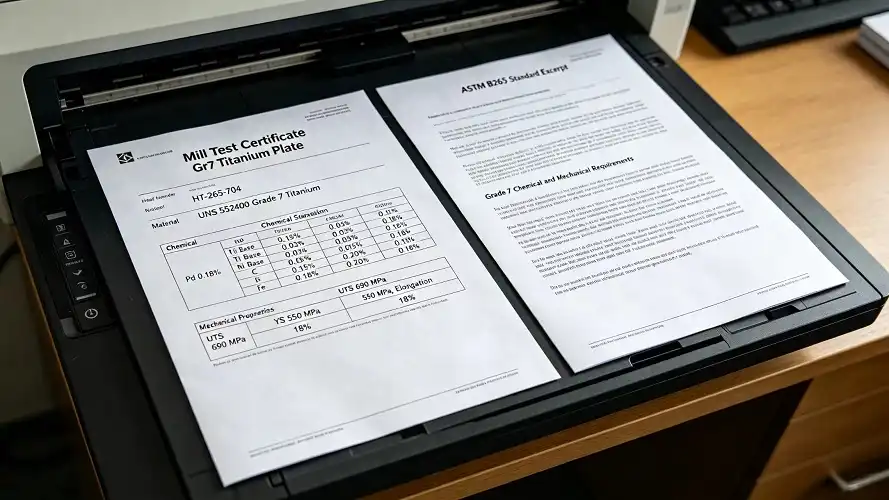
Role of AMS 4911 and ASTM F67 / F136
Ti-6Al-4V (Grade 5) sheet and strip made for aerospace is what AMS 4911 is for. Plus, it makes the microstructure and ultrasound test requirements stricter than the B265 standard. Commercially pure titanium (Grades 1–4) for medical devices is covered by the ASTM F67 standard. Ti-6Al-4V ELI for medical use is covered by the ASTM F136 standard. If you choose the right paper at the beginning, you won't have to make costly changes later on.
Why Certification Traceability Matters
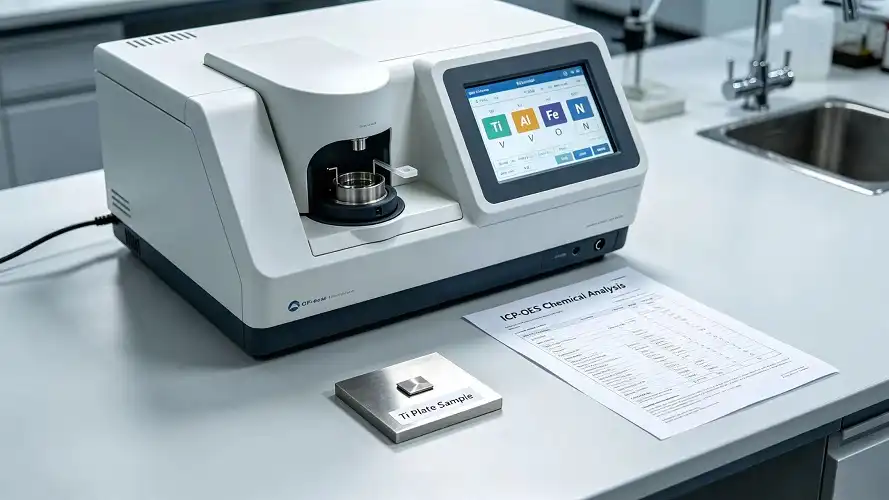
Along with EN 10204 3.1, every package that meets the standards should have a Mill Test Report (MTR). The ICP-OES results for the chemistry study are confirmed in this report, which also includes data from the mechanical test. The material is also linked to a certain heat number by the MTR. Without this, it's harder to get goods through U.S. customs, and checks further down the line, especially in medical or military supply lines, can stop production.
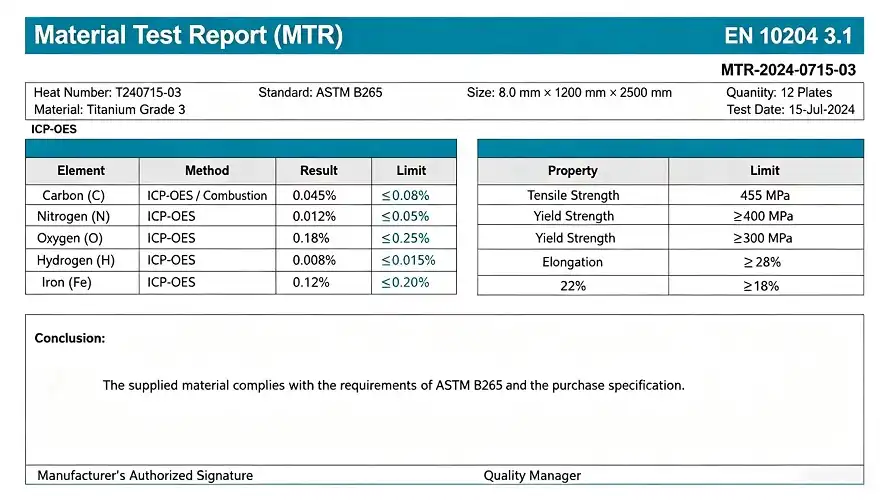
Essential Properties and Grades of Titanium Sheet Rolls According to ASTM
Before you choose a grade, you need to make sure that its chemical and mechanical properties are right for the job. Grades 1, 2, 3, 4, 5, 7, and 12 of flat-rolled coil are sold by Jucheng Titanium. It's between 0.3 mm and 12.0 mm thick and between 950 mm and 1,500 mm wide. Depending on the order, the length can be changed.
Grade 1 and Grade 2 — Commercially Pure Workhorses
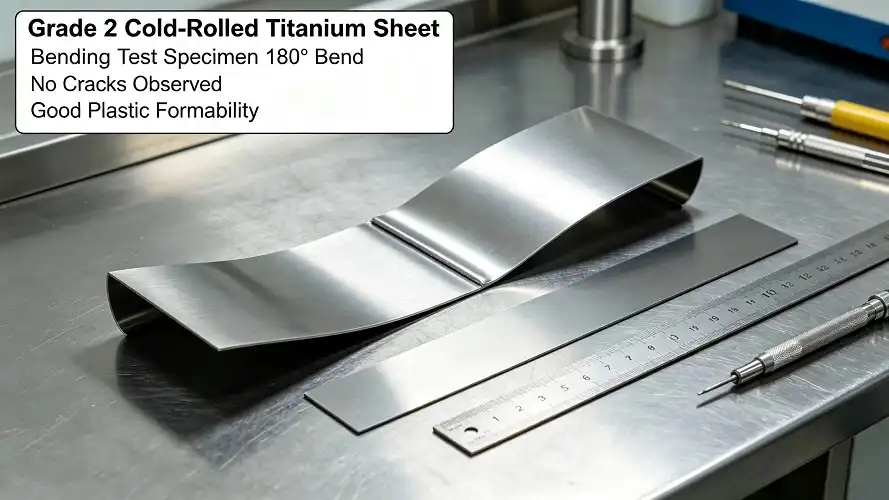
It can be stretched at least 24% and has a yield strength of at least 170 MPa. Grade 1 of ASTM B265 is the most convenient to work with. Most of the time, grade 2 commercially pure (CP) titanium is used. It works well with bonds, doesn't break down in seawater or weak acids, and has a yield strength of at least 275 MPa. Yes, both grades are good for cold rolling, and their surfaces are either annealed or acid-pickled.
Grade 5 (Ti-6Al-4V) — Aerospace and High-Strength Applications
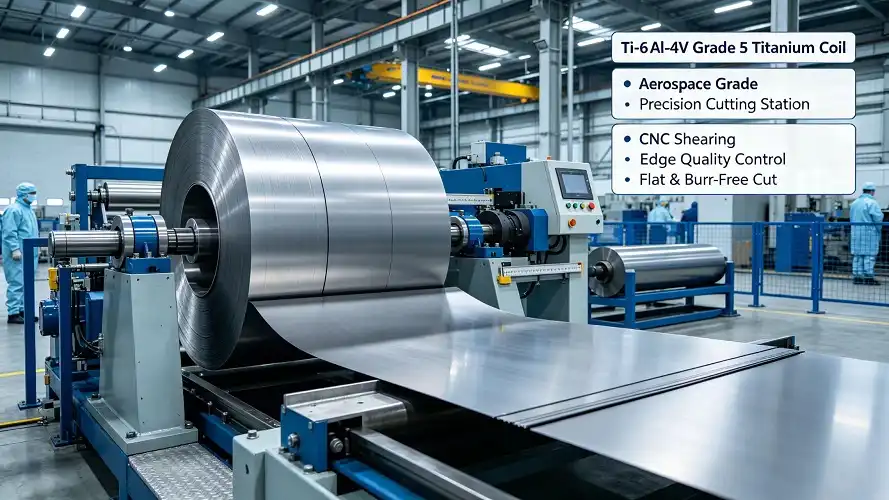
A report from the USGS in 2023 says that grade 5 titanium makes up about half of all the titanium used in the world. As per AMS 4911, the least amount of force that can be applied to a titanium sheet roll is 895 MPa. Because of this, it is often used for defense parts, engine firewalls, and structural plates on airplanes. It is important that the surface finish of this cold-rolled Grade 5 coil is Ra < 0.4 µm so that it can be cut and formed accurately.
Grades 7 and 12 — Corrosion-Resistant Variants
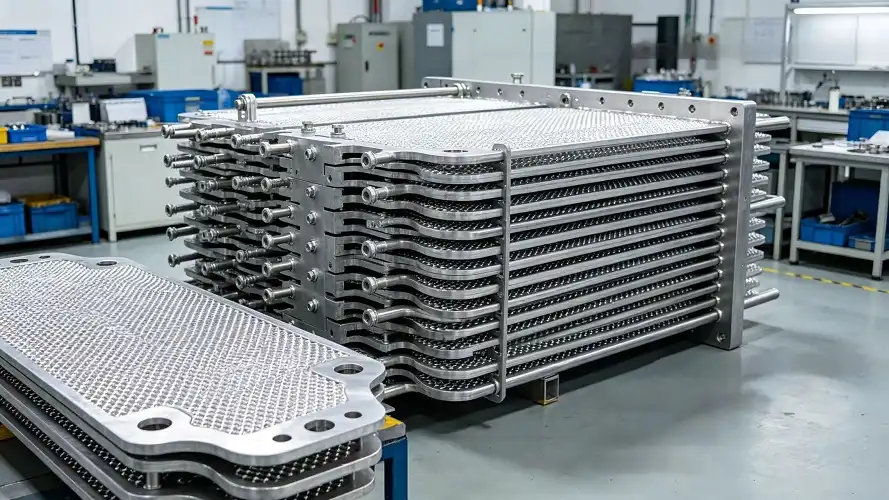
It is less likely to rust with Grade 7 (Ti-0.2Pd) and Grade 12 (Ti-0.3Mo-0.8Ni) than with other CP grades. Other reducing acids and hydrochloric acid can't hurt Grade 7. It is the best material for heat exchanger plates and chemical reactors because of this. Grade 12 works well in hot, concentrated brines and is used in distillation equipment and on platforms in the ocean.
How to Select the Right Titanium Sheet Roll Using ASTM Standards
Picking the right twisted titanium material needs to be done in a planned way. Before talking to sellers, buying engineers should decide on three things: the place where the work will be done, the way the goods will be made, and any certifications that are needed.
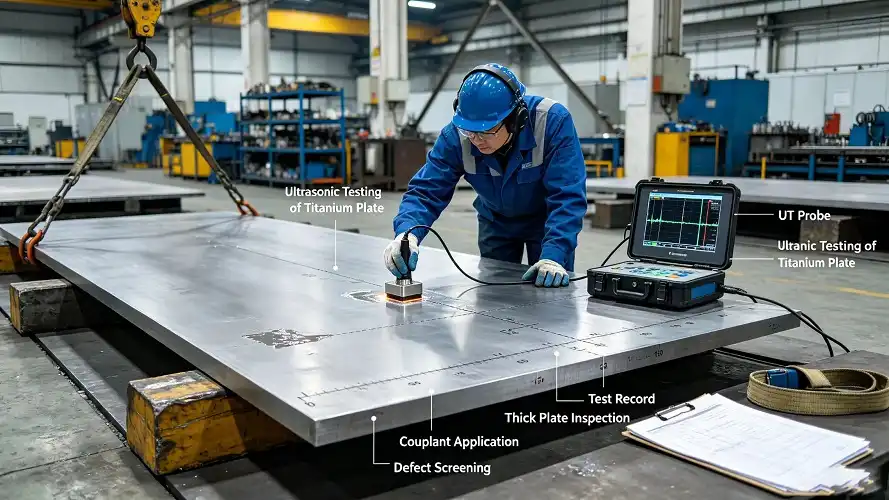
This selection framework is helpful, and it's broken down by industry: For aircraft and military, pick AMS 4911 (Grade 5) or ASTM B265 Grade 5, and test it with AMS 2631 Class A1 ultrasound waves. To get consistent results from a die press, the surface needs to be annealed, leveled, and pickled. When it comes to chemical processing, ASTM B265 says that Grade 7 is the best choice for places that are salty or full of chloride. To show that Alpha Case has been removed, ask for a hot-rolled or cold-rolled coil with a pickled acid surface that is up to 1,500 mm wide.
People working in medicine and biomedicine use ASTM F67 (Grades 1–4) or ASTM F136 (Grade 5 ELI). The MTR should have proof that it was tested for biocompatibility and made in a controlled environment. In the business world, Grade 2 under ASTM B265 or ASME SB265 is enough for most plate heat exchangers and condenser uses. It is easy to press-bend plates over and over with cold-rolled coil that has a smooth, bright surface.
- Aerospace / Defense: Specify AMS 4911 (Grade 5) or ASTM B265 Grade 5 with ultrasonic testing per AMS 2631 Class A1. Require annealed + leveled + pickled surface condition for consistent die-press performance.
- Chemical Processing: For chloride-rich or acidic environments, Grade 7 under ASTM B265 is the technically sound choice. Request hot-rolled or cold-rolled coil, width up to 1,500 mm, with an acid-pickled surface to confirm Alpha Case removal.
- Medical / Biomedical: ASTM F67 (Grades 1–4) or ASTM F136 (Grade 5 ELI) applies. Biocompatibility testing documentation and controlled-atmosphere production records should accompany the MTR.
- Industrial Equipment (Heat Exchangers): Grade 2 under ASTM B265 or ASME SB265 covers most plate heat exchanger and condenser applications. Cold-rolled coil with bright surface finish suits continuous stamping of corrugated plates.
When you look at titanium next to stainless steel or aluminum, it helps you decide to buy. Titanium is 44% lighter than 316L stainless steel, with a mass of 4.51 g/cm³. Its passive TiO₂ film keeps it from rusting in places with a lot of salt, which neither aluminum nor carbon steel can do.
Navigating Procurement Logistics with ASTM-Certified Titanium Sheet Rolls
It's not enough to know what the plan needs. The people whose job it is to buy things also have to deal with supply chain risks, wait times, and paperwork.
Verifying Supplier Certification
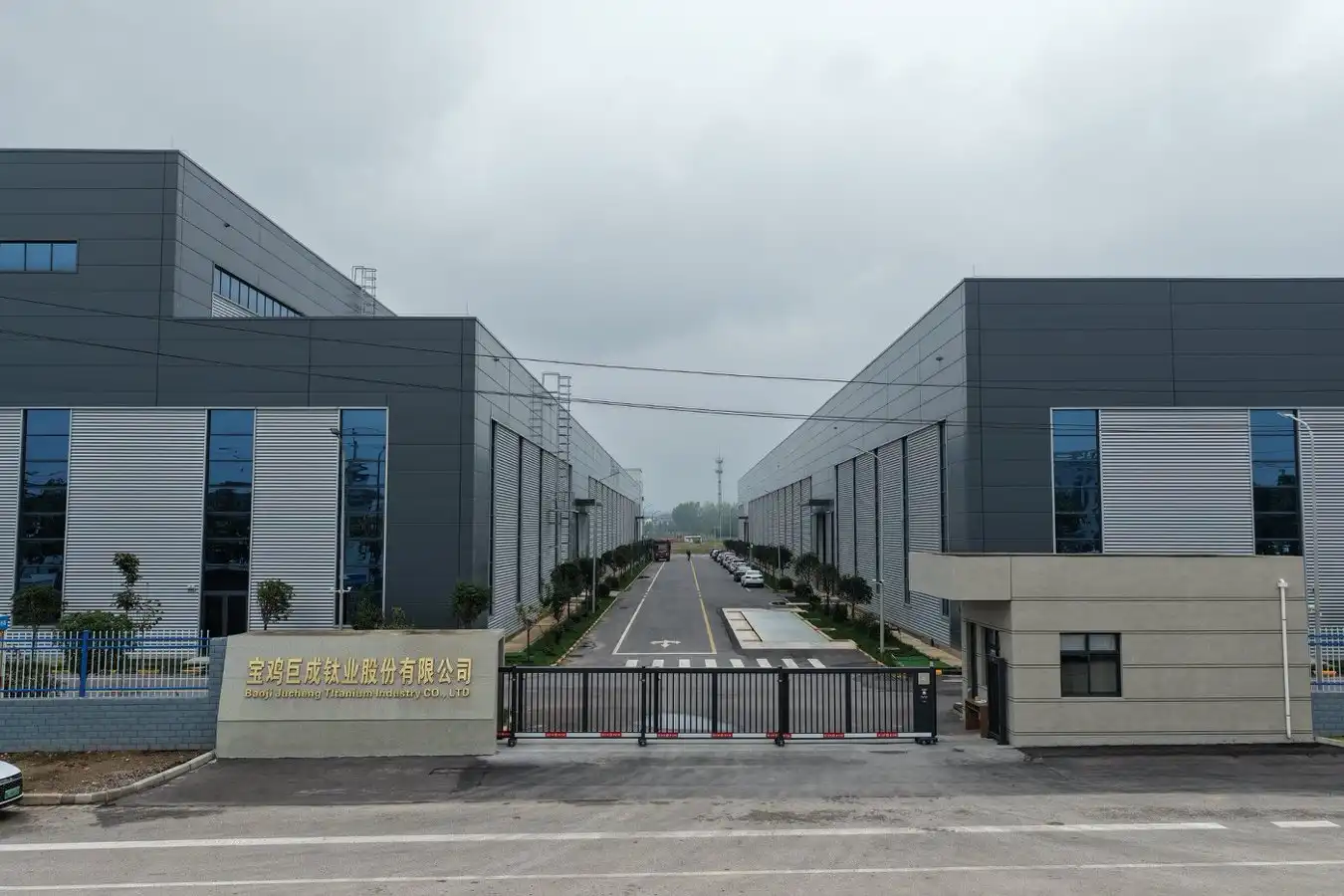
If you want to buy a titanium sheet roll from a company, make sure they have ISO 9001 certification, sample MTRs from recent orders, and proof that they have sold their goods in the U.S. before. The Ministry of Science and Technology of China gives a supplier the title of "National High-Tech Enterprise." This means that the supplier has its own infrastructure for research and development (R&D) and quality control. The owner of this title is Jucheng Titanium. They also own 4 invention patents and 41 utility model patents. People from all over the world buy their goods.
Pricing, MOQ, and Customization
ASTM-certified material costs more than uncertified stock because it has to go through tests, paperwork, and be able to be tracked by heat. When making a big B2B order, it is best to ask for a blanket purchase agreement with planned drops. This will lower the cost per unit and protect you from changes in the spot market. All year, Jucheng Titanium always has about 3,000 tons of titanium on hand. It cuts down on wait times and the chance of production delays, which is good for buyers with tight project schedules.
Shipping and Transit Risk Management
Water and rough treatment during ocean freight can damage the surface of a titanium tube. In terms of your buy order, you should include wooden boxes that are wrapped in moisture-barrier material. Ask for pre-shipment inspection records and make sure that pictures are taken of the boxes before they are put into the container.
Benefits and Challenges of Procuring ASTM-Standard Titanium Sheet Rolls
Getting titanium coil that is ASTM-certified is good for business and technology, but there are some real issues that buyers should know about ahead of time.
Key Procurement Advantages
There are more benefits to working with ASTM-compliant materials than just following the rules. In terms of how they affect work, these are the main benefits:
- Consistent mechanical properties: Each heat lot is tested against defined ASTM minima, so yield strength and elongation values do not vary between orders. This consistency protects stamping tooling from premature wear caused by hard spots.
- Confirmed Alpha Case removal: Certified acid-pickled surface states guarantee that the brittle oxygen-enriched surface layer has been removed, preventing micro-cracking during deep drawing or bending operations.
- Regulatory compliance at customs: U.S. importers sourcing titanium for aerospace or medical applications face ITAR and FDA documentation requirements. ASTM-certified MTRs simplify compliance audits substantially.
Because of these benefits, there is less trash, less unexpected machine downtime, and less work that needs to be redone with qualified suppliers. All of these things have costs that can be calculated over short, medium, and long periods of time.
Common Challenges and How to Address Them
There are still a lot of fake or false titles in the global titanium market. This can be avoided by comparing the MTR's heat number to the coil's markings and having a third-party lab check the accuracy of large orders. People who have never bought anything from Asia before should work with sellers who have sent goods to the U.S. before and whose quality records can be checked.
Conclusion
Sourcing ASTM-compliant titanium sheet roll requires more than selecting a grade from a catalog. It demands alignment between the application environment, the applicable specification (B265, AMS 4911, F67, or F136), and a supplier capable of delivering verified, traceable material on a consistent schedule. Whether your application sits in aerospace, chemical processing, medical device manufacturing, or industrial equipment, the grade selection and certification path are defined — the key is finding a supplier whose production and documentation practices can support them end to end.
FAQ
1. Why does ASTM certification matter when purchasing titanium coil?
ASTM certification confirms that the material meets defined chemical composition, mechanical property, and dimensional tolerance requirements. Without it, buyers have no objective basis for material acceptance or rejection, and downstream quality audits may require costly re-testing.
2. How do I verify that a supplier's MTR is genuine?
Cross-reference the heat number printed on the coil with the heat number listed on the MTR. For critical applications, send a sample to an independent ISO 17025-accredited laboratory for chemical analysis and compare results against the reported values.
3. Which ASTM grade is best for marine or seawater environments?
Grade 2 performs well in ambient seawater. For elevated temperatures or high-chloride brine conditions, Grade 7 (Ti-0.2Pd) under ASTM B265 provides broader chemical resistance. Grade 12 is also specified for offshore equipment exposed to hot concentrated brines.
4. What is the minimum bend radius for Grade 2 cold-rolled coil?
ASTM B265 Grade 2 cold-rolled material typically requires a minimum bend radius of 2T (twice the sheet thickness) at room temperature to avoid localized necking or cracking perpendicular to the rolling direction.
Request a Quote from Jucheng Titanium — Your Trusted Titanium Sheet Roll Supplier
Around the world and in the U.S. for more than 20 years, Jucheng Titanium has sold ASTM-certified titanium sheet roll to chemical, oil, and metal users. We have 3,000 tons in stock in widths ranging from 0.3 mm to 12.0 mm and grades Gr1 to Gr12. We can get the job done quickly and keep track of all the paperwork. Email our team at s4@juchengti.com to get a price quote right away.
References
1. ASTM International. ASTM B265: Standard Specification for Titanium and Titanium Alloy Strip, Sheet, and Plate. ASTM International, 2020.
2. SAE International. AMS 4911: Titanium Alloy Sheet, Strip, and Plate, 6Al-4V, Annealed. SAE International, 2015.
3. ASTM International. ASTM F136: Standard Specification for Wrought Titanium-6Aluminum-4Vanadium ELI Alloy for Surgical Implant Applications. ASTM International, 2023.
4. U.S. Geological Survey. Mineral Commodity Summaries: Titanium. USGS, 2023.
5. Donachie, Matthew J. Titanium: A Technical Guide, 2nd ed. ASM International, 2000.
6. Lutjering, Gerd, and James C. Williams. Titanium, 2nd ed. Springer, 2007.