
Best Grade 5 Titanium Seamless Tube for Aerospace Use
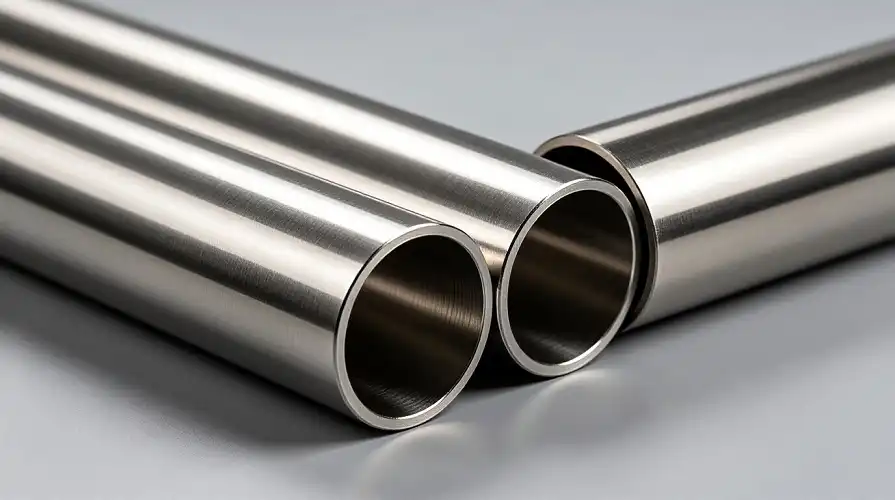
When aircraft components need high dependability, a grade 5 titanium seamless tube is best. This seamless tubing made from Ti-6Al-4V alloy, having 6% aluminum and 4% vanadium, has 895 MPa tensile strength at 4.43 g/cm³, 45% lighter than steel counterparts. Seamless design removes weld seams, assuring uniform structural integrity in high-pressure hydraulic systems, landing gear actuators, and engine components where failure is unacceptable.

Introduction
Performance-engineered materials are used in aerospace production. Every component must endure intense temperatures, high pressure, and corrosive exposure while remaining lightweight. Over two decades of servicing aerospace contractors and component manufacturers, we've seen how material selection affects project performance. Reliable supply chain partners and problematic vendors are commonly identified after manufacturing delays or certification failures.
Procurement managers and aeronautical engineers know this strain. Finding the correct grade 5 titanium seamless tube requires balancing certification, lead times, and pricing with complicated specs like ASTM B861 and AMS 4943. Technology is simplified in this guide to help with sourcing selections. We'll discuss why Ti-6Al-4V alloy tubing is essential, how production procedures impact quality, and which supplier competencies matter most when aerospace requirements are uncompromising.
Understanding Grade 5 Titanium Seamless Tube for Aerospace
The Ti-6Al-4V alloy accounts for nearly half of aerospace titanium consumption. Base titanium is combined with aluminum for strength and density reduction and vanadium for hot workability and ultimate tensile strength. This alpha-beta phase microstructure balances yield strength of 828 MPa with flexibility for forming processes, which pure titanium grades cannot equal.
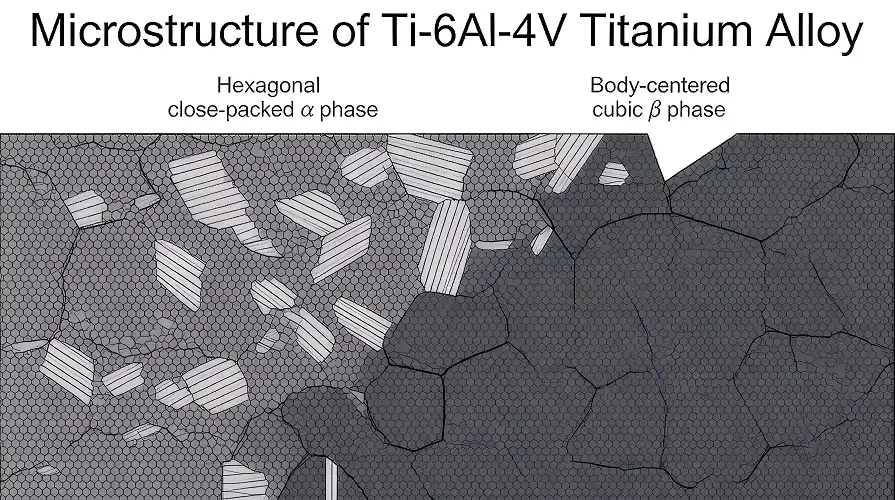
Chemical Composition and Material Properties
Aerospace material composition is strictly controlled. Oxygen stays below 0.20% to avoid embrittlement, while nitrogen and hydrogen levels are monitored by inert gas fusion. Carbon, iron, and other trace elements have strict ASTM B861 restrictions. These controls guarantee mechanical performance across production batches, a must for aeronautical certification.
The alloy is suited for engine bay applications and high-temperature hydraulic systems because it remains structurally intact at 400°C. It outperforms stainless steel in saltwater and oxidizing conditions, while commercially pure titanium grades like Grade 2 perform better in severely reducing acid situations. Fuel economy and cargo capacity improve due to the 56% density advantage over steel.
Manufacturing Methods for Seamless Tubing
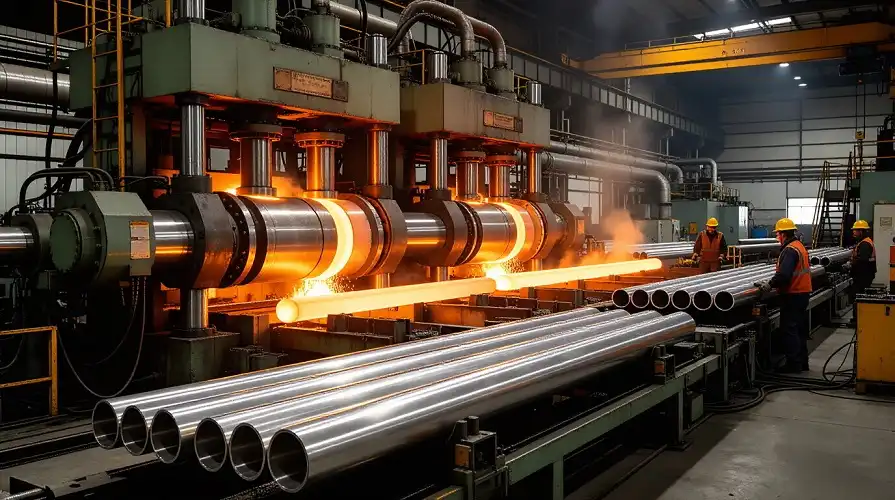
Creating a grade 5 titanium seamless tube from this high-strength alloy needs advanced processing. The most common process is hot extrusion, when titanium billets are heated and pressed into hollow tubes. The material's poor ductility makes cold pilgering harder and more costly than softer grades. As an alternative, cross-roll piercing creates the hollow shape before hot-working.
Compliance with Aerospace Standards
Aerospace materials must fulfill international requirements. The ASTM B861 standard covers seamless titanium pipe, whereas AMS 4943 covers annealed Ti-6Al-4V. ASME SB338 adds heat exchanger and condenser standards. Each standard sets chemical composition, mechanical qualities, dimensional tolerances, and surface quality limits.
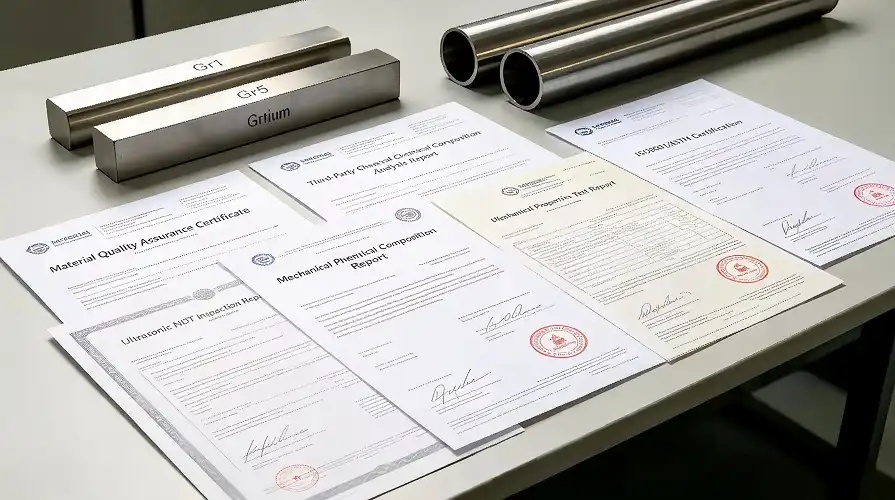
Certification includes traceability beyond material standards. Recording material processing stages to melt the batch is required for every production lot. Chemical analysis certifications, mechanical test reports, and non-destructive testing findings are aerospace purchasers' quality requirements. Aerospace supply chains are difficult for suppliers without AS9100-certified quality management systems.
Advantages and Applications of Grade 5 Titanium Seamless Tubes in Aerospace
Aerospace engineering material selection considers lifespan costs, not just purchase price. When examined via this perspective, grade 5 titanium seamless tubes have several advantages. Weight savings—reducing aircraft mass by hundreds of pounds when employed in hydraulic systems—reduces fuel costs during the aircraft's lifetime. The material's fatigue resistance and corrosion immunity reduce component replacement cycles, saving money.
Performance Benefits in Critical Systems
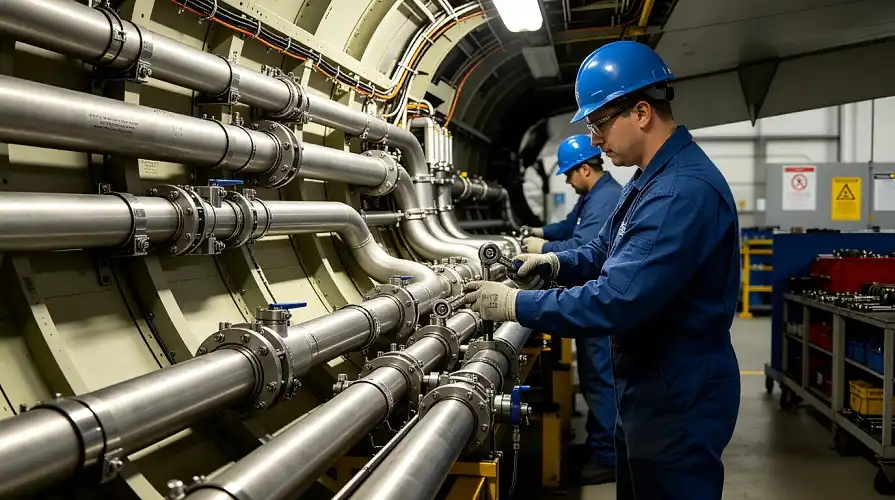
Perhaps the most demanding use is hydraulic systems at 3,000-5,000 PSI internal pressure. Seamless design removes the longitudinal weld seam in welded tubing, preventing cyclic pressurization failure. Burst pressure readings are constant due to tube wall hoop strength. Landing gear actuators and flight control systems need fatigue resistance that lasts millions of pressure cycles without cracking.
Real-World Implementation Examples
Leading aerospace manufacturers have tested Ti-6Al-4V seamless tube on several systems. This material is used widely in commercial aircraft hydraulic brake lines, actuator feeds, and pressure accumulators. Environmental control systems, auxiliary power unit connections, and weapons integration are military aircraft uses. Tubing is used in propellant feed systems and pressurization lines in space launch vehicles, where durability under harsh circumstances dictates mission success.
In some applications, the material's non-magnetic characteristics are useful. Measurement-while-drilling systems in aerospace-related businesses use titanium housings to protect sensitive magnetometers. These uses outside aerospace show the alloy's adaptability in high-performance fields.
How are Grade 5 Titanium Seamless Tubes Manufactured?
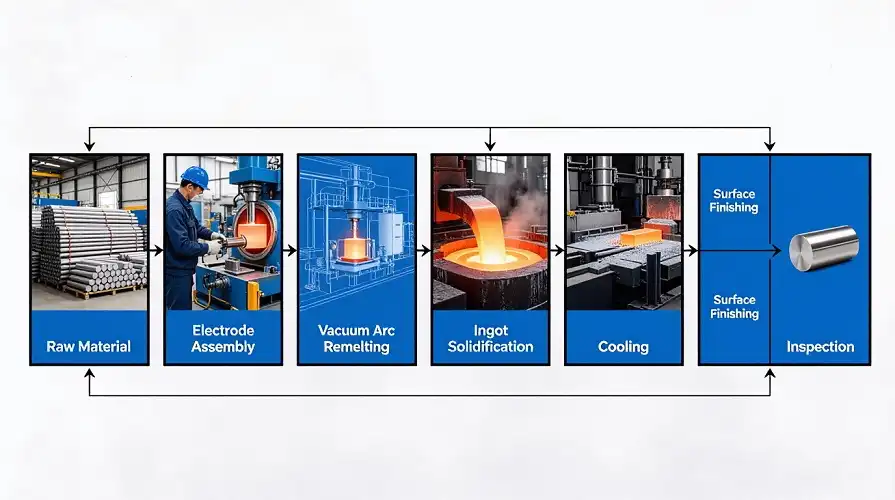
Supplier capabilities and quality hazards are assessed by procurement teams by understanding production processes. Primary melting, usually vacuum arc remelting, meets aerospace chemical purity standards. Titanium reacts with oxygen at high temperatures, requiring inert atmosphere processing during manufacture.
Hot Working and Forming Operations
Hot extrusion forms grade 5 titanium seamless tubes from ingots or billets. Hot enough for plastic deformation yet regulated enough to minimize grain development, extrusion temperatures are 870-980°C. Die geometry must balance material flow rates to create consistent wall thickness and minimize surface flaws. Mandrels support the inner diameter during piercing to generate the hollow shape.
Heat Treatment and Surface Finishing
Annealing is crucial to mechanical characteristics. To homogenize microstructure, tubes are heated to 700-800°C for defined times and cooled at regulated rates. Aerospace applications require annealed material to guarantee formability for installation while keeping strength.
Quality Assurance and Testing Protocols
Thorough testing verifies that every batch of corrosion resistant titanium pipe meets applicable industry standards. Mechanical testing measures ultimate tensile strength, yield strength, and elongation on production lot samples of the pipe. Heat treatment is quickly verified by hardness testing to confirm that the pipe meets specified material property requirements. Flattening tests compress tube sections of the pipe between parallel plates to measure its ductility. Pressure containment is proven by hydrostatic testing that exceeds service ratings for the corrosion-resistant titanium pipe.
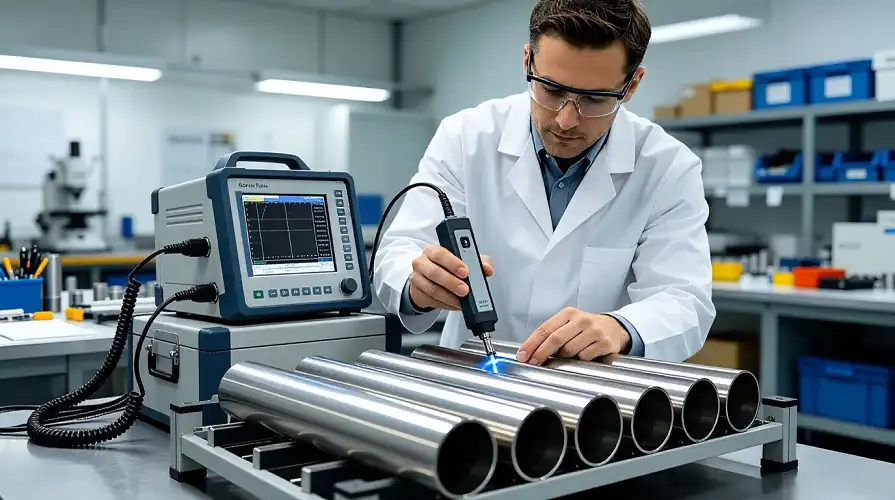
Non-destructive testing finds internal and surface faults without damage. Ultrasonic testing finds tube wall laminations, inclusions, and voids. Eddy current detects fractures and discontinuities. Radiographs show the key application of interior porosity. Each testing technique targets certain defects, and aeronautical requirements specify inspection coverage and acceptance criteria.
Comparing Grade 5 Titanium Seamless Tube with Other Materials and Grades
Understand performance tradeoffs when choosing materials. Comparing Ti-6Al-4V to other aerospace materials and titanium grades shows when this alloy is best and when others are better.
Ti-6Al-4V Versus Alternative Aerospace Materials
Stainless steel 17-4 PH has equivalent tensile strength to Ti-6Al-4V upon heat-treatment, but has a weight penalty of 7.8 g/cm³. Stainless steel tube costs less per pound, but its density reduces fuel efficiency throughout the aircraft's life. Magnetic stainless steel limits its usage in non-magnetic systems.
Performance Across Titanium Grade Options
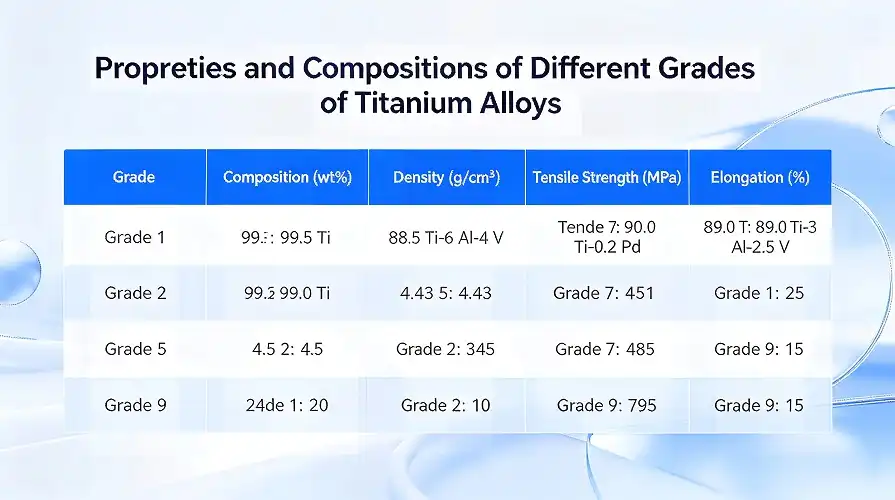
Commercially pure titanium grades like Grade 2 are more corrosion-resistant and easier to fabricate than Ti-6Al-4V, but their 340 MPa tensile strength is inadequate for high-stress structural applications. Grade 9 (Ti-3Al-2.5V) is appropriate for moderately stressed tubular components that require cold forming during installation because to its increased formability over grade 5 titanium seamless tube and 620 MPa strength.
Grade 23 Ti-6Al-4V is Extra Low Interstitial, having less oxygen, nitrogen, and iron. This alteration enhances fracture toughness and ductility, making Grade 23 ideal for cryogenic applications and medical implants that require impact resistance. For structural applications requiring high strength and moderate ductility at a cheaper cost than Grade 23, Grade 5 is the aerospace workhorse.
Procurement Guide: Buying Grade 5 Titanium Seamless Tubes for Aerospace
Sourcing goes beyond price comparisons. Selecting suppliers, ensuring quality systems, and building long-term partnerships are essential for aerospace procurement.
Evaluating Supplier Qualifications
AS9100-certified quality management systems are required for aerospace material suppliers. This certification verifies that vendors understand aerospace quality standards and follow configuration control, traceability, and corrective action processes. Beyond certification, evaluate the supplier's titanium processing experience—decades of specialization show process understanding that younger entrants lack.
Customization and Order Specifications
Most aircraft tube applications use outside diameters from 3mm to 219mm and wall thicknesses from 0.5mm to 20mm. Custom sizes meet specific needs, but tooling and minimum order numbers are higher. Aerospace fittings demand stricter diameter and wall thickness tolerances than mill tolerances. Explain dimensional tolerances.
Managing Lead Times and Inventory
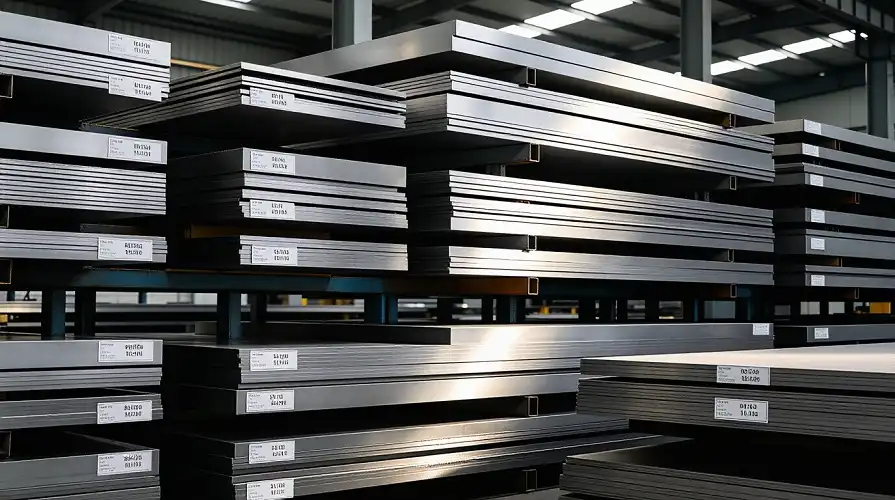
Grade 5 titanium seamless tube manufacture orders take 8-16 weeks, longer for bespoke requirements or mill capacity constraints. Strategic buyers secure preferential allocation during capacity crunches via framework agreements and guaranteed volumes. Suppliers with 3,000 tons or more inventory may fulfill conventional sizes in days, reducing delivery times.
Price Evaluation and Value Analysis
Global supply and demand affect titanium raw material prices. Baseline Ti-6Al-4V seamless tube price includes material costs and processing value-added. Different wall thickness tolerances, surface treatments, and certification requirements hinder pricing comparisons on identical specifications. Request thorough breakdowns of material, processing, and certification costs to detect value disparities.
Conclusion
Technical performance and supply chain concerns must be considered when choosing grade 5 titanium seamless tube for aeronautical applications. The Ti-6Al-4V alloy's strength, light weight, and corrosion resistance make it essential for hydraulic systems, structural components, and engines. Understanding manufacturing processes, quality criteria, and supplier capabilities guides procurement decisions that maximize component performance and program costs. The seamless design meets ASTM B861 and AMS 4943 aerospace requirements and avoids weld failure modes. Strategic supplier alliances with certified quality systems and aerospace knowledge lower program risks and enable contemporary aerospace program customisation.
FAQ
Q1: What makes seamless construction critical for aerospace titanium tubing?
Seamless tubes eliminate the longitudinal weld seam in welded tubing, a weakness in high-pressure hydraulic systems. Under cyclic pressure, fatigue fractures can form at welded joints. Standardized microstructure in seamless tube walls enables constant hoop strength and burst pressure ratings for safety-critical aircraft systems operating at thousands of PSI.
Q2: How does Ti-6Al-4V compare to commercially pure titanium grades for aerospace use?
Ti-6Al-4V has 2.5 times the tensile strength of Grade 2 commercial titanium—895 MPa vs. 340 MPa. This strength allows thinner walls and lighter components. The strength-to-weight ratio makes grade 5 titanium seamless tube the best choice for structural aerospace applications where mechanical stresses determine design, even while commercially pure grades provide somewhat better corrosion resistance in certain chemical conditions.
Q3: What certification documentation should aerospace buyers require from titanium suppliers?
Chemical analysis confirming ASTM B861 or AMS 4943 composition, mechanical test results showing tensile strength and elongation, heat treatment records showing proper annealing cycles, and traceability documentation linking finished tubes to the melt batch are all part of material certification. Ultrasonic or eddy current non-destructive test results enhance quality assurance. Suppliers should have AS9100 aerospace-quality management system certification.
Partner with Jucheng Titanium for Your Aerospace Material Needs
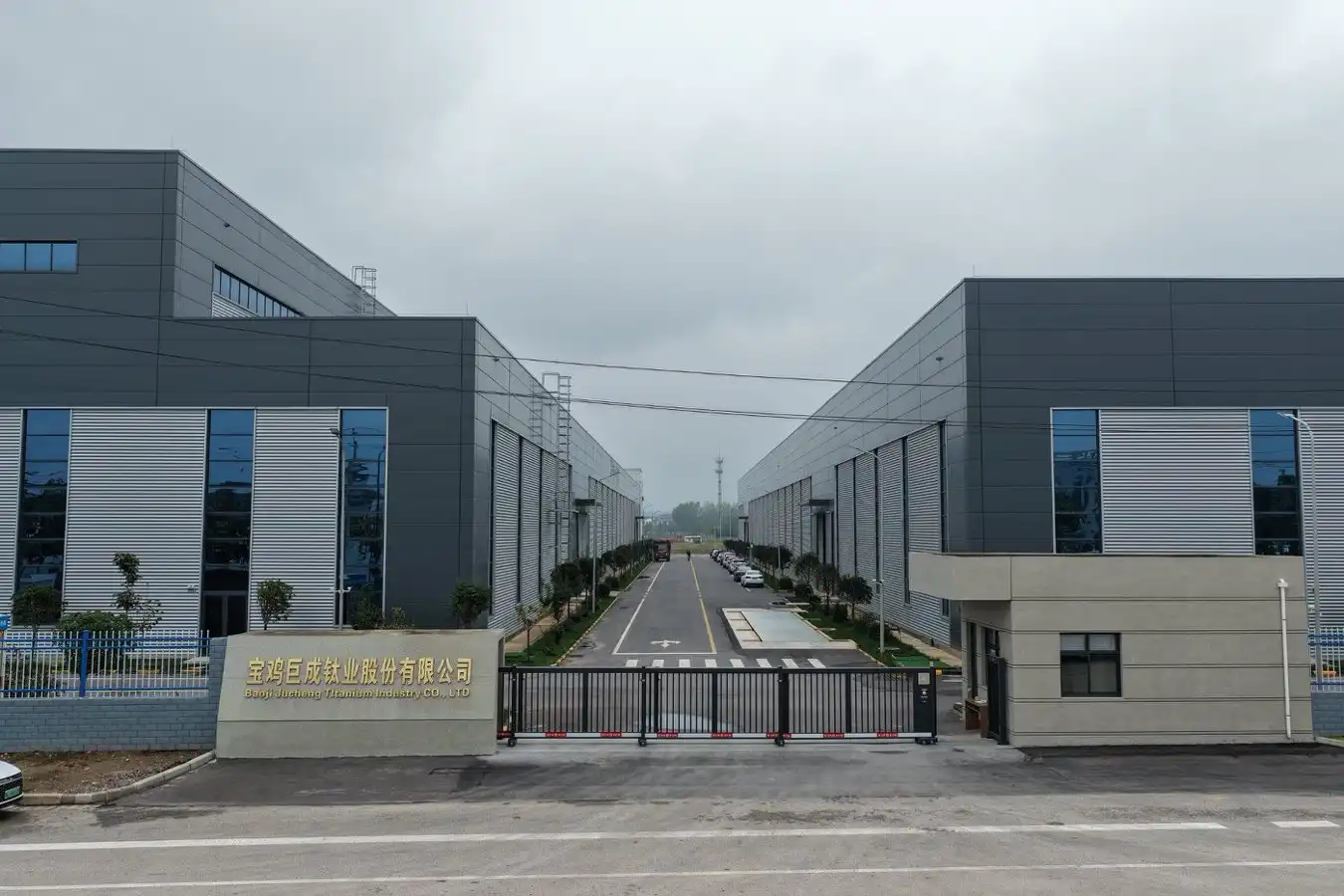
Aerospace vendors must realize that component dependability influences mission success. Jucheng Titanium has 20 years of titanium industry experience, from material processing to certification. Our 120,000-square-meter production facility offers hot extrusion, precise machining, and quality testing to ASTM B861, AMS 4943, and customer-specific standards. Our technical staff supports unique dimensions and surface treatments for aerospace applications, and our 3,000 tons of titanium inventory allows timely fulfillment of standard grade 5 titanium seamless tube criteria.
They've partnered with North American aircraft component makers, defense contractors, and material distributors as a National High-Tech Enterprise and "little giant" recognized by China. Our quality management procedures provide aerospace procurement-compliant traceability and certification. Our team provides responsiveness and technical assistance for complicated aerospace projects, whether you need prototype numbers for design validation or production volumes under long-term supply agreements. Talk to our experts at s4@juchengti.com about specs, test certificates, and how an experienced grade 5 titanium seamless tube supplier can improve your aerospace supply chain.
References
1. American Society for Testing and Materials. "ASTM B861-14: Standard Specification for Titanium and Titanium Alloy Seamless Pipe." ASTM International, West Conshohocken, PA, 2014.
2. SAE International. "AMS 4943J: Titanium Alloy Tubing 6Al-4V Annealed." Aerospace Material Specification, SAE International, Warrendale, PA, 2018.
3. Boyer, R., Welsch, G., and Collings, E.W. "Materials Properties Handbook: Titanium Alloys." ASM International, Materials Park, OH, 1994.
4. Donachie, Matthew J. "Titanium: A Technical Guide, 2nd Edition." ASM International, Materials Park, OH, 2000.
5. Peters, M., Kumpfert, J., Ward, C.H., and Leyens, C. "Titanium Alloys for Aerospace Applications." Advanced Engineering Materials, Vol. 5, No. 6, 2003.
6. Lutjering, G. and Williams, J.C. "Titanium, 2nd Edition: Engineering Materials and Processes." Springer-Verlag, Berlin Heidelberg, 2007.