



Best Titanium 6Al4V Sheet for Marine Applications
When sourcing materials for marine environments, the titanium 6Al4V sheet stands out as one of the most reliable choices available. Also known as Grade 5 titanium, this alpha-beta alloy contains 6% aluminum and 4% vanadium, delivering tensile strength of ≥895 MPa alongside a density of just 4.43 g/cm³. Those numbers matter in saltwater conditions where structural failure is not an option. This guide walks procurement managers and marine engineers through everything they need to know—from material properties and comparisons to fabrication tips and sourcing strategies.
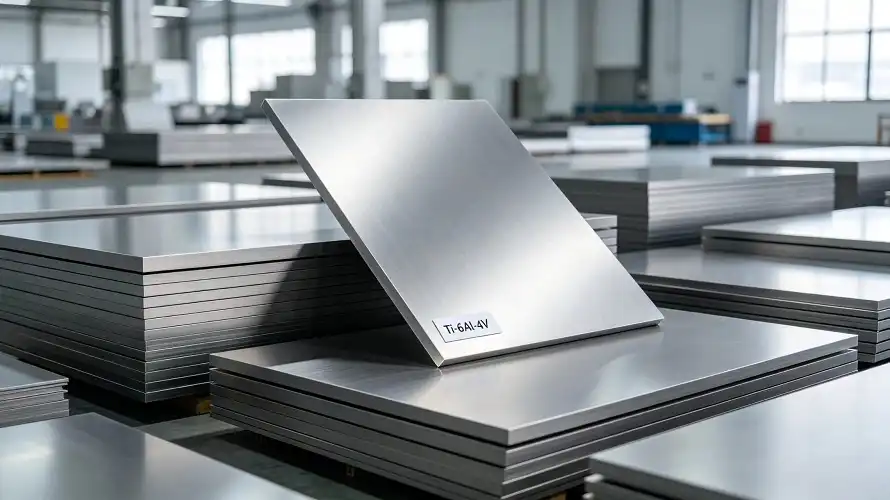
Understanding Titanium 6Al4V Sheet: Properties and Marine Suitability
Composition and Metallurgical Standards
Ti-6Al-4V is the most common type of titanium metal. It's used to make more than half of all titanium used in the world. It stays stable because of the aluminum and vanadium. The metal keeps the alpha phase steady. Because of this, the metal has a uniform microstructure. Well-known rules, such as ASTM B265, AMS 4911, and ASME SB265, are used in production. This makes sure that the quality is the same for all heat lots.
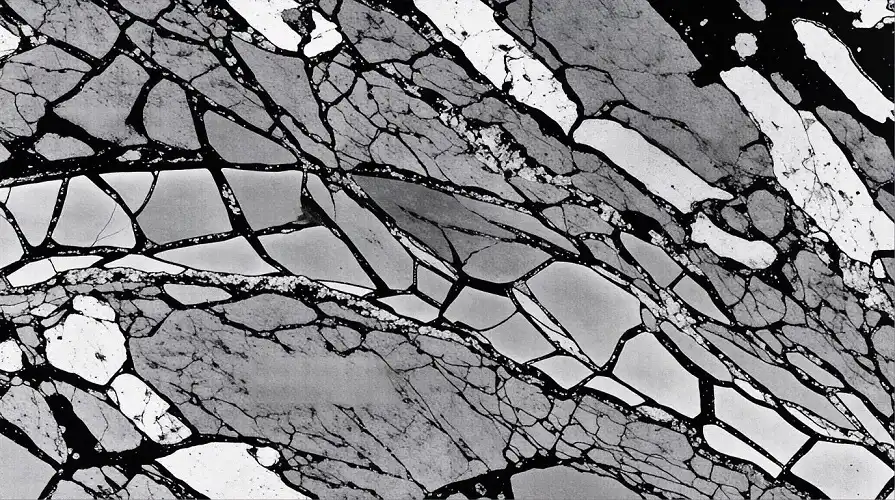
Mechanical Performance in Marine Conditions
Steel plate made of Grade 5 titanium can withstand at least 895 MPa and bend at least 828 MPa after being heated. Between 30 and 36 HRC is how hard it is. Even when naval power systems and cyclic wave loads put stress on them, these numbers stay the same. The material also stays in shape up to about 400°C, which means it can be used for steam-filled heat exchanger screens and deck parts.
Saltwater Corrosion Resistance
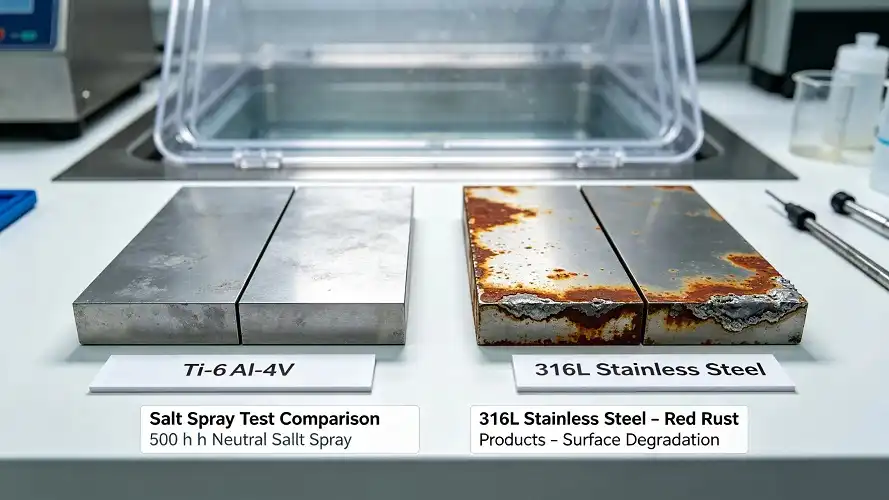
The material forms a passive oxide film (TiO₂) that sticks to itself when it comes into contact with air or water. Even though there is a lot of salt in the water, this film doesn't rust or pit in it. That's when 316L stainless steel usually breaks. NACE International shared the results of tests done by outside labs that show titanium metals often rust at rates of less than 0.002 mm/year in seawater.
Comparative Analysis: Titanium 6Al4V Sheet vs. Alternative Marine Materials
Ti-6Al-4V vs. Stainless Steel 316L
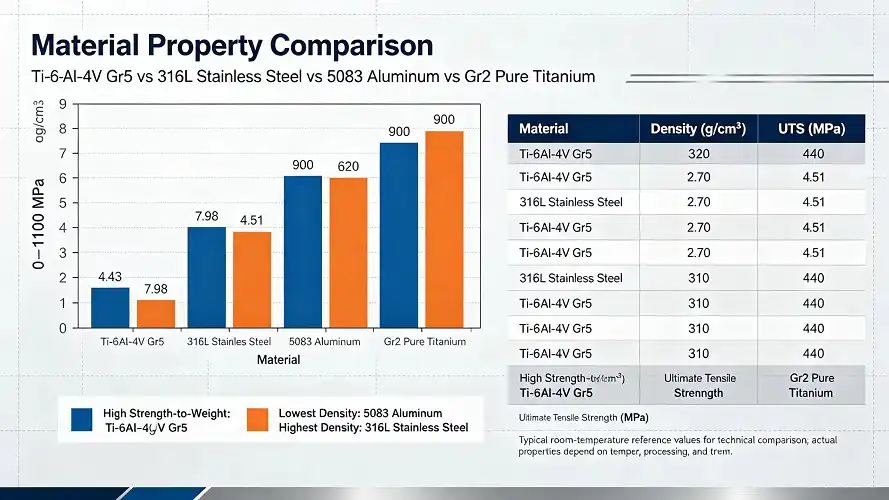
The density of stainless steel 316L is 7.99 g/cm³, which is almost twice as high as the density of Grade 5 titanium, which is 4.43 g/cm³. How much fuel is used and how the building is built to hold weight are both affected by the difference in weight when using a titanium 6Al4V sheet. Plus, Grade 5 titanium lasts longer than 316L in places with a lot of chlorine, where 316L rusts faster.
Ti-6Al-4V vs. Aluminum Alloys and Pure Titanium
Mild aluminum alloys (5000 and 6000 series) used in boats are light, but they can only handle 300–350 MPa of tension. Pure titanium types (Gr1, Gr2) make buildings less likely to rust, but they're not strong enough for ocean structures that need to hold weight. Ti-6Al-5 has the same low density goals as aluminum and is as strong as many structural steels. It fills in both gaps.
Lifecycle Cost Advantage
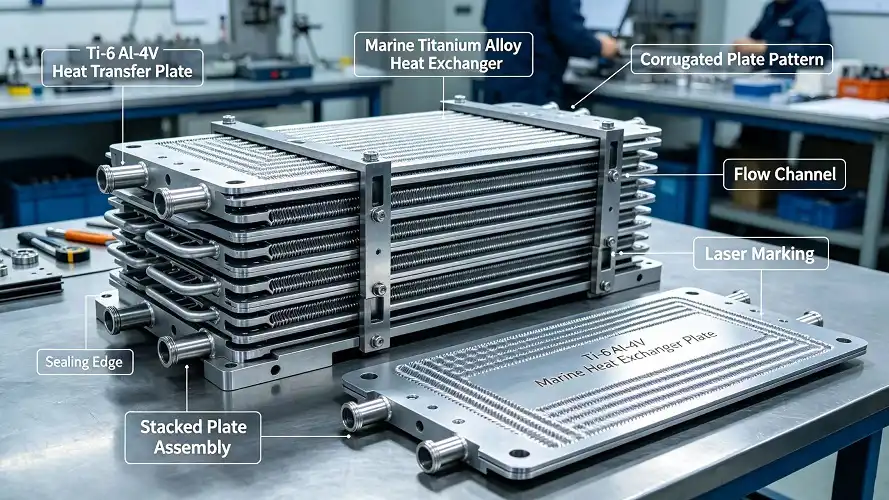
A North American naval equipment contractor did a case study that showed that replacing heat exchanger plates with Ti-6Al-4V instead of duplex stainless steel every 4 years. This made them last 15 years or more. It cost more to buy the supplies at first, but after 20 years, the total cost of ownership dropped by about 35%. When people know things like that, they talk about procurement in very different ways.
How to Select the Best Titanium 6Al4V Sheet for Your Marine Projects
Define Your Strength and Corrosion Requirements First
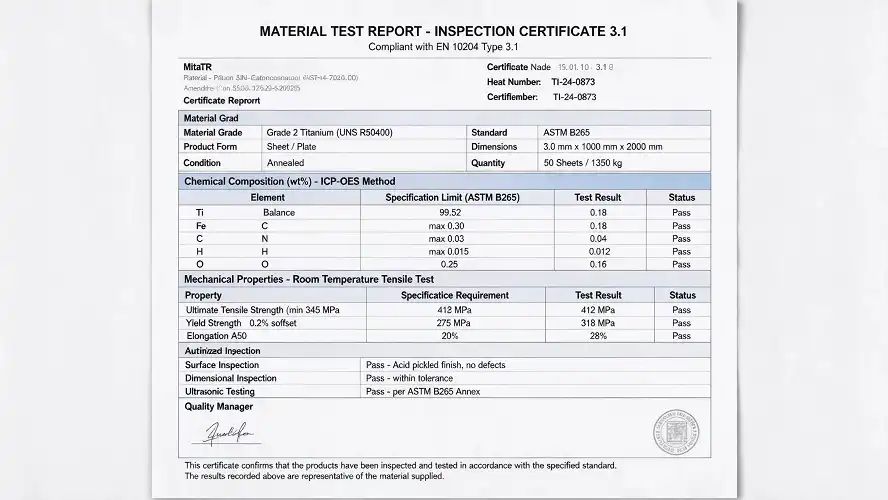
Before you place an order, make a clear plan of the area where you'll be working. There are different amounts of chloride and pressure around a part of the body that is underwater and a ventilation panel on top. To make sure the needed mechanical minimums are met, look at the ASTM B265 or AMS 4911 test certificates before accepting the material lot. This is especially important if the part needs to be heated after welding or works under fatigue loading.
Match Size and Grade to Project Specifications
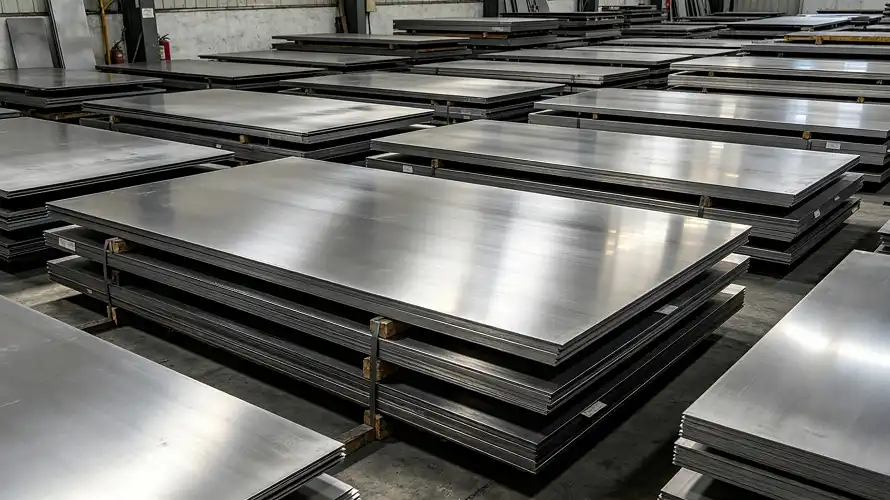
Sheets can be anywhere from 4 mm to 80 mm thick, 950 mm to 2500 mm wide, and 950 mm to 10,000 mm long. This is important to know if you are looking for sea. You can also talk about custom sizes. There are stronger grades than Grade 5. You could use Grade 7 (Ti-0.2Pd) in tough acid-chloride conditions or Grade 12 in seawater that is very hot. Which surface treatment you choose—polished, machined, or acid pickled—affects how well it works and the next steps in the manufacturing process.
Evaluate Supplier Reliability and Lead Times
Titanium wait times can go up to 12 to 20 weeks if the source doesn't have a lot in stock. Pick suppliers that keep at least a few hundred tons in stock and can give you all the paperwork you need to track it, like Mill Test Reports (MTRs) that are linked to the original ingot heat number. It should be written into the contract that certification to ASTM B265, AMS 4911, or ASME SB265 must be met.
Machining and Fabrication of Titanium 6Al4V Sheet for Marine Use
Tooling and Cutting Best Practices
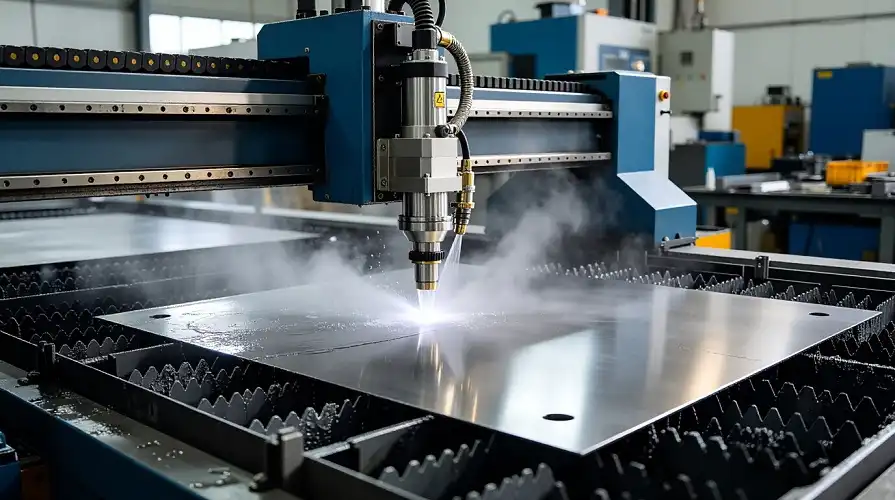
Titanium 6Al4V sheet doesn't move heat around well (about 6.7 W/m·K), so heat builds up at the tip of the tool instead of moving through the workpiece. Make sure the cutting speed isn't too fast, and there is a lot of water flow so the work doesn't get too hard. When measuring sheets, waterjet cutting or laser cutting with an inert gas shield stops the edges of the cuts from getting weak in the HAZ.
Welding and Post-Weld Treatment
It is possible to weld Grade 5 titanium well with Grade 5 or Grade 23 filler wire and GTAW (TIG) as long as oxygen doesn't get to the weld pool or the area that was heated up. It's likely that the cloth should be thrown away if the bond color is anything other than pale straw (gold or blue tint). After welding, marine parts need to be annealed at 480–600°C to release stress and make them flexible again. This also makes them resistant to corrosion.
Quality Assurance Before Deployment
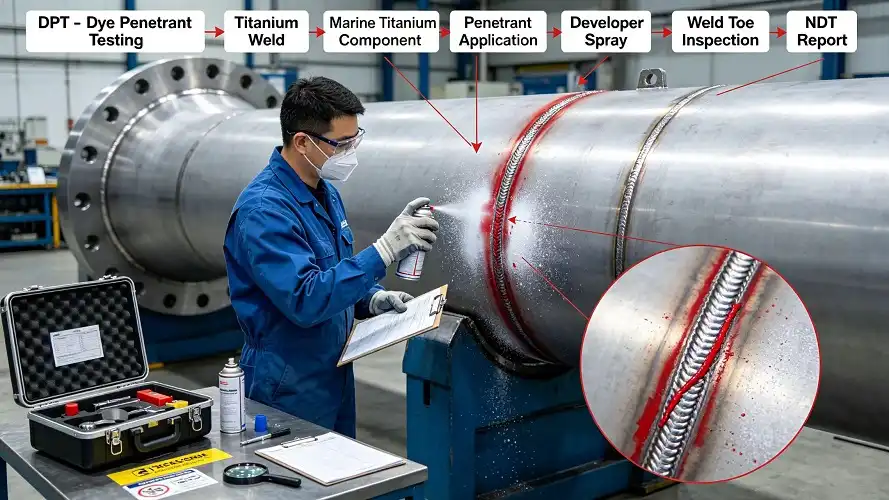
Before putting any sheet or fabricated part into a marine assembly, make sure it fits correctly, check its dimensions, and do a surface inspection according to ASTM A380. Also, make sure the mechanical properties match the MTR that was given. Dye penetrant testing on weld seams finds flaws that break the surface and could lead to crevice corrosion if the seams are left in salt water for a long time. A lot fewer service requests and trouble in the field happened after these steps were taken.
Procurement Guide: Where and How to Buy Titanium 6Al4V Sheets for Marine Applications
Key Supplier Markets and Credentials
It is well known that Timet (Titanium Metals Corporation) and VSMPO-AVISMA both make and sell titanium in the US and Europe. They serve aircraft and business customers. If a company wants to work on marine projects, make sure it has current mill approvals under ASTM B265 or AMS 4911. Also, make sure that the stock has the most recent certifications and not papers from older lots that are being used for newer orders.
Pricing Factors and Custom Order Expectations
Many times, the price of a titanium sheet is based on how much it weighs per kilogram. It takes longer and costs more to make grade 5 than widely used pure grades, so it costs more. Sheets that have been hot-rolled, annealed, rolled, leveled, pickled, and given a smooth finish cost more than plain mill-finish stock. You can get better deals on prices, wait times, and packaging for big marine jobs if you offer a certain number of items.
Why Jucheng Titanium Belongs on Your Shortlist
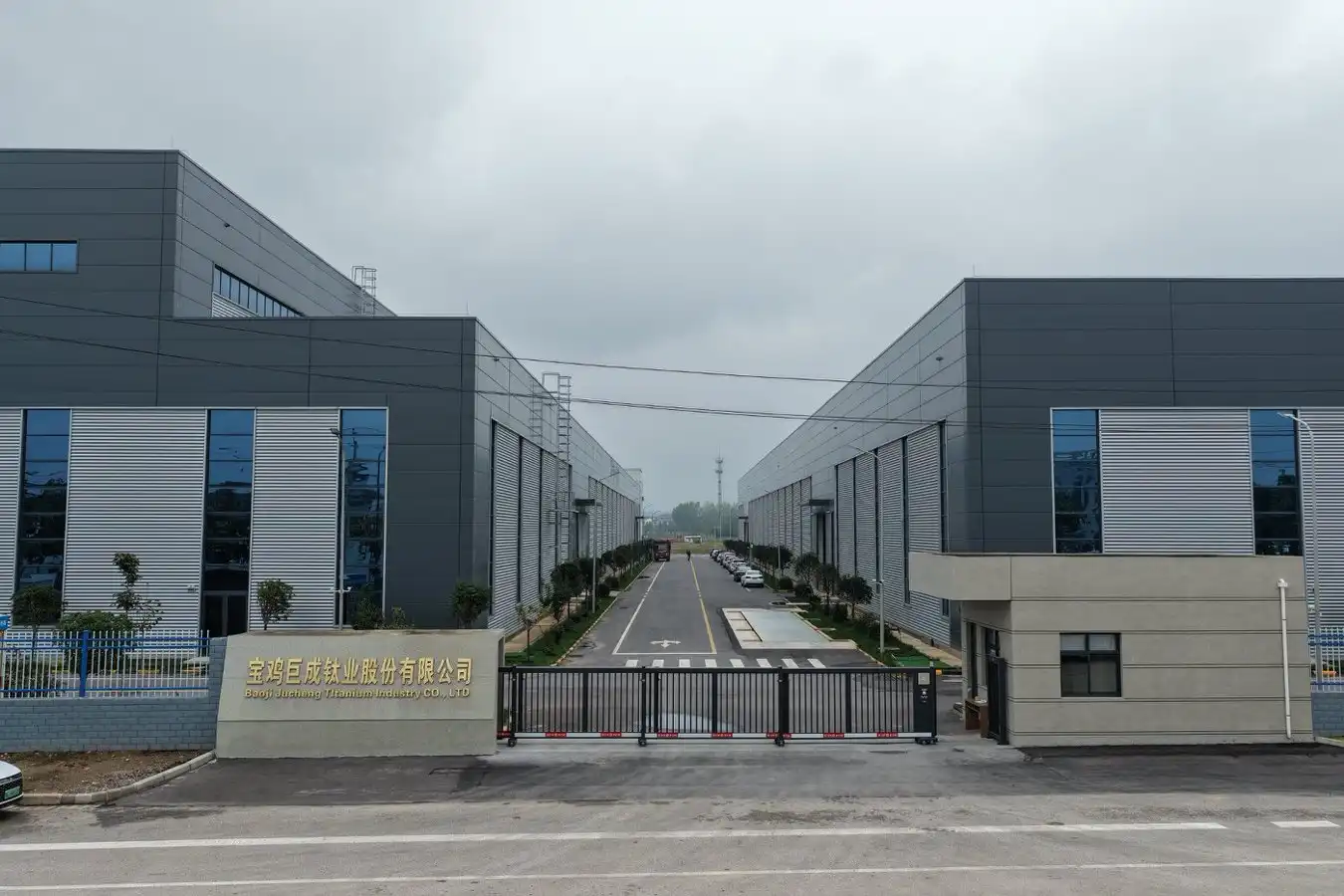
When it opened in 2004, Baoji Jucheng Titanium Industry Co., Ltd. was in the Titanium Valley of China. The business has 41 usage model patents and 4 idea patents. It always has about 3,000 tons of titanium on hand and ships it to customers in North America, Europe, and Southeast Asia. Their marine-grade sheets are made in line with ASTM B265, AMS 4911, and ASME SB265 standards.
Conclusion
To pick the best titanium 6Al4V sheet for marine use, you need to look at its mechanical properties, how it handles corrosion, how it needs to be made, and how much it will cost over its whole life. It has been shown over and over again that Ti-6Al-4V is better than stainless steel and aluminum for long-term use in salt water, especially when it is loaded and emptied a lot and is exposed to chloride. To avoid having to pay a lot of money to change materials in the middle of a project, procurement teams should make sure that the project requirements are clear, that supplier certifications are checked, and that fabrication needs are known from the start. That process is a lot easier if you have a qualified provider with a lot of records that you can keep track of.
FAQ
1. Does Ti-6Al-4V sheet perform better than stainless steel in marine environments?
Yes. Grade 5 titanium resists chloride-induced pitting and crevice corrosion far better than 316L stainless steel. NACE International data shows titanium corrosion rates in seawater below 0.002 mm/year, while stainless steel may begin pitting at chloride concentrations above 200 ppm.
2. What customization options are available for marine sheet orders?
Sheets are available in thicknesses from 4 mm to 80 mm, widths up to 2,500 mm, and lengths up to 10,000 mm. Surface finishes include polished, machined, and acid-pickled options. Custom cutting, OEM branding, and packaging are also available depending on supplier capability.
3. What grades besides Grade 5 suit marine applications?
Grade 7 (Ti-0.2Pd) performs well in acidic chloride environments, and Grade 12 suits high-temperature seawater service. For less demanding structural applications, Grade 2 commercially pure titanium offers adequate corrosion resistance at lower cost.
4. What lead times should I expect when ordering marine-grade titanium sheets?
Standard lead times range from 2–4 weeks for in-stock items and 8–16 weeks for custom orders. Suppliers with large standing inventory—like those maintaining 3,000+ tons on hand—can often fulfill standard dimensions faster.
Request a Quote from Jucheng Titanium — Trusted Ti-6Al-4V Sheet Supplier for Marine Industry
For more than 20 years, Jucheng Titanium has worked with businesses and the military in the US and around the world. It's possible for us to make unique parts, and they have 3,000 tons of stock on hand. Our technical team is ready to help you with any marine project, whether you need flat annealed sheets or titanium 6Al4V sheets that are cut just the way you want them. Write to us at s4@juchengti.com to find out about specs, prices, and wait times.
References
1. NACE International. Corrosion of Titanium Alloys in Marine Environments. NACE International, 2018.
2. ASM International. Titanium: A Technical Guide, 2nd Edition. ASM International, 2000.
3. ASTM International. ASTM B265: Standard Specification for Titanium and Titanium Alloy Strip, Sheet, and Plate. ASTM International, 2020.
4. Donachie, Matthew J. Titanium: A Technical Guide. ASM International, 2000.
5. Lutjering, G., and Williams, J.C. Titanium, 2nd Edition. Springer, 2007.
6. Peters, M., Kumpfert, J., Ward, C.H., and Leyens, C. "Titanium Alloys for Aerospace Applications." Advanced Engineering Materials, Vol. 5, No. 6, 2003.