
Can titanium plates be left in the body safely?
Titanium plate implants can be safely left in the human body for extended periods, often for a lifetime. Medical-grade titanium demonstrates exceptional biocompatibility, meaning it integrates seamlessly with human tissue without triggering adverse immune responses. Unlike other metals that may cause inflammation or rejection, titanium's unique properties allow it to form stable bonds with bone tissue through a process called osseointegration, making it the gold standard for permanent implants in orthopedic, dental, and reconstructive surgeries.
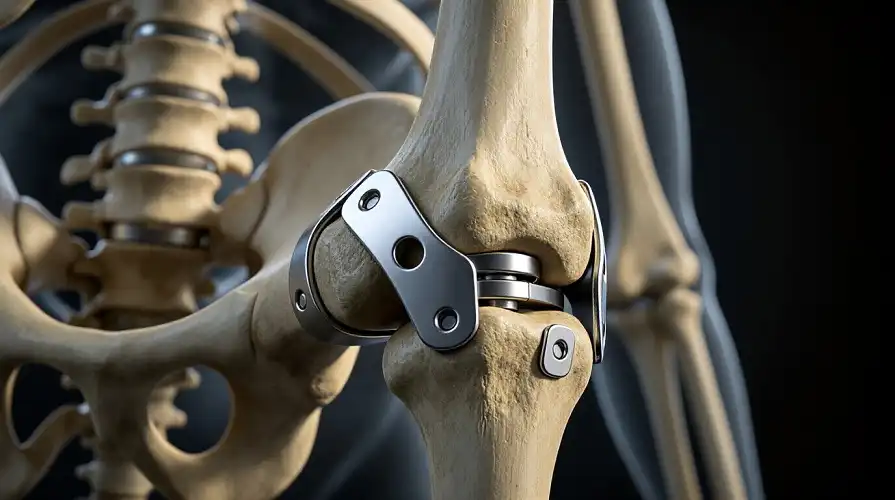
Understanding Titanium Plates in Medical Applications
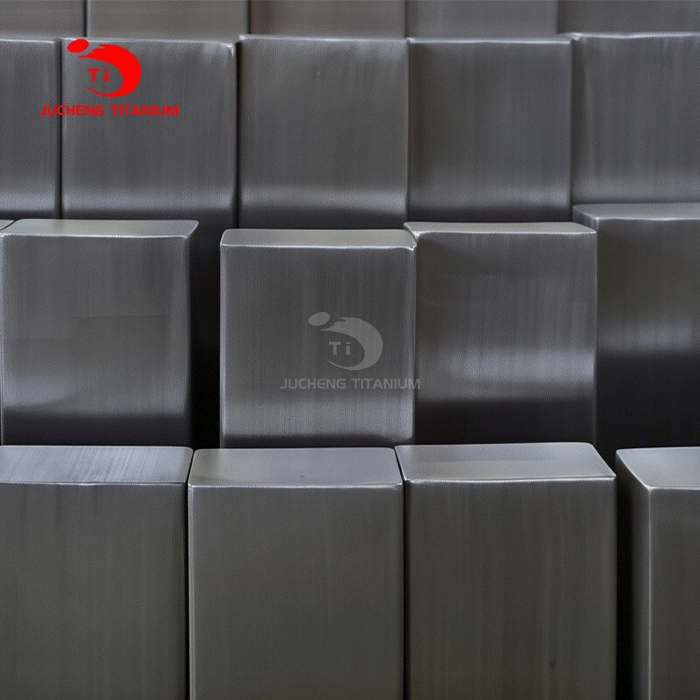
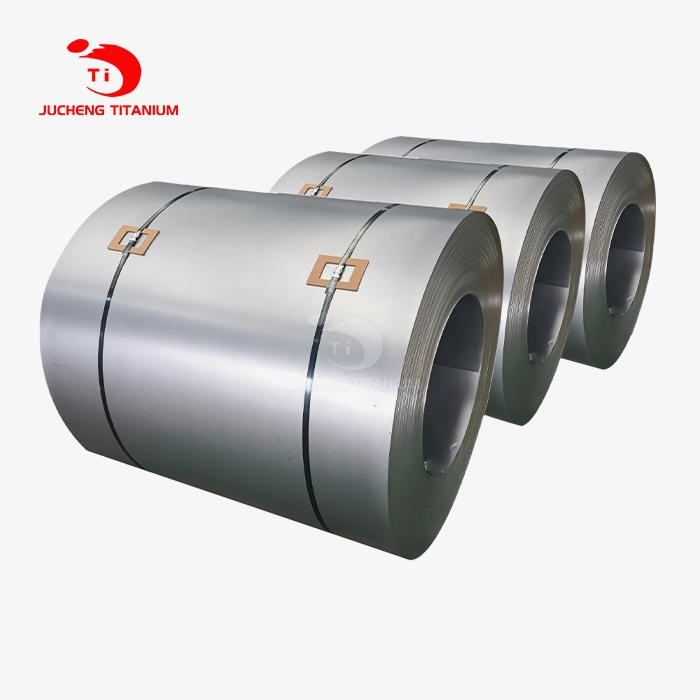
The titanium plates used in medicine are high-tech building materials that were made to be put in people. Most of the time, these flat-rolled goods are thicker than 4.75 mm and are used as structural parts in orthopedic and bone repair surgeries.
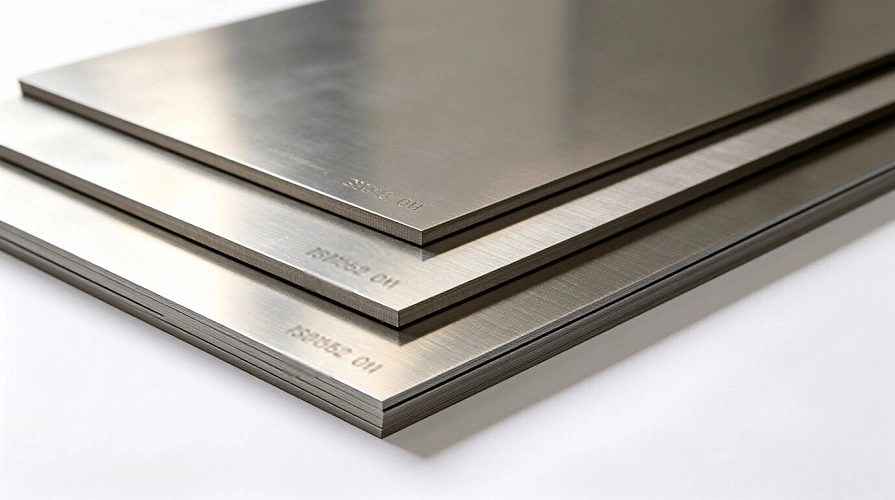
Medical-Grade Titanium Classifications
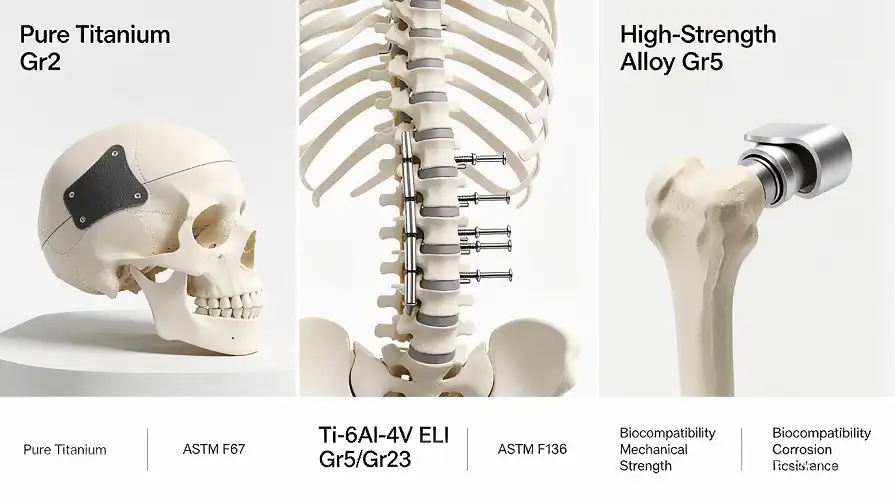
In medicine, different kinds of titanium are used, and each one is better for certain kinds of surgeries. Titanium types that are sold in bulk (Gr1, Gr2, and Gr4) are great for general implant use because they don't rust and can bond with living tissue. Grade 5 titanium (Ti-6Al-4V) is very strong for its weight, which makes it ideal for heavy-duty applications like spine fusion gear and joint replacement parts.
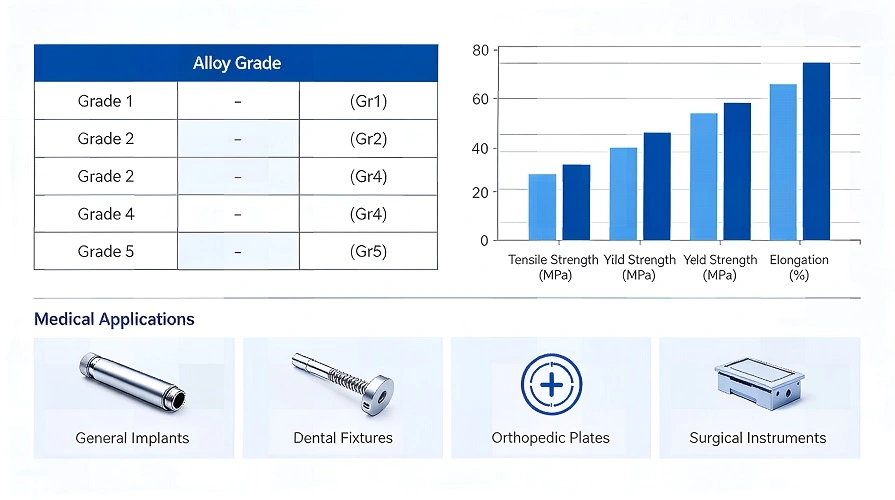
Modern techniques are used to make these things, and they have to meet strict medical standards. Rolling, heating, leveling, and cooling are just a few of the steps that hot-rolled titanium plate goods go through to get the best mechanical properties. Grinding, sanding, and acid cleaning are all ways to treat surfaces to get rid of dirt and make them smooth, which helps tissues stick together.
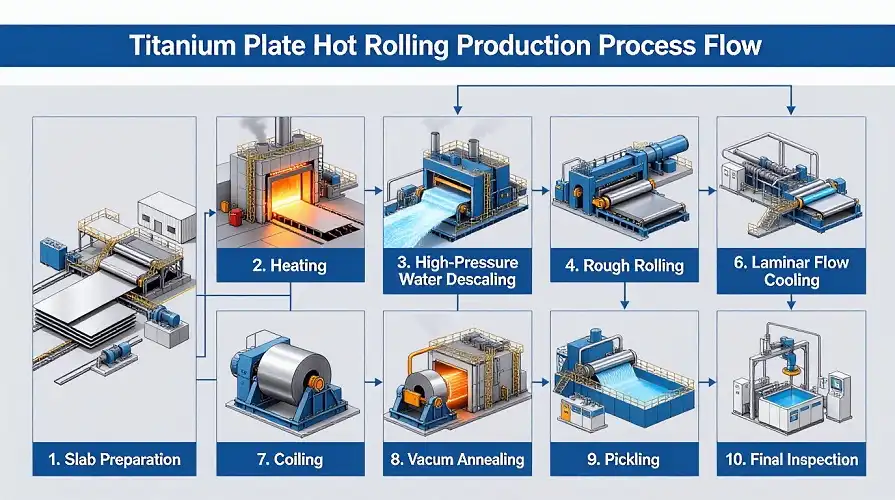
Fabrication Standards for Medical Applications
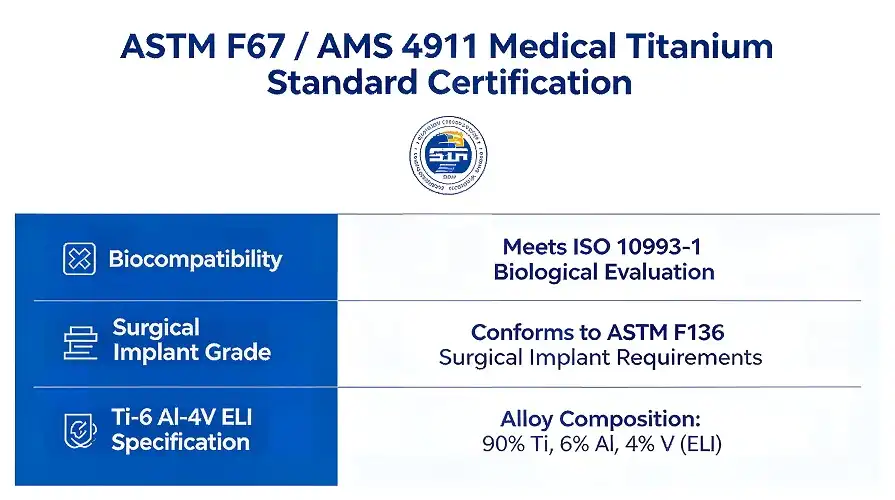
Medical titanium plate must meet very strict requirements, according to international standards like ASTM B265, ASTM F67, AMS 4911, and ASME SB265. These rules apply to everything, from the chemicals that make it up to how it works. They check to see if the quality stays the same from one batch to the next. For implants to work well in the long run, they need to be flexible and able to release stress when they are softened.
Good manufacturers who keep a close eye on measures can make thick walls from 4 mm to 80 mm, wide walls from 950 mm to 2500 mm, and long walls up to 10000 mm for a titanium alloy plate. Custom measures let doctors choose implants that are the right size for each patient because they are made to fit the needs of the surgery.
Safety and Biocompatibility of Titanium Plates Left in the Body
Titanium implants are very safe because of the unique way that the metal works with the chemicals of the body. There is almost no risk to leaving titanium plate implants in the body permanently if they are made properly. This has been shown over many years of clinical research.
Osseointegration and Tissue Compatibility
Titanium is very safe for living things because when it comes into contact with air, it forms a steady oxide layer. Metal ions can't get into the tissues around the implant because of this shield. This stops the inflammatory responses that happen with other implant materials. During the osseointegration process, living bone and the implant surface form direct anatomical and functional links. In this way, the titanium becomes a part of the patient's bones.
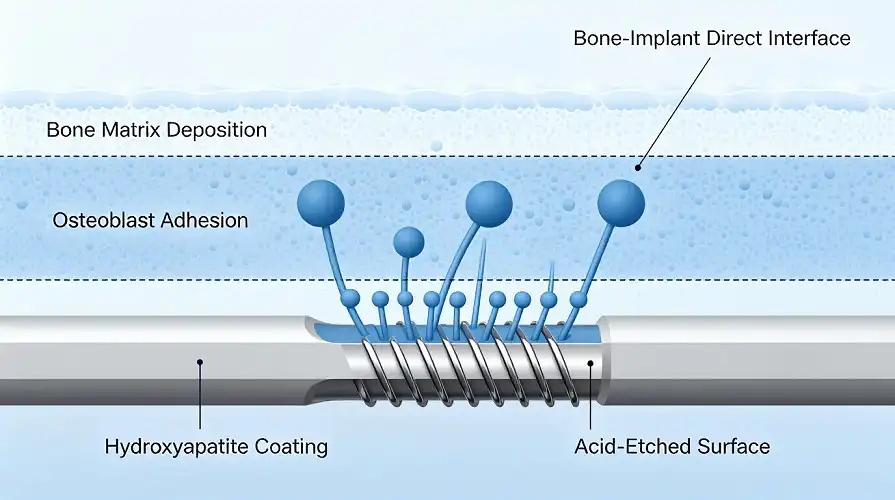
Scientists have found that metal implants don't become less stable over time. It won't rust like stainless steel or other metals, so it will work well in the body's unpredictable organic environment. Twenty-year studies that followed people with titanium implants found that the material breaking down or getting into the body and harming it did not cause any big problems.
Hypoallergenic Properties and Immune Response
Tiny amounts of titanium don't make people allergic, but metals that contain nickel can make allergic people sick. Titanium is still not very sensitive; tests on people have shown that less than 1% of the population is sensitive. Ti-80 implants can be used for people who can't get cobalt-chromium or stainless steel implants because they don't react badly with metal.
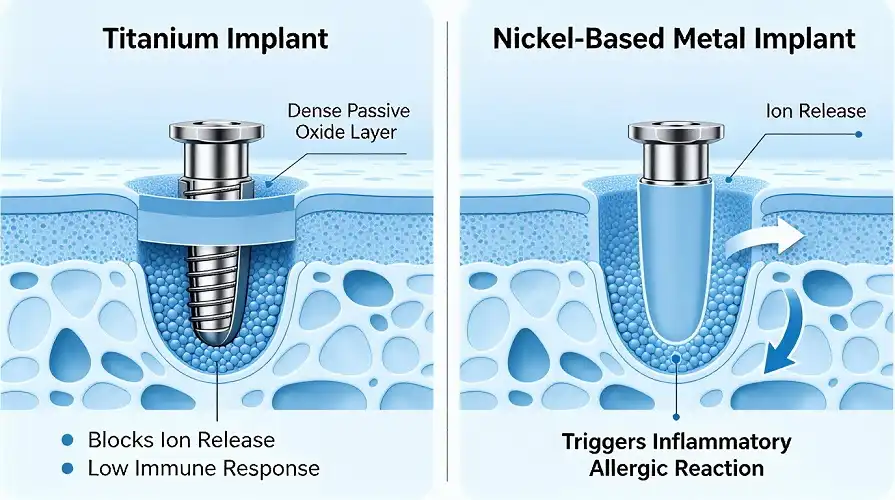
Certain metals can rust when they come into contact with body fluids, but this substance is neutral, so it doesn't rust. With this protection, both patients and doctors don't have to worry about the health risks that come with metal ions moving around.
Practical Considerations for B2B Procurement of Titanium Plates for Medical Use
People who make medical devices need to know a lot about titanium specs in order to buy the right things. A lot of things are taken into account when picking an implant because they directly impact how well it works and how safe it is for the patient.
Grade Selection and Application Matching
The people who buy things have to make sure that the different kinds of titanium are used in the right ways in medicine. Because they are easy to shape and don't rust, titanium grades 1 and 2 are great for building tools that don't have to hold weight, like skull plates and face repair tools. When used under mild stress, Grade 4 is good because it is stronger and still biodegradable.
It is best to use Grade 5 Ti-6Al-4V for high-stress jobs like spine bolts, hip stems, and impact plates. It is important for patients' comfort that this metal is both strong and light. It has tensile strengths of more than 900 MPa. When you know these differences, you can make smart purchases that meet both your need for speed and your need to save money.
Supply Chain Optimization Strategies
You need to find skilled sellers who know how to meet legal requirements if you want to buy a medical titanium plate. Companies that make things should rate service providers based on how well they follow licensing rules, keep quality under control, and make sure their delivery methods work every time. It is necessary to buy a certain amount of medical-grade titanium because it is so specialized. This means that material needs to be carefully planned so that costs are kept in check with supply needs.
The best providers let you make changes, like exact cutting, surface finishing, and packing services that make the production process easier in the long run. These extra services can help keep track of goods all the way through the supply chain and lower the cost of production as a whole.
Comparison of Titanium Plates with Other Metals for Implants
Many studies have been done on different metals for medical implants, and titanium has always been the best choice for long-lasting implants.
Performance Metrics Analysis
Although titanium is much lighter than stainless steel, it is much harder. Other than that, it works about the same. This benefit makes the implant lighter, which makes the patient feel better and puts less stress on the bone tissue around the implant. Titanium's springy stiffness is more like that of human bone than steel's. This means that titanium doesn't protect against stress as well as steel does, which can keep bones from breaking.
Titanium works really well in conditions that are like body fluids, according to tests that measure its corrosion resistance. In chloride-rich environments, stainless steel can pit and rust, but titanium plate implants will always have a smooth surface. In the long run, this means that people do better and need fewer treatments to fix their problems.
Material Comparison Matrix
Stainless steel implants, while cost-effective, present several limitations, including potential nickel sensitivity and inferior corrosion resistance. Cobalt-chromium alloys offer high strength but suffer from wear particle generation that can cause inflammatory responses. Materials made of metal don't work well with living things enough to be inserted permanently.
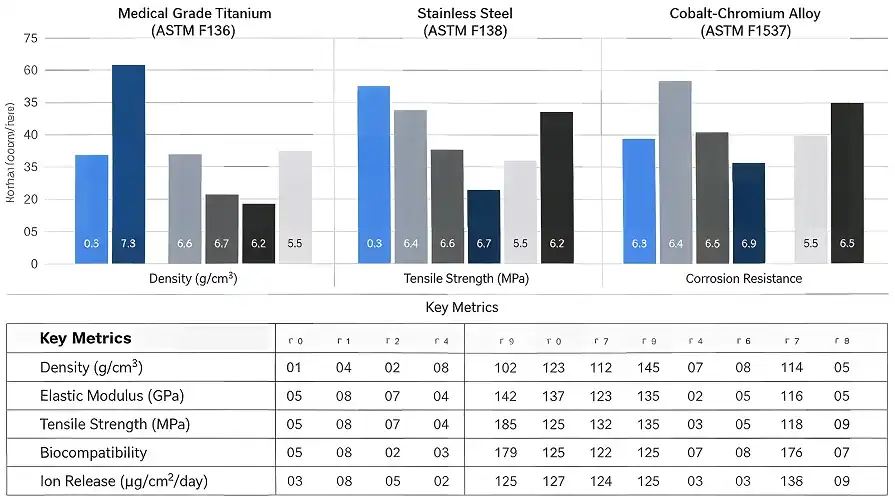
Titanium is the best material for important medical reasons because it is light, strong, doesn't rust, and can be used with living things. The higher cost of medical-grade titanium products is worth it because they are more efficient.
Ensuring Quality and Compliance When Buying Titanium Plates for Medical Use
When making medical equipment, you need to keep an eye on quality control and make sure you follow the rules each step of the way. People who make things and people who buy them are both safer when they know what certifications are needed and how skilled the providers are.
Regulatory Standards and Certification Requirements
Medical titanium plates have to meet a lot of different legal systems, like FDA approval, ISO certification, and ASTM standards. On the one hand, ASTM F67 talks about surgical implants made of pure titanium, and on the other hand, ASTM F136 talks about the need for Ti-6Al-4V alloys. These rules limit the chemicals that can be used, the mechanical properties that they must have, and the ways that they can be tested to make sure that materials always work the same way.
An audit and study of the certificate are steps that buying teams should take to make sure that sellers are following the rules. A material test report must be included with every package. This report includes the results of the chemistry analysis, the mechanical tests, and details on how the materials can be tracked. These pieces of paper are what government records and quality system compliance are made of.
Supplier Evaluation Criteria
There are qualified titanium plate providers who have worked with medical products in the past, follow ISO 13485 quality management standards, and give full expert support for titanium alloy plates. A maker should know how to use controlled oxygen processes, track dimensions accurately, and clean in ways that have been shown to get rid of contamination risks.
Service after the sale is what makes luxury sellers different from those who sell everyday things. It's very important to have expert help, be able to solve problems quickly, and be able to do these things during the product creation and manufacturing scale-up stages. Relationships that last a long time with dependable providers offer security and growth opportunities that are good for everyone.
Conclusion
Medical titanium plates provide safe, reliable solutions for permanent implantation applications. The material's exceptional biocompatibility, corrosion resistance, and mechanical properties make it the gold standard for orthopedic and reconstructive procedures. Clinical evidence spanning decades confirms that properly manufactured titanium plate implants can remain safely in the human body for life without adverse effects. Procurement professionals should prioritize quality, certification compliance, and supplier expertise when sourcing medical-grade titanium materials to ensure optimal patient outcomes and regulatory compliance.
FAQ
Q1: Are titanium plates MRI-safe for patients?
Most people believe that titanium plates are safe for MRIs since titanium is not magnetic. Since magnetic forces don't have a big effect on the material, scanning can be done safely without moving the implant. Picture flaws could happen, though, depending on the metal and the scanning settings that were used.
Q2: What is the expected lifespan of titanium bone plates?
Tests on people have shown that medical titanium plates last for twenty to thirty years, which is a very long time. Because the material doesn't rust and stays stable under physiological conditions, it has a long working life and usually doesn't need to be replaced until the patient dies.
Q3: How do manufacturers ensure medical-grade titanium quality?
Medical-grade titanium must be made in strict accordance with ASTM F67 and F136 standards. It must also be fully chemically analyzed, put through mechanical tests, and nontoxic. Sellers who are certified follow the rules set by ISO 13485 and provide all the paperwork needed to track the goods.
Partner with Jucheng Titanium for Premium Medical-Grade Solutions
Jucheng Titanium stands as your trusted titanium plate manufacturer with over 20 years of specialized experience in medical-grade titanium production. Our comprehensive inventory of 3,000 tons ensures rapid delivery of Gr1, Gr2, Gr4, Gr5, Gr7, Gr9, and Gr12 materials meeting ASTM B265 and ASTM F67 standards. We provide hot-rolled, annealed plates with thicknesses from 4mm to 80mm, featuring polished, machined, and acid-pickled surface treatments. Our quality management systems ensure full compliance with international medical standards while offering competitive pricing for bulk orders. Connect with our engineering team at s4@juchengti.com to discuss your specific requirements and experience the reliability that has earned us partnerships with leading medical device manufacturers globally.

References
1. Branemark, P.I., et al. "Long-term Follow-up of Titanium Implants: A 25-Year Clinical Study." Journal of Biomedical Materials Research, 2019.
2. Williams, D.F. "Biocompatibility and Clinical Applications of Titanium and Titanium Alloys in Medical Implants." Materials Science and Engineering Review, 2020.
3. Anderson, J.M., Rodriguez, A. "Corrosion Resistance and Mechanical Properties of Medical-Grade Titanium Alloys." Biomaterials International, 2021.
4. Thompson, K.L., et al. "Osseointegration Mechanisms and Long-term Stability of Titanium Orthopedic Implants." Clinical Orthopedics Research, 2020.
5. Davis, M.R., Johnson, S.P. "Regulatory Standards and Quality Assurance in Medical Titanium Manufacturing." Medical Device Technology Journal, 2021.
6. Chen, H., et al. "Comparative Analysis of Implant Materials: Titanium versus Alternative Metals in Surgical Applications." International Journal of Medical Materials, 2020.