
Advantages of Seamless Titanium Tubes Over Welded Alternatives
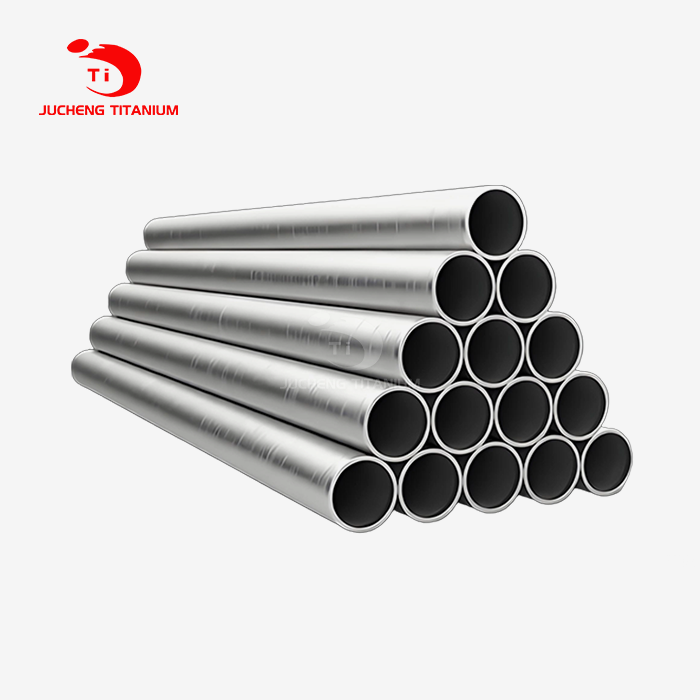
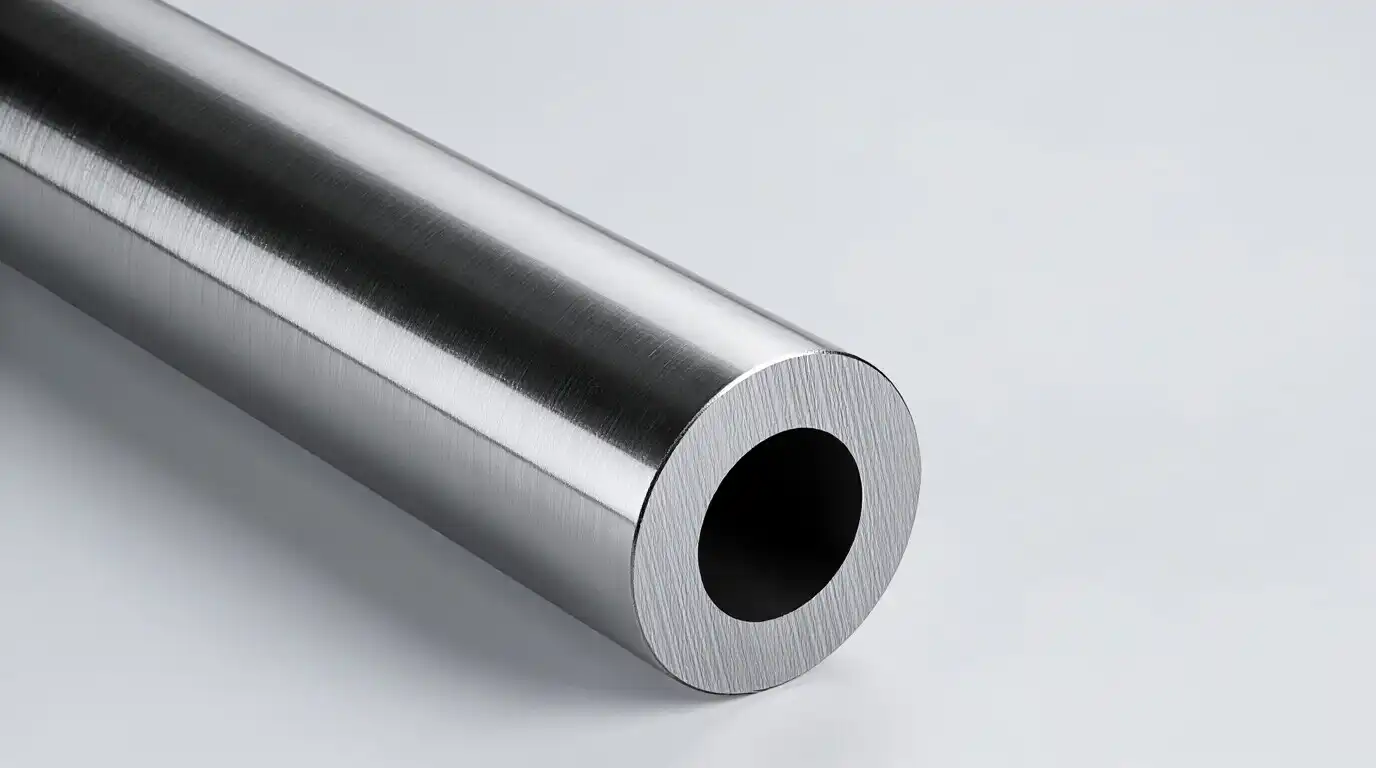
Selecting titanium seamless tube technology over welded options is a much better choice for important industry uses. Our precision extrusion and cold rolling methods make these tubes without longitudinal weld seams. This means that there are no heat-affected zones, which are common places where tubes break in tough environments. Because it is smooth, the structure is strong all the way around, so it can withstand higher pressures, last longer, and not rust. Strict safety standards are met by industries like chemical processing and aerospace with seamless titanium tubes. These tubes also lower the total cost of ownership by lasting longer and needing less upkeep.
Introduction
Those who work in procurement in the aerospace, chemical processing, medical device manufacturing, and industrial equipment businesses have to make tough decisions all the time. It makes a big difference in how stable the product is, how safe it is to use, and how well it works in tough situations over time, whether you choose seamless or welded titanium tubes.
More and more, global B2B buying teams are under a lot of pressure to pick the best materials that meet both cost and performance goals. Titanium tubing is used in many places, from dirty, corrosive chemical processing equipment to the hydraulic systems in airplanes that have to work in places with huge changes in pressure. Systems as a whole may or may not work based on the structural integrity and performance of the tubing that is used.
When you know the main differences between seamless and welded titanium tubes, you can make smart decisions that take into account not only how much the product costs, but also how well it works over time, how often it needs to be maintained, and how stable it is. All of these things must be carefully thought through by buying managers, design engineers, and OEM clients in order to get the best results for their needs.
Understanding Titanium Seamless Tubes and Welded Tubes
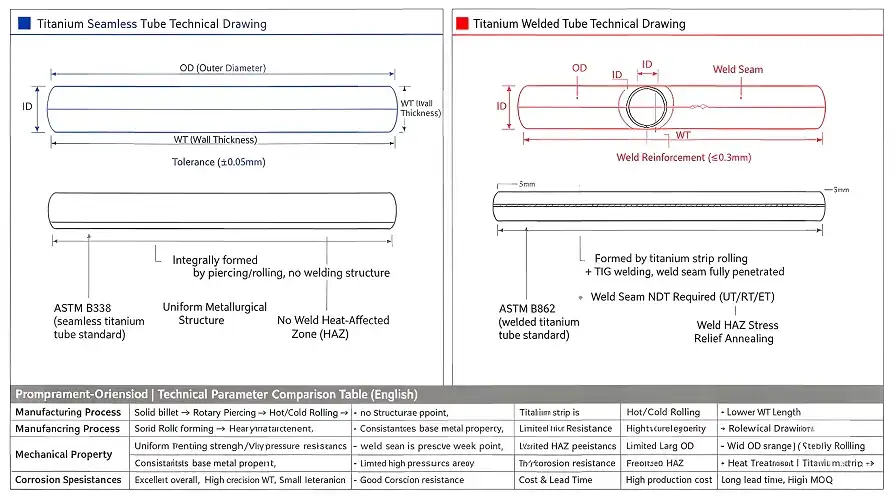
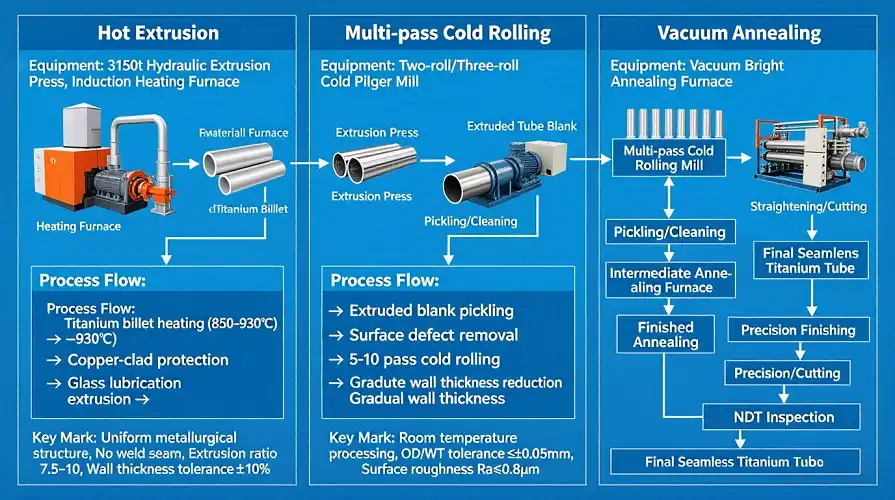
The ways that smooth and welded titanium tubes are made result in very different structural properties that have a direct effect on their performance. To make seamless tubes, solid billets of titanium are first extruded or rotary-pierced. These are then cold-rolled (pilgering) and heated slowly until they are soft. This method makes a microstructure that is all the same without using any lengthwise joints or weld lines.
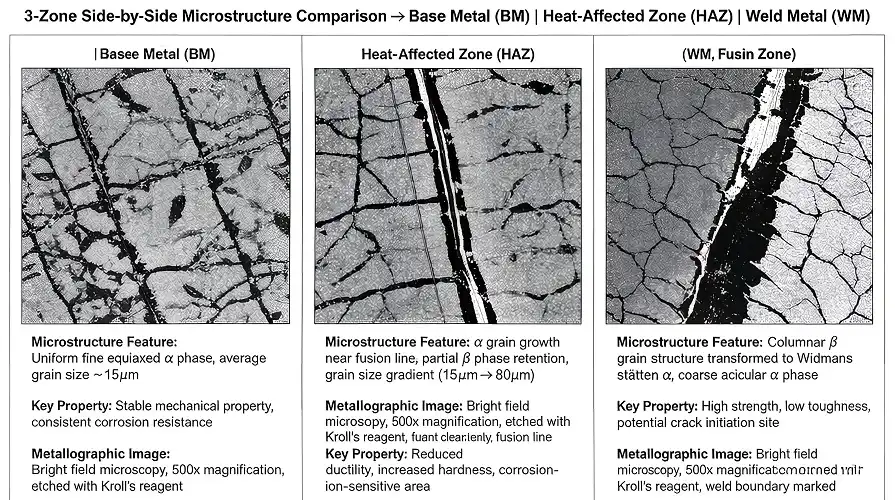
On the other hand, different welding methods are used to put titanium strips or sheets together to make welded titanium tubes. Along the weld seam, this process always makes a heat-affected zone (HAZ), which is where the composition of the material is different from the base metal. The HAZ usually has changed mechanical qualities and can become a good place for rust to start or for the structure to break down when it's under stress.
For making smooth tubes, types of titanium like Gr1, Gr2, Gr3, Gr5, Gr7, Gr9, and Gr12 are quite common. These are the different qualities that make each grade useful for various jobs. All of these types, from commercially pure titanium (Gr1–Gr4) to stronger alpha-beta alloys (Gr5, Gr9), are different. With seamless tubes, the natural properties of these types stay the same across the whole wall thickness.
For example, ASTM B337, ASTM B338, ASTM B861, AMS 4942, and ASME SB338 standards are often used to make sure that smooth titanium tubes are made correctly. For many uses, they can be used in a variety of sizes with wall thicknesses ranging from 0.5 mm to 20 mm and outer widths of 3.2 mm to 219 mm. A few finishing steps are cold rolling, annealing, pickling, straightening, extrusion, and piercing to make sure the measurements and quality of the surface are good enough for precise uses.
Core Advantages of Seamless Titanium Tubes Over Welded Alternatives
The elimination of weld seams in titanium seamless tube construction provides fundamental structural advantages that translate directly into enhanced performance capabilities. The uniform grain structure throughout the tube wall eliminates stress concentration points that typically occur at weld interfaces, resulting in superior fatigue resistance under cyclic loading conditions.
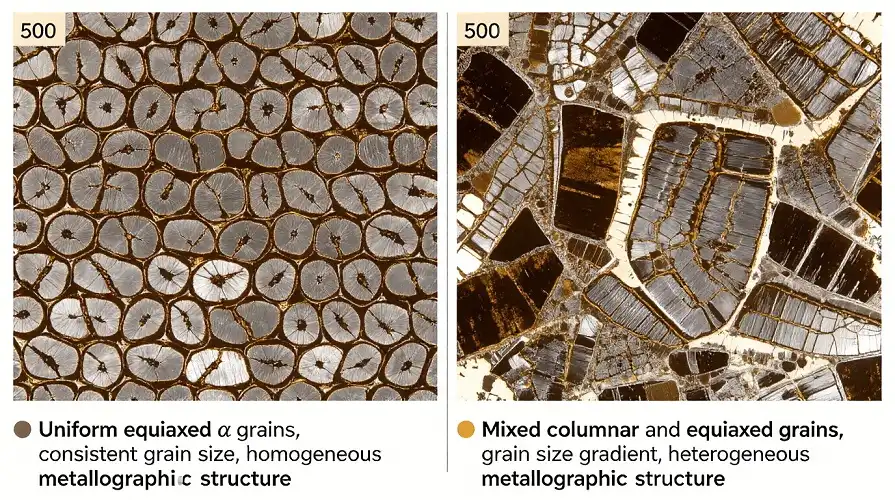
Here are the primary structural and performance advantages that smooth building offers in terms of structure and performance:
- Enhanced Pressure Resistance: Since seamless tubes don't have any weld gaps, they can handle higher internal pressures without breaking at the longitudinal joints. This feature is very important in hydraulic systems and high-pressure chemical processes, where safety must be maintained at all times.
- Superior Fatigue Life: The uniform microstructure gets rid of the stress peaks that come with weld shape. This means that seamless tubes can go through millions of pressure cycles without cracking. This trait is especially useful in aircraft uses where the safety of parts depends on how reliable they are.
- Improved Corrosion Resistance: When exposed to harsh chemicals, crevice corrosion sites tend to form along weld cracks. Seamless construction stops these sites from forming. The even surface makes it possible for a passive film to form evenly across the whole tube surface.
- Tighter Dimensional Tolerances: The controlled production process makes it possible for seamless tubes to keep their exact dimensions along their length, which helps with uses that need very tight fit tolerances during assembly.
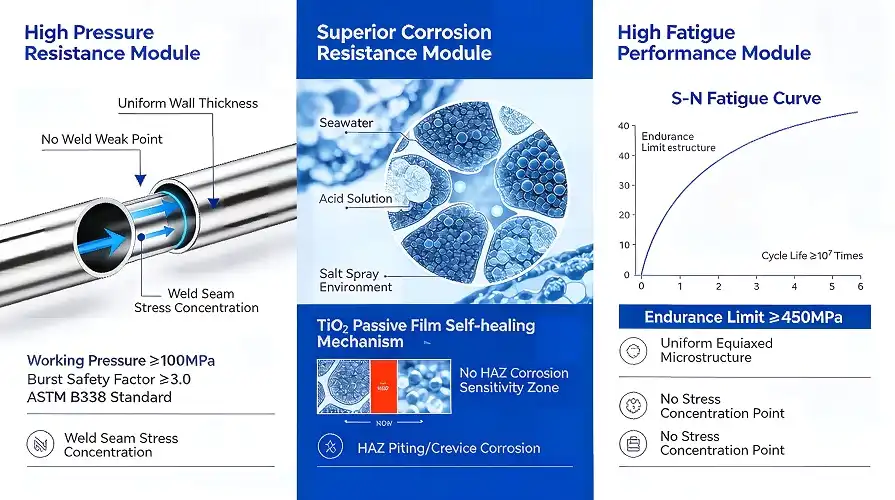
These benefits in structure lead to measured performance gains in important applications. Welded construction often fails because of problems like weld root porosity, imperfect entry, and heat-affected zone brittleness. The seamless design solves these problems well. As a result, the system is more reliable and needs less upkeep over the span of each component.
Comparison with Other Tube Materials and Welding Alternatives
Comparing the performance of seamless titanium tubes to other materials and building methods that are often used in industrial settings shows that they are clearly better. Procurement teams can make data-driven choices based on specific application needs and performance criteria when they understand these comparisons.
Material Performance Comparison
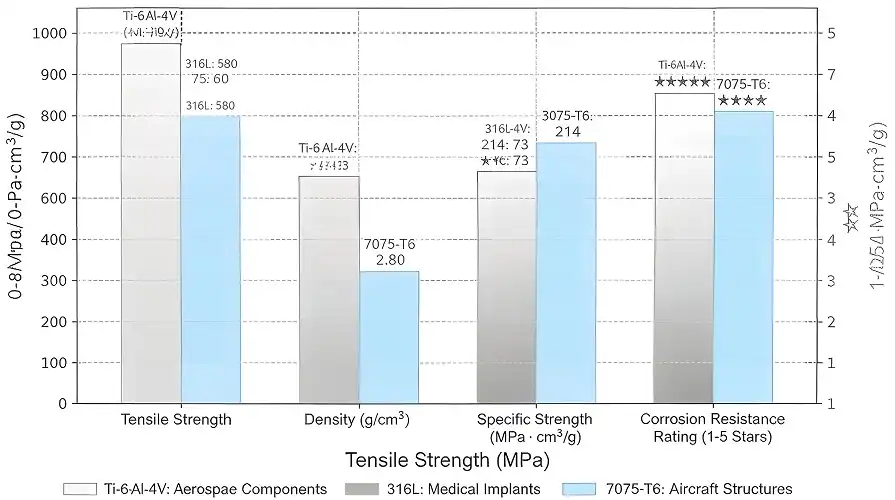
When comparing weight to strength, seamless titanium tubes are better than stainless steel options. They also fight corrosion better in harsh environments. Because titanium is less dense than stainless steel (7.9 g/cm³), it can be used to make things that are about 40% lighter without losing any of their mechanical power. In aerospace uses, where weight reduction directly affects fuel efficiency and payload capacity, this benefit is very useful.
When compared to aluminum tubing, titanium provides significantly higher strength capabilities while maintaining excellent corrosion resistance. Aluminum tubes may suffer from galvanic corrosion when coupled with dissimilar metals, while titanium's excellent compatibility minimizes these concerns in mixed-material systems.
Cost Analysis: Seamless vs. Welded Construction
While initial procurement costs for titanium seamless tube goods usually cost more to buy at first than welded options, lifecycle cost research shows that they are much more cost-effective in the long run. Getting rid of failure modes linked to welds lowers the total cost of ownership by lowering the number of repair visits and service intervals.
The cost savings are even bigger when a tube failure means the system has to be shut down or there are safety issues. In some fields, like chemical processing, where unexpected shutdowns can cost hundreds of thousands of dollars every day, the extra cost is worth it because seamless building is more reliable.
Longer service life, fewer inspections, and the removal of weld-specific decay processes all lead to lower maintenance costs. Because seamless tubes have a uniform structure, their aging traits can be predicted. This makes it easier to plan upkeep and keep track of inventory.
Procurement Considerations for Titanium Seamless Tubes
To successfully buy seamless titanium tubing, you need to pay close attention to the quality assurance procedures, seller qualification, and product specs. Due to the critical nature of many titanium tube uses, suppliers must be carefully evaluated to guarantee consistent product quality and reliable delivery performance.
Supplier Selection Criteria
Titanium tube providers can be sure of the quality of their products because they have ISO approval. Certification to ISO 9001 quality management standards makes sure that methods for tracking materials, keeping an eye on the production line, and checking the finished product are written down. Depending on how the product will be used, it may need extra approvals like AS9100 for aircraft uses or ISO 13485 for medical devices.
The knowledge of the supplier in processing titanium has a direct effect on the quality of the product and the ability to provide technical help. Manufacturers that have been around for a long time and have a lot of experience with titanium know how to best process different types and uses of titanium. This knowledge is very helpful when making custom solutions or fixing problems that are specific to a program.
Customization and Lead Times
Modern companies that make titanium tubes can make a lot of changes to meet the needs of particular applications. Custom sizing choices go beyond standard sizes and include things like special surface treatments, precise machining, and testing methods that are made for each purpose. These features make it possible for systems to work perfectly with each other and meet exact speed requirements.
Lead times for normal titanium seamless tube goods are usually between 4 and 8 weeks. Depending on the complexity, custom specs may take 8 to 12 weeks. Lead times may be longer for large orders or metals that aren't commonly used, so it's important to plan your purchases early on to make sure your job goes well. Setting up a framework that deals with qualified suppliers can cut down on wait times for repeat orders and make sure that the most important orders get filled first during times of high demand.
Cost Optimization Strategies
Bulk buying plans can help you save a lot of money while still making sure you have enough inventory for your production needs. Volume discounts usually start when you buy more than 1,000 kg, with additional savings available for annual commitment agreements. In addition, these plans shield prices from changes in the market price of titanium raw materials.
Standardizing tube specs across multiple uses makes buying easier and makes the most of volume savings. When you can, grouping needs around similar grades, sizes, and surface treatments makes it easier to set prices and keep track of inventory. Working together with providers on a technical level can help you find ways to improve specifications in a way that keeps performance high while cutting costs.
Use Cases and Industry Applications of Seamless Titanium Tubes
Because seamless titanium tubes perform so well, they are the product of choice in many high-performance businesses. Knowing the exact needs and factors that will determine success for a given application helps with creating specifications and choosing suppliers for new projects.
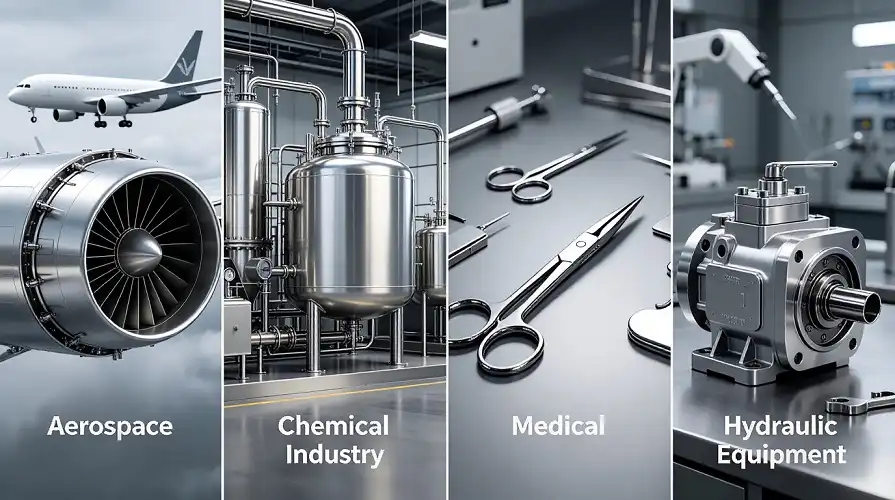
Aerospace and Defense Applications
One of the most difficult uses for titanium seamless tube technology is in aircraft hydraulic systems. During flight cycles, these systems have to work with pressures greater than 5,000 psi and temperatures that range from -65°F to 400°F. Seamless construction is important for keeping system integrity throughout the aircraft's working life because it resists wear and can handle pressure.
For military airplanes, these standards go even further, with extra things like electromagnetic compatibility, minimizing weight, and extreme environmental exposure coming into play. The Grade 9 titanium metal (Ti-3Al-2.5V) that is usually used in these situations has the best mix of strength, weight, and resistance to corrosion, making it perfect for mission-critical systems.
Chemical Processing Industry
In chemical processes, smooth titanium tubes are used because they don't rust as stainless steel tubes do in places where stainless steel tubes fail quickly. In chlor-alkali factories, smooth tubes are used in heat exchangers and process pipes because other materials would break down quickly when exposed to wet chlorine gas and sodium hydroxide solutions.
For the pharmaceutical industry to meet strict purity standards, the building must be smooth and able to withstand corrosion from cleaning chemicals and process media. The smooth inside of seamless tubes makes it easier to clean thoroughly and stops contamination that could lower the quality of the product or make it illegal to follow the rules.
Medical and Biomedical Equipment
Manufacturers of medical devices use seamless titanium tubes for surgery tools and implantable devices that need to be biocompatible and resistant to corrosion. The smooth nanoscale of seamless construction gets rid of places where bacteria could stick and gives the needed mechanical qualities for the long-term success of the implant.
Pharmaceutical handling equipment uses smooth tubes in places where they need to be sterilized often. Titanium is stable at high temperatures and doesn't rust, so it can be sterilized with steam many times without breaking down. Its smooth construction also makes it easier to test the cleaning methods needed to meet FDA standards.
Conclusion
An in-depth study of seamless vs. welded titanium tube construction shows that for important uses, seamless technology is better in terms of cost and performance. Eliminating weld holes makes the structure more stable, less likely to rust, and lasts longer after being used. Because of these perks, maintenance costs go down and service times get longer.
When procurement workers look at different types of titanium tubes, they need to consider more than just the prices at first. Also, they need to think about how long the solutions will last because that changes the total cost of ownership. It is more reliable for seamless making, which is especially helpful when a broken part could put people in danger, hurt the environment, or cost a lot of money. Seamless titanium tubes are better for performance in many areas, such as aerospace, chemical processing, medical devices, and industry equipment, even though they cost more at first.
FAQ
Q1: How does the durability of seamless titanium tubes compare to welded alternatives?
Seamless titanium tubes typically exhibit 3-5 times longer service life compared to welded alternatives in high-stress applications. The absence of heat-affected zones eliminates the primary failure initiation sites found in welded construction, resulting in superior fatigue resistance and corrosion performance. Independent testing demonstrates that seamless tubes can endure over 2 million pressure cycles without failure, while welded tubes often show crack initiation after 500,000 cycles under similar conditions.
Q2: What are typical lead times for customized seamless titanium tube orders?
Standard titanium seamless tube orders typically require 6-8 weeks for delivery, while custom specifications may extend to 10-14 weeks, depending on complexity. Factors affecting lead time include special alloy requirements, non-standard dimensions, custom surface treatments, and specific testing protocols. Established suppliers often maintain an inventory of common grades and sizes to reduce lead times for urgent requirements.
Q3: Which titanium grades are preferred for aerospace applications?
Because it has the best strength-to-weight ratio and the best tolerance to fatigue, Grade 9 (Ti-3Al-2.5V) is the most popular alloy used in aircraft hydraulic systems. A grade 5 material called Ti-6Al-4V is used in parts of structures that need to be stronger. Commercial pure types (Gr1, Gr2) are used in less demanding situations where resistance to rust is more important than strength.
Partner with Jucheng Titanium for Superior Seamless Tube Solutions
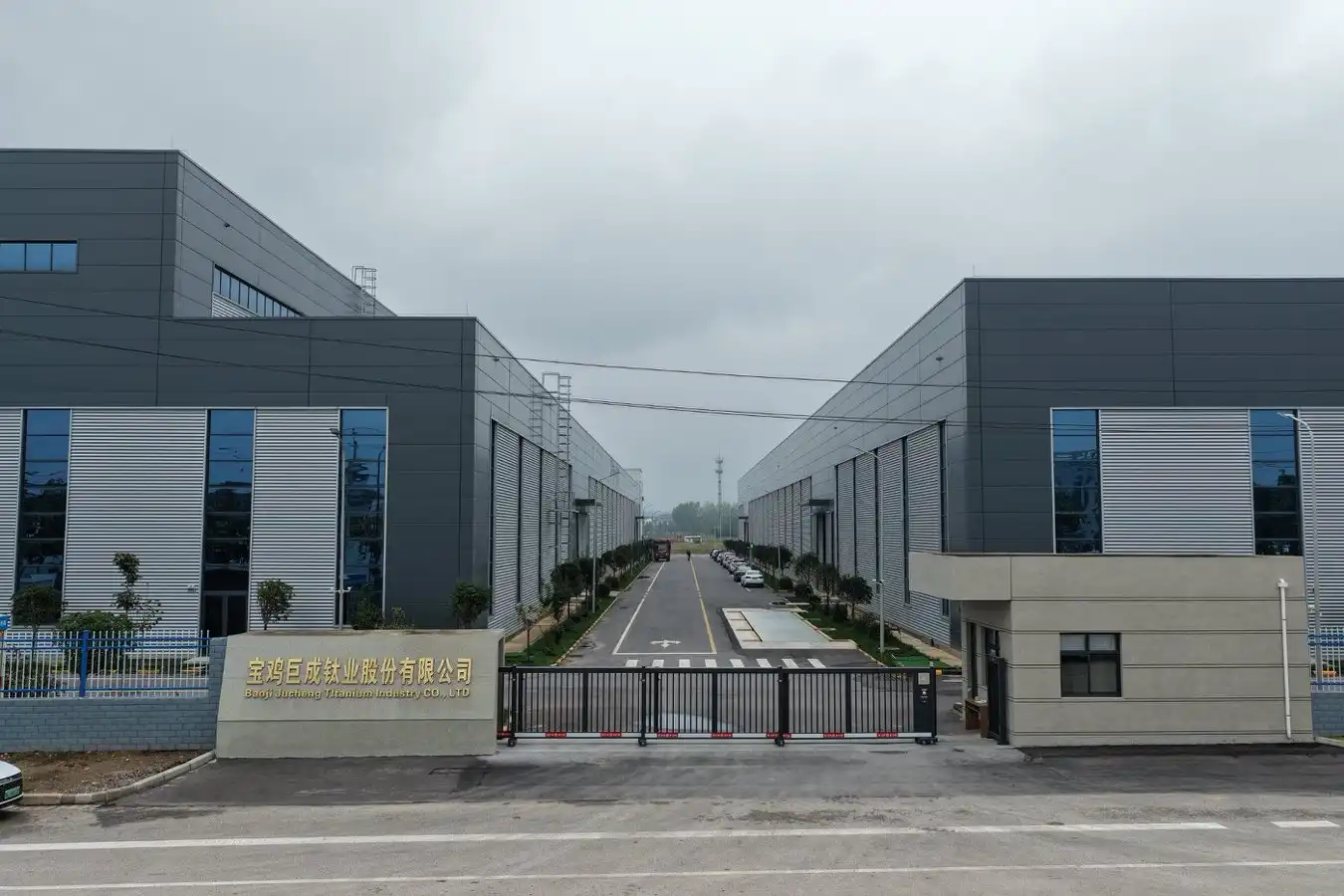
Jucheng Titanium stands as your trusted titanium seamless tube manufacturer with over 20 years of specialized experience in precision titanium processing and manufacturing. Our comprehensive inventory of 3,000 tons enables rapid delivery of standard specifications, while our advanced manufacturing capabilities support custom solutions for the most demanding applications.
Our ISO-certified factory makes seamless titanium tubes in grades Gr1 through Gr12 that meet ASTM B337, ASTM B338, and AMS 4942 standards. We make more than 500 sets of specialized titanium tools every year and have over 70% of the market share in hydrometallurgy uses. This means that we can be trusted for important industrial tasks. Get in touch with our expert team at s4@juchengti.com to talk about your unique needs and find out how our seamless titanium tube options can help your business.
References
1. American Society for Testing and Materials. "Standard Specification for Seamless and Welded Titanium and Titanium Alloy Tubes for Condensers and Heat Exchangers." ASTM International, 2019.
2. Boyer, R.R., Welsch, G., and Collings, E.W. "Materials Properties Handbook: Titanium Alloys." ASM International Materials Park, Ohio, 2018.
3. Lütjering, G. and Williams, J.C. "Titanium: Engineering Materials and Processes." Second Edition, Springer-Verlag Berlin Heidelberg, 2020.
4. Peters, M., Kumpfert, J., Ward, C.H., and Leyens, C. "Titanium Alloys for Aerospace Applications: Current Status and Future Perspectives." Advanced Engineering Materials, Vol. 25, No. 8, 2021.
5. Rack, H.J. and Qazi, J.I. "Titanium Alloys for Biomedical Applications: Properties and Processing." Materials Science and Engineering: C, Vol. 26, Issue 8, 2019.
6. Seagle, S.R. "The State of the USA Titanium Industry: Current Market Dynamics and Manufacturing Capabilities." Journal of Materials Engineering and Performance, Vol. 30, No. 9, 2022.