



Can Titanium Sheet Roll Reduce Manufacturing Waste?
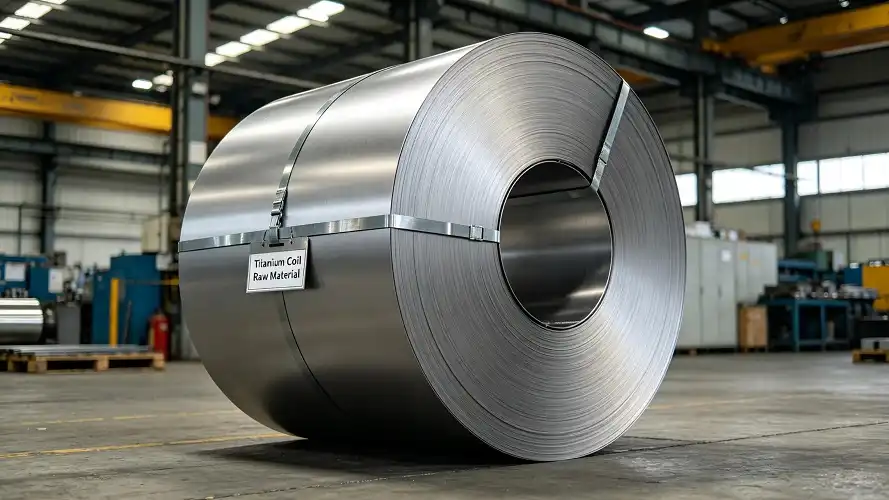
Yes—titanium sheet roll genuinely reduces manufacturing waste, and the evidence is compelling. As a continuous flat-rolled product processed via hot or cold rolling to ASTM B265 and AMS 4911 specifications, titanium sheet roll eliminates the high yield loss tied to discrete sheet nesting. Its consistent grain structure, tight thickness tolerances, and exceptional corrosion resistance directly lower scrap rates, rejection volumes, and material rework. For aerospace, chemical processing, and medical manufacturing sectors, switching to a rolled titanium coil format can measurably improve material utilization while cutting lifecycle costs.
、
Understanding Titanium Sheet Roll and Manufacturing Waste
Manufacturing trash is more than just scrap metal. It includes waste, rejected parts, reworked work, and replacing equipment too soon, all of which lower profits. Stainless steel and aluminum are common metalworking materials, but they produce a lot of waste because their mechanical properties often require thicker gauges or more frequent replacement cycles.
What Makes Titanium Sheet Roll Different?
The density of titanium flat-rolled coil is about 4.51 g/cm³, which is about 60% that of steel. Grade 5 titanium flat-rolled coil has a tensile strength of over 895 MPa. Grade 2, which is the standard in the business, has a yield strength of 275 MPa and an extension of 20% or more, which means it can be shaped easily without breaking. Grade 1 is the most flexible, with an elongation of at least 24%, making it perfect for deep-drawing. These qualities directly lead to smaller gages that can be used, fewer forming flaws, and less material being used per final part.
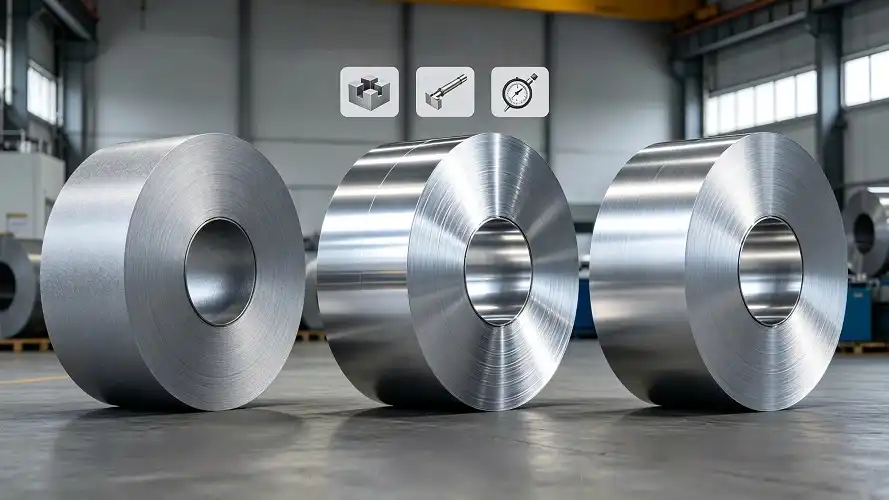
You can get rolled titanium strip and sheet from Jucheng Titanium in types Gr1, Gr2, Gr3, Gr4, Gr5, Gr7, and Gr12. The thickness ranges from 0.3 mm to 12.0 mm, and the width from 950 mm to 1500 mm. Standards that are mentioned include ASTM B265, ASME SB265, ASTM F67, AMS 4911, and ASTM F136. The steel can be hot-rolled or cold-rolled, and the surface can be annealed, pickled, or bright.
How Titanium Sheet Roll Reduces Manufacturing Waste—Core Mechanisms?
The benefits of titanium coil stock for reducing waste don't come from just one property. They come from the way the dimensions are accurate, how long the material lasts, and how well it works with other processes.
Precision Forming Minimizes Offcuts
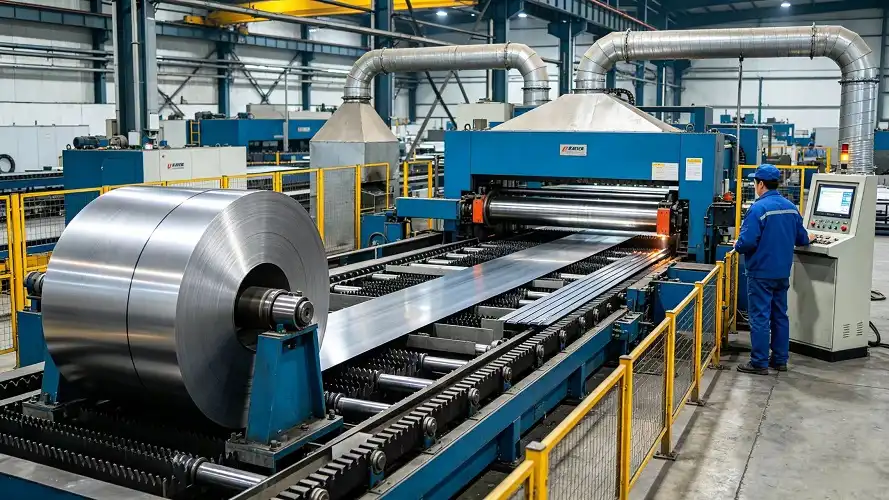
Titanium strip that has been cold-rolled has a surface roughness of less than 0.4 µm and a thickness that stays the same all the way along the coil. When supplied as a titanium sheet roll, this accuracy in dimensions greatly lowers the number of misaligned cuts and material rejects when put into laser cutting or waterjet systems. Continuous coil feeding also gets rid of the nesting inefficiency that comes with stacking single-cut sheets, which wastes 8–15% of the sheet area in most metalworking setups.
Corrosion Resistance Lowers Rejection Rates
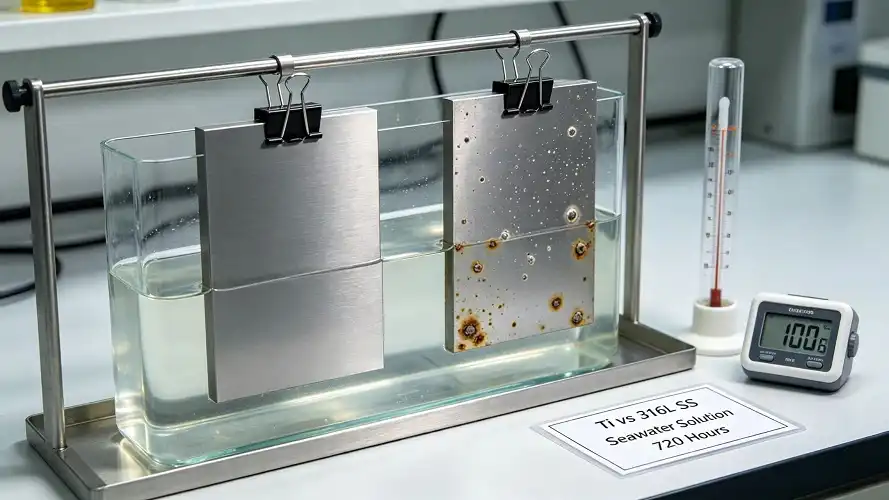
Titanium makes a steady TiO₂ passive oxide layer on its own, which protects it from chlorides, oxidizing acids, and saltwater, all of which are harsh on stainless steel and aluminum. This means that fewer corroded parts will need to be sent back to be fixed or thrown away in chemical processes and naval uses. A lower rejection rate raises material yield without adding more steps to the process.
Thinner Gauges, Equal Performance
Because titanium is stronger than steel, engineers can ask for thinner sheet gauges without affecting the performance of the structure. In aircraft firewall and heat shield uses, 0.5–2.0 mm titanium sheet can be used instead of steel parts that are three to four times heavier and use a lot less raw material per assembly. That drop in the amount of materials needed means less trash before production even starts.
The precise dimensions, long-lasting chemical resistance, and high gauge efficiency of titanium coil all work together to make it a noticeably lighter input material than most others.
Comparison: Titanium Sheet Roll vs. Other Materials in Waste Reduction
Picking between titanium, stainless steel, and aluminum isn't just a matter of how much each weighs. The amount of waste made during a production run depends on how the material behaves during fabrication processes like shaping, welding, cutting, and finishing the surface.
What these products are like and how they match in important ways related to waste:
- Titanium vs. Stainless Steel: Stainless steel is denser and requires heavier gauges for equivalent structural performance, generating more scrap by mass per part. Stainless steel also suffers from crevice corrosion in chloride-rich environments, causing premature failure and replacement waste. Titanium Grade 2 or Grade 7 outperforms stainless in corrosive service, delivering longer component life and lower cumulative material waste.
- Titanium vs. Aluminum: Aluminum is lighter but significantly weaker, requiring thicker sections or reinforcement structures. In high-temperature or chemically aggressive environments, aluminum degrades rapidly, driving replacement cycles. Titanium Grade 5 provides three times the yield strength of common aluminum alloys at comparable weight—meaning fewer replacement cycles and less total material consumed over the asset's service life.
- Grade 2 vs. Grade 5 within Titanium: Grade 2 excels in formability and corrosion resistance for chemical and heat exchanger applications, while Grade 5 suits aerospace structural parts demanding maximum tensile strength. Selecting the correct grade prevents over-engineering—using Grade 5 where Grade 2 suffices adds unnecessary material cost and machining waste.
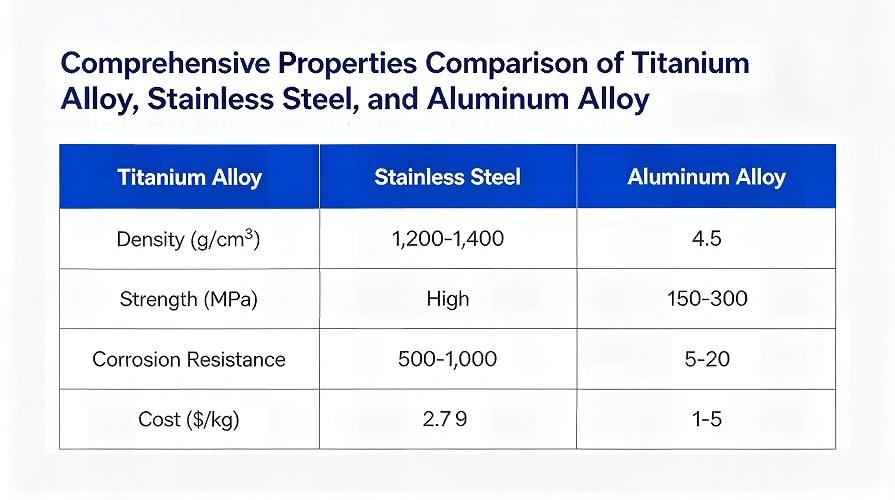
These similarities make it clear why procurement engineers are choosing titanium sheet roll and titanium flat-rolled coil more and more for production settings that are concerned with waste.
Practical Applications Demonstrating Waste Reduction
Titanium coil stock has made a real difference in how well materials are used and how efficiently processes work in many different fields.
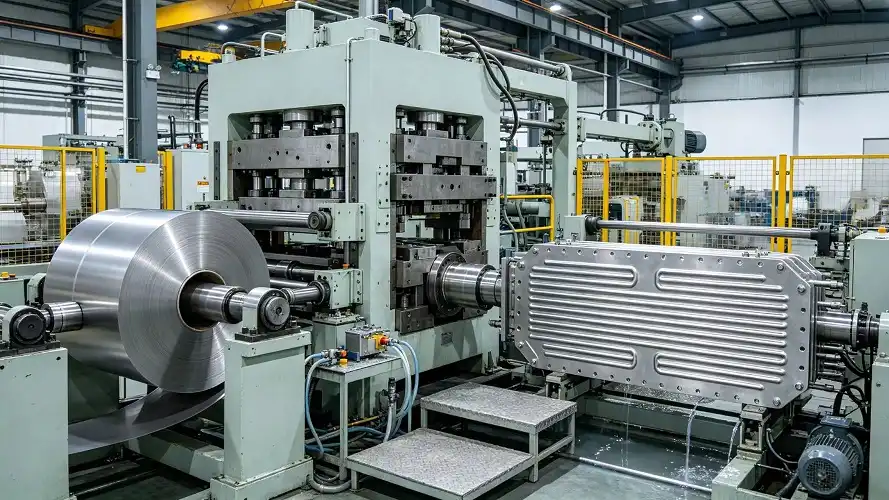
When it comes to chemical processing, companies that make plate heat exchangers stamp intricate chevron designs straight onto a continuous titanium coil. The roll shape lets the press feed continuously, which cuts down on setup waste between groups. Titanium doesn't get chloride pits, so PHE plates can be used for 15–20 years in desalination instead of 3–5 years for similar stainless steel plates. This means that a lot less waste is generated over the course of their life.
Thin-gauge titanium sheet is used to make engine shields and structural brackets in the aerospace production industry. The material can be shaped precisely and has little springback, which means that it can be hydroformed more precisely and with fewer rejected parts per production run.
Deep-drawn from Grade 1 or Grade 2 titanium coil, pacemaker housing, and surgical instrument parts are used to make medical devices. The biocompatibility of the material gets rid of the need for chemically wasteful surface treatment steps, and its uniformity along the length of the coil stops micro-cracking when small parts are stamped with a lot of precision.
Procurement Considerations When Choosing Titanium Sheet Rolls
How much waste reduction potential you actually get from titanium coil stock is directly related to the strategic decisions you make about buying it. As important as the material standard is getting it from a source that has strict process control.
Pay close attention to these things when choosing a titanium sheet roll supplier:
- Certifications and traceability: Confirm that Mill Test Reports comply with EN 10204 3.1, verifying chemical composition, heat numbers, and mechanical test results. Aerospace buyers should require AMS 4911 compliance; medical buyers need ASTM F67 or ASTM F136 documentation.
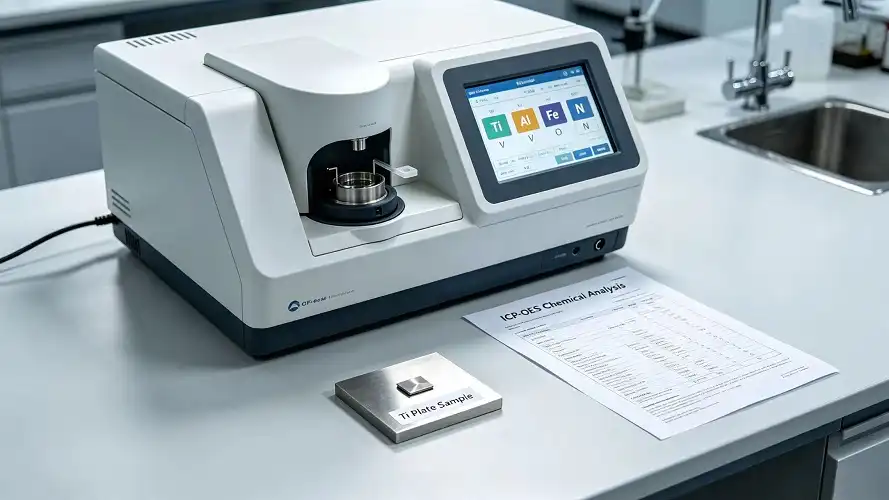
- Processing quality control: Suppliers should perform ICP-OES chemical analysis for interstitial elements, ultrasonic testing per AMS 2631 Class A1 for subsurface defects, and confirm that alpha case—the brittle oxygen-enriched surface layer—has been fully removed through pickling or grinding.
- Custom cutting and value-added services: Ordering to near-net dimensions reduces excess material on your production floor. A capable supplier offering precision slitting, annealing, leveling, and tension-leveling reduces springback during uncoiling, preventing tooling damage and dimensional rejects in automated lines.
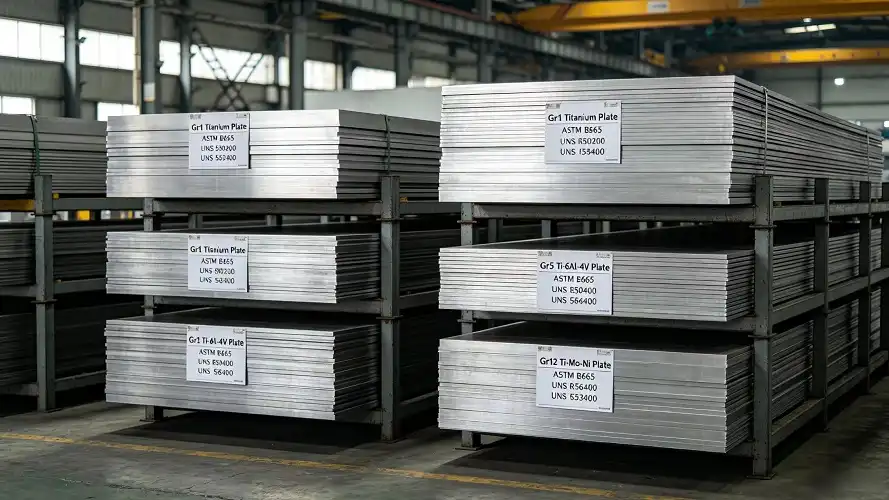
Baoji Jucheng Titanium Industry Co., Ltd. keeps about 3,000 tons of titanium in stock all year, so they can serve quickly and lower your inventory risk. Jucheng Titanium has been in business since 2004 and has 4 invention patents and 41 utility model patents. It has sold rolled titanium goods to customers in the aircraft, chemical, and medical industries around the world. They have their own research and development department and work with other organizations, like the Northwest Institute for Nonferrous Metal Research, to make sure they have technical support from choosing the materials to making the products.
Conclusion
Titanium sheet roll cuts down on waste in production because it is precise in size, resistant to rust, and easy to work with. These are all qualities that other materials can't match. Whether you're using the material for chemical processing, aerospace structures, or precise medical parts, its properties and the fact that it comes in a continuous coil format mean that there is significantly less waste, parts last longer, and less raw material is used. How much of that potential you use depends on three things: choosing the right grade, making sure the certifications are real, and getting the product from a source with strict process control.
FAQ
1. What thickness range works best for minimizing manufacturing waste?
For pressing and deep-drawing, cold-rolled titanium strip in the 0.3–2.0 mm range is the best combination of being easy to shape and being a good use of material. For structural machining, thicker gages work best because near-net-shape ordering cuts down on machining allowance waste.
2. Does welding titanium sheet introduce defects that increase scrap rates?
Titanium can be welded successfully with argon or helium as a protective gas. Welds that are contaminated make joints that are easy to break and raise the rate of rejection. If you block and clean properly before you join, the number of defects will be low. Direct bonding to steel, on the other hand, creates weak TiFe intermetallics that should never be used.
3. How does oxygen content in the alloy affect rejection rates?
Too much interstitial oxygen makes the material less flexible and increases the chance that it will crack during the making process. Maximum oxygen levels are set by grades approved to ASTM B265 or ASTM F67. ICP-OES verification at the source level makes sure compliance before the material gets to your production line.
4. What surface states are available, and how do they affect downstream processing?
Jucheng Titanium offers surface states that are annealed, pickled, and bright. A bright finish is good for jobs that need very precise surface tolerances. An acid-pickled finish makes sure that the alpha case is gone, which is important for keeping precision parts from getting damaged by pressing dies and microcracking.
Partner With Jucheng Titanium—Your Trusted Titanium Sheet Roll Supplier
Jucheng Titanium can fully certify all of their products according to ASTM and AMS standards and has been making titanium products for over 20 years. They also keep more than 3,000 tons of stock on hand. Our titanium sheet roll for sale comes in grades Gr1 through Gr12. You can choose from different sizes, surface finishes, and processing choices to meet your specific production needs. You can email our technical team at s4@juchengti.com to get samples or a quote for your project right away.

References
1. ASTM International. ASTM B265: Standard Specification for Titanium and Titanium Alloy Strip, Sheet, and Plate. ASTM International, 2020.
2. Boyer, R., Welsch, G., & Collings, E. W. Materials Properties Handbook: Titanium Alloys. ASM International, 1994.
3. Donachie, M. J. Titanium: A Technical Guide. 2nd ed. ASM International, 2000.
4. Leyens, C., & Peters, M. (Eds.). Titanium and Titanium Alloys: Fundamentals and Applications. Wiley-VCH, 2003.
5. SAE International. AMS 4911: Titanium Alloy Sheet, Strip, and Plate, 6Al-4V, Annealed. SAE International, 2015.
6. Peters, M., Kumpfert, J., Ward, C. H., & Leyens, C. "Titanium Alloys for Aerospace Applications." Advanced Engineering Materials, Vol. 5, No. 6, 2003, pp. 419–427.