



CP Grade 3 Titanium Sheet for Heat Exchangers: Selection Tips
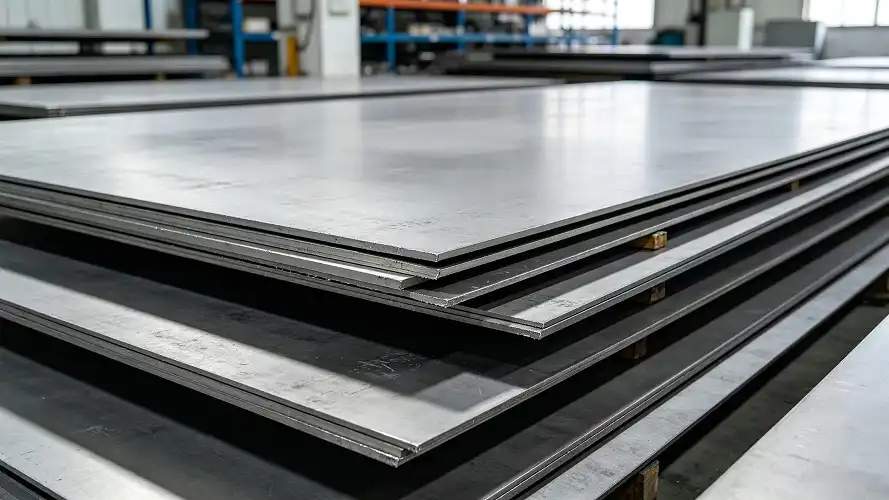
If you're sourcing titanium plate materials for heat exchanger applications, choosing the right grade matters more than most buyers realize. A CP grade 3 titanium sheet sits in a practical sweet spot — stronger than Grade 2, easier to form than Grade 5, and genuinely built for demanding thermal and chemical environments. This guide walks you through the properties, comparisons, selection criteria, and processing tips you need before placing a bulk order.
Understanding CP Grade 3 Titanium Sheet Properties for Heat Exchangers
Mechanical Strength That Earns Its Place
Commercial Grade 3 pure titanium (UNS R50550) has a minimum yield strength of 380 MPa and a minimum tensile strength of 450 MPa, which is about 30–40% stronger than Grade 1. However, it keeps a minimum stretch of 18%, which gives makers enough flexibility for cold forming. This balance between strength and ductility means that the wall gauges of heat exchanger tube sheets and pressure tank linings are smaller and the materials weigh less.
Chemical Composition and Corrosion Performance
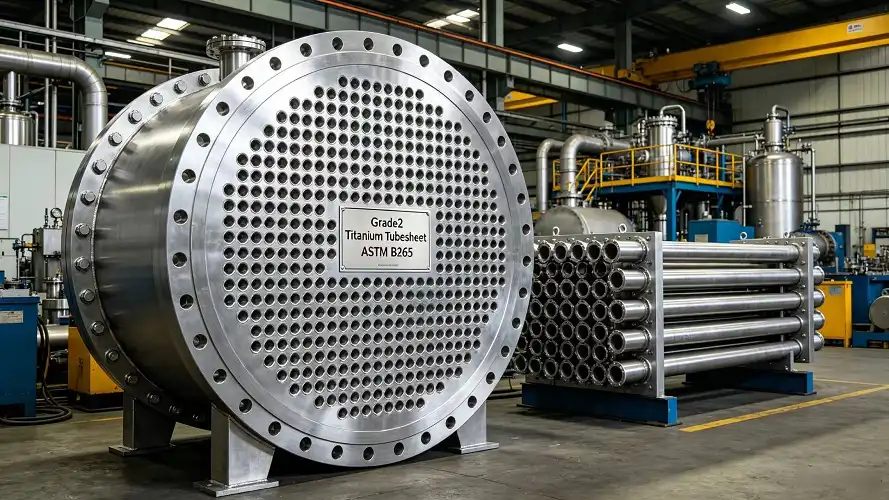
Oxygen must be less than 0.35%, Iron must be less than 0.30%, Carbon must be less than 0.08%, Nitrogen must be less than 0.05%, and Hydrogen must be less than 0.015%. The slightly higher oxygen content acts as an interstitial strengthener. This is the main reason why Grade 3 is stronger mechanically than Grade 2 without adding any alloying elements. This chemistry of pure titanium also makes it very resistant to saltwater, wet chlorine gas, and metallic chlorides, all of which are common in shell-and-tube heat exchangers.
Thermal Stability in Service
Grade 3 titanium can work at temperatures of up to 425°C (800°F) for long periods of time. After this point, oxygen diffusion can make the alpha-case top layer more fragile, which shortens the wear life. For most industrial heat exchanger jobs, like chemical processing, power generation cooling circuits, and naval service, the temperature stays well below this level. This makes the grade a reliable choice without having to use more expensive metals.
Comparing CP Grade 3 Titanium Sheet with Other Materials for Heat Exchanger Use
Grade 3 vs. Grade 2 and Grade 4
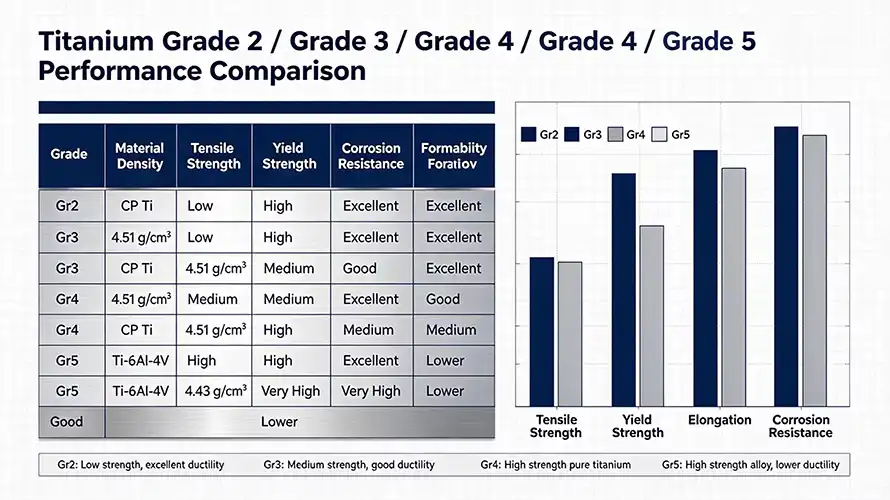
Pure titanium Grade 2 (UNS R50400) is the most common type used in business, but it has a yield strength of only about 275 MPa. When process pressures go up, or plate thickness needs to be lowered, Grade 2 is not good enough. Grade 4 is even stronger (yield strength ≥ 483 MPa), but it is less flexible, which makes cold forming a lot harder. Grade 3 is in the middle; it can be shaped easily and is stronger than Grade 2.
Grade 3 vs. Grade 5 (Ti-6Al-4V) and Grade 7
The tensile strength of Grade 5 (Ti-6Al-4V) is over 895 MPa, which is much higher than what most heat exchanger designs need. Because it costs more and doesn't cold form as well, it can't be used for thin-gauge heat exchanger plates. Grade 7 costs a lot more than Grade 3 because it has palladium added to it to make it more resistant to rust in less acidic conditions. Grade 3 is a good choice for standard oxidizing and chloride-rich media because it protects against corrosion well without the higher cost of Grade 7 or Grade 12.
Grade 3 vs. Stainless Steel
Titanium has a density of 4.51 g/cm³, while stainless steel (like 316L) has a density of 7.9 g/cm³. In big heat exchanger systems that use a CP grade 3 titanium sheet, that difference in weight is important. Stainless steel costs less per kilogram at first, but titanium lasts longer in harsh media because it doesn't corrode when exposed to chloride pitting and crevice corrosion. When you add up the total cost of ownership over a 10–15 year period, which includes shutdown, repair, and maintenance, commercially pure titanium sheet always pays for itself.
Key Selection Criteria When Procuring CP Grade 3 Titanium Sheets for Heat Exchangers
Dimensional Specifications and Standards Compliance
In the annealed state, Jucheng Titanium sells hot-rolled Grade 3 sheets that are 4 mm to 80 mm thick, 950 mm to 2,500 mm wide, and up to 10,000 mm long. You can ask for custom sizes if you want to. Standards like ASTM B265, ASME SB265, AMS 4911, and ASTM F67 are accepted. Before you place an order, you must make sure that the material certifications your seller offers match the exact standard needed by your design code, whether it's ASME Section VIII or a customer guideline.
Surface Condition and Processing Method
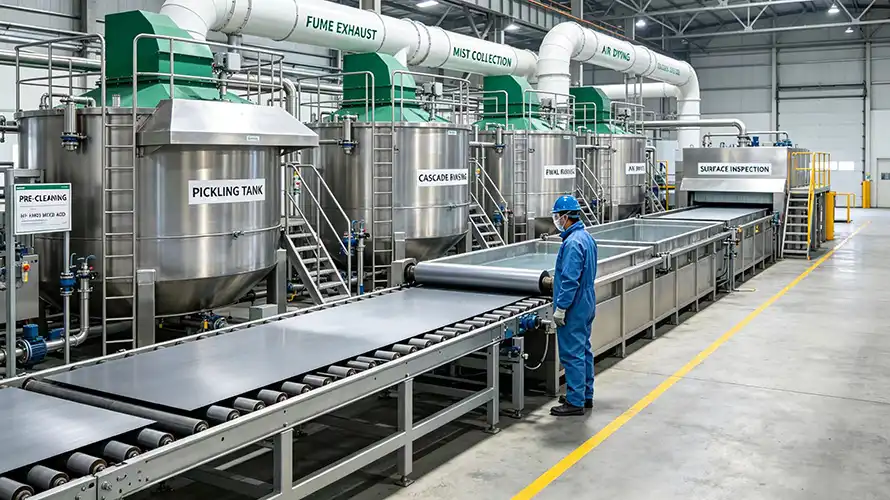
The processing method has a direct effect on both the surface's structure and the ability to be fabricated further down the line. Here are the main ways that industrial-grade titanium sheet can be processed:
- Hot Rolling + Annealing: Produces a uniform grain structure and stress-free condition suitable for pressure vessel applications. Annealing also restores ductility lost during rolling.
- Leveling: Corrects flatness deviations that accumulate during hot rolling, essential for tube sheet blanking and precision machining.
- Pickling (Acid Pickled): Removes the oxide layer formed during annealing, exposing a clean metallic surface free from alpha-case. Standard for ASTM B265 descaled finish.
- Polished or Machined Surfaces: Specified for aerospace firewalls, precision instrumentation, and applications where surface roughness (Ra) directly affects heat transfer efficiency.
When the surface finish is right for the job, it saves money on repairs and quality problems during the creation process.
Supplier Qualification and Quality Verification
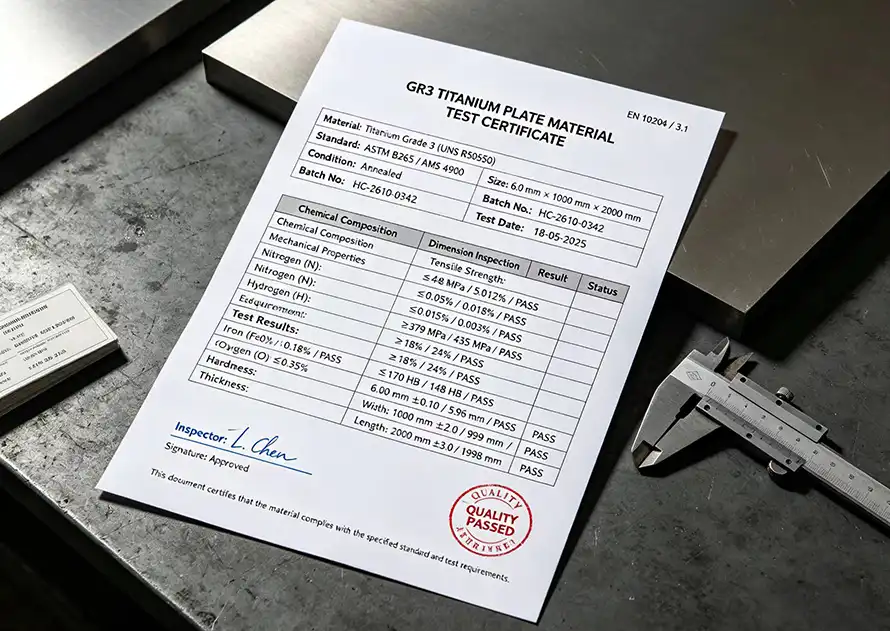
In addition to checking the size and finish, buying teams should also check the quality systems of suppliers. Chemical testing with ICP or IGAS to check the amounts of oxygen and iron, tensile testing according to ASTM E8, bend testing according to ASTM E290 (mandrel radius usually 4–5× sheet thickness), and ultrasonic testing according to AMS 2631 for thicker plates are some of the most important parts of the checking process. Most buyers in the aircraft and chemical processing industries need EN 10204 3.1 mill test certificates to show that the materials they use can be tracked.
Processing and Handling Tips for CP Grade 3 Titanium Sheets in Heat Exchanger Manufacturing
Welding Practices
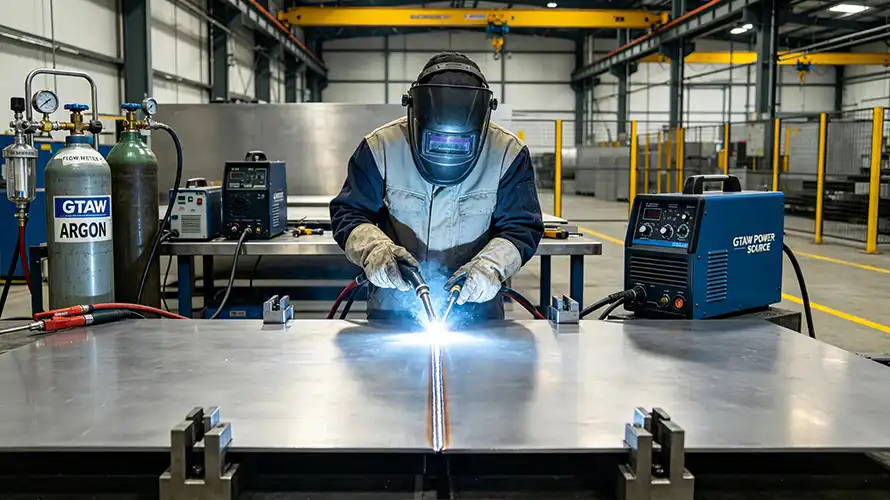
Gas Tungsten Arc Welding, or GTAW, is the usual way to join CP grade 3 titanium sheets that are sold in stores. Always use ERTi-3 filler wire that matches; using ERTi-2 wire instead will make the weld uneven, which could be against the ASME pressure tank code. It is very important that the shielding gas is pure. If the argon purity is less than 99.99%, oxygen and nitrogen can get into the weld and change its color from light straw (accepted) to blue or white (rejected). For heat exchanger tube sheet welds, it is common to use trailing screens and back-purging fittings.
Forming and Spring-Back Management
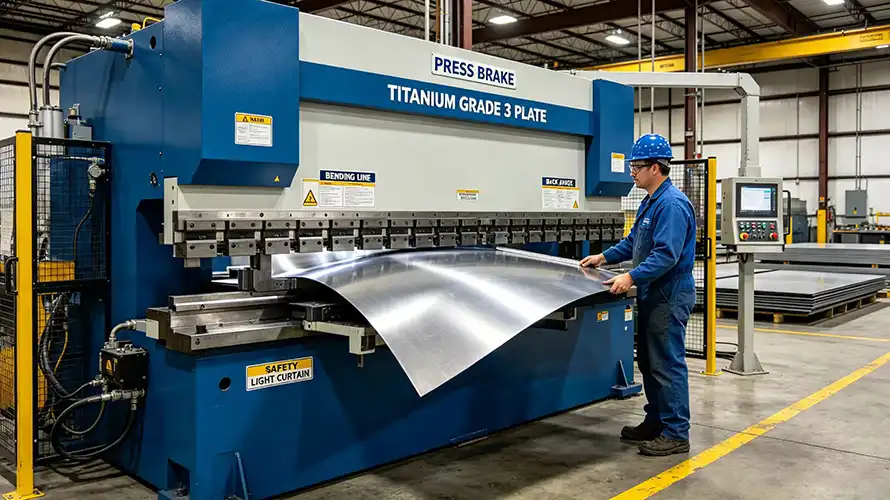
Because it has more air, Grade 3 needs stronger forming forces than Grade 2. Over-bending compensation must be built into the way the tools are set up. This is usually between 5° and 10°, depending on the thickness and bend radius. Using clean cutting fluid that doesn't contain chloride to lubricate stops galling. When the formed part will be used in a place where stress corrosion is likely to happen, it is best to do stress-relief annealing at 538°C to 595°C for 30 minutes.
Surface Protection During Fabrication
Titanium easily picks up iron from tools, workbenches, and storage units made of carbon steel. The passive oxide layer can be damaged by iron contamination, which makes rust stains more likely. Always use titanium-specific tools with stainless steel or plastic-coated surfaces for contact, and keep sheets away from metal materials. A light acid pickling step restores the passive surface after any mechanical work.
Practical Applications and Benefits of Using CP Grade 3 Titanium Sheets in Heat Exchangers
Chemical Processing and Petrochemical Plants
The main place where Grade 3 titanium plate is used is in shell-and-tube heat exchangers that deal with hot nitric acid, chlorinated process streams, and phosphoric acid solutions. Its ability to resist pitting and crevice corrosion in chloride media up to 175°F (80°C) makes unexpected shutdowns much less likely. Jucheng Titanium has provided titanium equipment, such as the biggest titanium spiral plate heat exchanger in China, which is now in use at WUGANG Group. This directly proves performance in harsh industrial settings.
Marine and Power Generation Applications
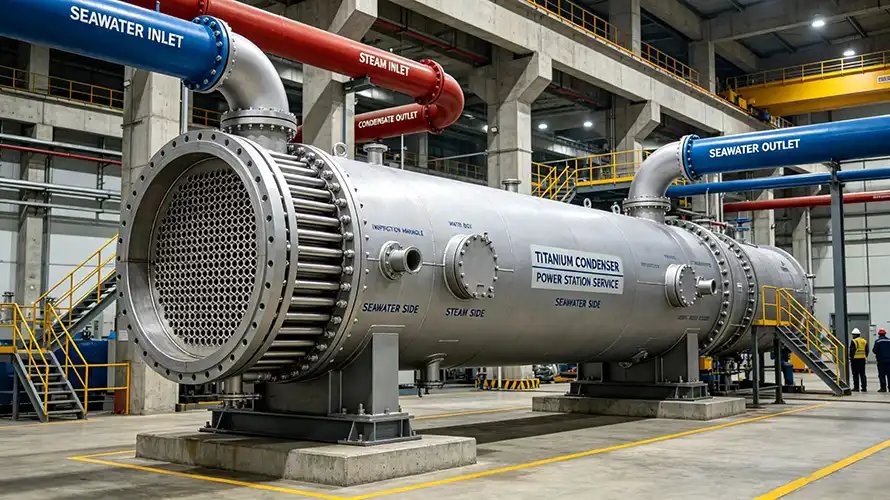
Grade 3 is good for marine heat exchangers and condensers that cool with seawater because it is structurally strong and doesn't react with saltwater. According to data from the industry, titanium condenser plates last 20 to 30 years in power plant service, while copper-nickel alloys only last 5 to 8 years in the same chlorinated cooling water environment.
Aerospace Thermal Management
When formability is important, Grade 3 is better than the more expensive Grade 5 for airplane firewall and warm-zone fuselage skin uses that work up to 400°C because it doesn't oxidize as easily and isn't as strong. The material meets the standards of AMS 4911 for use in aerospace sheet and strip applications.
Conclusion
Choosing the correct grade of CP grade 3 titanium sheet for a heat exchanger is an important engineering and purchasing choice that will have real lifecycle effects. Grade 3 economically pure titanium fills a clear performance gap. It is significantly stronger than Grade 2 and much cheaper than alloyed grades for use in corrosive thermal service. Standards compliance, surface state, welding process, and supplier qualification are some of the things that can make or break a project. The above selection tips can be used as a useful checklist by buying and tech teams to help them make smart decisions about where to get things.
Frequently Asked Questions
1. What makes Grade 3 titanium better than Grade 2 for heat exchangers?
Grade 3 offers approximately 30–40% higher yield strength than Grade 2 due to controlled oxygen content. This allows thinner plate specifications under the same design pressure, reducing material weight without sacrificing corrosion resistance.
2. Can Grade 3 titanium sheet be cold formed?
Yes, though it requires higher forming forces than Grade 2. Over-bending compensation must be factored into tooling, and post-forming stress relief annealing is recommended for stress-corrosion-sensitive service environments.
3. What international standards does Grade 3 sheet comply with?
Jucheng Titanium supplies Grade 3 sheet to ASTM B265, ASME SB265, AMS 4911, and ASTM F67. EN 10204 3.1 mill test certificates are provided for traceability.
4. What sizes are available?
Standard supply covers thickness 4 mm–80 mm, width 950–2,500 mm, and length up to 10,000 mm. Custom dimensions are available upon request.
Request a Quote from Jucheng Titanium — Your Trusted CP Grade 3 Titanium Sheet Supplier
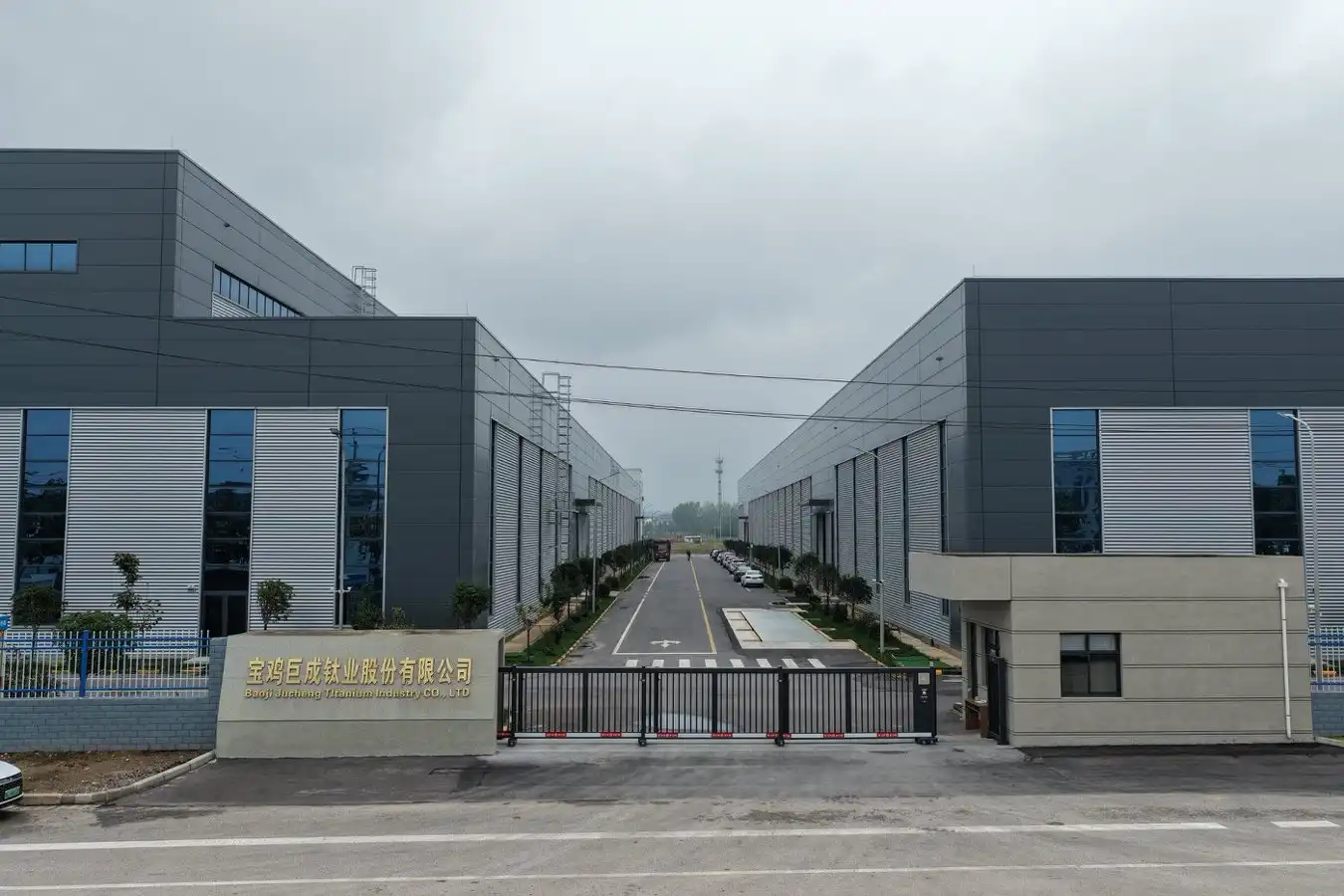
For more than 20 years, Jucheng Titanium has served industry buyers in the US and around the world from Baoji, China, which is where titanium is made. We have about 3,000 tons of titanium in stock all year, 4 invention patents, and 41 utility model patents. We also offer fully certified CP grade 3 titanium sheet that meets ASTM B265, ASME SB265, and AMS 4911. To get a price, email our team at s4@juchengti.com.
References
1. ASTM International. ASTM B265: Standard Specification for Titanium and Titanium Alloy Strip, Sheet, and Plate. ASTM International, 2020.
2. American Society of Mechanical Engineers. ASME SB-265: Titanium and Titanium Alloy Strip, Sheet, and Plate. ASME, 2021.
3. SAE International. AMS 4911: Titanium Alloy Sheet, Strip, and Plate. SAE International, 2019.
4. Schutz, R. W., & Watkins, H. B. "Recent Developments in Titanium Alloy Application in the Energy Industry." Journal of Materials, 1998.
5. Donachie, M. J. Titanium: A Technical Guide. 2nd ed. ASM International, 2000.
6. Boyer, R., Welsch, G., & Collings, E. W. Materials Properties Handbook: Titanium Alloys. ASM International, 1994.