



CP Grade 3 Titanium Sheet: Specs, Uses, and Buying Guide
A CP Grade 3 titanium sheet is a commercially pure, alpha-phase titanium product designated UNS R50550, manufactured to ASTM B265 and ASME SB265 standards. It occupies a precise position in the titanium grade spectrum — stronger than Grade 2 yet more formable than Grade 5. With a minimum yield strength of 380 MPa and tensile strength of 450 MPa, it delivers roughly 30–40% greater mechanical performance than Grade 1. For procurement engineers designing pressure vessels, chemical reactors, or aerospace firewalls, this grade resolves the classic moderate-strength-ductility gap without the cost premium of alloyed titanium.
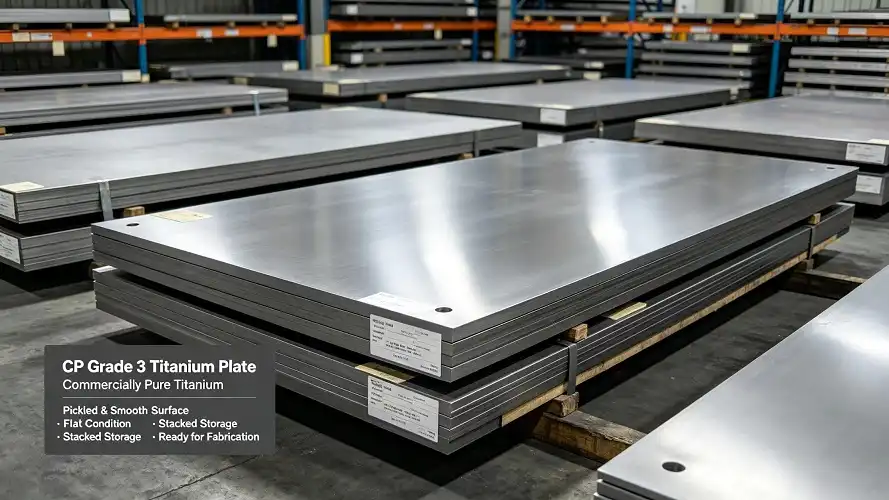
Understanding CP Grade 3 Titanium Sheet Specifications
For secure purchasing choices, it's important to know the exact specs of this material. These numbers are written down by ASTM B265, ASTM F67, AMS 4911, and ASME SB265. They are not guesses.
Mechanical Properties That Define Performance
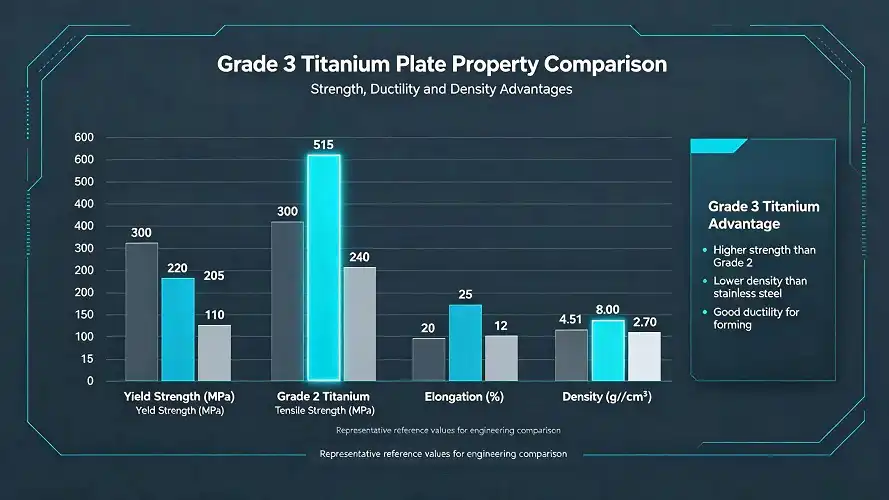
The yield strength of Grade 3 titanium sheet is at least 380 MPa, the tensile strength is at least 450 MPa, and the elongation is at least 18%. These numbers show that the material is flexible enough for cold-forming, but engineers should keep in mind that it has a greater spring-back than Grade 2. It weighs 4.51 grams per cubic centimeter, which is about 43% less than 316L stainless steel, which weighs 7.9 grams per cubic centimeter.
Chemical Composition and Interstitial Control
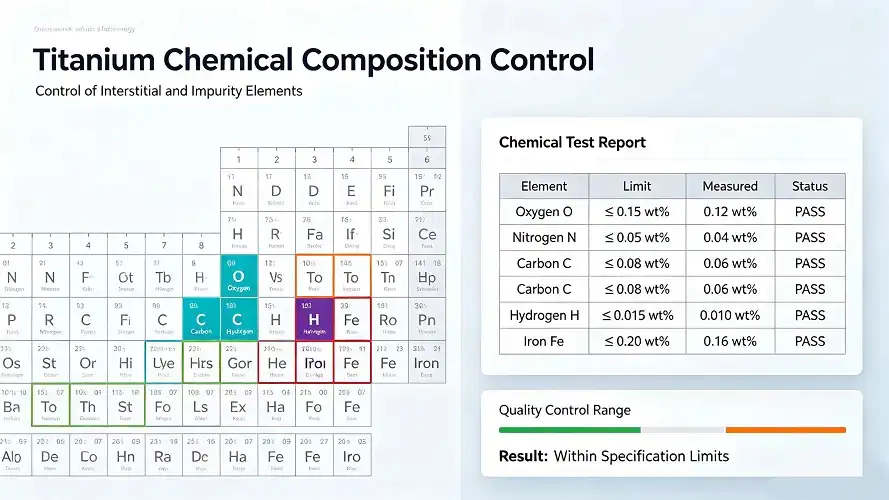
The higher oxygen content—which must be less than 0.35 percent according to ASTM standards—works as an interstitial strengthener. This is the main reason why Grade 3 is stronger than lower grades. There are about 0.05% nitrogen, 0.08% carbon, 0.0150% hydrogen, and 0.30% iron in the overall chemical environment. You need material test reports and EN 10204 3.1 certification to be able to offer approved goods because of these strict controls.
Dimensional Availability for Custom Fabrication
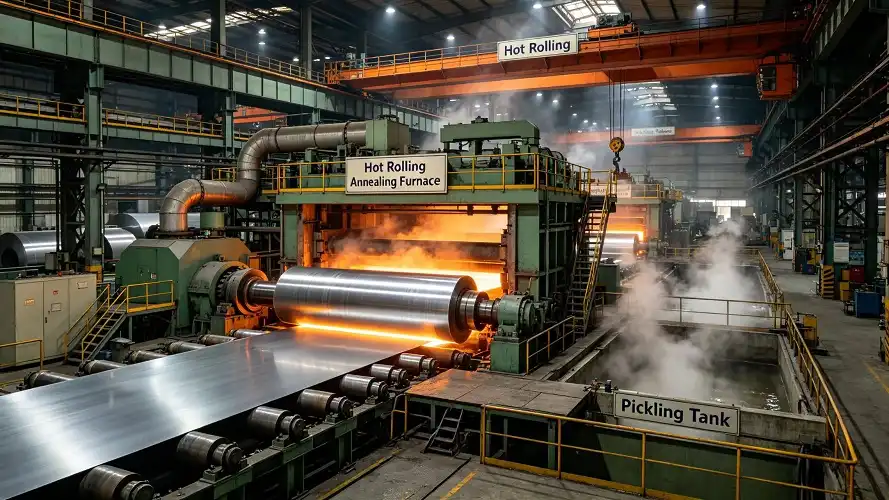
Titanium Grade 3 sheet is hot-rolled and supplied at Jucheng Titanium in the annealed state. The surface can be polished, machined, or acid-pickled. Standard size ranges include thicknesses from 4 mm to 80 mm, widths from 950 mm to 2,500 mm, and lengths up to 10,000 mm. If you need completely different sizes, just let us know. The product range includes grades Gr1, Gr2, Gr4, Gr5, Gr7, Gr9, and Gr12. This means that procurement teams can get everything they need for a project from a single source.
Applications and Industry Use Cases of Grade 3 Titanium Sheet
The material is sought after in many challenging areas because it is chemically inert and structurally strong. The main places where Grade 3 titanium sheet regularly shows its worth are listed below.
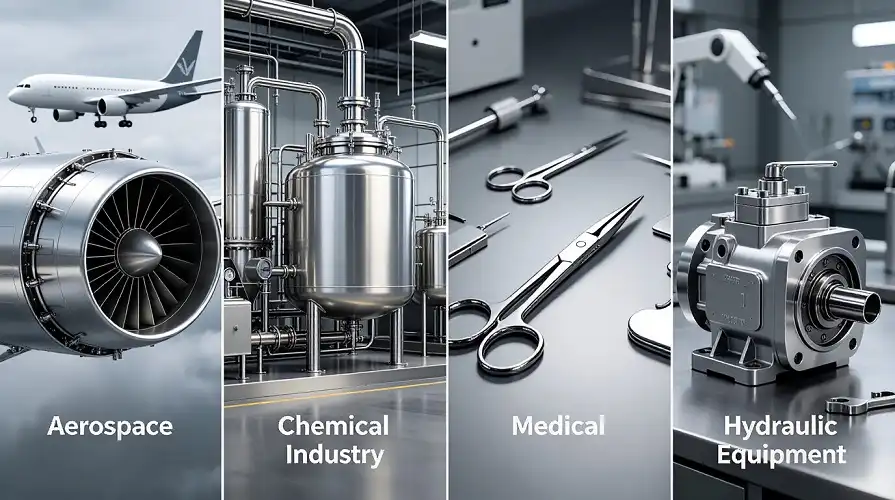
- Chemical Processing Equipment: Shell-and-tube heat exchanger tube sheets and pressure vessel linings operating in hot nitric acid or oxidizing chloride environments rely on CP Grade 3 titanium sheet when design pressures exceed what Grade 2 safely accommodates. The material withstands aggressive acid exposure while allowing thinner plate gauges, which directly reduces vessel weight and fabrication cost.
- Marine and Offshore Structures: Saltwater ballast tanks, desalination plant piping, and marine exhaust systems benefit from Grade 3's documented resistance to crevice corrosion up to 80°C. Unlike carbon steel alloys, it carries no galvanic corrosion risk in seawater exposure, eliminating the costly cathodic protection systems often required for steel alternatives.
- Aerospace Airframe and Firewall Panels: In warm zones of aircraft structures reaching up to 400°C, Grade 3 sheet serves fuselage skins and engine firewalls where full alloy titanium is over-specified yet standard steel is inadequate. Its oxidation resistance and non-magnetic properties satisfy both structural and certification requirements from aerospace material distributors.
As a whole, these use cases show why B2B clients in chemical plant contracting, offshore engineering, and making airplane parts trust Grade 3 as a safe material. Its balanced performance profile keeps the safety margins needed by international design rules while cutting down on the costs of over-engineering.
Comparing Grade 3 Titanium Sheet With Other Materials and Grades
It's not always easy to choose the right material, and buying teams often have to choose between grades and material groups. Figuring out where Grade 3 stands in comparison to other options helps you decide if it's the best standard for a project.
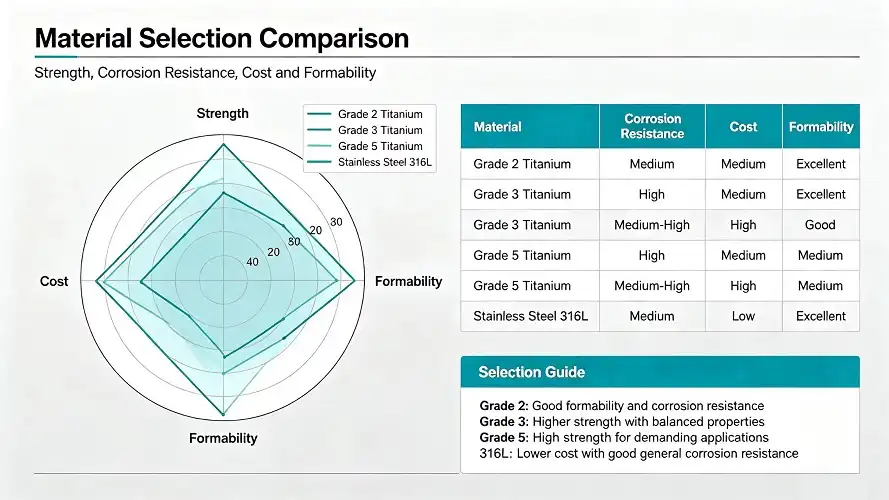
Most of the time, Grade 2 CP titanium is used. It has a yield strength of about 275 MPa. It can be cold-formed better and costs less than other materials, so it's the best choice for moderate-pressure settings and complicated shapes that need to be made. When pressure ratings or structural load needs go above Grade 2's safe working range without going over budget to alloyed grades, Grade 3 becomes the smart change.
Grade 5 has yield strengths of more than 880 MPa, which makes it essential for use in main aircraft structures and high-cycle fatigue situations. It does, however, cost a lot more per kilogram, and it can't be cold-formed very well. Grade 3 is the middle ground between these two choices in terms of price and performance. It has enough strength, full corrosion protection, and easy-to-handle forming.
Stainless steel is often looked at as an alternative in chemical processing procurement. Even though it costs less per kilogram, its density of 7.9 g/cm³ makes it much heavier, and it can't fight chloride rust as well as any CP titanium grade. Titanium regularly has a longer service life than austenitic stainless steels in seawater and chlorinated process settings. This lowers the cost of replacement over its entire life. Grade 1 and Grade 4 are the last two grades of CP titanium. Grade 1 is the most flexible and can be used for low-strength tasks, while Grade 4 is the strongest of the CP grades but is harder to shape.
How to Test and Verify Grade 3 Titanium Sheet Quality?
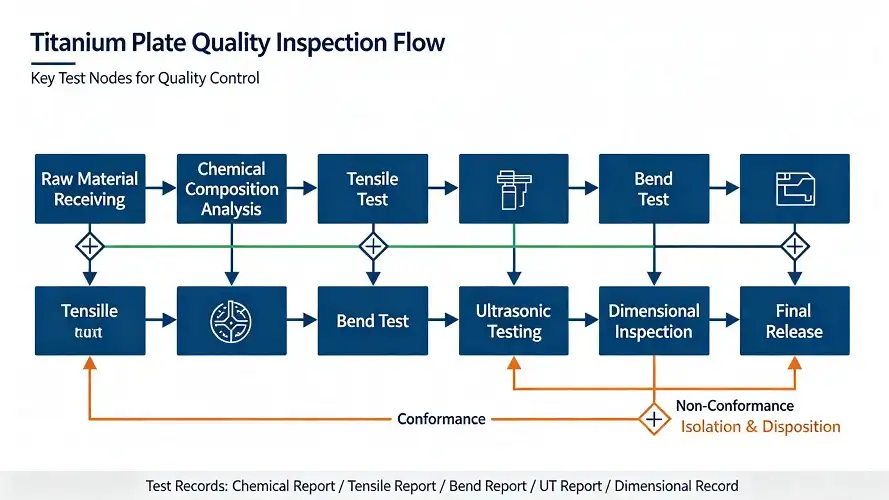
When getting titanium for aerospace and high-pressure uses, quality checks must be done at all times. A trustworthy provider gives written proof at every stage of the checking process, including documentation for CP Grade 3 titanium sheet to verify its material grade and quality.
Key Testing Methods Procurement Teams Should Require
Chemical testing with ICP-OES or inert gas fusion confirms that the oxygen content stays within the 0.35% limit; any changes below this limit directly affect how brittle and mechanical the material is. Tests for tensile strength according to ASTM E8 make sure that the basic requirements for yield and tensile strength are met. Before the material is used for fabrication, it is shaped by bending it around a mandrel at 4–5 times its thickness without cracking on the surface. This is called the bend test per ASTM E290.
Surface and Internal Integrity Checks
Visual and surface roughness checks show that the metal is free of alpha-case, the rigid oxygen-rich layer that forms during annealing if the atmosphere control wasn't good enough. Before the sheet can be used, alpha-case must be removed by cleaning or chemical milling. For plates thicker than 25 mm, AMS 2631 ultrasonic testing finds internal laminations or inclusions that could spread when pressure is applied and removed over and over again. Before shipping, laser flatness measurement ensures that the dimensions are correct.
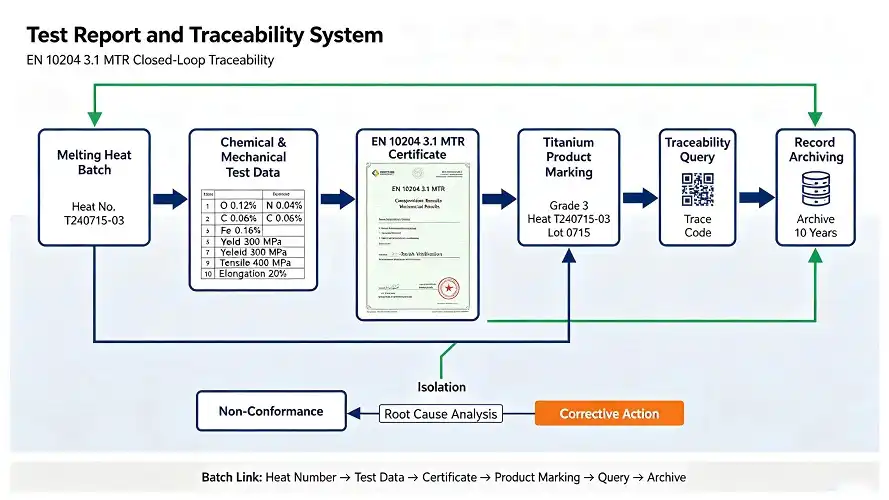
As part of your due diligence for any foreign purchase, you should ask for EN 10204 3.1 material test records and make sure that the chemical and mechanical data can be traced back to the melt heat.
Buying Guide for CP Grade 3 Titanium Sheet
If you want to buy a titanium plate from another country, you need to know what affects prices, how long it takes to get the plate, and how reliable the supplier is. The following useful tips are based on real buying situations in the US market.
The main things that determine the price of Grade 3 titanium sheet are the cost of the raw sponge, the accuracy of the oxygen level control, and the size of the order. Spot purchases are usually much more expensive per kilogram than bulk sales with stable schedule promises. Because they control the whole production chain, suppliers who can hot-roll, anneal, level, pickle, and finish the surface of the metal themselves can offer more consistent dimensions and faster wait times than trading middlemen.
As a starting point, buying managers should check the following things about a Grade 3 titanium sheet supplier:
- Standards compliance: Confirmed capability to produce to ASTM B265, ASTM F67, AMS 4911, and ASME SB265.
- Certification documentation: EN 10204 3.1 MTRs with full chemical and mechanical test data traceable to melt heat.
- Dimensional flexibility: Ability to cut, machine, or customize thickness, width, and length to project drawings.
- Inventory depth: Sufficient stock to support both sample orders and full project volumes without extended delays.
Long-term chemical processing and aircraft projects can have a lot less risk when they buy from suppliers who meet all of these factors.
Conclusion
Grade 3 titanium sheet, particularly CP Grade 3 titanium sheet, is still one of the most useful materials for business-to-business purchases because it bridges the performance gap between common CP titanium and high-end metals. It has been shown to be resistant to corrosion, have a good yield strength, and be dimensionally flexible according to ASTM B265 and related standards. This makes it a good choice for chemical processing vessels, marine structures, and aerospace panels.
FAQ
1. What is the difference between Grade 2 and Grade 3 titanium sheet in practical use?
Grade 2 is softer and easier to shape, making it good for places with moderate corrosion and complicated cold-formed shapes. Due to higher oxygen interstitial content, Grade 3 has a 30–40% higher yield strength. Purchasing teams pick Grade 3 when the safe design limit for Grade 2's structural pressure values is exceeded, but they don't want to pay more for Ti-6Al-4V.
2. Does Grade 3 titanium sheet require post-weld heat treatment?
Not often enough. Most of the time, CP Grade 3 is used as-welded, which means it was welded using GTAW or PAW methods and ERTi-3 filler wire. If the sheet has been through a lot of cold working in an area that is likely to cause stress corrosion, it is best to do a stress-relief anneal at about 538–595°C for 30 minutes.
3. What is the maximum continuous service temperature?
It is possible to use grade 3 titanium sheet continuously up to about 425°C. When this barrier is crossed, oxygen moves to the top and forms a brittle alpha-case layer that shortens the fatigue life.
4. What surface finish is standard for industrial supply?
For ASTM B265, the standard supply condition is to remove scale and pickle it in acid. For aircraft or precision uses, you can get treatments that are polished or sandblasted and pickled.
Partner with Jucheng Titanium for Reliable Grade 3 Titanium Sheet Supply
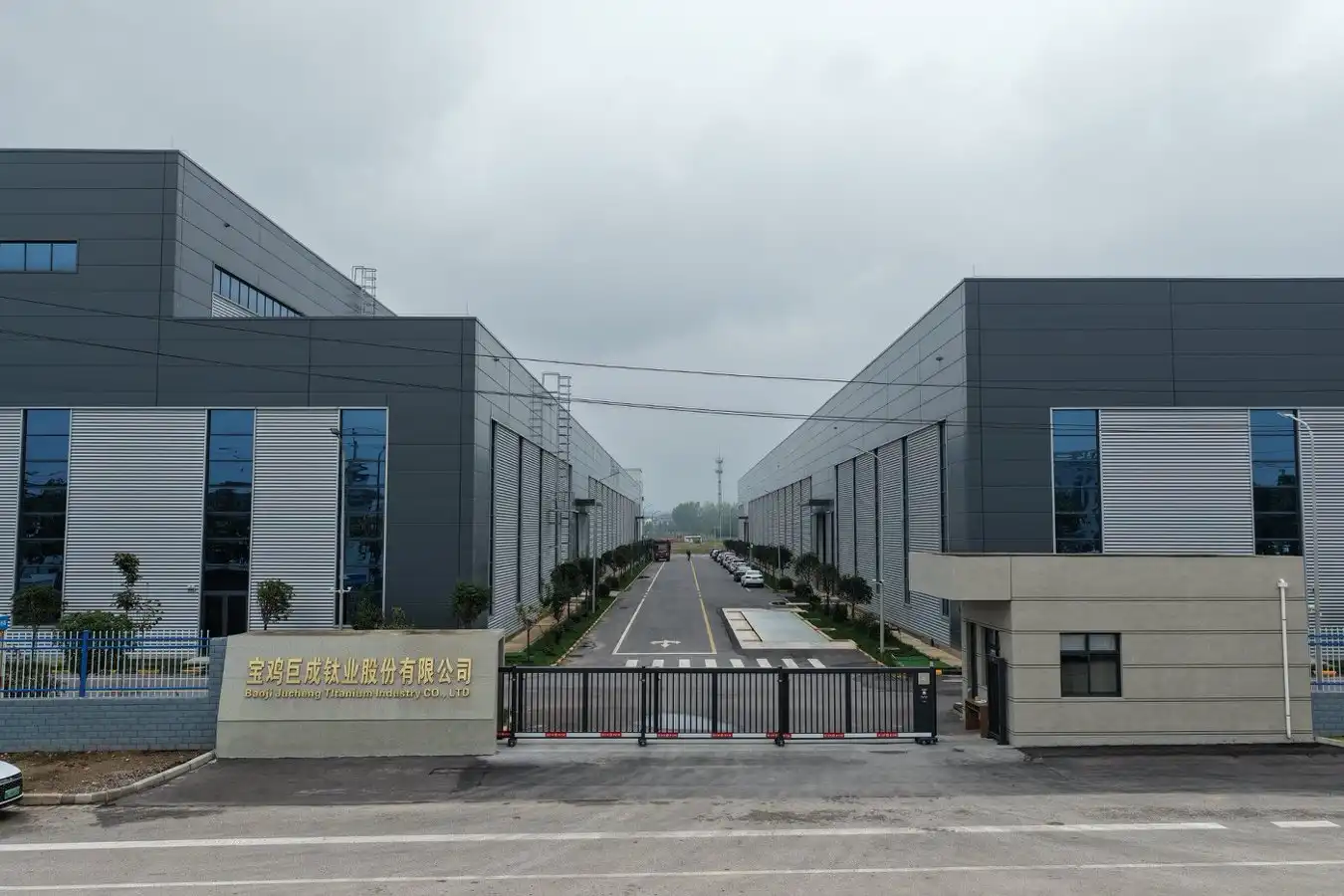
Jucheng Titanium has spent more than 20 years building a manufacturing base that covers 120,000 square meters and keeps about 3,000 tons of titanium on hand all year. Baoji is known as China's titanium production hub. We make CP Grade 3 titanium sheets that meet ASTM B265, AMS 4911, and ASME SB265 standards and are fully certified by EN 10204 3.1. You can email our technical team at s4@juchengti.com to get a unique price or a sheet with material specifications.
References
1. ASTM International. ASTM B265: Standard Specification for Titanium and Titanium Alloy Strip, Sheet, and Plate. ASTM International, 2020.
2. ASM International. Titanium: A Technical Guide, 2nd ed. ASM International, 2000.
3. Boyer, R., Welsch, G., & Collings, E. W. Materials Properties Handbook: Titanium Alloys. ASM International, 1994.
4. Lutjering, G., & Williams, J. C. Titanium, 2nd ed. Springer, 2007.
5. Schutz, R. W., & Thomas, D. E. "Corrosion of Titanium and Titanium Alloys." ASM Handbook, Volume 13: Corrosion. ASM International, 1987.
6. Peters, M., Kumpfert, J., Ward, C. H., & Leyens, C. "Titanium Alloys for Aerospace Applications." Advanced Engineering Materials, Vol. 5, No. 6, 2003.