
Everything You Need To Know About Titanium Round Bar Grades
Understanding titanium bar grades is crucial for aerospace, chemical reactor, and medical device procurement. Grade 2 titanium round rod is the industry standard, an unalloyed commercially pure titanium with balanced strength, corrosion resistance, and formability. Grade 2 has exceptional weldability and cold-forming without surrendering its 60% weight advantage over steel. This balance makes it essential for chemically stable applications in hostile conditions where stainless steel fails.
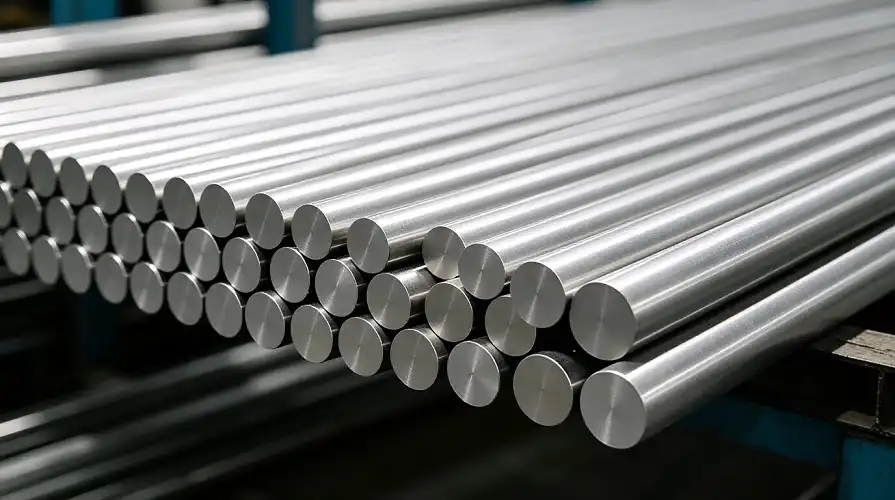
Understanding Titanium Round Bar Grades
Titanium round bars come in various grades for different performance needs. Chemical composition, mechanical qualities, and international procurement requirements must be considered while choosing a grade.
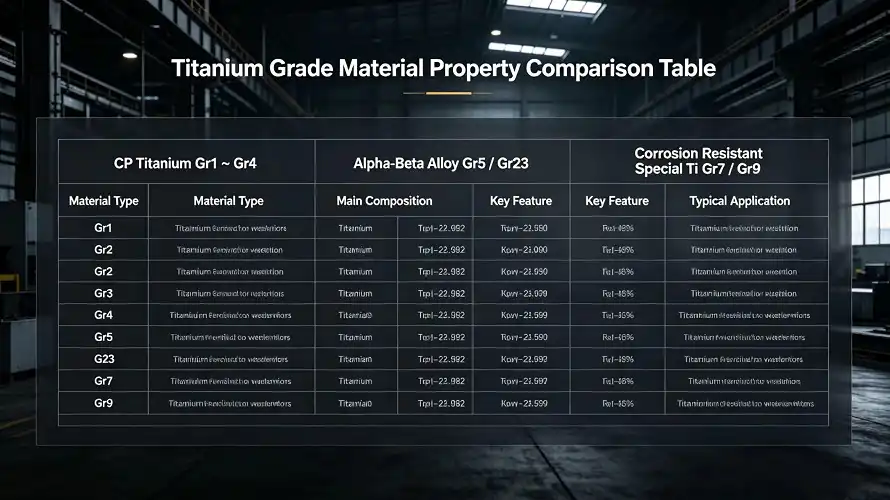
Commercial Purity Grades: Grade 1 Through Grade 4
Oxygen and iron concentration distinguish commercially pure titanium grades (CP titanium) from Grade 1 to Grade 4. Grade 1 is ideal for deep-drawing because to its purity, ductility, and reduced strength. Grade 2, UNS R50400, has 345 MPa tensile strength and 20% elongation, ideal for fabricators that need moderate load-bearing capability and corrosion resistance. Grade 3 has intermediate strength, while Grade 4 has 550 MPa tensile strength, nearing alloy performance while retaining CP titanium's corrosion benefits.
These grades meet ASTM B348 and ASME SB348 chemical and mechanical norms. The oxygen interstitial element controls strength, increasing hardness and decreasing ductility. When alloyed materials are too expensive, procurement teams select these grades for equipment that runs in oxidizing acids, saltwater, or chlorine-rich environments.

Titanium Alloy Grades: Grade 5 and Grade 23
Grade 5 titanium (Ti-6Al-4V) dominates aerospace applications because of its 900 MPa minimum tensile strength and 400°C high-temperature stability. The alpha-beta phase in aluminum-vanadium alloys is twice as strong as CP grades but requires stress relief after machining and welding problems. Grade 23 (Ti-6Al-4V ELI) meets ASTM F136 biomedical criteria for fracture toughness and biocompatibility in surgical implants with extra-low interstitials.
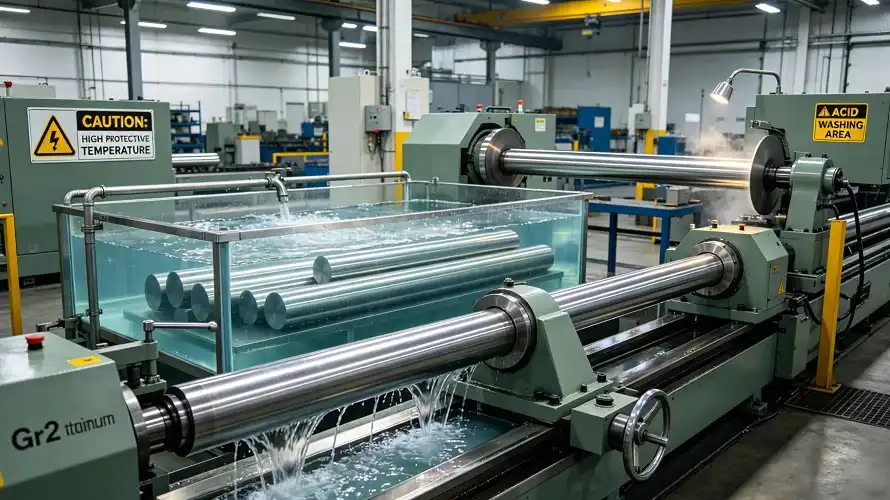
Grade 5 bars undergo vacuum melting, hot forging, and solution treatment, while Grade 2 simply needs annealing after rotary forging. This processing complexity impacts lead times and cost, which are crucial for 6-18-month project procurement cycles.
Specialized Corrosion-Resistant Grades
Standard CP titanium suffers in acidic situations; thus, Grade 7 and Grade 12 add palladium (0.12-0.25%). Chemical plant operators using concentrated hydrochloric or sulfuric acid streams specify these valve and pump shaft grades. Grade 9 (Ti-3Al-2.5V) is useful for aviation hydraulic tubing since it is stronger than CP grades but more formable than Grade 5.
Understanding these differences helps procurement managers match material requirements with operations. Grade 5's structural integrity under cyclic stress is needed for landing gear components, and Grade 2's seawater immunity for heat exchangers.
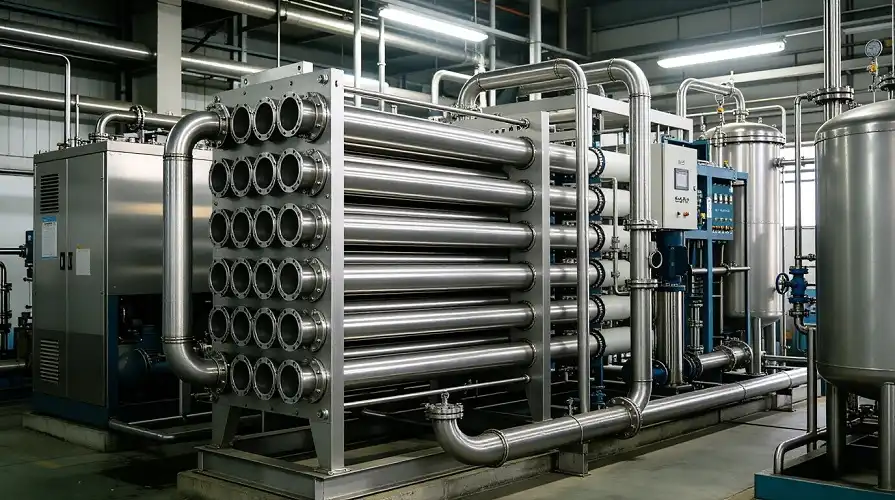
Detailed Insights on Grade 2 Titanium Round Rod
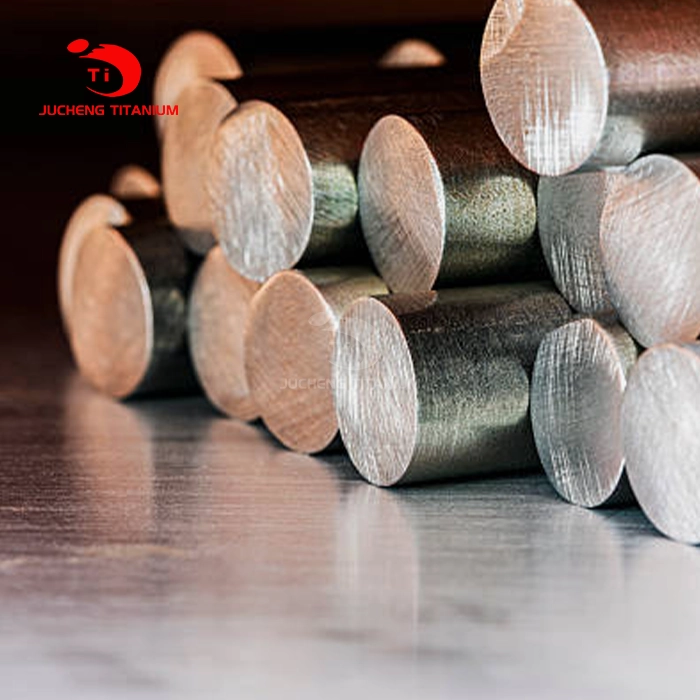
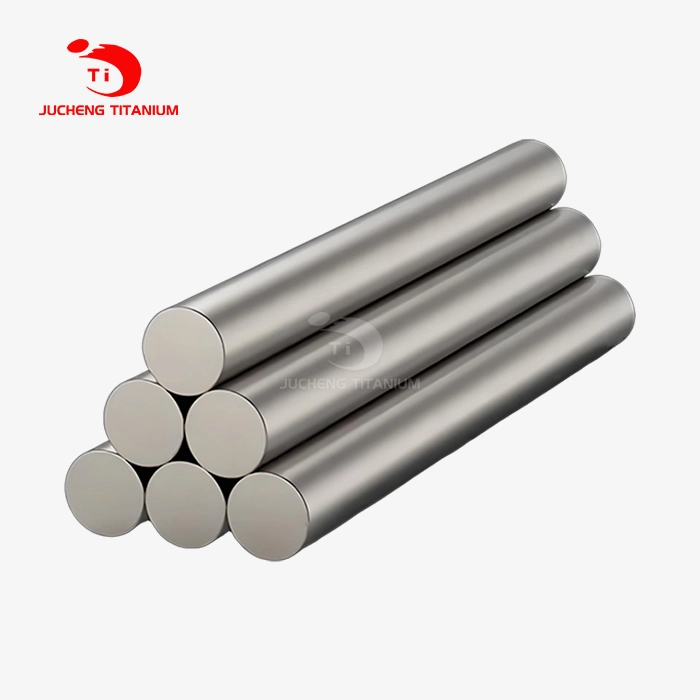
Over 60% of industrial titanium use is Grade 2 titanium round rod, the purest commercial titanium alloy. Its technology prevents corrosion-related equipment failure and allows cost-effective production.
Chemical Composition and Mechanical Performance
Grade 2 titanium's chemistry controls interstitial elements: titanium (balance), iron (0.30%), oxygen (0.25%), carbon (0.08%), and nitrogen (0.03%). This composition has a minimum ultimate tensile strength of 345 MPa, a yield strength of 275 MPa, and 20% elongation. Controlling oxygen enhances the alpha-phase crystal structure without reducing ductility, which is important for cold-forming activities like pipe fitting, bending, and flange stamping.
Physical parameters include 4.51 g/cm³ density (less than half of stainless steel), melting point at 1660°C, and 105 GPa modulus of elasticity. Grade 2 bars absorb stress better than steel (200 GPa), making them perfect for marine propulsion systems and industrial agitators.
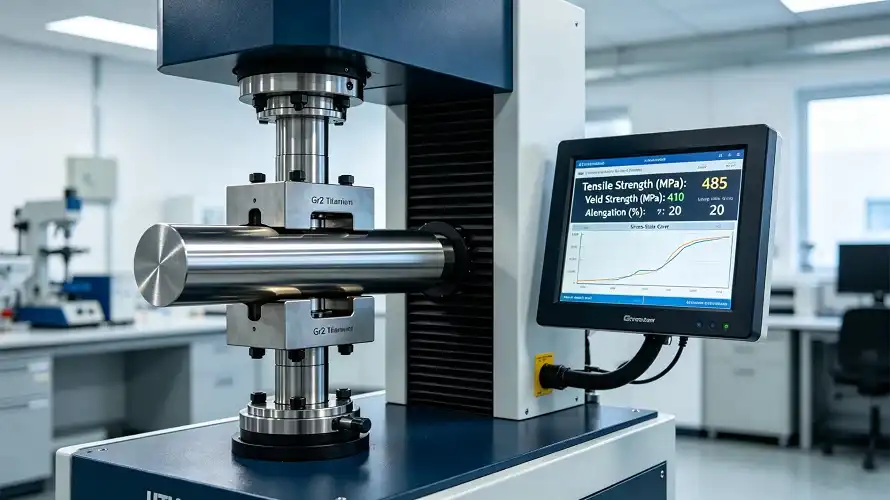
Corrosion Resistance Capabilities
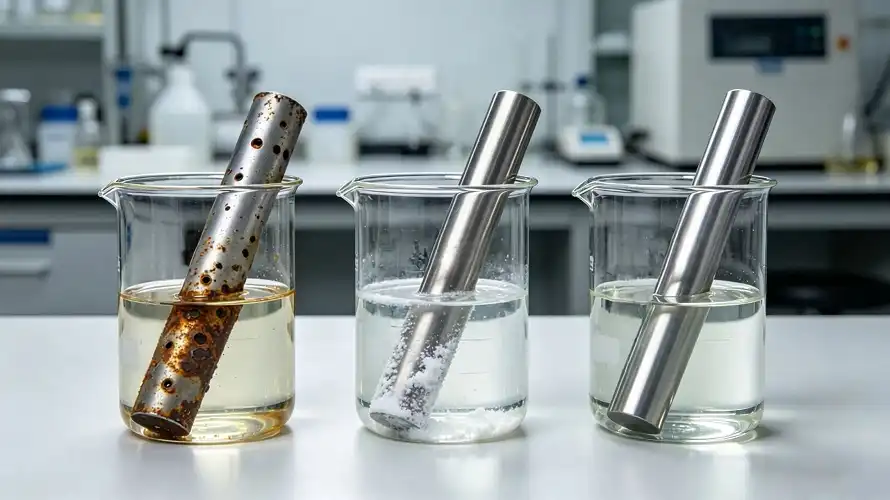
Crevice corrosion resistance in saltwater up to 260°C and resistance to oxidizing acids like nitric acid, aqua regia, and wet chlorine gas differentiate Grade 2 titanium round rod. The passive oxide layer (TiO₂) offers self-healing protection that stainless steel cannot match, repairing itself instantaneously when damaged. This means reactor vessels and heat exchanger tubes last 20+ years in chemical processing applications, reducing replacement expenditures.
Because biological fouling resistance avoids microbiologically induced corrosion, marine engineers demand Grade 2 for subsea instrumentation housings and desalination plant pipes. A coastal power plant's Grade 2 titanium condenser tube bundle had no wall thinning after 15 years, but nearby copper-nickel tubes needed repair twice.
Application Versatility Across Industries
Chemical processing companies use Grade 2 titanium round bars for valve stems, pump shafts, and reactor tie-rods in corrosive environments since Hastelloy is too expensive. When making pharmaceutical intermediates or semiconductor-grade compounds, trace metal contamination causes batch failures. The substance resists process fluid contamination.
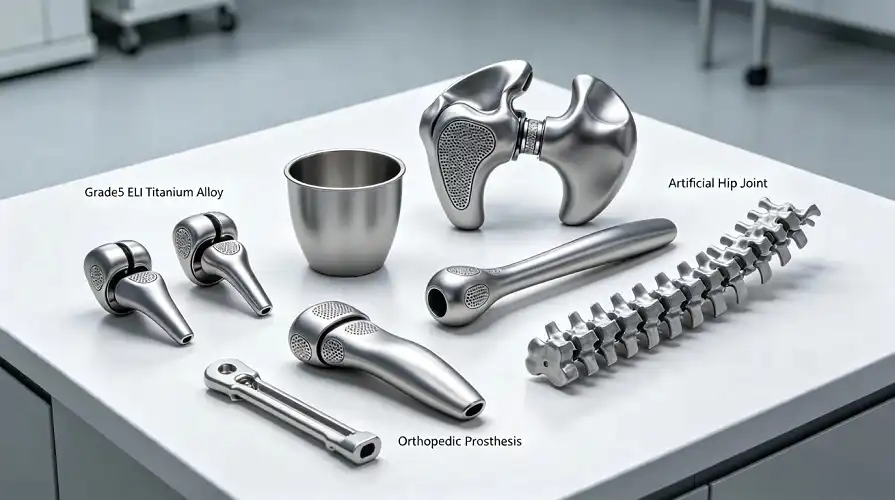
ASTM F67 biomedical Grade 2 round stock is used to make surgical tools and dental implant abutments. For orthopedic screws and cranial plates, the material's osseointegration and MRI compatibility are unmatched. Offshore engineering organizations use Grade 2 bars to make measurement-while-drilling equipment housings for directional drilling precision.
These varied uses show why material certification traceability is essential. According to AMS 4921, each bar must have mill test results for chemical and mechanical testing.
Comparing Grade 2 Titanium Round Rod with Other Materials
Procurement choices must objectively compare material options based on performance, lifetime costs, and supply chain factors. Grade 2 titanium round rod stands out from other titanium grades and technical materials.
Grade 2 Versus Higher-Strength Titanium Alloys
Fundamental trade-offs exist between Grade 2 and Grade 5 (Ti-6Al-4V). Grade 5 is required for high-stress aircraft structural components due to its 900 MPa tensile strength, twice that of Grade 2's 345 MPa. Work-hardening makes Grade 5 difficult to machine, requiring post-weld heat treatment to prevent cracking, and costs 40% more per kilogram.
Grade 2's fabrication flexibility is better. Grade 2 tubing may be cold bent into sophisticated heat exchangers without intermediate annealing, whereas Grade 5 needs hot forming above 800°C. For field repairs on chemical equipment where heat treatment is impracticable, welding Grade 2 bars generates 100% radiography junctions without stress relief.
Grade 4 is a middle-path with 550 MPa strength and good formability. When Grade 5 is too expensive, chemical plant designers use Grade 4 for high-pressure valve bodies that need more strength than Grade 2. The choice matrix weighs strength, manufacturing difficulty, and material availability.
Titanium Round Rod Versus Stainless Steel and Aluminum
The corrosion immunity of Grade 2 titanium round stock avoids pitting and crevice corrosion that restricts 316L stainless steel to mild temperatures in marine service. Titanium heat exchanger tubes last months longer than stainless steel, although they cost 8-12 times more. Quantifying replacement labor, downtime, and contamination hazards improves lifecycle analysis. Corroded stainless steel repair shuts down pharmaceutical reactor output for $200,000, exceeding the titanium construction's premium.
Aluminum alloys are a popular choice for heat sinks because of their better thermal conductivity and density (2.7 g/cm³ vs. titanium's 4.5 g/cm³). Aluminum's marine galvanic corrosion and strength loss over 150°C limit uses. Mixed-material aircraft assemblies require titanium round bars that withstand galvanic attack and mechanical characteristics to 350°C.
Chemical pump engineers consider these concerns while choosing materials for important spinning components. Titanium's strength-to-weight advantage decreases bearing loads and corrosion immunity increases seal life, justifying the initial expenditure over a 15-year equipment lifespan.
Procurement Considerations for Grade 2 Titanium Round Rod
Industrial titanium round bar procurement requires quality certifications, supply chain logistics, and customisation that differ from commodity metal purchases.
Certification Requirements and Quality Assurance
Aerospace and medical device industries require melt batch to final machining material traceability. Grade 2 titanium round rod suppliers must produce mill test certificates for ASTM B348 chemical and ASTM E8 mechanical property testing. Quality management systems certified to ISO 9001:2015 follow each manufacturing lot through vacuum melting, forging, and heat treatment.
Heat lot traceability should be required in procurement requirements, utilizing stamped identification and certified verification. Biocompatibility testing and certificate of conformity declarations are required for medical uses. Defense contractors specify AMS 4921 material with government source inspection, which takes longer but ensures key component dependability.
Third-party inspections check dimensional tolerances, surface polish, and interior faults using ultrasonic testing. For precision machining into bearing journals or valve stems, centerless grinding yields bars with ±0.1mm diameter tolerances and Ra 1.6 surface polish achieved by turning.
Pricing Factors and Minimum Order Quantities
Raw material prices, manufacturing complexity, and order volume determine Grade 2 titanium round rod pricing. Standard annealed bars in bulk quantities (500+ kg) with diameters of 25-100mm cost $18-25 per kilogram. Due to forging complexity and processing yield losses, specialty sizes below 10mm and over 300mm cost 30-50% more.
Common sizes need 100 kg minimum order quantities; experienced suppliers with inventory depth may accept lower test amounts. Beyond 6-meter mill lengths up to 12-meter maximum, bespoke length cutting boosts processing expenses but eliminates customer waste. By simplifying project needs and arranging yearly supply agreements to stabilize market price, procurement managers cut expenses.
Custom diameter forgings require dedicated manufacturing runs and take 12-16 weeks, whereas stock sizes take 4-6 weeks. Chemical processing plant contractors with multi-year building timelines place early procurement orders to lock in material availability and cost before installation.
Customization Services and Technical Support
Value-added manufacturers stand out in competitive markets. Round bar stock can be turned into shouldered shafts, threaded for fasteners, or precisely OD ground for press-fit assemblies. These services cut client machining time and titanium trash ($8-12 per kg as turnings vs. raw material).
Bars can be pickled, passivated, or electropolished for specialized uses. Bright polished coatings fulfill pharmaceutical equipment cleanroom regulations, whereas pickled surfaces (matte gray) suit later shaping. Composite-to-titanium connections in aerospace assemblies bind better with sandblasted texturing.
Quality suppliers have metallurgical engineers to help with material selection, welding parameter suggestions, and corrosion issues. This consulting approach fosters long-term collaborations, especially for titanium application pioneers.
How to Choose the Right Titanium Round Rod Grade for Your Business?
Selecting the best titanium grade includes assessing application needs, supplier capabilities, and total cost of ownership rather than focusing solely on material price.
Matching Grade to Application Requirements
The starting point is environmental exposure—oxidizing acid service, reducing acid settings, or neutral pH prefers various grades. Grade 2 excels in oxidizing air and saltwater, whereas Grade 7's palladium reduces acids. CP titanium grades can sustain characteristics at 300°C, whereas Grade 5 alloy can handle 400°C before creeping.
Strength demands are determined by mechanical loading. Grade 2's moderate strength is fine for static structural components, but fatigue cycling may need Grade 5's fracture propagation resistance. Grade 2's weldability avoids Grade 5's post-weld heat treatment difficulties for welded systems.
Formability greatly affects manufacturing costs. Simple turning can use stronger grades, but complex bending or deep drawing prefers Grade 2's ductility. The buying choice must consider downstream production costs, not only raw material pricing.
Evaluating Supplier Credibility and Certifications
First, verify supplier certifications like ISO 9001 for quality management, AS9100 for aerospace, and ISO 13485 for medical equipment for the Grade 2 titanium round rod. Vacuum arc remelting furnaces, rotary forging machinery, and non-destructive testing facilities indicate substantial industrial infrastructure. Site audits show production capabilities match declared capacity.
Chemical plant contractors running titanium reactors for five years can verify material performance. Case studies of successful projects in comparable applications decrease procurement risk, especially for organizations switching from conventional materials.
After-sales assistance is crucial when problems emerge. Technical teams who analyze field problems, propose remedial processes, and expedite replacement material show dedication beyond sales. Long-term supply agreements should entail technical collaboration and continual development.
Balancing Cost, Quality, and Delivery Timelines
Beyond per-kilogram pricing, total cost analysis includes manufacturing efficiency, lifespan durability, and supply chain reliability. When compared to stainless steel's 5-year replacement rate, titanium's 20+ year service life in corrosive settings justifies the premium cost. Reduced maintenance downtime and contamination risk favor titanium in lifecycle economics.
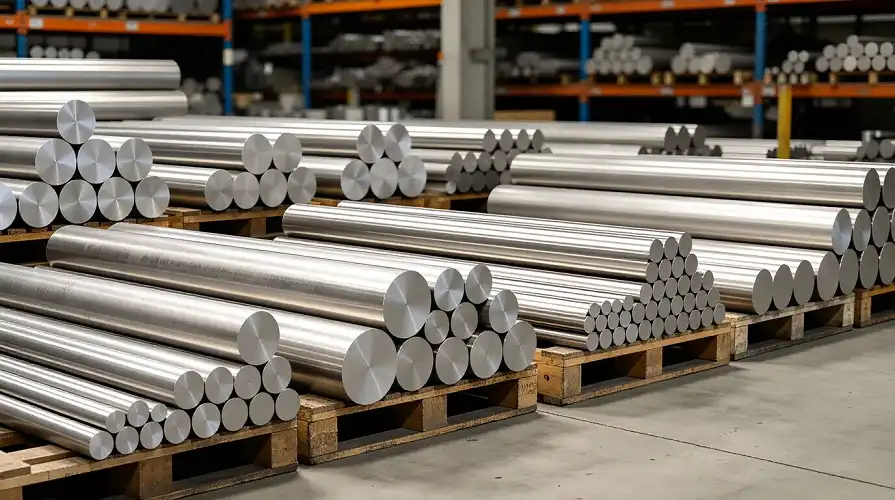
Delivery reliability is crucial to project timelines. Suppliers with 3,000+ tons of inventory in typical grades and sizes can meet urgent needs immediately, whereas build-to-order producers need 12-16 weeks. Strategic buyers build partnerships with stocking suppliers for quick response and bespoke manufacturers for specialties.
Quality consistency across recurrent orders reduces costly manufacturing interruptions. Through thorough qualification testing and frequent audits, certified vendor lists assure material dependability. Using supplier defect rates, dimensional compliance, and certification accuracy data, procurement teams maximize cost, quality, and delivery performance.
Conclusion
Understanding titanium round bar grades helps procurement experts match material attributes to application needs. In corrosion-critical conditions, Grade 2 titanium round rod provides balanced strength, excellent formability, and long-term durability in chemical, marine, and industrial industries. Material selection is optimized by methodically comparing grades to strength, environmental, and manufacturing criteria. Partners with recognized suppliers that provide comprehensive traceability, technical assistance, and consistent quality turn material procurement from transactional to strategic, cutting lifetime costs and improving equipment dependability and operational safety.
FAQ
Q1: What distinguishes Grade 2 from Grade 5 titanium round bars?
Grade 2 commercially pure titanium has 345 MPa tensile strength, high corrosion resistance, and outstanding weldability without heat treatment. Grade 5 (Ti-6Al-4V) is an alpha-beta alloy with 900 MPa strength, appropriate for aircraft structural components but tougher to process and needing post-weld stress relief. Grade 2 matches corrosive spaces that demand formability; Grade 5 suits high-stress applications.
Q2: Can Grade 2 titanium be welded to stainless steel?
Brittle titanium-iron intermetallic composites from direct fusion welding fail joints. Explosive bonding, nickel or tantalum transition joints, and mechanical fastening produce durable connections. Engineering advice ensures mixed-material assembly connecting.
Q3: What surface finishes are available for precision applications?
Acid-pickled (matte gray for forming), brilliant polished (strict diameter tolerances for CNC machining), centerless ground (Ra 0.8), and sandblasted are standard finishes. Electropolished finishes may fulfill cleanroom contamination regulations for medical purposes.
Partner with Jucheng Titanium for Your Grade 2 Titanium Round Rod Requirements
Jucheng Titanium, based in Baoji, China's Titanium Valley, has provided titanium material processing and equipment services to worldwide industries for over 20 years. We have 3,000 tons of inventory, including Grade 2 titanium round rod stock, as a National High-Tech Enterprise and specialized "little giant" enterprise to satisfy urgent project deadlines. We produce products with diameters from Φ6mm to Φ450mm and configurable lengths up to 12,000mm, according to ASTM B348, ASME SB348, and ISO requirements and mill test certification.
Precision turning, centerless grinding, and surface treatments (polished, pickled, sandblasted) convert raw bars into near-net-shape components that meet your standards. In chemical processing, aerospace, marine, and medical device applications, our engineering team collaborates on material selection, fabrication advice, and application troubleshooting to optimize performance. Jucheng Titanium combines production scale with R&D prowess, with 45 patents and cooperation with top research universities.
Our company provides excellent and reliable Grade 2 titanium round rod suppliers for continuing production or custom-engineered materials for unique applications. Contact s4@juchengti.com to discuss your needs and learn how our 20 years of titanium knowledge will help you succeed.

References
1. American Society for Testing and Materials. ASTM B348-13: Standard Specification for Titanium and Titanium Alloy Bars and Billets. West Conshohocken: ASTM International, 2013.
2. Boyer, Rodney, Gerhard Welsch, and E.W. Collings. Materials Properties Handbook: Titanium Alloys. Materials Park: ASM International, 1994.
3. Donachie, Matthew J. Titanium: A Technical Guide, 2nd Edition. Materials Park: ASM International, 2000.
4. Schutz, Richard W., and John S. Grauman. "Corrosion Resistance and Fabrication Characteristics of Commercially Pure Titanium." Journal of Materials Engineering and Performance 8, no. 2 (1999): 145-157.
5. Peters, Manfred, Christoph Leyens, and Klaus Kainer. Titanium and Titanium Alloys: Fundamentals and Applications. Weinheim: Wiley-VCH, 2003.
6. International Titanium Association. Titanium Design and Fabrication Handbook for Industrial Applications. Broomfield: International Titanium Association, 2010.