



Gr 5 titanium plate compared with Gr 2: which to choose?
One of the most typical considerations purchasers make when ordering titanium for a new project is whether to use a gr 5 titanium plate or a Gr. 2 plate. Both grades have the low weight and inherent corrosion resistance titanium is renowned for; however, they behave substantially differently in strength, forming, and cost. At Jucheng Titanium, we assist engineers and procurement teams in matching the correct grade to the right task. This article compares the two grades side-by-side to help you make an informed decision.
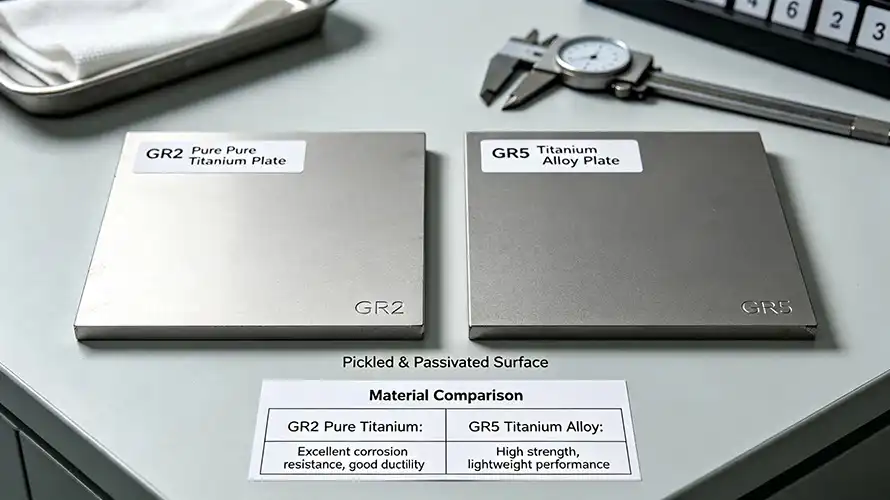
Understanding the Two Grades: Composition and Core Properties
What Makes Gr 2 a Reliable Workhorse
Gr 2 is commercially pure titanium. It has moderate strength, good ductility, and reliability in corrosion resistance. It is a desirable material for heat exchangers, tanks, and chemical processing equipment since it is simple to roll, bend, and weld as it includes no alloying additives. In saltwater, chlorides, and many acidic media, its stable oxide coating protects the surface. If your project is concerned with formability and lengthy service life, rather than maximal strength, Gr 2 is worth thorough consideration.
Why a Gr 5 Titanium Plate Stands Out for Strength
A Gr 5 titanium plate is constructed from the Ti-6Al-4V alloy, which combines aluminum and vanadium to drastically boost strength. It is the world’s most used titanium alloy, relied upon in aerospace, marine, and high-performance engineering. It has a tensile strength about twice that of Gr 2, although the density is about the same. The combination of high strength with low weight enables designers to lower section thickness and conserve bulk without sacrificing load capacity.
Side-by-Side Property Overview
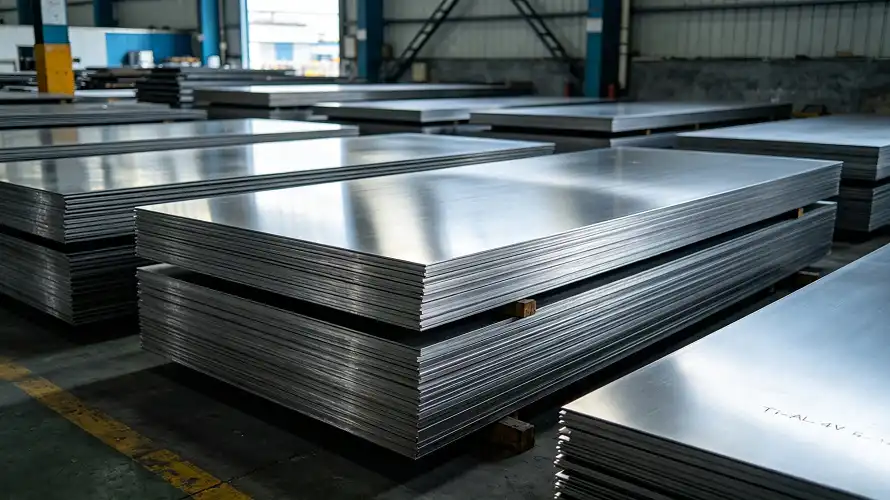
Numbers make the difference easier to see. The table below summarizes typical values for annealed plate according to common industry standards such as ASTM B265, and Jucheng Titanium can supply certified material for either grade.
| Property | Gr 2 (CP Titanium) | Gr 5 (Ti-6Al-4V) |
|---|---|---|
| Min. tensile strength | 345 MPa | 895 MPa |
| Min. yield strength | 275 MPa | 828 MPa |
| Density | 4.51 g/cm³ | 4.43 g/cm³ |
| Formability | Excellent | Good with proper heating |
| Typical focus | Corrosion service | Structural, high-load service |
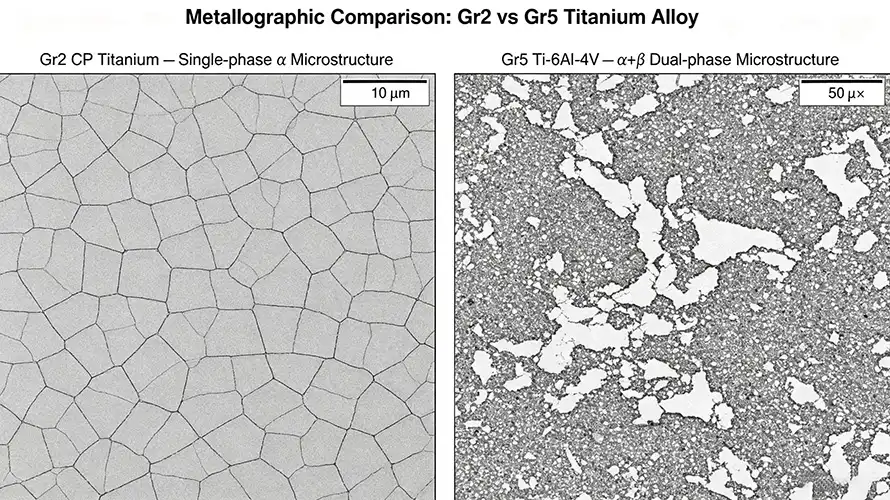
How Heat Treatment Shapes Each Grade
The heat treatment accounts for most of the variance in the behavior of the two plates. Gr 2 is usually provided annealed with a soft, homogeneous structure which is good for forming and for long-term corrosion service. A gr 5 titanium plate is also often provided in the annealed condition and may be solution treated and aged when a project requires even greater strength. This versatility allows the designer to adapt the plate to the loading case. Share your service conditions with Jucheng Titanium, and we will offer the suitable condition for your purchase.
Performance in Real Applications
Corrosion Resistance in Demanding Media
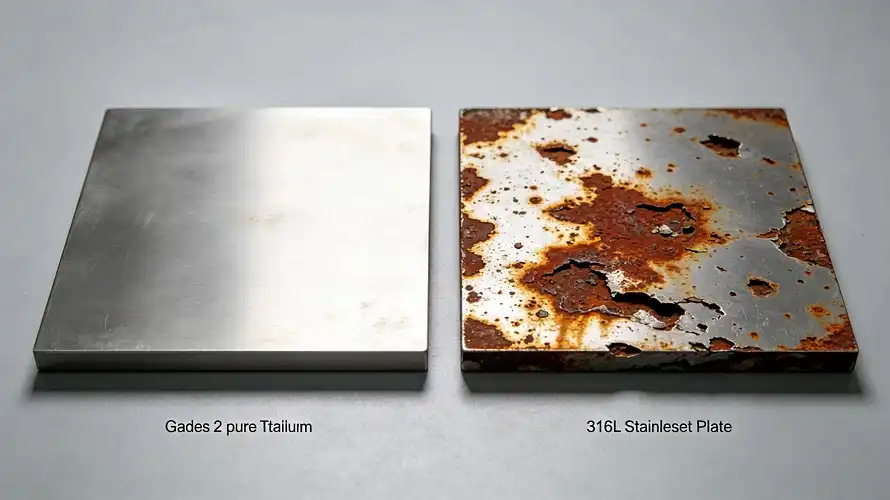
Both grades create a tight self-healing oxide layer, so both operate well in seawater, humid air and many industrial chemicals. Gr 2 is typically used for pure corrosion applications such as electrolytic cells and plate heat exchangers where the consistent structure provides predictable performance. A gr 5 titanium plate also has excellent corrosion resistance while offering structural strength; thus, it fits components that have to handle large loads in marine or chemical situations. The ultimate decision should be based on your working temperature and medium.
Strength-to-Weight Advantages in Aerospace and Marine Use
When every kilogram matters, the enhanced strength of Grade 5 makes a significant difference. The gr 5 titanium plate is a good option for aircraft brackets, engine components, ship fittings, and offshore equipment. It can carry a higher load per unit of weight than steel or aluminum alloys. Gr 2 may still be used in lighter constructions and cladding where stress levels are not too high. Jucheng Titanium sells plate to clients in aerospace, marine, and other industries, so we can provide actual knowledge on both grades.
Medical, Food and Industrial Environments
Titanium also has a clean, biocompatible surface. Gr 2 is widely used in food processing lines and general medical housings where ease of cleaning and formability are the most important. For tools, fixtures, and load-bearing items where additional stiffness and fatigue strength are required, a Gr 5 titanium plate is used. In industrial facilities, within one project, it makes clever sense to blend both classes to give strength where it is required and economy everywhere else. Talk to our staff to pair each part with the highest grade.
Matching Grade to Equipment Design Life
Design life is a major feature in the comparison of the two classes. Gr 2 is used in heat exchangers, reactors, and electrolytic systems that operate constantly for years with minimal maintenance. Gr 5 titanium plate is a great choice for assemblies exposed to repetitive loads, vibration, or impact, as the fatigue strength helps parts maintain their form during extended duty cycles. Matching each component to the grade that best suits its job helps customers construct equipment that will remain durable and cost-efficient for decades.
Fabrication, Machining and Welding Considerations
Forming and Bending Behavior
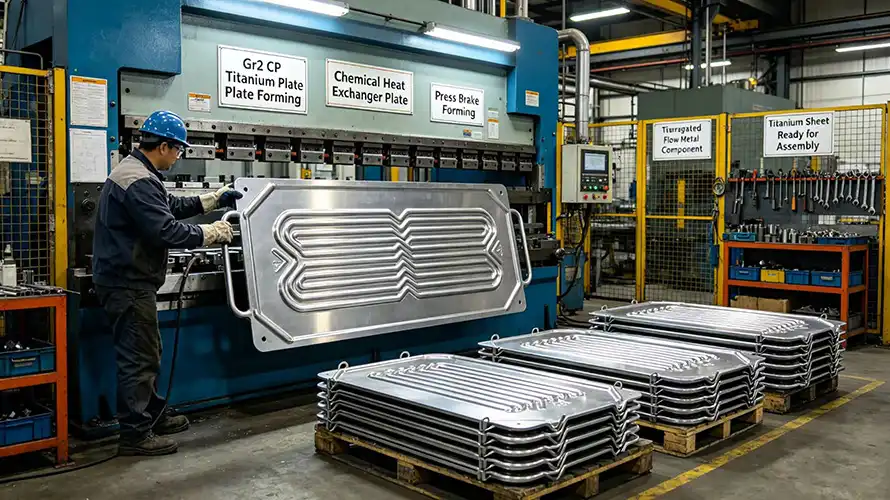
Gr 2 plate can be quickly bent and formed at room temperature, simplifying manufacturing and reducing costs for tanks, ducts and formed panels. A gr 5 titanium plate is stronger and hence requires bigger bend radii and, in many instances, mild heating to form smoothly. This is typical for fabricators with experience, and the item ends up being stiffer. Jucheng Titanium can process and cut to your designs, so you have the plate ready for your next step.
Machining and Surface Finishing
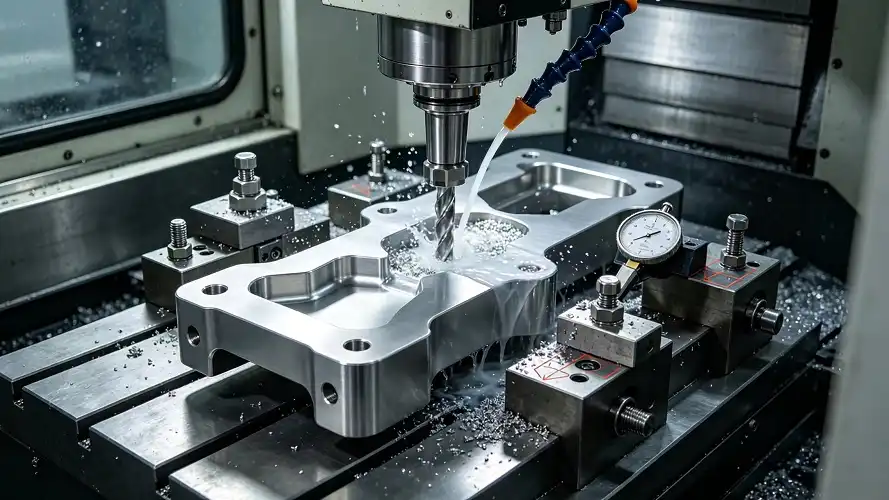
Titanium likes sharp tools, excellent cooling, and constant feeds. Gr 2 machines more softly because of its softer structure, whereas Grade 5 requires stiff setups at slower speeds but provides better dimensional stability and a finer finish. Both grades will respond to polishing, pickling, and anodizing for a clean look and extra surface protection. With a carefully designed technique, any plate may be brought to close tolerances. Need machining advice? Our technical staff is always on hand.
Welding Practice and Joint Quality
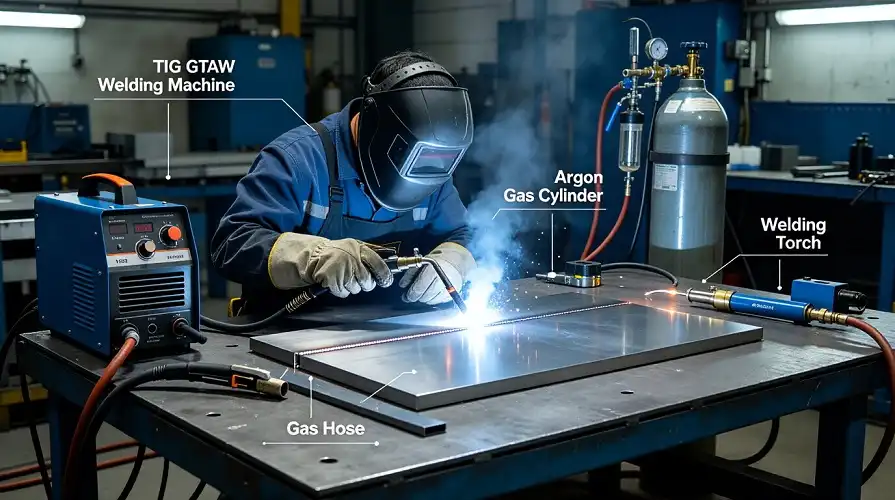
Both grades may be welded using TIG and other inert-gas processes, provided the weld zone is insulated from oxygen until it has cooled. Gr 2 is very tolerant and creates ductile welds, making it suitable for pressure equipment. A Gr 5 titanium plate may also be welded effectively, and a sufficient post-weld heat treatment is useful to maximize joint performance in crucial sections. Both materials provide good, consistent outcomes as long as clean techniques and acceptable filler wire are used.
Inspection and Quality Assurance for Titanium Plate
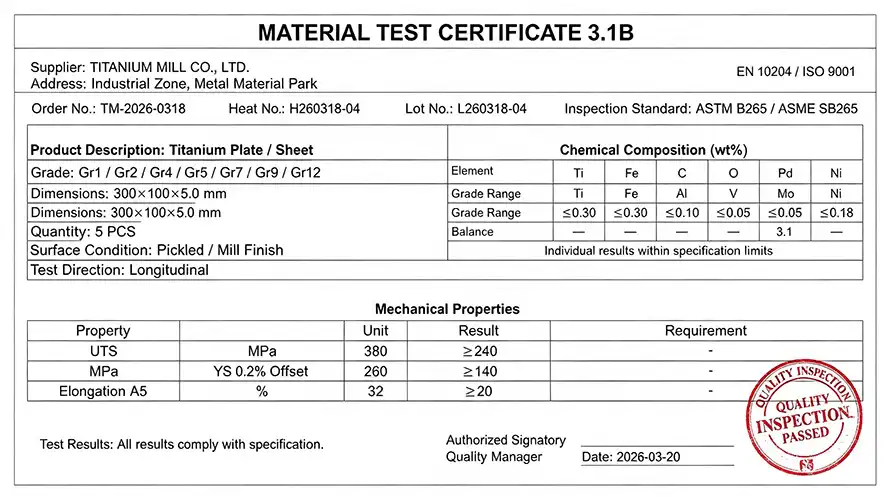
Good fabrication begins with good material. Each plate should be supplied with a Mill Test Certificate showing grade, chemical, and mechanical qualities. Surface and dimensional tests should be carried out before cutting commences. Jucheng Titanium has a competent quality inspection team to analyze every batch, and we gather comments from customers to improve continuously. Whether you choose a Gr 2 or Gr 5 titanium plate, accurate documentation offers your fabricators the confidence to continue forward without hassle.
Cost, Supply and Choosing the Right Grade
Understanding the Cost Picture
Gr 2 often comes with a reduced material price, making it a good choice for big surface areas and cost-conscious construction. A gr 5 titanium plate costs more per kg, but its strength typically may allow it to be used in thinner portions, which can decrease the difference in overall project cost. A comparison based on price per kilogram does not include lifetime value, including weight savings and service life, giving a better comparison. Share your designs with us, and we will help you analyze both approaches.
Supply Capacity and Delivery
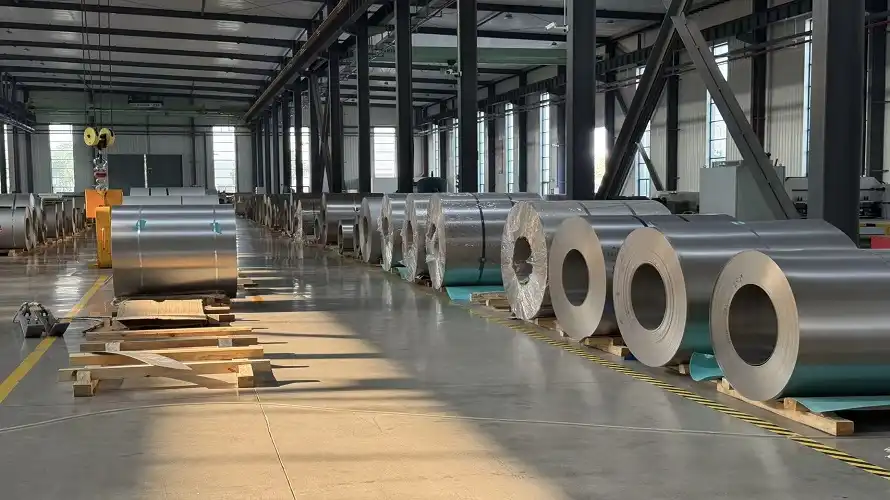
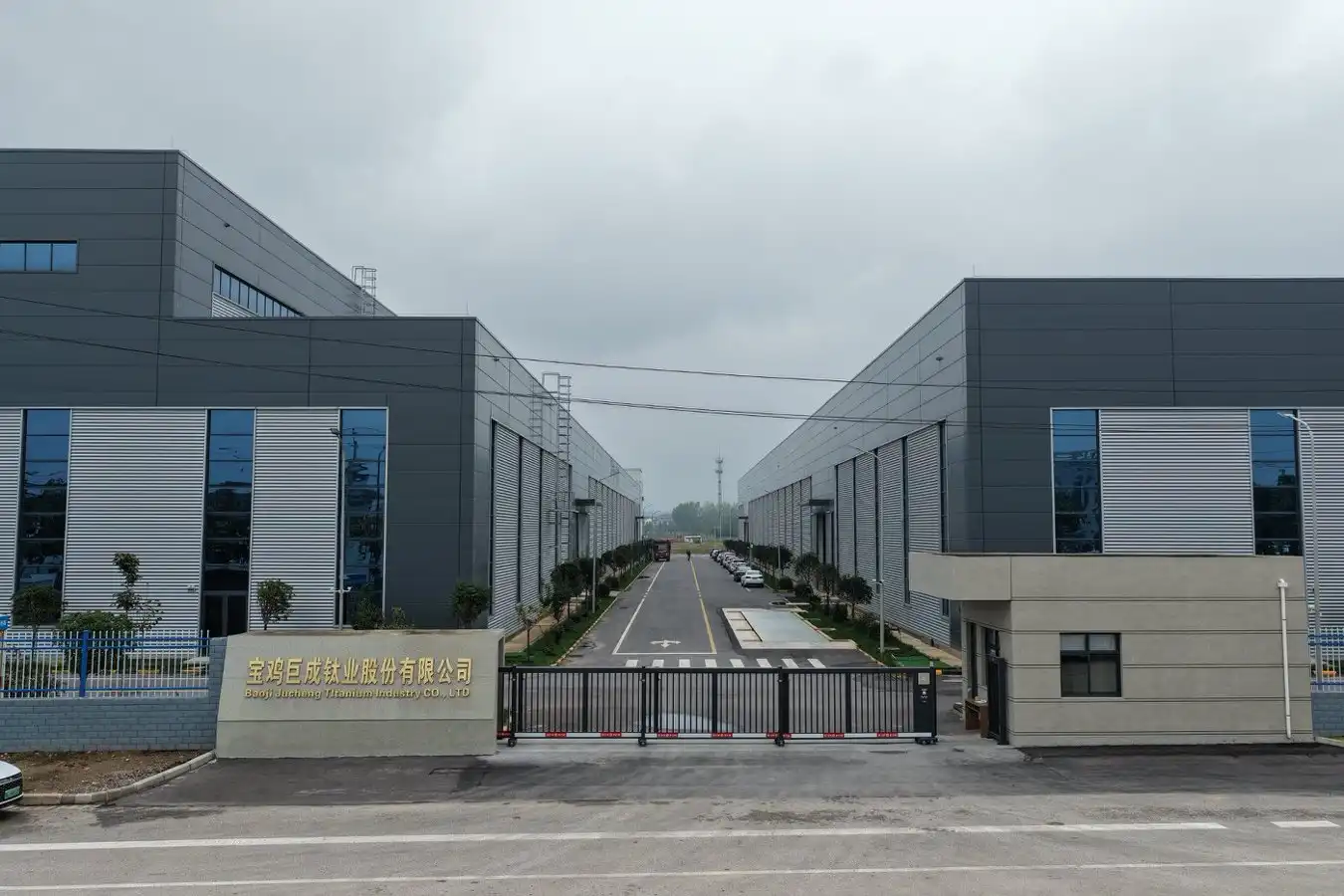
Reliable supply keeps projects moving forward. Founded in 2004, Baoji Jucheng Titanium Industry Co., Ltd. occupies an area of 120,000 square meters, has around 3,000 tons of titanium in store all the year round, which guaranties the timely delivery for urgent orders. Each batch is inspected by a special quality inspection team. The whole after-sales staff assists the clients long after shipping. Whether you require a single sheet or a big order, the procedure is straightforward and clear.
A Practical Grade Selection Guide
The quick guide below turns the comparison into clear choices. For further advice, email us at s4@juchengti.com, and our engineers will respond with a tailored recommendation.
| Project Priority | Recommended Grade |
|---|---|
| Maximum strength and low weight | Gr 5 |
| Easy forming and welding | Gr 2 |
| Chemical and heat exchanger service | Gr 2 |
| Aerospace, marine and load-bearing parts | Gr 5 |
| Balanced budget with mixed requirements | Combine both grades |
Working with Jucheng Titanium from Inquiry to Delivery
Should be easy to get titanium. Email us your designs and tell us what grade you would like, thickness, and quantity, and we will check the parameters, provide an estimate, and organize cutting or processing as necessary. We have over 20 years of expertise, and we work with research institutions like the Northwest Institute for Nonferrous Metal Research, and we assist projects of any scale. Whether it's a Gr 5 titanium plate or a Gr 2 sheet, you'll discover a responsive companion at every step.
Conclusion
Gr 2 is the practical choice for corrosion service, forming, and budget control, while a gr 5 titanium plate leads wherever strength and weight savings matter. Match the grade to your load, environment, and fabrication plan, and consult Jucheng Titanium for certified material and expert support.
FAQ
1. Is a gr 5 titanium plate stronger than Gr 2?
Yes. Grade 5 has roughly double the tensile strength of Gr 2.
2. Which grade is easier to weld?
Gr 2 is more forgiving, though both grades weld well with proper shielding.
3. Do both grades resist seawater corrosion?
Yes. Both form a protective oxide film that performs well in marine settings.
4. Can Jucheng Titanium cut plate to custom sizes?
Yes. We provide customized cutting and processing based on your drawings.
5. Is stock available for urgent orders?
We hold about 3,000 tons of titanium in stock year-round for fast delivery.
Get Your Gr 5 Titanium Plate Quote Today
Ready to choose between gr 5 titanium plate and Gr 2? Send your drawings, quantities, and application details to s4@juchengti.com, and the Jucheng Titanium team will reply with expert advice and a competitive quotation. Contact us today and start your project with confidence.
References
1. Boyer, R., Welsch, G., & Collings, E.W. (Eds.). Materials Properties Handbook: Titanium Alloys. ASM International, 1994.
2. Lütjering, G., & Williams, J.C. Titanium (2nd ed.). Springer, 2007.
3. Leyens, C., & Peters, M. (Eds.). Titanium and Titanium Alloys: Fundamentals and Applications. Wiley-VCH, 2003.
4. ASTM International. ASTM B265: Standard Specification for Titanium and Titanium Alloy Strip, Sheet, and Plate.
5. Donachie, M.J. Titanium: A Technical Guide (2nd ed.). ASM International, 2000.
6. Banerjee, D., & Williams, J.C. Perspectives on Titanium Science and Technology. Acta Materialia, 61(3), 2013.