
Grade 2 (Gr2) Titanium Plate: What Actually Happens at Room and Elevated Temperature
When engineers and purchasing managers choose materials for important industrial uses, they need to know how they will perform in the real world. As the most reliable form of commercially pure titanium, Grade 2 titanium plate has a good balance of resistance to corrosion, shapeability, and mechanical strength. This material has a constant tensile strength of about 345 MPa at room temperature and is also very flexible. Certain microstructural changes happen when temperatures rise. For example, grain boundaries move, and oxygen diffusion speeds up. These changes can affect how long something can be stretched and how much it can be stretched. When buying, teams know about these changes in behaviour based on temperature; they can make smart choices that lower the risk of equipment breaking down and maximise lifetime costs in the aircraft, chemical processing, and industrial equipment sectors.
Introduction
In industrial settings, things rarely work out perfectly. Materials are always being tested with changes in temperature, toxic media, and mechanical stress. We've seen a lot of jobs where the choice of materials made the difference between lasting 20 years and breaking down early. Commercially pure titanium Grade 2 titanium plates have become a smart choice, especially for B2B sourcing experts who handle complicated supply lines in industries like making aerospace parts, chemical reactors, and heat exchangers for industry.
Figuring out how this material acts at normal and high temperatures has a direct effect on how well technology works and how much it costs to own. Changes in temperature can affect a material's tensile strength, resistance to corrosion, and ability to be welded. These are the things that determine whether your heat exchanger will work in a harsh petrochemical environment or whether your aerospace bracket will keep its shape when temperatures change. This detailed guide gives information based on data about how well the Grade 2 titanium plate works. It helps buying managers, design engineers, and OEM dealers make better material choices while still following the rules and running their businesses efficiently.
Understanding Grade 2 Titanium Plate: Properties and Specifications
Core Composition and Standards
Grade 2 titanium plate is an alpha-phase metal that is mostly made up of titanium (about 99%), with a few trace elements adding to its performance. The chemicals used strictly follow the rules set by ASTM B265, ASTM F67, AMS 4911, and ASME SB265. This makes sure that the supply chains around the world are all the same. Oxygen content usually stays at or below 0.25%. It acts as an alpha stabiliser to make the material stronger without making it less flexible. The amount of iron stays below 0.30%, and the amounts of nitrogen, carbon, and hydrogen are tightly managed to keep the material's resistance to corrosion and its mechanical features. With this exact mix, a material is made that combines the high flexibility of Grade 1 with the higher strength of Grades 3 and 4.
Mechanical Behavior at Room Temperature
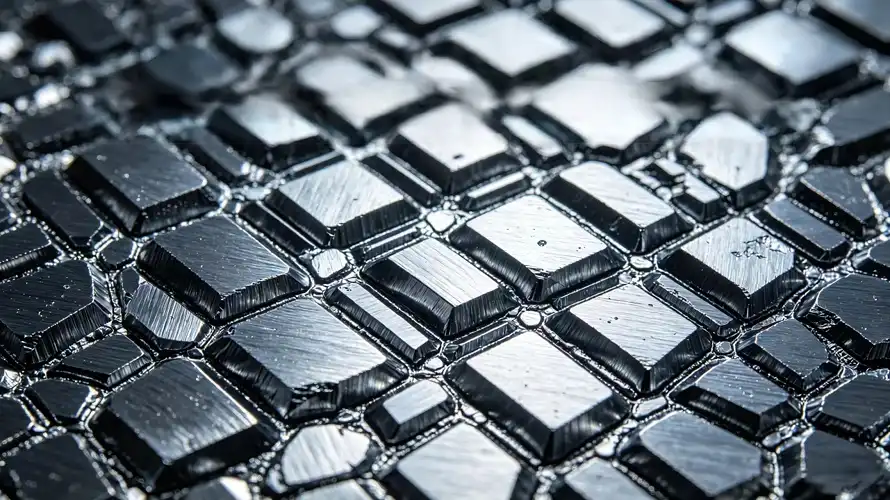
When the temperature is between 20°C and 25°C, the Grade 2 titanium plate has a minimum tensile strength of 345 MPa (50 ksi) and a maximum yield strength of 275 MPa (40 ksi). In a 2-inch gauge length, elongation values usually go over 20%, which means that the material is very easy to shape into complicated shapes that are used in pressure tanks and reaction chambers. Brinell hardness levels are between 160 and 200 HB, which means the material is resistant to wear and can still be machined. With a density of 4.51 g/cm³, the material is stronger than many stainless steel alternatives. This makes it useful in aircraft and transportation equipment, where weight is an issue.
Temperature-Dependent Property Shifts
When exposed to high temperatures, mechanical properties change in ways that can be measured. Tensile strength slowly goes down between 200°C and 400°C, while flexibility originally gets better because dislocations can move around more easily. When the temperature goes above 400°C, oxidation gets stronger, and the material starts to form a thicker TiO2 layer on the surface. This can change the accuracy of measurements in precision uses. For sustained loading conditions, creep resistance stays good up to about 315°C. This means it can be used in chemical reactors and heat exchangers with moderate temperatures. The thermal conductivity (16.4 W/m·K) stays pretty much the same across this temperature range. However, it is much weaker than copper or aluminium, so it needs careful thermal management design when used for heat transfer.
Available Specifications and Tolerances
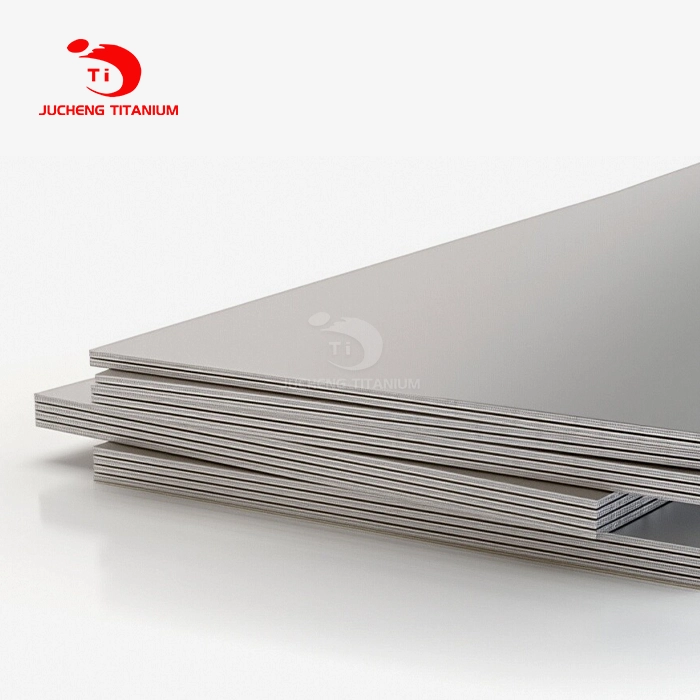
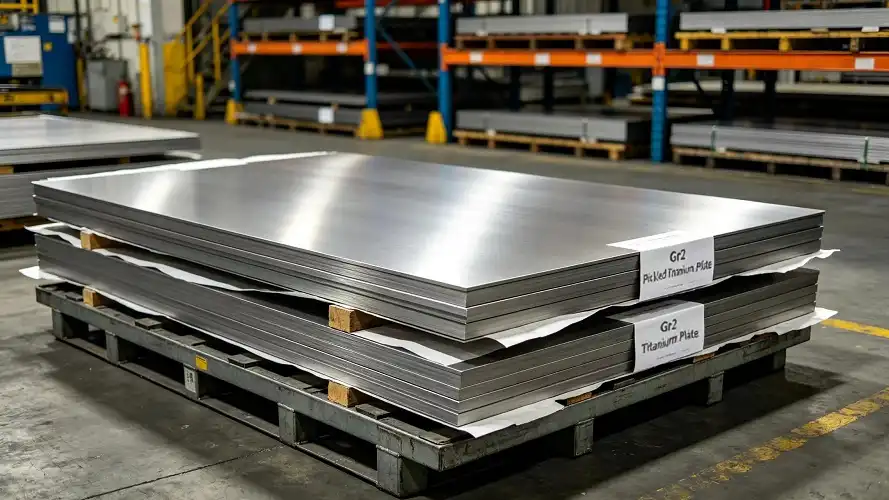
Hot rolling, heating, levelling, cleaning, and surface finishing are the steps that manufacturers use to make Grade 2 titanium plates. The standard thickness ranges from 4mm to 80mm to meet a variety of construction needs. The standard width ranges from 950mm to 2500mm to support the production of big pieces of equipment. The longest length that can be made is 10,000 mm, but custom sizes can still be made for unique tasks. Different surface treatments, like polished, machined, and acid-pickled finishes, are used to meet different needs, such as corrosion resistance or aesthetics. The annealed state makes sure that the metal is as flexible and stress-free as possible, which is important for the next steps of forming and welding.
Comparing Grade 2 Titanium Plate with Other Grades and Materials
Grade 2 Versus Adjacent CP Titanium Grades
Grade 1 titanium is easier to shape and slightly more resistant to rust than Grade 2 titanium because it has less intermediate element content. However, it has about 20% less tensile strength. In pressure vessel applications, where wall thickness has a direct effect on cost and weight, this trade-off becomes very important. As the oxygen level rises, Grades 3 and 4 become stronger, but they lose some of the great cold-forming properties that make Grade 2 titanium plate perfect for complex shapes. Adding palladium to Grade 7 makes it more resistant to reducing acids, but it also makes the material much more expensive because it is used in a very unique situation. Grade 12 has molybdenum and nickel added to it to make it more resistant to crevice rust, but it costs a lot more. Grade 2 is the best choice when you need a moderately strong material that is also easy to shape and resistant to rust across a wide range of conditions.
Performance Against Stainless Steel and Aluminum
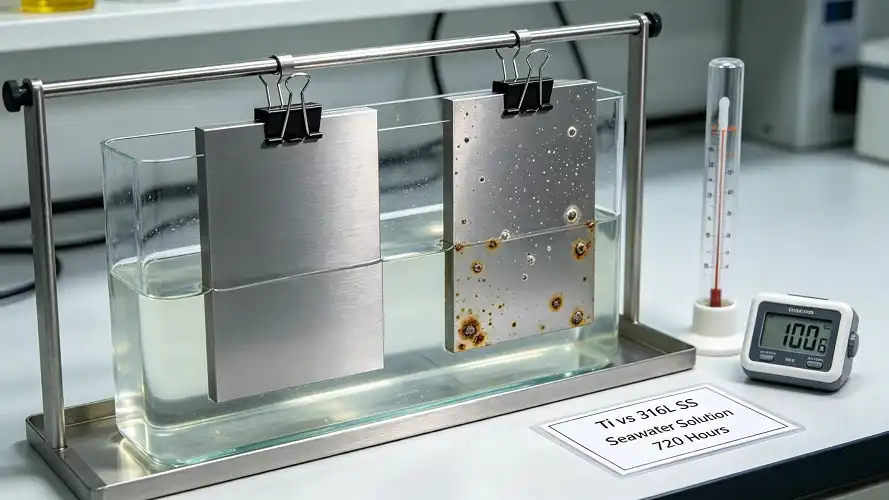
316L and other types of stainless steel often break down in high-chloride environments due to pitting and crevice corrosion, which means they need to be replaced more often, which raises the cost of their lifetime. Grade 2 titanium plate creates a stable, self-healing TiO2 oxide film that protects against exposure to seawater and wet chlorine, completely getting rid of these failure modes. At first glance, stainless steel seems like a cheaper material to buy, but after 5 to 10 years of use, the costs of repairs and downtime often cancel each other out. Aluminium alloys are lighter and better at transferring heat, but they can't compare to titanium when it comes to strength at high temperatures or resistance to harsh chemicals. Grade 2's low density and consistent performance across a wide range of temperatures make it a great choice for aerospace uses that need to reduce structure weight without sacrificing safety.
Industry-Specific Selection Criteria
It is important for chemical processing plants that Grade 2 is stable in nitric acid, chlorine, and alkaline solutions so that it doesn't rust in oxidising and reducing conditions. Manufacturers of aerospace parts need certifications that show where materials came from by using strict testing methods. This means that ASTM B265 compliance is a must. Medical device makers want titanium grades that are biocompatible and have a surface finish that supports osseointegration. These are qualities that all commercially pure titanium grades have. Fabricators of industrial equipment are looking for low-cost options that are strong enough and easy to weld so that complex systems can be made without having to be heated after the welding process. Because these standards are so different, Grade 2 continues to dominate the market in many areas.
Processing and Machining of Grade 2 Titanium Plate
Cutting and Forming Techniques
Because the Grade 2 titanium plate is a special metal, it needs to be machined in a certain way to keep the work from getting too hard and the tools from wearing out too quickly. Cutting tools made of carbide or ceramic work better than high-speed steel ones, especially when controlled cutting speeds are kept between 30 and 60 meters per minute. When coolant flows properly, chip welding and thermal damage to the workpiece and tools are avoided. Because the material tends to work harden while being deformed, it needs to be shaped slowly, with annealing processes in between, for big bends or deep draws. Waterjet and plasma cutting are good options to mechanical methods, especially for thick parts with complicated shapes.
Heat Treatment and Annealing
Annealing methods get rid of leftover stresses that built up during rolling and shaping, and they also make the grain structure better for the next steps in the manufacturing process. Typical annealing temperatures are between 650°C and 760°C, and they are kept there long enough to finish recrystallisation without too much grain growth. Controlled cooling rates keep dimensions from changing, which is important for precision assemblies. This heat process brings back the ductility that was lost during cold working, so more shaping operations can be done without the risk of cracks starting. The softened state also makes it easier to join by making it less likely to become weak from hydrogen during fusion processes.
Welding Considerations Across Temperature Ranges
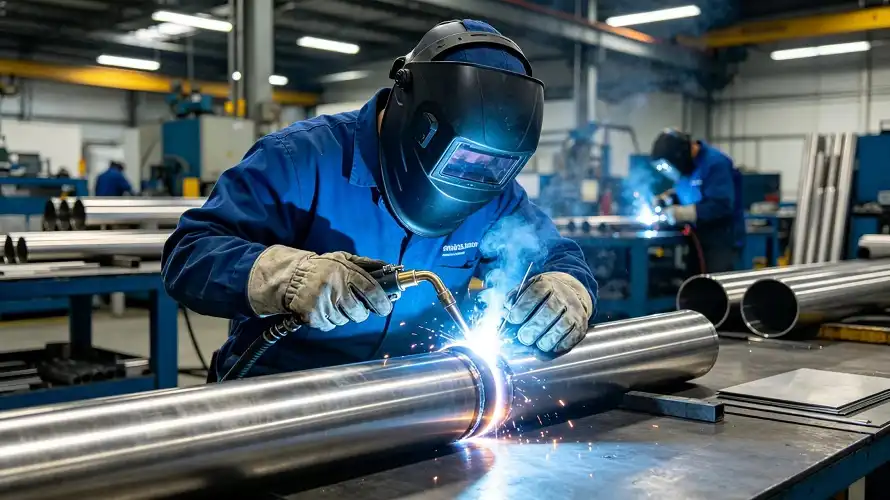
Gas tungsten arc welding (GTAW/TIG) is the best way to join Grade 2 titanium because it lets you precisely control the heat and uses inert gas shielding to keep the metal from getting contaminated by air. Argon cleaning of both the weld face and the root keeps the material's integrity because oxygen and nitrogen absorption during solidification make intermetallic stages that are easily broken. At room temperature, there isn't much need to heat the metal first, but if the service temperature is high, post-weld stress relief may be needed to stop creep-induced distortion. Because the material doesn't conduct heat well, heat builds up in the weld area. This means that the parameters need to be carefully adjusted so that the base metal doesn't get too hot.
Protocols for Storage and Handling
Surface pollution from fingerprints, oils, or metal bits can make it less resistant to rust and lower the quality of the weld. When you store things in a clean, dry place, moisture doesn't build up and start crevice corrosion under protected covers. Handling equipment that is only used for this purpose keeps carbon steel or aluminium from getting on it, which could lead to galvanic corrosion cells in service. During shipping and storage, protective films or paper interlayers keep the surface from getting scratched. This keeps the passive oxide layer that makes titanium resistant to corrosion. Suppliers who follow strict material handling methods that keep the integrity of products from the mill to the manufacturing site are good for procurement teams.
Procurement Insights: Sourcing Grade 2 Titanium Plate with Confidence
Verification of Supplier Qualifications and Certifications
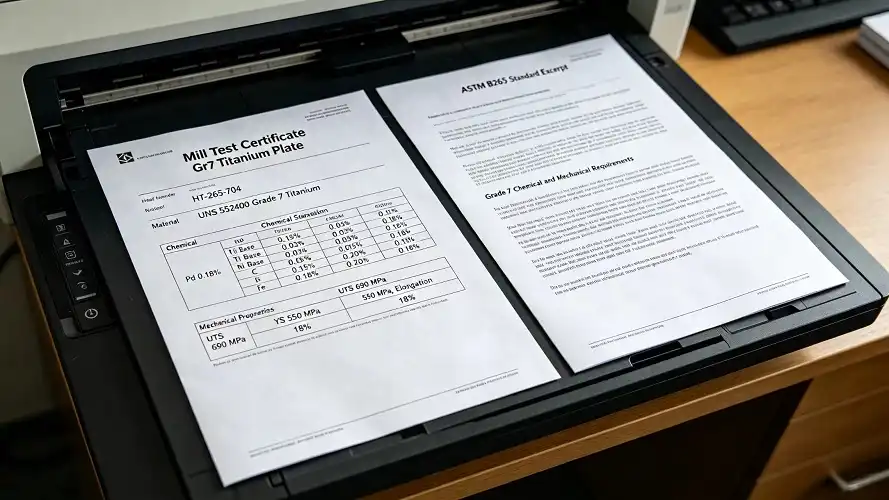
Checking ASTM compliance and traceability paperwork is the first step in finding trusted sources. Reliable providers keep mill test records (MTRs) for each plate that show its chemical makeup, mechanical properties, and heat treatment history. Getting approval from a third-party from a well-known testing lab adds to your peace of mind, especially for medical and aircraft uses that need strict quality control. Suppliers who have ISO 9001 certification show that they manage quality in a planned way. However, certifications specific to an industry, like AS9100 for aerospace or ISO 13485 for medical devices, show that the supplier has more experience in regulated markets for Grade 2 titanium plate.
Keeping track of inventory and lead times
Problems in the supply chain show how important it is for sellers to keep a lot of goods on hand. Having access to about 3,000 tonnes of stock in a range of grades and sizes lets you respond quickly to urgent project needs, cutting out delays that cause problems with other parts of the production schedule. Custom cutting services cut down on waste and make the best use of materials, especially when the sizes aren't standard, and you'd have to buy stock that's too big. Clear communication about production lead times lets project managers match buying with fabrication plans, avoiding expensive wasted time or shipping costs that come with shipping faster.
How to set prices and think about volume
The price of a material changes depending on its thickness, size, surface treatment, and the number of items ordered. Plates that are 4 to 10 mm thick usually cost less per kilogram because they can be made in larger quantities and are easier to roll. Custom specs that include odd sizes or special surface treatments cost more because they require more work to be done on them. Negotiated pricing systems that lower unit costs are made possible by volume promises. This is especially helpful for equipment makers whose yearly consumption patterns are predictable. Long-term supply agreements protect both the supplier and the customer from sudden changes in the prices of goods by balancing stable prices with market volatility.
Help with technology and working together in engineering
For complex uses, it's helpful when providers offer engineering advice during the material selection and planning stages of fabrication. Technical teams with a lot of experience can help you figure out the best ways to shape, weld, and heat treat finished parts so they work as well as possible. Working together with universities and research centers makes it easier for suppliers to handle new applications or figure out why materials are acting in ways that were not expected. This level of technical precision is very helpful when choosing materials for harsh settings where standard guides don't give enough information.
Advantages and Applications of Grade 2 Titanium Plate at Various Temperatures
Resistance to Corrosion in All Operating Conditions
The self-healing TiO2 oxide film that forms instantly on Grade 2 titanium plate surfaces protects against rust in a wide range of chemical conditions. This passive layer doesn't react with chlorides, seawater, wet chlorine gas, or most organic acids at room temperature. This keeps stainless steel from rusting and cracking. At temperatures up to 315°C, this protective behaviour stays the same, but the rate of oxidation speeds up, and the thickness of the scale grows. Titanium is very stable, so amounts and temperatures that quickly break down stainless steel don't have much of an effect on properly defined Grade 2 parts used in chemical processing equipment that works with nitric acid.
Advantages of Strength-to-Weight Ratio
Its density is about 56% that of steel, which means that aircraft structural parts and moving equipment can use it without adding weight. This benefit is even greater in situations where less mass means better fuel economy or more storage space. When titanium is used instead of heavier metals that don't corrode, base loads are lower for offshore platforms and marine buildings. Because it is strong enough and doesn't weigh too much, it lets engineers make designs that wouldn't work with regular materials. This opens up new options for uses that need to be light.
How biocompatibility is used in medicine
Medical device makers use Grade 2 titanium for surgical implants, instruments, and replacement parts because it is biologically inert. The substance is very good at osseointegration, which means that bone tissue can attach itself straight to titanium surfaces without any rejection reactions. Chemical disinfection or autoclaving are two ways to sterilise materials that don't change their properties much, so they can be used over and over again. Acid pickling and electropolishing are two surface processes that improve biocompatibility and cell response for implanted devices.
Sector-Specific Examples of Applications
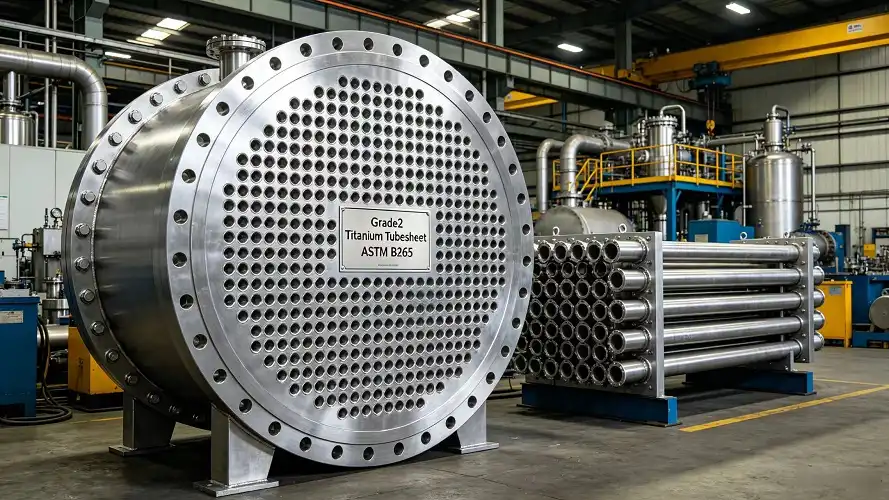
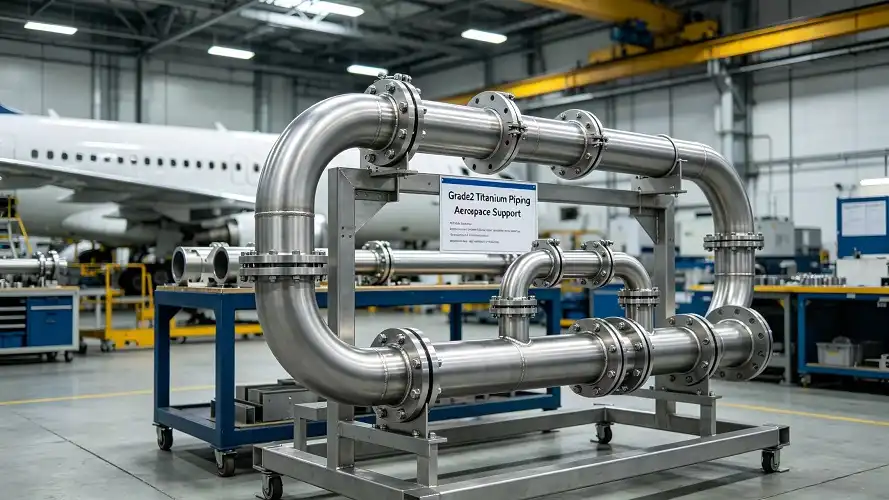
Marine infrastructure, such as heat exchanger tube sheets, condenser parts, and buildings for offshore platforms, uses Grade 2 because it doesn't rust or biofoul in seawater. In chlor-alkali operations, where wet chlorine would quickly destroy other materials, chemical processing plants use titanium reactors, storage tanks, and piping systems. Aerospace companies use Grade 2 for things like ducts, clamps, and other structural parts that aren't the main focus. This is because it's easier to shape and doesn't catch fire as easily as Grade 1. Titanium is used in power plants in waste gas scrubbers, desalination plants, and cooling systems that are exposed to harsh water chemicals. Builders of industrial equipment use Grade 2 plates in heat exchangers, pressure vessels, and systems for moving materials that need to last a long time with little upkeep.
Conclusion
To choose the right materials for tough industrial uses, you need to know how they work across the whole operating range. Grade 2 titanium plate is reliable at resisting corrosion, having enough mechanical strength, and being easy to shape from room temperature to moderately high temperatures. Its balanced properties solve the problem of making tools last longer in harsh settings, where other materials break down quickly. Professionals in procurement benefit from suppliers who have a large inventory, strict quality control, and technical knowledge that helps them choose the best materials. If you need economically pure Grade 2 titanium for chemical processing, aerospace parts, or industrial equipment, it is a cheap option that will give you the most service life while keeping lifetime costs as low as possible.
FAQ
1. Why do industrial buyers prefer Grade 2 over other titanium grades?
Other grades can't match the Grade 2 titanium plate when it comes to the best mix of mechanical strength, formability, and cost-effectiveness. Grade 1 is a little better at resisting rust, but it doesn't have the tensile strength needed for use in pressure vessels. Grades 3 and 4 are stronger, but they don't have the great cold-forming properties that are needed for complex shapes. Better metal types, like Grade 5 (Ti-6Al-4V), are stronger, but they cost a lot more and need special welding techniques. The Grade 2 version works well for 80% of industrial tasks and keeps the costs of materials and assembly low.
2. How does elevated temperature affect corrosion performance?
Up to about 315°C, Grade 2 titanium is very resistant to corrosion in most industrial settings. However, as the temperature rises, the rate of oxidation increases. When exposed to high temperatures, the protective TiO2 film gets thicker, which can change the accuracy of measurements in precision uses, but keeps protecting against chemicals. Above 400°C, surface oxide growth speeds up, and if the material is exposed to air for weeks or months, it becomes more likely to break down. When designing something that will be used at high temperatures for a long time, these factors should be taken into account, and the right amount of room should be made for oxide formation.
3. What minimum order quantities should purchasers expect?
How many items you order depends on their unique sizes and handling needs. Standard plate sizes from stock usually have lower minimum order quantities, and for urgent needs, they can be as low as one piece. Minimum orders that cover setup costs, which are usually between 500 kg and 2 tonnes based on the specs, may be needed for custom sizes or surface treatments. Long-term supply deals often don't require a minimum order size in exchange for volume commitments. This lets you buy things based on projects while still making sure the seller works efficiently.
Partner with Jucheng Titanium for Reliable Grade 2 Titanium Plate Supply
At Baoji Jucheng Titanium Industry Co., Ltd., we've been experts at handling Grade 2 titanium plate materials for more than 20 years, giving us a lot of knowledge that will help you make smart buying choices. Our warehouse keeps about 3,000 tonnes of different types of stock, so we can deliver quickly and keep your projects on schedule. Titanium plates that meet ASTM B265, ASTM F67, AMS 4911, and ASME SB265 standards come in thicknesses ranging from 4 mm to 80 mm and can be made in any size to fit your needs. We make grade 2 titanium plates and have 4 invention patents and 41 utility model patents. We use new ways to process the materials and have strict quality control. Get in touch with our team at s4@juchengti.com to talk about your application needs and find out how our expert support, low prices, and stable supply chain can help you get the best materials.
References
1. Donachie, Matthew J. "Titanium: A Technical Guide, 2nd Edition." ASM International, Materials Park, Ohio, 2000.
2. Schutz, R.W. and Thomas, D.E. "Corrosion of Titanium and Titanium Alloys." ASM Handbook, Volume 13B, Corrosion: Materials, ASM International, 2005.
3. Boyer, R., Welsch, G., and Collings, E.W. "Materials Properties Handbook: Titanium Alloys." ASM International, Materials Park, Ohio, 1994.
4. Lutjering, Gerd and Williams, James C. "Titanium, 2nd Edition." Springer-Verlag, Berlin Heidelberg, 2007.
5. American Society for Testing and Materials. "ASTM B265-20: Standard Specification for Titanium and Titanium Alloy Strip, Sheet, and Plate." ASTM International, West Conshohocken, Pennsylvania, 2020.
6. Peters, M., Kumpfert, J., Ward, C.H., and Leyens, C. "Titanium Alloys for Aerospace Applications." Advanced Engineering Materials, Volume 5, Issue 6, 2003.