
Grade 2 Titanium plate: Benefits, Applications & Custom Solutions
The grade 2 titanium plate is always the best choice when purchasing managers are looking for materials that are strong, don't rust, and don't cost too much. This commercially pure titanium material solves the problem of equipment breaking down in corrosive settings while still being very easy to shape for complicated manufacturing needs. Whether you're looking for this material for chemical reactors, aircraft parts, or marine systems, knowing its technical benefits and wide range of uses will have a direct effect on the success of your project and the costs of running it in the long term.
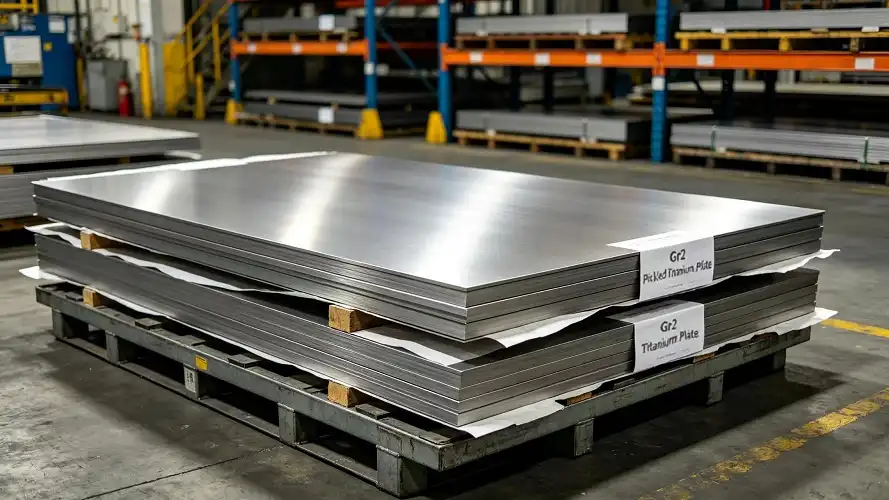
Understanding Grade 2 Titanium Plate: Properties & Specifications
Internationally known as UNS R50400, grade 2 titanium is the most commonly used commercially pure titanium grade in industrial settings. It's very common because it strikes a great mix between mechanical performance and ease of fabrication that is hard for other materials to match.
Chemical Composition and Material Characteristics
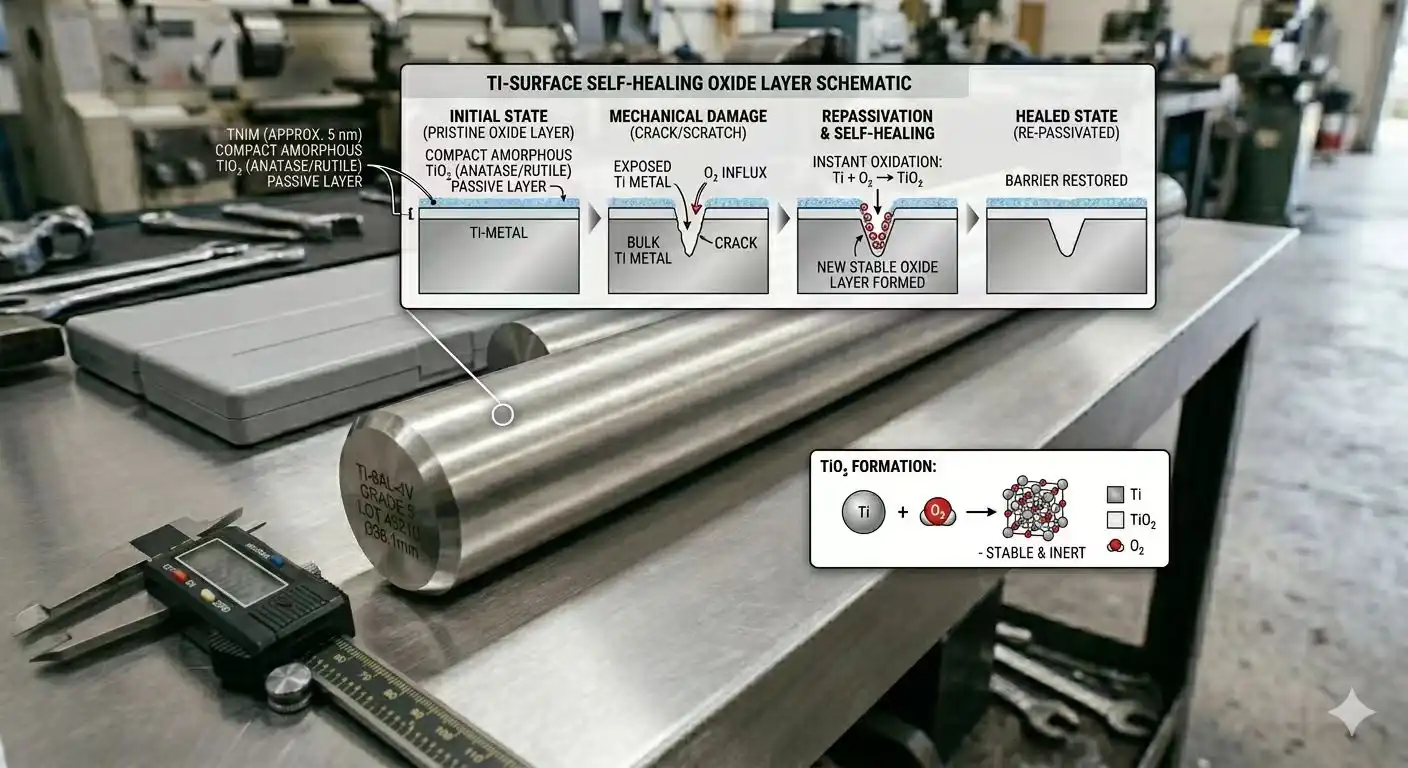
The managed chemistry make-up of the material determines how reliable it is. Nitrogen makes up no more than 0.03% of the composition, followed by carbon at 0.08%, hydrogen at 0.015 percent, iron at 0.30%, oxygen at 0.25%, and titanium making up the rest. Oxygen content is very important because it acts as an alpha stabiliser and directly affects strength levels. Iron content, on the other hand, affects rust resistance in certain settings. This exact mix makes a titanium dioxide layer on the surface that heals itself. This layer protects against oxidising media all the time without the need for extra coatings or treatments.
Mechanical Properties Meeting International Standards
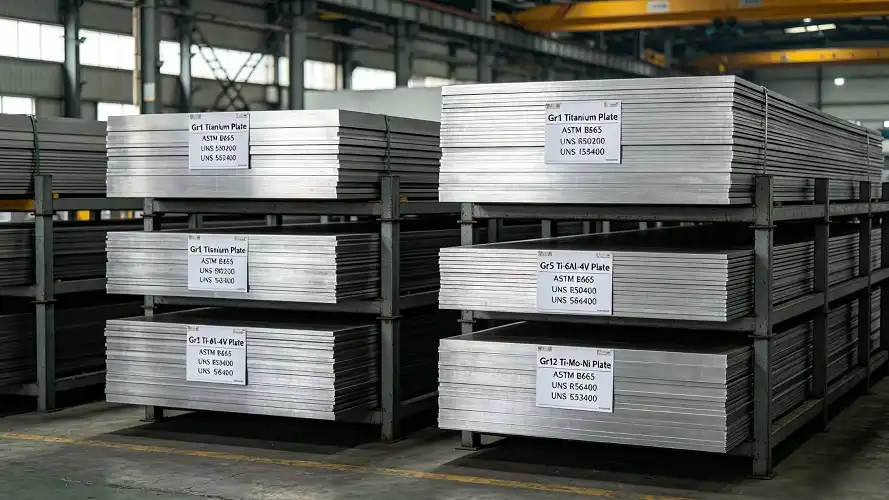
The material meets the requirements of ASTM B265 and has a minimum tensile strength of 50 ksi (345 MPa) and a yield strength of 40 ksi (275 MPa). It can also stretch at least 20% in a two-inch gauge length. It's usually between 160 and 200 Brinell hard. At Jucheng Titanium, we strictly follow standards like ASTM B265, ASTM F67, AMS 4911, and ASME SB265. This is to make sure that every plate meets the certification requirements for tracking and performance verification.
Physical Parameters and Dimensional Specifications
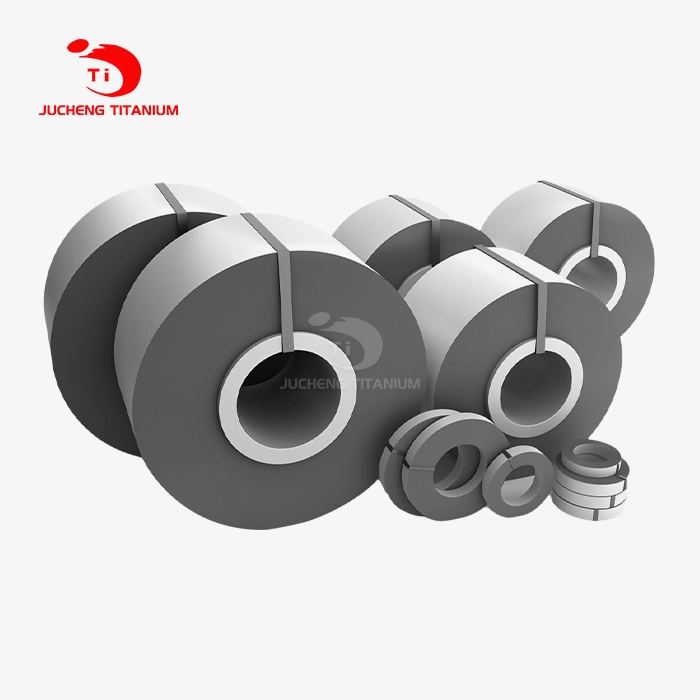
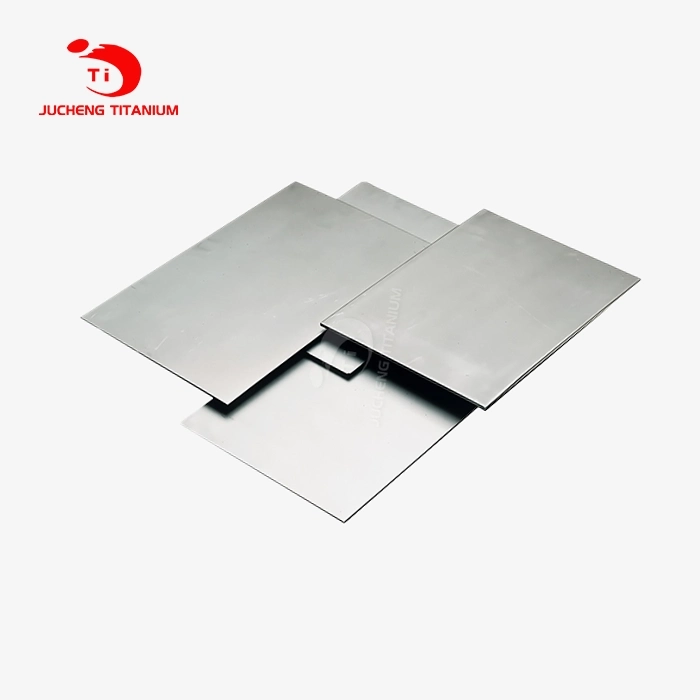
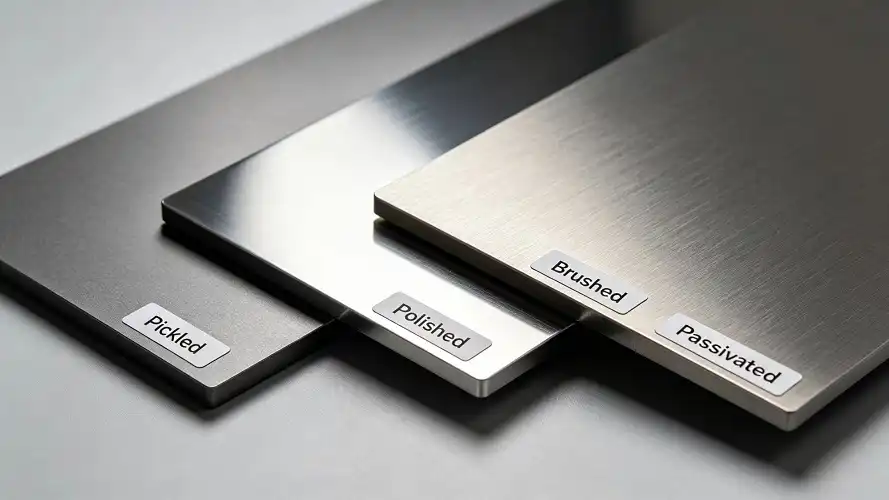
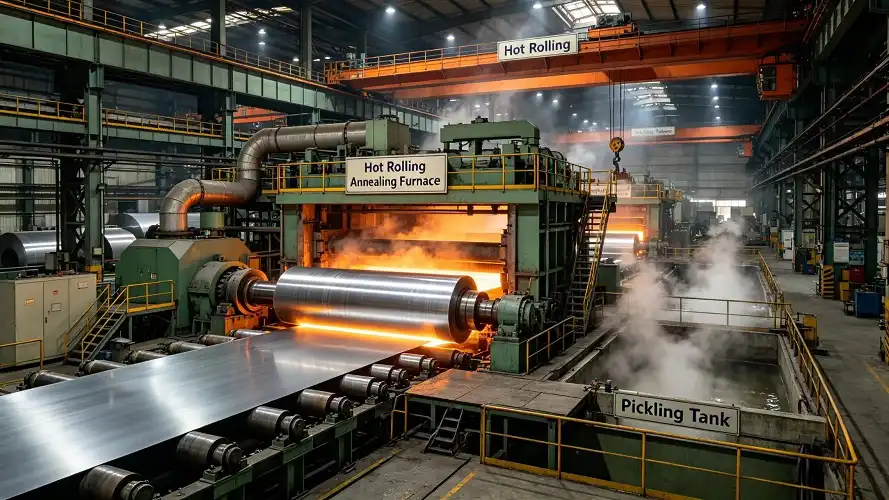
The density is 4.51 g/cm³, which is about 56% of the weight of steel. This makes it very useful in situations where weight reduction is important. The melting point is 1660°C (3020°F), and the heat conductivity is 16.4 W/m·K. Our production skills handle thicknesses from 4mm to 80mm, widths from 950mm to 2500mm, and lengths up to 10,000mm, with customization available for unique project needs. Each plate goes through hot rolling, annealing, levelling, pickling, and finishing the surface. They are annealed and can have finishes that are polished, machined, or acid-pickled, depending on the needs of the application.
Advantages & Performance Compared to Alternative Materials
To choose the right medium, you need to know how the different choices work in the real world. When it comes to certain problems, a grade 2 titanium plate can solve them better than other materials.
Superior Corrosion Resistance in Harsh Environments
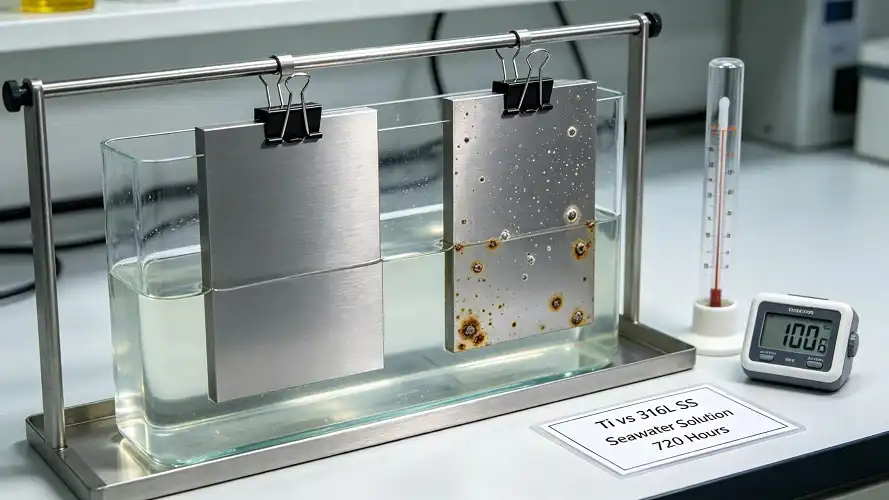
Titanium forms a stable passive oxide layer that heals itself right away when it gets damaged, unlike stainless steel, which pits and forms crevices due to corrosion in chloride-rich environments. It can handle seawater, wet chlorine gas, hypochlorites, and nitric acid, all of which are common problems in chemical processing and marine applications. This resistance stays the same across a wide temperature range thanks to the material. This means that facilities that use standard metals don't have to worry about expensive equipment replacements or unplanned downtime.
Strength-to-Weight Ratio and Fabrication Benefits
But grade 5 titanium (Ti-6Al-4V) is harder to work with when it comes to cold forming and welding, even though it has a higher final tensile strength of 130 ksi. This grade is the best of both worlds: it's strong enough for structural uses while also being very flexible, which makes it easier to make shapes with complicated shapes. The material is easy to weld with GTAW or PAW methods and an inert gas cover. For most commercial uses, it doesn't need to be heated again after welding. This makes it easier to make, which directly leads to lower costs and shorter lead times for making custom equipment.
Long-Term Cost Efficiency and Service Life
The initial cost of materials is only one part of the total costs of ownership. The longer service life in corrosive conditions, low upkeep needs, and lack of protection coatings make the equipment more cost-effective over its entire lifespan. Titanium heat exchangers and reactors have been used in facilities for more than 20 years without any material degradation. In the same conditions, stainless steel versions need to be replaced every 5 to 8 years. Because of these things, choosing the materials is more of a strategic investment than a cost of getting them.
Applications of Grade 2 Titanium Plate in B2B Industries
Because the material has special properties, it can be used in many important areas where the dependability of equipment affects both safety and production efficiency.
Chemical Processing and Chlor-Alkali Systems
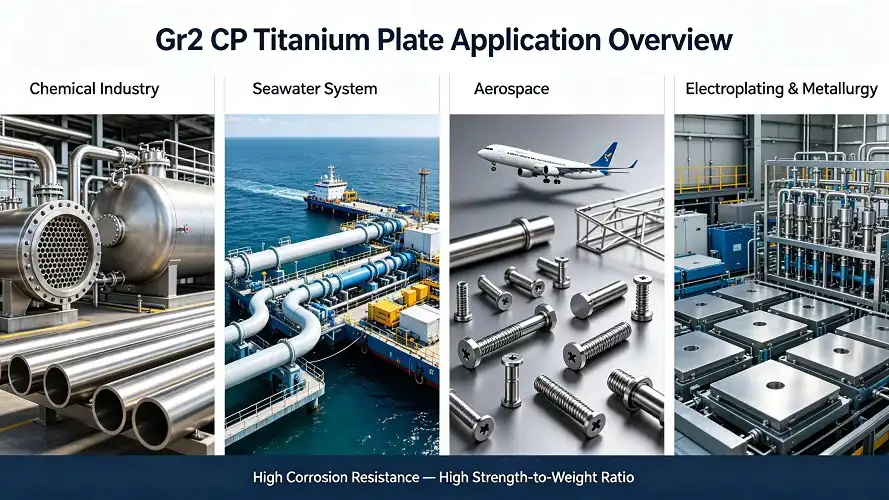
Equipment corrosion is a constant problem for chemical producers because it threatens the safety of workers and the purity of the process. Titanium plates are used to make heat exchangers, reaction vessels, and storage tanks that can handle harsh chemicals like sulphuric acid, chlorine gas, and caustic solutions. Because it doesn't pit easily, engineers can make equipment with thinner walls than with nickel metals. This lowers the weight of the whole system and the cost of the materials. Jucheng Titanium has made unique reactor shells for chlor-alkali plants. The performance of our materials increased the equipment's life by 300% compared to systems made of stainless steel.
Power Generation and Desalination Plants
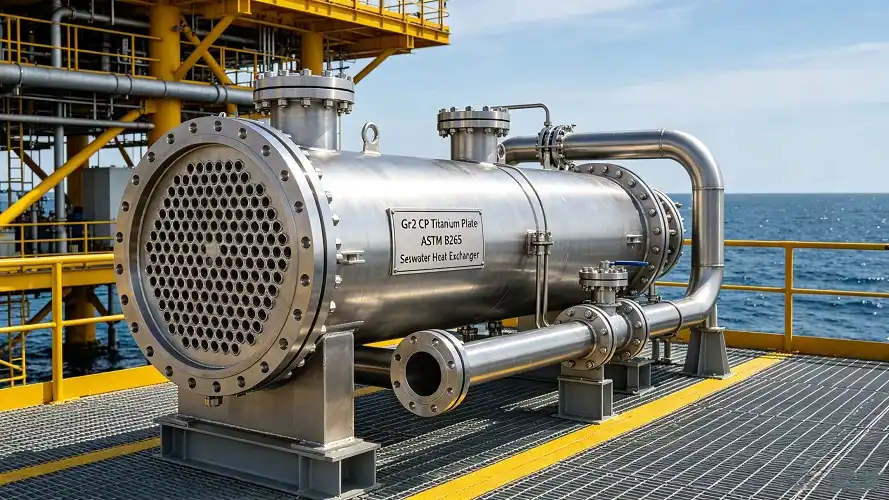
Power plants and purification plants depend on heat transfer equipment that works all the time in saltwater. This material is resistant to biofouling and microbiologically affected rust, which breaks down other metals. It is used to make condenser tube sheets, flash chamber linings, and cooling system parts. A lot of big businesses use our titanium spiral plate heat exchangers. For example, the largest unit in China works for WUGANG Group and can handle demanding thermal cycling without losing performance. The material stays thermally efficient throughout its useful life, so there is no slow loss of performance that forces equipment to be replaced too soon.
Aerospace and Defense Applications
Manufacturers of aeroplanes use commercially pure grade 2 titanium plate for parts of the airframe, ducting, brackets, and firewalls that need to be moderately strong but also need to be able to be shaped and resist fire. The material meets strict aircraft material standards and is a cheaper option to higher-grade metals in structural uses that don't need to hold weight. Defence companies like the uniform qualities of materials and reliable supply lines that help long-term military equipment projects, which need parts to be available and traceable for decades.
Marine Engineering and Offshore Systems
Saltwater environments are very bad for corrosion, which limits the types of materials that can be used to build ships and offshore platforms. Titanium plates are used to make propeller hubs, heat exchanges, pipe systems, and structural parts that can work reliably in salt water all the time. The material's ability to fight stress corrosion cracking and hydrogen embrittlement gives users peace of mind in situations where failure could be very bad. Our marine engineering titanium goods are well-known in specific uses that need to be resistant to rust and certified for structural integrity.
How Grade 2 Titanium Plate is Manufactured: Process & Quality Control
Understanding how things are made helps people who buy things figure out how good a seller is and make sure that materials will work in important uses.
Raw Material Selection and Processing Methods
The production process starts with carefully choosing titanium sponge feedstock that meets purity standards. The material is remelted under a vacuum spark to make sure that the chemicals are all the same and that there aren't too many inclusions. When hot rolling at controlled temperatures, the right grain structure is formed and the ideal width is reached. Plates with consistent mechanical properties across the cross-section are made by rolling them several times and annealing them in between. Pickling gets rid of surface scale, and then the finish is achieved through polishing for hygiene reasons, milling for precise measurements, or acid-pickling for general commercial use.
Quality Control and Testing Protocols
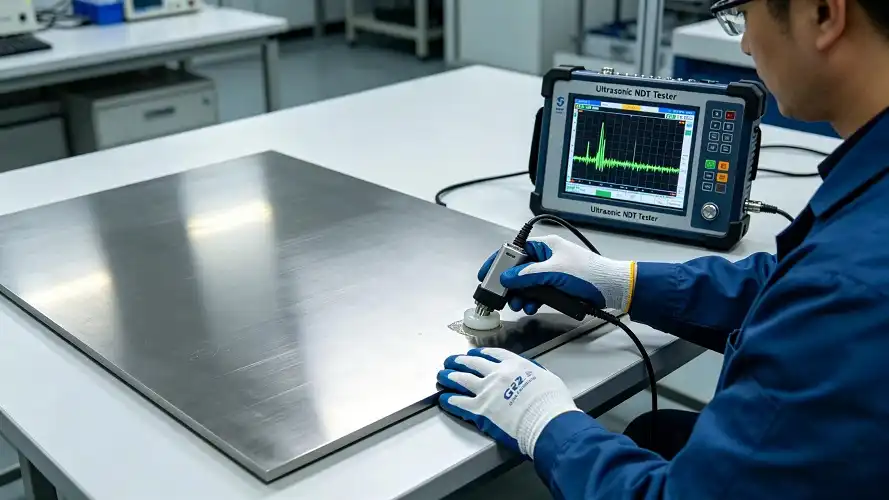
Material consistency is guaranteed by strict checking methods built into the whole production process. Chemical research proves that the makeup is correct, and tensile testing proves that the mechanical qualities are correct in both the lengthwise and transverse directions. Ultrasonic testing according to ASTM B548 finds internal breaks that could weaken the structure. For safety reasons, inert gas fusion analysis keeps an eye on hydrogen levels below 150 ppm. A metallographic examination confirms that the microstructure is uniform and that there are no alpha case surface layers. Material test certificates based on EN 10204 3.1 are given to each plate. These certificates show that the raw materials can be tracked all the way to the finished product.
Lead Times and Logistics Considerations
At Jucheng Titanium, we keep about 3,000 tonnes of grade 2 titanium plate in stock in a range of types and sizes. This lets us deliver quickly for projects that need it right away. Standard plate orders usually ship between 15 and 20 days, while orders made to special requirements can take up to 45 days, based on how complicated they are. Our well-established export processes and logistics partnerships make sure that foreign shipping goes smoothly and that all the necessary paperwork is kept on hand for customs clearing. Minimum order amounts depend on the standard. Qualified wholesalers can get flexible terms, and long-term supply deals are possible.
Buying Guide: How to Source Grade 2 Titanium Plates Trusted by Industry
When making strategic sourcing decisions, you need to look at more than just the original price quotes to make sure the job goes well.
Evaluating Manufacturer Certifications and Capabilities
Suppliers you can trust show that they have quality system certifications like ISO 9001 and credentials related to the business that are needed for the job. Manufacturing skills are very important. Companies that do all of their own production, from melting to finishing, have better quality control and faster wait times than trade companies that hire outside companies to do their production. For complicated projects, technical support services like metallurgical knowledge and custom engineering work are very useful. Jucheng Titanium is a National High-Tech Enterprise and a specialised "little giant" enterprise. We have 4 invention patents and 41 utility model patents that cover all of our product lines.
Assessing Quality Documentation and Traceability
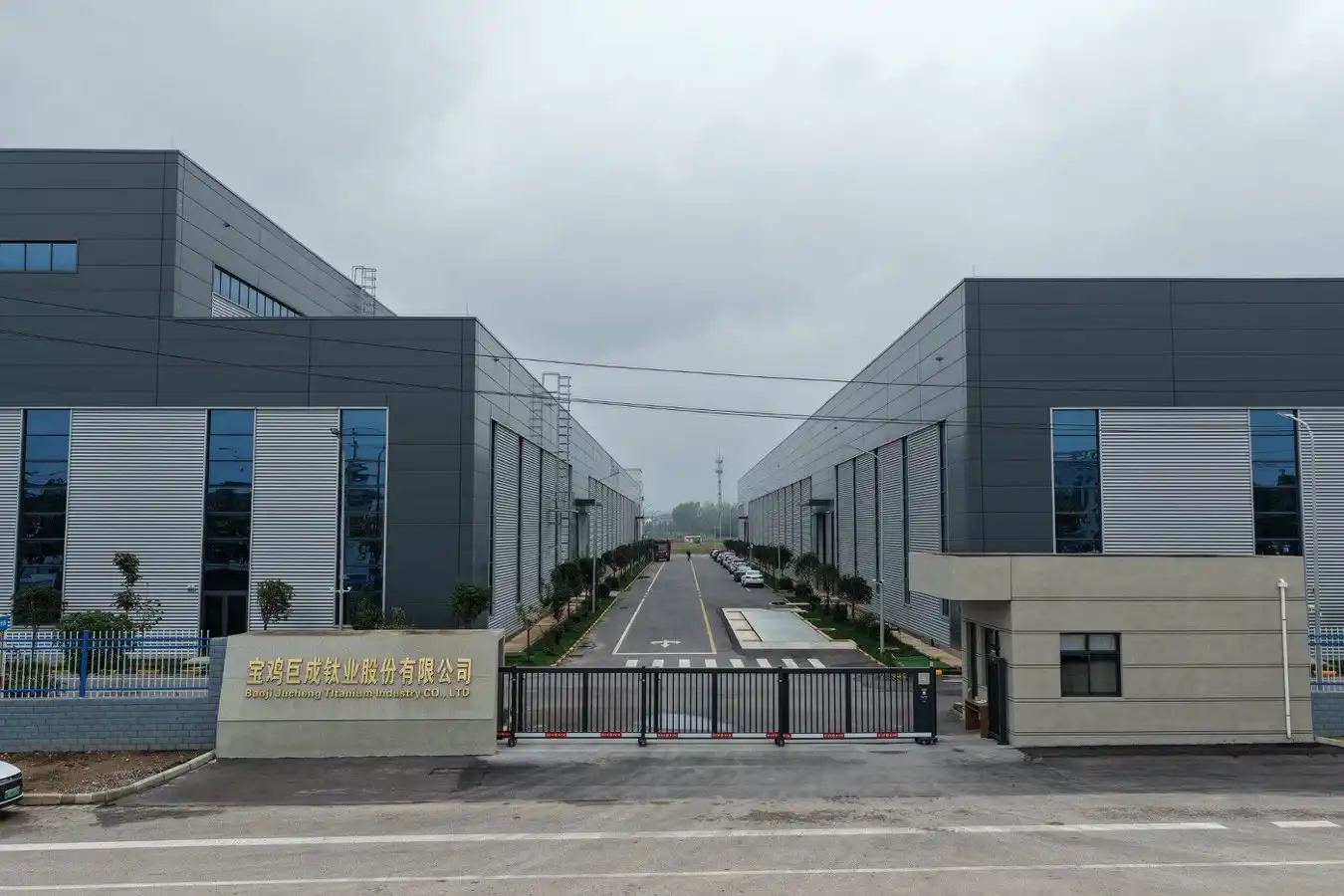
Ask for full material test reports that include chemical analysis, mechanical properties, and results from non-destructive tests. Make sure the supplier can link finished plates to specific production melts so that heat can be tracked. Instead of making general claims about quality, international standards compliance should include particular ASTM, AMS, or similar standards. When you visit a factory, you can see for yourself what the real production powers and quality control methods are, not just what is shown in marketing materials. Our 120,000-square-meter building is open to customer checks, which shows that we run our business honestly and have strict process controls.
Building Long-Term Supplier Relationships
Procurement that works well includes more than just one-time deals; it also includes smart relationships that help projects meet their ongoing needs. Check to see how much inventory your providers have so they can respond quickly to urgent needs. For example, our 3,000-ton standing inventory lets us ship common items the same week. Check to see how willing expert people are to work together on unique solutions and new products. Think about the supplier's experience in the field and ask for references from customers in related fields. Because Jucheng Titanium has worked with the aerospace, chemical, marine, and medical industries for 20 years, they have a lot of experience with a wide range of applications. This helps customers choose the best materials and design the best equipment. Our relationships with places like Tsinghua University and the Northwest Institute for Nonferrous Metal Research help us improve our professional skills and keep coming up with new ideas.
Price Dynamics and Value Analysis
The market for titanium sponge affects the cost of materials, but the long-term value is based on the total cost of ownership, not the price paid at first. When comparing options, look at the costs of fabrication, such as the time it takes to cut, shape, and weld. Figure out the total cost of ownership by taking into account the expected service life, the need for upkeep, and the frequency of replacements. Volume discounts are often given for big projects or long-term agreements to supply goods. To make it easier to compare providers, ask for specific quotes that include the grade of the material, the size, the quantity, the surface finish, the testing requirements, and the delivery terms.
Conclusion
The economically pure titanium choice has been shown to work well in tough industrial settings where strength, resistance to corrosion, and ease of manufacturing are all important. It has been used successfully in chemical processing, power generation, aircraft, and the marine industry, which shows how versatile it is. When making decisions about what to buy, it's best to work with experienced manufacturers that can do everything from processing materials to making custom equipment. These manufacturers should also have strict quality systems and technical expertise to help the project succeed throughout the lifecycle of the equipment.
FAQ
1. What distinguishes Grade 2 from Grade 1 and Grade 5 titanium plates?
Grade 2 has slightly higher levels of oxygen and iron than Grade 1. This makes it stronger (50 ksi versus 35 ksi ultimate tensile strength) while still being very easy to shape. Compared to grade 5, it is much easier to weld and cold form, and the material costs less. However, it is not as strong as grade 5. Grade 2 titanium plate is the workhorse of the industry because it balances performance and ease of fabrication for the widest range of uses.
2. Can this material be welded, and what precautions apply?
The material is very easy to weld with either GTAW (TIG) or plasma arc welding. Important requirements include inert gas shielding with argon or helium on both the weld face and the root to keep the atmosphere from contaminating the metal and discolouring or weakening it. For most industry uses, no post-weld heat treatment is needed. This makes manufacturing easier than with many alloy steels.
3. What is the maximum service temperature for continuous operation?
Temperatures should not go above 800°F (425°C) for continuous work. When this level is reached, oxidation rates go up a lot, and creep strength goes down. Titanium metals made for high temperatures should be considered for uses that need better performance at higher temperatures.
4. How do I verify supplier reliability when sourcing material?
Check the certifications of the maker, ask for test records for the materials that can be fully tracked, and make sure they meet the requirements of ASTM, AMS, or ISO standards. Check the supplier's technical support and get references from customers in the same industry as you. Going to production sites in person is a great way to learn about how things are made and how quality control works.
Partner with Jucheng Titanium for Reliable Grade 2 Titanium Plate Supply
With more than 20 years of experience as a reliable manufacturer of grade 2 titanium plates, Jucheng Titanium is ready to help you with your project needs. Our large inventory, ability to make things to order, and track record of success in the aircraft, chemical processing, and industrial equipment sectors will make sure that your material acquisition goes smoothly. We provide approved plates that meet ASTM B265 and similar standards. The sizes range from standard sizes to custom shapes up to 10,000 mm in length. Our engineering team can help you choose the best materials and design equipment for your specific needs by giving you technical advice. Email our team at s4@juchengti.com to talk about the details of your project and get a detailed quote for grade 2 titanium plate for sale.
References
1. ASTM International. (2021). ASTM B265-20a: Standard Specification for Titanium and Titanium Alloy Strip, Sheet, and Plate. West Conshohocken, PA: ASTM International.
2. Donachie, M.J. (2000). Titanium: A Technical Guide, 2nd Edition. Materials Park, OH: ASM International.
3. Schutz, R.W. & Thomas, D.E. (1987). Corrosion of Titanium and Titanium Alloys. Metals Handbook, Volume 13: Corrosion. Materials Park, OH: ASM International.
4. Peters, M., Kumpfert, J., Mawrd, C.H., & Leyens, C. (2003). Titanium Alloys for Aerospace Applications. Advanced Engineering Materials, 5(6), 419-427.
5. Boyer, R., Welsch, G., & Collings, E.W. (1994). Materials Properties Handbook: Titanium Alloys. Materials Park, OH: ASM International.
6. Seagle, S.R. & Hall, J.A. (2000). Titanium for Corrosion-Resistant Applications in the Chemical Process Industries. Materials Performance and Corrosion Engineering in Petrochemical and Chemical Plant Operations. Houston, TX: NACE International.