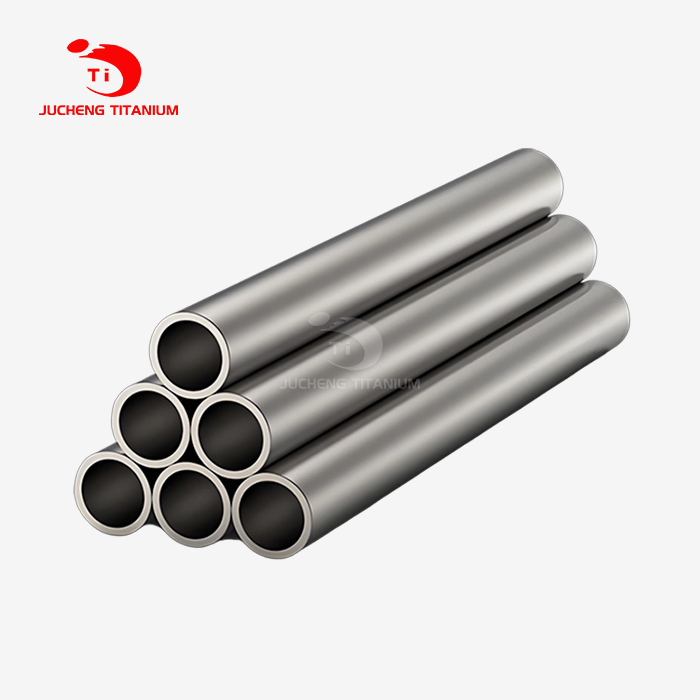

How does a titanium seamless pipe perform under high-temperature conditions?
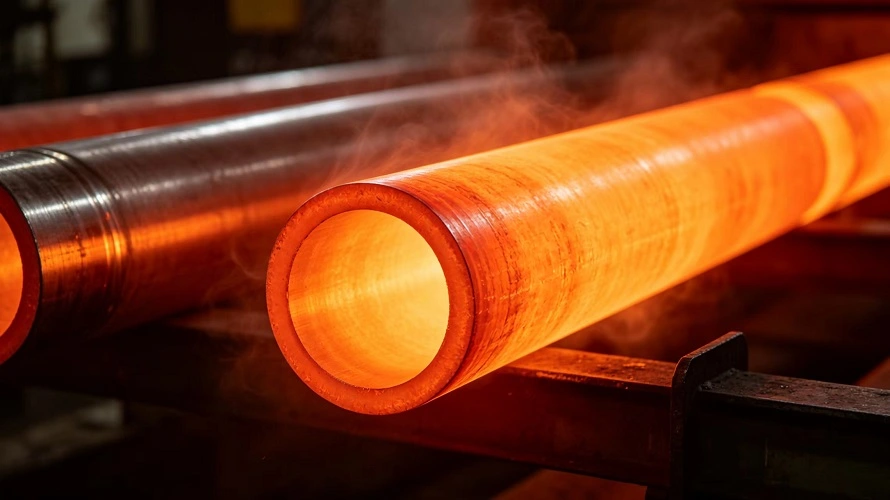
Titanium seamless pipe is stable and reliable at high temperatures. These pipes are appropriate for difficult heat settings since they retain mechanical strength and corrosion resistance over 400°C. The lack of welded seams enables equal heat transfer and prevents thermal stress failure sites. Gr2 is commercially pure and has high ductility, whereas Gr5 (Ti-6Al-4V) is an alloy and has greater strength retention at 600°C. Titanium seamless pipe is ideal for aerospace, chemical processing, and power generation applications that need thermal cycling and prolonged heat exposure.
Introduction
High-temperature fluid and gas industrial processes require thermally stable pipework. In sectors where traditional metals fail to function, titanium-based solutions have grown in popularity during the past two decades. Engineers and procurement managers seeking heat-intensive application dependability choose titanium seamless pipes. Understanding how these pipes react to high temperatures affects equipment longevity, maintenance costs, and operational safety. Project success depends on pipe material thermal behavior, whether you're sourcing components for a 450°C chemical reactor or constructing aircraft heat exchangers. This article examines titanium seamless pipe performance under heat using industry standards and real-world application data to help you buy wisely.
Understanding Titanium Seamless Pipes and Their High-Temperature Performance
Manufacturing Process Creates Structural Advantage
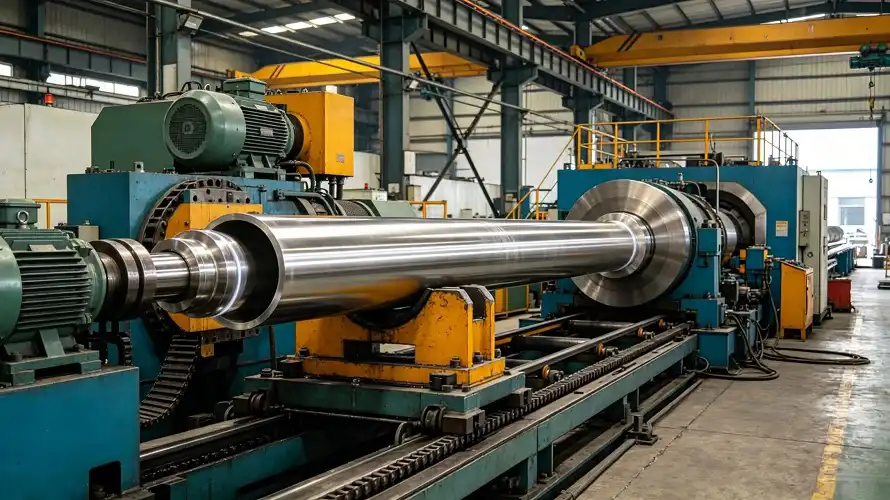
Titanium seamless pipes are made by extrusion, piercing, cold rolling, annealing, and pickling. These pipes have no fusion zones or heat-affected sections that degrade with thermal cycling, unlike welded ones. Continuous grain structure in the pipe wall ensures uniform mechanical qualities in all directions, which is important during thermal expansion during heating and cooling. Industrial facilities in Baoji, China's titanium valley, have improved these procedures for decades. Jucheng Titanium pipes undergo extensive annealing to remove cold working stresses and provide dimensional stability at operating temperatures. The tube responds reliably to heat stresses without warping or weakening.
Grade Selection Determines Thermal Capability
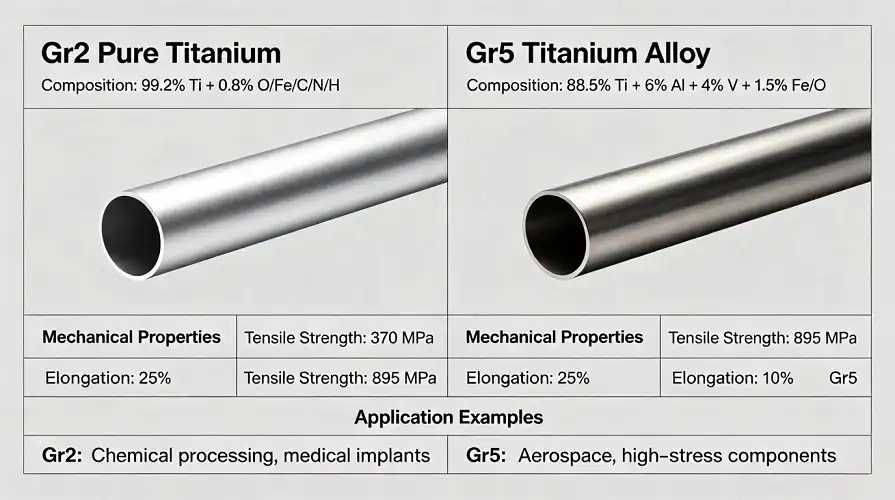
Different titanium grades have different high-temperature properties. Commercially pure grades (Gr1, Gr2, Gr3) are corrosion-resistant and formable, preserving structural integrity up to 300-350°C for continuous use. These grades meet ASTM B338 and ASME SB338 mechanical characteristics at ambient and high temperatures. Alloy grades improve thermal performance. Gr5 (Ti-6Al-4V) has a tensile strength above 895 MPa at 400°C, thanks to aluminum and vanadium stabilizing the crystal structure. This grade fulfills AMS 4942 for aerospace applications that need weight reduction and thermal resistance. Gr9 (Ti-3Al-2.5V) balances strength and weldability for complicated pipe systems. Interstitial elements—oxygen, nitrogen, and hydrogen—are carefully controlled to prevent embrittlement after extended heat exposure.
Mechanical Behavior Under Thermal Stress
Titanium has a thermal expansion of 8.6 × 10⁻⁶/°C, about half that of stainless steel. In systems that cycle temperature often, this reduced expansion coefficient decreases stress on pipe supports and joints, reducing fatigue failure risk. The material's creep resistance—its capacity to withstand gradual deformation under prolonged load at high temperature—is excellent below 450°C for most grades, but applications near 600°C require careful design. Titanium oxide films strengthen at high temperatures, improving corrosion resistance. This differs from many traditional alloys, where oxidation promotes material loss at high temperatures. ASTM testing shows that titanium seamless pipes retain about 85% of their room-temperature yield strength at 300°C and 60-70% at 500°C, depending on grade and alloy composition.
Factors Influencing the Performance of Titanium Seamless Pipes Under High Temperatures
Material Composition and Microstructure
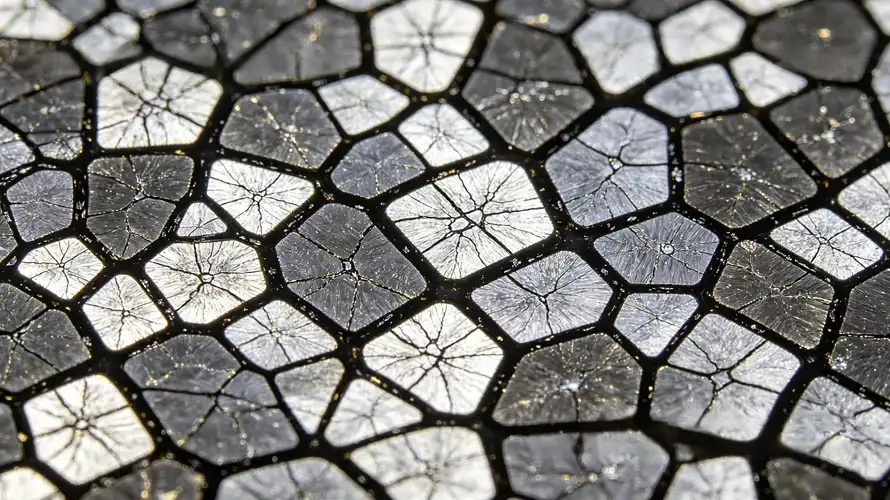
Gr5 pipes' high-temperature capacity depends on aluminum and vanadium content. Aluminum strengthens the solid solution and generates a protective oxide layer, while vanadium stabilizes the beta phase for thermal stability. Proper production controls ensure these alloying elements distribute evenly, preventing isolated weak zones that may break under heat. Controlled interstitial content gives commercially pure grades their qualities. Gr2's 0.18-0.25% oxygen concentration strengthens without affecting ductility at high temperatures. Excess oxygen causes brittleness, whereas lack reduces strength. Quality producers use spectroscopic analysis to preserve these compositional windows and ensure thermal performance across batches.
Surface Condition and Oxidation Resistance
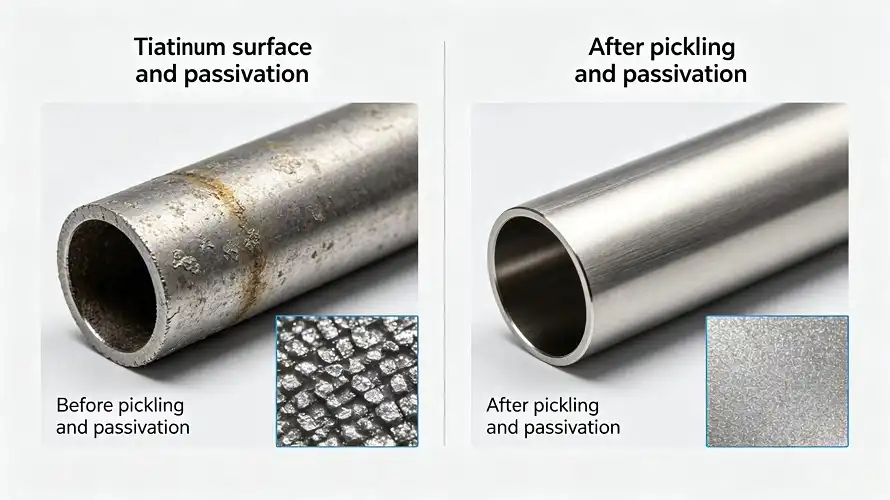
Surface treatment greatly impacts high-temperature oxidation. Acid-pickled surfaces remove contaminants and mill scale, forming a homogeneous oxide coating when heated. An early oxidation barrier delays oxygen entry, ensuring dimensional stability during service. Polished and machined surfaces oxidize differently. While attractive, highly polished surfaces may corrode more quickly than pickled finishes, the difference is minor after first exposure. Surface cleanliness is crucial because hydrocarbon contamination or machining iron particles can cause localized corrosion at high temperatures.
Manufacturing Quality and Inspection Protocols
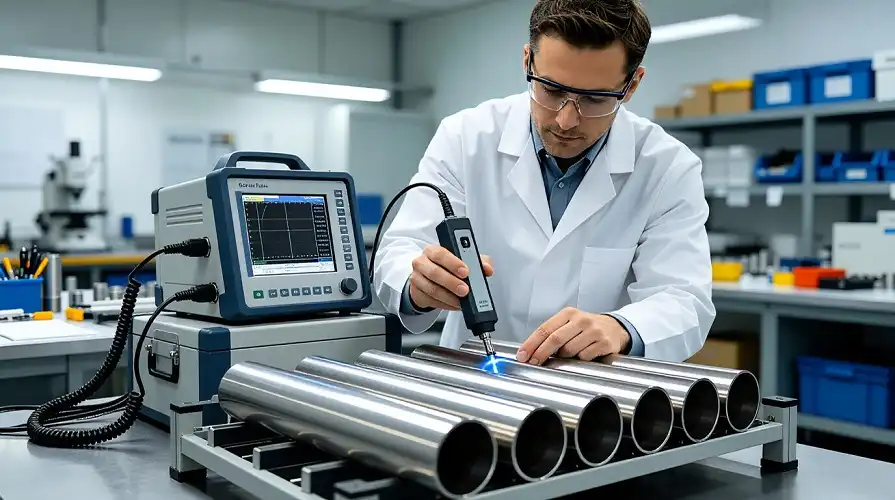
Ultrasonic and eddy current testing reveal internal defects that might propagate under heat stress. High-temperature pipes are 100% volumetrically inspected for delaminations, inclusions, and porosity that might affect performance. Hydrostatic testing to 1.5 times working pressure establishes structural integrity, but elevated-temperature mechanical data is needed for performance assurance. Thermal stress distribution depends on wall thickness homogeneity. Laser micrometer measuring throughout production maintains uniform dimensions, avoiding thin patches from overheating. Reliable providers provide certificates of real measurements rather than just conformity to specification ranges to maintain statistical process control on dimensional parameters.
Typical High-Temperature Applications of Titanium Seamless Pipes
Aerospace and Defense Systems
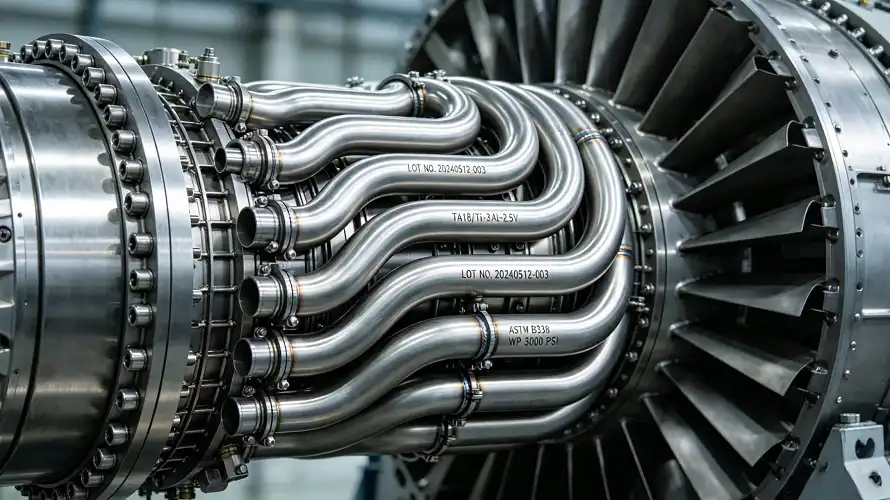
Titanium seamless pipe transfers hydraulic fluids, fuel, and pneumatic gases at 400°C in aircraft engines. Titanium has a lower density (4.51 g/cm³) than stainless steel (8.0 g/cm³), resulting in weight reductions that improve fuel economy and cargo capacity. Gr5 and Gr9 pipes that satisfy AMS requirements have the strength-to-weight ratio and resist vibration and thermal cycle fatigue. Defense uses titanium's heat resistance and radar transparency. Titanium's ability to withstand corrosive combustion products at high temperatures benefits auxiliary power units and environmental control exhaust systems. In mission-critical systems where dependability is essential, seamless construction minimizes failure sites.
Chemical Processing and Petrochemical Plants
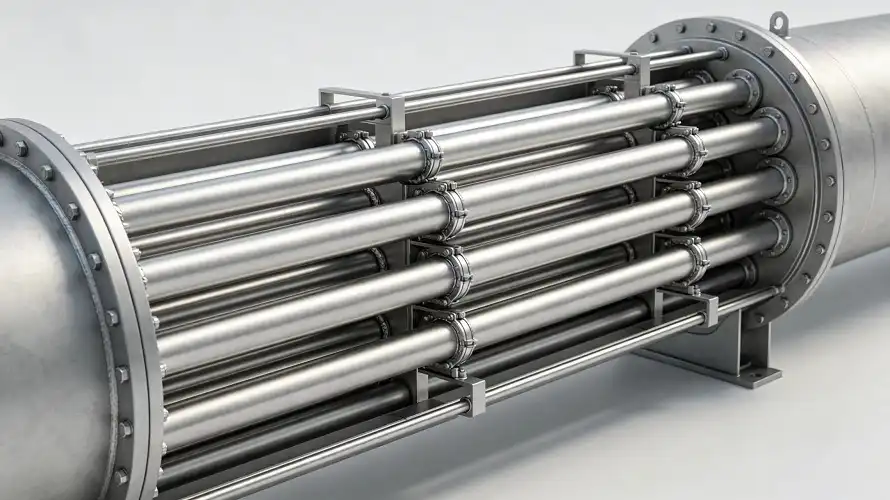
Titanium seamless pipe surpasses stainless steel and costly nickel alloys in chemical plant heat exchangers at 200-350°C for aggressive media. Chloride-containing streams that rapidly degrade stainless steel at high temperatures don't harm the titanium oxide coating. Titanium heat exchanger pipe has outlasted 20 years in terephthalic acid, titanium dioxide, and chlorinated compound plants. Gr2 and Gr7 (titanium-palladium alloy) pipes are used for feed lines and internal distribution in high-pressure reactors. The material's stress corrosion cracking resistance—even in hot chloride environments—prevents catastrophic failures. In their dimethyl terephthalate unit, a major North American petrochemical facility reported zero pipe failures after switching to titanium seamless pipe. Before titanium, stainless steel pipes were replaced every 18-24 months due to crevice corrosion accelerated by operating temperatures above
Power Generation and Energy Systems
Titanium's hot seawater corrosion resistance favors coastal power plant condenser tubing. Seasonal changes and process disruptions can raise temperatures in these systems, which run below 100°C. Copper-nickel alloys attack faster at 60°C in high-velocity seawater, whereas titanium seamless pipes resist corrosion. Geothermal energy systems face the worst heat, pressure, and corrosive fluids in industry. Brine saturated with dissolved minerals and gases runs through titanium pipes that must withstand general corrosion and targeted attack at temperatures above 200°C. Gr12 (titanium-molybdenum-nickel alloy) pipes have performed well in these settings, with minor wall loss after years of exposure.
Comparative Analysis: Titanium Seamless Pipe vs Other Materials at High Temperatures
Titanium Versus Stainless Steel
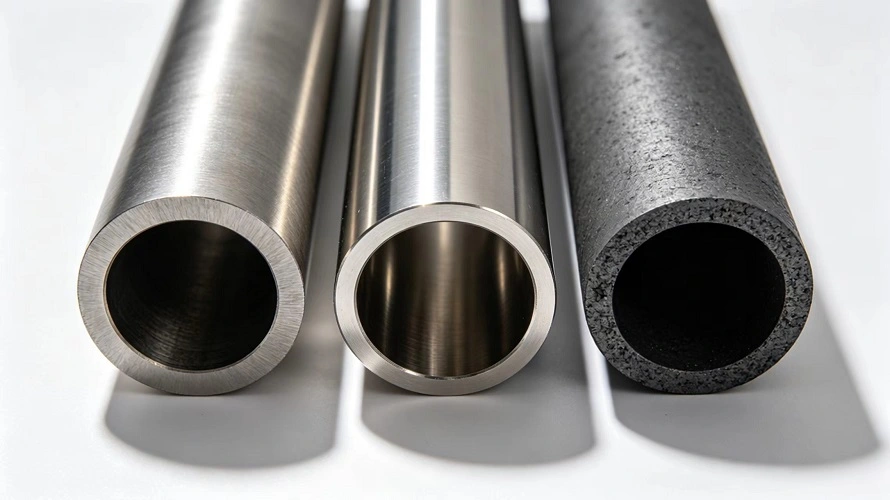
Due to cheaper material prices, stainless steel grades like 316L dominate pipe systems, which are limited beyond 300°C in corrosive conditions. In systems with even trace chloride contamination, increased temperatures can cause chloride stress corrosion cracking in stainless steel. Titanium removes this failure mode and reduces weight by 60%, lowering support structure costs and simplifying installation. The thermal conductivity difference between titanium (17 W/m·K) and 316 stainless steel (16 W/m·K) is small, ensuring equivalent heat transfer performance. Titanium's reduced thermal expansion decreases pipe stress during temperature fluctuations, eliminating stainless steel expansion loops. Titanium's greater initial procurement cost is generally justified by its longer service life and lower maintenance expenses over 20 years, especially when downtime costs are included.
Titanium Versus Nickel Alloys
Inconel 625 and Hastelloy C-276 perform well over 600°C, surpassing titanium's limit. Titanium seamless pipe has equivalent corrosion resistance below 450°C at 40-60% of the nickel alloy cost, depending on market conditions and quality. Titanium is advantageous for situations where weight affects operational costs due to its density (nickel alloys reach 8.4 g/cm³). Many applications choose titanium because of fabrication costs. Both materials need specialist welding, but titanium's reduced hardness decreases machining and drilling tool wear. Titanium tolerates substantial field alterations better than nickel alloys, which work-harden quickly during cold forming. Although more expensive, nickel alloys are needed for applications over 500°C when the service temperature is constant.
Titanium Versus Carbon Steel
Carbon steel is cheap for low-temperature applications but fails quickly in corrosive, high-temperature situations. In acidic or chloride-containing environments, corrosion rates grow exponentially with temperature, and oxidation scaling becomes severe at 400°C. Systems developed with carbon steel sometimes require costly titanium retrofits after recurrent failures. A Gulf Coast chemical factory recorded this change. Due to 180°C corrosion and erosion, their hot condensate system carbon steel pipe needed to be replaced every 14 months. The switch to Gr2 titanium seamless pipes reduced failures, with almost no wall loss after five years. Titanium material costs six times more, but eliminating production shutdowns for pipe replacement paid for itself in three years.
Procurement Considerations for Titanium Seamless Pipes in High-Temperature Applications
Standards Compliance and Material Certification
ASTM B861 specifies chemical composition, mechanical qualities, and dimensional tolerances for titanium seamless pipe for general corrosion-resisting and elevated-temperature use. ASTM B338 covers condenser and heat exchanger seamless and welded titanium and titanium alloy tubes. Buyers must ensure that the provided material has Mill Test Reports (MTR) that demonstrate heat-specific chemical and mechanical test findings. High-temperature applications require traceability. Each pipe length shall have a permanent grade, heat number, and manufacturer marks. This traceability allows field performance to be correlated with production metrics, aiding root cause investigation in unforeseen difficulties. AMS requirements may demand process control records showing adequate annealing cycles and non-destructive testing findings for aerospace and defense applications.
Dimensional Specifications and Tolerances
At high temperatures, wall thickness tolerance affects pressure rating. ASTM B861 requires seamless pipe to have a minimum wall of 87.5% of nominal, therefore, a 2.0mm pipe can be as thin as 1.75mm. Purchasers building systems with low safety factors should specify tighter tolerances or obtain real measurement data to verify operational temperature strength. Heat transfer and fitting compatibility depend on outer diameter tolerances. The standard tolerance for pipes under 25mm OD is ±0.4mm, rising to ±0.8mm for higher diameters. Though expensive, custom specs can tighten these ranges. Jucheng Titanium stocks standard and bespoke dimensional combinations from OD3mm to OD219mm with wall thickness from 0.5mm to 20mm to meet application needs without the delays of entirely custom manufacturing runs.
Supplier Verification and Quality Control
Reliable titanium suppliers have ISO 9001-certified quality management systems and AS9100 or PED certifications for aerospace and pressure equipment. Site audits validate production and inspection equipment calibration and dimensional tolerances. Suppliers should demonstrate 100% ultrasonic and eddy current testing, not only sample inspection. Jucheng Titanium, a National High-Tech Enterprise in China, has 20 years of titanium industry experience and excels in high-temperature applications. Seamless pipe production advancements in their 41 utility model patents improve dimensional uniformity and surface quality. The company's status as a national "little giant" represents official acknowledgment of its technological and market superiority. Production above 500 equipment sets per year shows manufacturing scale to serve huge projects while retaining quality.
Inventory Availability and Lead Time Management
Procurement cycles can delay projects, especially for rare grades or unique measurements. Suppliers with large inventories—Jucheng Titanium keeps 3,000 tons of titanium material year-round—can meet urgent needs without mill operations. Most high-temperature applications are covered by this inventory depth of Gr1, Gr2, Gr5, Gr7, Gr9, and Gr12. Custom processing supplements inventory for project needs. Extrusion and cold rolling may make non-standard diameters, whereas CNC machining centers end-form, thread, and more. Broad standard inventory and flexible custom processing reduce the availability-specification optimization trade-off, allowing buyers to match current demands with optimum design specifications.
Conclusion
Titanium seamless pipes operate well in high-temperature settings when other materials fail due to corrosion, weight, or thermal cycle stress. Its strength retention, oxidation resistance, and moderate thermal expansion make it ideal for aerospace, chemical processing, and power-generating applications at 300-600°C. While initial procurement prices surpass stainless steel alternatives, prolonged service life and lower maintenance usually justify the investment over the equipment's lifespan. The specification must match grade selection to operational temperature and corrosive environment, and ensure production quality through stringent inspection methods and supplier qualification. As companies seek better efficiency and harsher working circumstances, the technological and economic benefits grow more enticing.
FAQ
Q1: Can titanium seamless pipes operate continuously above 600°C?
Most titanium grades oxidize and weaken at 600°C. Gr5 alloy is usable at 550°C for continuous operation; the design stress should be lowered compared to lower temperatures. Instead of titanium, nickel-based superalloys are used for applications beyond 600°C.
Q2: How does seamless construction improve high-temperature performance compared to welded pipe?
The base material and welded pipe have different grain structures in the heat-affected zone. At high temperatures, this zone may lose strength or corrosion resistance. Without this weak spot, the seamless pipe is uniform. Without a weld seam, pipe can withstand 20% more pressure than welded pipe.
Q3: What testing verifies the titanium pipe's suitability for high-temperature service?
ASTM E21 elevated-temperature tensile testing determines operating temperature strength retention. Under prolonged load and heat, creep testing measures time-dependent deformation. Air or particular atmosphere oxidation testing measures weight increase and oxide layer properties. Certified test data for each heat of material from reliable vendors allows assured thermal application specification.
Partner with a Trusted Titanium Seamless Pipe Manufacturer
Jucheng Titanium has 20 years of expertise in making high-temperature titanium seamless pipes. Our extensive collection of Gr1–Gr12 grades and bespoke manufacturing capabilities meet project needs without sacrificing quality or deadline. Ultrasonic testing, eddy current inspection, and hydrostatic pressure verification ensure every pipe satisfies ASTM B861, B338, and ASME SB338 requirements. From material selection to final inspection, our technical team supports aircraft manufacturers, chemical processors, and equipment integrators worldwide. With yearly sales growth over 30% and national specialized business status, we've won confidence by delivering certified products with comprehensive traceability documentation. Contact us at s4@juchengti.com to discuss high-temperature pipes, material certifications, or sample assessment for your application.
References
1. Boyer, R., Welsch, G., and Collings, E.W. (1994). Materials Properties Handbook: Titanium Alloys. ASM International, Materials Park, Ohio.
2. Schutz, R.W. and Watkins, H.B. (1998). Recent developments in titanium alloy application in the energy industry. Materials Science and Engineering: A, Volume 243, Issues 1-2, Pages 305-315.
3. Donachie, M.J. (2000). Titanium: A Technical Guide, 2nd Edition. ASM International, Materials Park, Ohio.
4. Peters, M., Kumpfert, J., Ward, C.H., and Leyens, C. (2003). Titanium Alloys for Aerospace Applications. Advanced Engineering Materials, Volume 5, Issue 6, Pages 419-427.
5. American Society for Testing and Materials (2021). ASTM B861-14: Standard Specification for Titanium and Titanium Alloy Seamless Pipe. ASTM International, West Conshohocken, Pennsylvania.
6. Lutjering, G. and Williams, J.C. (2007). Titanium, 2nd Edition. Springer-Verlag, Berlin, Heidelberg.