
What is Grade 2 titanium round rod used for?
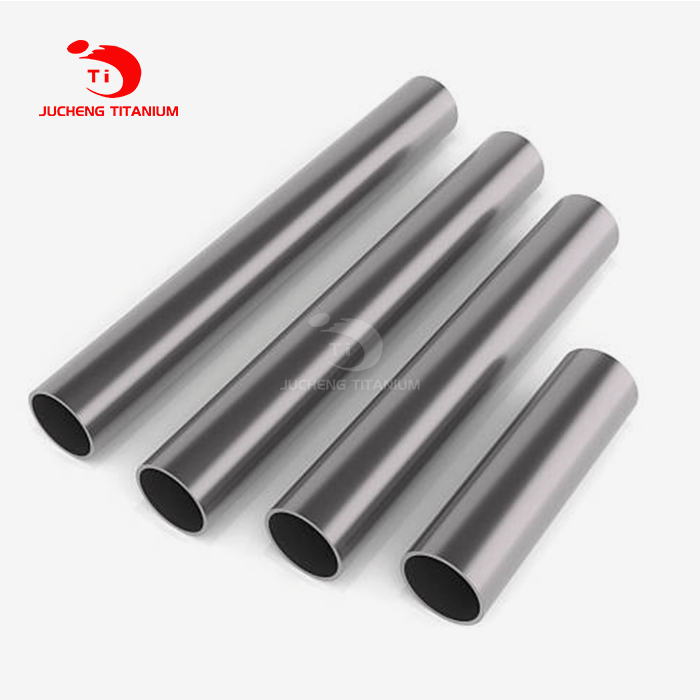
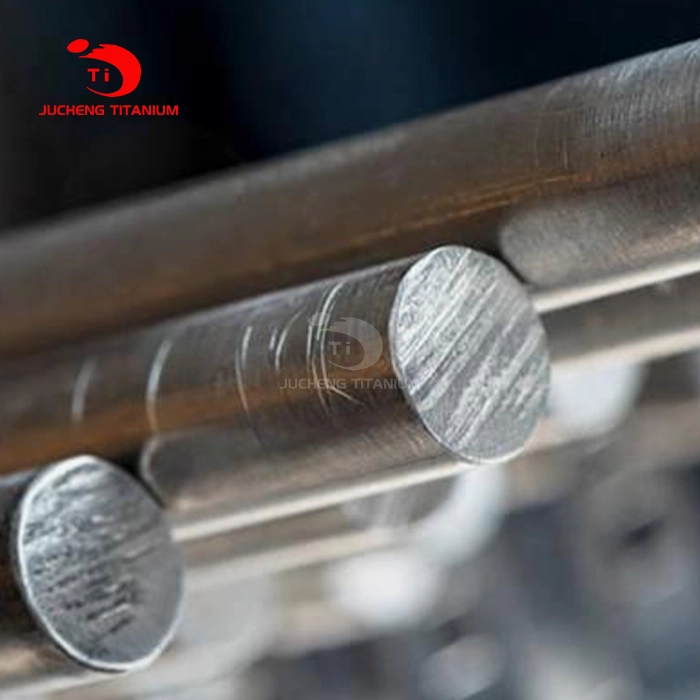
Grade 2 titanium round rod serves as the backbone material for industries demanding exceptional corrosion resistance combined with moderate strength. Engineers specify this commercially pure titanium for chemical processing equipment, marine hardware, desalination systems, and architectural components. Its balanced ductility allows cold forming while maintaining structural integrity in chloride-rich environments. Manufacturers across the petrochemical, offshore, and power generation sectors rely on this versatile round stock to solve critical material challenges where stainless steel simply cannot perform.
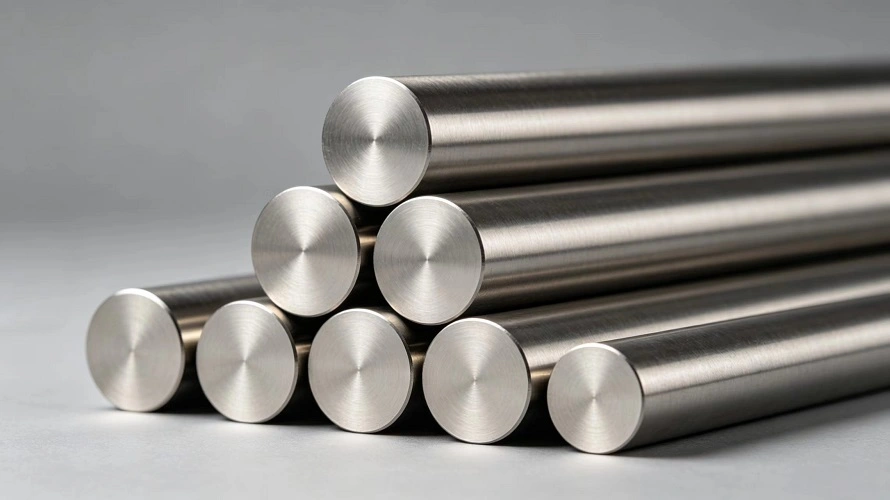
Understanding the Material Behind Industrial Excellence
For over two decades at Jucheng Titanium, we've witnessed how grade 2 titanium round rod transforms manufacturing challenges into engineering solutions. This commercially pure titanium material carries the designation UNS R50400, representing the ideal middle ground between pure elemental titanium and high-strength aerospace alloys.
The magic lies in its chemical simplicity. With titanium comprising the balance and controlled amounts of oxygen (maximum 0.25%), iron (maximum 0.30%), and trace elements, this material achieves something remarkable—it resists nearly every corrosive chemical environment while remaining surprisingly workable. Unlike the harder Ti-6Al-4V alloys that dominate aerospace, our grade 2 titanium bar bends without cracking, welds without special atmosphere chambers, and machines predictably.
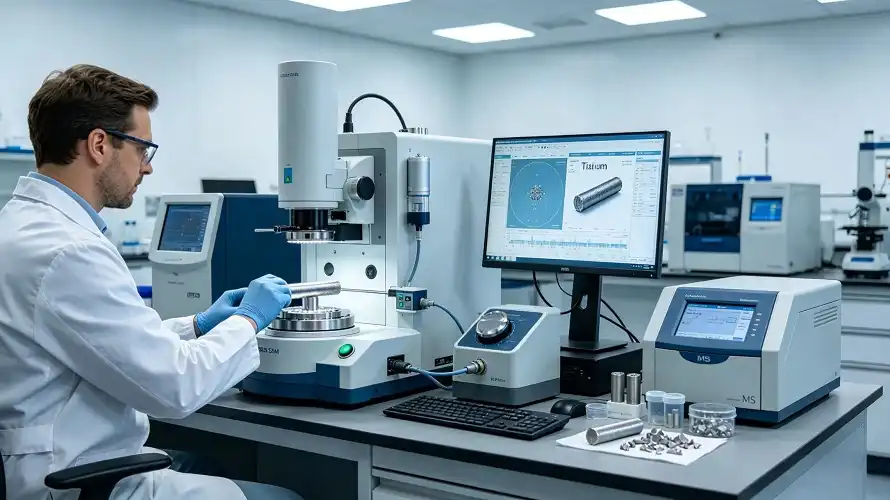
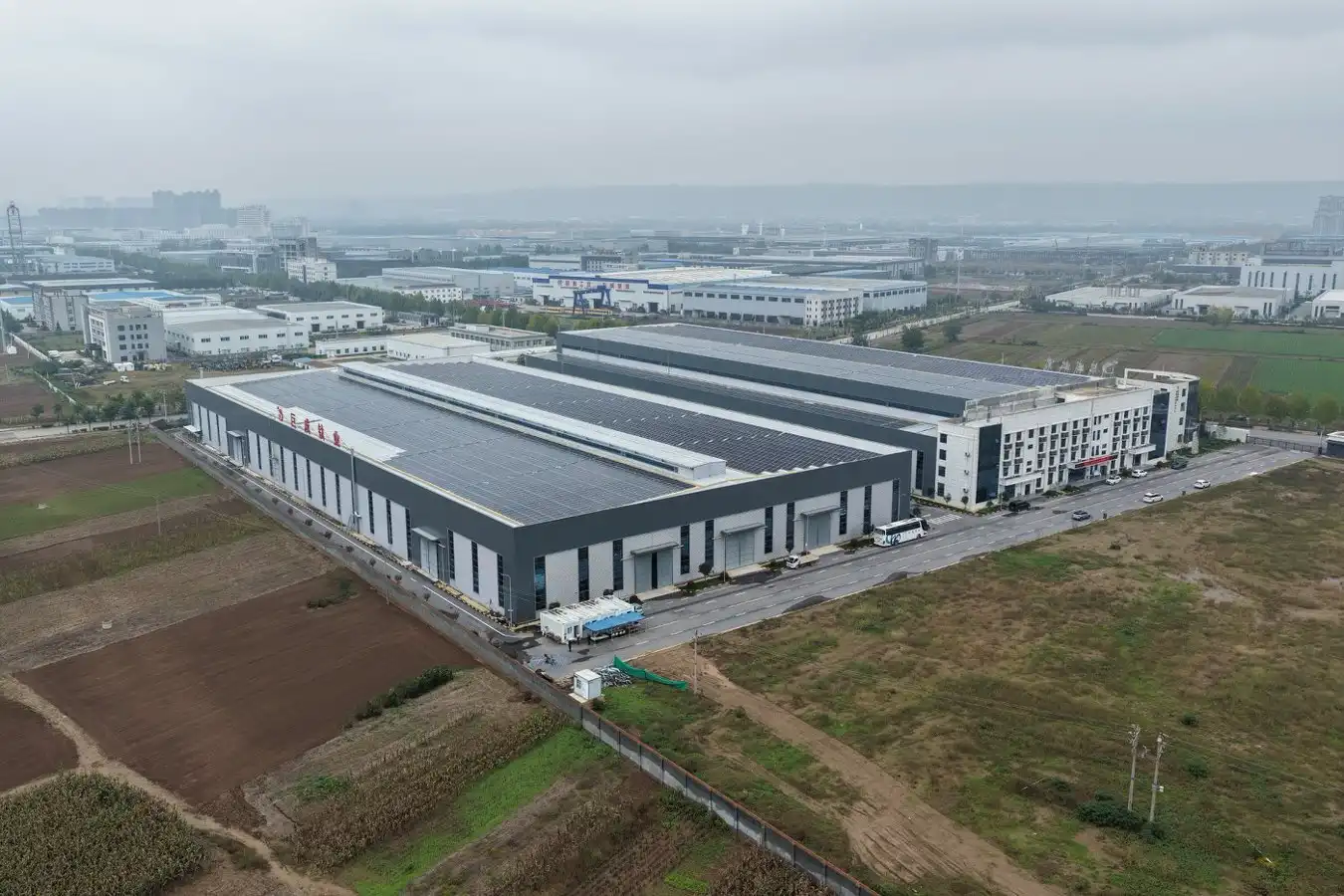
At our Baoji facility in China's Titanium Valley, we maintain approximately 3,000 tons of titanium inventory year-round. This includes round bars ranging from 6mm to 450mm in diameter, available in lengths up to 12 meters for specialized projects. Every piece meets ASTM B348 standards through vacuum melting, precision forging, and controlled heat treatment processes.
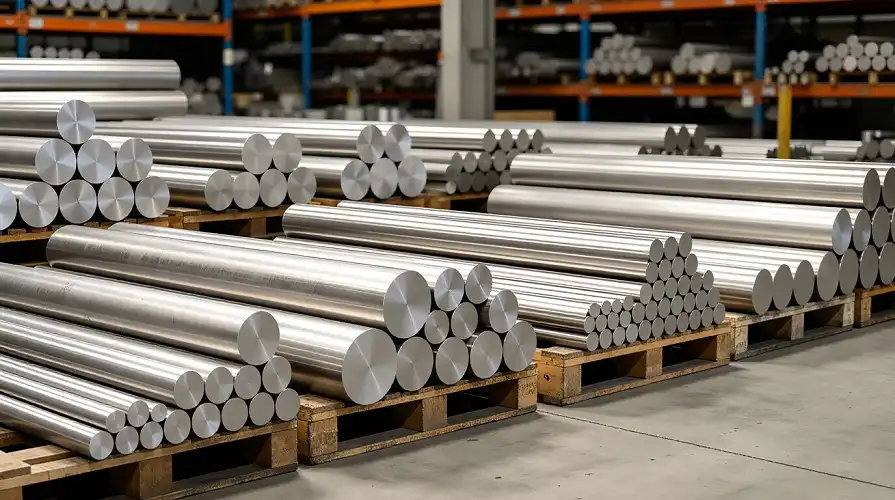
The physical properties tell the performance story: density sits at 4.51 g/cm³—about 60% lighter than steel—while delivering tensile strength around 345 MPa. The modulus of elasticity reaches 105 GPa, providing just enough flex to absorb shock without permanent deformation. These characteristics make titanium round stock the preferred choice when weight reduction matters, but structural reliability cannot be compromised.
Seven Critical Applications Transforming Industries
Chemical Processing Equipment Components
Walk through any modern chemical plant, and you'll find grade 2 titanium round rod working silently inside valve bodies, pump shafts, and agitator components. We machine these parts for clients handling wet chlorine, concentrated nitric acid, and oxidizing salt solutions—environments that would destroy conventional metals within months.
The material solves a persistent problem: stress corrosion cracking. Stainless steel develops microscopic fissures under tensile load in chloride environments, leading to catastrophic failures. Our titanium metal rod eliminates this risk. Plants experience zero corrosion-related downtime when switching to titanium components for critical flow control applications.
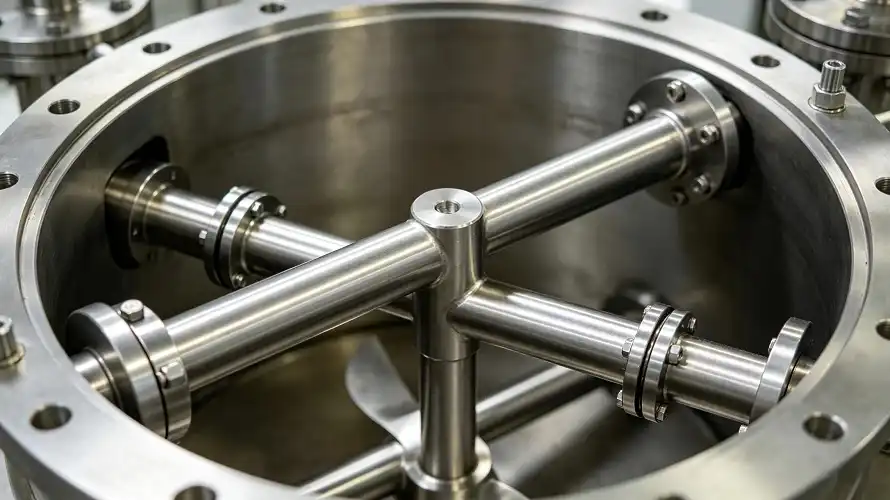
A recent project with a hydrometallurgy operation required 200 custom valve stems. The client had been replacing stainless versions every 18 months due to pitting corrosion. Our titanium round bar solution has now operated continuously for five years without measurable material loss. This longevity shifts maintenance from reactive replacement to predictable scheduling.
Marine and Offshore Engineering Hardware
Seawater presents one of nature's most aggressive corrosive environments. Salt, dissolved oxygen, variable temperatures, and biological activity combine to attack metal structures relentlessly. Grade 2 titanium round stock provides the answer for subsea instrumentation housings, propeller shaft sleeves, and fastening systems on offshore platforms.
The material remains immune to crevice corrosion—the hidden destroyer that attacks shielded areas where oxygen cannot reach. Traditional metals form localized anodic sites in these gaps, but titanium's passive oxide layer regenerates instantly even in oxygen-depleted zones. This characteristic extends service life beyond 25 years in continuous saltwater immersion.
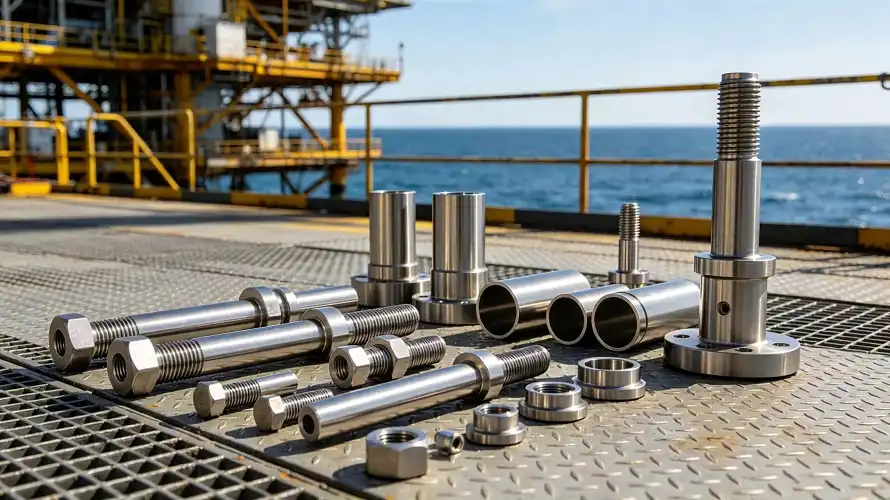
Desalination plants represent another major application area. The evaporator tie rods and heat exchanger support structures we fabricate handle both the mechanical loads and the corrosive brine concentrates. Plants processing 50,000 cubic meters daily depend on these components operating without interruption. The combination of strength and corrosion resistance makes the titanium round bar the only practical long-term solution.
Power Generation and Heat Exchanger Systems
Condenser systems in power plants face a brutal operating environment: constant thermal cycling, erosive cooling water flow, and potential microbiologically influenced corrosion. We supply pure titanium rods for manufacturing condenser tube sheets, tie rods, and structural supports that anchor thousands of heat transfer tubes.
The advantage becomes clear during operation. Copper-nickel alloys suffer erosion-corrosion at flow velocities above 2 meters per second. Our grade 2 titanium bar handles velocities exceeding 3.5 meters per second without material loss. This allows engineers to design more compact heat exchangers with better thermal efficiency and smaller footprints.
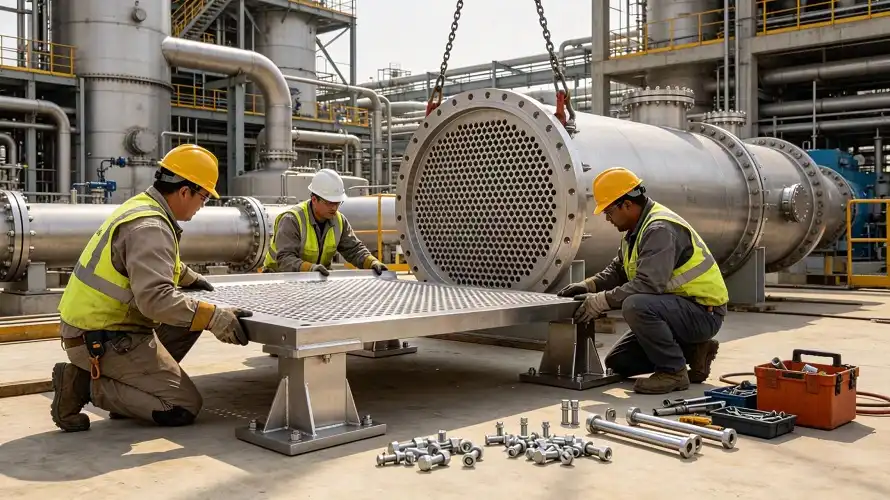
A 600-megawatt combined cycle plant recently upgraded its condenser internals using our material. The previous stainless steel components required replacement every seven years due to biological fouling and crevice attack. Engineering calculations project that the titanium replacement will exceed a 30-year service life. The initial material cost premium disappears when lifecycle costs are properly evaluated.
Architectural and Structural Applications
Modern architecture increasingly specifies commercially pure titanium for both functional and aesthetic purposes. The naturally forming oxide layer produces distinctive surface colors ranging from gray to gold, depending on heat treatment and surface preparation. We've supplied titanium round stock for exterior cladding systems, decorative railings, and structural support elements in coastal buildings.
Beyond appearance, the material delivers practical benefits. Zero maintenance requirements over decades contrast sharply with painted steel or aluminum systems requiring regular refinishing. The combination of corrosion resistance and strength-to-weight ratio allows designers to create spanning structures that would be impractical in heavier materials.
Coastal bridge fastening systems represent a specialized application. The threaded rods we machine from grade 2 titanium bar secure critical connections in salt spray zones. Unlike galvanized steel bolts that corrode within a decade, these titanium fasteners will outlast the concrete structures they hold together. Infrastructure managers increasingly specify titanium for new construction after calculating the true cost of repeated steel replacement.
Medical Device Manufacturing Stock
While medical implants typically use Grade 23 titanium for enhanced biocompatibility, many surgical instruments and sterilization equipment components rely on Grade 2 titanium round rod. The material withstands repeated autoclaving cycles without corrosion or dimensional changes. We provide precision-ground bars for manufacturing orthopedic drills, retractors, and specialized surgical tools.
The metal's non-magnetic properties prove essential in MRI environments. Hospitals require instruments that won't interact with powerful magnetic fields or create imaging artifacts. Our titanium metal round rod machines cleanly into complex tool geometries while maintaining these critical physical characteristics.
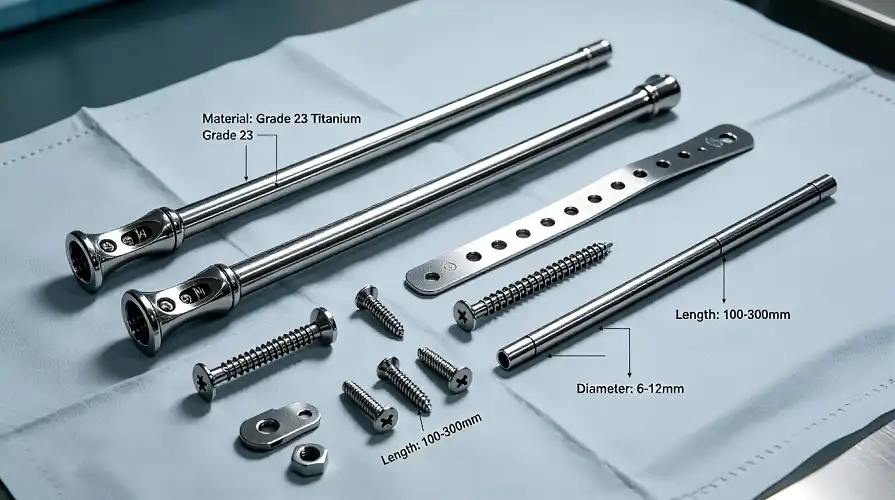
Equipment manufacturers value the material's consistent machinability. Unlike work-hardening stainless steels that dull cutting tools rapidly, grade 2 titanium rod machines predictably with proper tooling and cutting parameters. This consistency reduces manufacturing costs despite the higher raw material price compared to surgical stainless grades.
Food and Beverage Processing Equipment
Sanitary processing equipment demands materials that resist corrosion from acidic foods, alkaline cleaning agents, and repeated thermal shocking during clean-in-place cycles. We supply titanium round bar for manufacturing mixing shaft components, sampling valves, and specialized fittings in dairy, brewing, and pharmaceutical production lines.
The FDA has approved titanium for food contact applications due to its inert surface chemistry. Nothing leaches from properly passivated titanium surfaces, ensuring product purity. This characteristic proves particularly valuable in pharmaceutical manufacturing, where trace metal contamination could compromise drug efficacy or patient safety.
A major brewery recently converted its hot wort handling system to titanium components. The acidic, hot liquid had been corroding stainless steel at accelerated rates, requiring annual replacement of valve internals. Our grade 2 titanium bar solution eliminated this maintenance cycle while improving product consistency by eliminating trace iron contamination.
Renewable Energy System Components
Wind turbine offshore installations and tidal energy systems operate in uniquely challenging environments, combining mechanical stress, saltwater exposure, and limited maintenance access. We've supplied titanium round stock for manufacturing fasteners, shaft components, and structural elements in these applications.
The material's fatigue resistance becomes critical in cyclic loading environments. Titanium maintains strength under repeated stress reversals better than many competing materials. Combined with corrosion immunity, this creates components that reliably operate for decades in locations where replacement costs exceed initial installation expenses.
Solar thermal concentrator systems use our precision-ground bars for mounting hardware and tracking mechanism components. Desert environments with extreme temperature swings and occasional moisture create conditions where conventional fasteners loosen or corrode. Titanium's low thermal expansion coefficient and corrosion resistance solve both problems simultaneously.
Real-World Performance: Evidence from the Field
Our partnership with Jiangxi Copper Group demonstrates the practical value of grade 2 titanium round rods. Their hydrometallurgical processing facility required anode plates and structural components resistant to acidic copper sulfate solutions at elevated temperatures. We supplied both finished equipment and raw titanium round bar stock for their internal fabrication needs.
After three years of continuous operation, ultrasonic inspection revealed zero measurable corrosion on titanium components. Comparable stainless steel parts in similar service showed 0.8mm annual corrosion rates. The facility calculated a 340% return on investment from switching to titanium materials when factoring in replacement costs and production downtime.
The Northwest Institute for Nonferrous Metal Research collaborates with our technical team on developing specialized titanium alloy compositions. This "production, learning, and research" relationship ensures we remain at the forefront of material science developments. Our 4 invention patents and 41 utility model patents directly result from these partnerships, translating academic research into commercially viable products.
Quality Standards That Build Trust
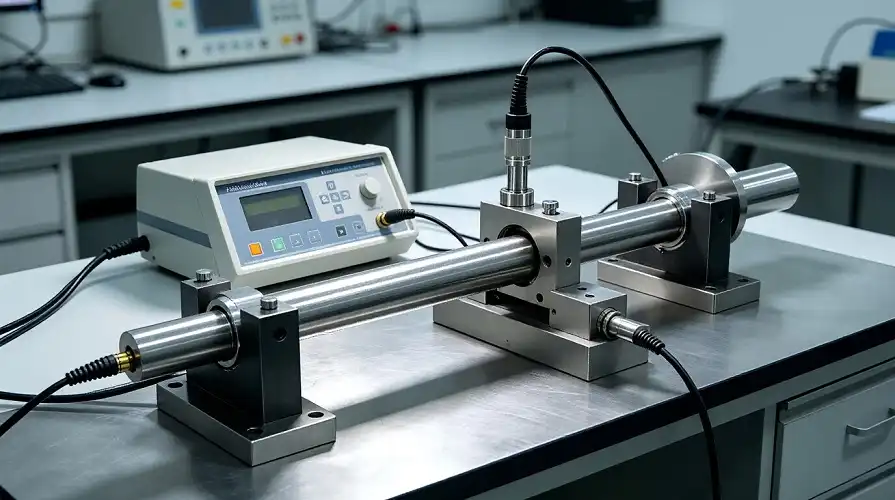
Every grade 2 titanium bar leaving our facility undergoes rigorous inspection protocols. Ultrasonic testing per AMS 2631 detects internal discontinuities down to 0.8mm diameter. Chemical analysis confirms elemental composition meets ASTM B348 specifications, with particular attention to oxygen and iron levels that control ductility and corrosion resistance.
Surface condition options include pickled (matte gray finish), peeled (precision diameter control), and centerless ground (tight tolerance applications). We maintain traceability through heat lot numbers linking every piece to its production records, chemical analysis, and mechanical testing results. This documentation proves essential for customers in regulated industries requiring a complete material pedigree.
Our quality inspection team conducts dimensional verification using calibrated instruments traceable to national standards. Straightness, diameter tolerance, and length specifications must fall within customer-specified ranges before the material ships. This attention to detail eliminates the costly rework and production delays caused by out-of-specification raw materials.
Technical Considerations for Successful Implementation
Machining grade 2 titanium round stock requires understanding its unique characteristics. The material's low thermal conductivity causes heat buildup at cutting edges, necessitating slower speeds and higher feed rates compared to steel. We recommend carbide tooling with sharp edges and copious coolant flow for optimal results.
Welding proceeds readily using TIG or MIG processes in an argon shielding atmosphere. Unlike higher-strength titanium alloys, grade 2 typically requires no post-weld heat treatment for most applications. The material's ductility accommodates weld shrinkage without cracking, simplifying fabrication procedures.
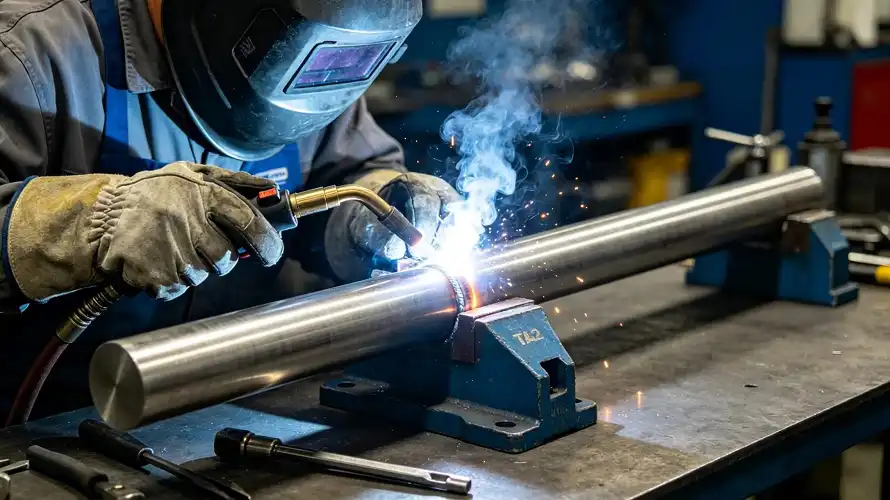
Cold forming operations benefit from titanium's excellent ductility. The material bends around tight radii without cracking when proper techniques are employed. However, springback exceeds steel by approximately 10-15%, requiring die compensation for accurate final dimensions.
Conclusion
Grade 2 titanium round rod represents the practical choice for industries requiring corrosion resistance, moderate strength, and reliable performance across decades of service. From chemical processing to marine engineering, this commercially pure titanium solves material challenges that compromise conventional metals. At Jucheng Titanium, our commitment to quality, technical innovation, and customer partnership ensures you receive not just material but complete solutions backed by proven expertise. The combination of our extensive inventory, precision processing capabilities, and collaborative engineering approach makes us the logical partner for your titanium material needs.
FAQ
Q1: How does grade 2 titanium round rod compare to Grade 5 alloy?
Grade 2 offers superior corrosion resistance and formability, while Grade 5 provides roughly double the tensile strength. The commercially pure version costs less and welds more easily. Applications requiring maximum strength in aerospace or military contexts specify Grade 5, while chemical and marine industries prefer Grade 2's corrosion performance and workability.
Q2: Can a titanium round bar be welded to stainless steel components?
Direct fusion welding creates brittle titanium-iron intermetallic compounds that crack easily. Explosive bonding, mechanical fastening, or transition pieces provide reliable joining methods. Some fabricators use silver brazing with careful flux selection, though mechanical connections generally prove more reliable for critical applications.
Q3: What surface treatments improve performance?
Acid pickling removes surface contamination and creates a consistent matte finish. Anodizing produces decorative colors while enhancing surface hardness slightly. For maximum corrosion resistance, chemical passivation develops the protective oxide layer fully. Shot peening increases fatigue resistance by introducing beneficial compressive stresses.
Q4: How long does grade 2 titanium last in seawater?
Properly fabricated components demonstrate service life exceeding 30 years in continuous marine immersion. The passive oxide layer regenerates instantly if damaged, providing self-healing protection. Biological fouling may occur, but it doesn't compromise material integrity. Regular cleaning maintains optimal performance without affecting structural properties.
Partner With Jucheng Titanium for Your Grade 2 Titanium Round Rod Supply
As a trusted grade 2 titanium round rod manufacturer with over 20 years of deep industry experience, Jucheng Titanium delivers the material quality and technical support your projects demand. Our 3,000-ton inventory ensures rapid delivery while our customized processing capabilities solve unique engineering challenges. Contact our team at s4@juchengti.com to discuss your specific requirements and discover how our certified titanium solutions can optimize your manufacturing operations.
References
1. Boyer, R., Welsch, G., & Collings, E.W. (1994). Materials Properties Handbook: Titanium Alloys. ASM International, Materials Park, Ohio.
2. Schutz, R.W. & Thomas, D.E. (1987). Corrosion of Titanium and Titanium Alloys. In Metals Handbook, Volume 13: Corrosion, ASM International.
3. Donachie, M.J. (2000). Titanium: A Technical Guide, Second Edition. ASM International, Materials Park, Ohio.
4. ASTM International (2020). ASTM B348: Standard Specification for Titanium and Titanium Alloy Bars and Billets. West Conshohocken, Pennsylvania.
5. Veiga, C., Davim, J.P., & Loureiro, A.J.R. (2012). Properties and Applications of Titanium Alloys: A Brief Review. Reviews on Advanced Materials Science, Volume 32.
6. Lütjering, G. & Williams, J.C. (2007). Titanium, Second Edition. Springer-Verlag, Berlin Heidelberg.