
Is grade 7 titanium good?
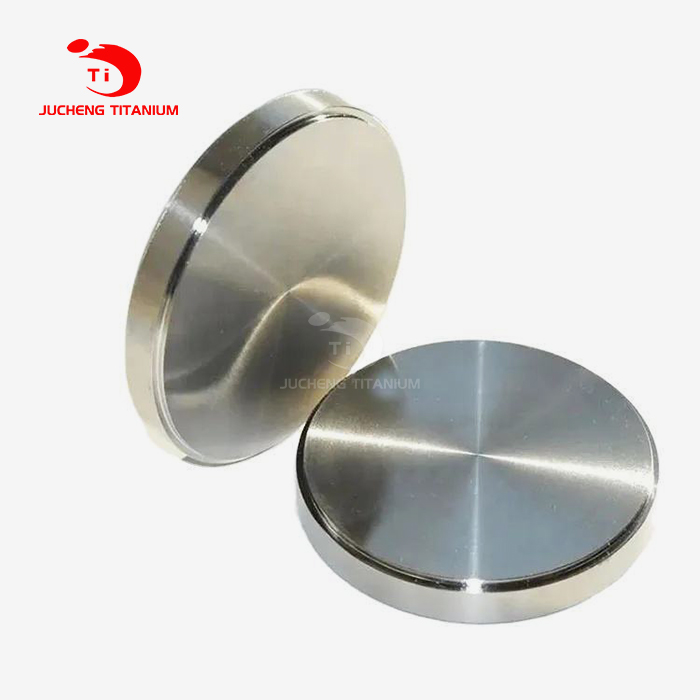
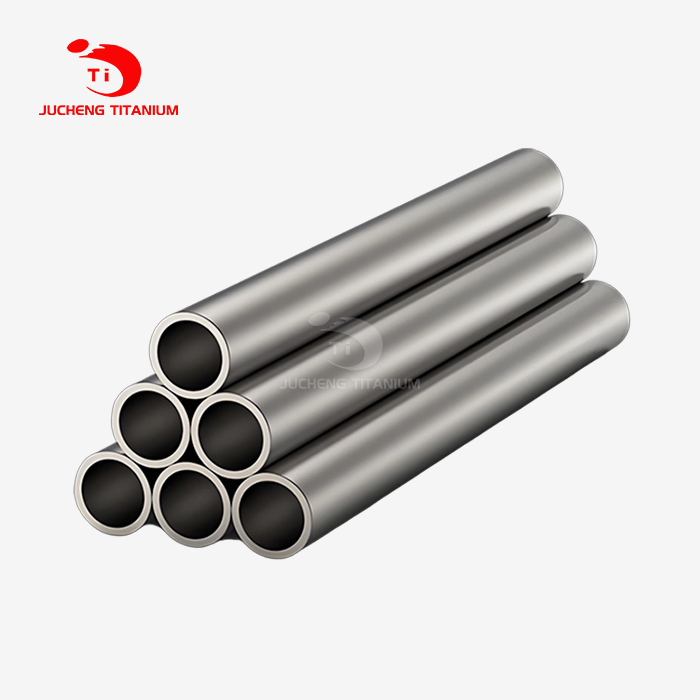
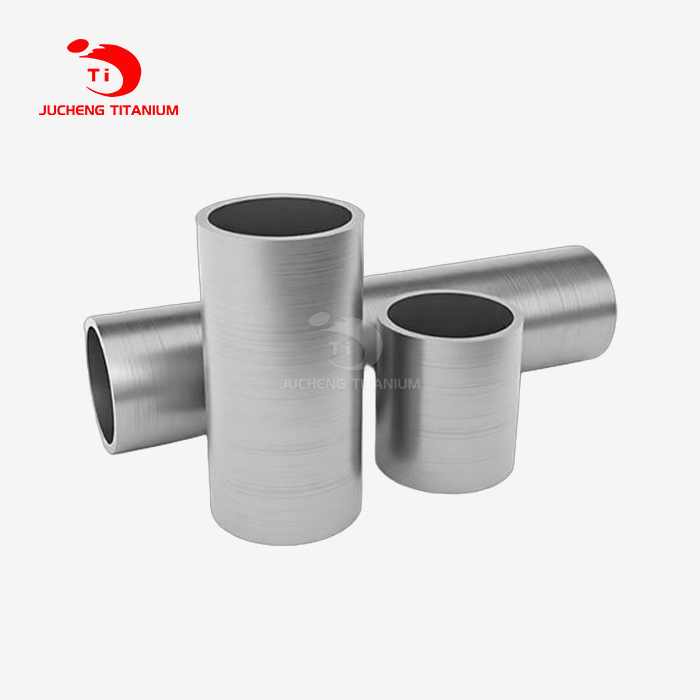
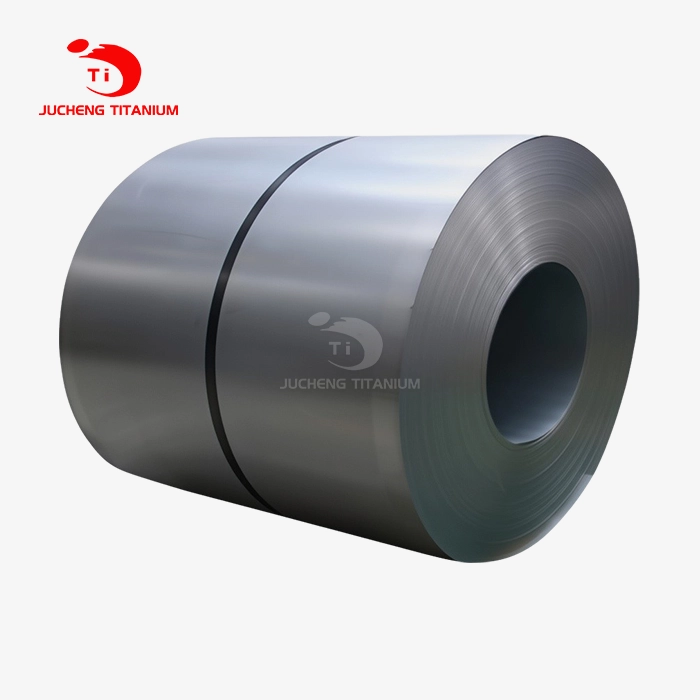
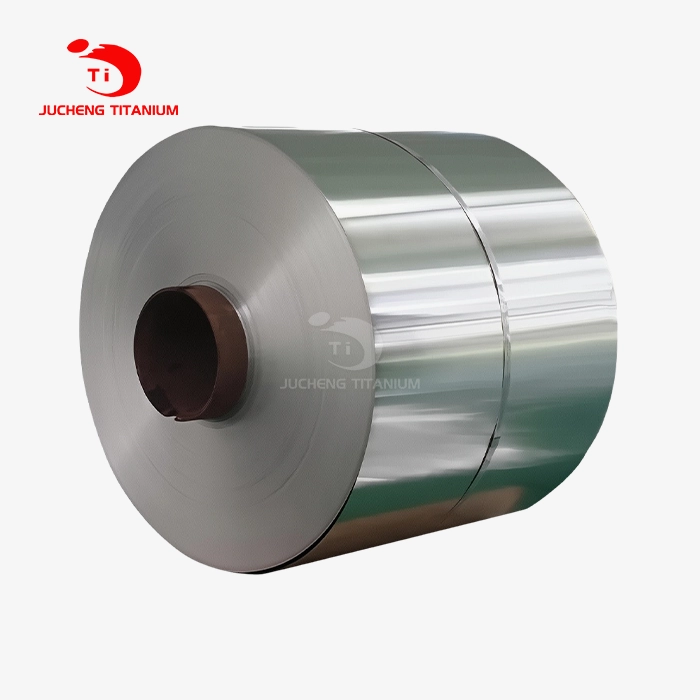
Grade 7 titanium is very good. This commercially pure titanium metal, which has palladium added to it, resists rust very well in harsh acidic and chloride conditions, where other titanium types fail. The Grade 7 titanium plate is moderately strong and very resistant to crack, rust, and localised attack. This makes it an essential part of chemical processing equipment, desalination plants, and hydrometallurgical processes. Its ability to keep its shape in hot brine and diluted sulphuric acid solves important longevity problems that companies that make aircraft, chemical, and industrial equipment face every day.
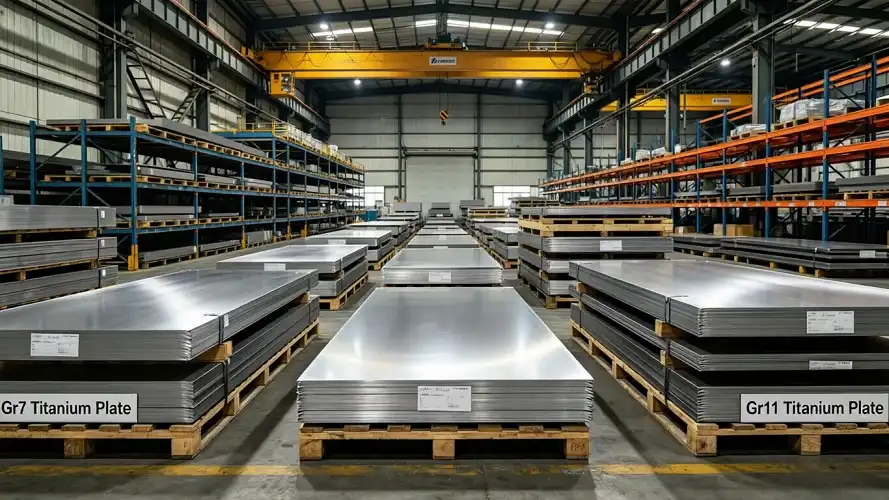
Understanding Grade 7 Titanium Plate
What Makes Grade 7 Titanium Unique?
When it comes to commercially pure titanium metals, the grade 7 titanium plate is a special type. The unique feature is the palladium addition, which changes the way it corrodes dramatically (usually between 0.12% and 0.25%). This tiny bit of element makes an oxide layer that fixes itself and stays stable even in reducing acid, which breaks down other types of titanium. These plates are made in line with ASTM B265, ASTM F67, AMS 4911, and ASME SB265 standards, which means they work the same way in all situations.
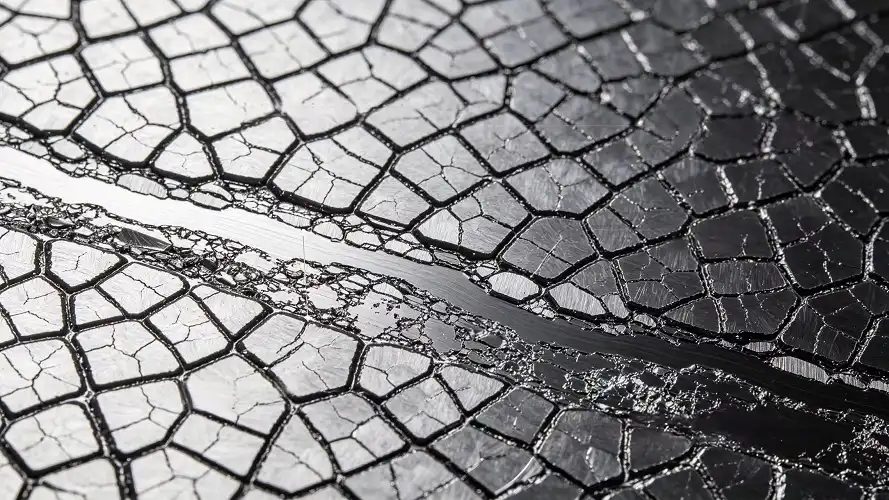
The hot-rolled plates are carefully processed by rolling, annealing, levelling, pickling, and finishing the surface. These steps in the production process get rid of internal stresses and make sure that the mechanical qualities of the material are the same across the whole thickness. When metal is annealed, it is at its most flexible and still resistant to corrosion. This lets manufacturers make complicated shapes without damaging the material.
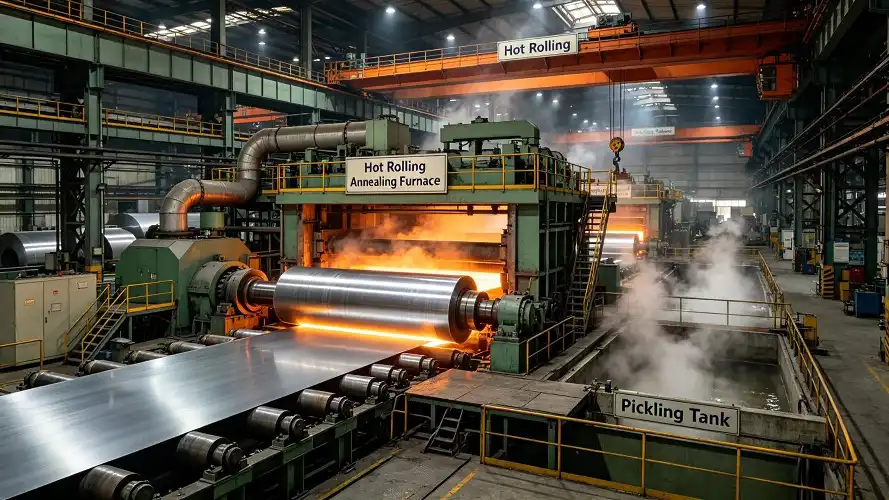
Chemical Composition and Mechanical Properties
The chemistry in Grade 7 is tightly controlled, with nitrogen at 0.03%, carbon at 0.08%, hydrogen at 0.015 %, iron at 0.30%, and oxygen at 0.25%. Palladium is the element that makes it stand out. This mix has a tensile strength of about 50 ksi (345 MPa), a yield strength of about 40 ksi (275 MPa), and a stretch of more than 20%. With a mass of 4.51 g/cm³, it is 56% lighter than steel, which means it can carry less weight and cost less to ship.
When looking at rust resistance, Grade 7 is better than Grade 2 in places where the temperature is above 260°C or where there are shapes that allow cracks to form. Even though Grade 5 (Ti-6Al-4V) is stronger, it is not chemically resistant enough for acid service. This makes Grade 7 the best choice for corrosive uses that need a moderate amount of strength and great fabricability.
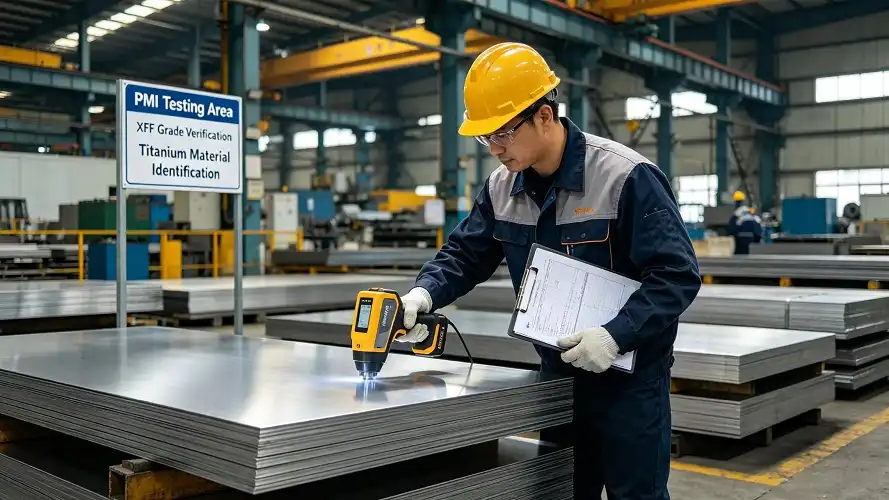
Available Specifications and Customization
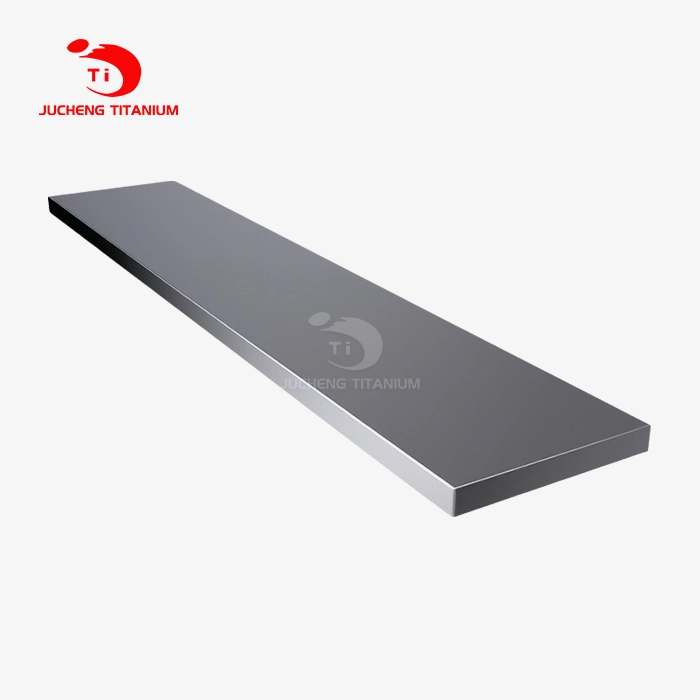
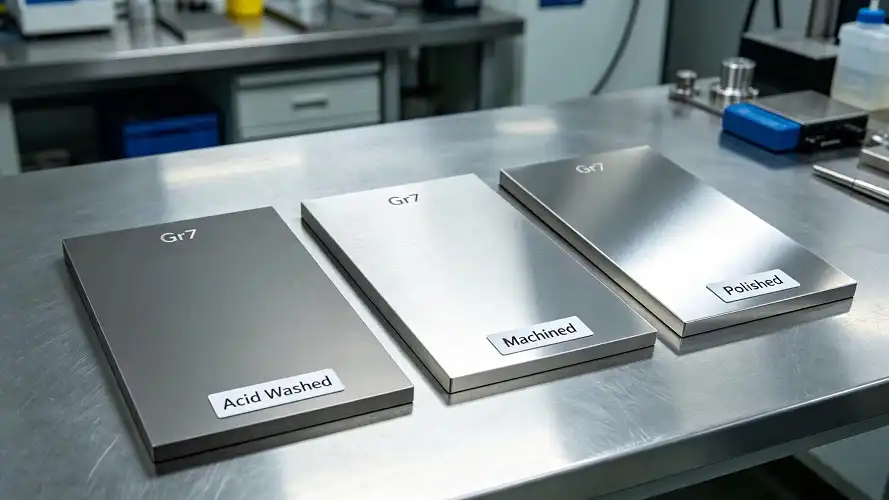
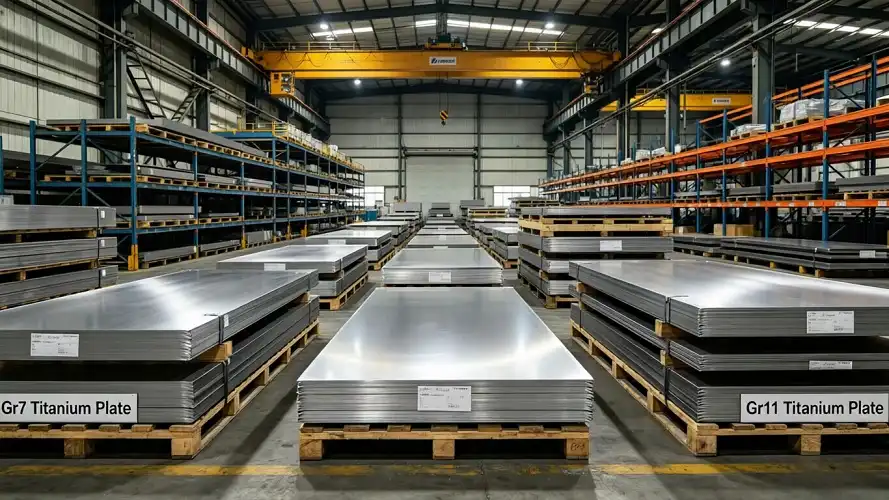
The standard sizes for plates are between 4 mm and 80 mm thick, 950 mm to 2500 mm wide, and up to 10,000 mm long. Custom size lets buying teams make the best use of materials and cut down on waste by meeting the needs of each project. Surface processes include acid-pickled, machined, and polished finishes, each of which is best for a different set of uses and looks.
Benefits and Applications of Grade 7 Titanium Plate
Superior Corrosion Resistance in Harsh Environments
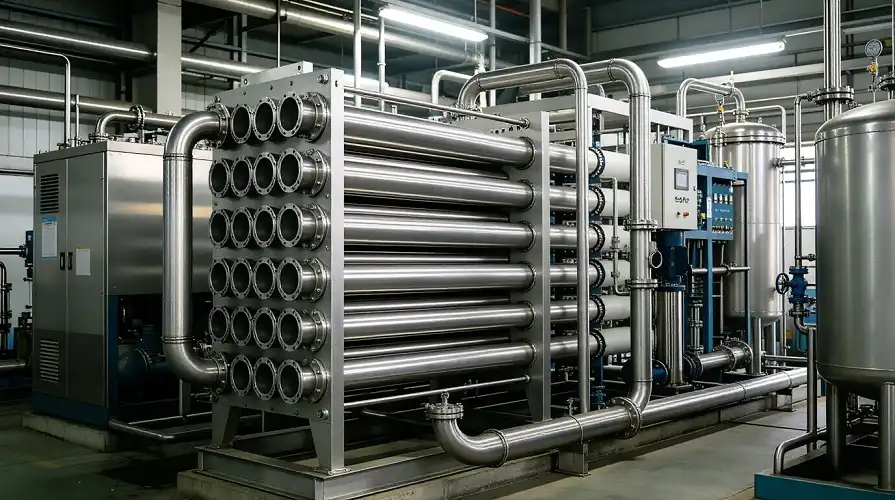
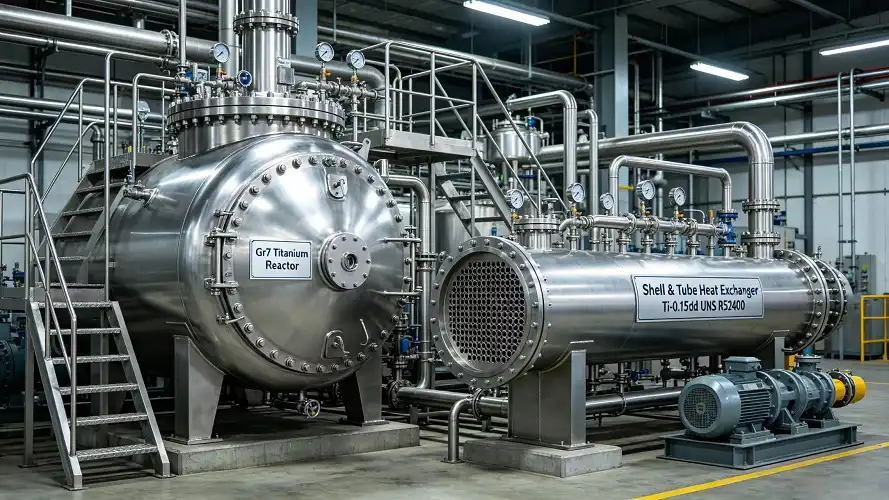
The palladium-enhanced oxide film on Grade 7 titanium plate protects against localised rust modes better than anything else. This material is used for reactor vessels, storage tanks, and shell-and-tube heat exchangers in chemical processing plants that work with weak sulphuric and hydrochloric acids. The plate stops crevice rust under seals and surfaces that are always wet, which are types of failure that damage equipment and cause expensive downtime.
Grade 7 is used in flash distillation chambers and brine heaters at desalination plants, where the temperature is higher than what is safe for standard titanium. The substance can handle small cracks and high levels of salt that would normally cause localised damage in Grade 2. This reliability makes equipment last longer and requires less maintenance, which saves a lot of money over its lifetime.
Industrial Applications Driving Demand
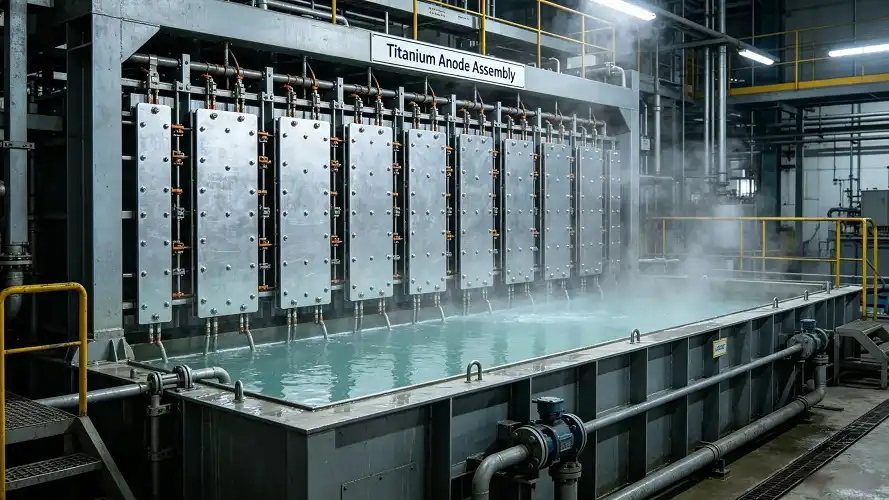
In hydrometallurgical processes, Grade 7 is used as a base for Dimensionally Stable Anodes in electrolytic cells. The highly acidic anolyte environment needs materials that maintain their electrical conductivity without breaking down the substrate. This use shows that the plate can work in harsh electrical conditions, where the choice of material has a direct effect on how well it works.
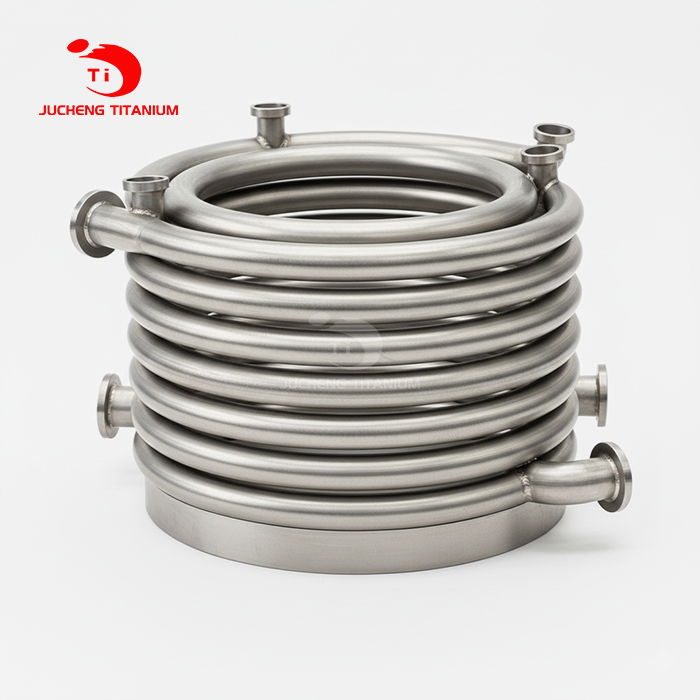
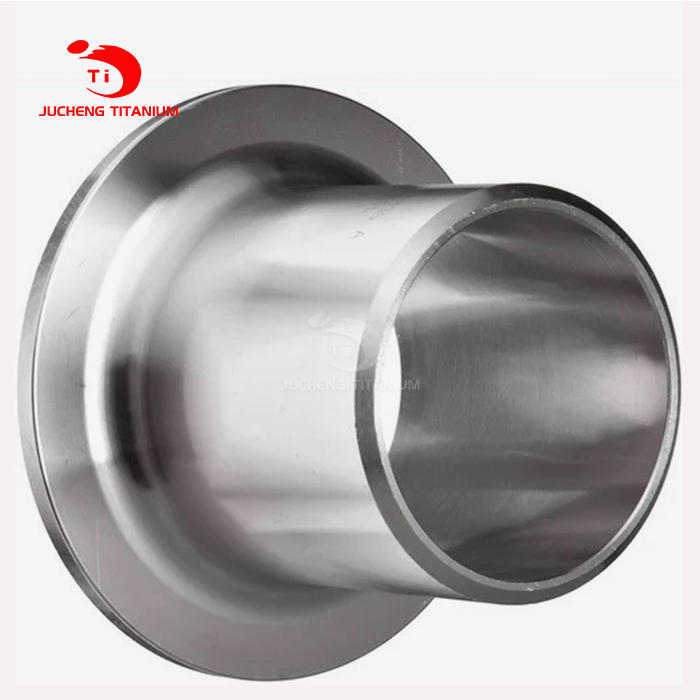
Manufacturers of chemical equipment use Grade 7 for reaction chambers, pressure vessels, and piping systems that work with corrosive media. Biocompatibility also lets it be used in medical equipment where material leaching can't change the quality of the product. In aerospace, it's used for things like ducting and structural parts that are exposed to corrosive fluids or salt spray. The ability to reduce weight and resist corrosion improves the performance of aircraft.
Strength-to-Weight Advantages
The high ratio of strength to weight lets engineers make structures that are lighter without lowering safety standards. Manufacturers of equipment lower the loads and support structures needed for a project, which lowers the total cost of the project. It becomes easier to move and set up big heat exchangers and pressure vessels that would be too heavy to move or place in stainless steel or nickel alloys.
Grade 7 Titanium Plate vs. Other Materials: Making an Informed Choice
Comparison with Other Titanium Grades
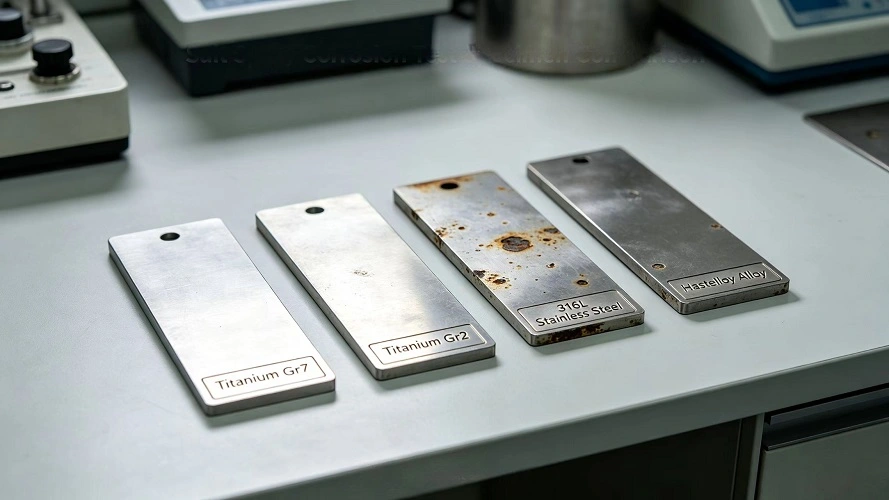
Grade 2 titanium is better at resisting rust in general and costs less. It can be used in oceans and oxidising acids. But it can't be used in many situations because it corrodes easily in hot chloride solutions and reducing acids. Grade 7 titanium plate makes titanium useful in these tough conditions, and the higher price is worth it because it is more reliable and doesn't need to be replaced as often.
Grade 7 versus Stainless Steel and Nickel Alloys
Even though stainless steel is cheap, it cracks and pits in chemical and marine environments because of stress corrosion caused by chloride. Grade 7 costs more at first, but it lasts longer and needs less upkeep, so it's worth it. The reliability of Grade 7 is a smart investment because the costs of downtime for equipment are often much higher than the costs of materials.
Nickel metals, such as Hastelloy, are very resistant to rust, but they are much more expensive and heavier. In many situations, Grade 7 works just as well as Grade 2 but costs a lot less. The lighter weight makes it easier to handle during manufacturing and installation, and lowers the amount of support that is needed.
Cost Considerations and Lifecycle Value
When buying something, the total cost of ownership, not just the initial price, needs to be taken into account. Because Grade 7 doesn't rust, defensive coats aren't needed. This means that inspections happen less often and replacements happen less often. Chemical processing plants say that their equipment lasts longer than twenty years in situations where stainless steel would break in five. When you add up these practical savings with lower insurance and safety event costs, you get a strong case for economic value.
Procurement Guide: How to Buy Grade 7 Titanium Plate
Identifying Qualified Suppliers
To get a grade 7 titanium plate, you need to work with makers who have the right certifications and a history of success in the field. Suppliers should give test certificates for materials that meet EN 10204 3.1 standards. These certificates should include details about chemical analysis, mechanical testing, and heat treatment settings. Ultrasonic testing according to AMS 2631 or ASTM B548 makes sure that there are no internal flaws that could affect performance.
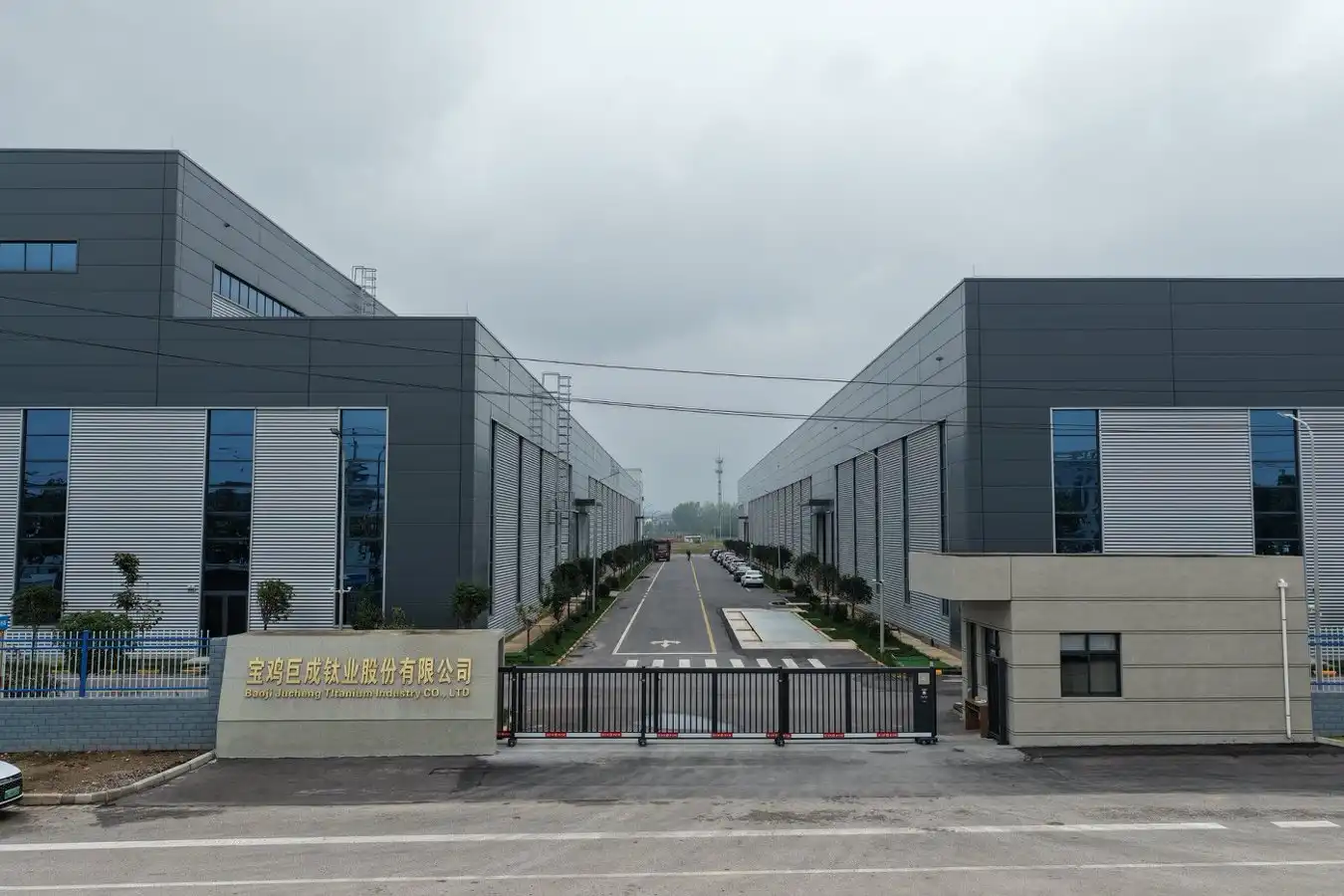
The production skills of Baoji Jucheng Titanium Industry Co., Ltd. are excellent. The company has been specialising in titanium materials, tools, and handling for more than twenty years. They keep a large inventory (about 3,000 tonnes), which lets them deliver quickly for important projects. They can make more than 500 sets of titanium equipment every year, such as heat exchangers, reactors, and air coolers that are used in many different industries.
Evaluating Technical Capabilities
Check to see what kind of engineering help and customisation options are possible for providers. Fabricators who know how materials behave when they are shaped, welded, and heated are needed for complicated jobs. When it comes to tough applications, suppliers with in-house R&D teams or partnerships with research institutions can really help.
Jucheng Titanium has forty-one utility model patents and four idea patents, which shows that they are always coming up with new ways to handle titanium. Working with the Northwest Institute for Nonferrous Metal Research and other top universities gives them access to the latest information on materials. This level of technical depth makes it possible to make custom solutions that meet specific needs and performance standards.
Pricing Dynamics and Order Optimization
Material costs are based on the prices of raw materials, how hard the process is, and how many items are ordered. Volume discounts are usually available for bigger purchases, but the costs of keeping inventory must be weighed against the savings from buying in bulk. Custom sizes and finishes on the surface cost more to process, but they get rid of waste from machining at the fabrication facility.
Ask for thorough quotes that include certifications for the materials, tolerances for size, quality of the surface finish, and shipping terms. Make sure you know if the prices include shipping, security, and packaging to your location. Knowing the full cost structure keeps you on budget and lets you plan your project's finances correctly.
Logistics and Lead Times
Standard plate sizes from stock can be shipped within days, but special specs take anywhere from four to eight weeks to make, based on how complicated they are. When shipping goods internationally, there are extra things to think about, like export paperwork, clearing customs, and making plans for goods delivery.
Reliable suppliers keep clear lines of communication open throughout the entire procurement process. They give updates on production and let buyers know ahead of time about any possible delays. Supply chain problems can't throw off project schedules if clear delivery expectations are set and backup plans are made.
Why Trusted Suppliers and Brands Matter
Certification and Quality Assurance
The success of a material relies on strict quality control during production. Suppliers that use ISO quality management systems have written methods that control the quality of the raw materials, the process factors, and the end inspection standards. This methodical technique makes sure that every grade 7 titanium plate meets the requirements of the standard and works as expected in service.
Reliable makers give a lot of paperwork, like mill test reports, non-destructive test results, and records of where the materials came from. This paperwork helps with regulatory compliance and customer quality systems. It's especially important for aircraft and pharmaceutical uses that have strict material approval standards.
Technical Support and Engineering Collaboration
When designing and choosing materials for complex applications, it helps to have technical knowledge from the supplier. Manufacturers with a lot of experience can help you choose the right plate thickness, surface treatment, and fabrication methods to maintain corrosion resistance. This way of working together lowers the risk of the project and speeds up the time it takes to get new equipment ideas to market.
The technical research and development (R&D) team and quality inspection staff at Jucheng Titanium are always available to help customers. Their work in aircraft, marine, medical, chemical, food, and biomedicine uses gives them important cross-industry knowledge that helps them solve hard material problems. This wide range of application knowledge helps clients avoid common problems and make designs work better.
Long-Term Partnership Value
Building relationships with dependable suppliers has benefits that go beyond individual transactions. With consistent quality and quick service, the buying process can be sped up, and inspections can be cut down. When suppliers know your specifications and quality standards, they can give you more reliable results, which lowers the cost of managing the project.
Long-term relationships make it easier to plan for capacity and keep track of supplies. If your suppliers know about your business cycles, they can set up production lines and keep your goods in smart places that meet your needs. This partnership makes the supply line more stable and guards against changes in the market.
Conclusion
grade 7 titanium plate has been shown to work well in acidic conditions, where the choice of material has a big effect on how well the equipment works and how much it costs to run. The palladium-enhanced composition is better at resisting crevice rust and acidic attack while still being easy to shape and having a modest level of strength. The fact that the material is used in aircraft, chemical processing, electrolysis, and hydrometallurgy shows how useful and flexible it is across many industries. To do good procurement, you need to work with qualified providers who can provide full expert help, strong quality systems, and reliable delivery performance. From an economic point of view, Grade 7 is more cost-effective because it lasts longer, needs less maintenance, and is more reliable in the workplace.
FAQ
1. Is Grade 7 titanium stronger than stainless steel?
Grade 7 titanium has about the same tensile strength as austenitic stainless steels like 316L, but it is more resistant to corrosion in acidic and chloride-filled environments. The main benefit is that its specific strength (strength per unit weight) is about 40% higher than stainless steel, which lets structural designs be lighter.
2. Can Grade 7 titanium withstand marine environments?
Grade 7 works great in marine settings, especially where the water is hot and moving quickly. Adding palladium stops corrosion in cracks under seals, bolts, and deposits, places where regular titanium grades might have localised attack. This feature is important for keeping equipment in good shape at desalination plants and remote bases.
3. What lead times should we expect for custom-sized plates?
Shipments of standard sizes from stock usually arrive in one to two weeks. Custom specifications take between four and eight weeks to make, based on the thickness, size, and number. Suppliers with large stock levels, like Jucheng Titanium, can often speed up delivery for pressing needs thanks to their 3,000-ton inventory capacity.
Partner with Jucheng Titanium for Your Grade 7 Titanium Plate Requirements
Jucheng Titanium is a reliable source for Grade 7 titanium plates. They have been helping companies make aerospace, chemical processing, and manufacturing tools for more than twenty years. We keep a large inventory of all grades of titanium in our 120,000-square-meter facility, so we can quickly meet your purchasing needs. We offer approved products that meet ASTM B265 and other international standards because we are a National High-Tech Enterprise and a specialised "little giant" business. Our engineering team creates unique solutions, from precise cutting to making whole pieces of equipment. These are backed by strict quality control and full support after the sale. Send us an email at s4@juchengti.com to talk about your needs and get a full quote. We want procurement managers and engineers to see how our dedication to quality, technical excellence, and customer happiness has led to 30%+ yearly growth and marketplaces at the top of our industry.
References
1. ASM International. (2015). Titanium: A Technical Guide, 2nd Edition. Materials Park, OH: ASM International.
2. Schutz, R.W. and Thomas, D.E. (1987). "Corrosion of Titanium and Titanium Alloys." Metals Handbook, 9th Edition, Volume 13: Corrosion. ASM International.
3. ASTM International. (2020). ASTM B265-20: Standard Specification for Titanium and Titanium Alloy Strip, Sheet, and Plate. West Conshohocken, PA.
4. Boyer, R., Welsch, G., and Collings, E.W. (1994). Materials Properties Handbook: Titanium Alloys. ASM International.
5. Donachie, M.J. (2000). Titanium: A Technical Guide, 2nd Edition. Materials Park, OH: ASM International.
6. Cotton, J.D. and Briggs, R.D. (2010). "Titanium Alloys for Marine Applications." Advanced Materials & Processes, Volume 168, Issue 5, pp. 26-31.