
The Properties and Advantages of Titanium Seamless Pipe
Titanium seamless pipe is a reliable option for industrial applications that require pipe systems that can withstand extreme conditions without failing. Precision procedures like extrusion and piercing create seamless pipes. This structure removes welded pipe weak areas, improving consistency and dependability. Due to its corrosion resistance and strength-to-weight ratio, Jucheng Titanium has seen steady demand in chemical processing and aircraft. We understand what procurement experts require when obtaining materials that must meet performance and certification standards, with over 20 years of production expertise and 3,000 tons of titanium inventory.
Understanding Titanium Seamless Pipes
What Defines Seamless Titanium Tubing
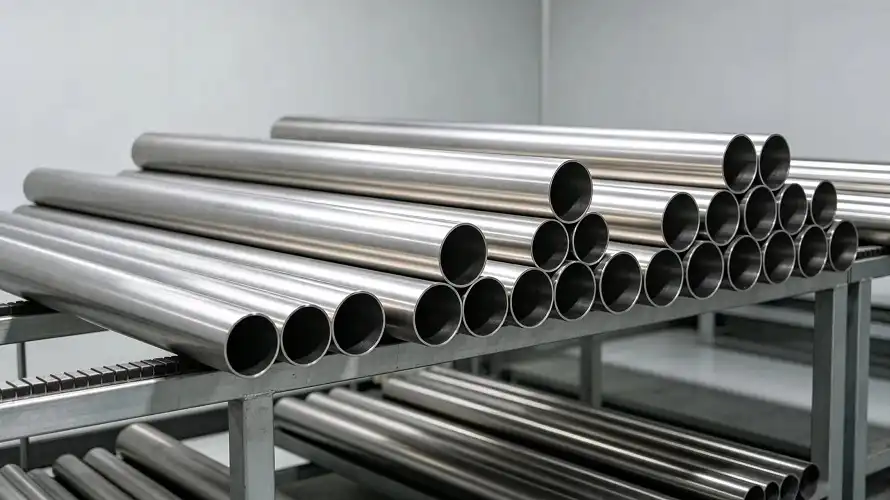
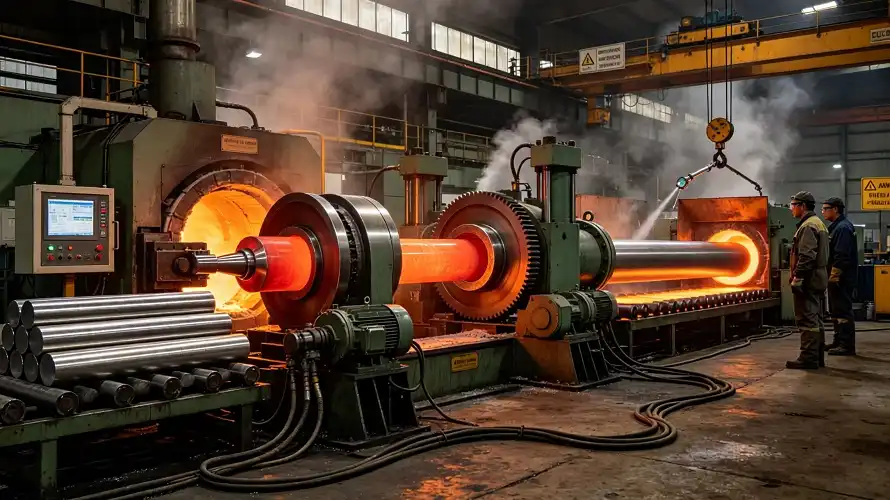
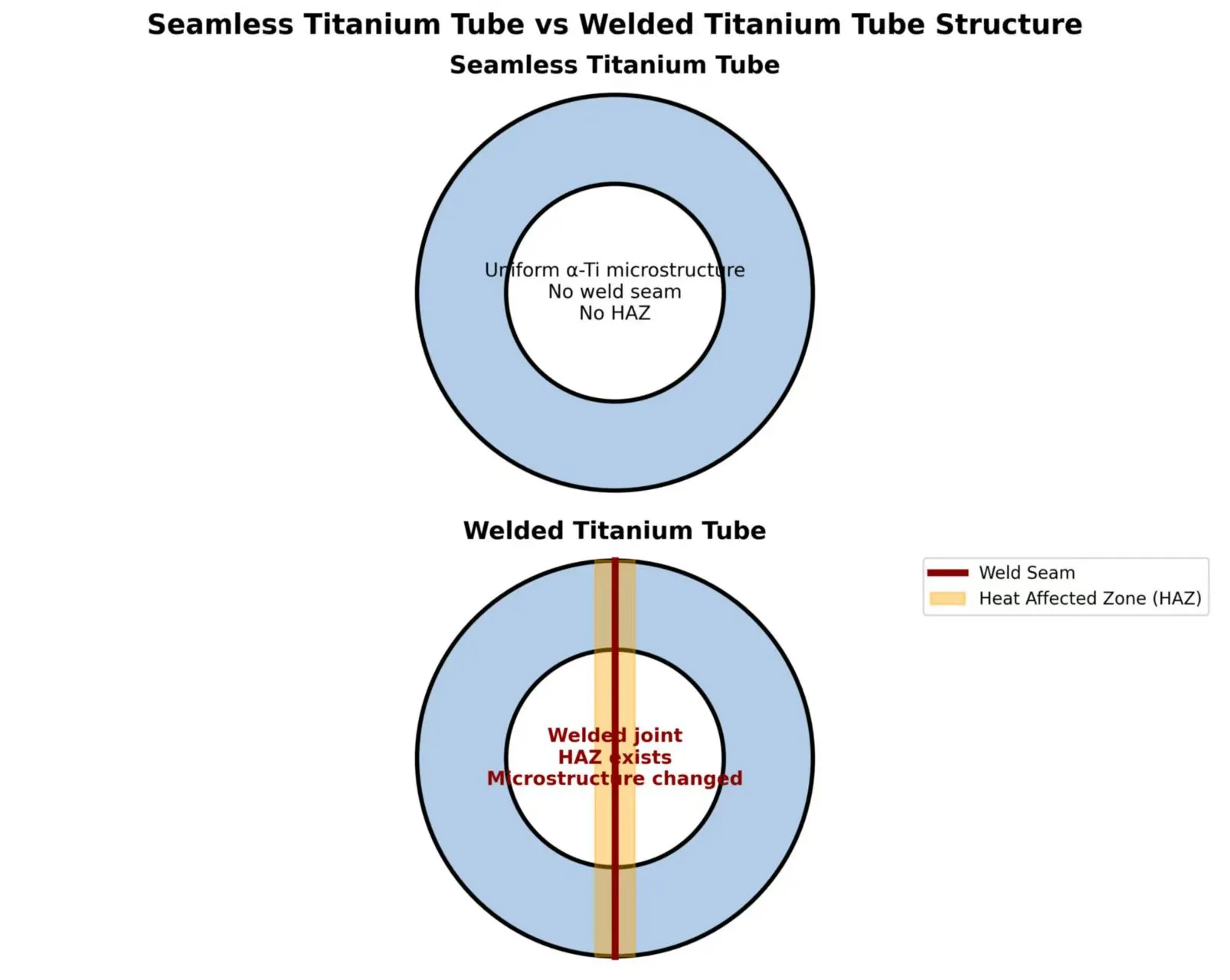
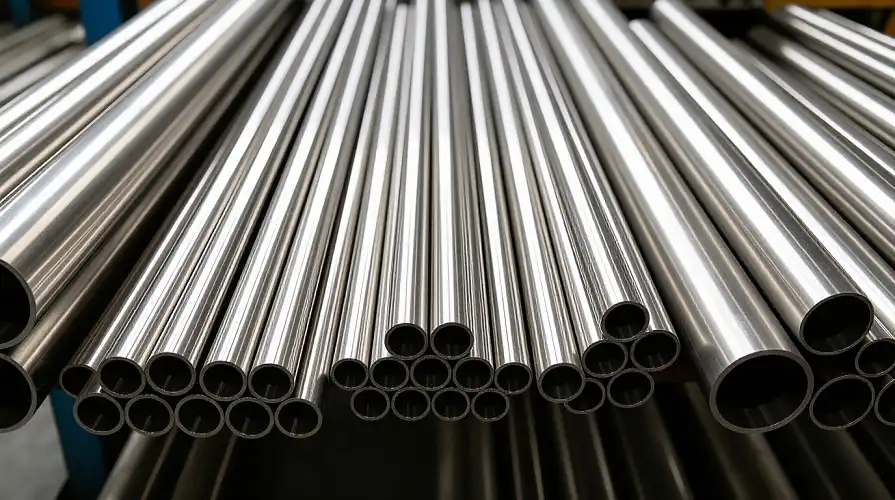
Titanium seamless pipes are hollow cylindrical components without longitudinal or spiral welds. Titanium billets are heated and extruded or pierced by spinning rolls to generate hollow shapes. The Heat Affected Zone in welded alternatives is eliminated, guaranteeing uniform metallurgical qualities across the pipe wall. The elimination of seams improves pressure retention, making these pipes ideal for situations where joint efficiency issues would lower performance ratings.
Manufacturing Process and Quality Standards
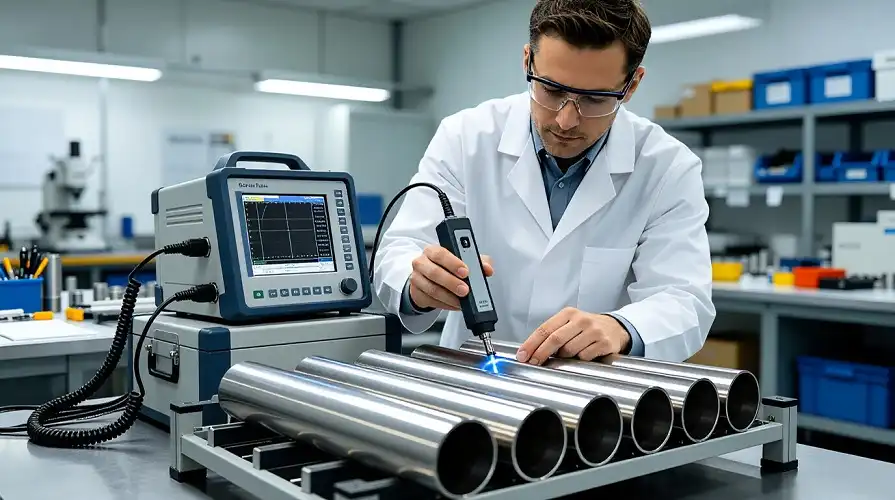
Titanium billets with regulated chemical compositions start production. Pipes are cold-rolled after extrusion or piercing for exact dimensions. Internal stresses are relieved by annealing, restoring ductility. Pickling eliminates surface oxides, straightening aligns. Each batch is meticulously inspected. Ultrasonic testing finds internal discontinuities, Eddy Current testing finds surface faults, and hydrostatic testing checks pressure integrity at 1.5 times working pressure. Laser micrometers verify outside diameter, wall thickness, and ovality meet ASTM B338, B861, and ASME SB338 standards. Material traceability and certification compliance for aerospace and medical applications are ensured by this multi-stage verification.
Titanium Grade Selection
Material choice depends on the application. Commercial Pure grades differ in strength and formability.
Grade 1 has maximum ductility and tensile strength of approximately 240 MPa, making it appropriate for difficult forming and deep-drawing applications that need corrosion resistance. Grade 2 is the industrial standard for heat exchangers and chemical processing equipment due to its moderate strength (345 MPa), formability, and corrosion resistance. Grade 5 (Ti-6Al-4V alloy) is ideal for aircraft structural components and high-stress hydraulic systems that need weight reduction due to its 895 MPa tensile strength and 828 MPa yield strength. Grade 7 has palladium for protection against reducing acids, whereas Grade 9 (Ti-3Al-2.5V) is ideal for tube hydraulic pressure resistance. Grade 12 is cost-effective and corrosion-resistant in harsh chemical conditions.
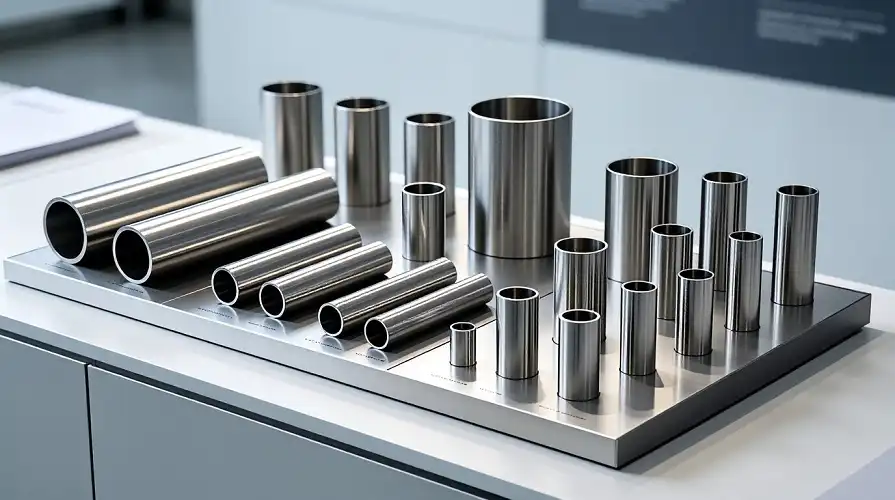
Understanding these characteristics helps procurement teams choose grades that meet operational and budget needs. Jucheng Titanium stocks grades with outer diameters from 3mm to 219mm and wall thicknesses from 0.5mm to 20mm, with customization possible for non-standard measurements.
Key Properties of Titanium Seamless Pipes
Exceptional Corrosion Resistance
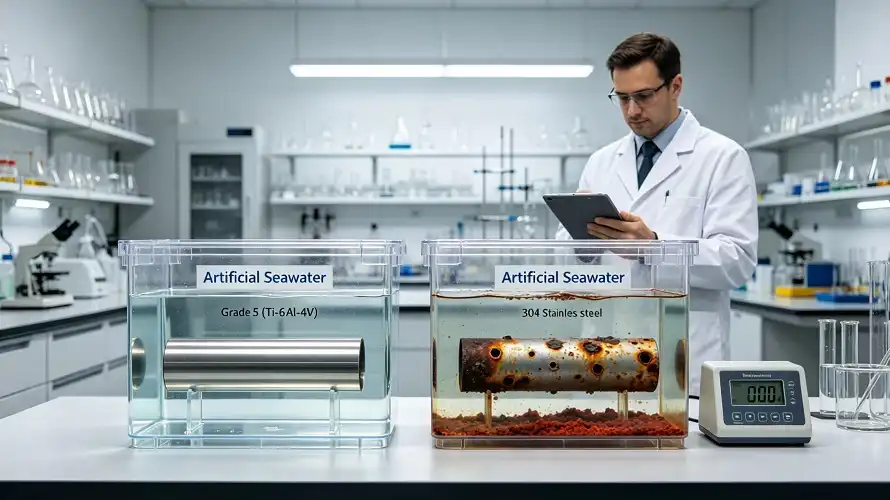
In situations that rapidly deteriorate, other materials rapidly deteriorate; titanium seamless pipe systems are corrosion-resistant. A persistent, tenacious oxide coating develops spontaneously on titanium surfaces when exposed to oxygen or moisture. Damaged passive layer regenerates quickly, protecting against general corrosion, pitting, crevice corrosion, and stress corrosion cracking. Titanium resists saltwater, moist chlorine gas, chloride solutions, nitric acid, chromic acid, and hypochlorite bleaching chemicals better than stainless steels or copper-nickel alloys. Material selection is economically crucial in offshore platforms, desalination plants, chemical reactors, and marine heat exchangers due to replacement costs and downtime penalties.
Mechanical Strength and Temperature Performance
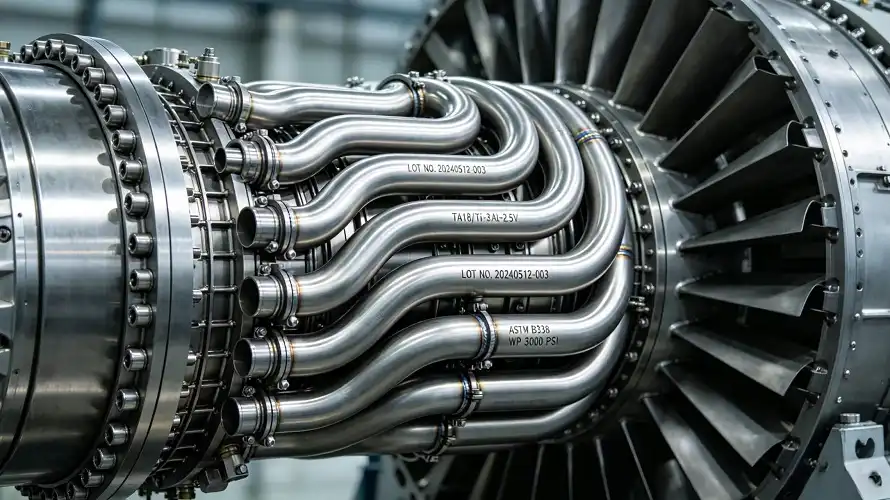
Titanium seamless pipe has outstanding mechanical qualities despite having a density of only 4.51 g/cm³—approximately 60% that of steel. Commercially Pure Grade 2 has 345 MPa tensile strength and outstanding cold forming ductility, whereas Grade 5 alloy has 895 MPa and 828 MPa yield strength. This high strength-to-weight ratio decreases aeronautical structural loads and facilitates installation. Titanium is structurally stable from cryogenic temperatures near absolute zero to 400°C. Liquefied gas systems, high-temperature chemical processes, and aircraft propulsion components benefit from thermal stability.
Lightweight Design Benefits
Titanium pipes weigh less than steel or nickel alloys of equal strength, saving 40-50% system weight. Aerospace applications benefit from every kilogram saved in fuel economy and cargo capacity. Installation logistics and foundation loading are simplified by lighter pipe systems offshore. Better manual handling during chemical plant maintenance improves worker safety and lowers installation costs.
Biocompatibility and Safety
The biological inertness of titanium makes it excellent for food processing, pharmaceutical manufacturing, and medicine. The substance does not taste or contaminate processing fluids, fulfilling strict hygiene standards. In dairy processing, beverage production, and biomedical device manufacture, where material purity is essential, corrosion resistance and this feature extend service life.
Advantages of Using Titanium Seamless Pipes
Superior Durability and Service Life
Titanium seamless pipe design avoids weld seam deterioration, the main pipe failure mode. No longitudinal or spiral welds imply no preferred corrosion paths, heat-affected zones with changed microstructures, or mechanical discontinuities where cracks can form. Due to structural homogeneity, operating pressure ratings are 20% greater than welded equivalents. In aggressive service environments, titanium seamless pipe demonstrates resistance to erosion-corrosion, impingement attack, and fatigue failure, extending operational life to 30-40 years with minimal maintenance, far exceeding the 10-15 year typical lifespan of stainless steel alternatives.
Long-Term Cost Efficiency
Titanium has higher initial material costs than stainless steel or carbon steel, but lifecycle economic analysis favors it in demanding applications. TCO reductions of 40-60% over 20-year project timeframes result from reduced replacement frequency, minimized corrosion allowances in design calculations, lower maintenance costs, and minimum unexpected downtime. Chemical facilities indicate that switching key services from stainless steel to titanium pipe reduces yearly replacement cycles and output losses. Titanium piping reduces corrosion-related platform shutdowns, saving offshore operators money.
Application-Specific Performance Gains
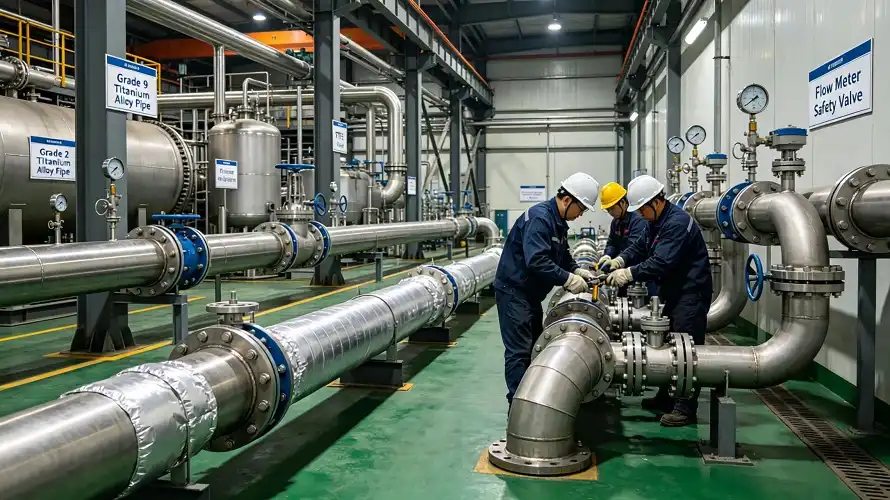
Different sectors benefit from the deployment of titanium seamless pipes. Cryogenic fuel systems, higher pneumatic systems, and weight reductions boost aircraft efficiency, which aerospace manufacturers appreciate. Chemical processors use titanium chloride's stress corrosion cracking and pitting resistance in process streams where stainless steel fails consistently. Power plants use titanium condenser tubing to prevent high-velocity cooling water erosion and copper contamination of boiler feedwater. Medical device makers use titanium's biocompatibility and sterilization tolerance for implanted fluid administration. Knowing where titanium excels allows for smart purchase decisions that boost project success.
Titanium Seamless Pipe vs Other Pipe Materials
Comparison with Stainless Steel
Traditional stainless steel pipe for corrosive applications has limitations compared to titanium seamless pipes. Whatever alloy grade, austenitic stainless steels can stress corrosion fracture in chloride-containing conditions over 60°C. Titanium is immune to all temperatures. Seawater applications show that stainless steel requires duplex grades or higher nickel alloys to survive, whereas commercially pure titanium Grade 2 lasts decades. Titanium systems are 40% lighter than stainless steel, simplifying installation and lowering structural support.
Seamless versus Welded Construction
Welded titanium pipe is cheaper but has a joint efficiency factor that lowers operating pressure by 15-20%. Heat-affected zones with changed grain structures after welding may have different corrosion properties than the base material. Quality assurance gets more complicated with radiography and pressure testing of every welded junction. Seamless construction avoids these issues and provides pipe body uniformity. Seamless pipe dependability justifies the cost premium for high-pressure hydraulic systems, subsea applications, and crucial chemical processes with severe failure implications.
Alternative Alloy Comparisons
Nickel-based alloys like Inconel have outstanding corrosion resistance and high-temperature strength, but a density approaching that of steel and prices exceeding those of titanium in many grades. Carbon steel with corrosion allowances is cost-effective for benign services but increases weight and maintenance. Copper-nickel alloys resist biofouling in marine applications but erode and corrode in high-velocity flows and cause copper contamination. Titanium's corrosion immunity, strength-to-weight ratio, and temperature performance make it valuable in demanding applications where other materials sacrifice performance.
Procurement Insights for Titanium Seamless Pipes
Supplier Selection Criteria
Certifying titanium suppliers involves many key competencies. ISO 9001 accreditation proves quality management system maturity, whereas ASTM, ASME, and AMS product certifications prove manufacturing expertise. Every shipment requires material test reports with chemical composition, mechanical property, and non-destructive inspection results traceable to heat numbers. Titanium processing businesses with decades of expertise understand the material's specific properties and processing needs. Suppliers differ in after-sales technical assistance, especially for specialized manufacturing projects requiring engineering collaboration.
Understanding Pricing Dynamics
Titanium seamless pipe prices go beyond material costs. Commercially pure grades cost less than Grade 5 high-strength alloys. Smaller diameters and thinner walls need specialist tooling and higher prices. Global titanium prices depend on aerospace demand cycles. Bulk orders get quantity savings and better terms. Supplier and product specifications determine minimum order quantities, making inventory planning crucial for procurement cost control.
Logistics and Delivery Considerations
Standard titanium seamless pipe takes 4-8 weeks, while sophisticated bespoke requirements might take 12-16 weeks. By stocking 3,000 tons of various grades and dimensions, Jucheng Titanium eliminates supply chain risks. International transportation requires wooden containers or protective covering for maritime freight to prevent surface damage. Material certificates, country of origin declarations, and compliance statements are required for aeronautical and medical imports under regulatory control.
Customization and Compliance
Many applications require custom dimensions or finishes. Some providers offer full outside diameter, wall thickness, and length customization. Polishing, machining, and acid pickling customize pipes for applications, with bright annealed finishes for hygiene and machined surfaces for precise fittings. In aerospace and medicine, controlled-condition materials with quality systems are essential for regulatory compliance. Supplier expertise with industry standards—AMS for aircraft, FDA for medical devices—speeds acceptance and certification.
Conclusion
In applications that need corrosion resistance, strength-to-weight ratio, and long-term dependability, titanium seamless pipes excel. Titanium's intrinsic characteristics and seamless construction eliminate weld-related failure mechanisms, benefiting aerospace, chemical processing, medicinal, and industrial industries. Lifecycle economic analysis shows total cost savings from prolonged service life, decreased maintenance, and avoided replacement cycles, even while beginning prices exceed alternatives. Procurement experts choosing titanium seamless pipes must assess supplier credentials, grade-specific features, and standards compliance. Titanium pipe systems operate for decades without failure in the harshest service settings with correct material selection and supplier relationships.
FAQ
Q1: What distinguishes titanium seamless pipe from welded alternatives?
Continuous hollow shapes without longitudinal or spiral welds are extruded or pierced to make titanium seamless pipes. The heat-affected zones and probable failure spots of welded construction are eliminated. Since there is no joint efficiency derating factor, seamless pipes can tolerate 20% greater operating pressures. High-pressure hydraulic systems, aerospace applications, and crucial chemical processes that require dependability prefer them because of their pipe wall mechanical property consistency and corrosion resistance.
Q2: Which titanium grade suits aerospace applications best?
Grade 5 (Ti-6Al-4V) is best for aircraft structural applications due to its strength-to-weight balance, tensile strength of 895 MPa, and yield strength of 828 MPa at 40% lower density than steel. For dynamic loading, this alpha-beta alloy has outstanding fatigue resistance and mechanical characteristics throughout wide temperature ranges. The aerospace industry standard for high-stress applications, where weight reduction increases fuel economy and payload capacity, is its proven performance in aircraft hydraulic systems, structural tubes, and engine components.
Q3: How does titanium's corrosion resistance compare to stainless steel's?
Titanium's stable, self-healing oxide coating protects against general corrosion, pitting, crevice corrosion, and stress corrosion cracking better than stainless steel. Stainless steel pits and cracks in chloride conditions like saltwater, chemical processing streams, and desalination systems, whereas titanium does not. This corrosion advantage improves service life by 2-3 times over high-grade stainless steels, eliminating corrosion allowances in design calculations and decreasing system maintenance.
Partner with Jucheng Titanium for Premium Seamless Pipe Solutions
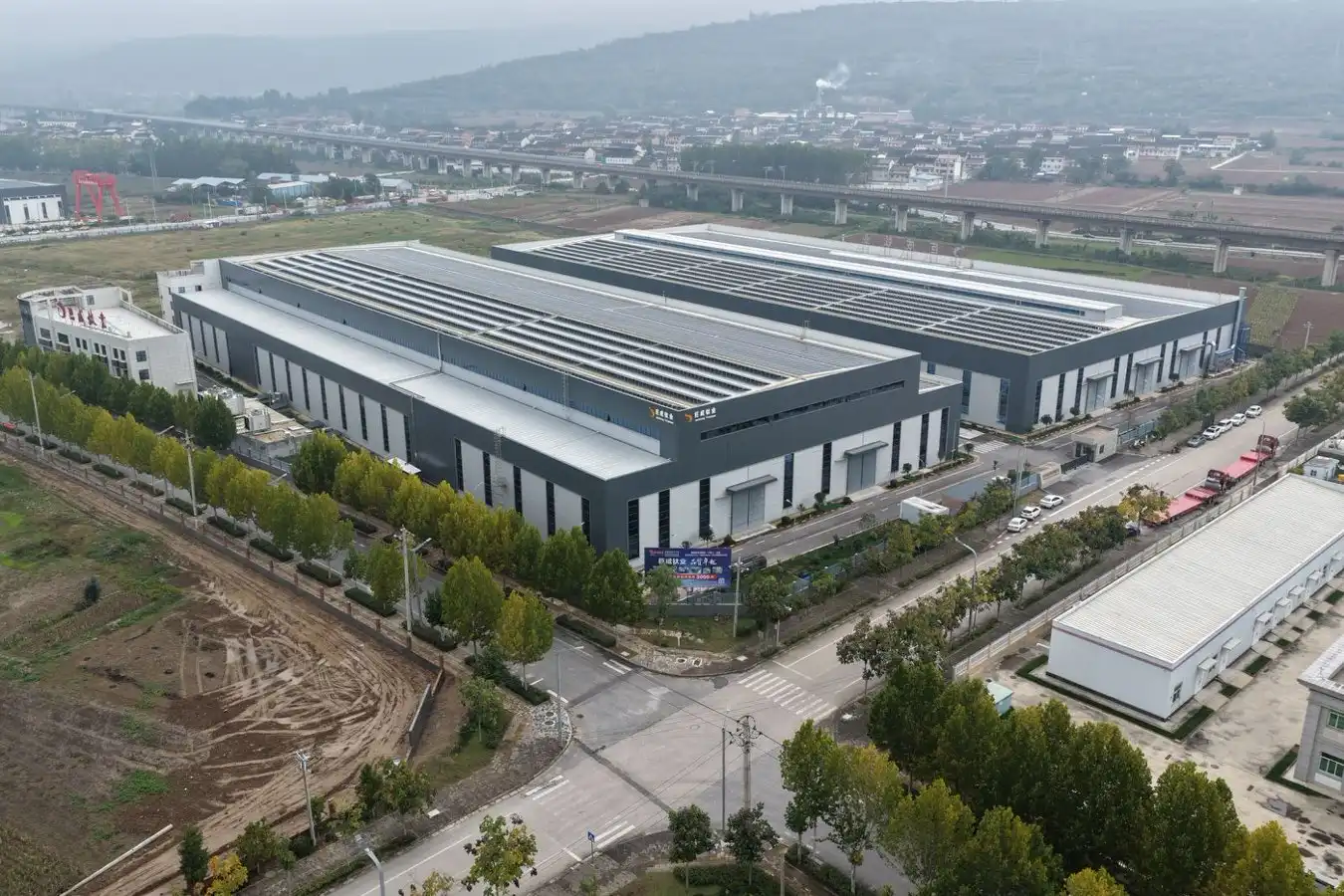
Baoji Jucheng Titanium Industry Co., Ltd. serves worldwide procurement experts seeking trusted titanium seamless pipe suppliers with over 20 years of specialized production expertise and extensive technical skills. Our bespoke fabrication services meet unusual needs with outer diameters from 3mm to 219mm and wall thicknesses from 0.5mm to 20mm. Our 3,000-ton inventory of Grades 1, 2, 5, 7, 9, and 12 allows timely delivery of standard dimensions. Complete material certifications and non-destructive testing paperwork accompany every pipe meeting ASTM B338, B861, and ASME SB338 requirements. Our engineering staff helps you choose grades and specifications for aeronautical, chemical, and industrial components. Contact our technical professionals at s4@juchengti.com to discuss your project needs and see how our quality assurance, low pricing, and after-sales support benefit your supply chain.
References
1. American Society for Testing and Materials. "Standard Specification for Seamless and Welded Titanium and Titanium Alloy Pipe." ASTM B337/B338-21, West Conshohocken, PA, 2021.
2. Boyer, R., Welsch, G., and Collings, E.W. "Materials Properties Handbook: Titanium Alloys." ASM International, Materials Park, OH, 1994.
3. Donachie, Matthew J. "Titanium: A Technical Guide, 2nd Edition." ASM International, Materials Park, OH, 2000.
4. Schutz, R.W. and Thomas, D.E. "Corrosion of Titanium and Titanium Alloys." In Corrosion: Fundamentals, Testing, and Protection, Vol. 13A, ASM Handbook, ASM International, 2003.
5. American Society of Mechanical Engineers. "Specification for Seamless and Welded Titanium and Titanium Alloy Tubes for Condensers and Heat Exchangers." ASME SB-338, New York, NY, 2020.
6. Peters, M., Kumpfert, J., Taylor, C.H., and Leyens, C. "Titanium Alloys for Aerospace Applications." Advanced Engineering Materials, Vol. 5, No. 6, 2003.