
A Complete Guide on Titanium CP Grade Rods
Commercially Pure titanium rods, or CP titanium rods, are important for modern industry and engineering. Because they don't rust, are biocompatible, and are strong for their weight, these rods are important for use in aircraft, chemical processing, medical device production, and maritime settings. If engineers and purchasing managers know about widely pure titanium types, their mechanical properties, and how to get them, they can safely balance performance and budget. This book has a lot of information about CP grade titanium rods, including differences in chemicals, how they are made, where to get them, and what they are used for.
Understanding CP Titanium Rods: Composition, Grades, and Specifications
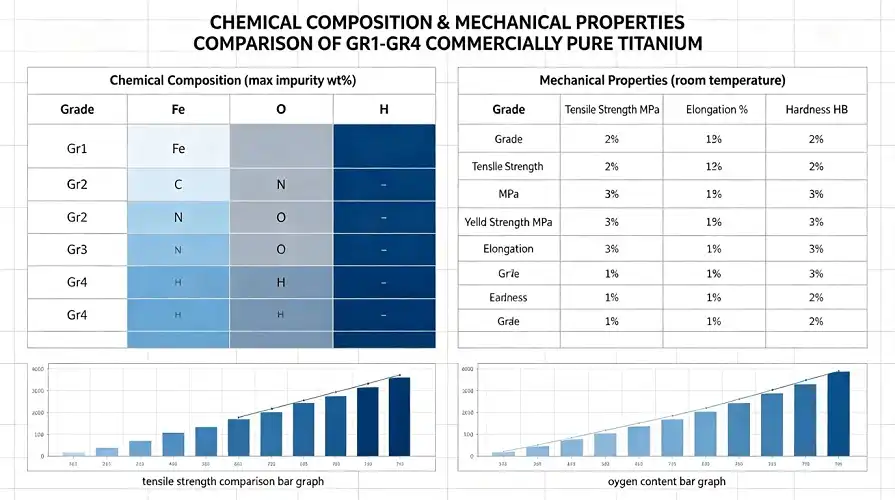
There are four types of commercially pure titanium bars based on their oxygen level and mechanical properties. These are Grade 1, Grade 2, Grade 3, and Grade 4. Global unalloyed titanium goods are based on these types.
What Defines Each CP Titanium Grade
Grade 1 titanium bars have the least amount of oxygen (less than 0.18%), which makes them the most flexible and easiest to shape. This grade is great for cold-working parts of heat exchangers in chemical plants. Grade 2 titanium is the most commonly used economically pure titanium. It has 0.25% oxygen and is strong and resistant to rust. It is used in systems for purification, processing chemicals, and building parts. Grade 3 increases the oxygen level to 0.35%, which makes the material stronger and easier to shape. With oxygen levels close to 0.40%, Grade 4 titanium is the hardest unalloyed titanium. It has the same tensile strength as some titanium alloys while still being resistant to rust.
Manufacturing Standards and Specifications
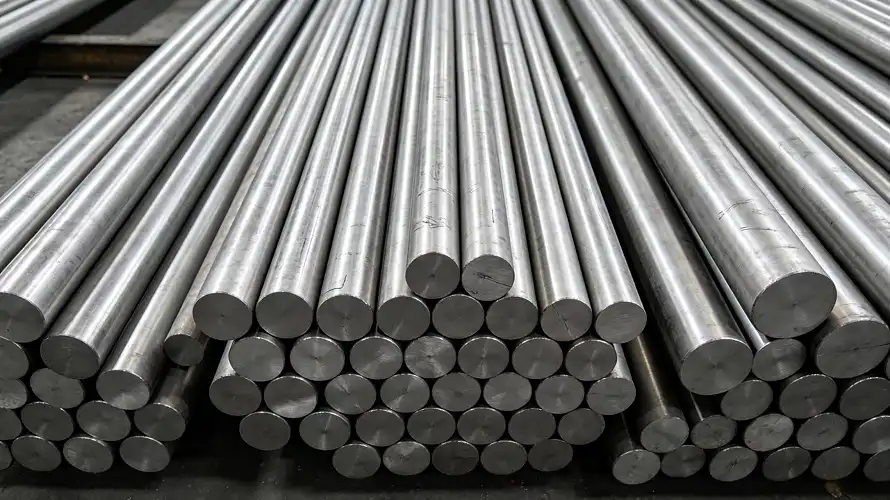
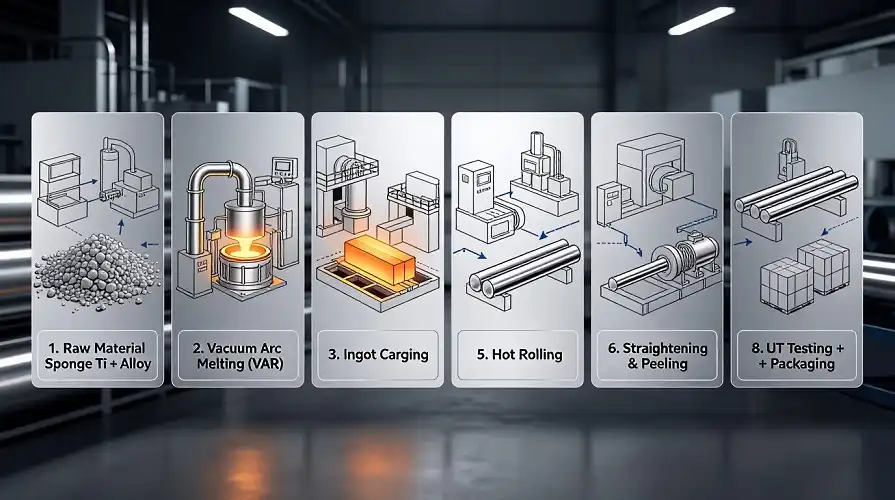
CP titanium rods are made to meet strict international standards like ISO 5832-3, ASTM B348, and ASME SB348. These factors include the chemical makeup, the mechanical properties, the range of sizes allowed, and tests. First, vacuum freezing cleans up the spaces between the grains, and then shaping smooths out the structure of the grains. By hot rolling or rotating forging, widths can range from 6 mm to 450 mm, and lengths can be standard up to 6000 mm or custom up to 12000 mm. Straightening keeps the shape of the shape, and centerless grinding or exact turning gives the most accurate measurements. Rods can be made ready for specific uses by polishing, pickling, sanding, and turning them. Annealing makes them more flexible and easier to work with.
Mechanical Properties and Performance Characteristics
Tensile, yield, and extension are all affected by the oxygen difference in CP grades. With a tensile strength of over 240 MPa and a stretch of about 24%, Grade 1 can make complex shapes. Grade 2 has a tensile strength of 345 MPa and an elongation of 20%, so it can handle pressure tanks and pipe systems. The tensile strength of Grade 3 is 450 MPa and that of Grade 4 is 550 MPa, which is about the same as that of titanium alloys. All CP grades don't rust in oxidising or moderately reducing conditions, and passive oxide layers form on their own in most air and water settings. Commercially pure titanium is useful in medicinal, marine, and chemical processing settings where material breakdown poses safety risks because of how it is naturally preserved.
Comparing CP Titanium Rods with Other Materials: Making Informed Decisions
It is easier to choose the right material when you know how CP titanium rods stack up against titanium alloys, stainless steel, and other metals.
CP Titanium Versus Titanium Alloys
Because they have more aluminium and vanadium, Grade 5 titanium (Ti-6Al-4V) and Grade 23 (Ti-6Al-4V ELI), which are the most common titanium alloys, are stronger. The tensile strength of Grade 5 titanium is 900 MPa, which is about twice that of Grade 4 pure titanium. This is needed for aerospace structural parts and high-performance bolts. This edge in strength makes it less resistant to corrosion in some cases, especially when hydrogen or halides are present. Grade 23, the extra-low interstitial form, gives medical devices that need to be reliable mechanically more fracture toughness and ductility. If final tensile strength is not important for the design, commercially pure titanium bars are cheaper, don't rust, and are easy to shape. Chemical equipment makers choose CP types because the resistance to rust makes the material cost worth it without having to pay extra for alloy composition.
CP Titanium Compared to Stainless Steel
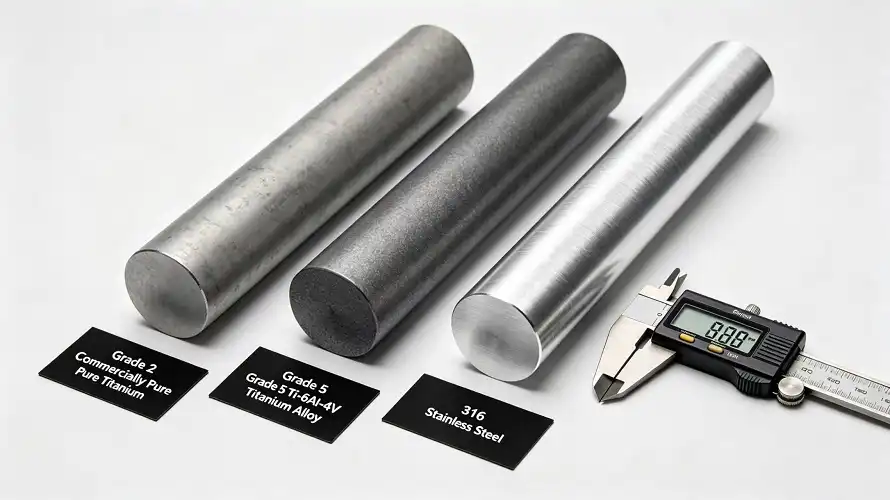
316L stainless steel and commercially pure titanium are put up against many toxic situations. Titanium's 60% density makes buildings, aeroplane parts, and personal gear lighter, even though stainless steel costs less at first. Titanium is better than stainless steel at resisting pitting and stress corrosion cracks in places where salt is present. Titanium is good for remote platforms, desalination plants, and marine exhaust systems because it doesn't react with saltwater. Stainless steel is good for heat transfer because it doesn't rust at temperatures above 400°C, and it conducts heat well. When making buying decisions, people shouldn't just look at the price of the materials; they should also think about how much it will cost over time to maintain, repair, and shut down.
Rod Forms Versus Other Titanium Product Shapes
Round bars made of titanium are not the same as sheets, plates, tubes, or wire. Rods are used to make shafts, bolts, valve parts, and other precise mechanical parts by turning, cutting, and milling. Solid cross-sections make structures stiffer and make it easier to remove material from difficult forms. Titanium strips can be bent, welded, and used to make large areas. Tubes save weight when used for building frames and moving fluids. Choosing the right material form and metal grade is easier when you know what the production needs are, how it will be loaded, and how it will be made.
Procurement Guide for CP Titanium Rods: Pricing, Suppliers, and Order Logistics
To buy CP titanium rods, you need to know how the market works, how to evaluate suppliers, and how to handle specifications.
Pricing Factors and Market Considerations
The cost of an industrial pure titanium rod relies on the raw materials used, how hard it is to make, its size, and the number of orders that are placed. It costs more for precision ground finishing, tight tolerances, and custom lengths than for standard sizes that have been annealed and have surfaces that have been turned. Prices on the market rely on how much titanium sponge is available, how much vacuum melting energy costs, and how much demand there is around the world. Load buyers get better unit prices when they sign long-term contracts and make sure all the specs are the same. Some providers let you make prototypes in small amounts, while others are more experienced with large production runs. The general landed price is affected by the cost of transporting heavy materials, especially for foreign packages that need special handling and paperwork.
Supplier Selection and Verification
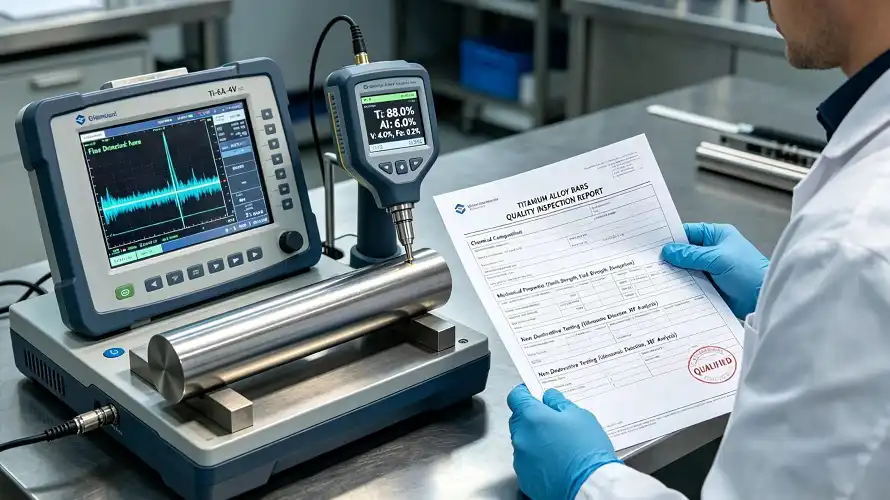
To find reliable providers, you need to look at how well they make things, maintain quality, and get them to you on time. AS9100, ISO 13485, and PED certifications are held by well-known makers. According to EN 10204 3.1, mill test papers show where the materials came from, what they are made of chemically, and the results of a mechanical test for each production lot. The AMS 2631 acoustic test finds internal gaps that could weaken the structure. Reliable sellers let you check out their facilities, keep records of the processes, and talk to you freely during the whole buying process. Professional companies stand out because they have problem-solving skills, client references, and a good name in the field. In addition to providing products, choosing materials, creating specifications, and application engineering all help to add value.
Logistics and Lead Time Management
It takes six to twelve weeks to make commercially pure titanium rods, based on their size, amount, and how smooth the surface is. Custom specs need processing times, but sizes that are in stock can be shipped within days. For foreign exports, you need export paperwork, customs processing, and goods forwarding. Put in boxes, titanium bars keep their finishes and don't get damaged during transport or handling. Strategic inventory management, safety stock processes, and good relationships with suppliers all lower the risks of late project delivery. Just-in-time delivery programs find a balance between the costs and risks of running out of stock, while vendor-managed inventory gives providers control over logistics.
Practical Applications and Industry Use Cases of CP Titanium Rods
CP titanium rods that are commercially pure improve performance, service life, and safety in several fields.
Chemical Processing and Petrochemical Equipment
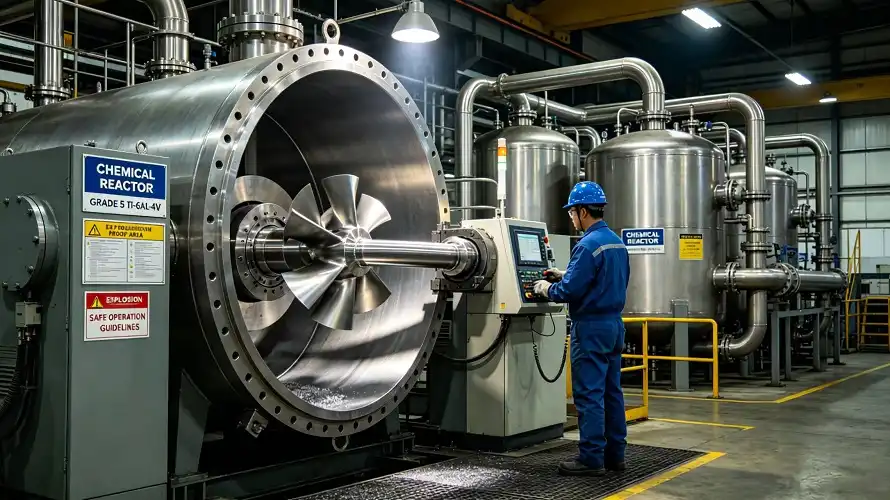
Chemical companies use Grade 2 titanium rods for parts of reactors that are open to rust, such as agitator shafts, heat exchanger tube sheets, and valve stems. Mineral acids, organic substances, and chloride solutions can't damage the passive oxide layer, which makes stainless steel and nickel metals stronger. In tools used to make bleach, fertiliser, and medicines, inert titanium cuts down on contamination and repair shutdowns. A well-known petrochemical plant switched from stainless steel stirrer shafts to Grade 2 titanium rods for chlorinated hydrocarbon service. This increased the average time between failures from 18 months to almost 7 years and got rid of the pollution caused by rust.
Aerospace and Defense Applications
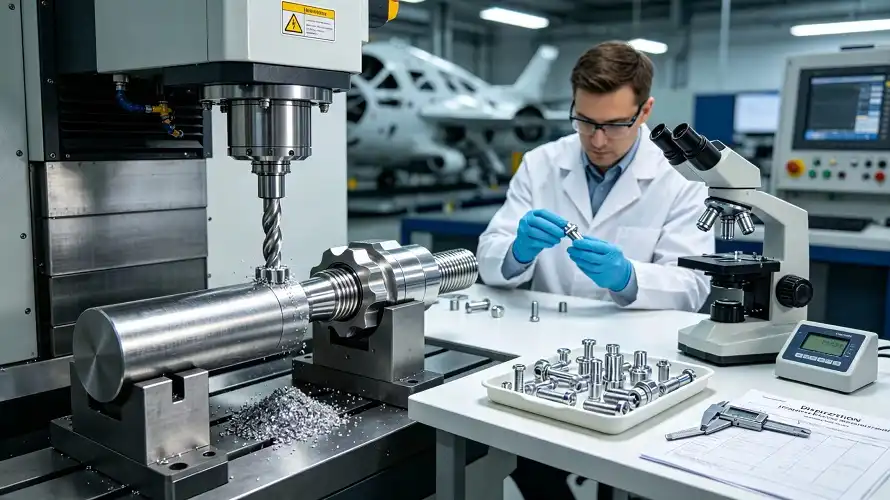
For better corrosion protection and lighter weight, CP titanium rods are machined into aircraft bolts, bushings, and structural fittings. Commercially pure types are used for parts of the engine, the landing gear, and the hydraulic system that don't need to be alloyed to make them stronger. Titanium rods are used in underwater devices, torpedo parts, and UAV rotor shafts. For aircraft material standards to be met from batch to batch, there must be a lot of tracking, strict testing, and statistical process control. These sellers have special certificates, control the flow of materials, and maintain a written record of who has what from melting to the final check.
Medical Device Manufacturing
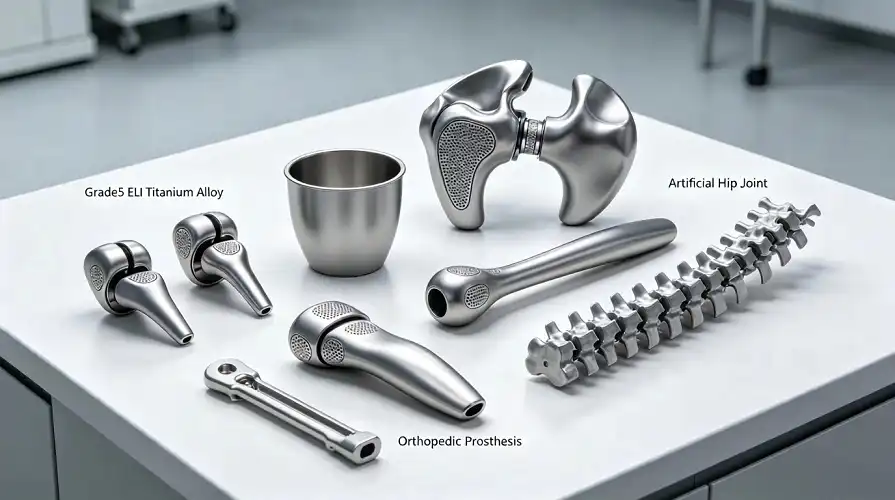
Orthopaedic devices, dental fixtures, and surgery tools are all made from commercially pure titanium. Because Grade 4 titanium rods have a measure of elasticity closer to bone than stainless steel, they can be machined into hip stems, bone plates, and external fixation pins. This is because they don't protect against stress as well. Because it doesn't contain dangerous metals like nickel and has been proven to fuse with bone, CP titanium is the standard for lasting implants. AsTM F67 and ISO 5832-2 precision ground rods are used to make abutments and fixing posts for dental implants. Acid etching and grit blasting control roughness, which makes it easier for bones to stick together. Medical device rules require thorough testing of the materials' properties, their ability to withstand sterilisation, and their ability to work with living things.
Marine and Offshore Engineering
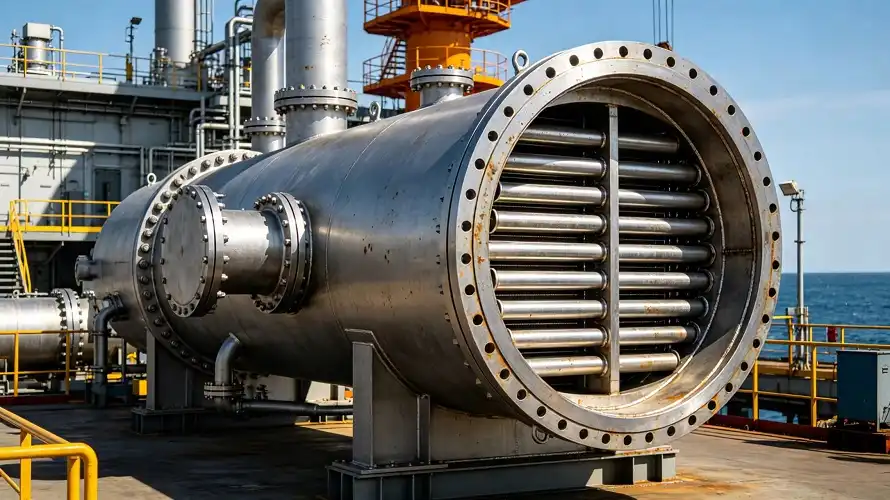
One of the worst places for engineering to happen is in the sea. Titanium bars that are commercially pure work well in aquaculture facilities, military ships, remote platforms, and desalination plants. Copper-nickel and stainless steel can get rust and corrosion problems, but heat exchanger parts made with Grade 2 titanium tube sheets and tie rods don't have those problems. Grade 2 titanium tube sheets and tie rods were used in multi-stage flash evaporators at a big desalination plant. These lasted twenty years in hot saltwater with little upkeep. The old stuff had to be replaced every five years. Titanium did away with the need for spare parts, planned breaks, and emergency fixes, which cut down on lifetime costs.
Conclusion
Commercially pure titanium bars work well in tough situations where their resistance to rust, biocompatibility, and high strength-to-weight ratio make the extra cost worth it. Knowing about Grades 1–4, output standards, and the skills of the provider can help you decide what to buy. When you look at CP grades next to titanium metals and other materials, you can see where they really shine. Longer service lives, less upkeep, and higher dependability have been seen in chemical processes, aeroplanes, medical devices, and maritime settings. It's better for projects to work and run smoothly if you buy from certified manufacturers with clear quality systems, expert support, and shipping performance.
FAQ
Q1: What distinguishes Grade 1 from Grade 4 commercially pure titanium?
Specifically, oxygen content influences mechanical characteristics. With 240 MPa tensile strength and the lowest oxygen, Grade 1 is the most formable. The greatest oxygen level, Grade 4, has a tensile strength of 550 MPa but low ductility. Lower grades are used for extensive shaping, whereas Grade 4 is stronger for structural components.
Q2: Can CP titanium rods perform in high-temperature environments?
Commercially pure titanium is strong and corrosion-resistant up to 315°C in most conditions. Above this temperature, oxidation increases and mechanical characteristics degrade. Alloying elements strengthen titanium alloys like Grade 5 for high-temperature applications over 400°C. Chemical processing equipment at high temperatures should indicate thermal exposure ratings.
Q3: How do I verify supplier authenticity and product quality?
Request EN 10204 3.1 mill test certificates for chemical composition, mechanical qualities, and heat traceability. Internal soundness is confirmed by AMS 2631 ultrasonic testing. AS9100 for aerospace and ISO 13485 for medical devices are industry-specific supplier certifications. In essential cases, independent laboratory testing of sample materials verifies specification conformity.
Partner with a Trusted CP Titanium Rod Supplier
With over twenty years of manufacturing experience, Baoji Jucheng Titanium Industry Co., Ltd. produces CP titanium rod for aerospace, chemical, medical device, and industrial equipment makers worldwide. Our warehouse has over 3,000 tons of inventory to quickly satisfy standard and bespoke specifications from 6mm to 450mm diameter. Through controlled vacuum melting, precision forging, and improved surface finishing, we make titanium rods to ASTM B348, ASME SB348, and ISO standards. Our processing capabilities satisfy changing market needs thanks to a technical partnership with top research institutes. Our technical team supports specification formulation, quality verification, and logistics coordination for small prototype numbers or production volumes with customised requirements. Discuss your commercially pure titanium rod needs with experienced material professionals at s4@juchengti.com. We understand your application problems and procurement goals.

References
1. Boyer, R., Welsch, G., & Collings, E.W. (1994). Materials Properties Handbook: Titanium Alloys. ASM International, Materials Park, Ohio.
2. Schutz, R.W. & Watkins, H.B. (1998). Recent developments in titanium alloy application in the energy industry. Materials Science and Engineering A, 243(1-2), 305-315.
3. Donachie, M.J. (2000). Titanium: A Technical Guide, Second Edition. ASM International, Materials Park, Ohio.
4. Peters, M., Kumpfert, J., Word, C.H., & Leyens, C. (2003). Titanium alloys for aerospace applications. Advanced Engineering Materials, 5(6), 419-427.
5. ASTM International. (2020). ASTM B348-20: Standard Specification for Titanium and Titanium Alloy Bars and Billets. West Conshohocken, Pennsylvania.
6. Jackson, M.J. & Ahmed, W. (2007). Surface Engineered Surgical Tools and Medical Devices. Springer Science & Business Media, New York.