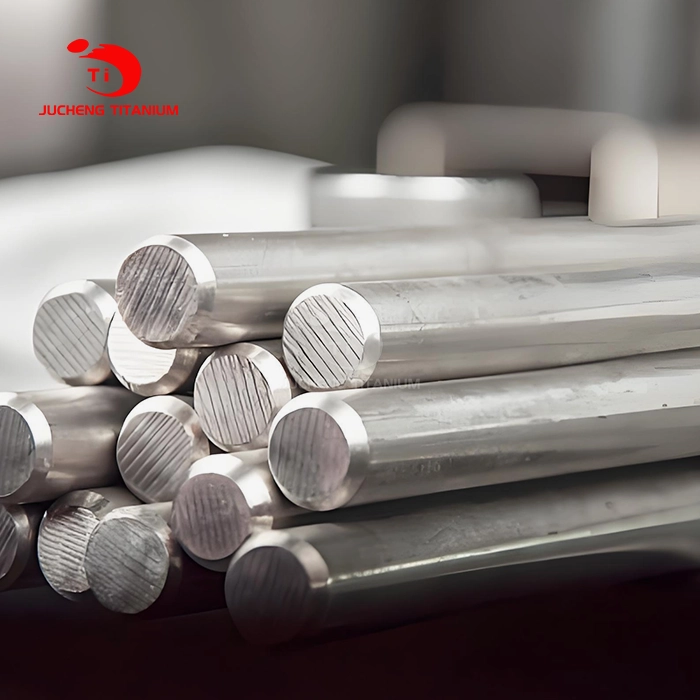

Titanium Bars and Rods Guide
When specifying materials for aerospace components, chemical reactors, or medical implants, choosing the right titanium form is critical. This guide focuses on titanium bars and rods, particularly commercially pure CP titanium rod options, which represent the most corrosion-resistant and biocompatible forms available. Understanding grades, mechanical properties, manufacturing standards, and supplier capabilities helps procurement professionals make informed decisions that balance performance, compliance, and cost. Whether you're sourcing material for a cryogenic valve shaft or a surgical instrument, this resource provides the technical clarity needed to navigate the titanium supply landscape confidently and efficiently.
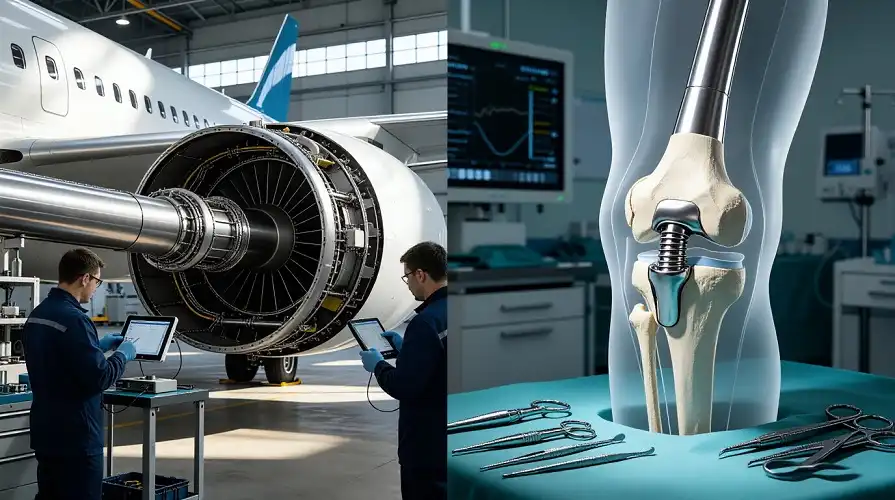
Understanding CP Titanium Rods – Properties, Composition, and Manufacturing
What Defines Commercially Pure Titanium Rods?
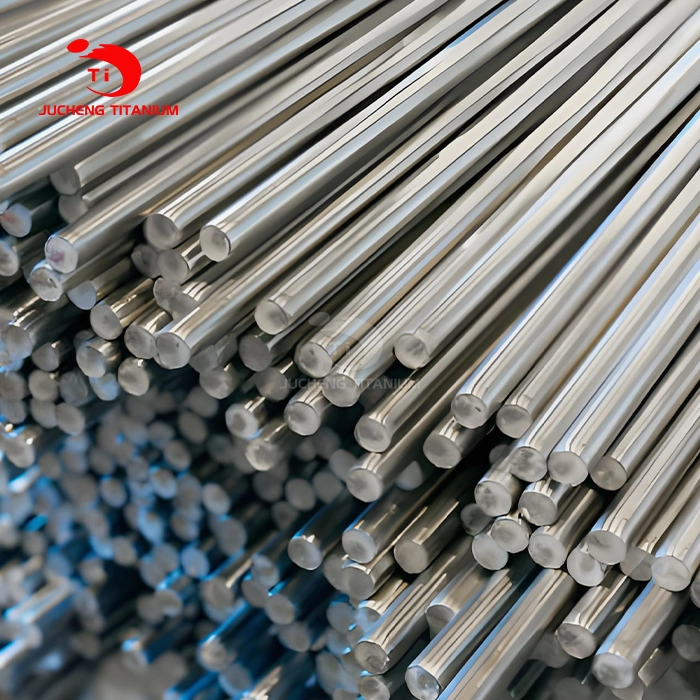
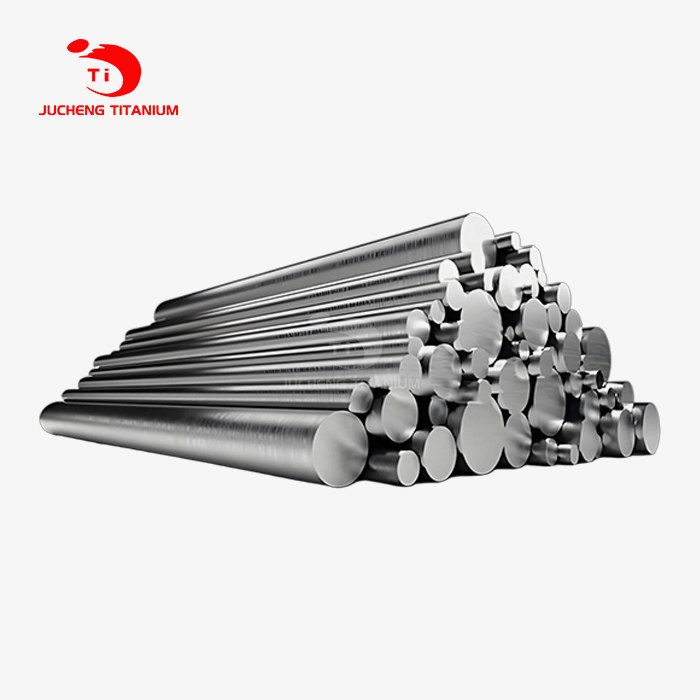
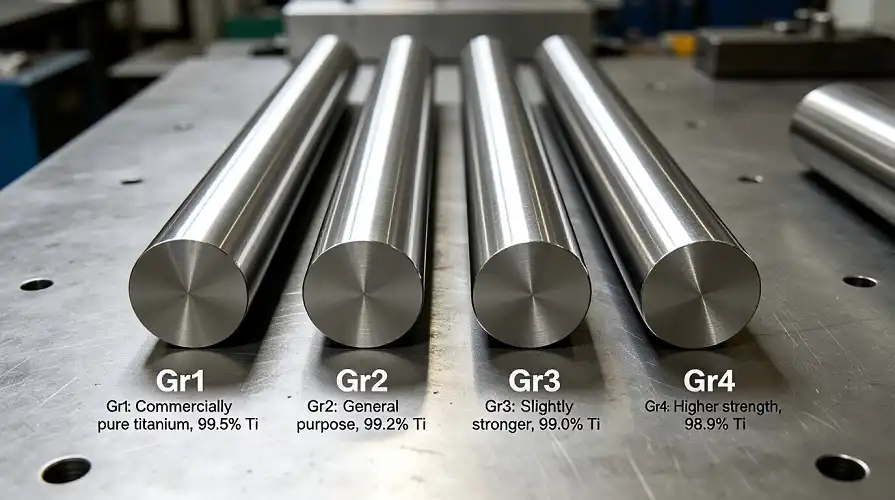
CP titanium rod options are mostly made of titanium and have very few alloying elements. Different grades are available, from Gr1 to Gr4. Gr1 is the purest, and Gr4 is the strongest. Gr1 has a tensile strength of about 240 MPa and a stretch of more than 24%. This is because it has less than 0.20% iron and less than 0.18% oxygen. Gr2, which is the most common type, is a good mix between being easy to shape and being moderately strong (about 345 MPa tensile). These rods are used in chemical processing and naval uses, where resistance to corrosion is more important than best mechanical performance.
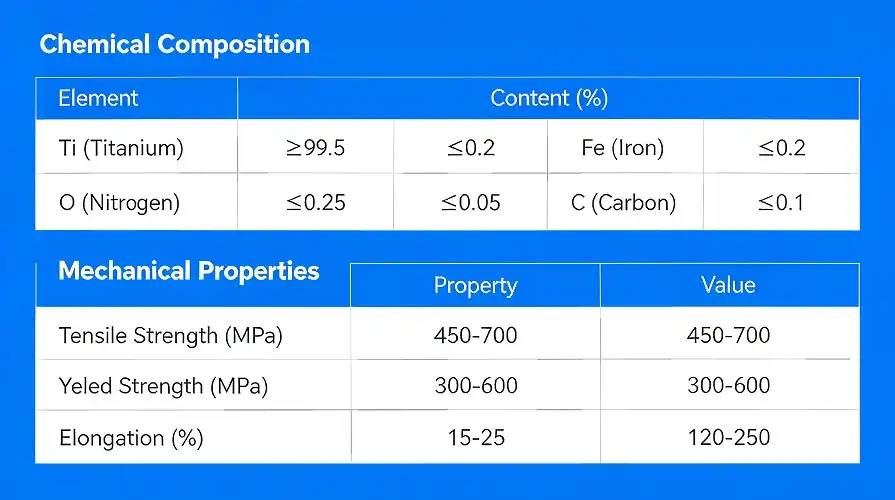
Chemical Composition and Mechanical Performance
As required by ASTM B348 and ASME SB348, each grade must meet strict chemical limits. The amount of oxygen in a material directly affects its strength and flexibility. For cold forming, smaller oxygen grades like Gr1 offer better stretch. To keep things from becoming weak, iron, carbon, nitrogen, and hydrogen are tightly managed. All types of CP have a density that stays close to 4.51 g/cm³, which gives them a strength-to-weight edge over stainless steel. The yield strength goes from 170 MPa in Gr1 to 480 MPa in Gr4, so engineers can choose based on the load-bearing needs without giving up resistance to rust.
Manufacturing Process and Quality Assurance
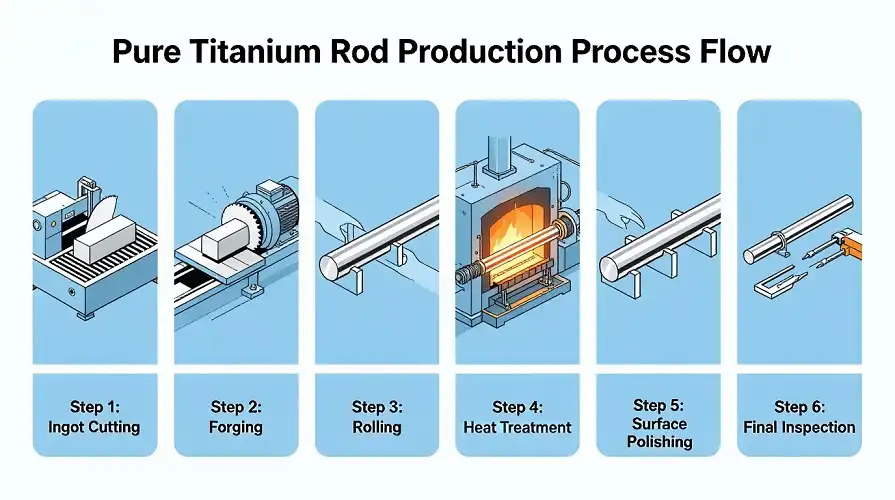
Titanium sponge or ingot is used as a starting material. It is vacuum arc remelted to get rid of any flaws. After being hot-rolled at temperatures between 850°C and 950°C, the metal is shaped into cylinders. It is then annealed to remove internal stresses and improve the grain structure. The annealed state makes sure that the dimensions stay the same and the mechanical qualities stay the same. Acid pickling gets rid of scale, grinding makes things fit together tightly, and polishing is used in biological settings. ASTM B265, ASTM F67 for medical implants, and AMS 4911 for aircraft are all standards that must be met. Material certifications are given to each batch. These include chemical analysis, tensile test results, and tracking numbers.
Corrosion Resistance in Harsh Environments
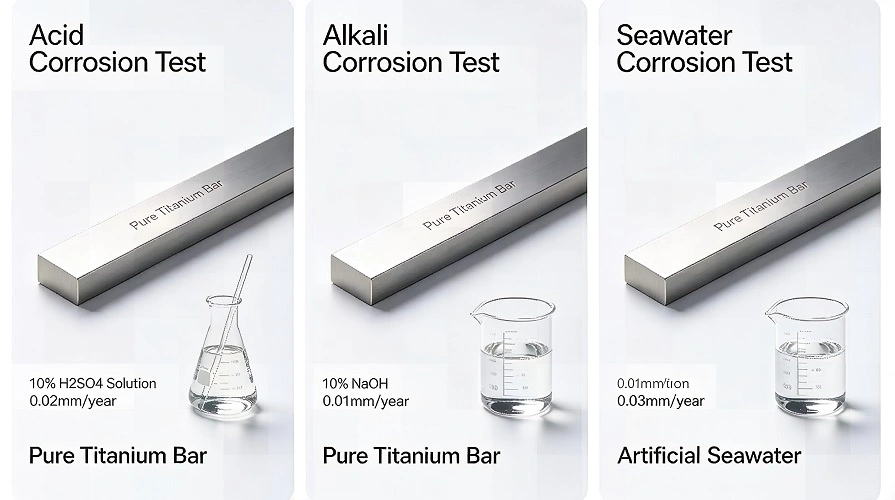
CP titanium rods are very resistant to chloride, sulfuric acid, and seawater because an inactive titanium dioxide layer forms on their own. CP titanium stays solid in saturated brine at high temperatures, while stainless steel pits when chloride levels rise above 100 ppm. Because of this, it is needed for desalination equipment, chemical reactions that work with hydrochloric acid, and instruments used at sea. When scratched, the oxide layer heals itself, giving long-lasting security that doesn't need to be maintained. CP titanium works better than more expensive metals in oxidizing conditions, saving money over the life of the product even though it costs more at first.
Comparing CP Titanium Rods with Alternative Materials
CP Titanium Versus Stainless Steel
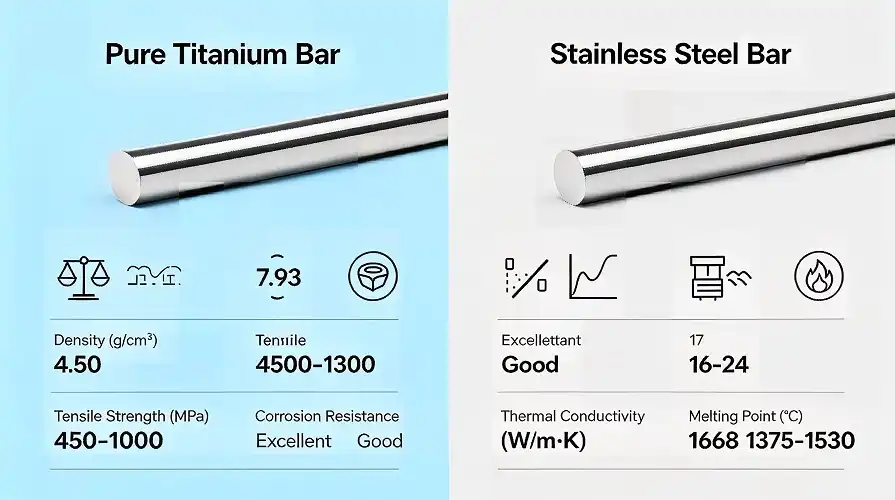
Grades of stainless steel like 316L are much cheaper per kilogram, but they don't work well in places where the CP titanium rod excels. 316L can handle light acids and chlorides at room temperature, but it cracks easily in hot chloride solutions that are typical in chemical plants. At the same size, CP titanium rods weigh 40% less than stainless steel rods of the same thickness. This makes aircraft systems lighter. But stainless steel has a higher modulus of elasticity, which makes it better for uses that need toughness over weight savings. When deciding between these materials, procurement teams have to look at how likely corrosion is, the working temperature, and the total cost of installation.
Titanium Alloys Like Ti-6Al-4V (Gr5)
Ti-6Al-4V (Gr5) titanium metal has a tensile strength of 895 MPa and a yield strength of 828 MPa. It does this by adding 4% vanadium and 6% aluminum. This makes it the best choice for aircraft fasteners, rotor blades, and landing gear parts that are under a lot of stress. At 4.43 g/cm³, its density is still lower than steel, but it is as strong as high-grade metal steels. But Gr5 doesn't protect against rust as well as CP grades, especially in reducing acids. Because it is more biocompatible, Gr5 ELI (extra low interstitial) is preferred for hip devices in medical settings. Titanium alloy rods are stronger than CP versions when the extra cost is worth it, but chemical processing usually chooses economically pure material because it doesn't rust as easily.
Aluminum and Niobium Alternatives
Aluminum metals, like 6061 or 7075, are one-third the price of titanium but are easier to work with and conduct heat well. They can't be used in high-temperature or sea settings because they melt more easily and are more likely to rust. Niobium rods are very resistant to liquid metals and some acids, but they are much more expensive to make and aren't available everywhere in the world. CP titanium rods are in the middle. They have corrosion resistance similar to niobium and strength higher than aluminum. They are also more stable in the supply chain than unusual refractory metals. This balance explains why they are used so widely in many different industries.
Selecting the Right CP Titanium Rod for Your Application
Grade Selection Based on Industry Requirements
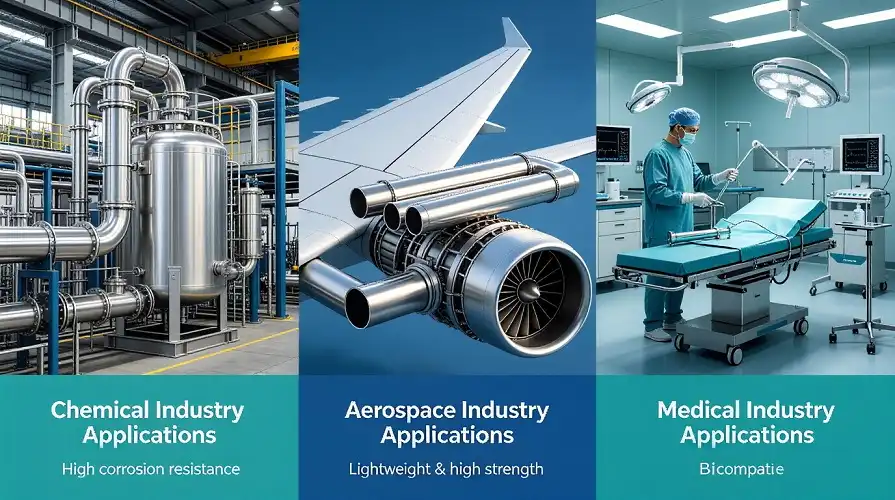
When strength and corrosion protection are needed at the same time, aerospace and defense companies usually ask for Gr2 or Gr4 rods. Gr2 is used for mild mechanical loads in hydraulic systems and aircraft parts, while Gr4 is used for higher-stress tasks like screws and brackets. Manufacturers of equipment used in chemical processing, like Gr1 for heat exchanger tubes and the insides of reactors, because it is easy to shape and join. For tooth implants, surgical pins, and tool shafts, companies that make medical devices use Gr1 or Gr2 approved to ASTM F67 because it is biocompatible and not magnetic. Focusing only on tensile strength standards is not as helpful when choosing a CP titanium rod grade as understanding the working environment.
Size Customization and Dimensional Tolerances
Titanium rods can be anywhere from 4 mm to 80 mm thick, 950 mm to 2500 mm wide, and up to 10,000 mm long under normal conditions. Custom size meets the specific needs of engineers, especially when making prototypes and other specialized equipment. Different finishing methods give different levels of tolerance. For example, hot-rolled rods meet general measurement standards, but areas that have been machined and polished get even tighter tolerances that are needed for precision parts. To avoid expensive repairs, buyers should be clear about the required surface finish, straightness limits, and tolerances for the width when they place their order. For non-standard shapes, suppliers who can machine the parts in-house have faster lead times.
Regulatory Certifications and Compliance
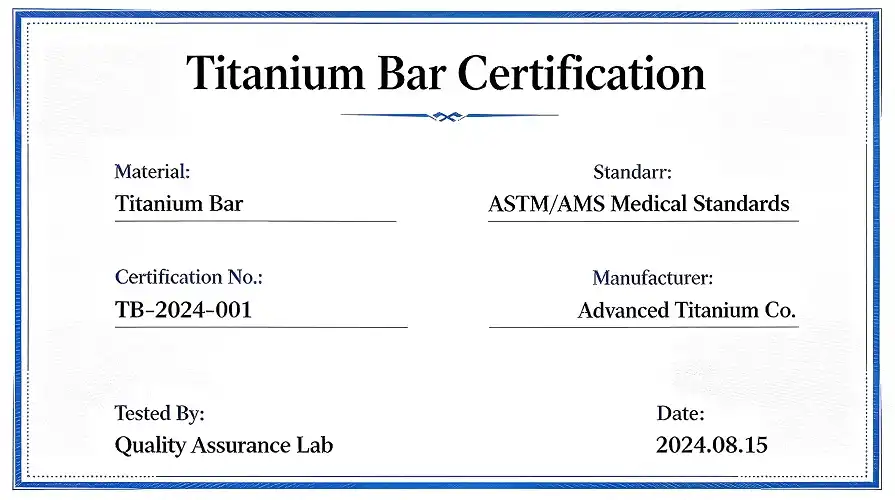
Traceability paperwork shows where an item came from and that it meets industry standards. For industrial uses, ASTM B348 approval checks the chemical makeup and mechanical qualities. Aerospace parts that are supervised by the FAA must be qualified according to AMS 4911. For medical uses, you need to have either ASTM F67 or ISO 5832-2 approval that shows biocompatibility tests. For high-stakes projects, third-party inspection reports from approved labs add another layer of security. Before taking delivery, purchasing managers should ask for mill test results, heat treatment records, and certificates of conformance. Suppliers who don't have strong quality control systems add risk to the supply chain that is greater than any cost savings.
Minimum Order Quantities and Lead Times
Distributors usually keep popular grades and sizes in stock, which makes it easy to fill small orders quickly. For unique specs, manufacturers often need at least 500 kg to 1,000 kg of the item. This is because melting and rolling are done in batches. Standard wait times for mill runs are between 6 and 12 weeks, but faster handling is possible for an extra fee. Strategic buyers plan ahead for what they will need and place blanket orders to make sure they have enough capacity and can get big savings. Having a qualified secondary seller on hand lowers the risk when the main sources are under-capable or there are problems in the world's politics.
Sourcing and Purchasing – Smooth CP Titanium Rod Procurement
Global Sourcing Options and Regional Considerations
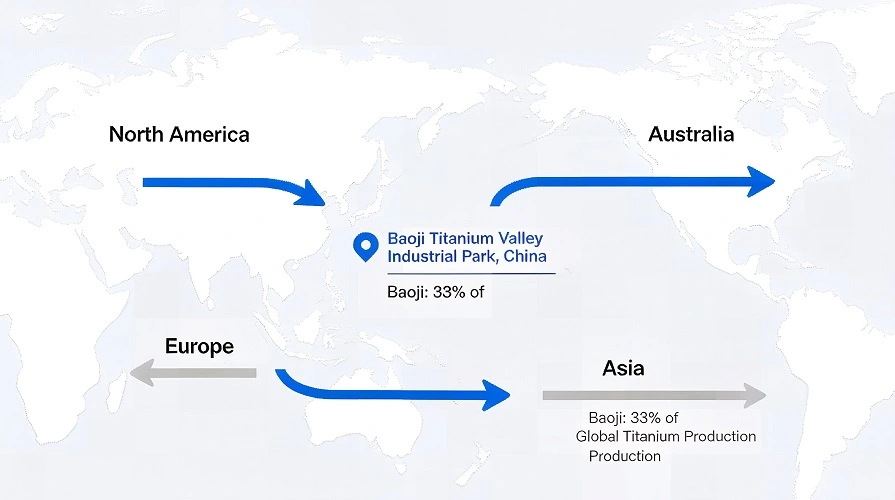
There are established titanium dealers and service centers in the United States. Most of them are located near aerospace hubs in California, Texas, and the Pacific Northwest. European buyers get materials from sellers in Germany and the UK, where strict respect for EN standards goes hand in hand with ASTM standards. Titanium Valley in China's Baoji area makes a lot of it at a price that's competitive, and quality standards are rising. India has become a backup source, especially for industrial grades used in chemical processes. Regional buying lowers transportation costs and tariff risk, but buyers need to check the certifications of suppliers and do pre-shipment reviews to make sure everything is the same.
Pricing Structures and Bulk Discounts
CP titanium rod prices change along with titanium sponge prices, which are affected by demand in aircraft and mines around the world. Because they are easier to work with, CP grades usually cost 15% to 30% less than Ti-6Al-4V. Volume discounts usually start at orders of 500 kg, and for orders over 5,000 kg, savings go up by up to 20%. Long-term supply deals protect against market changes by locking in prices for 12 to 24 months. Buyers should compare quotes to price trends in the same industry and make sure that the prices they are given include standard packing and material certification. It's possible for visible savings to be wiped out by hidden costs like rush fees, custom cutting fees, and inspection fees.
Logistics and Delivery Considerations
Titanium has a high value-to-weight ratio, which means that pressing orders should be sent by air freight. However, bulk sales should still be sent by ocean freight. When you package things correctly, they stay clean and don't get damaged during shipping. Deliveries within the US usually take 3 to 5 working days, while deliveries outside of the US can take anywhere from 4 to 8 weeks, based on how long it takes for customs to clear. Incoterms spell out who is responsible for freight, insurance, and import taxes. To avoid surprises, buyers should ask for DAP (Delivered at Place) or DDP (Delivered Duty Paid) terms. Suppliers who already have an export system in place make paperwork easier and cut down on wait times.
Certification and Quality Assurance in Transactions
Suppliers you can trust give you mill test certificates that can be linked to specific heats and lots. Chemical analysis using spectrometry, measures of tensile and yield strength from test samples, and hardness tests should all be on certificates. Third-party review by companies like SGS or Bureau Veritas is a way for high-value sales to get independent proof. Buyers can ask for witness testing or do their own arrival inspections to make sure the measurements and quality of the surface are correct. When material doesn't meet the requirements, it leads to warranty claims and replacement processes spelled out in buy agreements. Setting clear acceptance standards and review rules before delivery stops disagreements and delays in the project.
Why Choose Trusted Industry Leaders for CP Titanium Rod Supply?
Expertise Rooted in Titanium Valley
Based in Baoji, China, which is the center of titanium production, Jucheng Titanium has gained 20 years of business experience. The company began in 2004 as a regional producer and has grown into a widely known specialty business since then. Listing on the National Equities Exchange in 2017 showed that the company was financially stable and had mature control. Jucheng is good at both research and development and mass production. It has 4 idea patents and 41 utility model patents that cover a wide range of products. Partnerships with Tsinghua University and the Northwest Institute for Nonferrous Metal study speed up new developments in alloys and processing methods, turning academic study into useful products for businesses.
Comprehensive Product Range and Inventory Depth
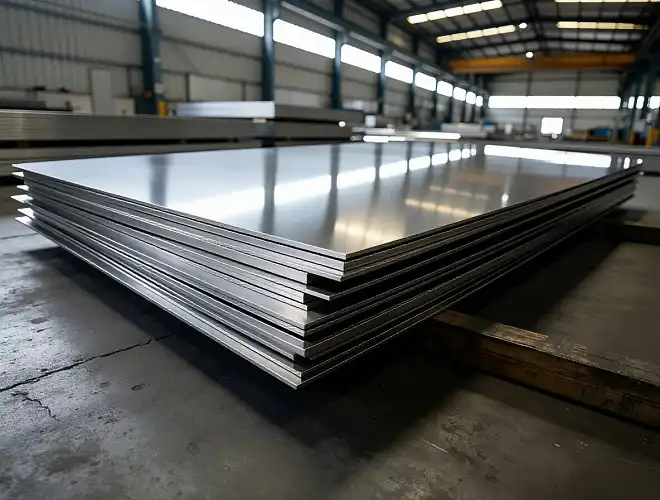
Keeping 3,000 tons of titanium in stock in types Gr1, Gr2, Gr4, Gr5, Gr7, Gr9, and Gr12 lets you quickly meet urgent buying needs. Standard CP titanium rod thicknesses range from 4 mm to 80 mm, and special sizes can be made by rolling, heating, leveling, pickling, and finishing the surface. Material that is hot-rolled meets the standards set by ASTM B265, ASTM F67, AMS 4911, and ASME SB265. The surface can be polished, cut, or acid-pickled. Vertical integration goes beyond just providing raw materials by showing that more than 500 sets of titanium equipment, like heat exchangers and reactors, are made every year. Because of this, procurement teams can combine sources, which cuts down on administrative costs and makes quality control easier.
Quality Control and Customer-Centric Service
At every stage of production, strict standards are enforced by a technical R&D team and quality checking staff. In-process controls use spectrometry to check the chemical makeup, tensile tests to check the mechanical properties, and coordinate measuring machines to check the correctness of the dimensions. Before shipping, a final check makes sure that the surface shine, straightness, and markings are correct. Continuous improvement is driven by customer happiness, and feedback systems help guide product creation. Technical advice on choosing materials, help with manufacturing, and debugging are all part of after-sales support. This all-inclusive service model changes one-way transactions into long-term partnerships where the knowledge of the seller improves the abilities of the buyer.
Sustainability and Future-Forward Practices
Titanium recycling programs help the environment and keep material costs stable as the amount of scrap increases. Closed-loop production reuses machined parts and rejected ones by melting them down and making them back into new feedstock with little damage to their properties. The carbon impact of production is smaller when boilers and waste heat recovery systems use less energy. When you invest in automation and technology, you make processes more consistent and make workers safer. These efforts to be more environmentally friendly are in line with what companies are required to do when they buy things, which means that Jucheng is a good partner to work with as regulations get stricter.
Conclusion
When choosing titanium bars and rods, you need to think about the technical specs, the stability of the source, and the total cost of ownership. CP titanium rod options are the best at resisting corrosion and working with living things. They can be used in aircraft, chemical processing, and medicine. Procurement pros can safely choose products when they know about grade differences, manufacturing standards, and certification requirements. Getting supplies from well-known companies with tested quality systems, technical know-how, and large inventories lowers risk and speeds up project timelines. As businesses look for materials that are lighter and last longer, titanium bars are still needed to solve technical problems where other metals fail.
FAQ
1. What distinguishes CP titanium rods from titanium alloy rods?
CP titanium rod types have few alloying elements because they value resistance to rust and shapeability over strength. Grades Gr1 through Gr4 are made up of 99% titanium and a limited amount of iron and oxygen. Titanium alloys, such as Ti-6Al-4V (Gr5), contain aluminum and vanadium to achieve tensile strengths higher than 895 MPa. This means that they can be used to make high-stress aircraft parts. When biocompatibility and resistance to rust are more important than strength, CP grades are the best choice for chemical processing and medical implants.
2. What kinds of approvals should people look for when they buy titanium rods?
For industrial uses, you need an ASTM B348 or ASME SB348 certificate that shows the chemical makeup and mechanical qualities. Aircraft parts need to be qualified according to AMS 4911, which meets strict aircraft material requirements. Medical gadgets need to be certified by ASTM F67 or ISO 5832-2 to show that they have been biocompatibility tested. Shipments should come with mill test records that can be used to track them back to specific heats and lots. For important uses, third-party inspection by approved labs adds extra security.
3. How do prices and wait times change for different types of CP titanium rods?
This is because Gr1 and Gr2 are easier to work with and cost 15% to 30% less than Gr5 metal. Standard sizes in stock can be sent out within days, but mill runs for special sizes take 6 to 12 weeks. Orders that are more than 500 kg can get savings of up to 20%. Long-term deals keep prices stable when the market changes. There are extra fees for expedited handling, but it can cut wait times down to 4 weeks.
Partner with Jucheng Titanium for Reliable CP Titanium Rod Supply
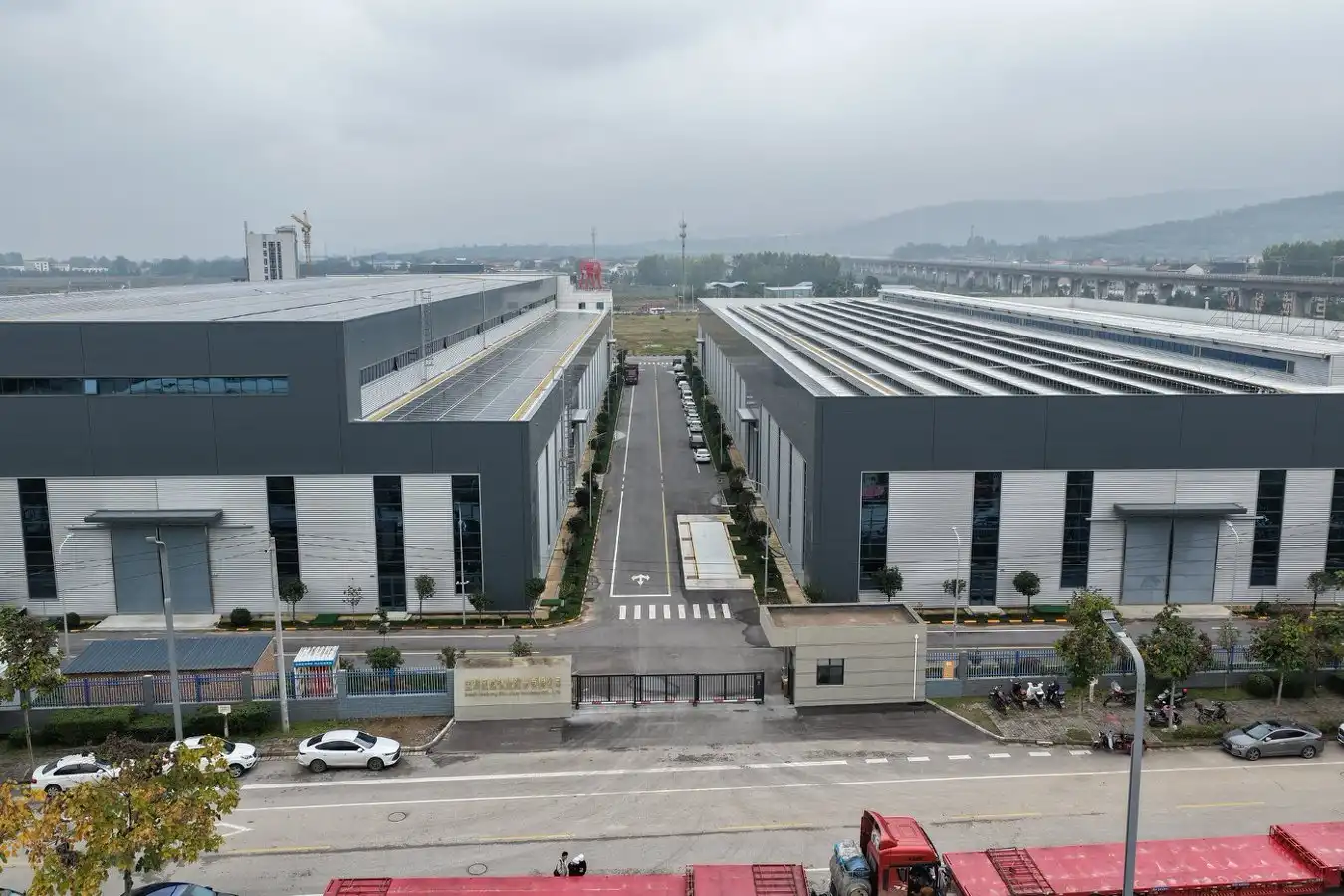
Jucheng Titanium can help you get titanium because they have been doing it for over 20 years. As a national high-tech company and "little giant" maker, we keep 3,000 tons of stock in grades Gr1 through Gr12, so we can quickly deliver standard and special sizes. Our certifications are based on ASTM B265, ASTM F67, and AMS 4911 standards and come with a lot of quality paperwork and material tracking. Our expert team can help you with any purpose, whether you need a CP titanium rod for chemical reactors, aerospace parts, or medical instruments. They can also give you a low price. You can talk to a reliable CP titanium rod seller about your needs by emailing s4@juchengti.com. They are dedicated to quality, service, and new ideas.
References
1. American Society for Testing and Materials. (2021). Standard Specification for Titanium and Titanium Alloy Bars and Billets. ASTM B348-21.
2. Boyer, R., Welsch, G., & Collings, E.W. (2017). Materials Properties Handbook: Titanium Alloys. ASM International.
3. Donachie, M.J. (2000). Titanium: A Technical Guide (2nd ed.). ASM International.
4. Lütjering, G., & Williams, J.C. (2007). Titanium (2nd ed.). Springer-Verlag Berlin Heidelberg.
5. Peters, M., Kumpfert, J., Ward, C.H., & Leyens, C. (2003). Titanium Alloys for Aerospace Applications. Advanced Engineering Materials, 5(6), 419-427.
6. Schutz, R.W., & Thomas, D.E. (1987). Corrosion of Titanium and Titanium Alloys. ASM Handbook Volume 13: Corrosion, ASM International.