



Titanium Sheet Roll Applications in Aerospace and Chemical Processing
Titanium sheet roll is flat-rolled titanium material that is hot or cold rolled into continuous coils, strictly in accordance with the specifications of ASTM B265, AMS 4911, ASTM F67, etc. Grades range from Gr1 to Gr12, and thicknesses are available from 0.3 to 12.0 mm and widths up to 1500 mm. This product form provides constant grain structure, precise dimensional tolerances and excellent corrosion resistance. The unique combination of low density and great mechanical strength makes it a material of choice in aircraft manufacturing and chemical processing sectors where performance and dependability are non-negotiable.
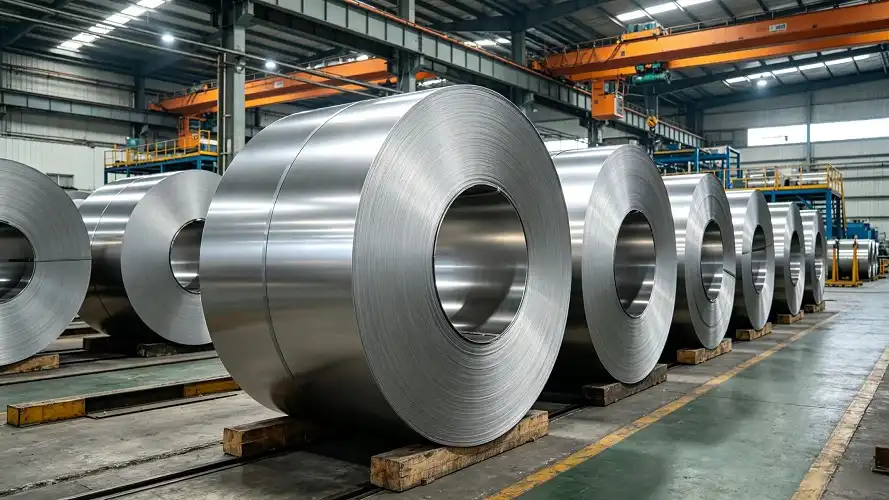
Understanding Titanium Sheet Rolls and Their Core Properties
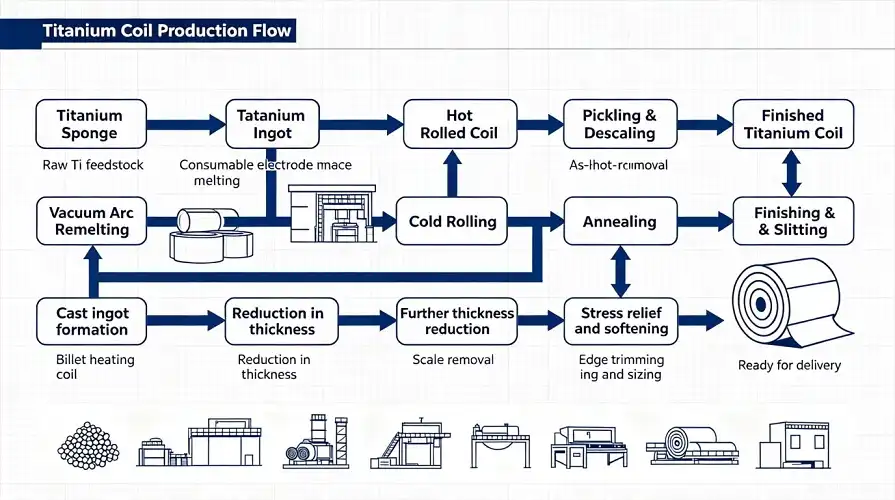
Titanium flat-rolled coil is produced via a sequence of rolling, annealing, levelling and pickling operations. The surface may be annealed, brilliant or pickled. The mechanical and chemical qualities of the final product are directly influenced by the manufacturing sequence.
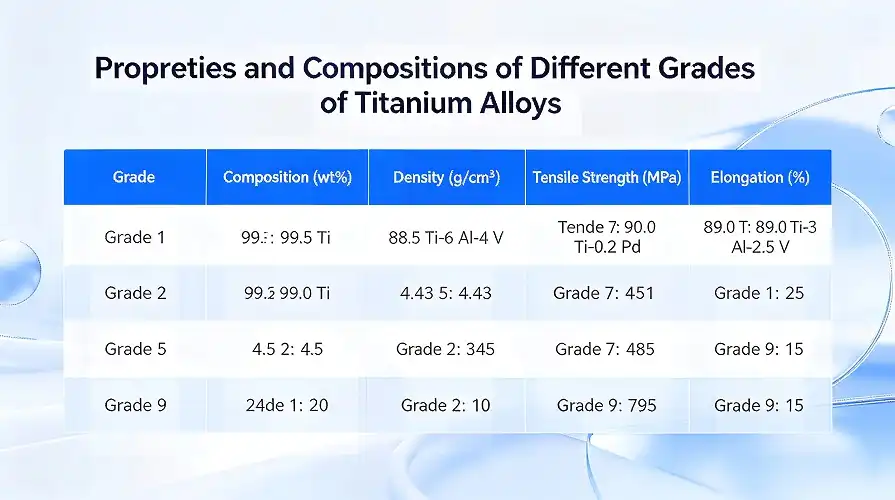
Grade and Property Overview
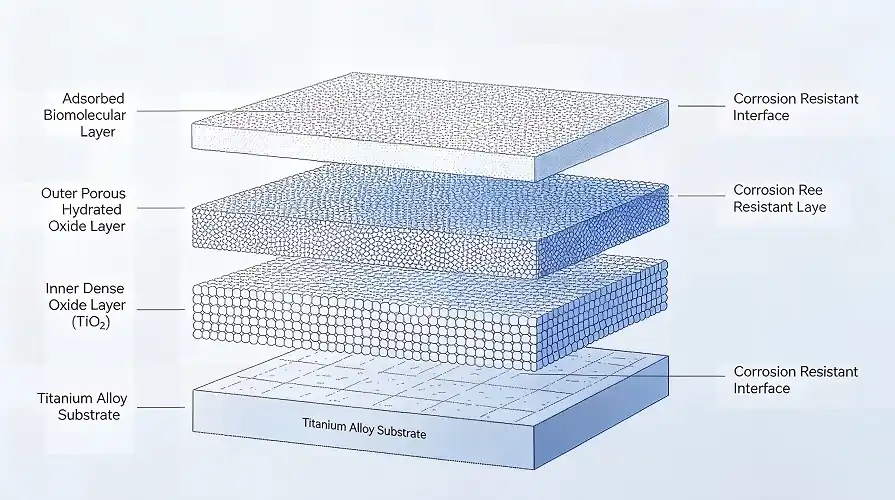
These properties are provided by titanium’s naturally occurring passive oxide layer, TiO₂. The coating is self-healing when injured by mechanical forces and protects the metal against saline water, chlorides and reactive acids. Cold-rolled kinds feature superior surface roughness and better standards of thickness. For the heavier gauges the hot rolled kinds are cheaper.
- Gr1: Max. formability with elongation > 24% for deep drawn parts for chemical equipment.
- Industry workhorse for Gr2 with yield strength > 275 MPa and high corrosion resistance in chloride conditions. Meets ASTM B265 and ASME SB265.
- Gr5 Aerospace grade tensile strength > 895 MPa per AMS 4911. Used in structural airframe components and engine parts.
- Gr7: Good resistance to reducing acids. Used for chemical reactor linings and heat exchanger plates.
- Gr12 Superior high temperature crevice corrosion resistance for severe petrochemical applications.
The spontaneously produced TiO2 passive oxide coating on titanium, which is self-healing in the event of mechanical injury and confers tolerance to seawater, chlorides and oxidising acids, is responsible for these qualities. Cold-rolled variations with tighter thickness tolerances are able to produce surface roughness Ra < 0.4 µm. Hot-rolled material is cost-effective for larger gauges.
To get a price or example right away, email us at s4@juchengti.com.
Applications of Titanium Sheet Rolls in Aerospace
The aircraft business needs materials that are lighter without losing their strength. Titanium has a mass of about 4.51 g/cm³, which is about 60% that of steel. Its tensile strength is the same as or better than steel's. This combination immediately means that business and military platforms will use less fuel and need to be serviced less often.
Airframe Structures and Engine Components
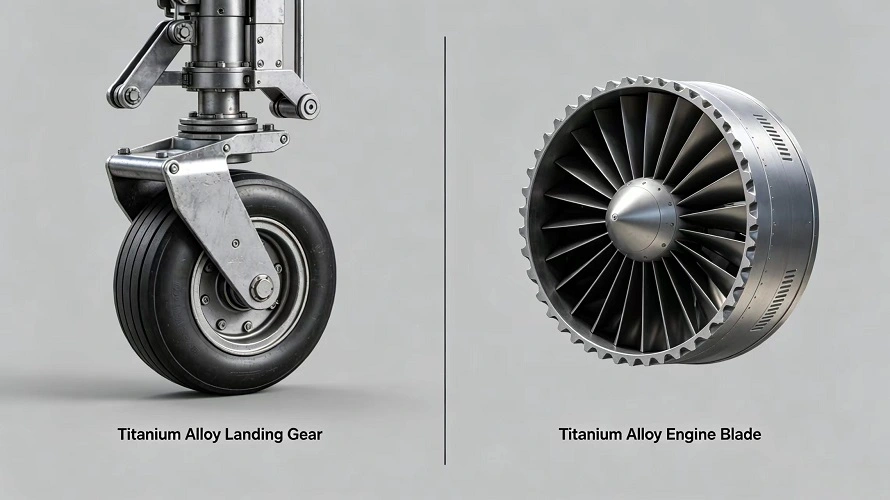
It is common to make bulkheads, wing spars, and nacelle panels out of rolled titanium sheet in Gr5 that meets the requirements of AMS 4911. Boeing says that the 787 Dreamliner's fatigue strength and resistance to corrosion are the main reasons why it uses about 15% titanium by structure weight. In some manufacturing processes, a titanium sheet roll is also used to produce engine firewall panels and exhaust duct covers because it allows continuous forming of complicated shapes with little material waste. This eliminates the output losses that come with discrete cut plate nesting.
Thermal Shielding and Fastener Stock
Titanium coil engine bay heat shields can withstand temperature changes from -54°C to +315°C without warping or wearing out, which is an advantage over aluminum alternatives. Defense companies also cut titanium fastener blanks straight from approved coil stock. This makes sure that the full heat-number traceability required by EN 10204 3.1 Mill Test Reports is met.
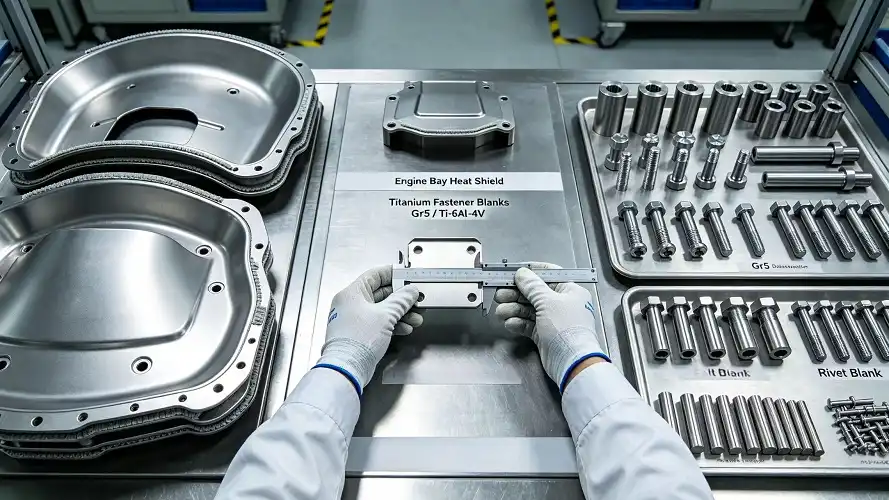
Verified material certification is needed to buy titanium rolled sheet for aerospace. To make sure the metal can be shaped during high-precision stamping, suppliers must keep records of its chemical make-up, mechanical test results, and microstructure evaluation that confirms a grain size of ASTM E112 No. 7 or smaller.
Titanium Sheet Roll Uses in Chemical Processing
Every year, the chemical processing industry spends billions of dollars replacing stainless steel equipment that has been corroded. Titanium doesn't corrode in acids, alkalis, or chloride-filled streams, so even though it costs more up front, it's a good investment.
Heat Exchangers and Reaction Vessels
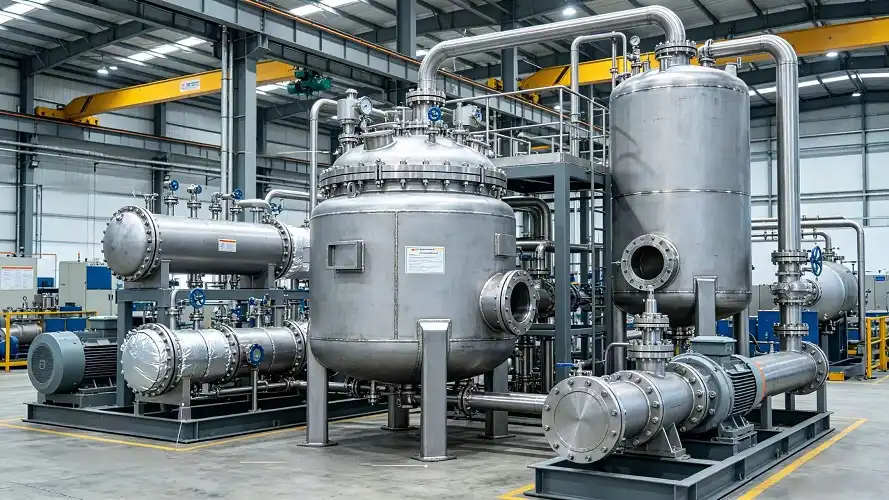
Plate heat exchangers made from Gr2 or Gr7 titanium coil let chevron-patterned plates be stamped continuously, which increases the area that can move heat. A study in the NACE International Corrosion Journal called "Lifecycle Cost Study" showed that titanium PHE plates in chlor-alkali service outlasted 316L stainless steel by four times, which cut the total cost of ownership by more than 40% over the course of 20 years.
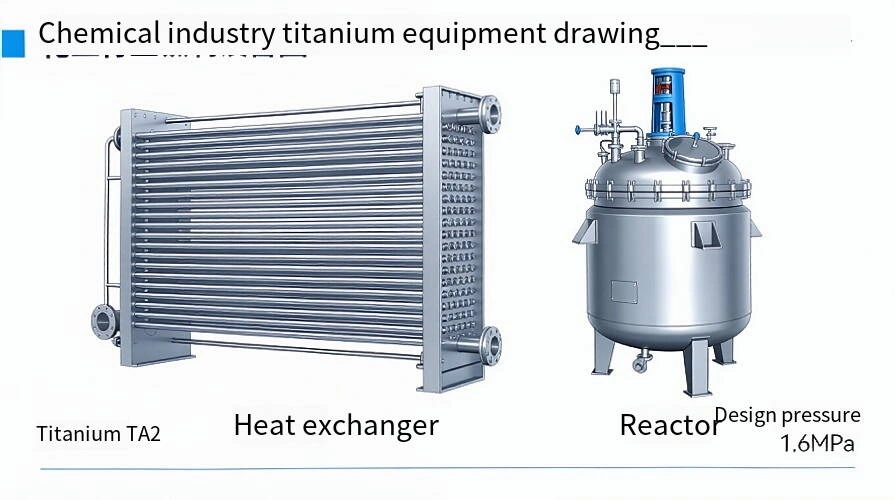
Reaction tanks and column interiors lined with Gr7 or Gr12 sheet can withstand attacks from hydrochloric and sulfuric acids at levels and temperatures that quickly break down other metals. Jucheng Titanium has sold titanium equipment to Luoyang Petrochemical and other customers. Titanium-based composite tubes have been used successfully in toxic process streams.
Titanium vs. Stainless Steel in Aggressive Environments
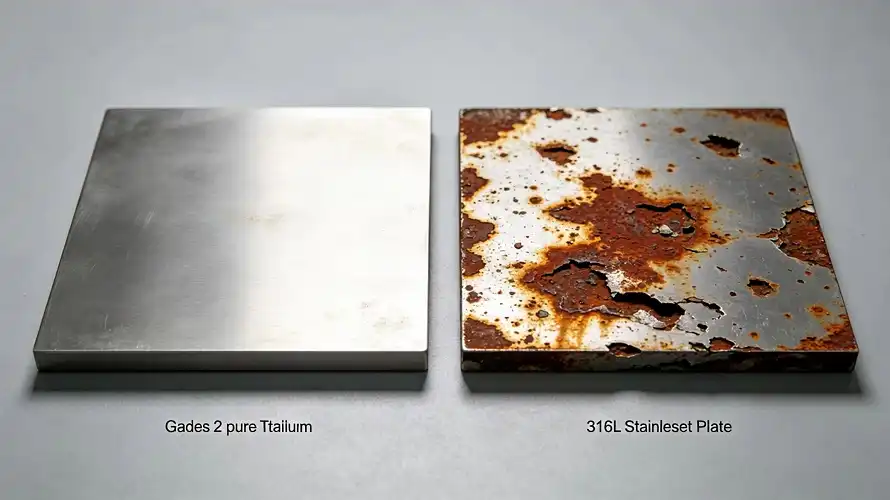
The choice of whether to buy titanium or stainless steel is not just a matter of replacing one material with another. In chloride environments, stainless steel loses its passive film integrity above about 60°C. This causes pitting and stress corrosion cracking. Up to its melting point of about 1668°C, Gr2 titanium stays passive. Titanium sheet stock costs more at first, but after five to seven years of service in aggressive media, planned maintenance shutdowns, replacement fabrication, and production downtime losses always make stainless steel more expensive in the long run.
Procurement Guide: How to Choose the Right Titanium Sheet Roll?
The most important choice in the buying process is matching the material to the job. Jucheng Titanium sells hot-rolled and cold-rolled products, including titanium sheet roll options, that are ASTM B265, ASME SB265, ASTM F67, AMS 4911, and ASTM F136 compliant. Their thickness ranges from 0.3 mm to 12.0 mm, and their width ranges from 950 mm to 1500 mm. They can also make custom lengths for each order.
Here are the main things that buying teams should look at when making decisions:
- Grade compatibility: Gr2 for general corrosion-resistant chemical service; Gr5 for high-strength aerospace structural parts; Gr7 and Gr12 for aggressive acid environments; Gr1 for maximum formability in deep-drawing operations.
- Rolling type: Cold-rolled coil delivers Ra < 0.4 µm surface finish and tighter gauge tolerances required for precision stamping; hot-rolled material suits structural applications where surface aesthetics are secondary.
- Certification alignment: Aerospace procurement must specify AMS 4911 or ASTM F136; chemical equipment typically references ASTM B265 or ASME SB265; medical-adjacent applications require ASTM F67.
- Ultrasonic testing requirement: Specify AMS 2631 Class A1 inspection to screen for subsurface laminations before committing to automated feed-line production.
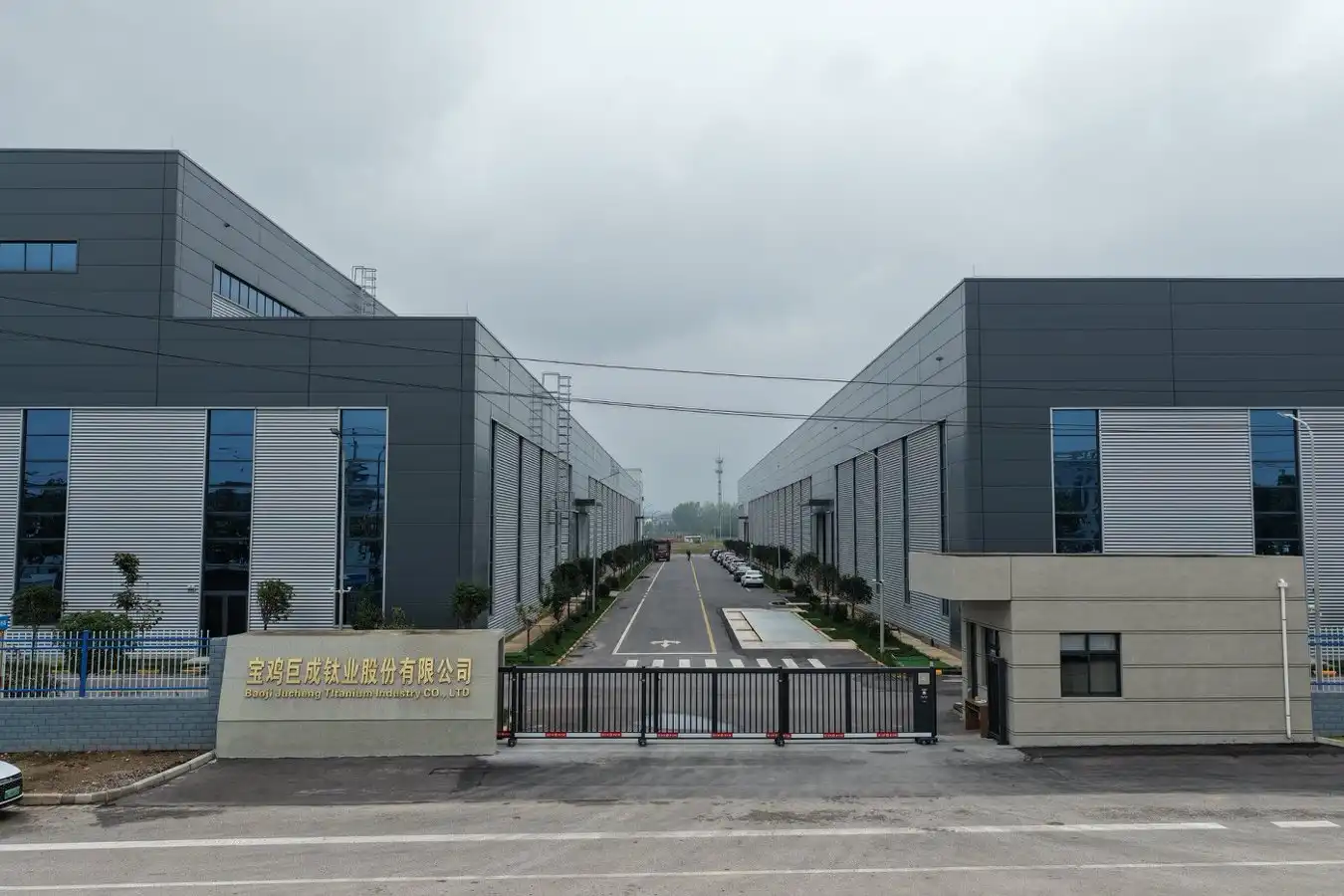
Jucheng Titanium's 120,000 m² facility in Baoji keeps about 3,000 tons of titanium in stock all year long. This means that lead times on standard grades are much shorter than the norm in the industry. An combined rolling and annealing line, backed by the company's four idea patents and 41 utility model patents, makes custom sizes and specialty grades.
Trusted Suppliers and Quality Assurance for Titanium Sheet Rolls
Aerospace and chemical processing buyers care about the credibility of their suppliers. One nonconforming coil can cause a production line to shut down or a regulatory audit. In this case, quality control at the stage of the raw materials is the first line of defense.
Quality Verification Protocols
At Jucheng Titanium, all incoming and outgoing parts are carefully inspected at five points: ICP-OES chemical composition analysis checks for interstitial elements (O, N, H, and Fe); microstructure evaluation according to ASTM E112; ultrasonic testing according to AMS 2631; laser gage measurement for thickness uniformity; and surface inspection to make sure that all of the alpha case has been removed through pickling. Each package comes with an EN 10204 3.1 Mill Test Report that includes a heat number, chemical analysis, and mechanical test data that can be fully tracked.
Jucheng Titanium was founded in 2004 and went public on the National Equities Exchange and Quotations in 2017. It is a National High-Tech Enterprise and a new "little giant" business at the national level. Working together on research and development with the Northwest Institute for Nonferrous Metal Research and Tsinghua University supports ongoing material development and quality improvement.
Conclusion
Titanium rolled sheet and coil goods, including titanium sheet roll, are very important in both the chemical processing and aircraft industries. The passive oxide film, high strength-to-weight ratio, and thermal stability of the material solve engineering problems that can't be fully solved by cheaper alternatives. Three important parts of a good procurement plan are choosing the right grade, making sure the certifications are valid, and working with a maker whose inventory can be tracked. Jucheng Titanium has been processing titanium for 20 years and has a large certified inventory as well as the ability to make custom parts. This makes it a reliable source for difficult global projects.
FAQ
1. What thickness range is most common for aerospace titanium sheet applications?
Thicknesses between 0.5 mm and 6 mm are used for most aircraft structure and shielding needs. Thin gages are used as a heat barrier and a fence. Heavier gages are used to make bulkheads and structural brackets. All materials used in aircraft should meet the requirements of AMS 4911 or ASTM F136 and come with full MTR paperwork.
2. How does titanium's corrosion resistance compare to 316L stainless steel?
Titanium keeps its passive TiO₂ film even at temperatures and salt levels that cause 316L stainless steel to split and crack from stress corrosion. Titanium's service life is usually three to four times longer than stainless steel's in chlor-alkali and seawater environments. This lowers the total cost of ownership over time.
3. What are typical lead times for custom-sized titanium coil orders?
From Jucheng Titanium's current stock, standard grades in popular sizes usually ship within two to four weeks. Custom widths, specialty grades, or thicknesses that aren't standard take four to eight weeks to make, which includes rolling and annealing processes. This depends on how much you buy.
4. What certifications accompany each shipment?
Mill Test Reports per EN 10204 3.1 are included with every delivery. These report the heat number, chemical composition, and mechanical properties against the ASTM B265, AMS 4911, ASTM F67, or ASTM F136 standard.
Request a Quote from Jucheng Titanium — Certified Titanium Sheet Roll Supplier
Jucheng Titanium keeps 3,000 tons of approved titanium in stock in grades 1 through 12. This titanium can be bought in hot-rolled or cold-rolled coils with unique sizes and all the necessary paperwork. Our technical team can help you find the right grade of titanium sheet roll, whether you need it for corrosion-resistant chemical equipment or structural parts for spacecraft. To get a price or example right away, email us at s4@juchengti.com.
References
1 .ASTM International. ASTM B265: Standard Specification for Titanium and Titanium Alloy Strip, Sheet, and Plate. 2021.
2. AMS Committee. AMS 4911: Titanium Alloy Sheet, Strip, and Plate, 6Al-4V, Annealed. SAE International, 2020.
3. Schutz, R. W., & Watkins, H. B. "Recent Developments in Titanium Alloy Application in the Energy Industry." Journal of Materials, 1998.
4. Peters, M., Kumpfert, J., Ward, C. H., & Leyens, C. "Titanium Alloys for Aerospace Applications." Advanced Engineering Materials, 2003.
5. Sedriks, A. J. Corrosion of Stainless Steels, 2nd ed. Wiley-Interscience, 1996.
6. Donachie, M. J. Titanium: A Technical Guide, 2nd ed. ASM International, 2000.