



Titanium Sheet Roll vs Plate: Which Format Fits Your Project?
When sourcing flat titanium products, the choice between a titanium sheet roll and a cut-to-length plate is more consequential than most buyers initially expect. A titanium sheet roll is a continuous coil of flat-rolled titanium — cold-rolled or hot-rolled — processed under ASTM B265 or AMS 4911 standards, offering dimensional consistency across large surface areas. Plates, by contrast, are rigid, thick slabs cut to fixed dimensions. Selecting the wrong format can inflate scrap rates, slow down your production line, or cause fitment failures downstream. This guide breaks down both formats so you can match material to application with confidence.
Understanding Titanium Sheet Roll and Plate: Definitions and Key Properties
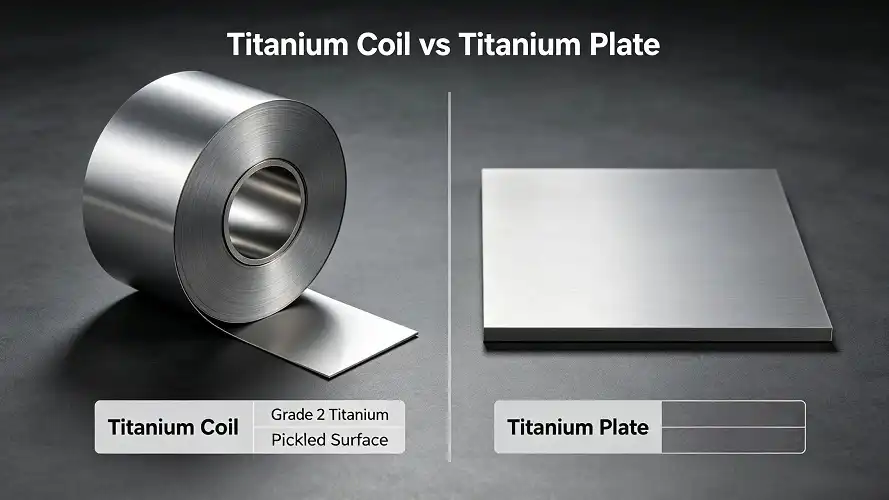
What Is a Titanium Sheet Roll?
Continuous hot rolling or cold rolling is used to make a titanium sheet roll. The roll is then annealed, leveled, and pickled to make it stable and flat. Sheet rolls in grades Gr1, Gr2, Gr3, Gr4, Gr5, Gr7, and Gr12 are sold by Jucheng Titanium. The rolls are between 0.3 and 12.0 mm thick and 950 mm to 1,500 mm wide. Cold-rolled types have a better surface finish and thickness tolerance, which is very important for precision pressing or automatic feed lines.
What Is a Titanium Plate?
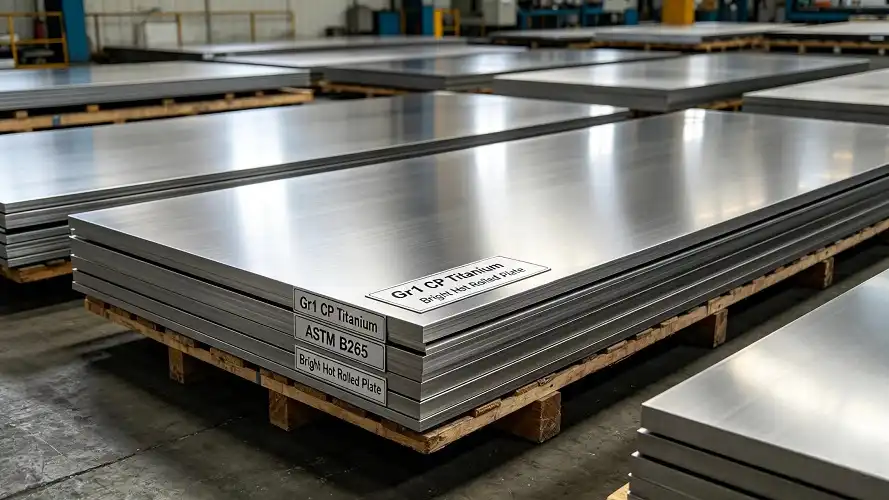
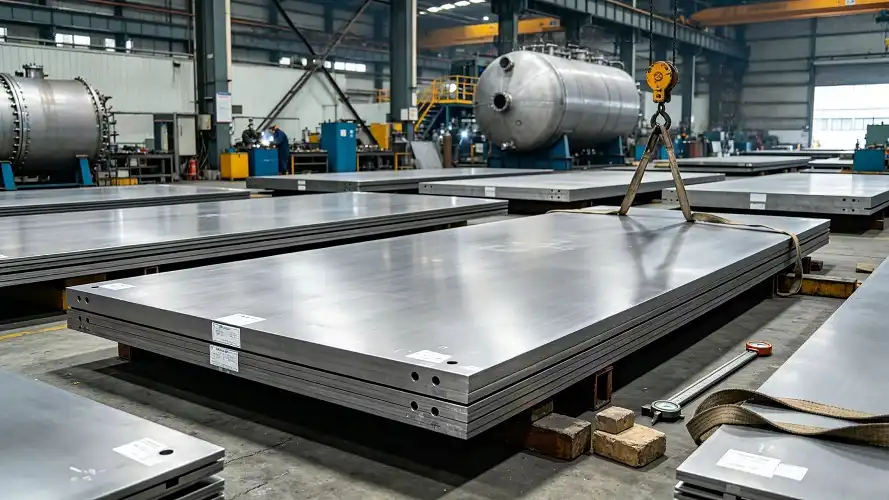
A titanium plate is a flat, separate piece of metal that is usually heavier and cut to a set length. Steel plates are made by hot rolling, and they work best for tasks that need strong structures, a lot of machining, or a lot of welding. If the grade and end use are right, both forms meet ASTM B265, ASME SB265, ASTM F67, AMS 4911, and ASTM F136.
The main difference is between forms and how well they work with later processes. Sheet rolls naturally fit into continuous manufacturing processes; plates hold together structural assemblies where being able to keep their shape under load is more important than being able to bend.
Comparing Titanium Sheet Rolls and Plates: Application Suitability and Benefits
Where do Sheet Rolls Outperform?
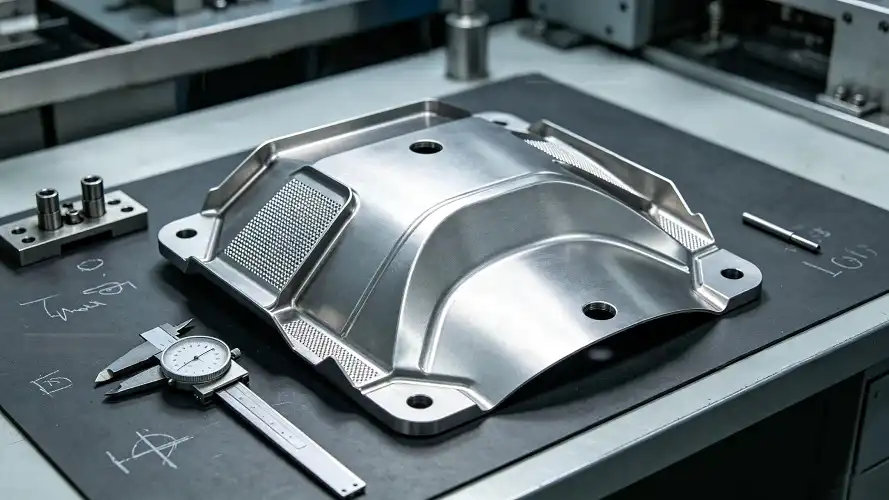
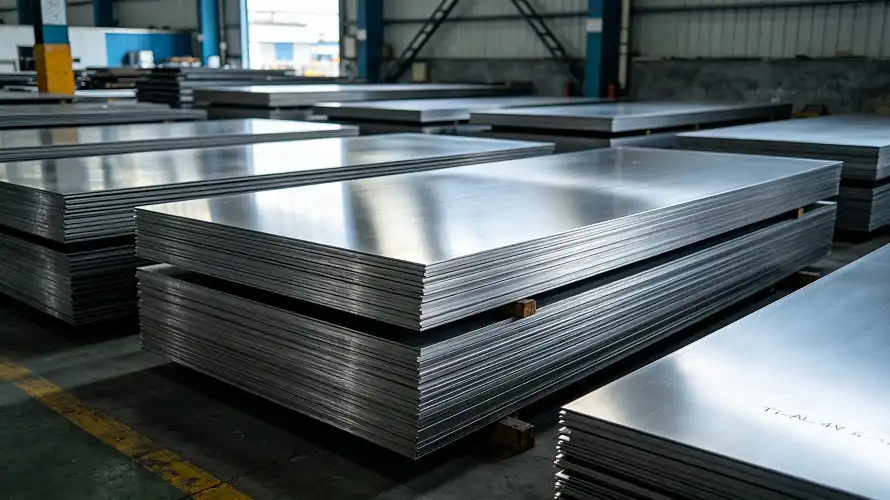
Titanium sheet rolls are the best choice when you need to stamp, deep draw, hydroform, or do automatic constant feeding. Here are the main areas of use where coil format clearly has an advantage:
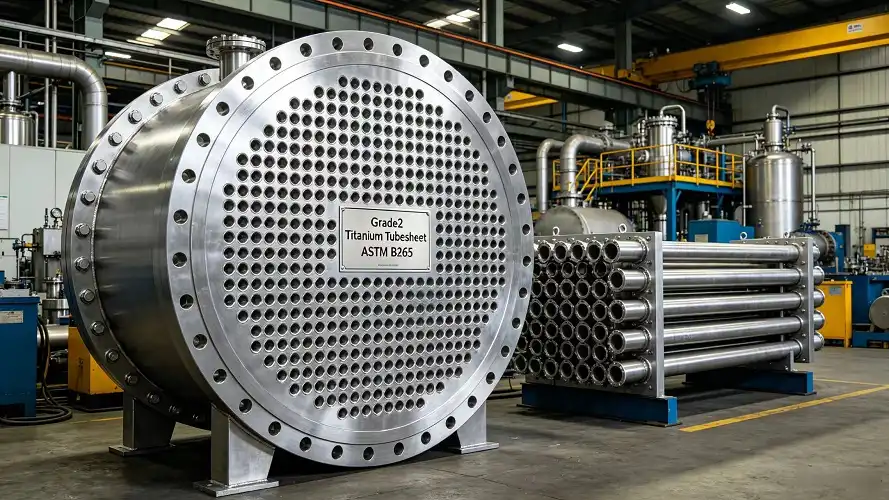
- Plate heat exchangers: Continuous coil feeding enables uninterrupted stamping of chevron-pattern plates. Grade 2 titanium's immunity to chloride-induced pitting makes it the dominant material in desalination and chemical synthesis equipment.
- Aerospace thermal shielding: Aircraft engine firewalls and ducting benefit from a titanium sheet roll's ability to produce large-span, seamless heat shields. Grade 5 under AMS 4911 provides tensile strength ≥ 895 MPa with minimal weight penalty.
- Medical implant components: Pacemaker housings and defibrillator cases are deep-drawn from ASTM F136-compliant Grade 23 coil. Consistent gauge across the roll prevents tearing during high-precision micro-stamping.
In the case of plate heat exchangers, Continuous coil feeding lets chevron-pattern plates be stamped without stopping. Because grade 2 titanium doesn't get pitted by chloride, it is the most common material used in tools for purification and chemical synthesis.
Where Are Plates the Better Call?
There is one thing that all of these uses have in common: they need uniform materials and smooth process flow, which the coil format regularly provides.
Titanium plates are used when stiffness, weldability, and the cross-section of the structure are more important than their ability to be shaped. Plate material is usually Grade 2 or Grade 7 for chemical protection or Grade 5 for high-strength structural uses. This is what is needed for chemical reactor shells, pressure tank walls, and heavy-duty marine parts.
Cost and Procurement Considerations for Titanium Sheet Rolls vs Plates
Pricing Dynamics and Order Flexibility
The cost of procurement depends on the grade, the method of processing, and the size of the order. Because it goes through more steps of processing, like leveling, heating, and precision gauging, cold-rolled coil with a bright or acid-pickled surface finish costs a little more than hot-rolled plate. Still, coil format usually cuts down on material waste in stamping operations that do a lot of them, which makes up for differences in cost per kilogram over the course of a production run.
Jucheng Titanium keeps about 3,000 tons of titanium in stock all year long in a variety of grades and forms. This level of inventory directly cuts down on lead times, which is a big plus when project deadlines are tight. Distributors and trading companies can get custom widths, lengths, and surface states, and they can also get OEM package support.
Supplier Reliability and Risk Mitigation
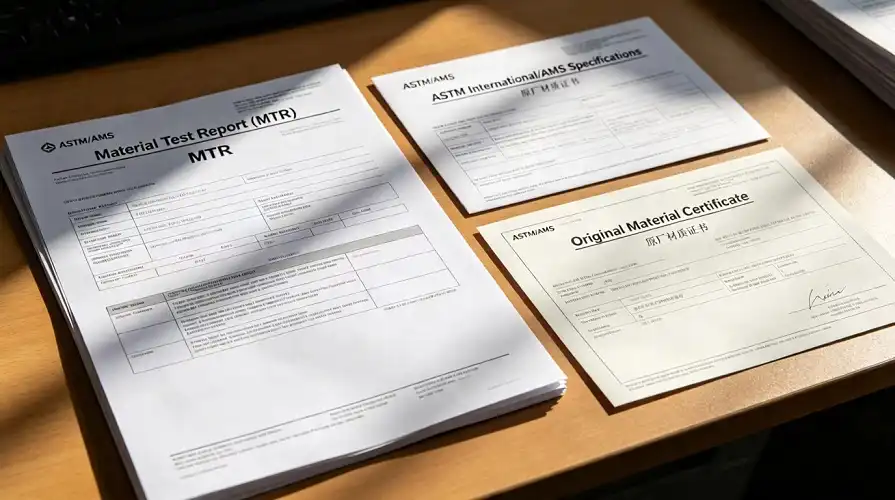
As per EN 10204 3.1, every shipment of titanium from a reliable source should come with a Mill Test Report that lists the heat number, chemical composition, and mechanical test results. People who are buying things for medical or aircraft use should make sure that they are compliant with AMS 4911 or ASTM F136, as needed. Interstitial element controls, especially the amount of oxygen and hydrogen present, are unavoidable quality gates. Too much oxygen makes the material less flexible, and too much hydrogen makes it more likely to break over time.
The most common risk in the supply chain is getting titanium sheet roll material that looks good but fails during processing. This can be avoided by working with a licensed maker that keeps trackable paperwork.
Fabrication and Handling: Working with Titanium Sheet Rolls vs. Plates
Cutting, Bending, and Surface Treatments
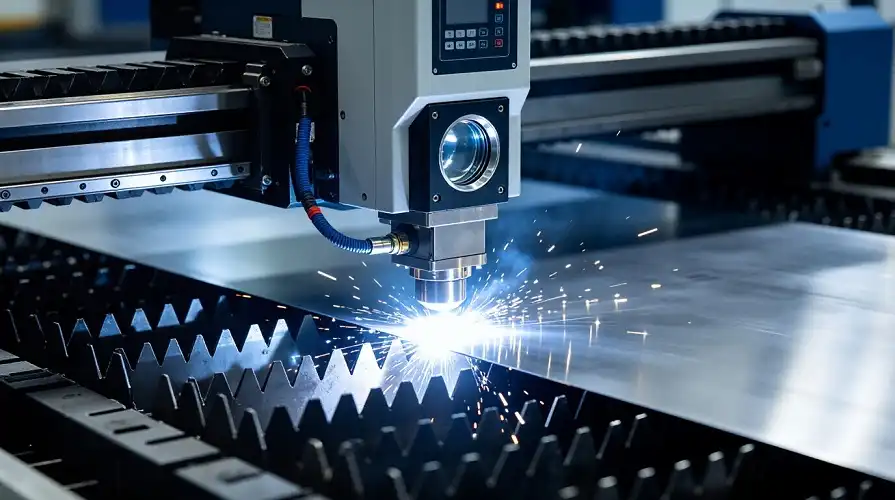
Prior to processing, titanium sheet rolls fed into stamping or laser-cutting lines must be tension-leveled to remove any remaining coil set and guarantee "dead flat" behavior. At room temperature, the smallest bend radius that should be used for Grade 2 coil is 2T, which is twice the width of the material. Any smaller than this could cause micro-cracks that run perpendicular to the direction of rolling.
Surface cleaning affects both how well rust works and how well downstream bonds work. There are two main surface states that Jucheng Titanium can be made in: "bright" and "acid pickled". The alpha case is a thin, brittle layer of oxygen-rich material that forms during hot processing. It needs to be completely removed before pressing can happen. Our cleaning process guarantees that it has been removed completely.
Carbide-tipped or PCD tools are needed to machine titanium plates because the material doesn't conduct heat well and tends to work-harden. To keep the ductility of the weld zone, welding Grade 2 and Grade 5 plates needs inert-gas protection and strict rules on contamination.
Making the Right Choice: How to Decide Between Titanium Sheet Roll and Plate for Your Project?
The choice depends on three things: the type of process, the technical demand, and the number.
| Criteria | Sheet Roll | Plate |
|---|---|---|
| Best for | Stamping, deep drawing, continuous feed | Structural fabrication, heavy machining |
| Thickness range | 0.3–12.0 mm | Typically > 4.0 mm |
| Surface finish | Bright / Acid Pickled | Acid Pickled / Mill |
| Grade options | Gr1, Gr2, Gr3, Gr4, Gr5, Gr7, Gr12 | Gr1, Gr2, Gr4, Gr5, Gr7, Gr12 |
| Standards | ASTM B265, AMS 4911, ASTM F67, ASTM F136 | ASTM B265, ASME SB265 |
| Waste reduction | High | Moderate |
| Weldability | Good | Excellent |
It is best for stamping, deep drawing, continuous feed, structural fabrication, and heavy machining. The thickness ranges from 0.3 mm to 12.0 mm, but it's usually more than 4 mm. The surface finish can be bright or acid-pickled, and there are different grades. The grades are Gr1, Gr2, Gr3, Gr4, Gr5, Gr7, and Gr12. The standards are ASTM B265, AMS 4911, ASTM F67, and ASTM F136. The waste reduction is high or moderate. The weldability is good to excellent.
A coil format cuts down on nesting waste and speeds up cycle times if your project involves automated manufacturing with repeating part geometries. Sheet metal is what you should use when making a reactor vessel, a structural bracket, or a conduit with thick walls. In hybrid uses, like a heat exchanger with stamped PHE plates and a thick end plate, both forms may show up in the same BOM.
Conclusion
Picking between a titanium sheet roll and a titanium plate is a technical choice that has real effects on cost and performance. Sheet rolls are used in industrial processes that need to be continuous and precise, and plates hold together structural parts that require a lot of welding. You can get both forms for grades Gr1 through Gr12 under ASTM B265, AMS 4911, ASTM F67, ASTM F136, and ASME SB265. Instead of choosing the more common format, make sure it fits your needs. This will protect your budget, performance, and output throughout the whole project.
FAQ
1. What is the standard thickness range for titanium sheet rolls?
We sell titanium coil from Jucheng Titanium that is 0.3 mm thick to 12.0 mm thick and 950 mm to 1,500 mm wide. If you ask, we can make lengths that fit your needs.
2. Which titanium grade is best for chemical processing equipment?
Grade 2 covers most places where rusting can happen in water. It is necessary to use Grade 7 when reducing acids like hydrochloric acid or sulfuric acid at high temperatures because the palladium adds a lot to the passive range.
3. Can titanium sheet rolls be welded?
Yes, it is common to use argon back-shielding for TIG welding. It is not possible to directly weld carbon steel to TiFe intermetallics because they become weak. For metal joints that are not the same, you need to use explosion bonding or mechanical fastening.
4. What certifications should accompany a titanium coil shipment?
As per EN 10204 3.1, a package that is compliant has an MTR that confirms the heat number, chemical makeup, and mechanical test results. Aerospace and medical orders need AMS 4911 or ASTM F136 compliance paperwork as well.
Partner with Jucheng Titanium — Trusted Titanium Sheet Roll Supplier
Since 2004, Jucheng Titanium has worked with clients in the aerospace, chemical, medical, and industrial fields from Baoji, which is known as the "heartland" of titanium in China. We are a nationally known high-tech company with 45 patents and 3,000 tons of stock. We offer approved titanium sheet roll and plate options that are made to your exact specifications. Whether you need ASTM B265 Gr2 coil for PHE stamping or AMS 4911 Gr5 sheet for aircraft parts, our team is ready to help you with your order. To get a quote right away, email s4@juchengti.com.
References
1. ASTM International. ASTM B265: Standard Specification for Titanium and Titanium Alloy Strip, Sheet, and Plate. ASTM International, 2020.
2. ASM International. Titanium: A Technical Guide, 2nd Edition. ASM International, 2000.
3. Boyer, R., Welsch, G., & Collings, E. W. Materials Properties Handbook: Titanium Alloys. ASM International, 1994.
4. Peters, M., Kumpfert, J., Ward, C. H., & Leyens, C. "Titanium Alloys for Aerospace Applications." Advanced Engineering Materials, 2003.
5. SAE International. AMS 4911: Titanium Alloy Sheet, Strip, and Plate, 6Al-4V, Annealed. SAE International, 2015.
6. Donachie, M. J. Titanium: A Metallurgical Guide. ASM International, 2000.