
Unveiling the Titanium Flat Plate Manufacturing Process
Titanium flat plates are made through a complicated process of chemical changes that keep the metal's original qualities while meeting exact size requirements. These plates are made by hot rolling titanium ingots, which controls the temperature and force of deformation between 700°C and 950°C. The plates are then annealed, which re-crystallizes the grain structure. The finished goods are up to strict standards like ASTM B265 and AMS 4911. They are good at resisting rust and being strong for their weight, which are important for uses in aircraft, chemical processing, and medical devices. Knowing this production route helps people who buy things judge the skills of suppliers and make sure that materials are always the same.
Introduction
It's important to find the right tools for a job on time. When flight engineers choose materials for structural parts or chemical plant managers choose materials for equipment, they're not just buying metal; they're investing in long-term safety, performance, and stability. Because they can solve problems that other materials can't, titanium flat plate goods have become essential in high-performance fields.
This guide shows you the whole process of making these special plates, from choosing the raw materials to making sure the final product is of good quality. We'll talk about what makes different grades of titanium different, how production methods affect the properties of the material, and what buying teams should look for in sources. You'll find useful information that can be used right away to make decisions about buying, whether you're a purchasing manager making decisions about the supply chain or a distributor looking at your product choices.
Materials that work well under pressure—both literally and figuratively—are needed in the industrial world. Chemical environments that are corrosive, high temperature changes, and strict weight limits pose problems that normal metals can't solve. Knowing how companies turn raw titanium into precision-engineered plates helps buyers spot signs of quality and make smart choices that protect the results of projects.
Understanding Titanium Flat Plates – Properties and Applications
What Defines a Titanium Flat Plate
A titanium flat plate is a semi-finished mill product that has a rectangular cross-section and a thickness between 4mm and 80mm. Its width is between 950mm and 2500mm, and its length can go up to 10,000mm. Titanium plates are thicker than sheets, which are usually less than 4mm thick. Plates keep the metal's density of 4.51 g/cm³, which is about 56% that of steel, and are used for load-bearing purposes.
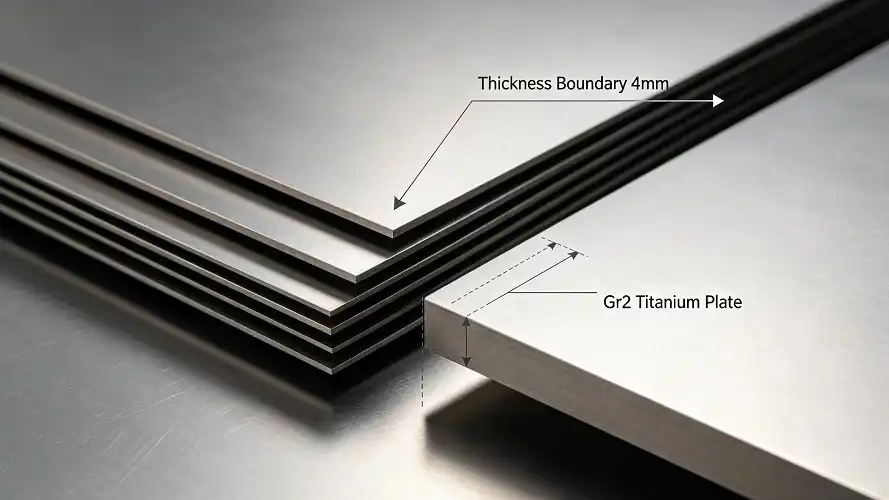
Key Grades and Their Distinct Characteristics
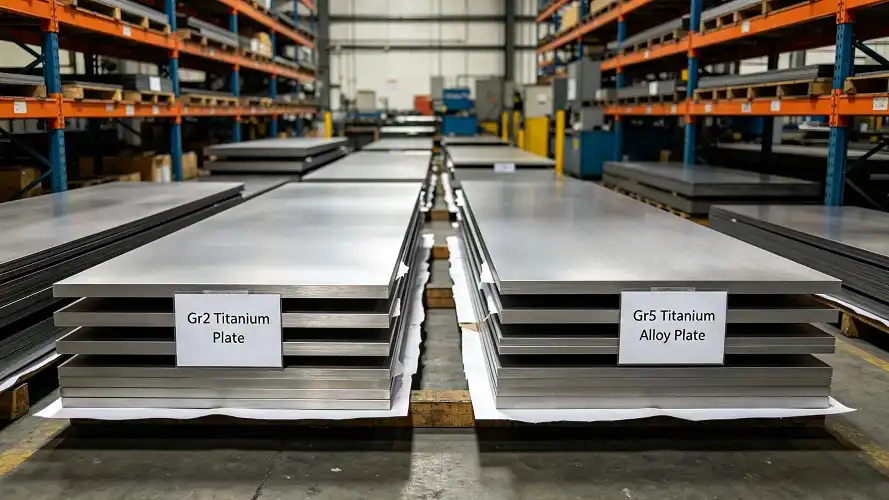
Commercial purity grades (Gr1, Gr2, Gr4) are great for use in chemical processing equipment and on the water because they are easy to shape and don't rust. Grade 2 is the workhorse of the industry because it has the best mix of technical qualities and weldability. Different grades of alloys change performance parameters in big ways. Grade 5 (Ti-6Al-4V) has a minimum tensile strength of more than 895 MPa, making it ideal for use in aerospace structural parts that need to be resistant to high-cycle fatigue. Palladium is added to Grade 7 to make it more resistant to reducing acids, which is useful for certain problems in hydrometallurgical processes. Grade 9 (Ti-3Al-2.5V) is a cheap option for applications like tubing and pressure vessels that need moderate strength.
Mechanical and Chemical Properties That Matter
A passive titanium dioxide (TiO2) film forms on these titanium flat plates on its own, protecting them from corrosion in the air, seawater, and oxidizing acids. This is a huge benefit for remote bases and desalination systems. The tensile strength varies from 240 MPa for Grade 1 to over 900 MPa for Grade 5. The modulus of elasticity is around 110 GPa, which lets the stress be spread out in different ways. The material's mechanical performance stays stable at temperatures close to 600°C, making it better than aluminum alloys in high-heat areas.
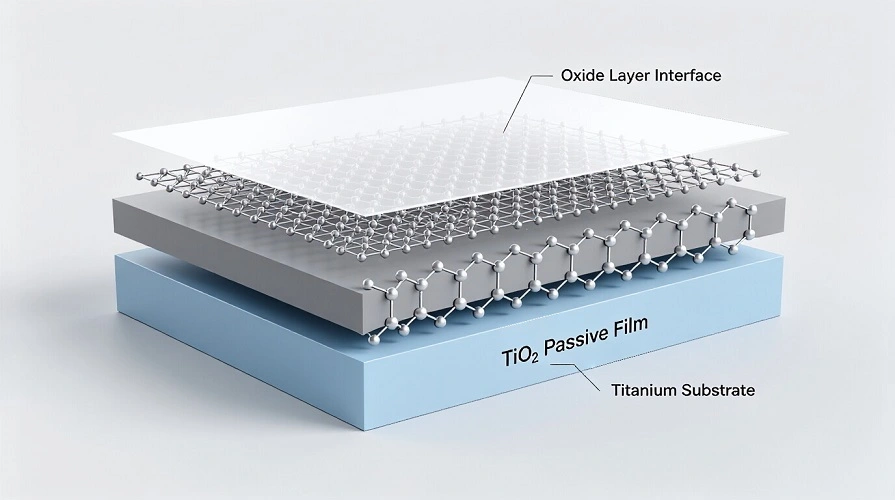
Industry Applications Driving Demand
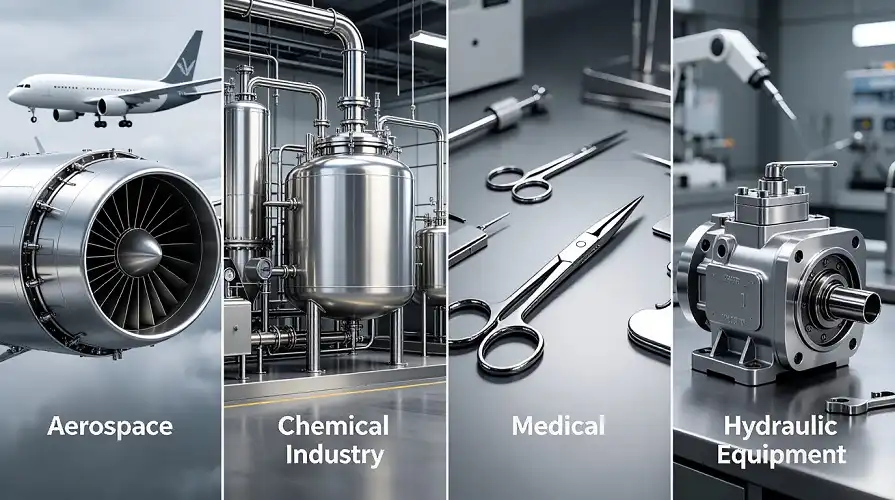
These plates are used by aerospace companies for bulkheads, wing skins, and engine parts, where reducing weight has a direct effect on fuel efficiency. Titanium's ability to prevent rust is important for reactor vessels, heat exchanger plates, and storage tanks that deal with aggressive media in chemical processing plants. Medical device makers use the metal's osseointegration qualities to make surgical implants and tool parts that are biocompatible. Titanium is used in marine engineering projects for ship hulls, offshore platform structures, and submarine parts that will be exposed to saltwater all the time. These different uses show why people who work in procurement need to know about the little things that affect how well materials work during production.
The Titanium Flat Plate Manufacturing Process Explained
Raw Material Selection and Billet Preparation
The process of making something starts with vacuum arc remelting (VAR) ovens, melting titanium sponge or scrap materials to get rid of impurities and make sure the makeup is uniform. Cylindrical ingots are made and then surface-conditioned to get rid of flaws before they are forged into billets. Controlling the amounts of oxygen, nitrogen, and iron in this preparation phase sets the stage for the metallurgical process. The end product's mechanical qualities and resistance to rust are directly affected by these elements.
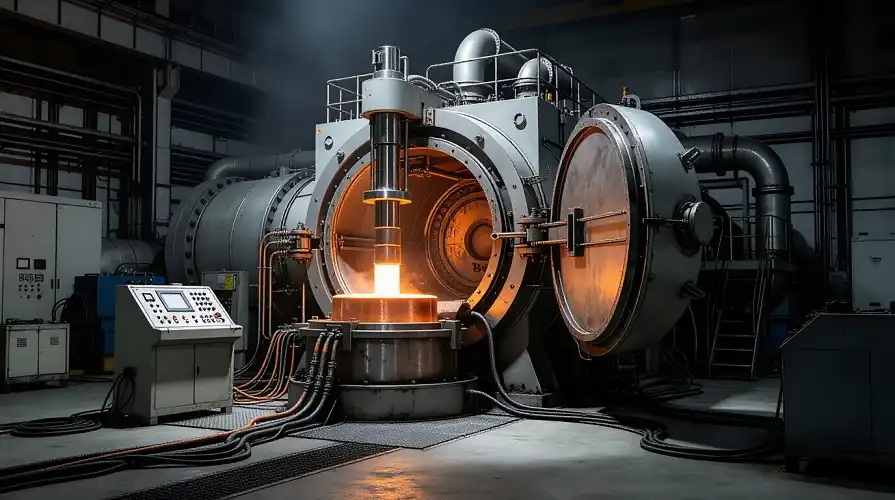
Hot Rolling: The Primary Formation Process
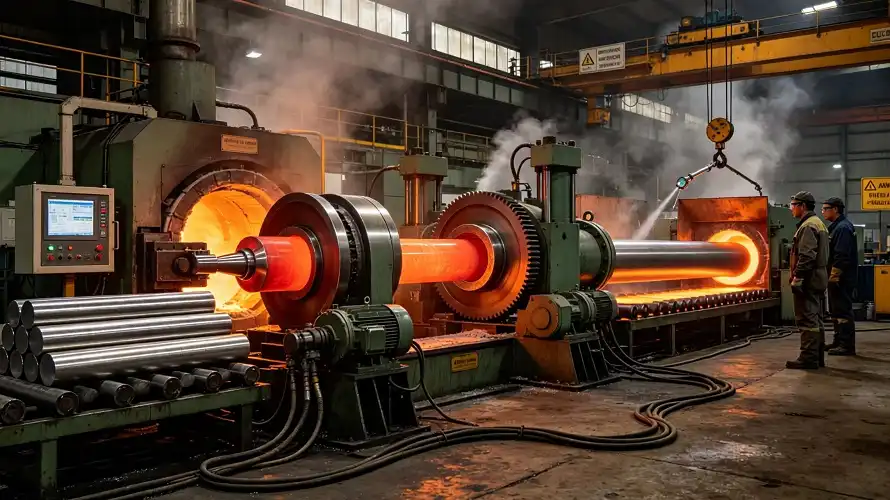
When billets are heated to 850–950°C and then put through a series of mill stands that gradually reduce their thickness, this is the most important step in the transformation process. The high temperature keeps the workability high while dynamic recrystallization improves the grain structure. The reduction ratios, inter-pass temperatures, and rolling speeds are carefully coordinated to reach the target thickness ranges (4mm to 80mm) and develop the desired mechanical properties. For bigger plates, more than one heating and rolling operation may be used, and each pass must be watched to make sure there are no surface cracks or changes in size.
Modern rolling mills have complex control systems that keep the thickness the same across plate widths of more than 2500mm, which is important for making big aircraft parts. At the end of the process, controlled cooling rates change the phase makeup in different alloy grades. In Grade 5, the alpha-beta ratio sets the final tensile strength.
Heat Treatment and Annealing Protocols
Annealing does two things: it relieves stress and improves the microstructure. Plates are heated in safe atmospheres or vacuum tanks to temperatures between 650°C and 750°C and then kept at those temperatures for set amounts of time based on their thickness. This heat treatment gets rid of any residual stresses from rolling and helps the grains grow evenly. For commercially pure grades, annealing makes them more flexible and easier to shape. Certain heat treatment plans can help different types of alloys by bringing out strengthening phases or getting rid of unwanted parts. Whether the metal is cooled in a furnace or by air, the rate at which it cools from the annealing temperature affects its final mechanical properties and must meet the requirements of the specification.
Surface Finishing Techniques
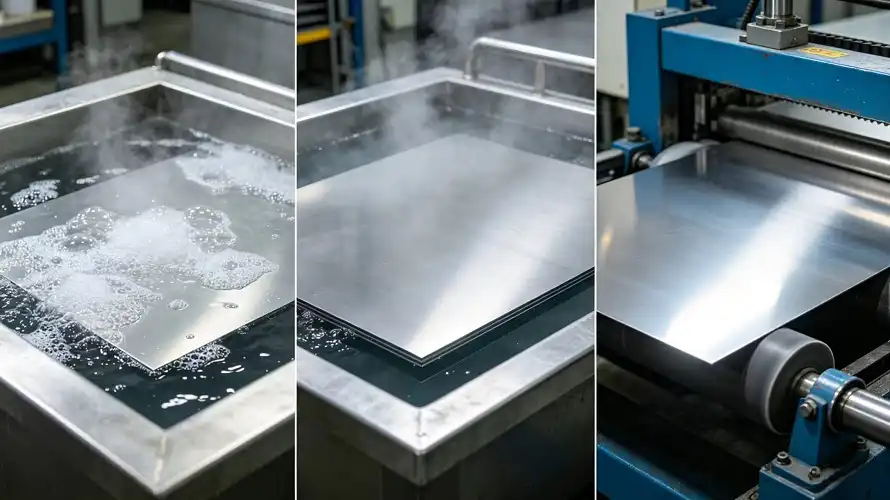
The way the surface is treated has a direct effect on how well corrosion works and on the manufacturing processes that follow. The oxygen-rich alpha-case layer that forms during hot working is removed by pickling in hydrofluoric and nitric acid solutions. This leaves a clean titanium base. Some mechanical finishing choices are grinding to get exact control over the thickness, machining to meet flatness requirements, and polishing to get medical-grade mirror finishes. Different ways of treating the surface leave different microstructural marks that affect how the material welds and how well coatings stick in later steps of production.
Rigorous Quality Control and Certification
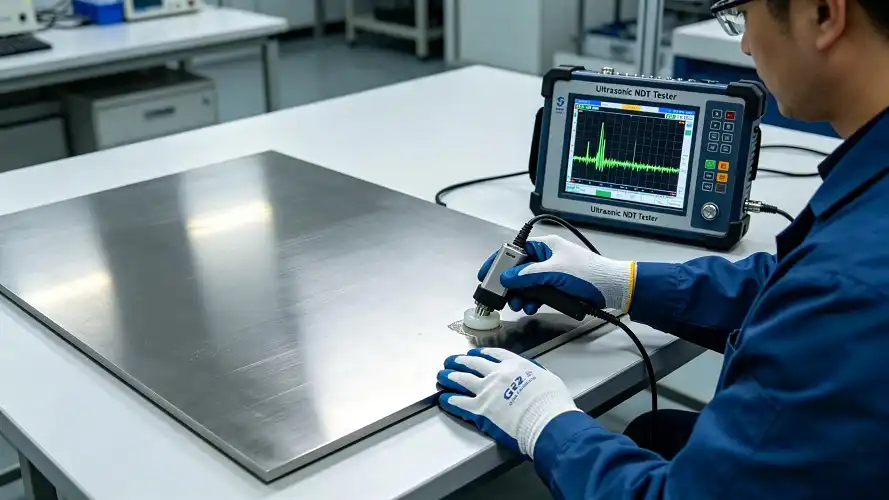
Comprehensive testing protocols are used on every production batch of titanium flat plate. Dimensional metrology checks for thickness, width, and smoothness tolerances, while ultrasonic testing finds internal flaws. As part of mechanical testing, tensile specimens are taken from plate samples and checked against ASTM B265 or AMS 4911 standards for yield strength, ultimate tensile strength, and elongation values. Spectroscopic chemical analysis confirms the grade's composition and ensures that the amounts of interstitial elements stay within the limits set by the standard. For important uses, corrosion testing may include water tests or electrical checks. Full material traceability, from the chemistry of the ingot to records of the final certification, provides the chain of documentation that the aerospace and medical sectors require.
Comparing Titanium Flat Plates with Alternative Metals
Stainless Steel: The Traditional Benchmark
Grades of stainless steel like 316L are good at resisting rust and cost about a third of what titanium does. This makes them a good choice for projects that need to stay within a budget. But stainless steel's density (about 8.0 g/cm³) is almost twice that of titanium, which means it is heavier in aircraft and car uses. Stress corrosion cracking caused by chloride is still a problem for stainless steel in naval settings. Titanium's passive oxide layer gets rid of this failure mode. Titanium's better performance justifies the higher price for chemical processing equipment that works with oxidizing acids or high-temperature chloride solutions. It makes equipment last longer and costs less to replace.
Aluminum Alloys: Weight Advantages with Limitations
As a result of their lower density (about 2.7 g/cm³) and low cost, aluminum alloys are the most common material used in business airplane fuselages. But aluminum's strength-to-weight ratio isn't as high as titanium's. This is especially true at high temperatures, above 150°C, when aluminum metals stop being mechanically sound. For corrosion resistance, protective coatings are needed, which adds up to maintenance needs that aren't there with titanium. Titanium plates offer performance that aluminum can't match for aircraft parts that are heated by engines or military uses that need to be resistant to bullets.
Nickel Alloys: High-Temperature Specialists
Nickel-based superalloys work really well in very hot places, like the hot parts of gas turbines, where the temperature is too high for titanium to work. But nickel metals have a mass of about 8.5 g/cm³ and cost more than titanium most of the time. Usually, the choice line is around 600°C. Titanium plates are used for tasks below this temperature, while nickel alloys are used for tasks that need to be heated up. Titanium's ability to resist corrosion is better than nickel's ability to handle heat for pressure vessels in chemical plants or offshore structures.
Making the Right Material Selection
When buying something, you should think about a lot of different things at the same time. Titanium plates' high price is worth it in situations where problems due to corrosion would cost a lot, where reducing weight would make operations more efficient, or where government rules demand certain material qualities. Choosing the right grade further refines the value equation. Commercially pure grades (Gr2, Gr4) work well in corrosive environments with moderate stress levels, while alloy grades (Gr5, Gr9) meet the needs of high-strength structures. When buyers know these performance limits, they don't over-specify, which drives up costs needlessly, or under-specify, which increases the risk of failure too soon.
Procurement Considerations for Titanium Flat Plates
Evaluating Supplier Capabilities
To make titanium plates, you need special tools and knowledge about metals that not all suppliers have. When looking for a maker, make sure they have experience with hot rolling, controlled-atmosphere heat treatment, and full-service testing labs. Systematic process control is shown by certification to quality management standards like ISO 9001 and industry-specific plans like AS9100 for aircraft and ISO 13485 for medical. Audit accounts of suppliers, customer references from similar applications, and records of on-time delivery can tell you more than what the marketing says.
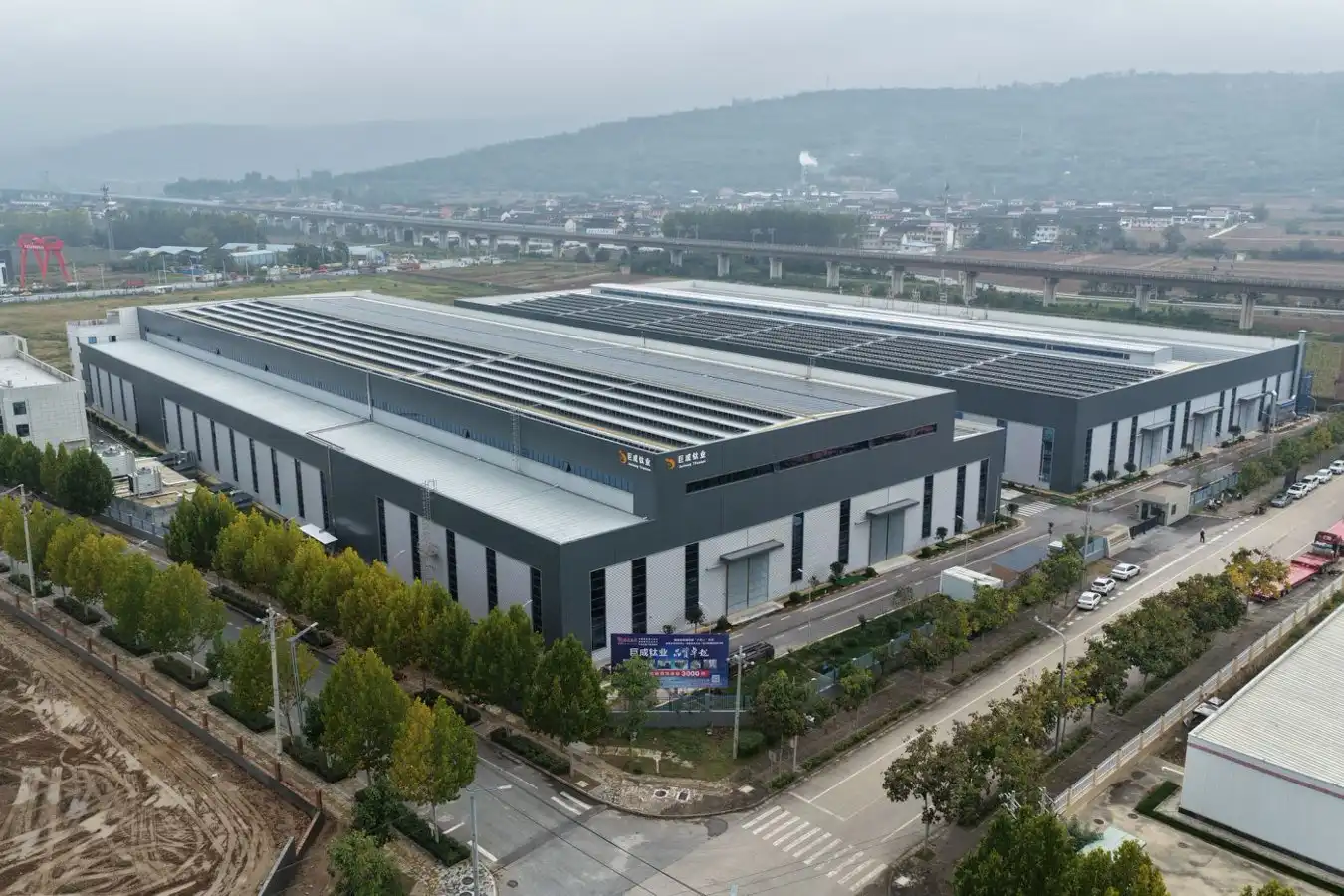
The Baoji area in China has become a major center for making titanium products, with companies there that have been making these materials for decades. When looking at wholesalers from this area or elsewhere, make sure you check how they get their raw materials, because the quality of the ingots directly affects how well the plates work. Well-known companies keep working with trustworthy sponge sources and use strict testing procedures for new materials that prevent chemical differences from happening.
Understanding Pricing Structures and Lead Times
The cost of titanium flat plates depends on a number of factors, including the cost of the base metal, how hard they are to process, how many plates are ordered, and their exact dimensions. Prices for Grade 2 plates on the market right now are between $15 and $25 per kilogram, while prices for Grade 5 metal plates are between $25 and $40 per kilogram, though these prices can change depending on how the global supply chain works. Usually, the smallest amount you can order is 500 kilograms, but some suppliers can work with smaller amounts if you need them, and they may charge you less. Custom sizing, which means sizes that aren't standard for widths, lengths, or thickness, may cost more and take longer to deliver.
Standard production wait times are between 6 and 10 weeks from the time an order is confirmed until it is shipped. This time includes getting the materials, processing them, checking the quality, and making the paperwork. You might be able to get rush orders at a higher price, but faster delivery should never mean skipping quality checks. By making blanket buy deals with scheduled releases, you can better control your inventory and get better prices by committing to a higher number.
Navigating International Logistics and Documentation
When you source goods from around the world, you need to pay attention to export laws, shipping processes, and customs paperwork. Make sure that suppliers give you full material test reports (MTRs) that show the chemical makeup, mechanical properties, and heat treatment records. These are necessary for quality audits by customers and regulatory filings. The lines on the Certificate of Conformity should list the relevant standards (ASTM B265, ASME SB265) and be able to be linked to individual production lots.
When shipping, it's important to use the right packing to keep the surface from getting damaged during transport, especially if the surface is polished or machined. Optimizing containers for plate sizes affects freight costs, and insurance coverage should be based on the value of the goods being insured. Import taxes and fees are different for each country and type of product, so you need to talk to customs traders who know about titanium product codes. Getting to know suppliers who have experience with foreign trade can make things easier and lower the risks of buying.
Practical Tips for Handling and Using Titanium Flat Plates
Machining Best Practices
Because titanium doesn't conduct heat well and reacts chemically with cutting tools, it needs special ways to be machined. To keep the work from getting too hard, keep the cutting speeds low (about half of what is used for steel) and the feed rates high. Sharp tools with positive rake angles lower cutting forces, and a lot of coolant flow gets rid of heat and stops chip welding. Carbide or polycrystalline diamond tools work better than high-speed steel, but they cost more and need to be bought in order for production to run smoothly.
Welding Techniques for Titanium Plates
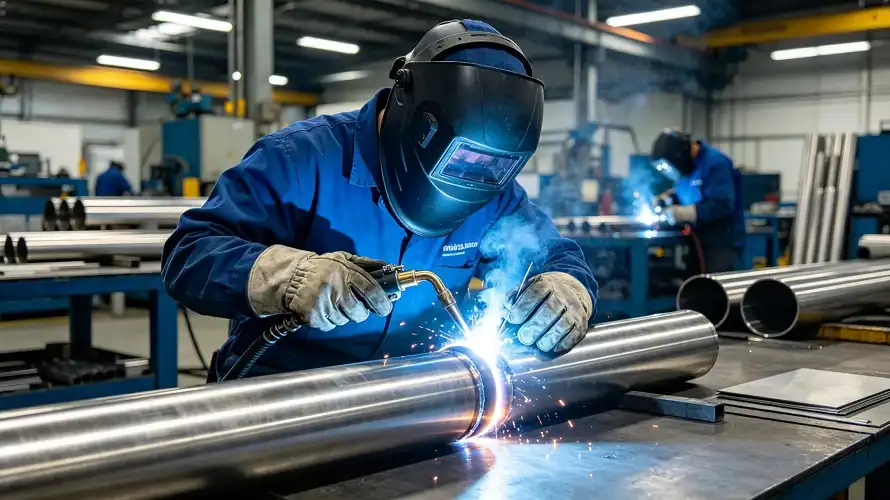
To successfully weld titanium, it must be completely protected from contamination from the air. Gas tungsten arc welding (GTAW/TIG) is still the best way to join metals. It uses argon gas to protect both the front and back of the weld pool. Trailing shields cover the metal while it cools until it's below 400°C. This keeps air or nitrogen from weakening it. A good weld starts with properly preparing the joint, which includes cleaning with solvents and mechanically removing surface oxides. Qualifying welding methods according to AWS D1.9 or aerospace standards makes sure that all production runs have the same results.
Storage and Surface Protection
Titanium plates should be kept in dry places, away from carbon steel and other metals that could contaminate or cause galvanic corrosion. Surfaces don't get scratched when they're handled because of protective plastic films or interleaf paper. Do not let chlorinated solvents or strong reducing acids touch the passive oxide layer. They could damage it. By checking the surface often for discoloration that could mean heat exposure or contamination, problems can be fixed quickly, before the material starts to break down and affects performance.
Real-World Application Examples
An aerospace company cut the weight of the airframe by 18% by using Grade 5 titanium flat plates instead of aluminum in important load-bearing bulkheads. This saved the company money on fuel over the life of the aircraft. A chemical processing plant got rid of frequent reactor vessel failures by switching from 316L stainless steel plates to Grade 7 titanium plates. This made the equipment last longer, from 5 years in hydrochloric acid service to over 15 years. Using titanium's biocompatibility and image compatibility, a company that makes medical devices got FDA approval for a new spine implant system made from Grade 23 plates. These examples show how choosing the right materials and treating them properly can have a direct effect on the success of a project.
Conclusion
To make precision-engineered flat plates from raw titanium, complex chemical processes, strict quality control, and specialized production know-how are needed. Knowing this production journey helps procurement pros judge the skills of suppliers, choose the right grades for the jobs they want to do, and arrange terms that balance cost with performance needs. Titanium's unique mix of strength, resistance to rust, and light weight is being used in more and more commercial settings where material performance is crucial. Successful sourcing strategies know that the lowest price isn't always the best value. Reliability, technical support, and regular quality delivery from suppliers are what decide the success of a project and its cost over its lifetime.
FAQ
1. What is the difference between titanium plates and titanium sheets?
The difference is based on diameter measurements. Titanium sheets are usually less than 4mm thick, which makes them flexible for shaping and covering processes. Plates are thicker than 4mm (between 4mm and 80mm for standard production), which keeps load-bearing parts structurally sound. This line of thickness affects how things are made; for example, plates need hot rolling processes that sheets can skip. To make sure that sellers offer the right goods, procurement specs should include exact thickness requirements.
2. Which titanium grade is best for aerospace applications?
Grade 5 (Ti-6Al-4V) is the most common type of steel used in aerospace structures because it has a high strength-to-weight ratio, doesn't fatigue easily, and stays stable at high temperatures. This alpha-beta metal has a tensile strength of more than 895 MPa and can still be welded and shaped. Grade 2 is a cheaper option for aircraft parts that don't need to be very strong or where better corrosion protection is more important than strength. Based on stress analysis and weather exposure, the best grade to use depends on the part's purpose, such as engine parts, aircraft structures, or hydraulic systems.
3. Can titanium flat plates be customized to non-standard dimensions?
Reliable manufacturers can meet custom sizing needs, such as widths, lengths, and thickness tolerances that aren't standard. For custom orders, there may need to be a minimum order quantity in order to cover the costs of setting up the production line and the longer lead times needed to prepare the tools. Clearly state the required tolerances, dimensions, and surface finish during the quote process to make sure the supplier's skills match the needs of the project. Custom size is especially helpful for cutting down on waste when making things or meeting the design requirements of specific pieces of equipment.
Partner with Jucheng Titanium for Your Titanium Flat Plate Supply
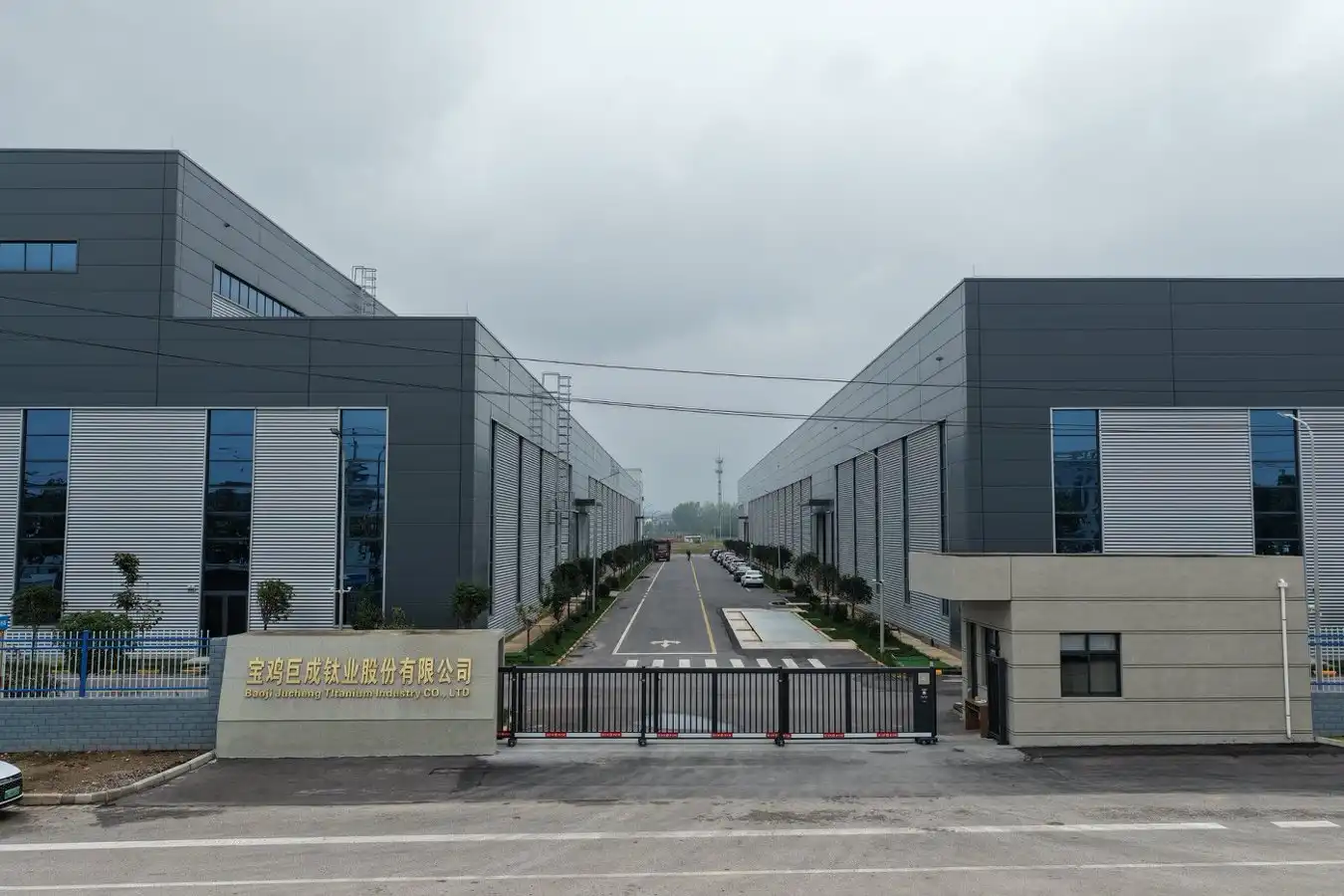
At Baoji Jucheng Titanium Industry Co., Ltd., we can help you with your buying plan because we have been making titanium products for over 20 years. Our plant keeps about 3,000 tonnes of titanium in stock in different grades (Gr1, Gr2, Gr4, Gr5, Gr7, Gr9, and Gr12), so we can deliver quickly and meet the deadlines for your project. We have 4 idea patents and 41 utility model patents that are used on all of our production lines as a National High-Tech business and a national-level "little giant" business. We make sure that our titanium flat plate goods meet strict international standards like ASTM B265, ASTM F67, AMS 4911, and ASME SB265. We also provide full material traceability and certification paperwork to back this up. Whether you need standard sizes or custom ones (thickness between 4 and 80mm, width up to 2500mm, and length up to 10,000mm), our engineering team can help you match the properties of the material to the needs of your application. Get in touch with us at s4@juchengti.com to talk about your buying needs with experienced sources who know how important accuracy and dependability are for your projects.
References
1. Lutjering, G., & Williams, J.C. (2007). Titanium: Engineering Materials and Processes. Springer-Verlag Berlin Heidelberg.
2. Donachie, M.J. (2000). Titanium: A Technical Guide, 2nd Edition. ASM International, Materials Park, Ohio.
3. ASTM International. (2020). ASTM B265-20: Standard Specification for Titanium and Titanium Alloy Strip, Sheet, and Plate. West Conshohocken, PA.
4. Boyer, R., Welsch, G., & Collings, E.W. (1994). Materials Properties Handbook: Titanium Alloys. ASM International.
5. Schutz, R.W., & Watkins, H.B. (1998). "Recent developments in titanium alloy application in the energy industry." Materials Science and Engineering: A, 243(1-2), 305-315.
6. Peters, M., Kumpfert, J., Ward, C.H., & Leyens, C. (2003). "Titanium alloys for aerospace applications." Advanced Engineering Materials, 5(6), 419-427.