



What Industries Use 1 Inch Titanium Plate for Structural Components?
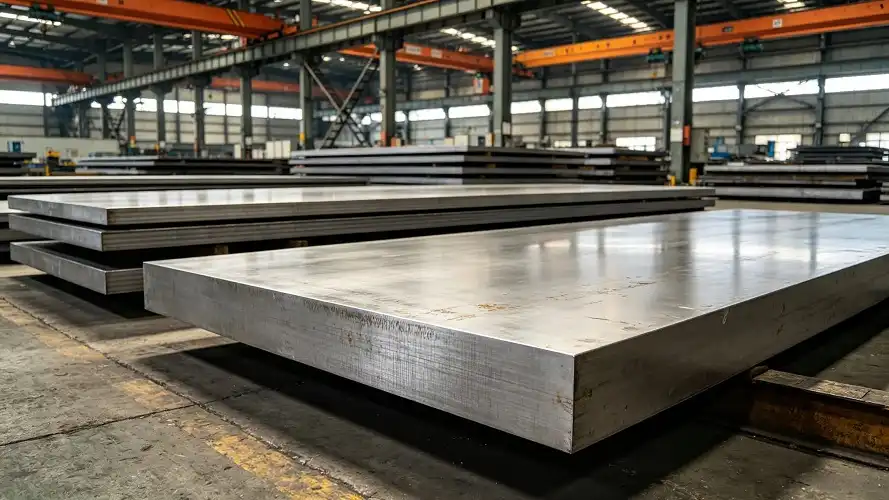
Titanium 1inch plate is often the best alternative for heavy-gauge titanium. Engineers and project managers turn to this product time and time again in the procurement process. This flat-rolled product fills a performance niche at 25.4 mm thick, dense enough to support considerable structural loads yet light enough to exceed steel in a strength-to-weight comparison. Demand for certified, precision-rolled 25mm titanium plate has been gradually growing across aerospace, marine, chemical processing and medical sectors. Knowing the sectors it is used in can help buyers make smarter buying choices.
Key Properties of 1 Inch Titanium Plate That Drive Industrial Use
Not all metals are consistent at the 25.4mm thickness. Titanium ranks first because it offers a combination of mechanical strength and chemical inertness that steel or aluminium of comparable weight just cannot match.
Mechanical Strength Across Grades
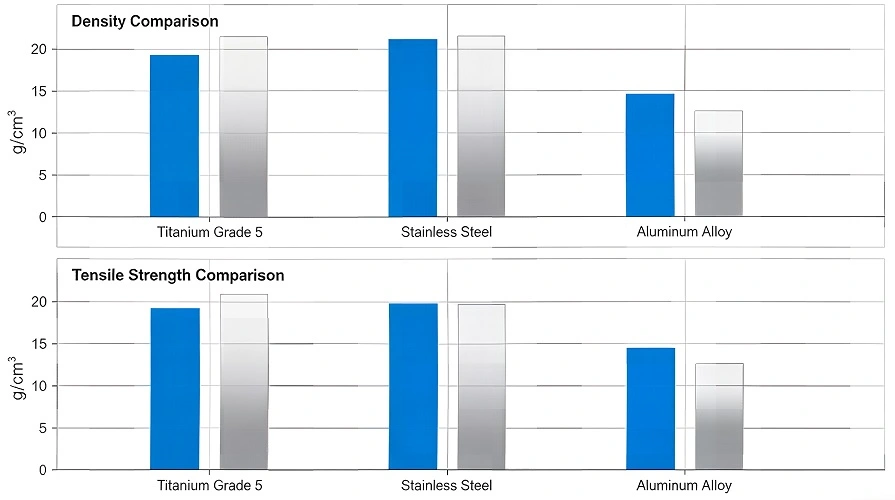
Tensile strength varies greatly from grade to grade. 483 MPa of Grade 2 commercially pure titanium is sufficient for regions where rust is frequent. Ti-6Al-4Vcan withstand stresses above 895 MPa and is the best option for extremely high loads. In Jucheng Titanium, we provide Gr1, Gr2, Gr4, Gr5, Gr7, Gr9 and Gr12 for your selection. Each grade is intended to perform effectively under a certain set of conditions. It is extremely crucial to preserve the flexibility through the thickness in hot rolling in an effort to avoid the separation of the thick cross section.
Corrosion Resistance in Aggressive Environments
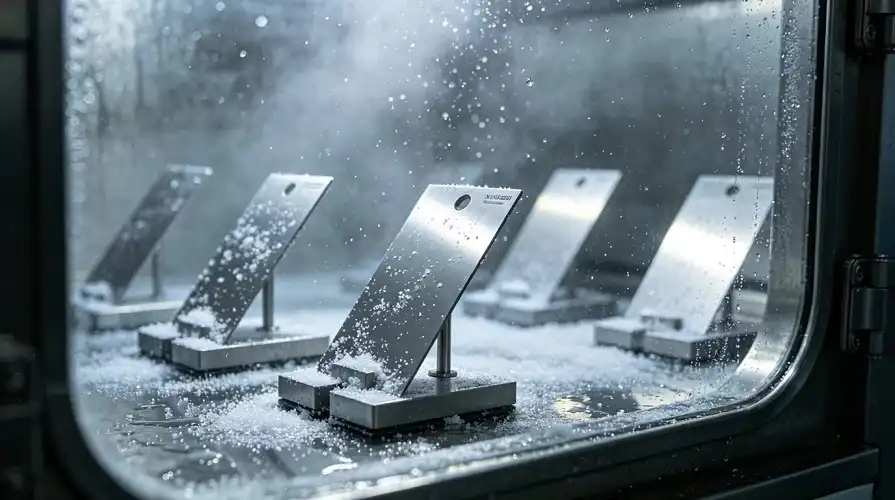
Due to a passive oxide coating, titanium is highly protected against chloride pitting, crevice corrosion, and oxidising acids up to roughly 316°C. The passive oxide film recovers immediately when the surface is injured. This property is irreplaceable in environments like saltwater, acid reactors, and chlor-alkali operations where steel must have thick layers that wear down with time.
Weight Advantage Over Steel
A 1 inch titanium plate weighs around 45% less than a steel plate of the same dimension, due to its density of 4.51 g/cm³ against 7.8 g/cm³. This difference translates into lifespan savings for aircraft and maritime constructions where every kilogram has an operating cost.
In and of itself, these three qualities—high strength, low density and resistance to corrosion—won't sell anything. Heavy-gauge titanium plate is used by capital-intensive organisations that can’t afford to break or quickly fix parts since they are a team.
Industries Leveraging 1 Inch Titanium Plate for Structural Components
You can see how versatile the material is, since 25mm-class titanium plate, including titanium 1inch plate, is employed in so many various industries. The key industries driving worldwide demand are as follows:
Aerospace and Defence: 1-inch titanium plate stock to make bulkheads, wing spars and nacelle frames that have to hold up under severe G-forces and wear cycles without failing. The plate is thick like a billet, so it may be machined to remove material from complicated forms. Acceptance requirements are defined by standards such as AMS 4911 and ASTM B265. FAA and MIL-SPEC clearance requires traceability of the material.
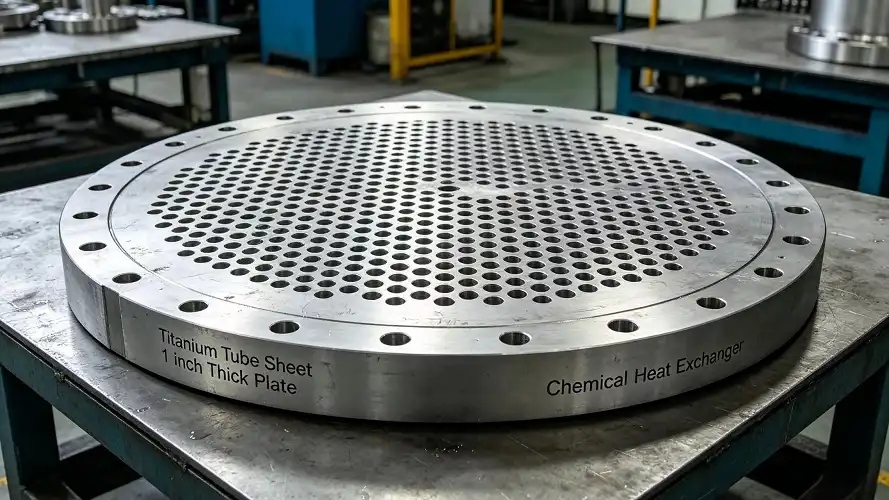
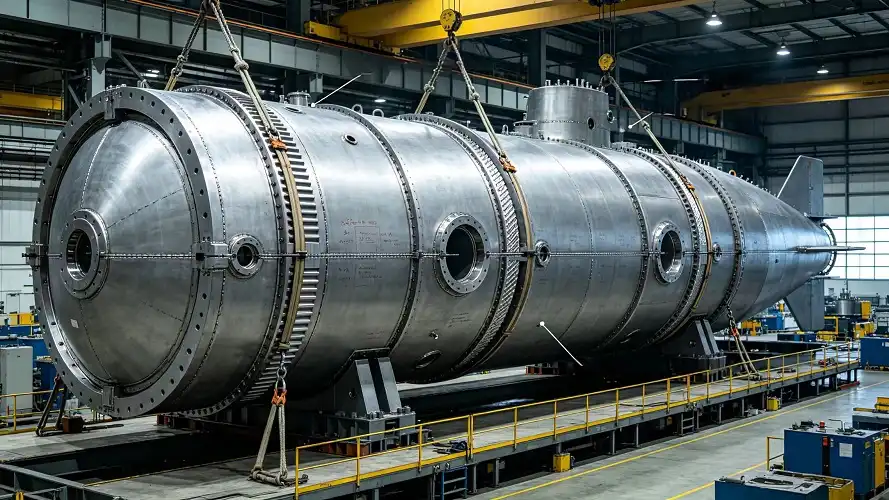
Chemical Processing & Petrochemical Titanium’s chemical inertness is used in the production of PTA and acetic acid, where titanium tube sheets, reactor tank walls and covered base plates are employed. The thickness of the wall is 1 inch. The pipe systems may be welded directly under high pressure without the modes of failure that are associated with smaller liners or coated steel.
- Aerospace & Defence: Machining 1″ titanium plate stock for bulkheads, wing spars and nacelle frames must survive high G-forces and fatigue cycles without fracturing. The plate as thick as a billet, so you may subtractively machine complicated designs. Acceptance criteria are defined by standards such as AMS 4911 and ASTM B265. Material traceability is a required specification for FAA and MIL-SPEC compliance.
- Chemical Processing & Petrochemical Titanium's chemical inertness is used in PTA and acetic acid manufacturing plants for tube sheets, reactor vessel walls and clad base plates. 1-inch wall thickness permits direct welding of pipe systems at high pressures, avoiding failure mechanisms of thinner liners or coated steel.
- Marine Engineering & Naval Defence: Deep-sea submersible pressure hulls, offshore platform components and naval vessel fittings are subjected to enormous hydrostatic pressure in persistently corrosive seawater. At this thickness titanium plate may function at depths more than 3,000 meters without the cathodic protection devices necessary for steel.
- Medical Device Manufacturing: Although thinner sheet is more typical for medical applications, Grade 4 and Grade 5 plates of intermediate thicknesses are used as feedstock for machining surgical implants and structural prosthetic components. Biocompatibility as per ASTM F67 is a must qualify.
- Industrial Equipment & Heat Exchangers: Titanium’s combination of thermal conductivity, corrosion resistance and extended service life is used in tube sheets and baffle plates in large heat exchangers, especially in power generating and desalination. For equipment manufacturers seeking a cost-effective bulk supply of titanium plate, certified mill certificates are always at the top of the list.
While performance criteria range from one industry to another, they all have one thing in common in terms of purchasing: they all want solid quality backed up by evidence.
Comparing 1 Inch Titanium Plates with Alternative Materials
When it comes to corrosive service, stainless steel 316L is the most common competitor. A structure made of stainless steel weighs about 73% more than a structure made of titanium, even though it costs less per kilogram. Titanium's higher unit price often means a lower total cost of ownership over a 20-year service life in situations where the extra weight costs a lot in fuel, structural support, or transportation.
Aluminum saves about the same amount of weight as titanium, but it doesn't work well in acidic or high-chloride conditions. Aluminum is usually not a good choice for building parts that will be exposed to seawater or chemicals.
Although there are different grades of titanium, Grade 7 is the most common choice for hydrochloric acid service because it is more resistant to reducing acids than Grade 2. When temperatures are high, Grade 12 is better at resisting crevice corrosion, which is important for heat exchangers. For applications requiring specific thickness and dimensional requirements, titanium 1inch plate can be selected to provide the necessary structural strength and corrosion resistance. By knowing these differences, procurement engineers can avoid asking for too many expensive metals when commercially pure types are enough.
Practical Considerations When Procuring 1 Inch Titanium Plates
It takes more than just checking prices per kilogram to find a titanium 1inch plate for structural use. Several technical and practical factors show if a provider can really help you with your project.
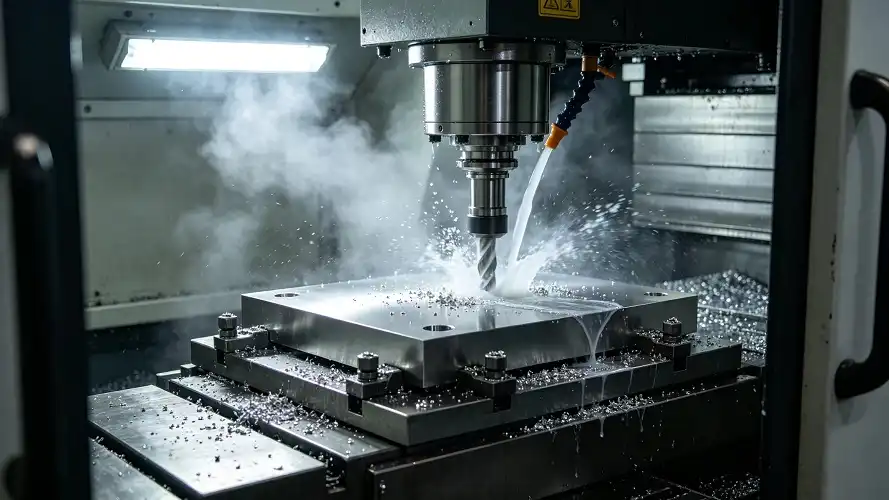
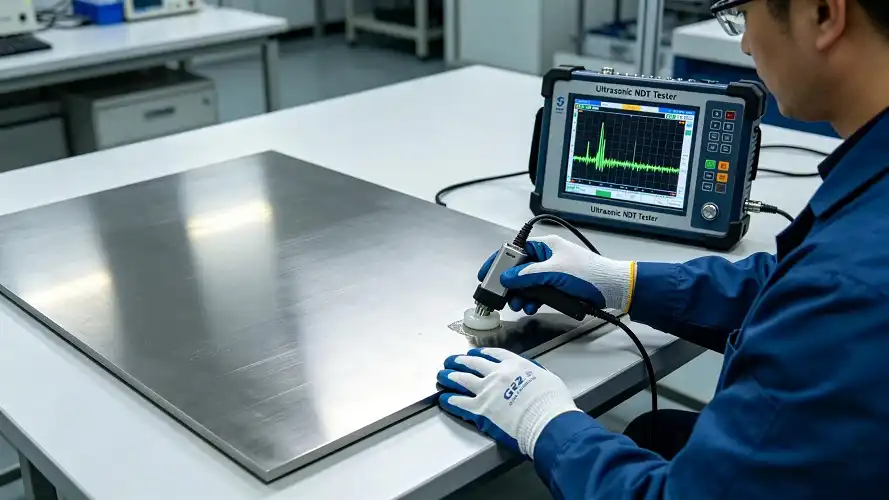
Certifications and proof of testing are essential. Plates that meet ASTM B265, AMS 4911, ASME SB265, and ASTM F67 standards must come with mill test results that show their chemical make-up and mechanical qualities. Ultrasonic testing according to AMS 2631 or ASTM B265 Supplementary Requirement S1 is the usual way to make sure that plates that are 1 inch thick don't have any laminations or holes inside them.
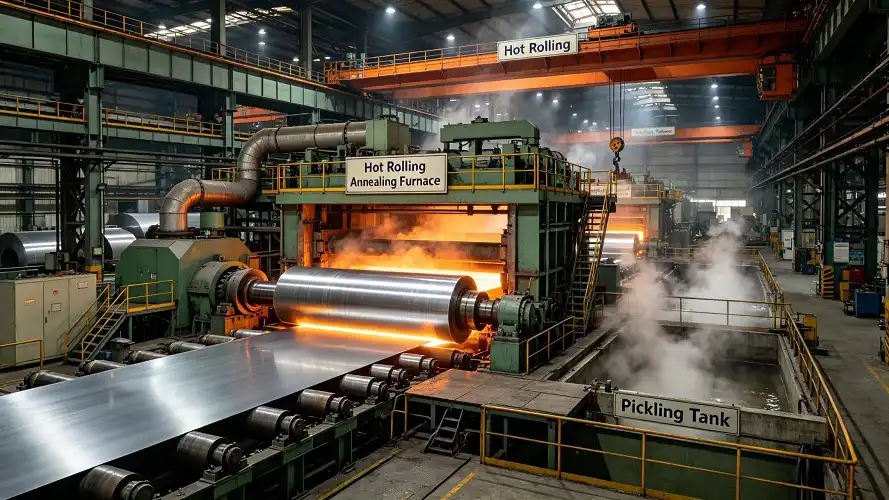
To cut through thick titanium, you need to use a waterjet or a plasma. The heat-affected zone is completely removed by waterjet, but the brittle alpha-case layer that forms at the edge has to be removed by post-cut machining with plasma. When suppliers offer cut-to-size and surface finishing services, like acid pickling, polishing, or precision machining, they make it a lot easier for downstream processing to do its job.
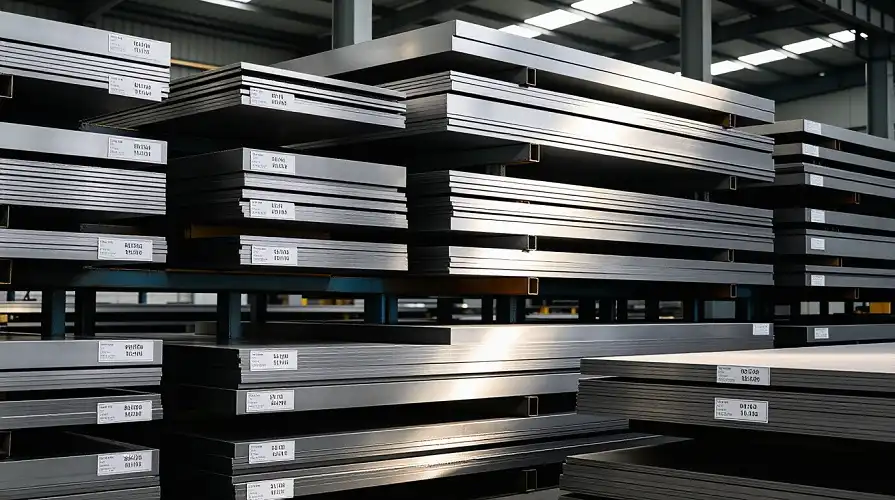
Jucheng Titanium makes hot-rolled titanium plates that can be any length, any width, and any thickness. Customized sizes are also possible. The annealed state keeps the dimensions stable, and different surface treatments, such as machined, polished, and acid-pickled finishes, meet the needs of different applications. Since a stockpile of about 3,000 tons of titanium is kept all year, wait times stay low even for urgent building projects.
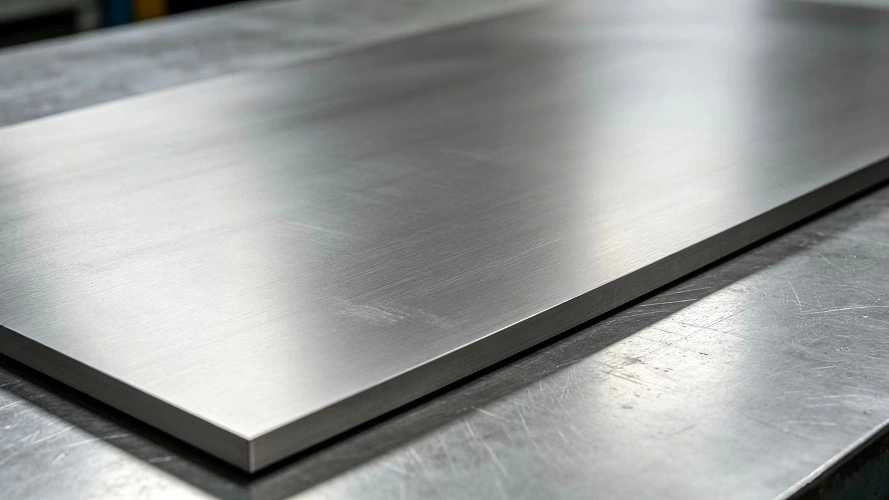
Maximizing Structural Performance with 1 Inch Titanium Plate
The design stage is where structural optimization starts. When engineers put titanium heavy plate into systems made of more than one material, they need to think about galvanic compatibility. Titanium is noble, and it can speed up corrosion in aluminum or carbon steel parts that are connected without the right separation.
To weld 25.4 mm titanium, you need to use strict inert gas shielding, like argon or helium with following shields, and electron beam or vacuum chamber welding is best for aerospace-critical joints. To keep the base material from becoming weak during high-heat welding, the hydrogen level must stay below 0.015%.
It is very easy to follow the maintenance instructions for titanium structure parts. The self-regenerating rust layer gets rid of most of the need for active corrosion upkeep. However, in high-vibration service, it is still a good idea to check for mechanical damage on a regular basis. Titanium reactors and heat exchangers made with certified plate often last longer than 20 years in chemical processing installations. This is a performance record that directly justifies the investment in buying them.
Conclusion
The titanium 1inch plate fills an important role in building products. Its high tensile strength, resistance to corrosion, and low weight make it a great choice for a wide range of applications, from aerospace bulkheads to chemical reactor walls and marine pressure hulls. No other material can meet all of these needs as well. Throughout the entire lifecycle of a project, procurement pros who know how to choose the right grade, meet certification standards, and work within the limits of fabrication will always get more value from this material.
FAQ
1. How does a 1-inch titanium plate compare to stainless steel in structural applications?
Titanium is about 45% lighter than stainless steel for the same section size, and it is also more resistant to salt pitting and crevice rust. Even though stainless steel costs less per kilogram at first, titanium usually has a lower total cost of ownership in environments that are corrosive or sensitive to weight because it lasts longer and needs almost no maintenance.
2. Is ultrasonic testing required for 1-inch titanium plate?
Yes. At this layer, laminations and holes inside the material that can't be seen from the outside can weaken its structure. In aircraft and pressure vessel uses, ultrasonic testing according to AMS 2631 Class A or ASTM B265 Supplementary Requirement S1 is the norm.
3. What grades are appropriate for chemical processing service?
Grade 2 works well with moderately corrosive service. It is best to use Grade 7 in acidic settings, and Grade 12 is better for high-temperature crevice rust in heat exchangers.
4. Can titanium heavy plate be welded on-site?
With the right inert gas shielding, welding is possible. Field welding needs tight argon covering and a trailing shield to keep air from getting into the heat-affected area while it cools.
Request a Quote from Jucheng Titanium — Your Trusted Titanium 1 Inch Plate Supplier
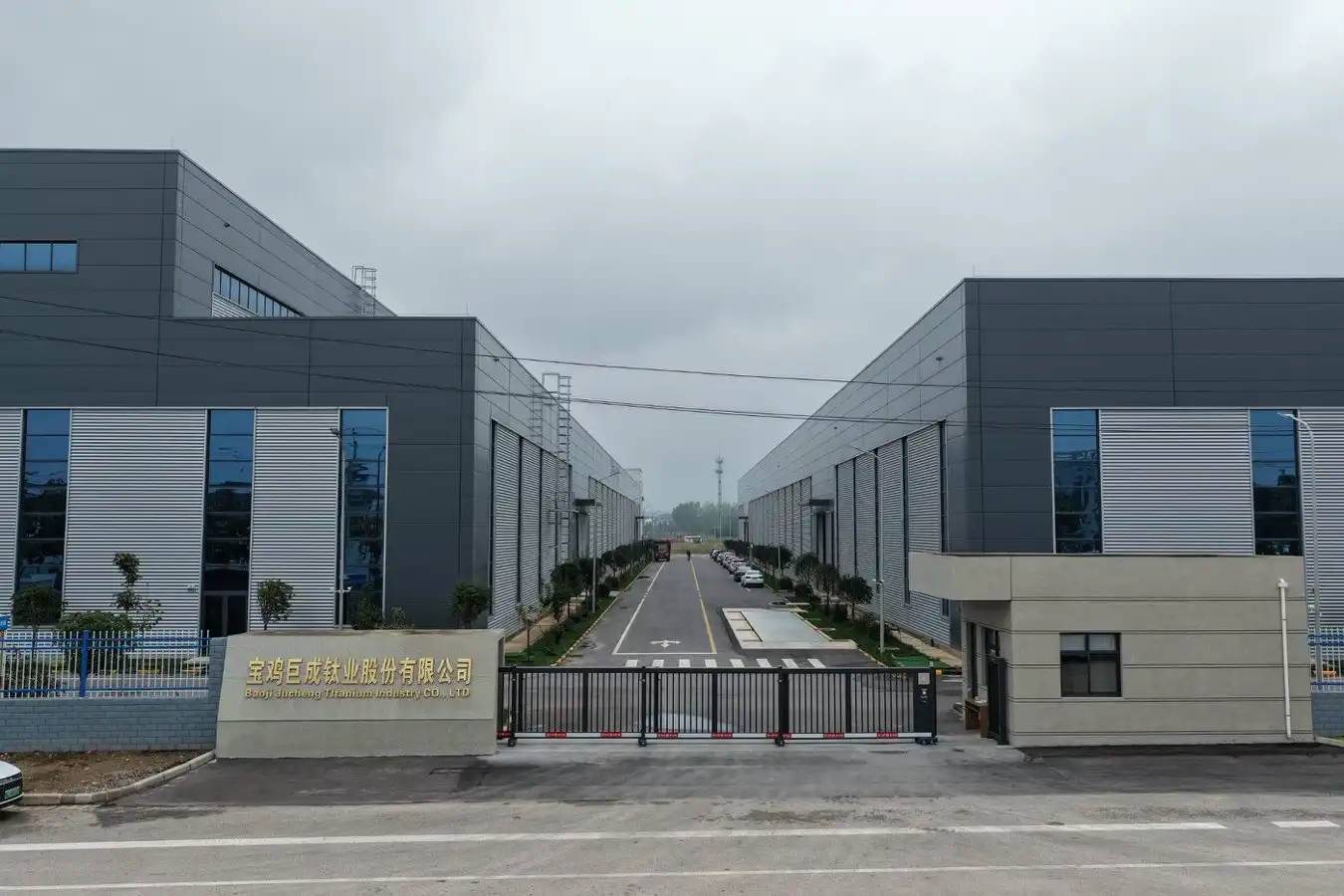
Jucheng Titanium has been perfecting the whole process of making titanium plate for more than 20 years. They have 4 idea patents and 45 utility model patents, and they have 3,000 tons of approved inventory ready to ship right away. Our team can give you accurate mill certifications and help you choose the right grade for your needs, whether you need standard ASTM B265 plates or custom-sized titanium 1inch plates for building parts. To ask about prices, email us at s4@juchengti.com.
References
1. ASTM International. ASTM B265: Standard Specification for Titanium and Titanium Alloy Strip, Sheet, and Plate. ASTM International, 2020.
2. SAE International. AMS 4911: Titanium Alloy Sheet, Strip, and Plate, 6Al-4V, Annealed. SAE International, 2015.
3. Lutjering, G., & Williams, J. C. Titanium. Springer, 2nd Edition, 2007.
4. Boyer, R., Welsch, G., & Collings, E. W. Materials Properties Handbook: Titanium Alloys. ASM International, 1994.
5. Peters, M., Kumpfert, J., Ward, C. H., & Leyens, C. "Titanium Alloys for Aerospace Applications." Advanced Engineering Materials, Vol. 5, No. 6, 2003.
6. Schutz, R. W., & Thomas, D. E. "Corrosion of Titanium and Titanium Alloys." ASM Handbook, Volume 13: Corrosion. ASM International, 1987.