
What is the magnetic property of titanium tubes?
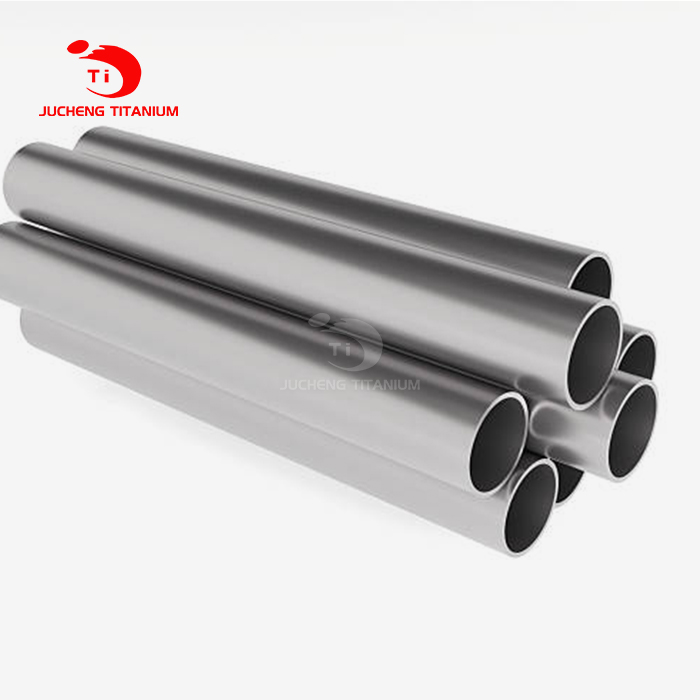
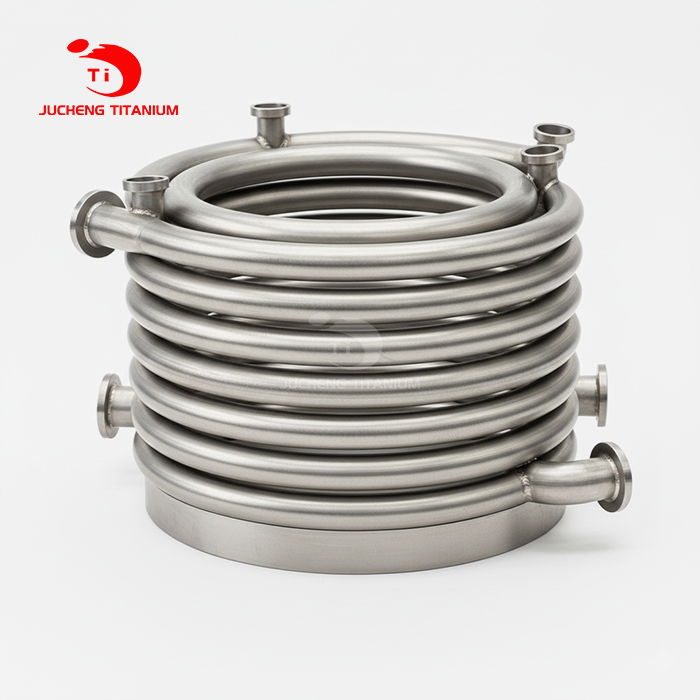
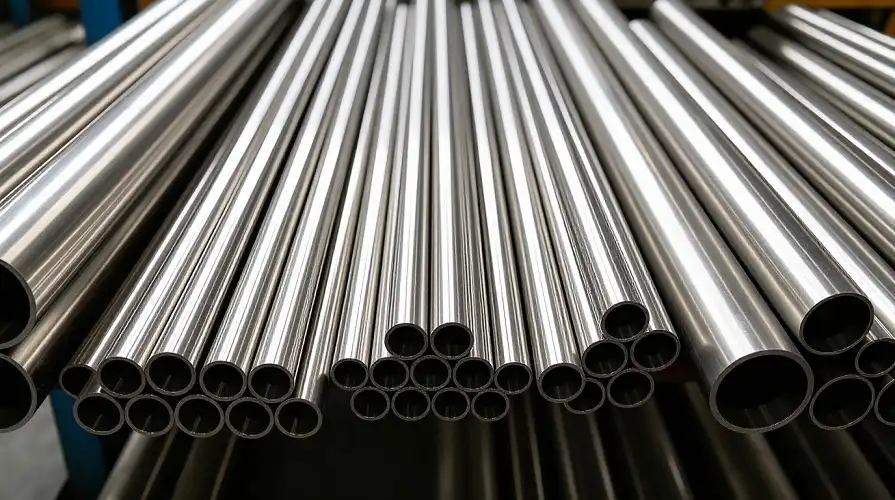
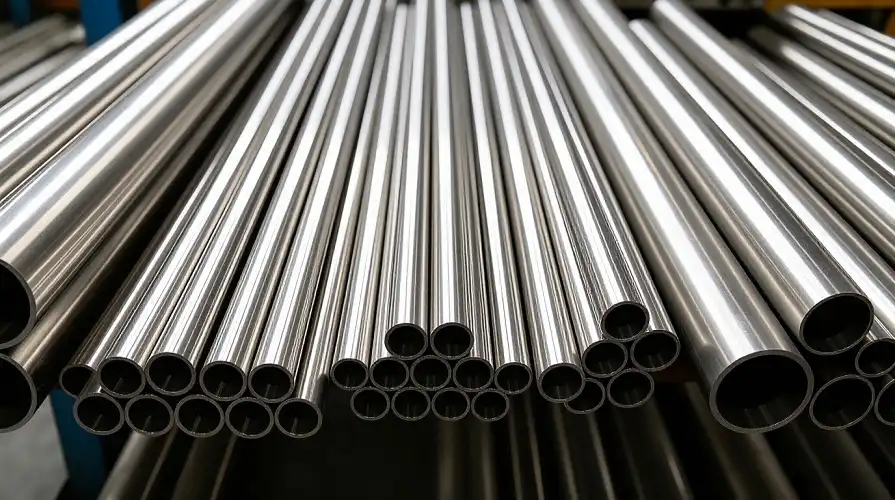
Titanium tubes exhibit paramagnetic behavior, meaning they respond weakly to magnetic fields and do not retain magnetization once the external field is removed. This property stems from titanium's electronic structure and crystal lattice configuration. The Gr1 Titanium Tube, being the purest form of commercially pure titanium with minimal oxygen (less than 0.18%) and iron content (less than 0.20%), demonstrates extremely low magnetic susceptibility. Unlike ferromagnetic materials such as steel that strongly attract magnets, titanium tubes remain virtually unaffected by magnetic fields, making them ideal for environments where electromagnetic interference must be minimized or eliminated entirely.
Understanding the Magnetic Properties of Titanium Tubes
When purchasing managers look at materials for important uses, they need to know how they behave magnetically. Due to its paramagnetic properties, titanium is one of a kind among industrial metals. This means that titanium atoms have single electrons that line up briefly with magnetic fields outside the material, but the material doesn't hold magnets permanently.
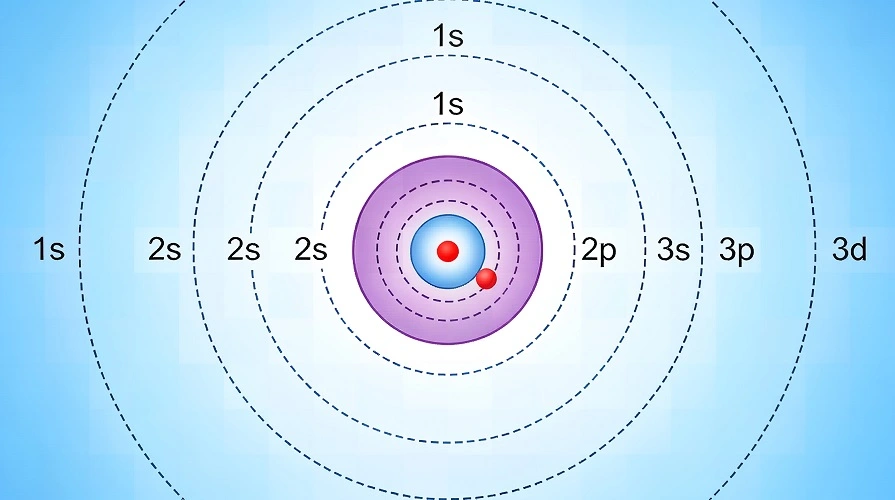
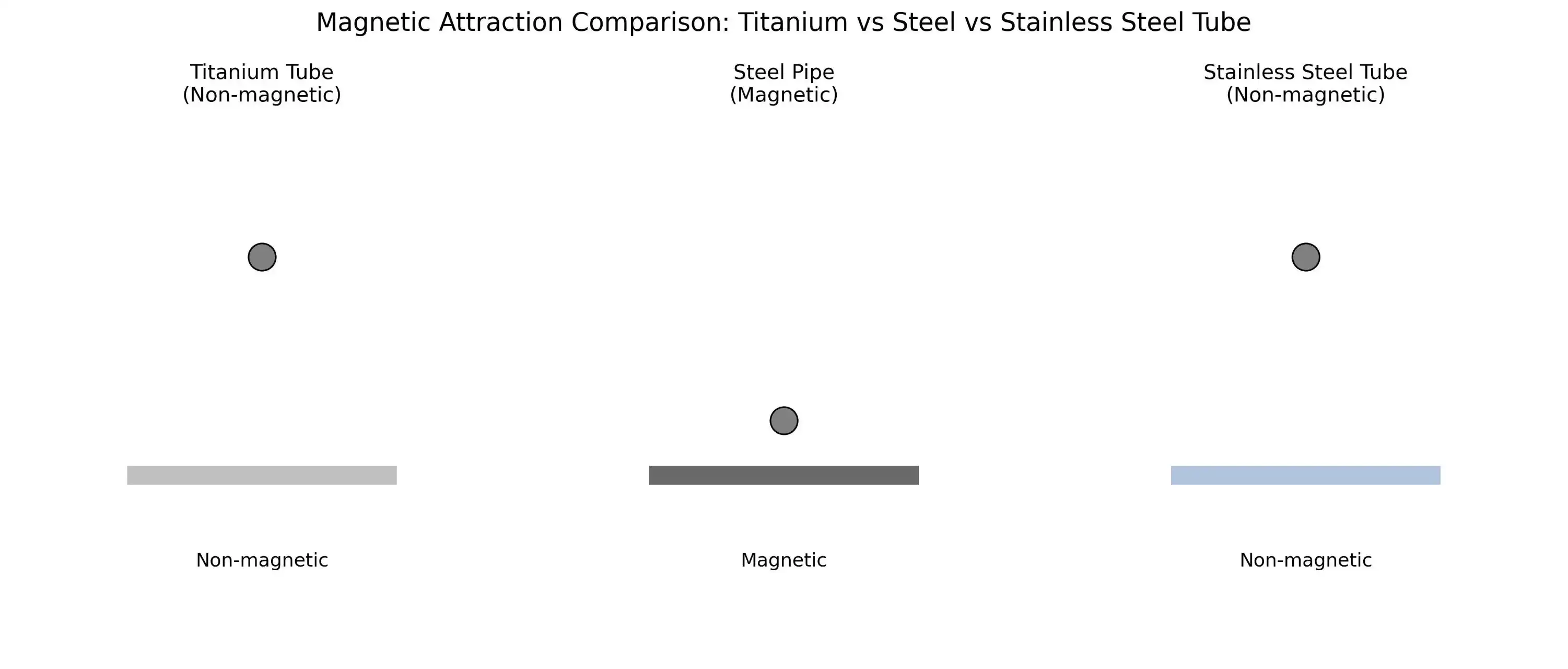
Titanium has a magnetic susceptibility of about 3.2 × 10⁻⁶ cm³/mol, which is much smaller than that of iron or nickel, which are ferromagnetic materials. In real life, putting a magnet close to a titanium tube won't make them connect or pull each other much. This behavior is very different from stainless steel tubes, which can have different levels of magnetic reaction based on what they are made of and how they were processed.
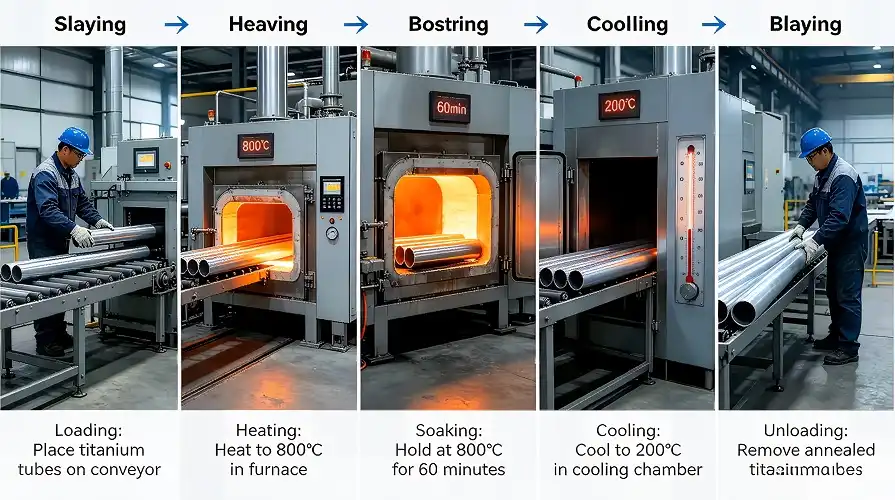
The way titanium tubes are made affects their magnetic qualities in the end. Titanium's microstructure can change during casting, cutting, and cold rolling, which can have a small effect on its magnetic susceptibility. But these differences are still not important for most industry uses. For commercially pure grades, the annealing process is done between 650°C and 850°C. This helps to maintain the alpha-phase crystal structure, which makes sure that the tube's paramagnetic behavior is the same all the way through.
Titanium is great for situations where magnetic transparency is needed because it doesn't let magnets pass through it easily. For example, medical imaging centers can't use materials that mess up magnetic fields. Parts for aerospace navigation systems need to work without messing up critical equipment. Titanium's stable and reliable behavior under changing electromagnetic conditions makes it useful for chemical processing equipment that is used in places with magnetic fields.
The Chemical and Physical Characteristics of GR1 Titanium Tubes Related to Magnetism
Chemical Composition and Magnetic Susceptibility
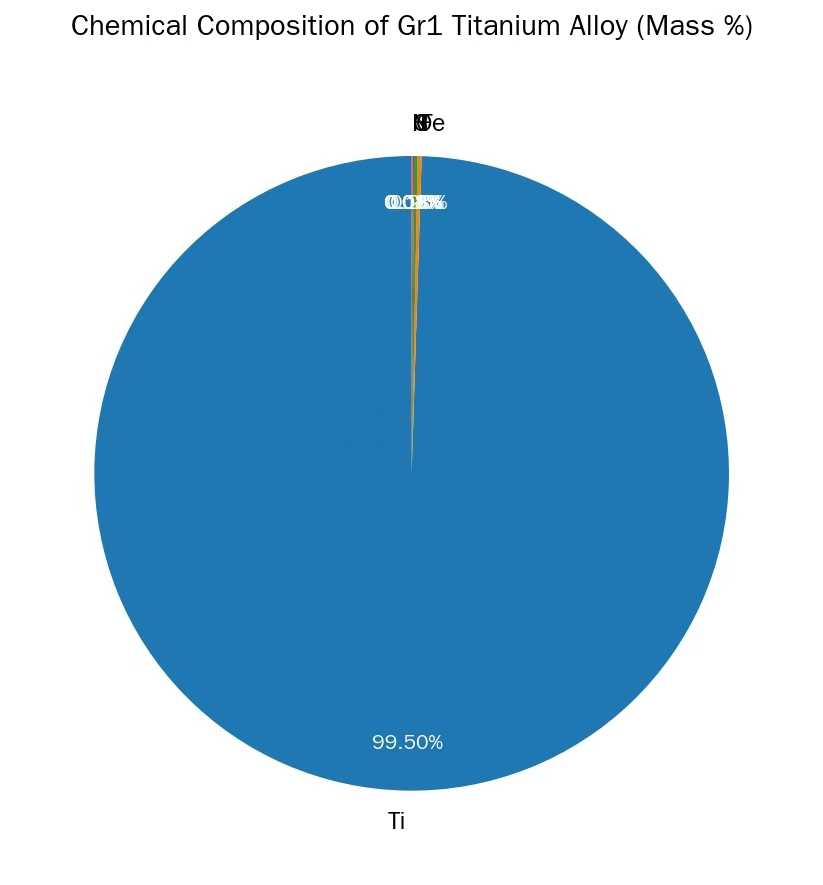
The magnetic qualities of Gr1 Titanium Tube products are directly affected by how pure they are. With a titanium percentage higher than 99.5%, Gr1 is the purest type that is the softest and easiest to shape. The very low amount of oxygen (below 0.18%) stops oxide stages from forming, which could change how magnetic the material is. Iron flaws, which are limited to 0.20%, stay low enough in the material so that they don't change its ferrous properties.
Crystal Structure and Paramagnetic Nature
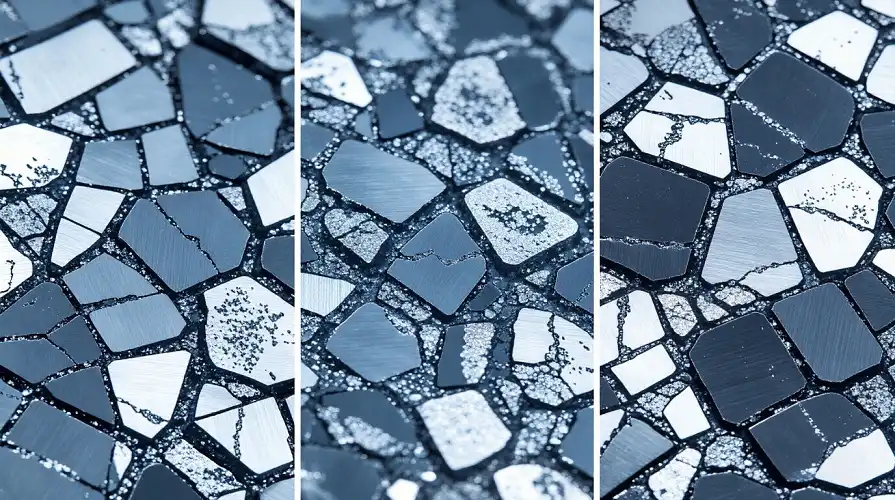
Gr1 titanium stays in its alpha phase, which is a hexagonal close-packed (HCP) crystal structure, at room temperature. The material is paramagnetic in part because of the way its atoms are arranged. Titanium atoms' 3d orbital has single electrons that can react to magnetic fields from the outside without making lasting magnetic domains. Manufacturers keep this crystal structure when they make uniform tubes by cold rolling and heating. This makes sure that the magnetic performance is the same from batch to batch.

Temperature Effects on Magnetic Properties
Titanium tubes keep their magnetic properties steady over a wide temperature range, which is useful for industrial uses. The paramagnetic nature doesn't change much from very cold temperatures (near -200°C) to high temperatures (around 300°C). This thermal stability is very important for heat exchangers and condensers that work in environments where the temperature changes a lot. Due to stronger atomic motions, temperature makes the magnetic susceptibility go up a little, but this change doesn't usually have an effect on real-world uses.
There are small changes between Gr1 and higher grades. When the oxygen level is up to 0.25% in Gr2 titanium, it has a slightly higher magnetic susceptibility because there are more intermediate elements. As an alpha-beta alloy, Gr5 (Ti-6Al-4V) has a dual-phase lattice that makes its magnetic behavior more complicated, but it is still classified as paramagnetic. Distributors of titanium materials and makers of aerospace parts still choose Gr1 for uses that need the very lowest magnetic reaction.
Comparison of Magnetic Properties: GR1 Titanium Tube vs Other Materials
Gr1 Titanium Versus Stainless Steel
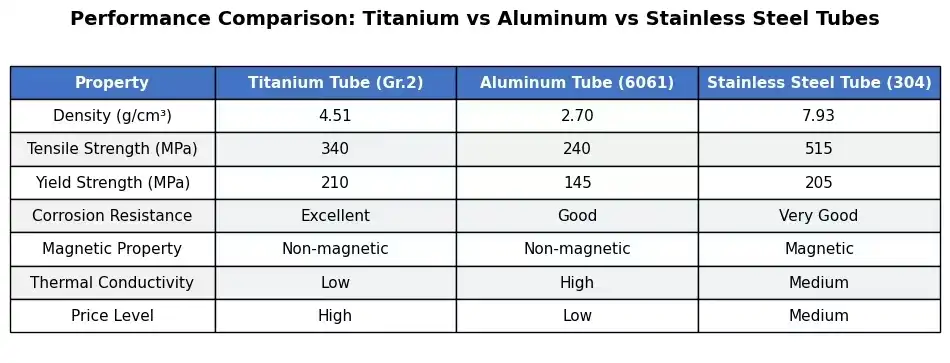
The magnetic properties of stainless steel are very complicated and change a lot from grade to grade. Austenitic stainless steels, such as 304 and 316, are usually not magnetic when they are heated, but they can become magnetic when they are cold worked. Strong magnetism can be found in ferritic and martensitic stainless steels. This lack of consistency makes things hard for procurement workers who need regular results. This problem is not a problem at all with Gr1 Titanium Tube units because they have reliable paramagnetic behavior no matter how they were made or how they were mechanically processed. Titanium has a density of 4.51 g/cm³, while steel has a density of 7.9 g/cm³. Titanium's density cuts the overall system weight by about 45% while keeping the magnetic balance.
Gr1 Titanium Versus Aluminum Alloys
Aluminum is also a paramagnetic metal, but its magnetic susceptibility is a little higher than titanium's, at about 2.2 × 10⁻⁵ cm³/mol. Even though aluminum tubes are cheaper and lighter, they can't compare to titanium when it comes to resistance to corrosion in harsh chemical conditions or seas. When companies that make chemical equipment look at materials for reactors that deal with chlorine compounds or acidic media, Gr1 titanium tubes last longer, even though they cost more at first. The magnetic qualities stay the same, so the choice should be based on how resistant it needs to be to rust and how strong it needs to be mechanically.
Variations Among Titanium Grades
Knowing the differences between the different types of titanium helps buyers make smart choices. When made according to ASTM B338 and ASTM B861 standards, Gr1 titanium tubes have a compressive strength of about 240 MPa and are very flexible. Gr2 makes things stronger to 345 MPa by having a little more oxygen in them, but it doesn't change their magnetic properties much. Gr5, the standard titanium alloy, has a tensile strength of 895 MPa, but it also has aluminum and vanadium in it. These alloying elements make a two-phase microstructure that slightly raises the magnetic susceptibility while keeping the paramagnetic label. For most uses, procurement managers shouldn't worry about the magnetic differences between these types; instead, they should choose based on the strength needs and the way the material forms.
Applications Impacted by the Magnetic Properties of GR1 Titanium Tubes
Aerospace and Defense Applications
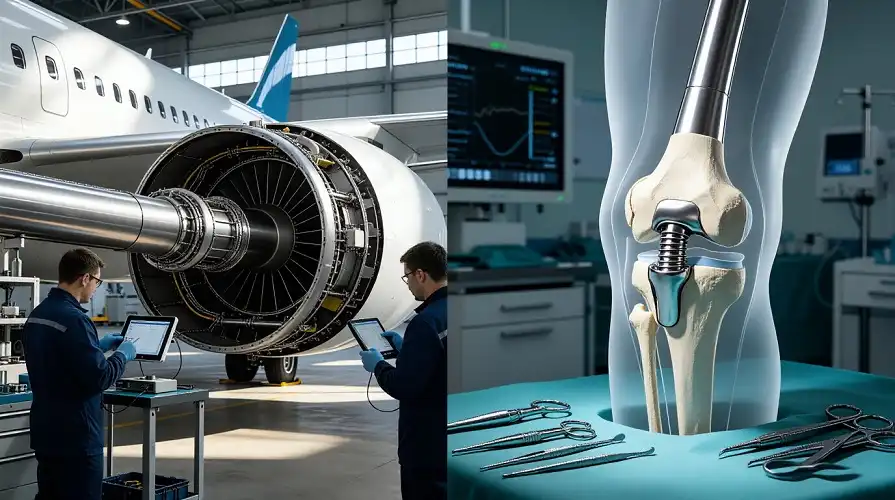
Manufacturers of airplanes use Gr1 Titanium Tube components in hydraulic systems, fuel lines, and weather control systems that need to be electromagnetically compatible. Avionics and navigation tools depend on magnetically neutral materials to keep the compass from wandering and sensors from getting messed up. These tubes are unbeatable in current aircraft engineering because they have a high strength-to-weight ratio, don't rust, and are paramagnetic. Defense companies ask for Gr1 tubes to be used in underwater communication systems and sensor housings, where lowering the magnetic signature is important for operating invisibly.
Medical Device Manufacturing
Medical imaging centers use strong magnetic resonance imaging (MRI) machines that can create fields of up to 3 Tesla. When ferromagnetic materials are brought into this setting, they turn into dangerous projectiles. Gr1 titanium tubes made to medical-grade standards are used in MRI rooms for equipment supports, patient positioning systems, and lines for cold water. Titanium is used to make surgical instruments because it is biocompatible and magnetically neutral, which are both important for tools used in MRI-guided treatments. Because the material isn't magnetic, doctors can work safely in magnetic fields without their tools getting damaged.
Chemical Processing and Marine Environments
When making chlor-alkali, chemical plant workers use Gr1 titanium tubes for heat exchanges because other materials quickly break down in the presence of wet chlorine gas. The paramagnetic feature keeps the heat transfer surfaces clean by stopping the buildup of magnetic particles that could happen with ferritic steels. Titanium tubing is used in saltwater cooling systems and desalination units on offshore drilling sites. Marine equipment integrators like titanium tubes because they don't get in the way of magnetic compasses or magnetometers, which are used for geological studies and underwater guidance. Every year, we can make more than 500 sets of titanium equipment, which includes specialized heat exchangers for these tough industries.
Manufacturers of industrial electronics use titanium tubes in the cooling systems of tools used to make semiconductors. Because it is electrically clear, it doesn't get in the way of the precise electromagnetic fields used in chip processing. Titanium condensers are used in power plants that use geothermal energy. In these plants, rust resistance and magnetic neutrality are important for accurate sensors and system tracking.
Procuring GR1 Titanium Tubes: What Buyers Need to Know About Magnetic Properties
Specification Verification
Procurement workers should ask for material test reports (MTR) that meet EN 10204 3.1 standards when they issue buy orders. For real Gr1 Titanium Tube material, these papers must list the chemicals that make it up and show that the oxygen level is below 0.18% and the iron level is below 0.20%. Tensile strength (at least 240 MPa), yield strength (170-310 MPa), and elongation (at least 24%) are some of the mechanical qualities that show that the work was done right. Tolerances should be set according to ASTM B338 or ASME SB338 guidelines for the outer diameter (OD3–OD219 mm) and wall thickness (0.5–20 mm). These should match the needs of the application.
Supplier Certification and Quality Assurance
Buying from certified makers ensures that the magnetic and physical qualities stay the same. We keep our quality management systems up to date with ISO 9001 and have national high-tech company approval. Our 41 utility model patents and 4 idea patents show that we can process titanium technically. As a national "little giant" company that has been in this business for more than 20 years, we know that strict process control is necessary to make sure that magnetic properties are always the same. Our 3,000-ton inventory of titanium allows for quick shipping, and our technical R&D team helps with engineering for special needs.
Material tracking is very important. Each heat lot should have a label that connects the finished tubes to the batch of titanium sponge that started it all. When magnetic properties need to be checked for medical or military certifications, this paperwork becomes very important. Buyers should make sure that the pickling and annealing processes are done correctly, since the wrong heat treatment can change the grain and could affect the magnetic susceptibility.
Customization and Processing Considerations
Standard continuous tubes are pushed through a die, pierced, cold rolled, annealed, pickled, and straightened. Surface processes like machined, polished, or acid-pickled finishes don't change the magnetic properties, but they might change how clean and resistant to rust the metal is. Custom cutting services should keep the purity of the material and not introduce ferromagnetic pollution from the tools they use. We offer custom options that include different sizes, surface treatments, and heat treatment conditions to meet the needs of each application.
Lead times are usually between 4 and 8 weeks for normal specs, but we can speed up production if needed because we keep a lot of stock on hand. Minimum order numbers depend on the size and specifications of the order. However, we can handle small batch orders for research institutions and prototype development. Pricing is based on the cost of raw materials, the difficulty of processing, and the need for approval. Established partnerships can get bulk savings.
Conclusion
Titanium tubes, especially Gr1 grade, have amazing paramagnetic qualities that make them essential in the medical, chemical processing, aircraft, and industrial electronics fields. The low magnetic susceptibility, excellent rust resistance, and good strength-to-weight ratio work together to solve important problems that ferromagnetic or inconsistently magnetic materials can't. Procurement workers can confidently choose materials when they know how chemical makeup, crystal structure, and manufacturing methods affect magnetic behavior. Compared to options made of stainless steel and aluminum, Gr1 Titanium Tube solutions work reliably and consistently in places that are sensitive to magnetic fields. Whether you need materials that won't mess up precision instruments or that MRI equipment needs to be completely magnetically neutral, titanium tubes made to ASTM B338 and ASTM B861 standards are reliable options that have been used in industry for decades.
FAQ
Q1: Is the Gr1 titanium tube completely non-magnetic?
Instead of not being magnetic at all, Gr1 Titanium Tube units are paramagnetic. They are very weakly attracted to magnetic fields and lose their magnetization when the field is taken away. This useful non-magnetic behavior is good enough for almost all situations that need magnetic transparency, like MRI rooms and places with sensitive electronics.
Q2: How do heat treatments affect the magnetic properties of titanium tubes?
Between 650°C and 850°C, annealing methods keep the alpha-phase crystal structure stable without changing the magnetic susceptibility too much. The magnetic qualities of the tube will be the same all the way through if it is heated correctly. If something gets too hot, above 900°C, it might grow grains, but it doesn't make it ferrous.
Q3: Can Gr1 titanium tubes be used in applications demanding zero magnetic interference?
Gr1 titanium tubes are good for uses that need very little magnetic disturbance. With a magnetic susceptibility of about 3.2 × 10⁻⁶ cm³/mol, they can be used in most precision tools, medical imaging facilities, and places where electromagnetic compatibility is needed. Only superconducting materials can have an exact zero magnetic reaction, but they can't be used in structures.
Partner with Jucheng Titanium for Superior Gr1 Titanium Tube Solutions

When you need to buy materials, Baoji Jucheng Titanium Industry Co., Ltd. is ready to help you with high-quality Gr1 Titanium Tube products that are made to your exact specs. As a national high-tech company that has been handling titanium for over 20 years, we keep 3,000 tons of stock on hand for quick shipping and can also make custom parts to meet specific needs. Our seamless tubes are made to meet the standards set by ASTM B338, ASTM B861, and ASME SB338. They come in sizes ranging from OD3 mm to OD219 mm and have wall thicknesses ranging from 0.5 mm to 20 mm. Whether you're looking for materials for medical devices, chemical processing equipment, or flight parts, our scientific team can help you with questions about magnetic properties, resistance to corrosion, and performance in specific situations. Contact our experts at s4@juchengti.com to talk about the needs of your project, ask for material certifications, or get a price from a reliable supplier. We want aerospace companies, companies that build chemical equipment, and companies that sell titanium materials to come see for themselves the quality and dependability that have earned us relationships with Jiangxi Copper Group and Northwest Institute for Nonferrous Metal Research.
References
1. Boyer, R., Welsch, G., & Collings, E.W. (1994). Materials Properties Handbook: Titanium Alloys. ASM International.
2. Donachie, M.J. (2000). Titanium: A Technical Guide, 2nd Edition. ASM International.
3. Lütjering, G., & Williams, J.C. (2007). Titanium, 2nd Edition. Springer-Verlag Berlin Heidelberg.
4. Schutz, R.W., & Watkins, H.B. (1998). Recent developments in titanium alloy application in the energy industry. Materials Science and Engineering A, 243(1-2), 305-315.
5. ASTM International. (2019). ASTM B338-19: Standard Specification for Seamless and Welded Titanium and Titanium Alloy Tubes for Condensers and Heat Exchangers. West Conshohocken, PA.
6. Veiga, C., Davim, J.P., & Loureiro, A.J.R. (2012). Properties and applications of titanium alloys: A brief review. Reviews on Advanced Materials Science, 32(2), 133-148.