



What Thickness of Sheet of Titanium Works for Fabrication?
When it comes to metal fabrication, the thickness of a sheet of titanium is one of the most important factors to consider. The optimal thickness depends on the intended application, structural strength requirements, forming methods, welding processes, and product specifications. Insufficient thickness may result in inadequate rigidity, while excessive thickness can increase material costs, machining time, and overall weight. Evaluating these factors helps manufacturers, engineers, and procurement teams balance performance with production efficiency. Jucheng Titanium, an experienced titanium material manufacturer based in Baoji, China, offers titanium sheets and customised processing solutions for a wide range of industrial applications. To make a more informed purchasing decision, it is important to understand how to select the appropriate titanium sheet thickness, compare common thickness ranges, and consider relevant manufacturing parameters.

Understanding Titanium Sheet Thickness and Its Classification
What Is the Standard Thickness of a Sheet of Titanium?
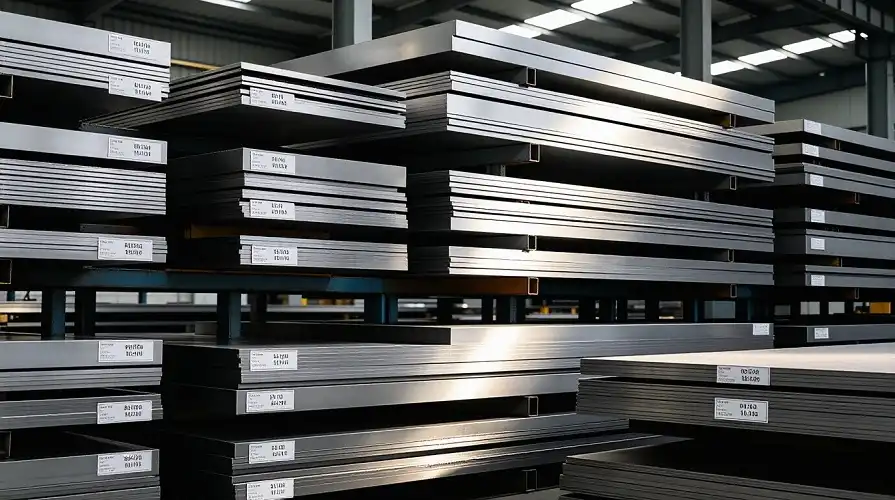
Titanium may be produced in a variety of thicknesses due to the fact that its thickness can vary depending on the production process, product categorisation, and application. Titanium stock that is thinner is used for the production of lightweight components and precise manufacturing, while material that is thicker is necessary for structural elements, industrial equipment, and components that are physically loaded. It is important to keep in mind that different vendors and standards have different definitions of what titanium sheet and titanium plate are. Prospective buyers should review the criteria provided by ASTM or AMS rather than depending on the names of the products they want to acquire. A titanium sheet with a thickness of several millimetres may be used for the purpose of industrial production in circumstances where the component needs stiffness, machining allowance, or resistance during deformation. This is often the case in instances when the component is being manufactured. Before you place an order, you should make sure that the nominal thickness, tolerance, material quality, and final dimensions are all accurate by checking with your supplier.
Common Titanium Thickness Ranges for Different Fabrication Tasks
The thickness is determined by the production technique as well as the physical requirements of the component. Titanium stock that is thinner is easier to cut and mould into lightweight shapes, but stock that is thicker yields superior results when it comes to machining and structural applications. For the purpose of initiating a preliminary design, fabricators may make use of the following thickness categories. Rather than engineering criteria, indicative selection ranges are being used.
Thickness range | Typical fabrication applications | Main consideration |
|---|---|---|
0.5–1.0 mm | Thin covers, lightweight panels | Flexibility and dimensional control |
1.0–2.0 mm | Enclosures, formed components | Balance between weight and rigidity |
2.0–4.0 mm | Equipment components, brackets | Greater stiffness and machining allowance |
4.0–10 mm | Industrial parts, structural components | Load-bearing requirements |
10–80 mm | Heavy equipment, machined components | Structural strength and machining requirements |
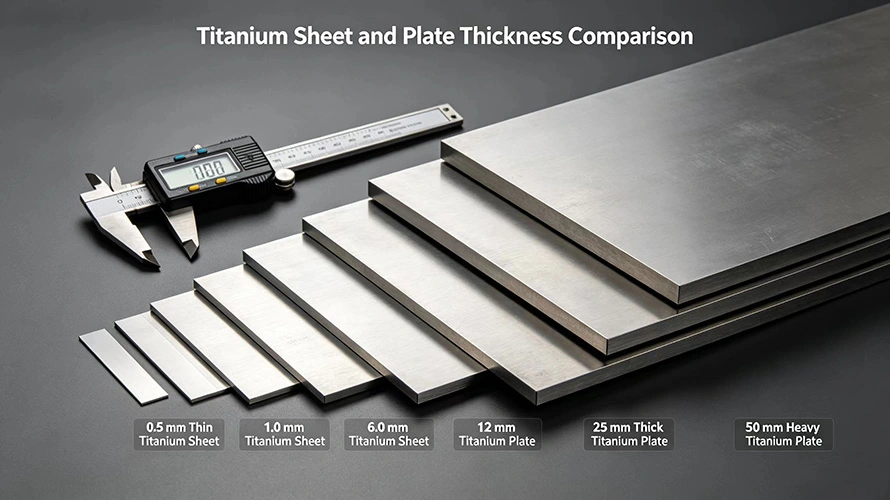
The ranges above are useful for initial planning, but the final specification must account for alloy properties, geometry, operating conditions, and fabrication tolerances. For example, a flat panel supported by a closely spaced frame may require less thickness than a large unsupported panel exposed to pressure or vibration.
How Do Sheet and Plate Classifications Affect Purchasing?
Because of the variances between sheets and plates, product availability, processing, and dimensional tolerances are all affected. Despite the fact that standards specify and require them, some commercial suppliers refer to thinner products as sheets, while larger ones are called plates. Depending on the customer's requirements, Jucheng Titanium offers industrial titanium sheet in thicknesses ranging from 4 to 80 millimetres, widths ranging from 950 to 2,500 millimetres, and lengths extending up to 10,000 millimetres. Industrial fabricators that want a material that is thicker than thin-gauge sheet metal will find this range to be beneficial. Items that have been hot-rolled and annealed, as well as those that have been machined, polished, and acid-pickled, are required. It is also important for procurement teams to communicate their technical requirements rather than making the assumption that all vendors use the same product classification.
Choosing Titanium Thickness According to Fabrication Requirements
How Does Cutting Influence Titanium Thickness Selection?
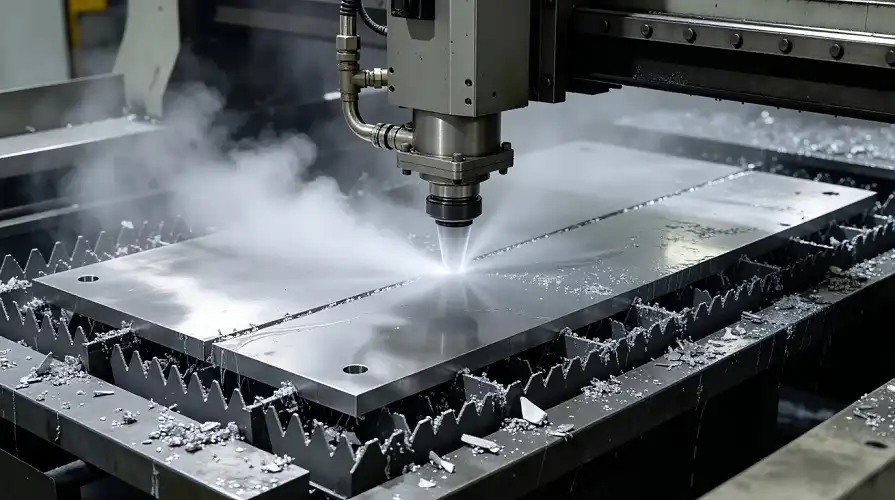
Cutting is often the first step in titanium fabrication, and material thickness directly influences equipment selection, cutting speed, and edge quality. For thicker titanium components, waterjet cutting, sawing, or conventional machining may be more suitable than laser cutting, depending on the equipment and application requirements. The ideal cutting method depends on factors such as available machinery, dimensional accuracy, component geometry, and production volume. When processing a sheet of titanium, manufacturers should evaluate whether the selected cutting method can accommodate the required thickness while maintaining acceptable edge quality and minimising additional finishing work. Machining tolerances must also be considered when components require precise holes, grooves, or mating surfaces. Discussing cutting methods with the supplier before purchasing thicker titanium materials can help reduce processing costs, minimise material waste, and improve overall manufacturing efficiency.
What Thickness Works Best for Bending and Forming?
During the process of bending and forming, it is essential to take into account the thickness of the material, the grade of the material, the bend radius, the tooling, and the direction in which the material is being formed. Since the bending force increases in direct proportion to the expansion of the thickness, it is essential that the tooling be chosen in accordance with this relationship. As a consequence of the strong springback that titanium has, it is able to partly restore its shape after it has been produced during the manufacturing process. When determining the appropriate bending angles and choosing the appropriate forming equipment, it is essential to take this behaviour into mind. The possibility of cold forming thinner components is something that may be considered, but it is contingent on the quality of the material and the shape of the component. It is possible that the use of certain machinery and the application of regulated heating may be required in order to manufacture complex items. Titanium grades 1 and 2 are used in circumstances where ductility and formability are of the highest significance; nonetheless, higher-strength alloys need additional process design techniques to be implemented. It is essential to develop a prototype component before beginning the production of complex structures in large quantities.
How Should Thickness Be Considered for Titanium Welding?
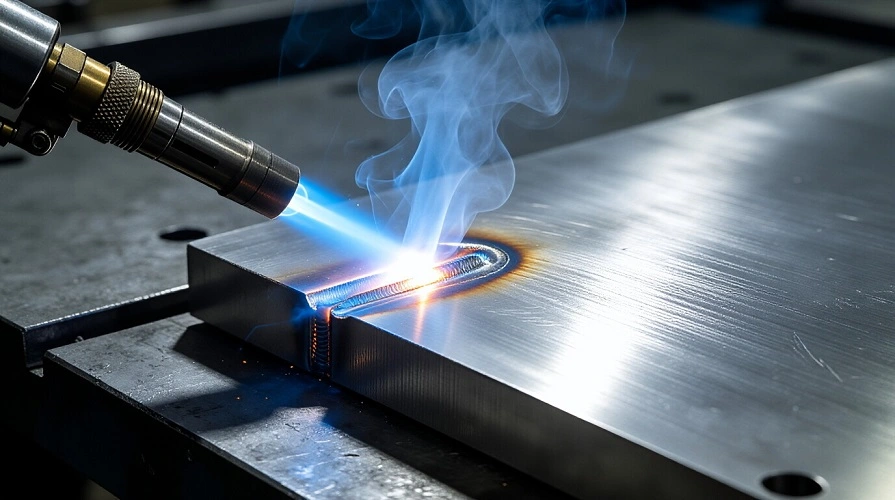
There is an impact on the thickness of titanium due to the requirements for welding. The use of heat that is not under control has the potential to deform smaller pieces, whilst bigger portions may need more preparation, joint designs, and welding techniques that are more conservative. Titanium is vulnerable to contamination on account of oxygen, nitrogen, and hydrogen particles when it is exposed to high temperatures. Therefore, in order to achieve a high level of weld quality, it is important to conduct surface preparation and shielding procedures that are adequate. Before making a purchase of titanium sheet for use in welding assemblies, the manufacturers of welded assemblies should be certain to examine the material quality, delivery condition, thickness tolerance, and compatibility with the welding process. In addition to that, the design has to include the requirements for joint arrangement and penetration. When establishing the thickness of the component, engineers should take into account the weldability of the component in addition to the mechanical requirements and the circumstances under which the component will be used. It is necessary to possess the necessary welding abilities for applications that are important.
Matching Titanium Grades and Thickness to Industrial Applications
Due to the fact that the thickness was selected without taking into account the quality of the titanium, it is likely that the fabrication parameters are incorrect. The properties of processing, ductility, corrosion resistance, and strength that are connected with various classes are quite diverse. There is a large variety of these characteristics. Components that have been meticulously created are designed with the environment in which they will be used in mind, and their material composition and thickness are matched accordingly.
Which Titanium Grades Are Suitable for General Fabrication?
Titanium Grades 1, 2, and 4 are often used in industry because to the fact that they are pure enough for industrial purpose. When it comes to components that need considerable shaping, Grade 1 is an ideal option because of its ductility and formability. With its realistic mix of strength, resistance to corrosion, and skills in fabrication, Grade 2 has been more popular in the chemical processing and marine equipment sectors. This popularity may be attributed to both of these industries. In terms of strength, Grade 4 is superior to other grades that are available for commercial use. As a result, it is suited for applications that need a high level of mechanical strength. Engineers should first establish if the component needs extensive bending, welding, machining, or exposure to corrosive conditions before opting for the suitable materials. This will allow them to make the most informed decision possible. It is not the case that grades become more comparable as the thickness is increased. It is recommended that you make use of the data on the mechanical properties as well as the design standards in order to establish the ideal combination.
When Should Fabricators Choose Grade 5 or Grade 9?
Ti-6Al-4V, which is also often referred to as grade 5 titanium, is an alpha-beta alloy that is used in a wide range of demanding applications, such as aerospace engineering, mechanical engineering, and other application areas. As a result of its excellent strength-to-weight ratio, this material is appealing to designers who are searching for pieces that are durable yet do not add bulk to their applications. There is also the possibility of using grade 9 (Ti-3Al-2.5V), which is distinguished by its strength and its capacity to be formed. It is likely that the use of these alloys will make it feasible for engineers to accomplish structural performance with a thickness that is distinct from that of pure titanium. Rather than depending on the replacement of materials, this choice needs to be in accordance with mathematical principles. The selection process is impacted by a variety of elements, including the requirements for fatigue, the operating temperature, the conditions for heat treatment, and the production techniques. In order to fulfill the needs of a wide variety of fabrication projects, Jucheng Titanium provides Grades 1, 2, 4, 5, 7, 9, and 12 of titanium.
What Thickness Is Appropriate for Different Industrial Uses?
The requirements for titanium components vary significantly across industries. When selecting a sheet of titanium for chemical processing equipment, long-term performance, corrosion resistance, and dimensional stability are among the most important considerations. Marine and desalination equipment must withstand prolonged exposure to seawater and other demanding environmental conditions. For aerospace components, the strength-to-weight ratio, material traceability, and manufacturing precision are particularly important. Medical applications may require additional considerations, including biocompatibility, cleanliness, and appropriate material certifications. Therefore, titanium sheet thickness should be selected according to the specific performance requirements, operating conditions, and manufacturing standards of each industry rather than applying a single thickness specification across all sectors.
Application | Material selection considerations | Thickness selection priority |
|---|---|---|
Chemical reactors | Grade 2, Grade 7, Grade 12 | Pressure and corrosion requirements |
Marine equipment | Grade 2, Grade 5 | Environmental exposure and structural loads |
Aerospace components | Grade 5, Grade 9 | Strength-to-weight ratio |
Medical components | Grade 1, Grade 2, Grade 5 | Design requirements and applicable standards |
Heat exchangers | Grade 2, Grade 7 | Heat transfer, pressure, and corrosion |
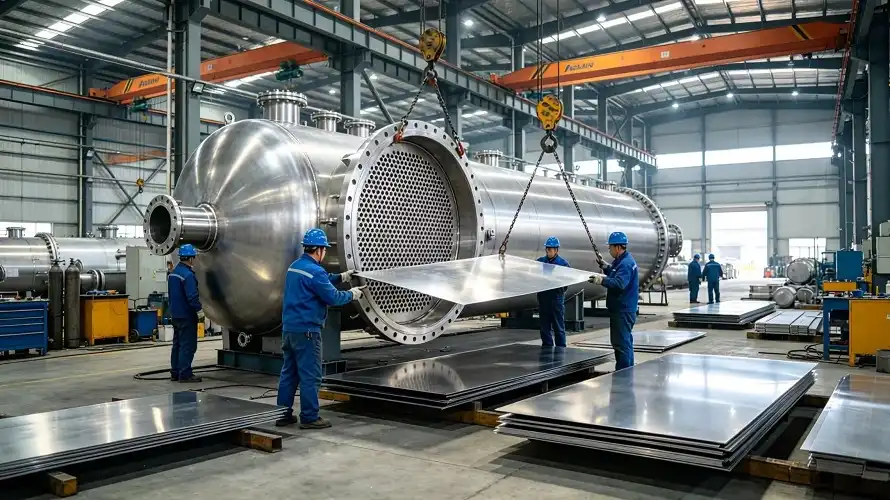
These examples are starting points, not fixed material specifications. For example, reactor walls and heat exchanger components may require entirely different thickness calculations even when they operate in the same chemical environment. Jucheng Titanium supplies titanium materials for chemical processing, marine engineering, aerospace, medical equipment, and power generation. Buyers can use this product range as a starting point when discussing material selection and customized dimensions with the manufacturer.
How to Confirm the Right Titanium Thickness Before Ordering
Consider Mechanical Loads and Structural Design
Before selecting titanium, engineers should first establish the operating loads at which the component will be used. A few examples of these types of forces are tensile forces, compression, bending moments, internal pressure, vibration, and repeated loading. For the purpose of estimating thickness, engineering calculations should take into account the yield strength of the material, the permitted stress, the geometry of the component, and safety considerations. In order to accommodate the interior pressure, a flat titanium panel requires a design that is distinct from that of a protective cover. The dimensional stability of a large surface that is not supported may need the addition of thickness or reinforcement. The performance of fatigue is dependent on more than just the nominal thickness; consequently, engineers should take cyclic loads into consideration. Any equipment that contains pressure is required to comply with the standards and design criteria for pressure vessels. Although preliminary thickness estimations might be helpful for budgetary purposes, they should never be used in lieu of structural examinations.
Choosing the right titanium thickness requires more than comparing dimensions; it also involves understanding material grades, fabrication methods, and project-specific requirements. If you are unsure which specification best suits your application, Jucheng Titanium can provide professional material recommendations and customized processing support. Email s4@juchengti.com with your drawings or technical requirements to discuss suitable titanium solutions.
Check Thickness Tolerances, Surface Condition, and Material Standards
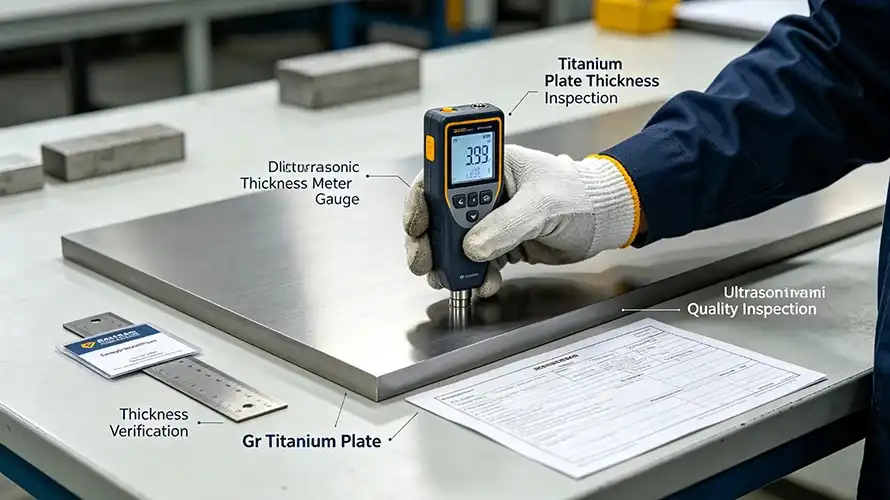
There is a possibility that the nominal thickness of titanium items is not measured everywhere. The allowances for machining, component fit, and assembly accuracy are all affected by manufacturing tolerances, which establish the maximum amount of variation that may occur from the given dimension. It is thus the responsibility of purchasers to set the product standard and seek dimensional tolerances prior to the production process. The ASTM B265 standard is an important one for the strip, sheet, and plate that are made of titanium and titanium alloy. Both ASTM F67 and AMS 4911 may be applicable in the case of titanium alloy sheet, strip, and plate. ASTM F67 is used for surgical implants made of unalloyed titanium. The condition of the surface is also important. Surfaces that have been polished may be selected for components that are visible or accurate, but surfaces that have been acid-pickled or machined may be more suitable for industrial operations. On polished, machined, and acid-pickled surfaces, Jucheng Titanium provides services such as chemical composition analysis, testing of mechanical properties, ultrasonic inspection, surface investigation, and dimensional verification. These tests are used by purchasers in order to discern whether or not the material satisfies the specification.
Why Is Customized Titanium Processing Worth Considering?
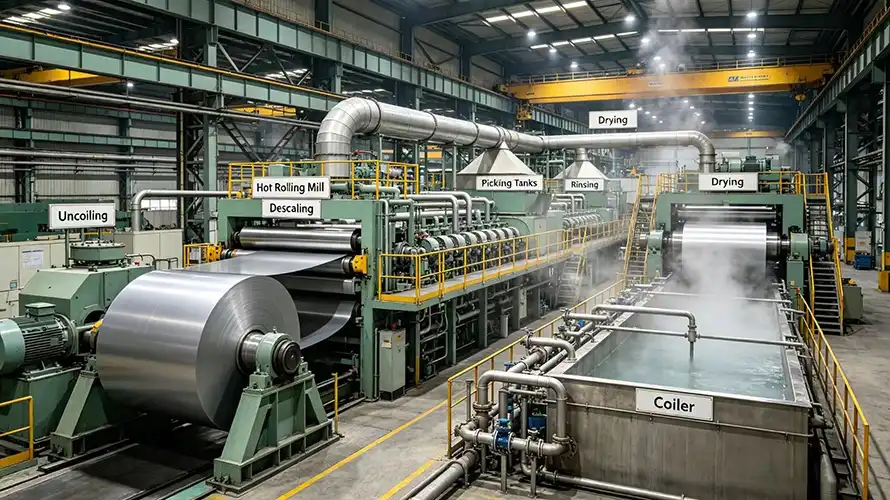
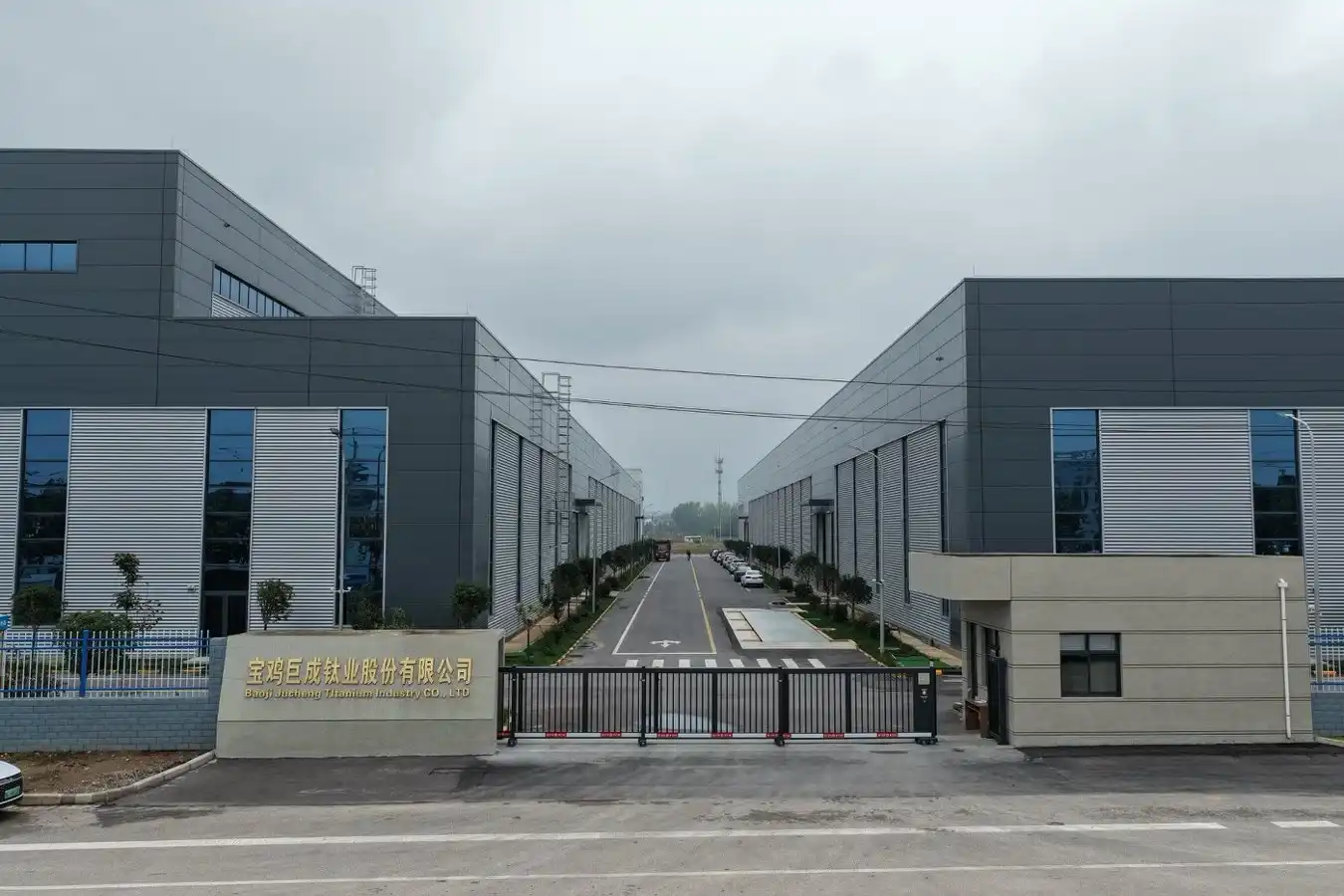
It is not always the case that standard dimensions are the most cost-effective option for industrial manufacture. A reduction in cutting waste, machining time, and material handling may be achieved with the purchase of material that corresponds to the dimensions of the finished component. The use of customised processing is advantageous for manufacturers of equipment such as reactors, heat exchangers, marine components, and other products that have dimensions that are not standard. Before getting a quotation, you should first prepare a technical design that includes the following dimensions: thickness, width, length, grade, standard, delivery condition, surface treatment, and dimensional tolerances. In the event that the component requires levelling, machining, or special packaging, be sure to include these services in the inquiry. Production and processing are both individualised by Jucheng Titanium in accordance with the designs provided by customers. Rolling, annealing, levelling, pickling, and surface finishing are all processes that are used throughout the production process. With a production complex that spans 120,000 square meters and a titanium stockpile that weighs 3,000 tonnes, the organization is able to fulfill a wide range of procurement requirements. Additionally, the company's expertise in the manufacture of titanium materials and equipment may make it simpler for big industrial project buyers to pick materials and communicate with fabrication companies.
Instead of employing a thickness chart, you should discuss your idea with a technical provider. Tsinghua University and the Northwest Institute for Nonferrous Metal Research were the two institutions with which Jucheng Titanium started collaborating in the titanium sector in the year 2004. The company's technical and quality inspection teams provide assistance with the selection of materials, the customisation of products, and the guarantee of quality.
Conclusion
The appropriate thickness of a sheet of titanium depends on the material grade, the production technique, the structural stresses, and the operating circumstances. In order for manufacturers to attain dependable performance and efficient manufacturing, it is necessary for them to evaluate all of these aspects together. By collaborating with Jucheng Titanium, you will be able to choose an appropriate material and a customised solution for your next project.
Frequently Asked Questions
1. What Is the Most Common Thickness of a Sheet of Titanium?
It depends on the application. Thin-gauge products suit lightweight fabrication, while thicker titanium materials are commonly selected for industrial equipment and machined components.
2. Is 4 mm Titanium Thick Enough for Fabrication?
It can be suitable for brackets, equipment components, and certain structural parts. However, the final decision depends on loads, geometry, grade, and operating conditions.
3. Which Titanium Grade Is Best for Bending?
Grade 1 and Grade 2 are commonly considered for applications requiring good ductility and formability. The appropriate choice also depends on bend radius and forming conditions.
4. Does Thicker Titanium Always Provide Better Strength?
No. Thickness increases section stiffness and load capacity in many designs, but material grade, component geometry, and structural loading are equally important.
Get the Right Titanium Sheet for Your Fabrication Project
Looking for a reliable titanium material supplier? Jucheng Titanium offers multiple titanium grades, customized dimensions, professional quality inspection, and technical support for industrial fabrication. Whether you need a standard sheet of titanium or materials with customized specifications, our team is ready to help. Contact us at s4@juchengti.com to discuss your drawings, thickness requirements, and project needs.
References
1. ASTM International. ASTM B265 – Standard Specification for Titanium and Titanium Alloy Strip, Sheet, and Plate.
2. ASTM International. ASTM F67 – Standard Specification for Unalloyed Titanium, for Surgical Implant Applications.
3. SAE International. AMS 4911 – Titanium Alloy, Sheet, Strip, and Plate, 6Al-4V, Annealed.
4. ASM International. ASM Handbook, Volume 14: Forming and Forging. 1988.
5. Donachie, M. J. Titanium: A Technical Guide. 2nd Edition, ASM International, 2000.
6. Leyens, C., and Peters, M. Titanium and Titanium Alloys: Fundamentals and Applications. Wiley-VCH, 2003.