



Why Gr9 titanium plate suits aerospace and chemical builds
When procurement teams ask me which titanium grade handles both aerospace structures and aggressive chemical environments without forcing a trade-off between weight and strength, my answer is consistent: the GR9 titanium plate (Ti-3Al-2.5V) earns that position more reliably than most alternatives. It delivers a tensile strength of ≥620 MPa and a yield strength of ≥483 MPa—roughly 20–50% higher than commercially pure Grade 2—while retaining cold formability that Grade 5 simply cannot match. For engineers building hydraulic brackets, heat exchangers, or airframe components, that combination resolves a long-standing materials selection dilemma.
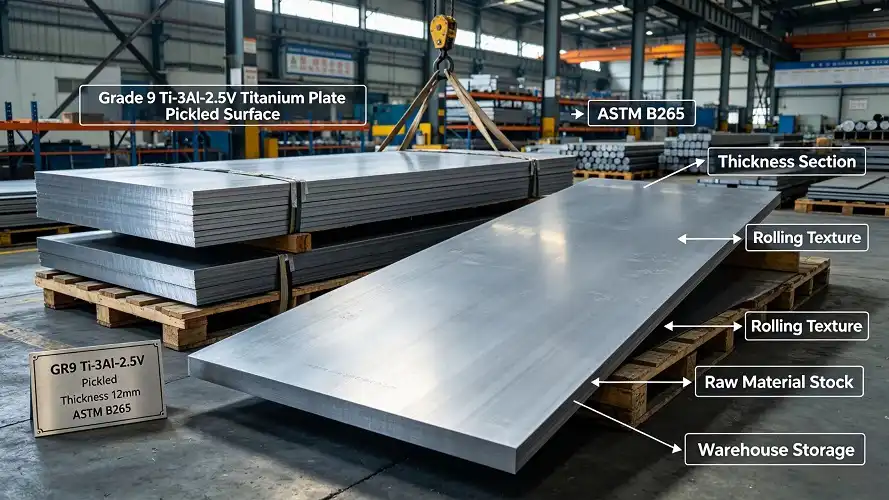

Understanding GR9 Titanium Plate: Properties and Composition
Alloy Composition and Standard Form Factors
The UNS number for Gr9 titanium plate is R56320, and it is made up of 3% aluminum, 2.5% vanadium, and the rest titanium. Plates are made at Jucheng Titanium from hot-rolled, annealed sheets that meet the standards set by ASTM B265, AMS 4911, and ASME SB265. Thicknesses range from 4 mm to 80 mm, widths from 950 mm to 2,500 mm, and lengths up to 10,000 mm. Custom sizes can be made upon request. You can choose from acid-pickled, polished, or machined surfaces. Before they are shipped, all plates are rolled, heated, leveled, pickled, and given a surface finish.
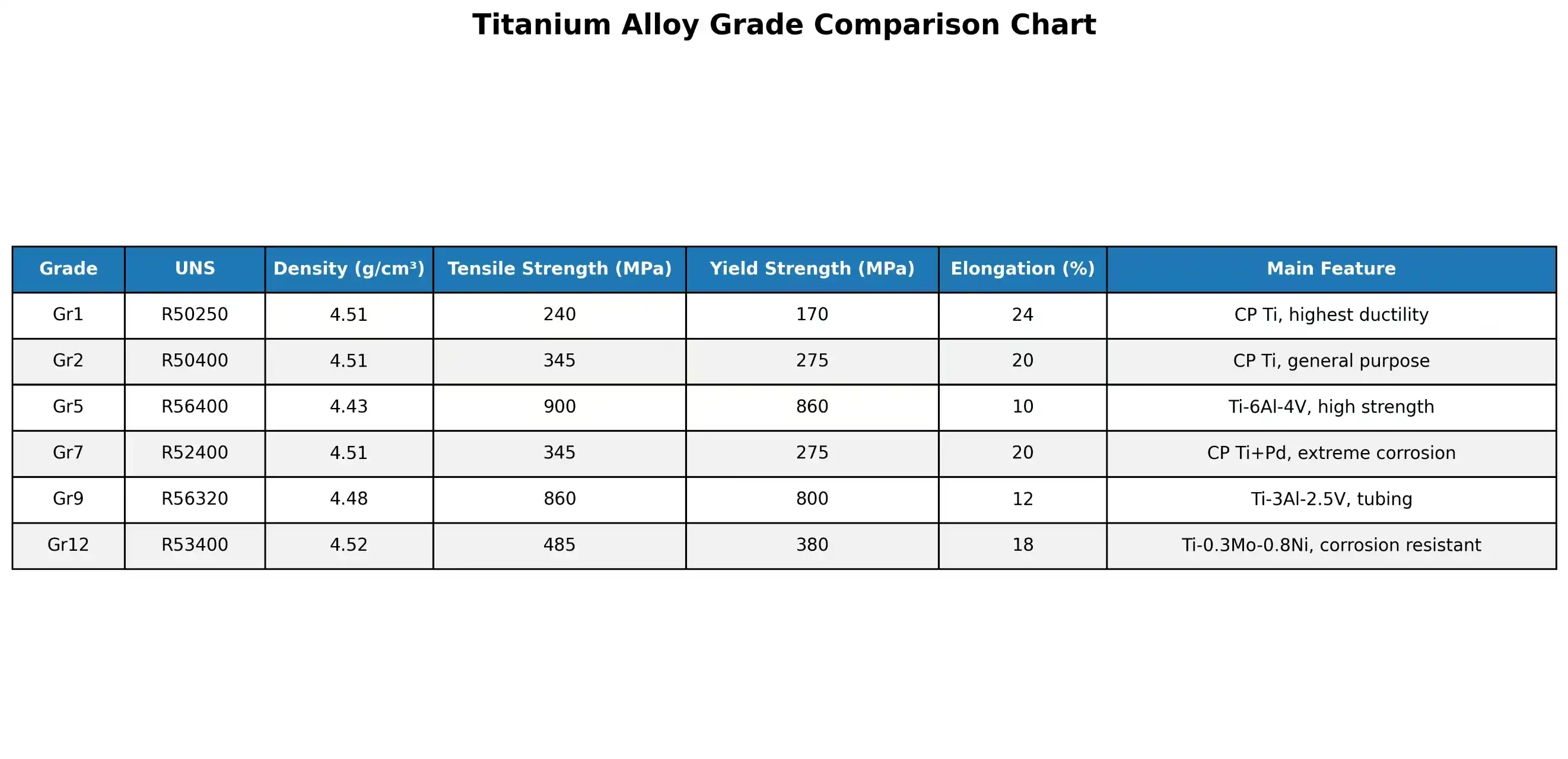
Mechanical Performance Metrics
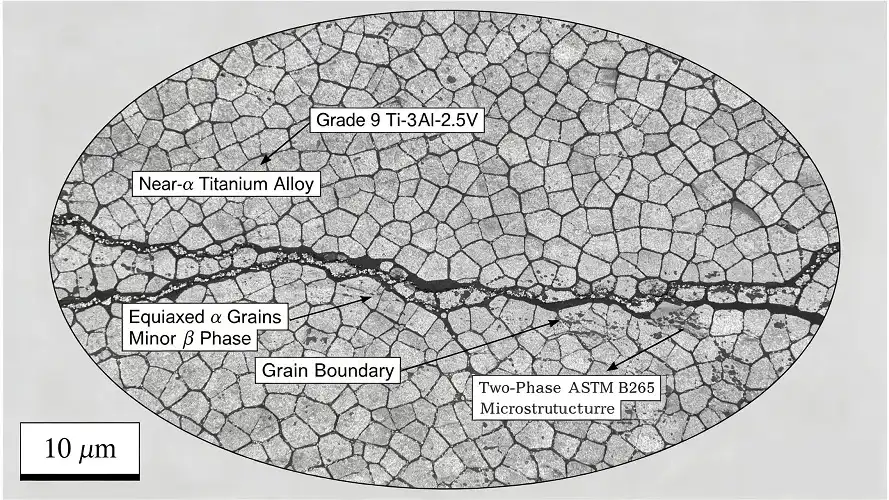
The plate has a density of about 4.48 g/cm³ because of its near-alpha, alpha-beta substructure of Ti-3Al-2.5V. With a UTS of ≥620 MPa, it performs much better than Grade 2's UTS of ≈345 MPa and is only about 20% lower than Grade 5. The resistance to fatigue is high enough for cyclic loads in aircraft settings. Its melting point is close to 1,670°C, and it can survive oxidation up to 315°C, which is a key temperature for hot-section work on aircraft ducting and chemical reactor lining.
Cold Formability and Heat Treatment
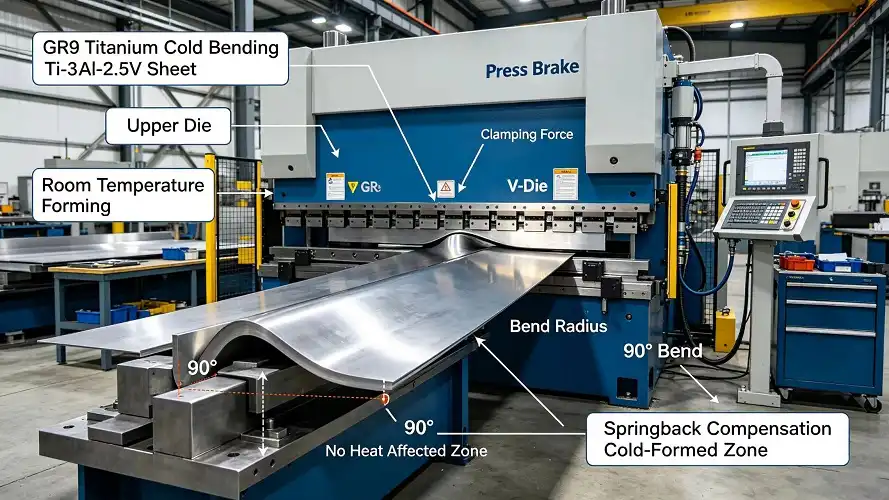
Cold-rollability is one thing that makes this metal different from Grade 5. It is possible to cold-work Ti-3Al-2.5V up to 75–85% reduction before it needs an anneal cycle, which is usually done at 600–800°C to make it flexible again. Because of that processing window, fabricators can bend, stamp, or draw complicated shapes at room temperature, without having to use expensive hot-forming tools that Grade 5 requires. As per ASTM B265 and AMS 4911, all of Jucheng Titanium's plates are shipped in the annealed state, which has been confirmed by bend tests and microstructure evaluations.
Why GR9 Titanium Plate Is Preferred in Aerospace and Chemical Builds
Aerospace: Strength-to-Weight Ratio and Fatigue Life
In aerospace, lowering weight directly leads to less fuel use and more payload. Stainless steel weighs about 43% more than Ti-3Al-2.5V, which weighs 4.48 g/cm³. That density advantage is good for aircraft hydraulic tubing, airframe brackets, wing spars, and structural panels, but it means giving up the mechanical integrity that aluminum can't provide at high temperatures. Independent research published in the International Journal of Aerospace Engineering confirms that steel has been replaced with Ti-3Al-2.5V hydraulic tubing systems in a number of commercial aircraft platforms. This has cut the weight of the systems by 30–40%.

Chemical Processing: Corrosion Resistance in Aggressive Media
Corrosion of equipment is a direct cost of doing business in petrochemical and hydrometallurgy settings. GR9 titanium plate has the same level of corrosion resistance as Grade 2 titanium. It is almost completely resistant to chloride pitting, wet chlorine, oxidizing acids, and most organic acids up to 260°C. According to NACE International corrosion studies, this alloy often lasts three to five times longer than stainless steel alternatives in chloride-rich environments. This includes heat exchangers, reactors, and pipeline fittings. This longer service life cuts down on replacements and unexpected downtime, which leads to a measured increase in return on investment (ROI).

Grade Comparison: GR9 vs. GR5 vs. GR2
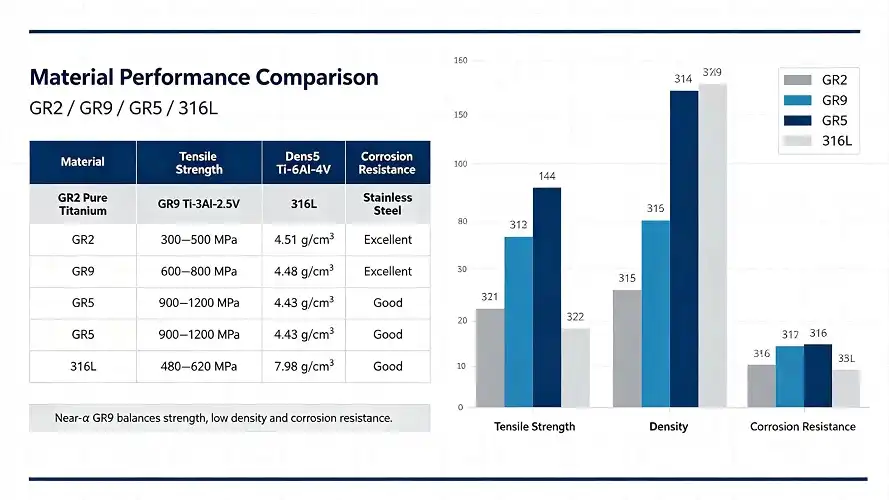
To pick the right titanium grade, you need to compare them fairly. Here are the most important things that buying teams should look at:
- GR9 vs. GR2: Grade 2 is the most weldable and ductile CP titanium, but its yield strength of ≈275 MPa limits use in structural applications. GR9 provides 75% higher yield strength while retaining equivalent corrosion resistance—making it the logical upgrade for moderate-to-high load environments.
- GR9 vs. GR5 (Ti-6Al-4V): Grade 5 tops GR9 in tensile strength (≥895 MPa), but its low cold-formability forces expensive hot-working or CNC machining. For fabricated geometries like tubing brackets or clad panels, GR9 reduces production costs significantly without a structurally meaningful strength penalty.
- GR9 vs. Stainless Steel 316L: Stainless steel costs less per kilogram, but its density (7.99 g/cm³) and inferior chloride resistance make it a poor long-term choice in weight-sensitive or chemically aggressive service.
If you compare GR9 to 316L stainless steel, even though stainless steel is cheaper per kilogram, it is not a good long-term choice for service that needs to be sensitive to weight or chemicals. This is because it has lower chloride resistance and a higher density (7.99 g/cm³).
How to Choose GR9 Titanium Plates for Your Projects
Matching Grade to Operating Environment
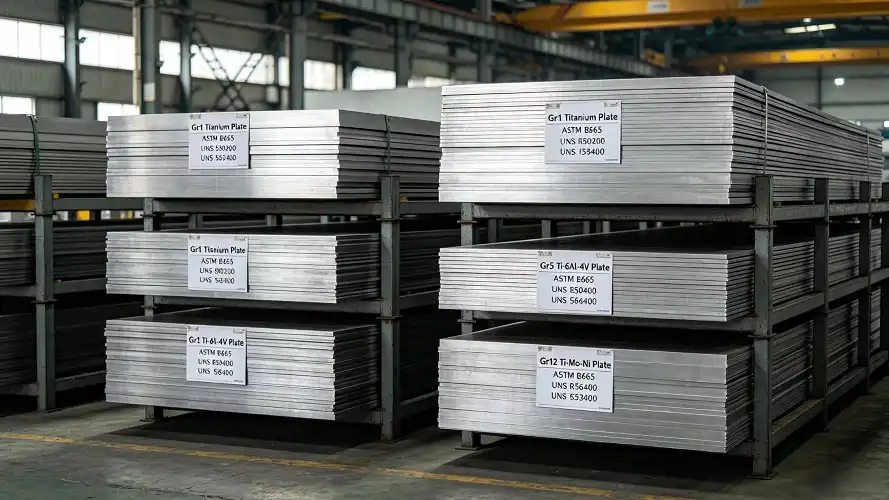
First, make a map of your working conditions, including the temperature range, chemicals that will be present, the mechanical load profile, and the way the part was made. GR9 is good for uses where the temperature stays below 315°C, where the metal needs to be shaped or bent, and where it will be exposed to chloride or acid. If the temperature is above 400°C or the structure is under a lot of stress, Grade 5 or Grade 12 might be better. During the planning process, Jucheng Titanium also sells GR1, GR2, GR4, GR5, GR7, and GR12 plates so that you can compare different grades.
Certification and Compliance Requirements
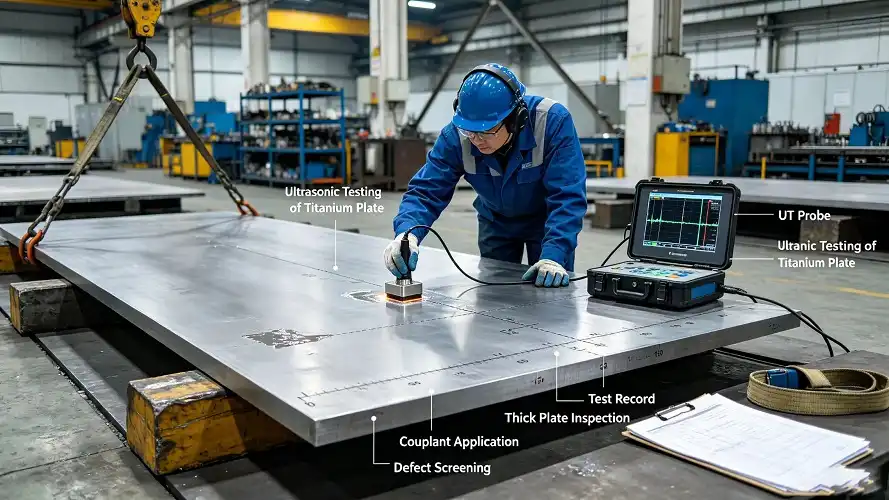
For aerospace buying, materials must be able to be tracked, and full paperwork must be kept. Based on the level of specification, plates must meet ASTM B265, AMS 4911, or ASME SB265. As part of quality control, the chemical composition should be analyzed using ICP or OES, ultrasonic testing should be done according to AMS 2631 Class A1 to look for internal flaws, and guided bend testing should be done to make sure the cold-forming is solid. When looking for pressure vessels that are FDA-approved or ASME-approved, buyers should make sure that the supplier keeps a full mill test report (MTR) with heat numbers that can be tracked back to the final part.
Cost, Lead Time, and Customization
Custom plate orders—those with non-standard widths, sizes, or finishes on the surface—usually take longer to get than stock items. Planning to buy things 8–12 weeks before they are made lowers the risk of being behind schedule. Jucheng Titanium keeps about 3,000 tons of titanium in stock all year, which cuts down on the time it takes to deliver normal sizes. Long-term supply deals protect prices against changes in raw materials and make sure that big or repeat orders get the attention they deserve.
Procuring GR9 Titanium Plates: Best Practices and Supplier Insights
Evaluating Supplier Credibility
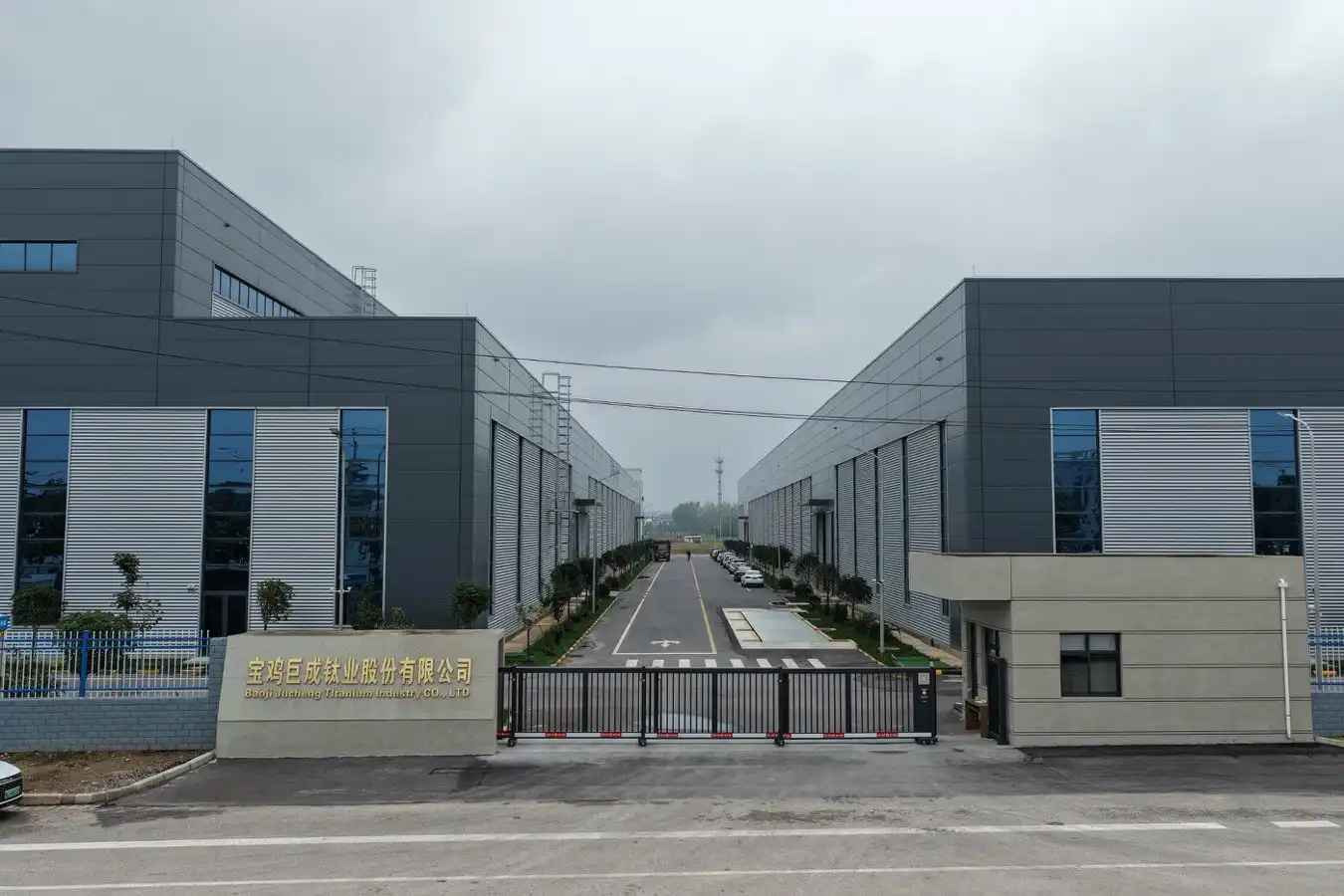
A reliable GR9 titanium plate provider should have quality certificates that are recognized, full MTRs, and proof that they have exported to markets in North America and Europe. Baoji Jucheng Titanium Industry Co., Ltd. was established in 2004 in China's Baoji titanium production zone. It has been recognized as a National High-Tech Enterprise and was the first private titanium company in Shaanxi Province to list on the National Equities Exchange and Quotations in 2017. It holds 4 invention patents and 41 utility model patents. The company has been making things for more than 20 years and works closely with Tsinghua University and the Northwest Institute for Nonferrous Metal Research. They have a lot of technical knowledge that helps them with both standard orders and R&D-grade custom orders.
Managing Logistics and International Trade Compliance
When you ship titanium plates to people in the U.S., you need to make sure they have the right HS code classification, export paperwork, and material certification packages that meet ASTM and AMS standards. Clearance delays can be avoided by working with a supplier who knows how to handle international freight—sea freight for large orders and air freight for urgent small batches. The United States, Europe, and Southeast Asia are all part of Jucheng Titanium's world shipping network. The company helps OEM and private-label buyers with packing and labeling.
Real-World Applications and Case Studies
Aerospace Structural and Hydraulic Systems
Plates and tubes made of Ti-3Al-2.5V are commonly used in hydraulic systems at Boeing and Airbus. Because the metal can be cold-formed, stamped structural parts can be made without having to spend a lot of money on hot-tooling. Based on industry case data from ASM International, OEM makers in the U.S. aerospace sector say that making Grade 6 brackets costs 15% to 25% less than making Grade 5 brackets with the same geometry.
Chemical Equipment: Heat Exchangers and Reactor Linings
Titanium plates from Jucheng Titanium have been used in heat exchangers and reactor tanks for hydrometallurgy and industrial applications. The largest titanium spiral plate heat exchanger in China was provided to WUGANG Group as an example of a project. The corrosion-resistant titanium plate directly increased the time between equipment repair intervals. Titanium equipment doesn't need to be serviced as often as stainless steel equipment does in chloride-rich leaching circuits, which are popular in copper and zinc hydrometallurgy.
Conclusion
Few materials can match the performance of GR9 titanium plate, which has moderate to high strength, great cold formability, and resistance to chloride rust that works well in both aircraft structures and chemical process equipment. Its mechanical qualities are much better than those of commercially pure titanium, and because it is easier to work with than Grade 5, it costs less to make complicated shapes. Ti-3Al-2.5V is still one of the best options for procurement teams looking for materials that must meet strict certification requirements and work well in harsh operating conditions.
FAQ
1. What is the main difference between GR9 and GR5 titanium plate?
GR5 (Ti-6Al-4V) offers higher tensile strength—≥895 MPa versus ≥620 MPa for GR9—but it is very difficult to cold form and typically requires hot-working or extensive machining. GR9 is approximately 20% lower in strength but can be cold-worked up to 75–85% reduction before annealing, making it the better choice for fabricated aerospace and chemical components where bending or stamping is required.
2. How does GR9 perform in seawater and acid environments?
Ti-3Al-2.5V shares essentially the same corrosion resistance as Grade 2 titanium in seawater up to 260°C, and it resists wet chlorine, oxidizing acids, and most organic acids effectively. This makes it well-suited for offshore, petrochemical, and hydrometallurgy equipment where chloride attack is the primary failure mechanism.
3. What certifications should I request when ordering GR9 plate?
Request a full mill test report (MTR) with chemical composition results per ASTM B265 or AMS 4911, ultrasonic testing reports per AMS 2631 Class A1, bend test results, and heat number traceability documentation. For pressure vessel work, confirm ASME SB265 compliance.
4. What lead times should I expect for custom-size GR9 plates?
Standard inventory sizes can ship within days from suppliers carrying sufficient stock. Custom thicknesses, widths, or surface finishes typically require 4–8 weeks of production time. Planning 8–12 weeks ahead of your fabrication start date is a safe buffer for most project timelines.
Source Your GR9 Titanium Plate From Jucheng Titanium
Baoji Jucheng Titanium Industry Co., Ltd. is a verified GR9 titanium plate manufacturer with over 20 years of production experience, 3,000 tons of standing inventory, and full ASTM B265 / AMS 4911 / ASME SB265 certification support. We supply custom sizes from 4 mm to 80 mm thickness across a full grade range—GR1 through GR12—with acid-pickled, polished, or machined surface options. Contact our technical team directly for a project quote or sample request. Email: s4@juchengti.com.
References
1. ASM International. Titanium: A Technical Guide. 2000.
2. NACE International. Corrosion of Titanium and Titanium Alloys. 2003.
3. ASTM International. ASTM B265: Standard Specification for Titanium and Titanium Alloy Strip, Sheet, and Plate. 2020.
4. AMS 4911: Titanium Alloy Sheet, Strip, and Plate, 6Al-4V, Annealed. SAE International. 2015.
5. Donachie, M.J. Titanium: A Technical Guide, 2nd Edition. ASM International. 2000.
6. International Journal of Aerospace Engineering. "Weight Reduction in Hydraulic Systems Using Ti-3Al-2.5V Alloy." Hindawi Publishing. 2018.