
Why Is Grade 2 Titanium Round Rod Widely Used in Industry?
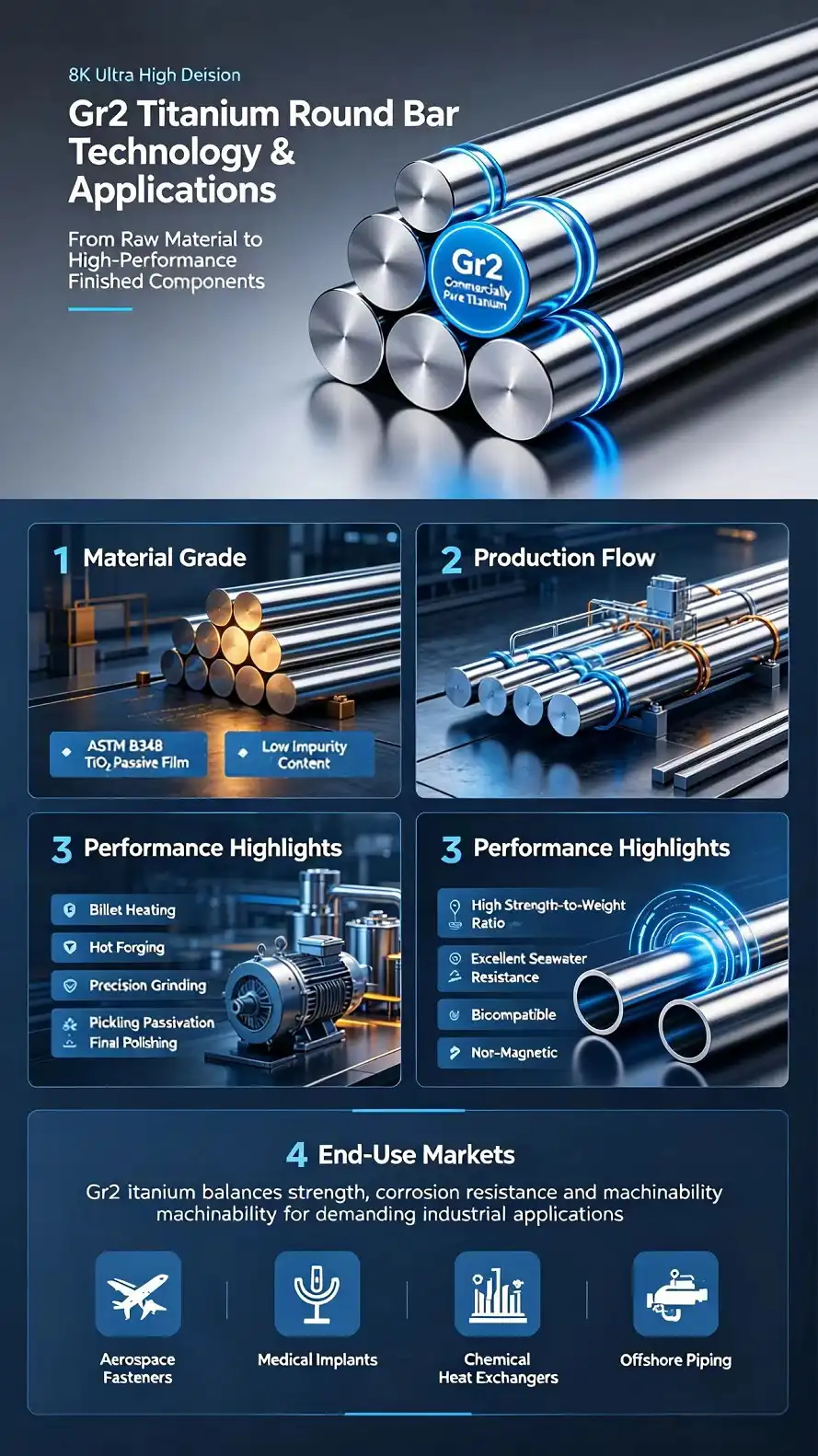
It is known as the workhorse of commercially pure titanium because grade 2 titanium round rods have the best mix of middling tensile strength, excellent corrosion resistance, and excellent formability. This material is used in aircraft, chemical processing, medical devices, and marine engineering to solve important problems where stainless steel rusts too quickly and aluminium isn't strong enough. As well as being able to reliably work in harsh chloride environments, it is also effortless to weld and about 60% lighter than steel. This makes it the best choice for engineers and procurement teams who want long-term durability without giving up fabrication flexibility.
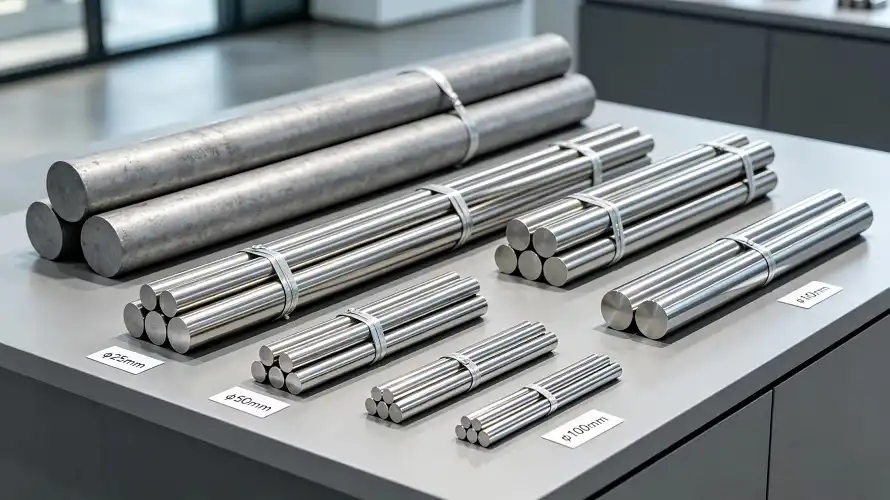
Understanding Grade 2 Titanium Round Rod: Properties and Composition
When it comes to pure titanium that can be sold, Grade 2 titanium round rods stand out as the most useful choice. Under international metallurgical standards, this unalloyed alpha-phase titanium rod is known as UNS R50400. It is a carefully designed mix between strength and ductility that meets the needs of real-world industrial applications.
Chemical Composition and Purity Standards
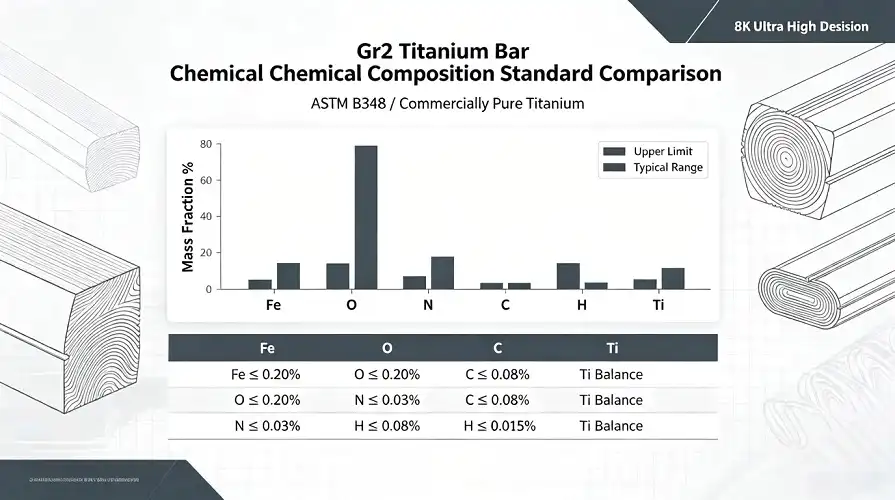
The chemical makeup of a grade 2 titanium round rod keeps titanium as the main element, with minor elements that are tightly managed and determine how well it works. The amount of oxygen stays at or below 0.25%, the amount of iron stays below 0.30%, the amount of nitrogen stays below 0.03%, and the amount of carbon stays below 0.08%. These exact chemical limits make sure that the mechanical behaviour is the same from one production batch to the next. Following strict rules like ASTM B348, ASME SB348, and AMS 4928 makes sure that every rod meets the certification and traceability needs of aircraft makers and chemical equipment builders. Material consistency is a challenge for procurement workers when they are buying for long-term projects. This level of control directly addresses that problem.
Mechanical Properties That Matter
Grade 2 titanium round rod has a minimum tensile strength of 345 MPa, a minimum yield strength of 275 MPa, and an expansion rate of more than 20%. Because of these factors, the material can handle a lot of stress while still being able to bend without breaking during cold forming. The density of about 4.51 g/cm³ makes it much lighter than steel and stainless steel alternatives. This is critical in situations where lowering the weight of the structure directly leads to better fuel economy or lower running costs. The hardness is usually between 160 and 200 HB, which is high enough to prevent wear in many industrial settings while still being easy to machine.
Corrosion Resistance and Surface Characteristics
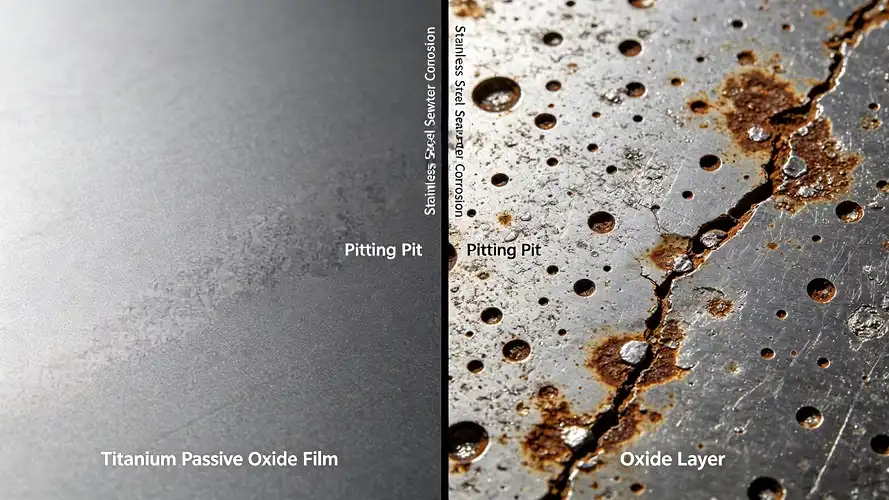
What makes this material unique is that when it is introduced to air, it forms a passive titanium dioxide layer on its own. If this protective film gets broken, it grows back right away, so it can handle rainwater, wet chlorine gas, and many organic acids. Grade 2 titanium round rod doesn't rust as stainless steel does in chloride-rich settings; it stays strong even after decades of being exposed. The softened state in which these rods are usually delivered improves their ability to protect while also making them as flexible as possible for the next steps in the manufacturing process.
Performance Comparison: Grade 2 Titanium Round Rod vs Other Materials
When buying, teams know how Grade 2 titanium round rod compares to other materials; they can make choices that balance cost, performance, and long-term dependability.
Grade 2 Versus Higher Titanium Alloys
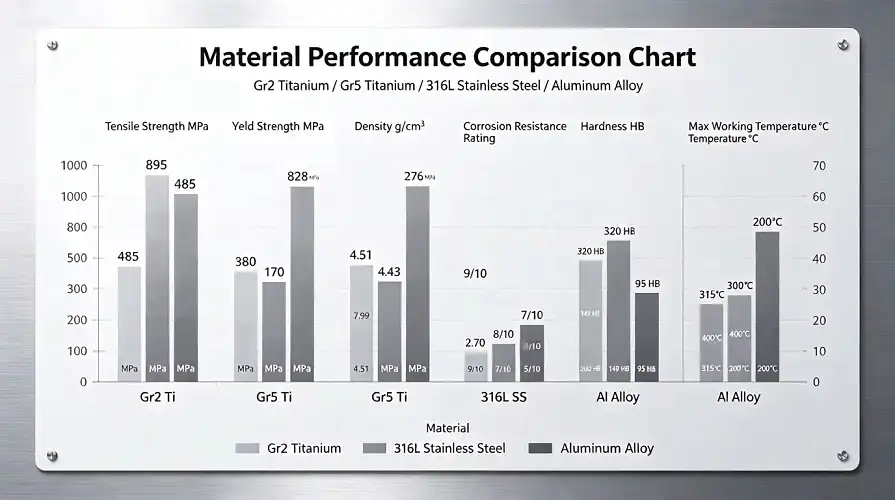
When you look at Grade 2 titanium round rod and Grade 5 titanium metal (Ti-6Al-4V), you can see that they have different pros and cons. Grade 5 has about twice as much tensile strength, which is why it is chosen for high-stress aircraft structural parts. But this strength comes at the cost of not being able to weld or cold form. Grade 2 titanium round rod is great for jobs that need to bend, draw, or join many things together without first heating the metal. When companies that make chemical equipment need to make complicated heat exchanger shapes, Grade 2 titanium round rod's high flexibility keeps them from cracking as stronger metals would. In the same way, Grade 7 titanium adds palladium to make it more resistant to reducing acids, but it costs a lot more. Grade 2 titanium round rod works well in oxidation conditions, where this pricey addition doesn't add anything useful.
Stainless Steel Alternatives
When it comes to industrial uses, stainless steel is the most common comparison point. Austenitic stainless steels, such as 316L, are less expensive to make and are particularly effective at resisting rust. However, they fail completely in places with wet chlorine or hot chloride solutions. When stainless steel is used for offshore platforms and processing equipment, stress corrosion cracks happen, but not when grade 2 titanium round rod is used. Because it is about 40% lighter than stainless steel, it lowers the amount of structural strength needed and the cost of installation, especially for large-diameter pipe systems or equipment that is hung.
Aluminum Comparisons
Aluminium metals have great strength-to-weight ratios and are easier to work with, but Grade 2 titanium round rod is better at resisting fatigue and corrosion in chemical or sea processing conditions. Manufacturers of aircraft parts know that titanium keeps its mechanical qualities at high temperatures, while aluminium starts to soften. Grade 2 titanium round rod is good for uses outside of aluminium's normal service range because it can handle temperatures up to 315°C without losing much of its strength.
Core Applications of Grade 2 Titanium Round Rod in Industry
Because Grade 2 titanium round rod has a special set of properties, it is in high demand in many industries where material failure can have serious effects.
Aerospace and Defense Components
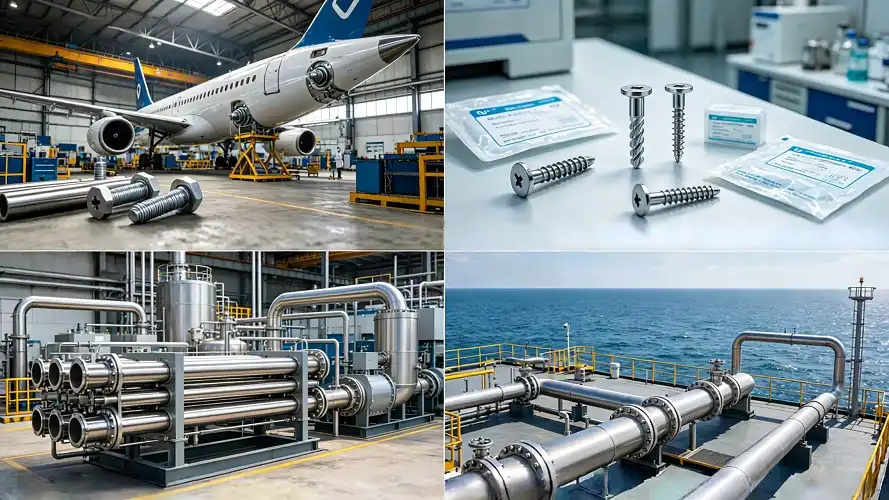
Grade 2 titanium round rod is used by aerospace companies to make bolts, hydraulic tubes, and aircraft parts that need to be resistant to corrosion and also light. Because it is biocompatible and doesn't rust, the material can also be used for parts of fuel systems and weather control systems. Defence companies use this grade for marine gear on military ships because stainless steel would quickly rust if it were exposed to salt water. The strict certification methods that make it possible to track the material meet the high-quality standards that these businesses require.
Medical Device Manufacturing
Manufacturers of surgical instruments like grade 2 titanium round rod because it can be sterilised and doesn't react badly with living things. The cloth doesn't break down or change colour after being autoclaved many times. Implant makers use it for parts that don't carry weight because it's moderately strong enough and has been shown to be biocompatible, which lowers the risk of rejection. Being able to polish a surface to a clean, smooth finish helps with germ control, which is critical in medical settings.
Chemical Processing Equipment
Corrosion of equipment is a constant problem for chemical plant workers, as it leads to unexpected downtime and early replacement of equipment. Grade 2 titanium round rod is used to make reactor tanks, heat exchanger tubes, and pipe systems that deal with toxic substances. The material works really well in chlor-alkali production, oxidising acid services, and wet chlorine conditions where even expensive nickel metals can rust. Jucheng Titanium has made the biggest titanium spiral plate heat exchanger in China for WUGANG Group and supplied Luoyang Petrochemical with composite tubes made of titanium. This evidence shows that the material can meet strict industrial requirements.
Marine and Offshore Applications
Offshore platform workers and marine equipment makers choose grade 2 titanium round rod for use in saltwater, where the investment in long-term dependability is worth it. It is used to make rotor blades, heat exchanges, and parts for ballast systems. Because the material doesn't react with biofouling and crack rust in seawater, it lasts longer between repairs and costs less to maintain. Jucheng Titanium's all-titanium air coolers are well-known in the North American market because they don't rust like stainless steel systems do.
How to Procure Grade 2 Titanium Round Rod: A Practical Guide?
To make effective purchasing plans for titanium products, you need to know what the suppliers can do, what certifications they need, and how to place an order in a way that doesn't delay the project or cost too much.
Identifying Reliable Suppliers
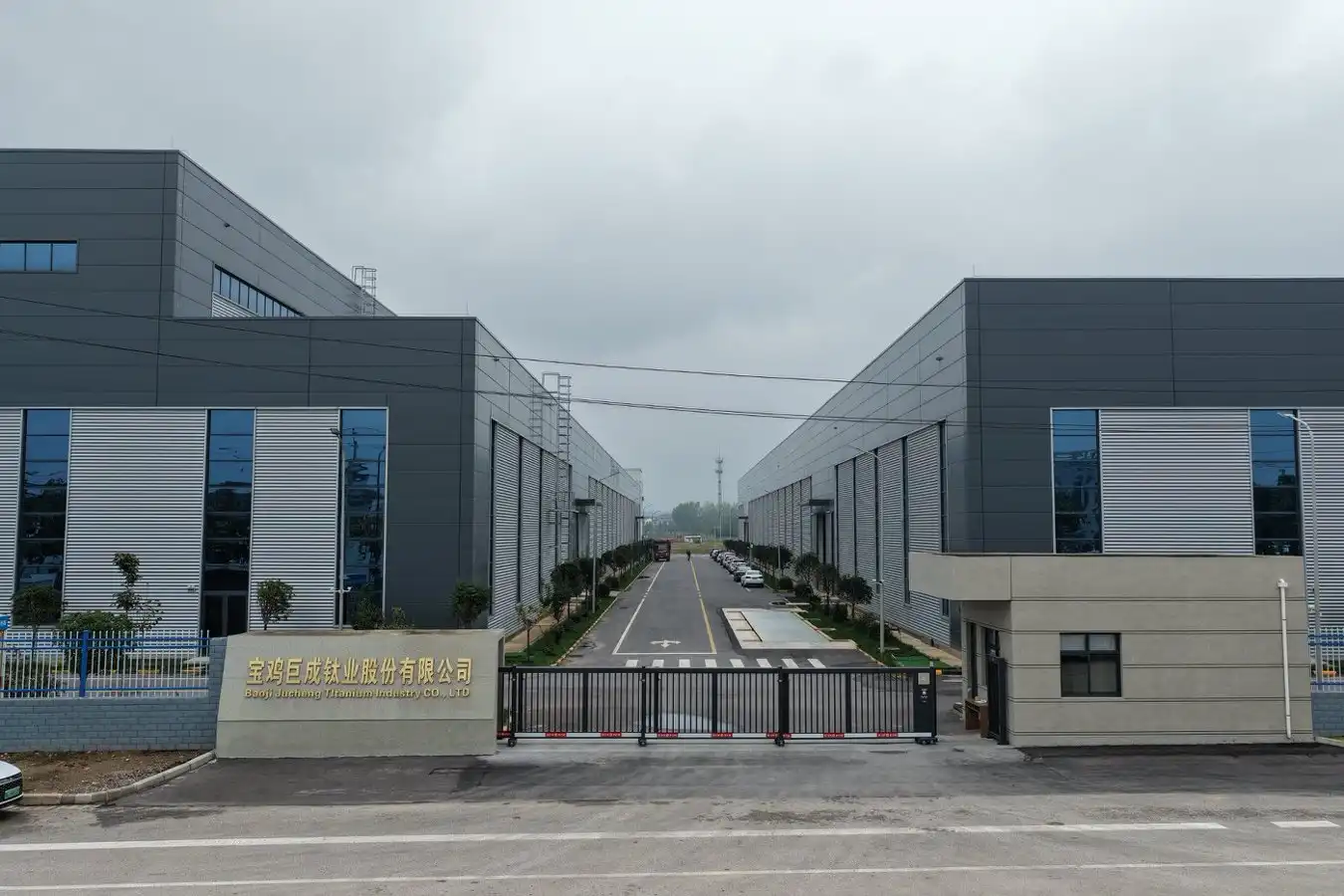
Titanium is mostly made in a few places around the world, with Baoji, China, being one of the most important ones. Baoji Jucheng Titanium Industry Co., Ltd. is a prime example of what well-known Chinese makers can do. They have been handling titanium for over 20 years and keep about 3,000 tonnes of stock on hand for quick delivery. With 4 idea patents and 41 utility model patents, the company shows that it has a lot of scientific knowledge that goes beyond just selling goods. North American suppliers like ATI and European makers like Timetal offer options for regional sourcing, but they usually charge more. When purchasing goods, teams should check that sellers have the right certifications, such as ISO compliance, ASTM material test results, and industry-specific credentials like NACE MR0175 for sour service environments.
Technical Specifications and Ordering Considerations
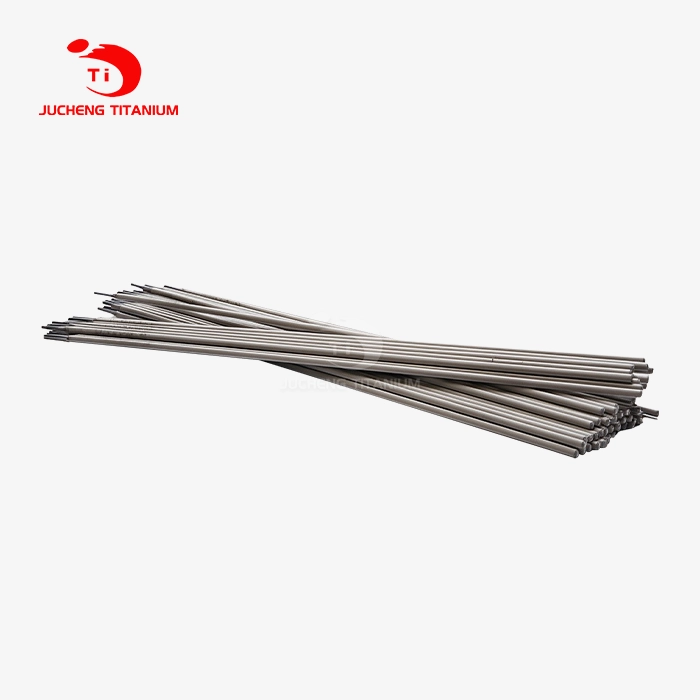
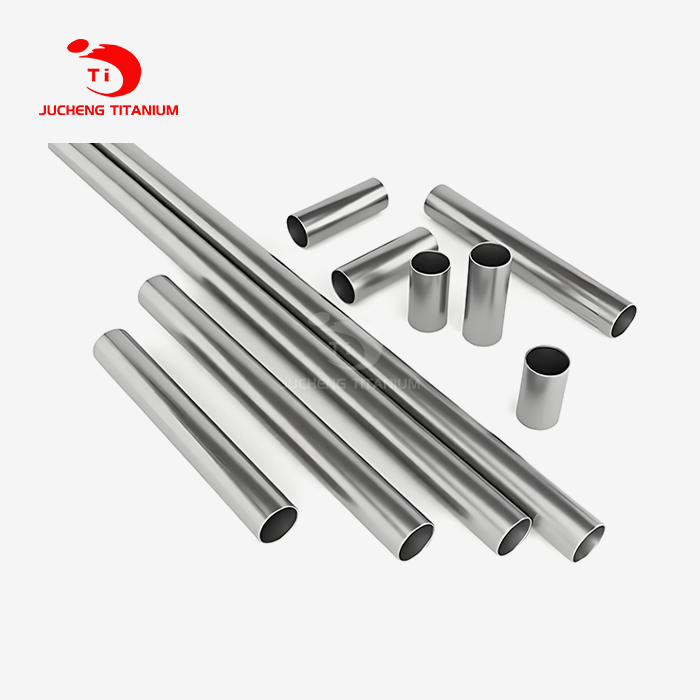
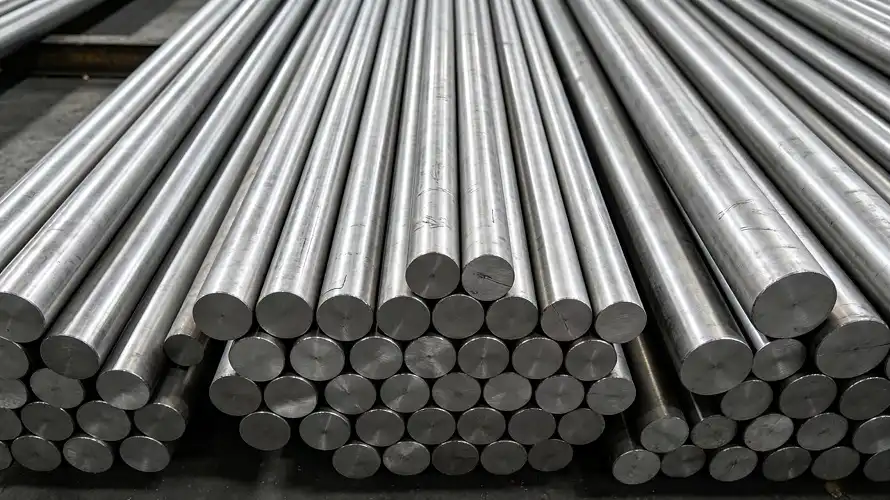
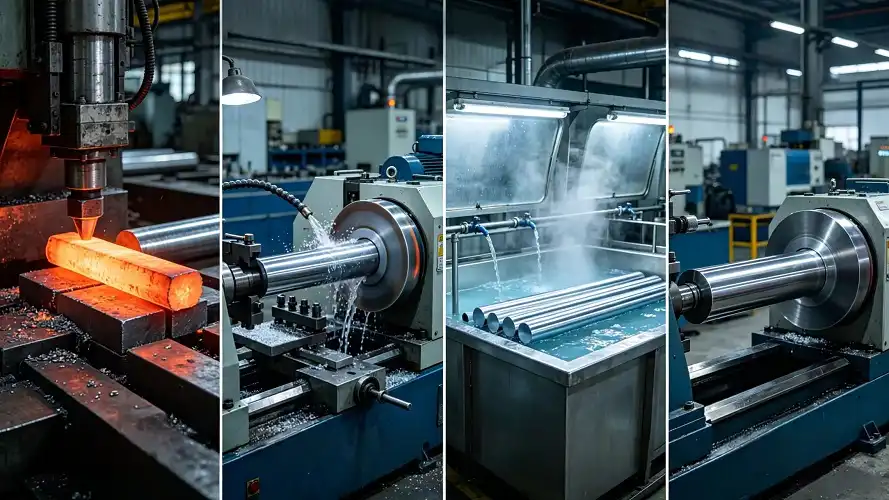
Grade 2 titanium round rods come in sizes from 6 mm to 450 mm and can be ordered in regular lengths up to 6,000 mm or custom lengths up to 12,000 mm if needed. Vacuum freezing, forging, hot rolling, or rotating forging are all steps in the production process. Next comes centreless grinding or turning, straightening, and surface treatment. There are different surface finishes, such as polished (bright), turned (peeled), centreless ground, sandblasted, and pickled. Each one is best for a certain type of construction work that comes after. Polished surfaces with close specs on size allow for precise CNC cutting, and pickled finishes work well for welding and shaping that comes after. Different suppliers have different minimum order numbers, but well-known companies like Jucheng Titanium can handle both large-scale orders and smaller study quantities for prototyping.
Pricing Dynamics and Cost Management
The price of sponge titanium around the world, the desire for alloys in aircraft markets, and changes in regional supply all affect the cost of titanium materials. Because it is easier to make and handle, Grade 2 titanium rods usually cost less than Grade 5 alloys, which are stronger. One way to buy things strategically is to make long-term deals with suppliers that include options to change the price based on public titanium sponge rates. When you buy in bulk, the cost per unit goes down, but you have to weigh the cost of keeping goods against the risk of price changes. Chemical equipment makers often get prices on materials early in the planning phase to avoid budget overruns caused by market price increases for projects with timelines of 6 to 18 months.
Machining and Handling Grade 2 Titanium Round Rod
To work with a grade 2 titanium round rod successfully, you need to know how to machine it and follow the right manufacturing procedures.
Machining Best Practices
Titanium doesn't transfer heat well, so heat generated during cutting stays at the tool-chip contact instead of spreading through the workpiece. Because of this, cutting speeds must be slower than those used for steel, usually 40 to 60% of the speeds used for stainless steel. Cutting forces and heat production are kept to a minimum by using sharp tools with positive rake angles. Carbide tools keep their edges sharp longer than high-speed steel ones, but they need to be used carefully so they don't chip. A lot of coolant flow is still necessary, and high-pressure systems that send cutting fluid straight to the contact between the tool and chip give the best results. Titanium hardens quickly after being worked on, so cuts that are broken up or that stay in one place should be avoided. When you use climb milling instead of regular milling, work hardening is lessened, and the surface finish is better.
Welding and Fabrication Techniques
Compared to higher-strength metals, Grade 2 titanium round rod is very easy to weld, but it is still very important to make sure that the protective gas covers the whole piece. Because the material reacts with oxygen and nitrogen at high temperatures, both the front and back of the weld need to be protected by inert gases. Helium is sometimes added to argon to make it more permeable, but argon alone is enough for most uses. Tungsten inert gas welding lets you precisely control thin pieces and complicated joint shapes. Post-weld stress release at temperatures between 480°C and 595°C helps keep the measurements of precision parts stable, but the material, as it was welded, works well in many situations as well. One major problem is that titanium and steel can't be bonded together directly because of the formation of weak intermetallic compounds. Explosive bonding or mechanical fixing must be used to join metals that are not the same.
Storage and Contamination Prevention
To keep materials' consistency from the time they are received until they are made, they need to be kept clean. Titanium should be kept away from steel so that iron particles don't get embedded and make places where rusting can start. Choline substances can cause stress corrosion cracks, so cutting fluids and lubricants must not contain them. Fingerprint oils won't affect the ability to weld if you wear clean hands when handling things. Before welding, the surface should be cleaned by chemical washing or mechanical cleaning to get rid of any dirt or dust that was there from grinding or cutting. When compared to working with common metals, these rules may seem hard, but they directly stop the quality problems and material failures that cause expensive project delays.
Conclusion
As an industry standard, Grade 2 titanium round rod stays in place because it solves real problems that purchasing teams, engineers, and plant workers face every day. When you mix the material's resistance to rust in places where stainless steel breaks down with its better shapeability and weldability compared to higher-strength titanium alloys, you get a performance window that no other material can match. This material has been shown to be reliable whether you're specifying parts for offshore platforms that will be exposed to seawater for decades, designing chemical processing equipment that needs to be resistant to corrosive media, or making medical devices that need to be biocompatible and resistant to sterilization. Knowing the material's features, the best way to get it, and how it needs to be put together lets you make smart choices that balance the cost of the initial material with the money you'll save in the long run on performance and care.
FAQ
1. What distinguishes Grade 2 titanium from Grade 5 alloy?
Grade 2 titanium round rod is commercially pure and has good resistance to rust and weldability, but it is only moderately strong, with a tensile strength of 345 MPa. As compared to Grade 4, Grade 5 (Ti-6Al-4V) is an alpha-beta metal that has about twice the tensile strength but is much less flexible and harder to work with. Grade 2 titanium round rod is usually used for projects that require a lot of welding or cold forming, while Grade 5 is better for high-stress structure uses because it is stronger.
2. Can Grade 2 titanium be welded to stainless steel?
When Grade 2 titanium round rod is directly welded to steel, weak intermetallic compounds are made that are easy to break. This means that these joints are not good for load-bearing uses. In its place, explosive bonding or mechanical binding must be used. An easy way to switch between titanium and steel pipe systems is to use titanium-clad steel plates that are made by explosive welding.
3. How does Grade 2 perform in acidic environments?
When used to oxidise acids and chloride-based liquids, grade 2 titanium round rod performs admirably by forming a steady passive oxide layer. Strong reducing acids, such as pure hydrochloric or sulphuric acid, can't hurt it much unless inhibitors are present. When it comes to lowering acid service, Grade 7 titanium with palladium additions works better and costs more.
Get Started with a Trusted Grade 2 Titanium Round Rod Supplier
When your project needs certified grade 2 titanium round rod or titanium round stock parts that can be tracked and delivered quickly, working with an experienced maker can make the difference between a smooth process and frustrating delays. Jucheng Titanium keeps a large stock of tubes with sizes ranging from 6 mm to 450 mm, all of which meet ASTM B348, ASME SB348, and AMS standards. We've been processing titanium for 20 years and are a nationally recognised specialist business. This means you can count on steady quality, which strict testing backs up. Our team can help you match the right material specifications to your application needs, whether you need regular sizes or unique lengths up to 12000 mm. You can email our engineering team at s4@juchengti.com to discuss your unique needs, ask for material certifications, or get a full quote for your next project.
References
1. American Society for Testing and Materials. (2021). ASTM B348: Standard Specification for Titanium and Titanium Alloy Bars and Billets. West Conshohocken, PA: ASTM International.
2. Donachie, M.J. (2000). Titanium: A Technical Guide (2nd Edition). Materials Park, OH: ASM International.
3. Lutjering, G. & Williams, J.C. (2007). Titanium (2nd Edition). Berlin: Springer-Verlag.
4. Schutz, R.W. & Watkins, H.B. (1998). Recent developments in titanium alloy application in the energy industry. Materials Science and Engineering A, 243(1-2), 305-315.
5. Boyer, R., Welsch, G., & Collings, E.W. (1994). Materials Properties Handbook: Titanium Alloys. Materials Park, OH: ASM International.
6. Peters, M., Kumpfert, J., Ward, C.H., & Leyens, C. (2003). Titanium alloys for aerospace applications. Advanced Engineering Materials, 5(6), 419-427.