



Why titanium grade 7 plate resists harsh acid environments
Titanium grade 7 plate (UNS R52400) resists harsh acid environments because of a small but decisive addition of palladium—between 0.12% and 0.25% by weight. This alloying element shifts the material's electrochemical corrosion potential firmly into the passive region, stabilizing a protective titanium dioxide surface film even in reducing acid conditions such as hot dilute hydrochloric or sulfuric acid. Where commercially pure Grade 2 titanium breaks down through rapid wall thinning and localized pitting, Grade 7 maintains structural integrity across a wide temperature and pH range, making it the preferred choice for heavy chemical processing, desalination, and hydrometallurgy equipment.
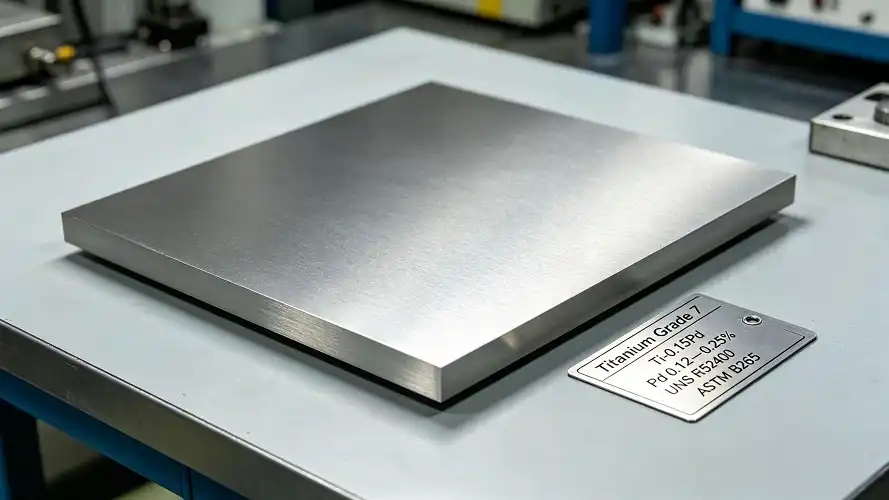

Understanding Titanium Grade 7 Plate and Its Unique Properties
Procurement experts need to have a clear picture of what they are getting before they define any materials for acid-service equipment. A data sheet for Grade 7 almost looks the same as one for Grade 2, but the way it reacts to aggressive chemicals is very different.
Chemical Composition That Sets It Apart
Grade 7 is an alpha-phase titanium alloy that has between 0.12% and 0.25% palladium (Pd). It is classified under UNS R52400 and is sometimes written as Ti-0.2Pd. Other than iron, oxygen, carbon, nitrogen, and hydrogen, all of the other elements stay within the same strict limits as Grade 2. The only thing that makes this alloy different is that tiny amount of Pd. However, it raises the alloy's corrosion potential well above the critical level for passive film stability in reducing media.
Mechanical Properties Worth Knowing
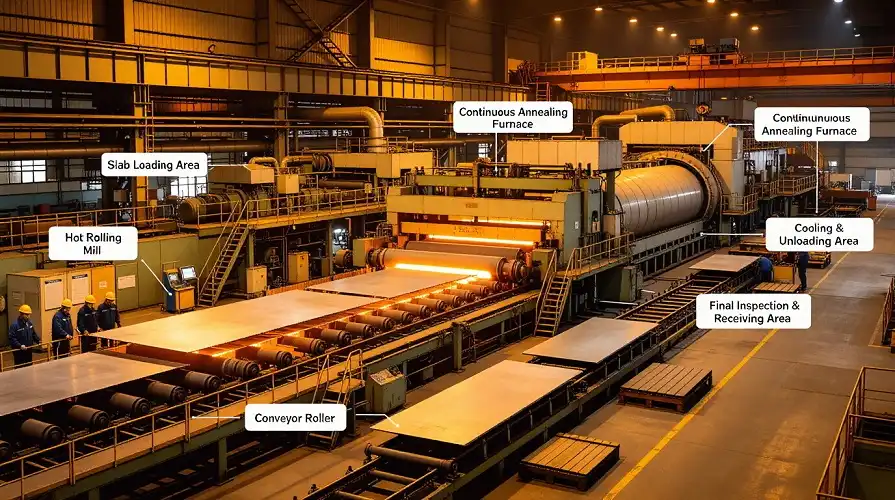
Mechanically, Grade 7 works about the same as Grade 2: it has a minimum tensile strength of 345 MPa, a minimum yield strength of 275 MPa, and an extension of at least 20%. These numbers meet the requirements of ASTM B265, ASME SB265, and AMS 4911. The metal comes in hot-rolled, annealed plate sizes ranging from 4 mm to 80 mm thick, 950 mm to 2500 mm wide, and up to 10,000 mm long. The surface can be cut, polished, or acid-pickled.
Why Palladium Changes Everything
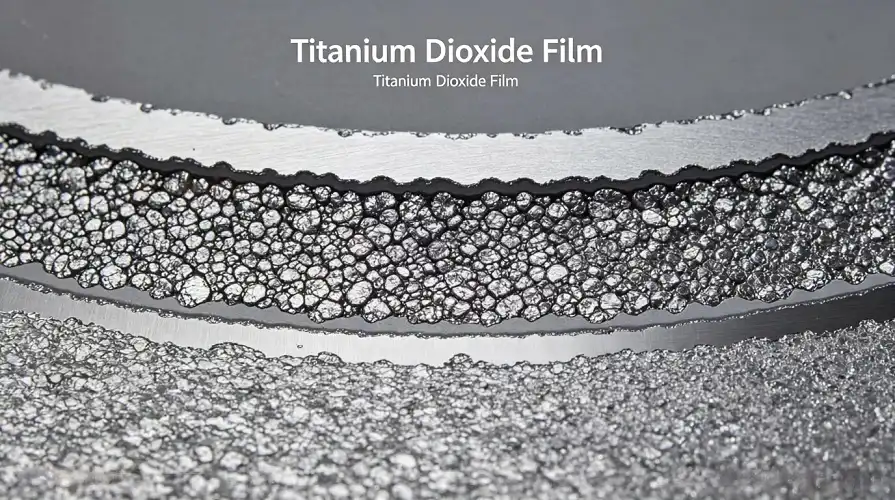
A cathodic depolarizer is what palladium does. It speeds up the hydrogen evolution process on the plate surface in a reducing acid solution. This raises the mixed potential above the point where the inactive film breaks down. The end result is a TiO₂ film that can fix itself almost instantly after being scratched. In low-pH chloride conditions, no nickel alloy or type of stainless steel consistently shows this behavior at the same cost-to-performance ratio.
Why Grade 7 Plate Outperforms in Acidic and Harsh Environments
When procurement teams have to defend the higher cost of titanium grade 7 plate during internal budget reviews, knowing the science behind the material's behavior is helpful. The proof from both lab tests and installations in the field is the same.
The Passive Oxide Film Mechanism
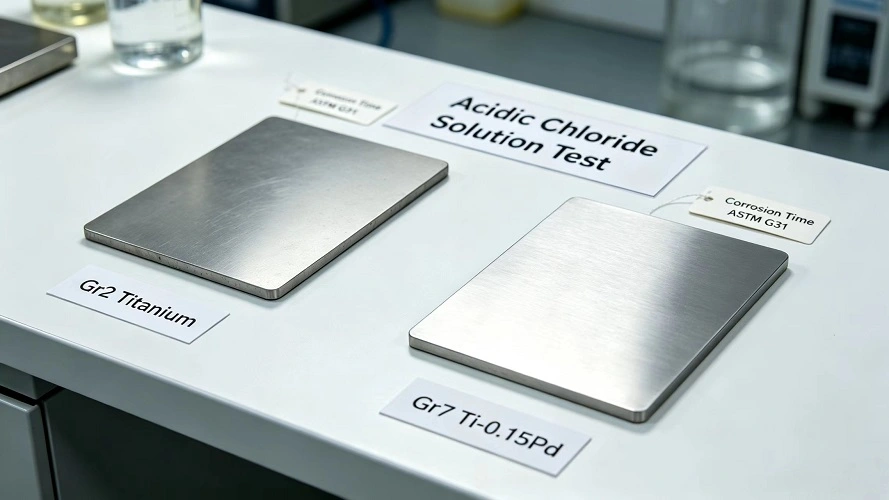
Standard, commercially pure titanium makes a steady TiO2 passive film by itself in oxidizing acids. That film breaks down faster than it grows back in reducing acids, especially hot, weak HCl or H₂SO₄. Palladium in Grade 7 changes the dynamics of repassivation in a big way. ASTM rust test results show that Grade 7 corrodes at a rate of less than 0.1 mm per year in 20% HCl at 100°C, while Grade 2 corrodes at a rate of more than 5 mm per year in the same conditions.
Resistance to Crevice and Pitting Attack
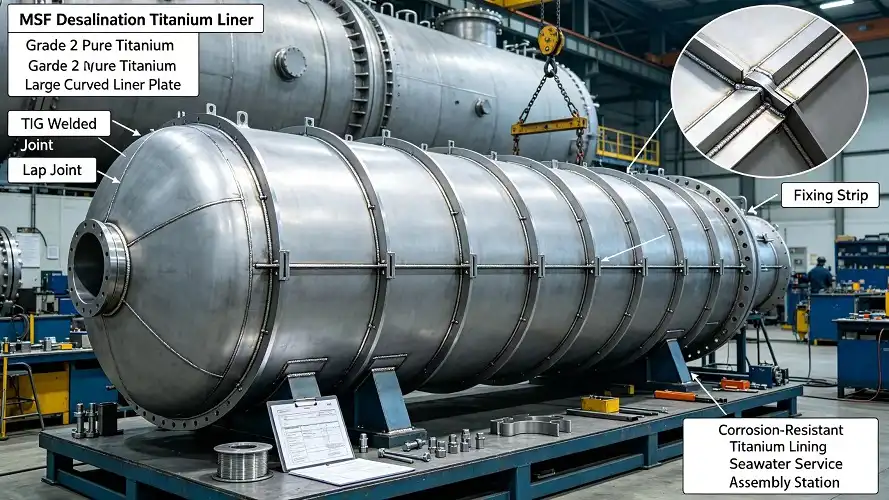
In plate lining and heat exchanger applications, pitting and crevice corrosion are the most likely ways that something will break. Even in small cracks where oxygen is scarce and the local chemistry turns acidic and reducing, the palladium content keeps the passive film stable. Field data from multistage flash desalination plants that use Grade 7 parts regularly show that they last more than 20 years in hot brine at temperatures above 120°C.
Comparison With Stainless Steel and Other Titanium Grades
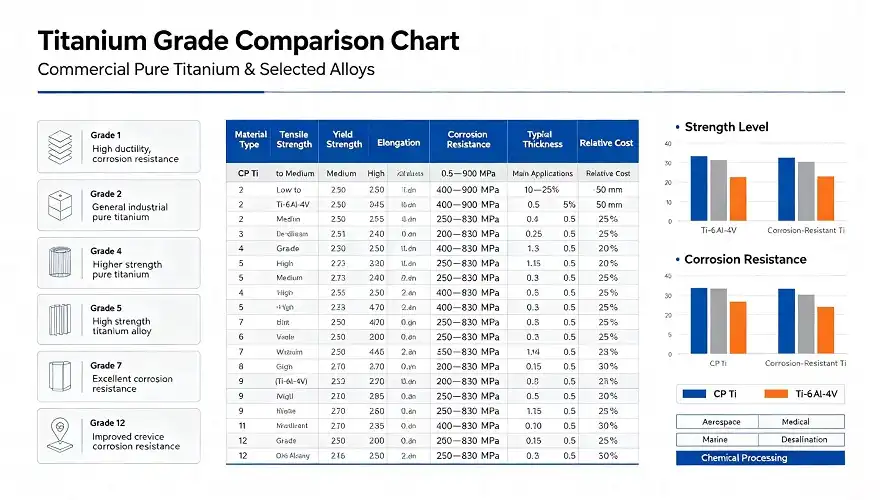
In chloride-rich, low-pH environments, stainless steel grades 316L and 904L lose their passive film stability and crack due to stress corrosion. Titanium grade 2 works well with oxidizing acids but not with reducing ones. Grade 5 (Ti-6Al-4V) is stronger, but it doesn't prevent rust as well in concentrated acid. Grade 7 fills a unique and valuable need: it can be shaped and welded similarly to Grade 2, and it is resistant to acid in a way similar to nickel-based alloys, but it costs a lot less.
Selecting Grade 7 Plate for Specific Industrial Applications
Knowing where this alloy really adds value helps engineers write accurate specifications and keeps them from writing too many or too few. Ti-0.2Pd plate has been shown to be the best material for the following three types of uses:
- Chemical processing units and storage tanks: Grade 7 doesn't let acid condensation weaken the walls of pressure vessels and heat transfer channels that handle hot, dilute reducing acids. The material meets the standards of ASME BPVC Section VIII, which allows code-stamped equipment to be built.
- Chemical processing reactors and storage tanks: Pressure vessel linings and heat exchanger channels handling hot, dilute reducing acids benefit from Grade 7's resistance to acid condensation-driven wall thinning. The material meets ASME BPVC Section VIII requirements, enabling code-stamped equipment construction.
- Desalination and marine scrubbers: In multistage flash plants and marine exhaust gas cleaning systems, Grade 7 components exposed to hot brine with fluctuating oxygen levels achieve documented service lives exceeding 20 years, reducing lifecycle replacement costs substantially.
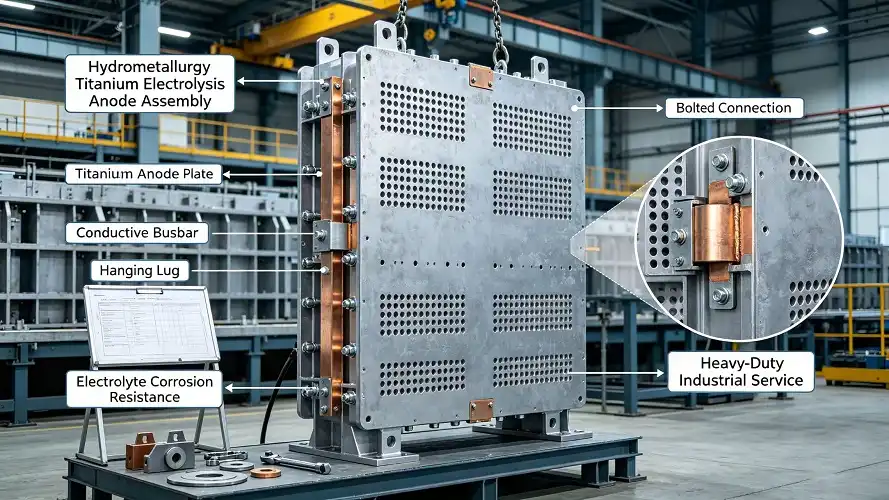
- Hydrometallurgy electrolysis electrodes: Anode components in electrowinning operations benefit from palladium's effect on electrical conductivity stability. The alloy resists the corrosive electrolyte while maintaining dimensional integrity under continuous current load.
- Electrodes for hydrometallurgy electrolysis: Palladium's effect on stable electrical conductivity helps anode parts in electrowinning processes. The metal can stand up to the corrosive liquid and keep its shape under a constant current flow.
Procurement Insights: How to Source Grade 7 Plate Efficiently
There are risks involved in getting titanium grade 7 plate that aren't present with standard grades. Chemical proof is required because of the palladium content, and price changes related to precious metal markets need careful contract structure.
Verify Palladium Content Before Acceptance
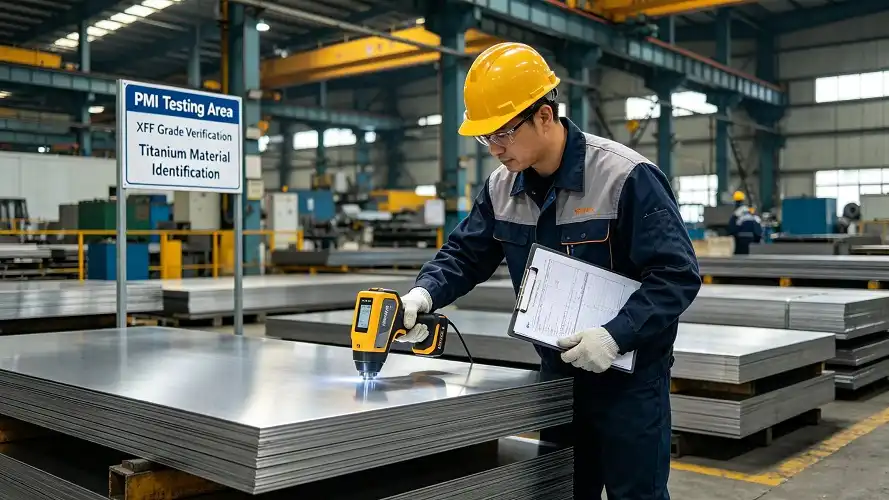
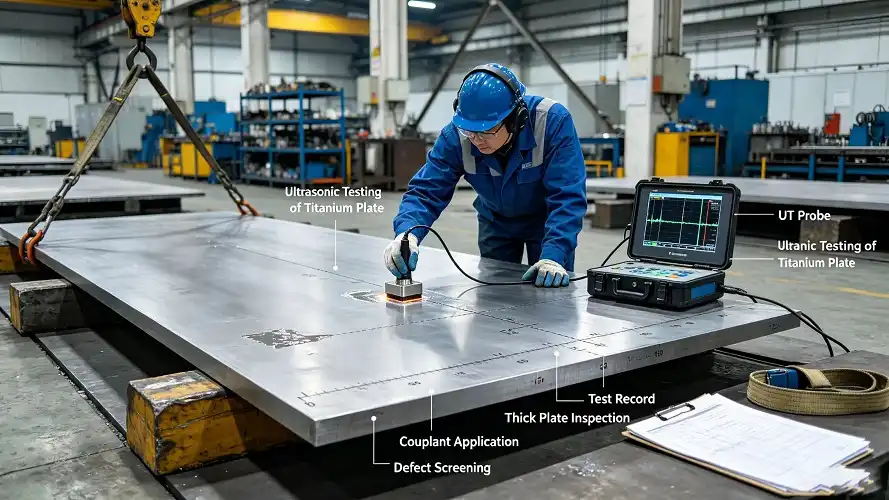
Using Inductively Coupled Plasma (ICP) or Optical Emission Spectroscopy (OES) tests to make sure that the Pd content is between 0.12% and 0.25% is the most important part of the checking process. A mill test report is not enough; each heat needs to be checked by an independent PMI to make sure that no substitute materials were used. After that, ultrasonic testing according to AMS 2631 should be done to find internal laminations before the plates are put into manufacture.
Understand the Cost Structure
Palladium's market price is the main reason why Grade 7 costs more than Grade 2. The purchasing team should keep an eye on both the spot price of palladium and the cost of titanium sponge. For big or long-term contracts, they should also try to get prices that are tied to an index. When you order in bulk, the cost of preparing each kilogram is lower. This is especially true for custom thickness or width needs that require their own rolling passes.
Certifications and Standards to Require
Any reputable supplier of Grade 7 plates should be able to show material certifications that can be tracked back to ASTM B265, ASME SB265, and AMS 4911. Each order should come with records of the steps used to process it, such as rolling, heating, leveling, cleaning, and finishing the surface. To keep the palladium content in the weld beads and stop corrosion-prone dilution zones, welding requirements must include ERTi-7 filler wire according to AWS A5.16.

Making an Informed Decision: Grade 7 Plate Versus Alternatives
Grade 7 isn't always needed for acid repair jobs. To pick the right metal, you have to weigh the cost, the amount of rust, and the mechanical load. Grade 9 (Ti-3Al-2.5V) is stronger than Grade 7 but less resistant to reducing acids. Grade 12 (Ti-0.3Mo-0.8Ni) is a little better than Grade 2 at resisting crevice corrosion, but it costs less than Grade 7. However, it doesn't work as well in weak HCl above 80°C as Grade 7. For uses with only reactive acids or service at room temperature, Grade 2 is usually enough.
If the decision is based on lifecycle cost instead of initial material price, Grade 7 is usually the best choice when temperatures are above 60°C, acid concentrations are between 5% and 30%, and there are tight spaces like tube-to-tubesheet joints. When engineers have had to repair Grade 2 equipment within five years because of acid attack, they often say that upgrading to Grade 7 stops the problems from happening again.
Conclusion
Titanium grade 7 plate can handle harsh acidic environments because palladium stabilizes its passive film on the surface in hot, reducing, low-pH conditions, which is where other materials fail. It has the same mechanical properties as Grade 2; it's easy to make, and it's been used reliably in chemical plants, desalination systems, and hydrometallurgical operations for decades. When procurement workers have to choose materials for aggressive acid service, the recorded lifecycle savings from less upkeep and longer service intervals always make up for the higher original cost.
Frequently Asked Questions
1. What distinguishes Grade 7 from Grade 2 titanium plate?
Both grades share nearly identical mechanical properties. Grade 7 adds 0.12%–0.25% palladium, which extends corrosion resistance into reducing acid environments where Grade 2 would rapidly deteriorate. The palladium shifts the electrochemical potential into the passive region, enabling the protective oxide film to remain stable in dilute HCl and H₂SO₄ at elevated temperatures.
2. Which filler wire should be used when welding this plate?
ERTi-7 filler wire per AWS A5.16 is required. Using Grade 2 filler dilutes the palladium concentration in the weld bead, creating a localized zone vulnerable to reducing acid attack. Maintaining Pd content throughout the weld zone is as important as preserving it in the base material.
3. How does temperature affect performance?
Grade 7 performs reliably up to approximately 260°C (500°F). Above 300°C, oxidation rates increase, and creep may become a limiting factor under sustained mechanical load. For most chemical processing applications operating below 200°C, thermal degradation is not a primary concern.
4. Why is Grade 7 plate more expensive than standard titanium?
The cost premium is driven by palladium's market price. Although the Pd fraction is small, the precious-metal surcharge is significant. However, lifecycle cost analysis consistently shows that the elimination of premature equipment replacement justifies the initial price difference.
Request a Quote From Jucheng Titanium — Your Trusted Grade 7 Plate Supplier
From Baoji, China's titanium processing center, Jucheng Titanium has been making and exporting titanium plate for more than 20 years. The plate is used in aerospace, chemicals, and other industries. We have four idea patents, keep about 3,000 tons of titanium on hand all year, and meet the standards for ASTM B265, AMS 4911, and ASME SB265 when we sell titanium grade 7 plate. You can email our technical team at s4@juchengti.com to talk about your needs, ask for a sample mill test report, or get a fair price.

References
1. ASTM International. ASTM B265: Standard Specification for Titanium and Titanium Alloy Strip, Sheet, and Plate. ASTM International, 2020.
2. Schutz, R. W., & Watkins, H. B. "Recent Developments in Titanium Alloy Application in the Energy Industry." Journal of Materials, 1998.
3. Covington, L. C. "The Influence of Surface Condition and Environment on the Crevice Corrosion of Titanium." Corrosion, Vol. 35, No. 8, 1979.
4. Donachie, M. J. Titanium: A Technical Guide, 2nd ed. ASM International, 2000.
5. Schutz, R. W. "Titanium Alloy Applications in Aggressive Acid Service." Corrosion Engineering, Science and Technology, Vol. 46, No. 1, 2011.
6. ASM International. Corrosion of Titanium and Titanium Alloys. ASM Handbook, Volume 13B, 2005.