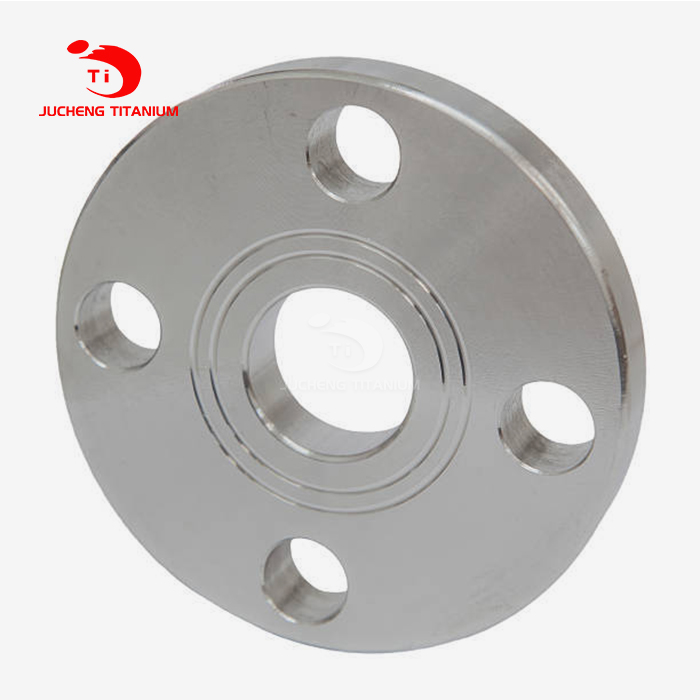

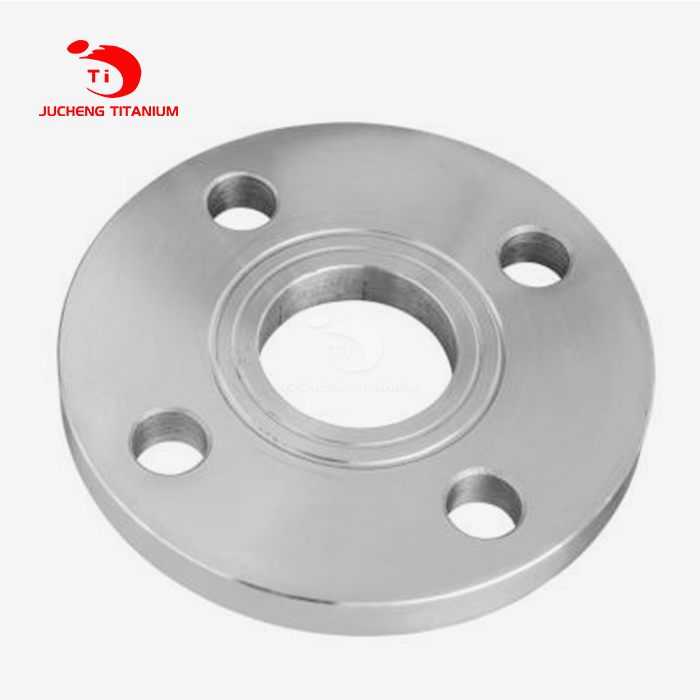
gr2 titanium flange
2.Size: NPS 1/2″ – 48″ (DN15 – DN1200), custom larger sizes available, Thickness: Sch5S – Sch160, XXS
3.Standard: ASME/ANSI B16.5, ASME B16.47, MSS SP-44, DIN 2631-2638, EN 1092-1, AWWA C207, JIS B2220, GB/T 9112, HG/T 20592
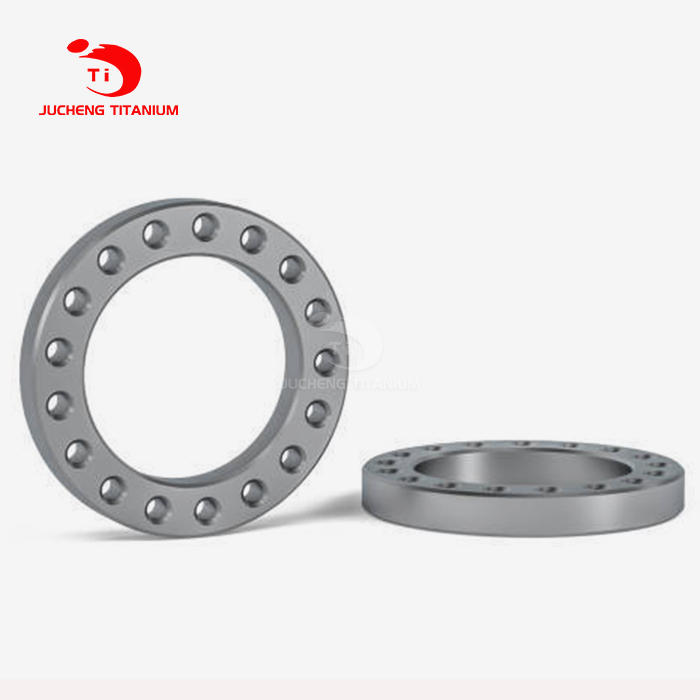
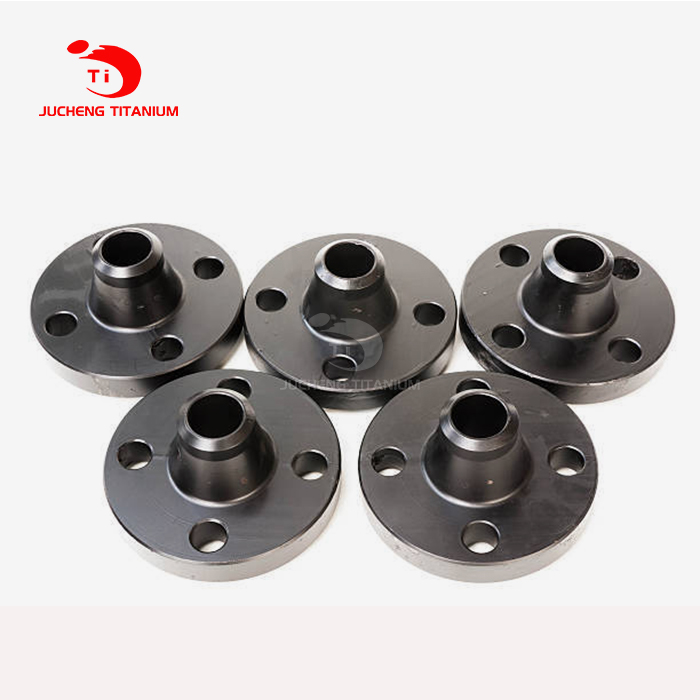
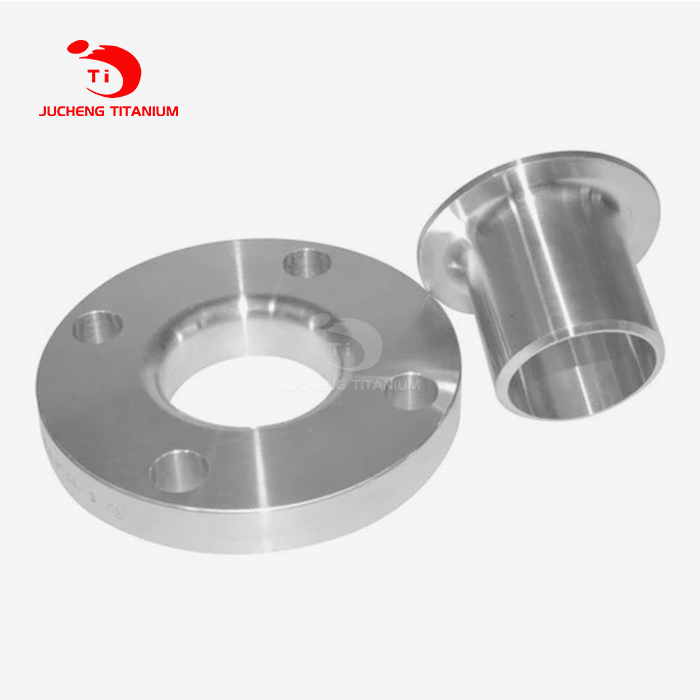
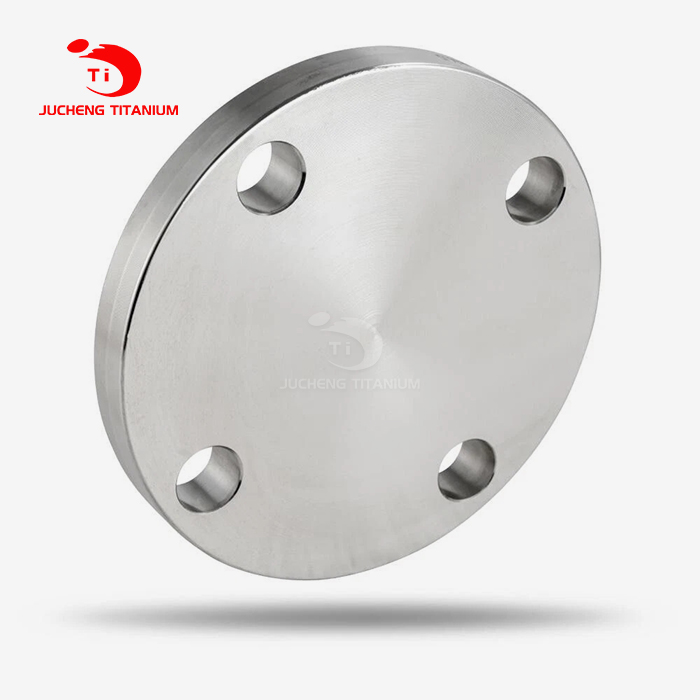
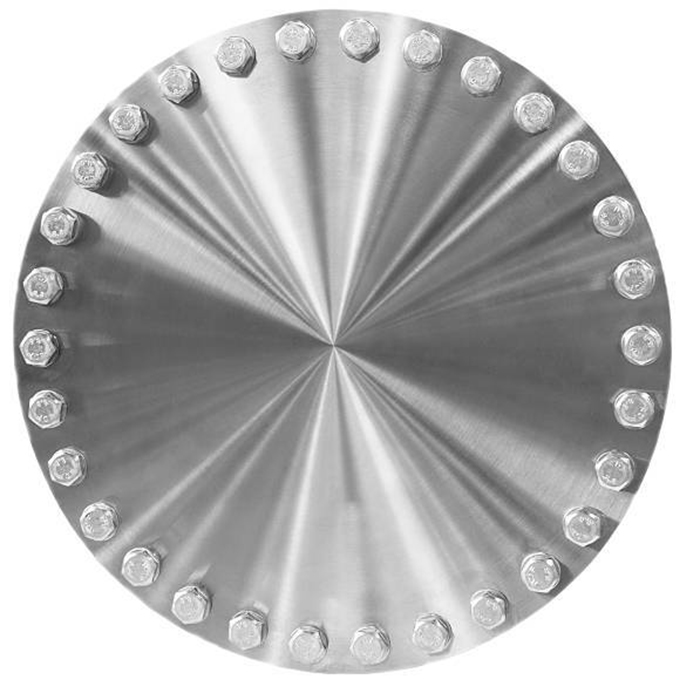
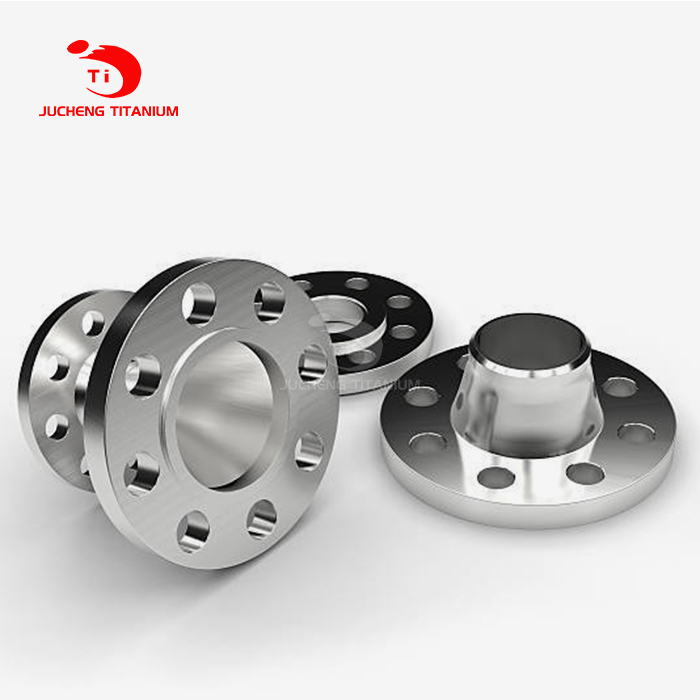
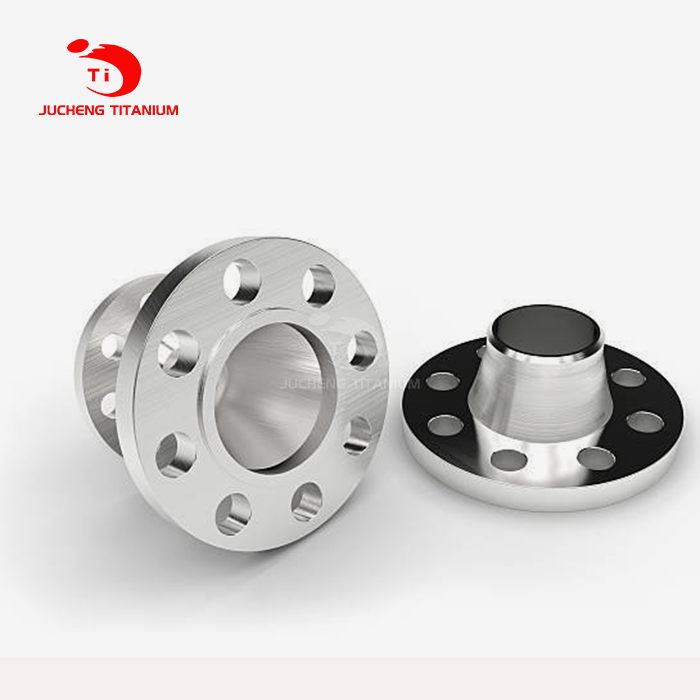
4.Type: Weld Neck (WN), Slip-On (SO), Blind (BL), Socket Weld (SW), Threaded (THR), Lap Joint (LJ), Plate, Orifice, Long Weld Neck
5. Processing Method: Titanium ingot → Forging → Heat treatment → CNC machining → Drilling → Surface finishing → Marking
6.State: Annealed
7.Surface Treatment: Machined bright
- Product Description
GR2 Titanium Flange – High-Performance Pipeline Connection Solution
Baoji Jucheng Titanium Industry Co., Ltd. manufactures gr2 titanium flange components engineered to ASTM B381 F2 standards, leveraging over 20 years of titanium processing expertise. In oxidizing acidic and chloride-rich situations where standard stainless steel fails, our precision-forged flanges made of Grade 2 commercially pure titanium offer remarkable corrosion resistance. We provide dependable pipeline connection solutions with an annual inventory of over 3,000 tons and a production capacity of more than 500 sets of titanium equipment. Our 120,000 square meter facility, which is based in Baoji, China's Titanium Valley, combines cutting-edge CNC machining and non-destructive testing equipment to guarantee dimensional accuracy and zero-defect quality for crucial industrial applications.
 |  |  |  |
Technical Specifications Of gr2 titanium flange
Parameter | Specification |
Grade | Gr1, Gr2, Gr5 (Ti-6Al-4V), Gr7, Gr9, Gr12, Gr23 |
Size Range | NPS 1/2″ – 48″ (DN15 – DN1200), custom larger sizes |
Thickness | Sch5S – Sch160, XXS |
Standard | ASME/ANSI B16.5, ASME B16.47, DIN 2631-2638, EN 1092-1, JIS B2220, GB/T 9112 |
Type | Weld Neck, Slip-On, Blind, Socket Weld, Threaded, Lap Joint, Plate, Orifice |
Processing | Forging → Heat Treatment → CNC Machining → Drilling → Surface Finishing |
State | Annealed |
Surface | Machined bright, Ra 3.2-6.3µm serrated finish |
 |  |  |
 |  |  |
Manufacturing Process Excellence
Our titanium flange production follows a rigorous seven-stage protocol.
Titanium ingots undergo precision forging to achieve optimal grain structure. Heat treatment then stabilizes mechanical properties and eliminates residual stress.
CNC machining ensures tight tolerances on bolt circle diameter and sealing face geometry. Drilling operations accommodate standard bolt patterns per ASME B16.5 specifications.
Surface finishing produces the required roughness for gasket sealing performance. Permanent marking includes material grade, size, and traceability codes.
Each manufacturing stage is monitored by our professional quality inspection team. This systematic approach guarantees consistent product reliability across all order volumes.
Quality Assurance Protocol
Chemical composition verification uses Optical Emission Spectrometry to confirm iron content below 0.30%. Oxygen levels are controlled to prevent embrittlement while maintaining desired strength.
Mechanical testing per ASTM E8 validates tensile strength, yield strength, and elongation properties. Samples are extracted from forged billets to represent actual product characteristics.
Ultrasonic testing per AMS 2631 Class A detects internal discontinuities. Liquid penetrant inspection per ASTM E1417 reveals surface defects on sealing faces and weld bevels.
Positive Material Identification using XRF technology confirms grade accuracy before shipment. Dimensional inspection with CMM equipment verifies all critical measurements against drawing specifications.
Our quality control system aligns with requirements for National High-Tech Enterprise certification. This comprehensive testing regimen minimizes field failure risk and extends service life.
 |  |  |  |
Applications
Our gr2 titanium flange serves assorted businesses including:
- Chemical handling and petrochemicals
- Marine and seaward engineering
- Power era facilities
- Pharmaceutical manufacturing
- Food and refreshment processing
- Aerospace and defense
- Pulp and paper industry
- Desalination plants
 |  |  |
 |  |  |
Application Advantages
The titanium flange excels in seawater systems where stainless steel suffers from chloride-induced pitting. Its passive oxide layer regenerates spontaneously, providing maintenance-free corrosion protection.
In wet chlorine processing environments, Grade 2 titanium resists attack that destroys conventional alloys. You avoid costly unplanned shutdowns and emergency repairs.
Chemical processing plants benefit from compatibility with oxidizing acids including nitric and chromic solutions. The material maintains integrity in concentrations that rapidly degrade other metals.
Offshore platforms utilize our flanges to reduce topside weight while meeting stringent safety standards. The weight savings allow increased payload capacity or reduced structural reinforcement costs.
Medical and food processing industries value the biocompatibility and cleanability of titanium surfaces. Our machined bright finish facilitates sanitary installations compliant with FDA requirements.

FAQ
Q: What is the maximum operating temperature for Grade 2 titanium flanges?
A:Continuous service is recommended up to 315-425°C depending on specific code requirements. Beyond this range, oxidation rates increase and mechanical properties decline progressively.
Q: Can I weld a titanium flange directly to stainless steel pipe?
A:No, direct fusion welding forms brittle intermetallic compounds that fail immediately. You must use mechanical flange-to-flange connections with appropriate isolation gaskets and insulated fasteners.
Q: What gasket material should I specify?
A:PTFE or spiral wound gaskets with titanium inner rings prevent galvanic corrosion. The gasket must accommodate the hardness and thermal expansion characteristics of titanium flanges.
Q: Is post-weld heat treatment required after installation?
A:Generally not necessary when proper inert gas shielding is used during welding. Stress relieving may be specified for complex geometries to ensure dimensional stability in precision assemblies.
Q: How does Grade 2 differ from Grade 5 titanium?
A: Grade 2 is commercially pure with superior corrosion resistance and weldability, ideal for chemical piping. Grade 5 (Ti-6Al-4V) offers higher strength but reduced weldability and lower resistance to certain corrosive media.
Partner with Titanium Valley Expertise
Baoji Jucheng Titanium combines advanced manufacturing infrastructure with deep industry knowledge. Our cooperation network includes Northwest Nonferrous Metals Research Institute and Tsinghua University for continuous innovation.
Ready to specify corrosion-resistant gr2 titanium flange solutions? Contact our technical team at s4@juchengti.com for customized flange specifications and fast delivery from our 3,000-ton inventory.