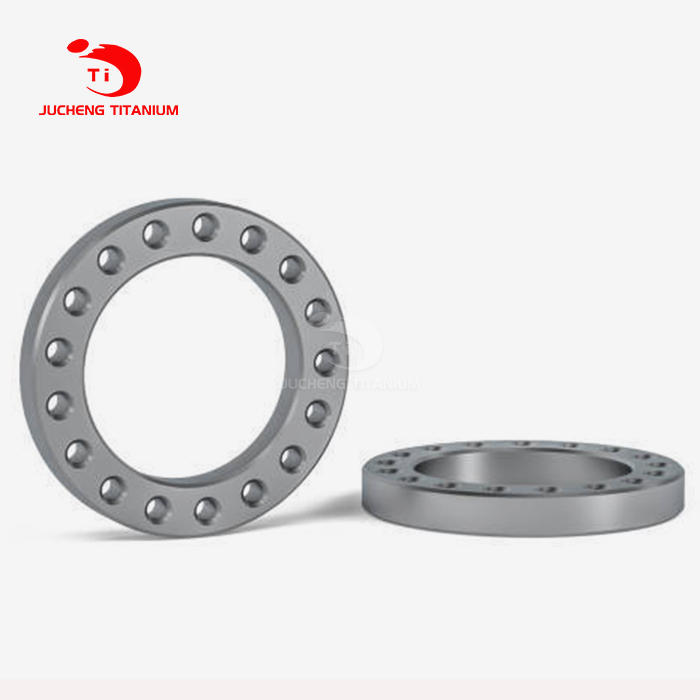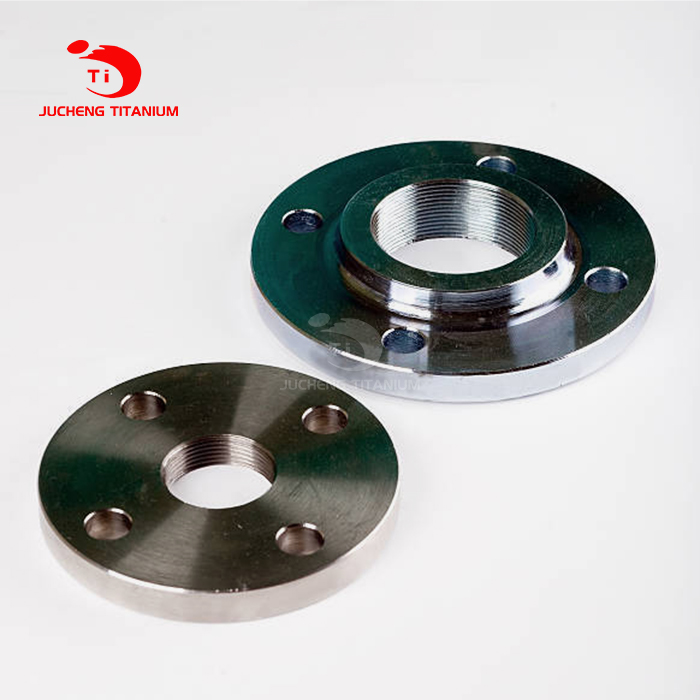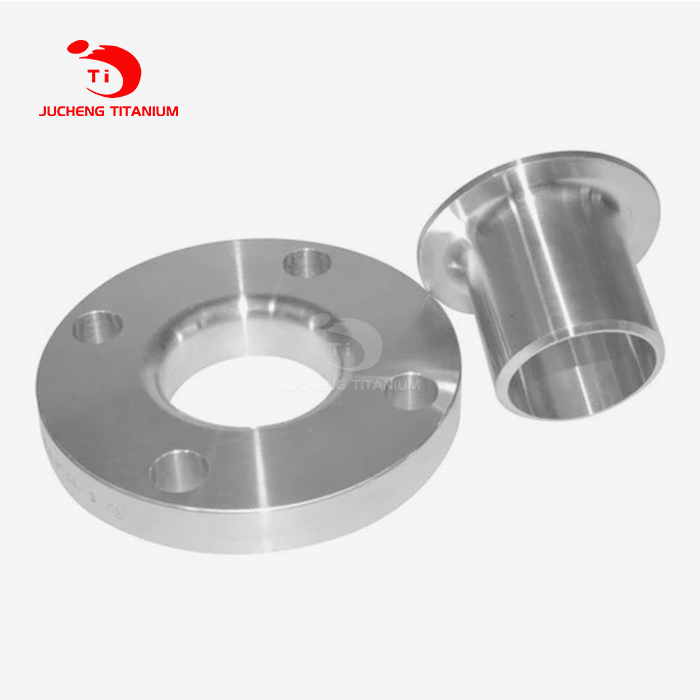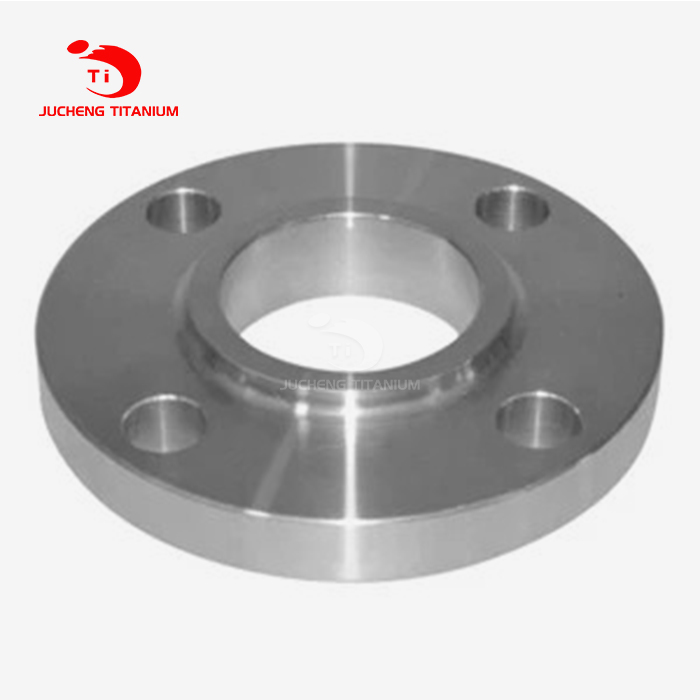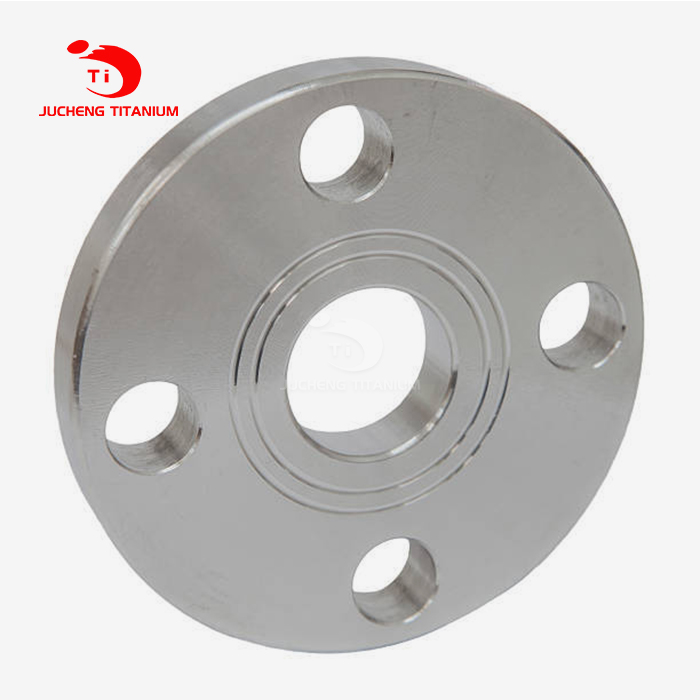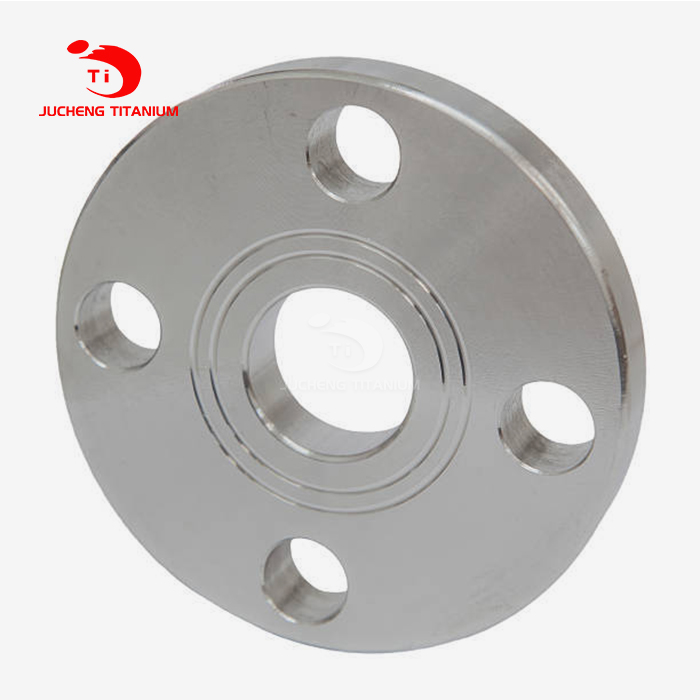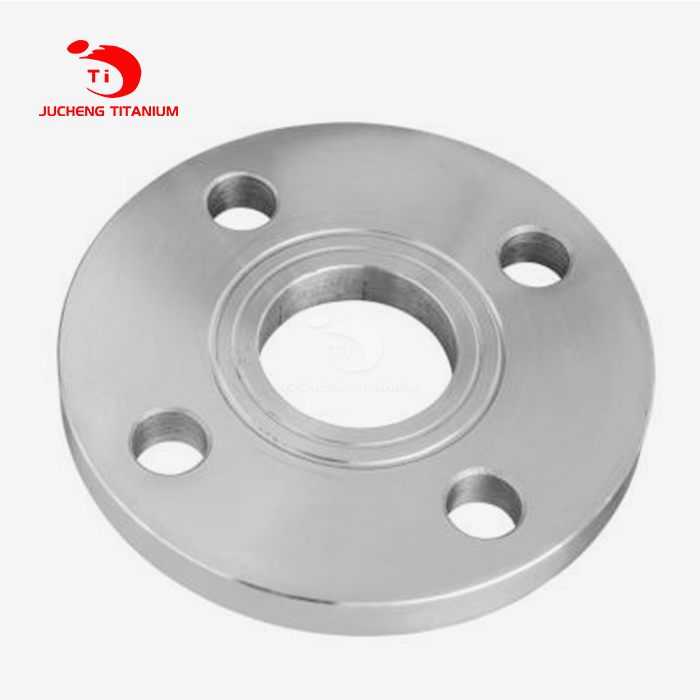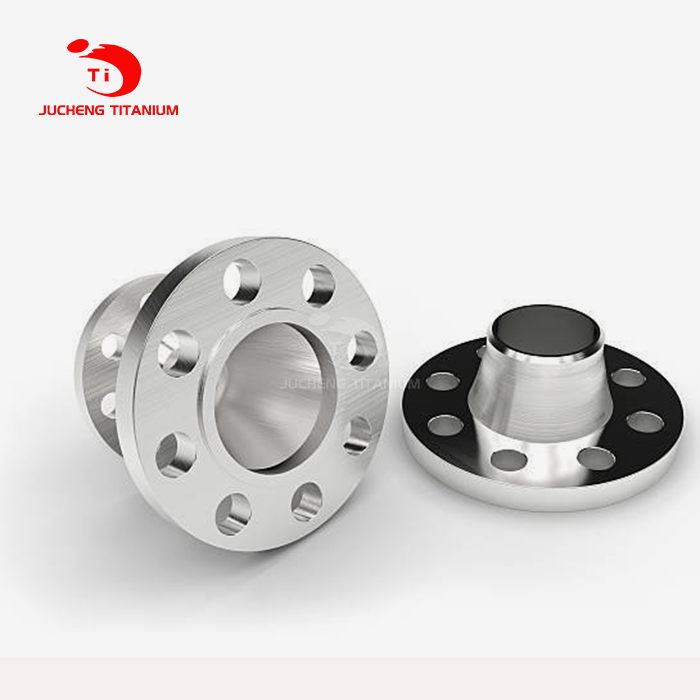

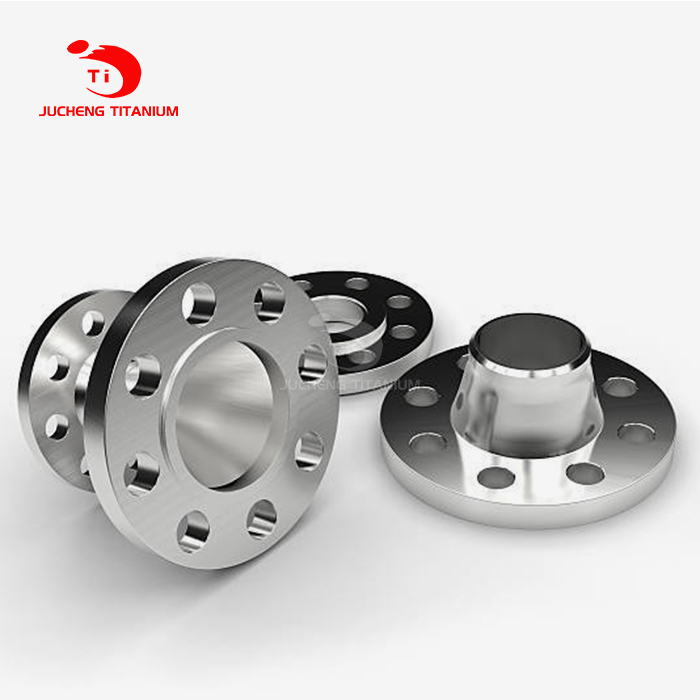
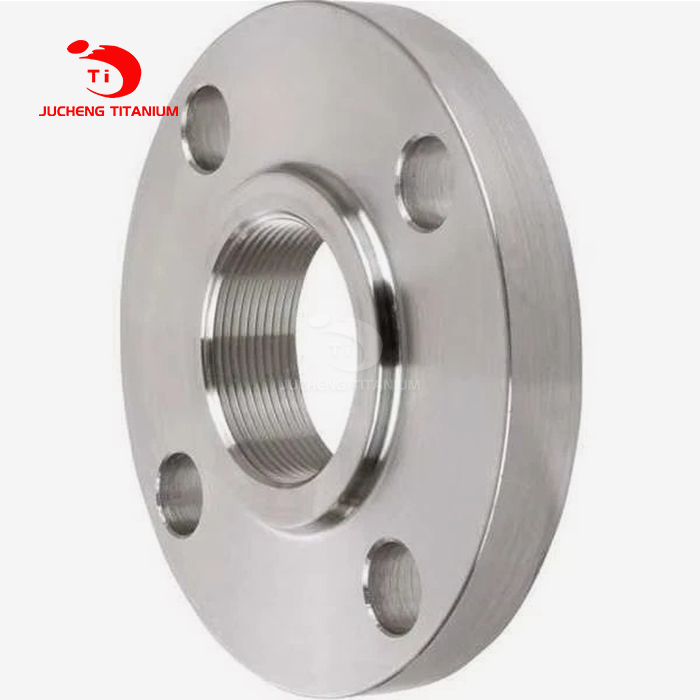
titanium flange
2.Size: NPS 1/2″ – 48″ (DN15 – DN1200), custom larger sizes available, Thickness: Sch5S – Sch160, XXS
3.Standard: ASME/ANSI B16.5, ASME B16.47, MSS SP-44, DIN 2631-2638, EN 1092-1, AWWA C207, JIS B2220, GB/T 9112, HG/T 20592
4.Type: Weld Neck (WN), Slip-On (SO), Blind (BL), Socket Weld (SW), Threaded (THR), Lap Joint (LJ), Plate, Orifice, Long Weld Neck
5. Processing Method: Titanium ingot → Forging → Heat treatment → CNC machining → Drilling → Surface finishing → Marking
6.State: Annealed
7.Surface Treatment: Machined bright
- Product Description
Titanium Flange – Precision-Engineered Corrosion-Resistant Pipe Connection Solutions
Baoji Jucheng Titanium Industry Co., Ltd. is ideally located in China's Titanium Valley and provides enterprise-grade titanium flange solutions backed by over 20 years of specialized manufacturing experience. The multi-grade capabilities of our products, which are manufactured in accordance with ASME/ANSI B16.5, EN 1092-1, and GB/T 9112 international standards, include Gr1, Gr2, Gr5 (Ti-6Al-4V), Gr7, Gr9, Gr12, and Gr23. We ensure quick delivery cycles and a steady supply because of our remarkable yearly inventory of about 3,000 tons and production capacity of more than 500 sets of titanium equipment annually. For demanding applications in the chemical processing, aerospace, and marine engineering industries, each flange goes through a rigorous production process that guarantees dimensional perfection and durability. This procedure involves surface finishing, heat treatment, CNC machining, and titanium ingot forging.
 |  |  |  |
What Makes Our Titanium Flange Superior for Critical Industrial Applications?
Among the numerous difficulties your plumbing systems must handle are seawater corrosion, exposure to corrosive chemicals, and weight limitations on offshore platforms.
In high-chloride conditions, conventional stainless steel flanges break too easily. With a self-healing titanium dioxide (TiO2) passive layer that offers defense against pitting and stress corrosion cracking, our flange assemblies address these issues. You may significantly lower payload without sacrificing tensile strength equal to structural steel alloys thanks to its density of only 4.51 g/cm³, which is 45% lighter than steel.
We provide nine different types of flanges, including Weld Neck, Slip-On, Blind, Socket Weld, Threaded, and Lap Joint. Diameters ranging from NPS 1/2" to 48" (DN15-DN1200) are available; larger sizes can be manufactured upon request.
In cryogenic conditions up to 600°F (315°C), temperature performance preserves structural integrity in Class 150 to Class 2500 pressure ratings.
Technical Specifications & Material Grades
Parameter | Specification |
Grade Options | Gr1 (Ductile), Gr2 (Industry Standard), Gr5 (Ti-6Al-4V High Strength), Gr7 (Palladium-Enhanced), Gr9, Gr12, Gr23 (Ti-6Al-4V ELI) |
Size Range | NPS 1/2″ – 48″ (DN15 – DN1200), custom larger sizes available |
Thickness | Sch5S – Sch160, XXS |
Manufacturing Standards | ASME/ANSI B16.5, ASME B16.47, MSS SP-44, DIN 2631-2638, EN 1092-1, AWWA C207, JIS B2220, GB/T 9112, HG/T 20592 |
Flange Types | Weld Neck (WN), Slip-On (SO), Blind (BL), Socket Weld (SW), Threaded (THR), Lap Joint (LJ), Plate, Orifice, Long Weld Neck |
Processing Method | Titanium ingot → Forging → Heat treatment → CNC machining → Drilling → Surface finishing → Marking |
Material State | Annealed |
Surface Treatment | Machined bright finish |
Density | 4.51 g/cm³ (45% lighter than steel) |
Operating Temperature | Cryogenic to 600°F (315°C) |
 |  |  |
 |  |  |
 |  |  |  |
Industry Applications & Performance Benefits
Flanges used in offshore and marine engineering must be able to withstand constant exposure to saltwater. Our Gr7 palladium-alloyed titanium provides outstanding resistance to crevice corrosion for subsea connections.
Chemical processing: Conventional materials are destroyed by oxidizing acids and chlorides. Grade 2 flanges prevent expensive maintenance cycles by maintaining integrity in moist chlorine and organic acid conditions.
Aerospace Systems: In flying, weight is important. For hydraulic and fuel system connections, our Grade 5 (Ti-6Al-4V) high-strength flanges offer outstanding strength-to-weight ratios.
Food & Pharmaceutical: Our products' non-toxic, non-magnetic qualities make them perfect for hygienic processing applications that demand complete material purity.
When conventional materials fail, each titanium flange remarkable strength-to-weight profile and self-healing corrosion protection guarantee long-term joint seal integrity.
 |  |  |
 |  |  |
Why Choose Baoji Jucheng Titanium Industry?
We combine technological innovation with demonstrated manufacturing expertise, as evidenced by our 41 utility model patents and 4 invention patents. Complete melting, forging, CNC machining, and non-destructive testing systems are housed in our 120,000-square-meter production plant.
As the first private titanium company in Shaanxi Province to be listed on NEEQ, we uphold stringent quality control throughout the whole production process. Our expert R&D collaborations with Tsinghua University and Northwest Nonferrous Metals Research Institute guarantee ongoing process optimization and product development.
Our large raw material inventory gives you quick reaction times, shorter delivery cycles, and reliable supply capability.

FAQ
Q: Is it possible to weld flanges on pipes made of stainless steel?
A: No. Direct titanium-to-steel welding produces brittle intermetallic complexes (FeTi) that break easily. When combining materials, mechanical connections like V-band clamps or particular loose-flange designs are required.
Q: Which grade—Grade 2 or Grade 5—should I select for exhaust applications?
A: Because Grade 2 matches the ductility of tubes, use it for flanges that need to be welded to titanium tubing. For loose flanges or clamps that require a higher tensile strength to withstand bending under bolt stresses, grade 5 is the most effective.
Q: How can bolt galling on titanium connections be avoided?
A: Thread seizing is common in titanium. Use silver-plated nuts or high-temperature nickel-based anti-seize lubricant at all times. As an alternative, galling problems are avoided by using different materials, such as Inconel studs.
Q: What causes my flange's color to change while it is operating?
A: This visible heat map is produced by natural oxidation. Gold is visible at 300°C, purple at 400°C, and blue over 500°C. This patina shows areas of thermal exposure and verifies that the substance is real titanium.
Q: What keeps warping from happening in applications with high temperatures?
A: Compared to stainless steel, our titanium offers better warp resistance due to its lower thermal expansion coefficient. Dimensional stability under intense turbo heat is ensured by proper torque sequencing and sufficient flange thickness (minimum 8mm).
Contact Us for Custom Flange Solutions
Ready to upgrade your piping systems with corrosion-resistant, lightweight connections? Our engineering team provides customized manufacturing based on your technical specifications and application conditions. Contact us at s4@juchengti.com for professional titanium flange solutions and comprehensive after-sales support.