
Every significant detail about seamless titanium tubes
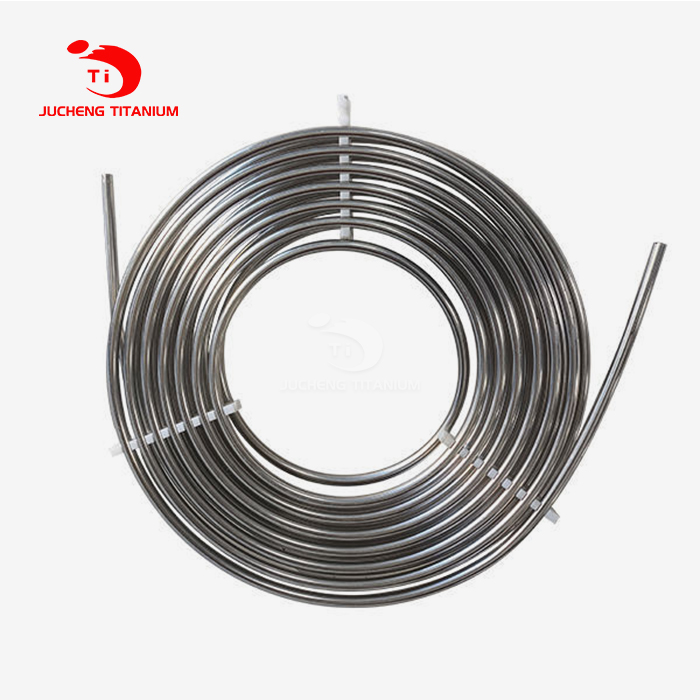
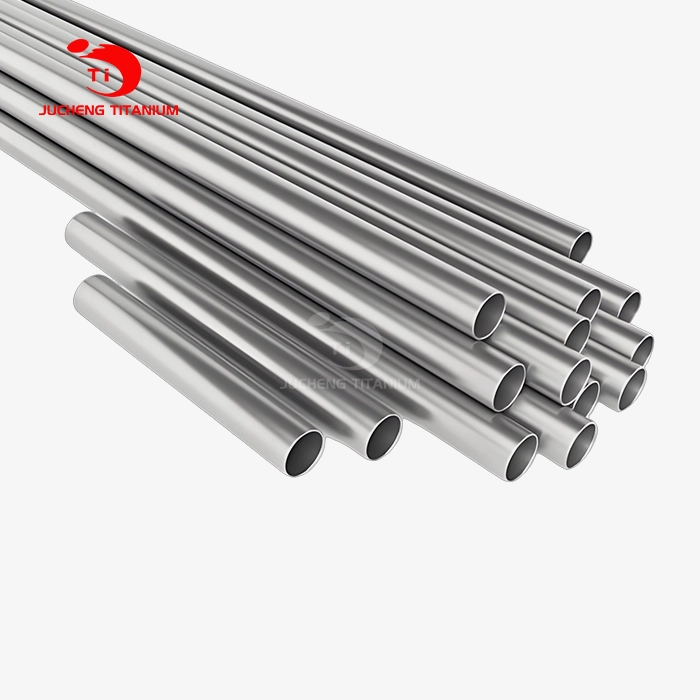
In the world of industrial pipes, smooth titanium tubes are the best because they work so well in so many areas. Modern extrusion and piercing methods are used to make these titanium seamless tube goods, which don't have any horizontal lines like bonded alternatives. This means the building doesn't have any weak places that could let it fall. Because it is made without any seams, the metal has the same features all the way around. In fields like aircraft, medicine, and chemical processing, where high pressures, corrosive conditions, and big changes in temperature are common, this makes it better able to handle them.
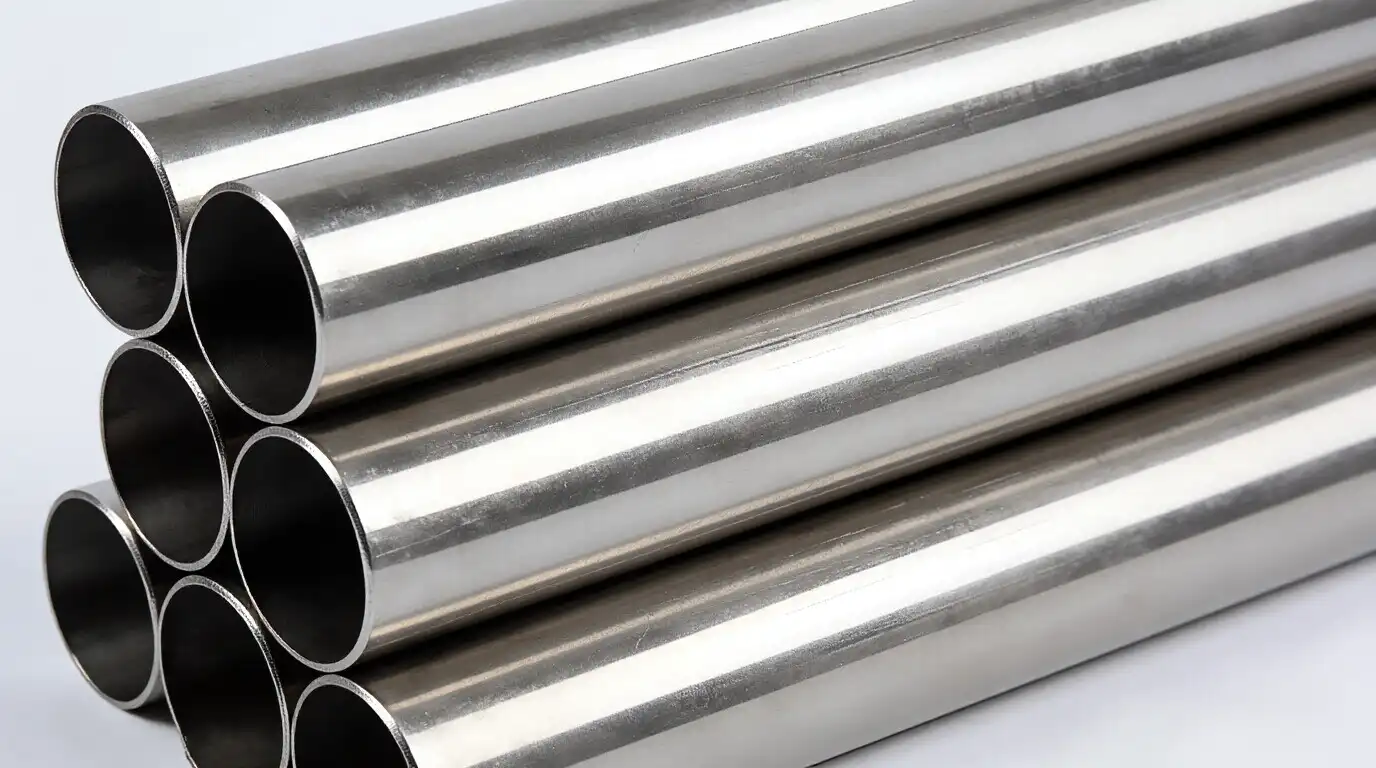
Understanding Titanium Seamless Tubes: Properties, Production, and Benefits
One of the best things about seamless titanium tubes is that they are very light while still being strong. It's hard for these tubes to rust, even in places with a lot of salt, where other materials rust quickly. There are no soldered parts, so there are no hot spots that could crack or break from stress, rust, or strain.
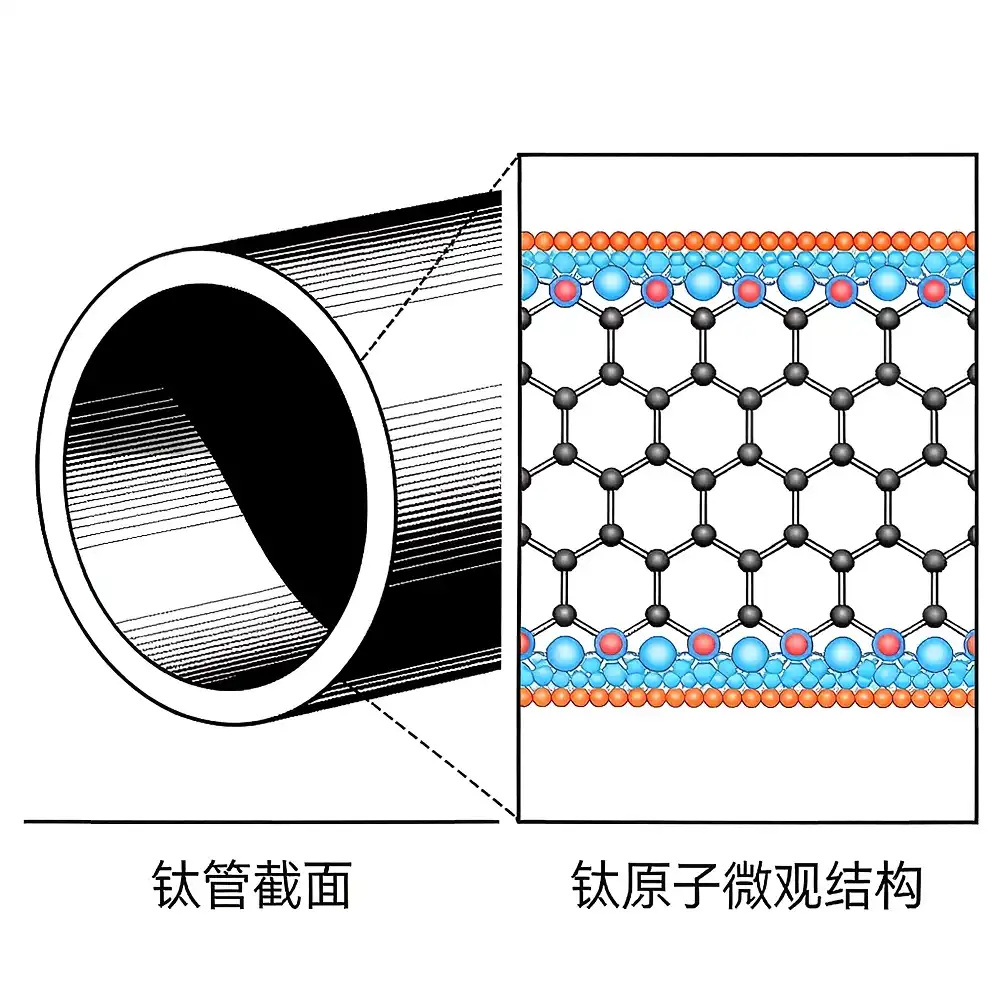
Advanced Manufacturing Processes
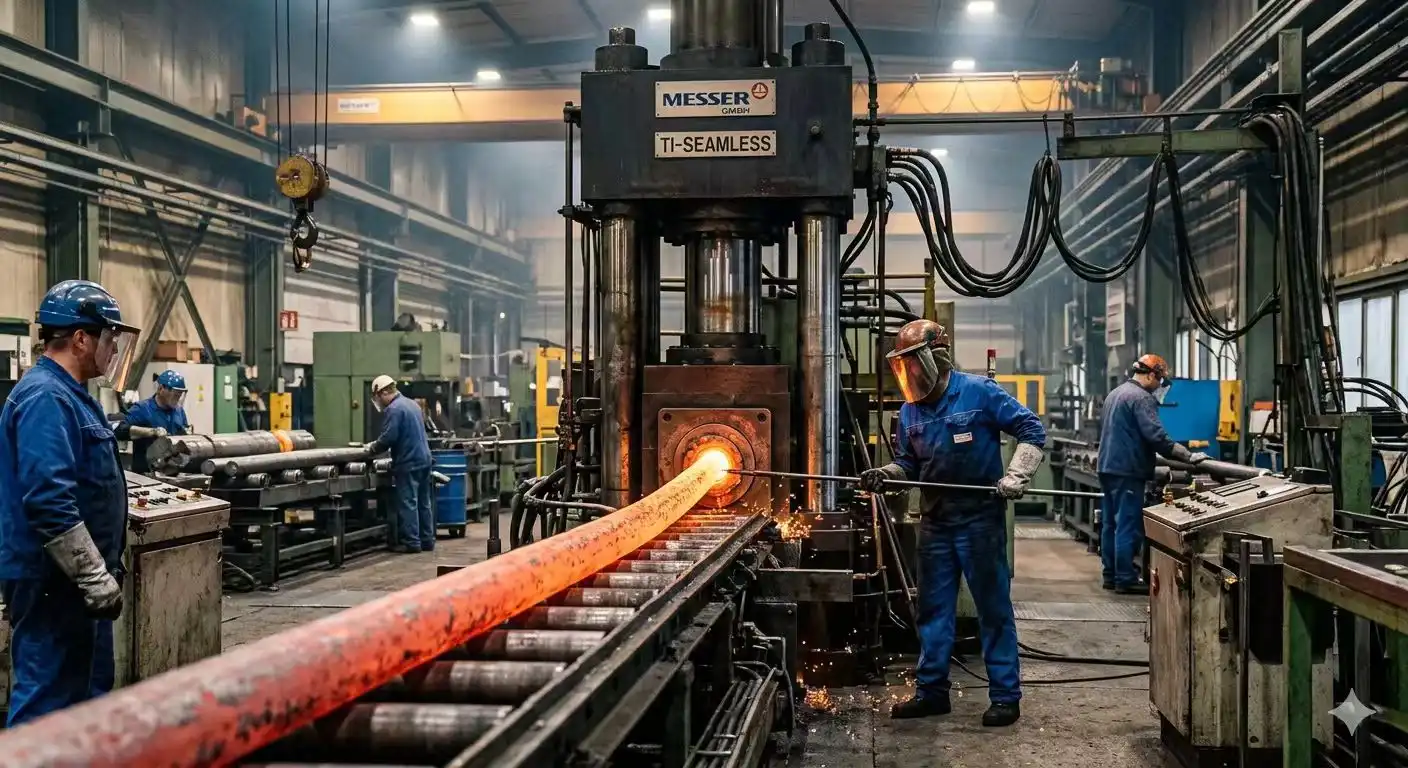
High-quality titanium billets are the first step in a complicated production process that makes seamless titanium tube goods. These are the main ways that things are made:
Once the titanium billets are heated to the right temperature, they are pushed through special dies with a lot of force. With this method, the wall thickness and mechanical properties stay the same all the way through the tube. Rotary drilling is another important way to make things. It uses spinning mandrels to shape hot billets into hollow forms while keeping the structure's strength.
The measures are more accurate, and after cold rolling and building, the surface finish is better. The material can be used in these ways when it is at room temperature, which makes readings more accurate while having the good qualities that titanium alloys naturally have. After that, vacuum cooling is used to lower the pressure inside and make the grain ideal for the job.
Material Specifications and Standards
The business sets standards that make sure the quality and performance are the same no matter what the use is. Astm B337, ASTM B338. ASTM B861. AMS 4942. And ASME SB338 all say that our smooth titanium tubes are up to par. For important things, this gives you peace of mind. There are 12 grades to choose from: Gr1, Gr2, Gr3, Gr5, Gr7, Gr9, and Gr12. Each one is made to meet the needs of a different industry with its own set of technical features.
Outer sizes of Gr2 Titanium Tube range from OD3 mm to OD219 mm, and wall thicknesses range from 0.5 mm to 20 mm, so they can be used for a lot of different projects. When standard sizes don't work for a job, custom measures are used. Finishes that are cut, polished, or acid-pickled are some examples of surface treatments. It depends on what it will be used for, whether the surface can be made smooth, pickled, or shiny.

Comparing Titanium Seamless Tubes with Other Materials
What you use for a project's success, cost, and how long its parts last are all very important. Titanium's better performance qualities stand out when you compare a seamless titanium tube to other materials in a number of important ways.
Performance Advantages Over Traditional Materials
Tin is more resistant to rust in hard circumstances than stainless steel, which is more expensive. This difference is especially clear when used in salt water: stainless steel gets pits and corrodes in cracks, but titanium's structure stays strong forever. Titanium is stronger than it is heavy, so buildings can be made lighter without losing their ability to do their job.
Metals made of aluminum are lighter than titanium, but they rust and don't hold up well in hot places. Aluminum indeed loses its tensile strength above 200°C, but titanium seamless tube items keep their properties well past 300°C. Additionally, nickel metals don't rust very well, but they are a lot more expensive and heavier.
Seamless Versus Welded Construction
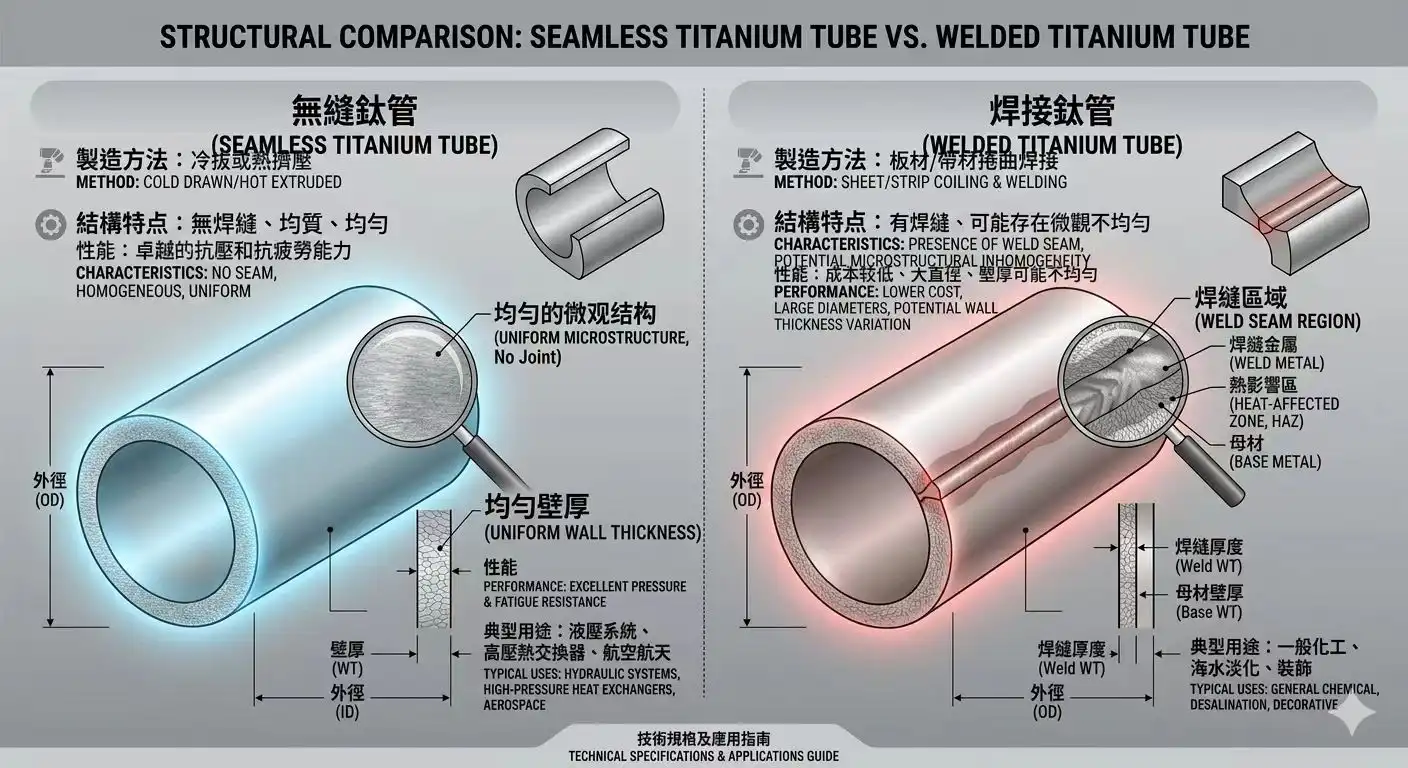
Smooth tubes and soldered tubes work very differently, and this difference shows up in many places. At the joint of soldered tubes, there are metallurgical breaks that could cause them to break under long-term stress. When these places get hot, they're perfect for rusting, especially if there are strong chemicals around.
These flaws are fixed by smooth building, which makes the whole circle have the same qualities. This makes it possible for the working pressures to rise without lowering the safety limits. It becomes a lot less likely to wear down, which makes it last longer in places where vibrations are common, like the car and airplane industries.
How to Procure Titanium Seamless Tubes: A Global Buyer's Guide
People from all over the world can use this guide to learn how to get titanium seamless tubes.
It's important to know how the market works, what your sellers can do, and how to make sure the quality of the tube before you buy it. To be good at buying, you need to connect with manufacturers who have a history and a lot of certifications.
Supplier Evaluation Criteria
When looking at possible providers, you should check how well they can make things, how well they control quality, and whether they have the right certifications. Some examples of high-tech tools that manufacturers should show off are modern extrusion presses, spinning piercing mills, and full-service testing labs. These tools are used to make smooth tubes. Getting ISO 9001 certification means you care about quality control. For airplane use, you need to get AS9100 certification.
One way to make sure that providers can meet the number needs within the time limits that have been set is to estimate their production capacity. A lot of stock is kept on hand by well-known manufacturers, so companies that need it quickly can get what they need. Top sources stand out because they can help engineers pick the right products and figure out how to best use them.
Cost Considerations and Procurement Strategies
Titanium prices change because of how much the metal is made, how much is needed for it, and how much of it is made. The higher price of a titanium seamless tube generally comes from the fact that it costs more to make them smooth, and the material itself is better. You can often save a lot of money by buying in bulk, especially for common sizes and grades.
Long-term supply deals keep prices fixed and make sure that projects that are still going on always have the products they need. These deals are good for both shoppers and sellers. They get fair prices and first choice when there aren't enough goods on the market, and sellers get steady orders.
Practical Applications and Use Cases of Titanium Seamless Tubes
Because seamless titanium tube is so bendable, it can be used in many places where a material failure would be very bad. If procurement experts know how these things will be used, they can better understand how valuable they are.
Aerospace and Defense Applications
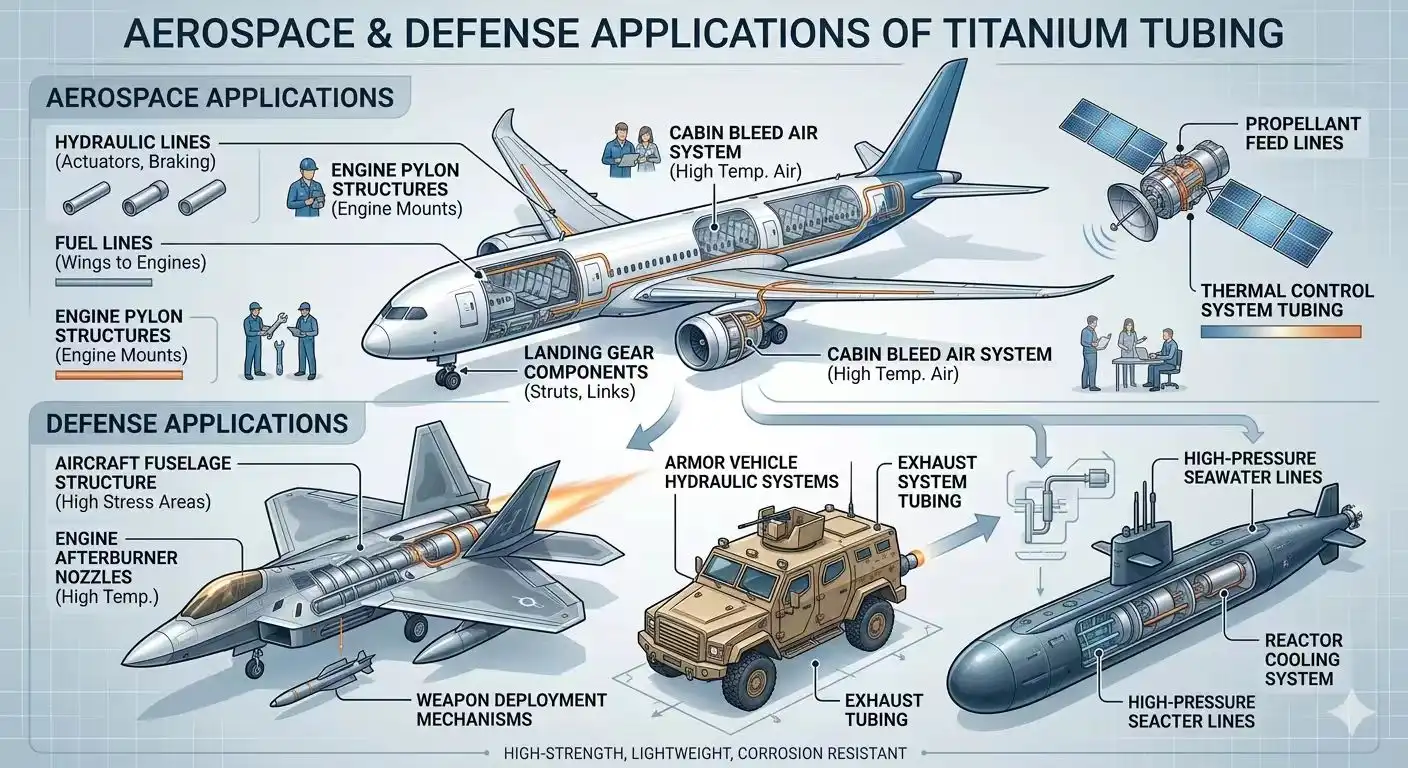
The materials that are used in space have to be strong and light at the same time. It is really easy for titanium seamless tube goods to handle changes in temperature and pressure, but they work great in hydraulic systems, fuel lines, and air lines. Big problems that could put the plane's safety at risk don't happen because the building is clean.
Titanium is used in the military because it is neutral to electricity and doesn't reflect radar. Steel devices rust in salt water, but titanium doesn't. This means that naval ships can use titanium. Titanium is great for submarines because it can handle high pressures and rust in deep-sea environments.
Chemical Processing and Petrochemical Industries
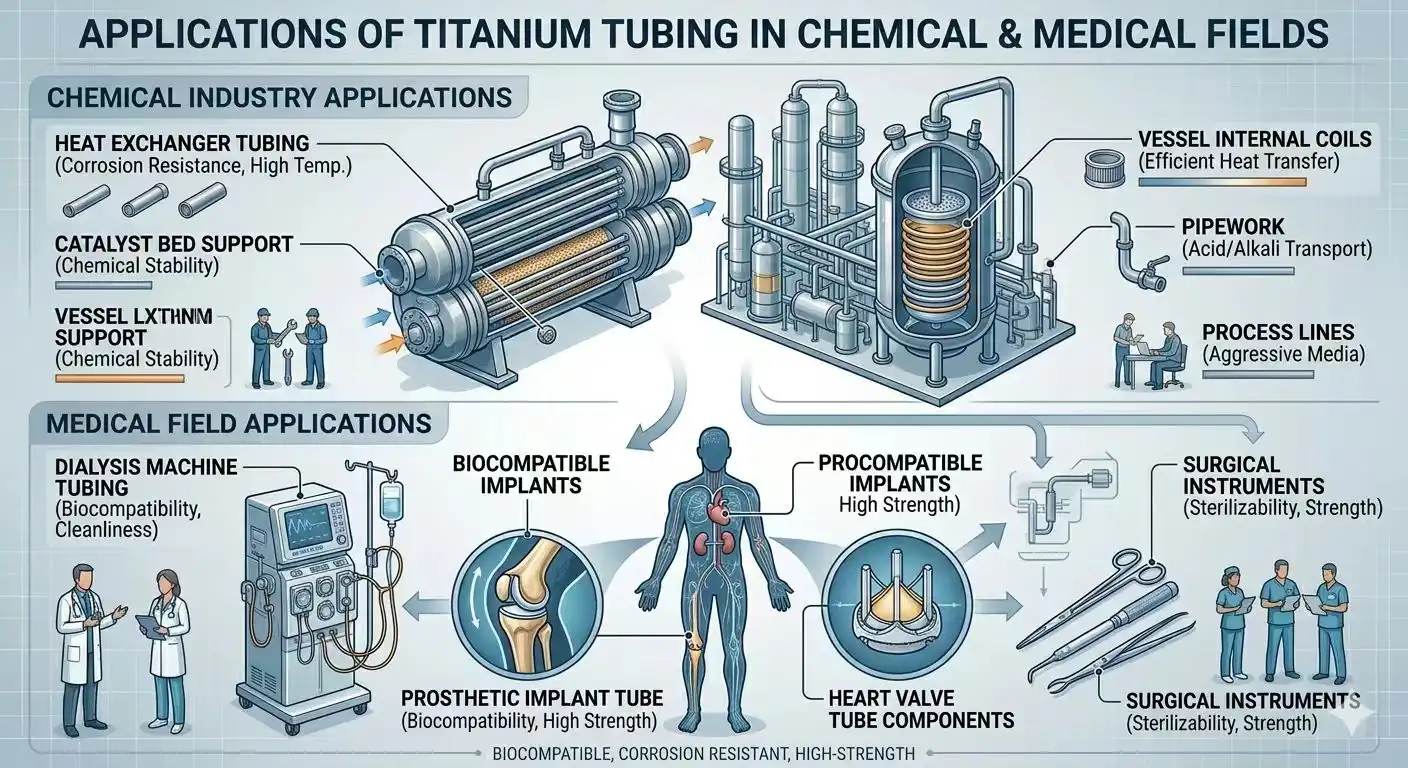
In chemical production settings, materials are put in environments with hard chemicals, high temperatures, and harmful air. Other materials are easily broken down by mineral acids, organic compounds, and solutions that contain chloride, but the smooth titanium tube is very strong against these.
Titanium is useful in heat exchanges because it can move heat around and keep it from rusting. People who work at desalination plants use titanium tubes a lot in their condensers and evaporators because other materials would break down in months when they were exposed to seawater. Because it is smooth, there are no leaks that could mess up processes or damage equipment.
Medical and Biomedical Applications
To make medical equipment, you need materials that are both safe and strong. Titanium doesn't respond with living things, so it's great for implants, surgery tools, and test gear. With seamless building, there are no cracks where germs could hide. This helps keep hospital rooms clean.
Titanium is good for making tools for making medicines because it is chemically neutral and easy to clean. Because the inside of seamless tubes is smooth, it is easier to follow the steps needed for cleaning and approval in pharmaceutical production. Some cleaning methods can be made to work better with surface processes that don't damage the material's structure.
How to Choose the Right Titanium Seamless Tube for Your Business Needs?
It is important to match the traits of the material with the purpose of the tube in order to get the best one. If you know how titanium grades, mechanical properties, and external factors are linked, you can make smart decisions that save money and boost performance.
Grade Selection Guidelines
Titanium comes in different types that are stronger, less likely to rust, and easier to shape. There is one grade that does most of the work: Grade 2. It is strong enough for most chemical handling jobs and doesn't rust easily. Grade 5 (Ti-6Al-4V) is very strong, which is important for uses in airplanes and high-pressure environments.
Adding palladium to Grade 7 makes it less likely to rust in places with less acidity. It is possible to get Grade 9 (Ti-3Al-2.5V), which is a choice that is both strong and easy to shape. To pick the right grade, think about the temperatures it will be used at, the chemicals it will be around, and the functions it needs to do each job.
Quality Assurance and Testing Requirements
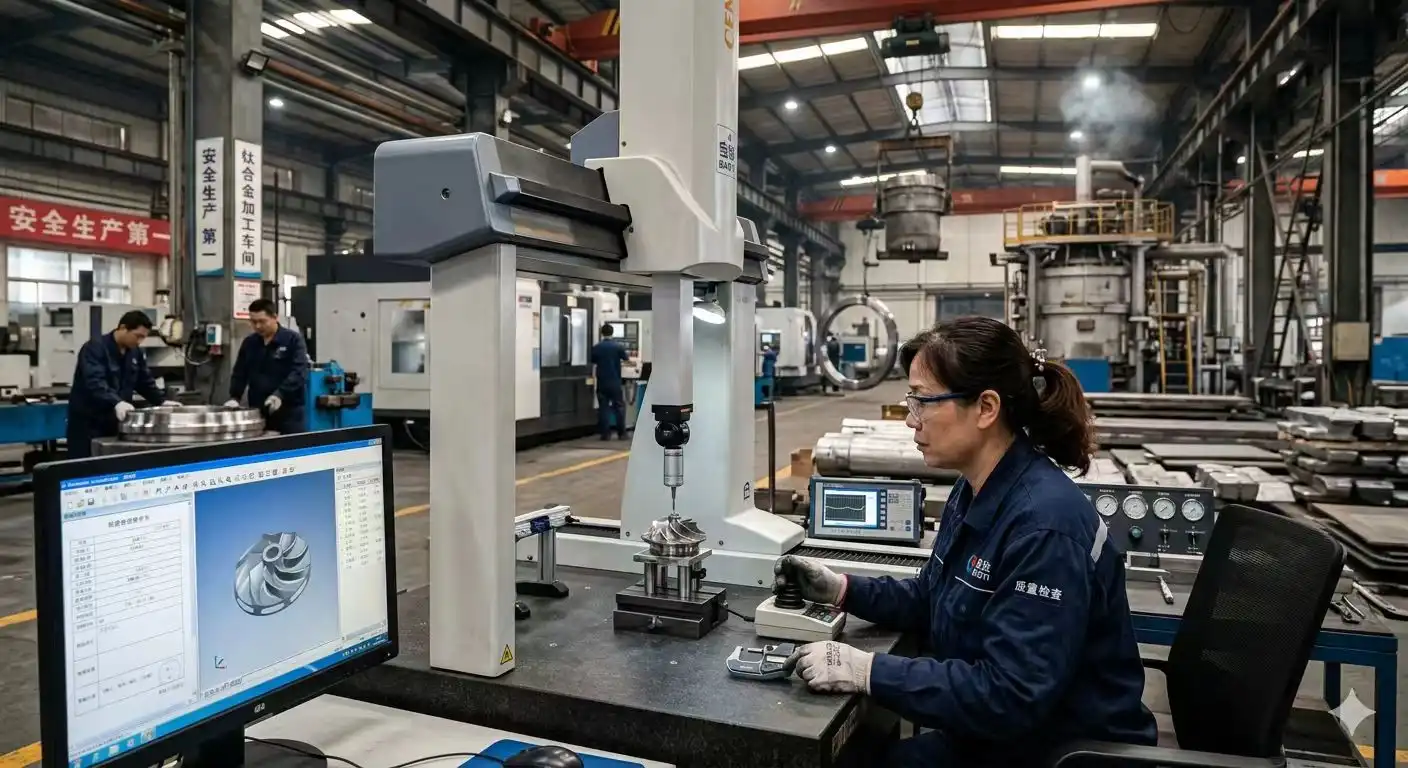
Thanks to strict testing methods, Gr2 Titanium Tube goods meet the needs of applications and meet international standards. Tensile strength, yield strength, and extension are all measurements that are used in mechanical tests to prove what a material is like. Ultrasonic screening and other non-destructive testing methods can find issues with a product that might make it less useful.
Checking the molecular make-up shows that the grade is met and that minor elements are under control. Dimensional checking makes sure that tubes are straight and within the allowed ranges for width, wall thickness, and other dimensions. A study of the surface quality finds flaws that could cause stress groups or rust spots.
Conclusion
When a business needs to do well in tough conditions, smooth titanium tubes are a key tool that lets them do so. Some of the biggest problems with other materials can be avoided by making something that doesn't rust, is strong for its weight, and is built without any seams. Knowing how the product is made, the type of material used, and how it will be used can help you make smart purchases that save money and improve performance. If you buy smooth titanium tubing, it will save you money in the long run because it will be more reliable, last longer, and need less maintenance in many commercial settings.
FAQ
Q1: What advantages do seamless titanium tubes offer over welded alternatives?
With seamless titanium tubes, there are no heat-affected zones like there are with soldered tubes. This means that their mechanical properties are the same all the way through. At weld cracks, stress and rust tend to build up, but this design stops that from happening. This makes it able to handle more pressure, last longer, and be less likely to wear out in important scenarios.
Q2: Which titanium grades are most suitable for chemical processing applications?
Most places where chemicals are made don't corrode titanium Grade 2, and titanium Grade 7 with palladium added is very good at lowering acid conditions. When used with chemicals that are under a lot of pressure, Grade 12 is stronger. You should use the right grade based on the product's chemistry needs, temperature, and pressure.
Q3: How do I verify the quality and authenticity of seamless titanium tubes?
For quality control, you need full material test records that include information from looking at the chemistry make-up, testing the mechanical properties, and checking the sizes. Real seamless tubes should have mill test certificates that refer to relevant ASTM or AMS standards, evidence of non-destructive testing, and tracking information that connects the product to the batch that it was made in and the sources of its raw materials.
Partner with Jucheng Titanium for Premium Seamless Titanium Solutions
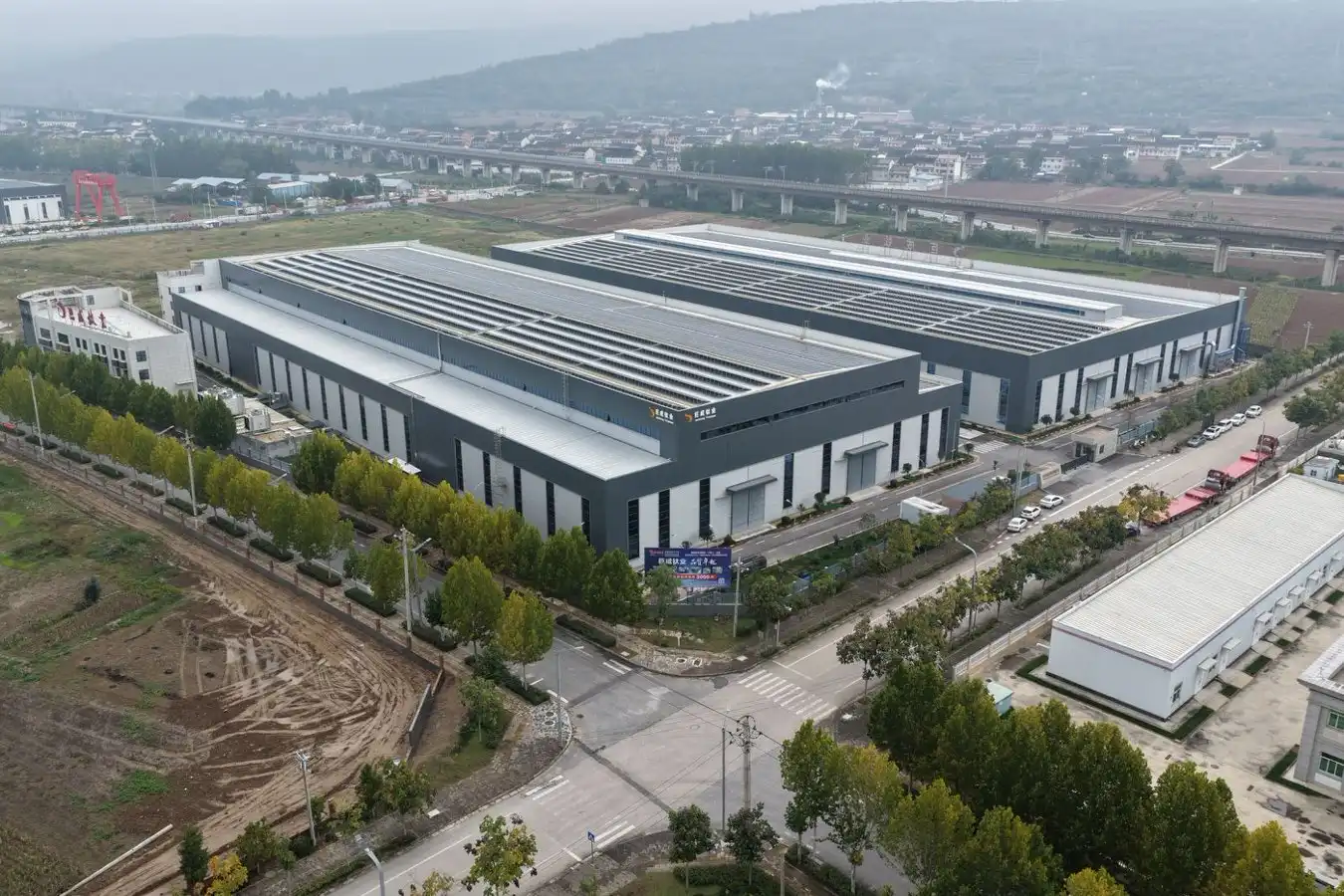
The people at Jucheng Titanium have been working with and making titanium for more than twenty years, so they can help you with even the toughest issues. From Gr1 to Gr12, we can make all the main types of titanium seamless tubes. We can also make tubes in any size you need, and we give you all the paperwork you need to get them approved. We keep more than 3,000 tons of titanium seamless tubes in stock because we are a trusted company that makes high-quality tubes. This way, we can deliver quickly for important projects and offer low prices for big orders. For our company, the technical team works with top study groups to find new ways to address issues in the field. Get in touch with our scientific staff at s4@juchengti.com to talk about your needs for seamless titanium tubes. You'll see why big companies in aerospace, science, and medical devices trust us.
References
1. American Society for Testing and Materials. "Standard Specification for Seamless and Welded Titanium and Titanium Alloy Tubes for Condensers and Heat Exchangers." ASTM International Materials Standards Review, 2023.
2. Boyer, Rodney R. "Titanium for Aerospace Applications: Properties, Processing and Performance." Aerospace Materials Engineering Quarterly, Vol. 45, 2023.
3. International Titanium Association. "Global Market Analysis: Seamless Titanium Tube Applications in Chemical Processing Industries." Industrial Materials Review, 2023.
4. Johnson, Michael P. "Corrosion Resistance Comparison of Titanium Alloys in Marine Environments." Marine Engineering and Technology Journal, Vol. 28, 2023.
5. Smith, Sarah L. "Manufacturing Processes for High-Quality Seamless Titanium Tubes: Modern Production Techniques." Advanced Manufacturing Technology Review, 2023.
6. Williams, David A. "Medical Grade Titanium Applications: Biocompatibility and Performance Standards in Healthcare Industries." Biomedical Materials Science Journal, Vol. 12, 2023.