
GR1 pure Titanium Tubes vs GR5 titanium ALLOY Tubes
The main difference between GR1 pure titanium tubes and GR5 titanium alloy tubes is their make-up and how well they work in different situations. With a 99.5% pure titanium content, the GR1 titanium tube is very resistant to rust and easy to shape. This makes it perfect for chemical processing and marine settings. GR5, an alloy of titanium, aluminium, and vanadium, is chosen in aircraft and high-stress structural uses because it is very strong and doesn't melt in hot conditions. Which one you choose will depend on how important chemistry compatibility is to you.
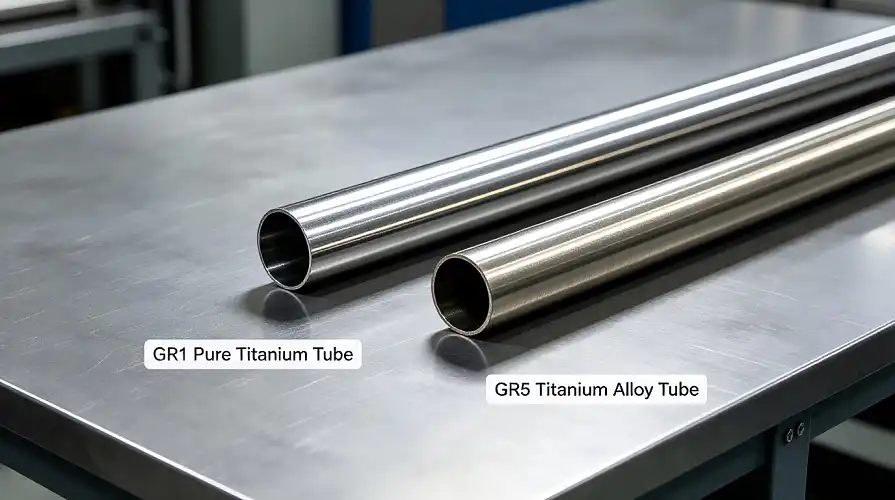
Understanding the Core Differences Between Pure and Alloyed Titanium Tubing
The difference between these two grades is more than just a description. Each meets a different industry need that has been shaped by decades of work in materials engineering.
The three main differences are:
- Composition Structure: GR1 is made up of commercially pure titanium and very little other material (oxygen content =0.18%), while GR5 has 6% aluminium and 4% vanadium in it, which makes it very different in terms of its mechanical properties.
- Mechanical Performance: The tensile strength is very different. GR1 has a minimum tensile strength of 240 MPa and great flexibility (24% elongation), while GR5 has a minimum tensile strength of 895 MPa and 10% elongation, intended to keep the structure intact under stress.
- Cost: Pure titanium tubes usually cost 15 to 20 per cent less than alloyed versions because they are easier to work with and easier to find.
GR1 is better for tubing that needs to be used in harsh chemical conditions where flexibility is important. GR5 is the best material for aircraft parts that need to be strong while also being light.
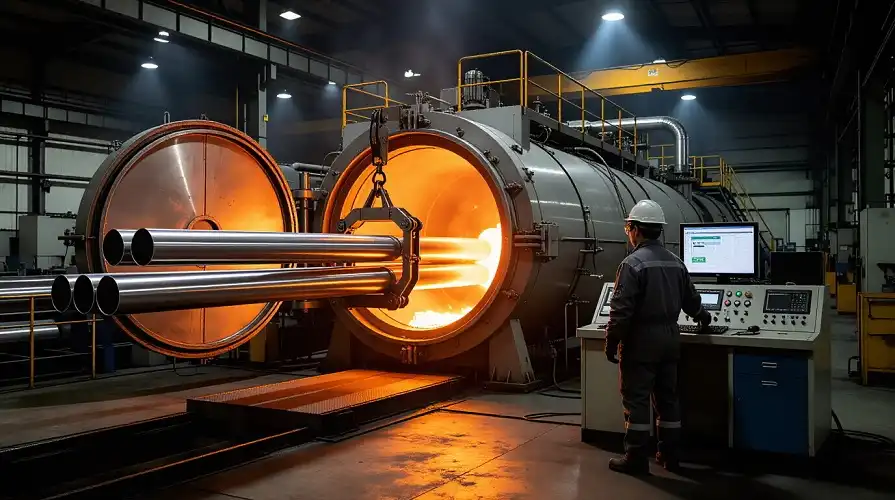
The handling methods are also very different. When annealed at temperatures between 650°C and 750°C, Gr1 Titanium Tube works well for cold forming processes. To get the best grain structure, GR5 needs to be worked on while hot (900–1000°C) and then cooled slowly. This difference affects wait times and how hard it is to make the product.
Analysing chemical make-up: What makes each grade different
Material science tells us why these grades work so differently in different situations.
GR1 Profile of Composition:
- Titanium (Ti): at least 99.5%
- Iron (Fe): no more than 0.20%
- Oxygen (O): up to 0.18%
- Carbon (C): no more than 0.08%
- Nitrogen (N): no more than 0.03%
GR5 Profile of Composition:
- Balance (about 90%) in titanium (Ti)
- 5.5% to 6.7% aluminium (Al)
- 3.5% to 4.5% vanadium
- Iron (Fe): no more than 0.30%
- Maximum of 0.20% oxygen (O)
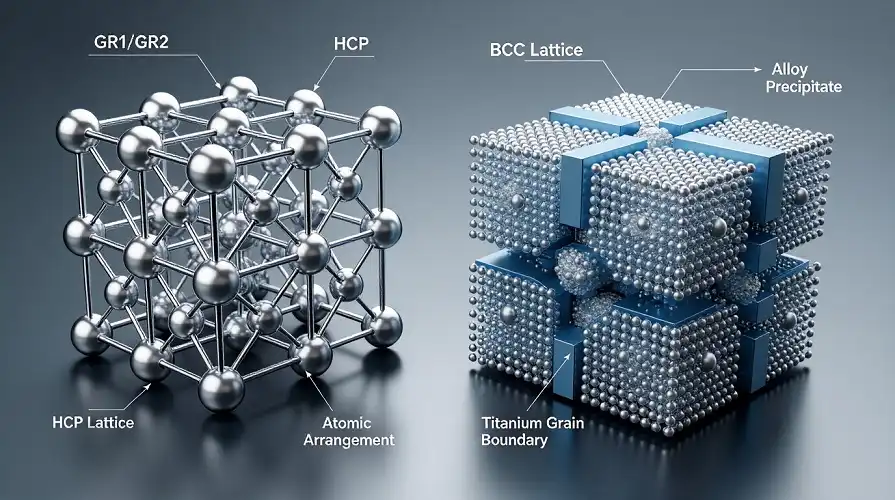
Adding aluminium to GR5 stabilises the alpha phase, which makes the material stronger and less dense. Vanadium improves the response to heat treatment and performance at high temperatures by acting as a beta stabiliser. These alloying elements change the crystal structure of the material, making a two-phase substructure that isn't present in pure grades.
Testing results from aircraft clearance programs show that GR5 keeps 80% of its room-temperature strength at 300°C, while GR1 loses more of its strength above 200°C. Because it doesn't change much when heated or cooled, alloyed tubing is essential for turbine parts and exhaust systems.
If you need safe tubes for medical implants, you don't have to worry about allergic reactions to alloying elements because GR1 is so pure. The harder GR5 is (HRC 36 vs. HRB 70 for GR1), which makes it better for defence uses that need projectile protection.
Corrosion Resistance Capabilities: Real-World Performance Data
Both types don't rust, but they do so in very different ways.
GR1 corrodes at a rate of 0.05 mm/year in 10% hydrochloric acid at 60°C, while GR5 corrodes at a rate of 0.12 mm/year. In acidic conditions, the oxide layer on pure titanium grows back more evenly. However, both work very well in chloride-rich saltwater, showing almost no pitting after 5,000 hours of salt spray contact.
Corrosion Performance Comparison:
| Environment Type | GR1 Rate (mm/yr) | GR5 Rate (mm/yr) |
|---|---|---|
| Sulfuric Acid (20%) | 0.03 | 0.08 |
| Sodium Hydroxide | 0.02 | 0.05 |
| Seawater (ambient) | 0.001 | 0.001 |
| Organic Acids | 0.01 | 0.04 |
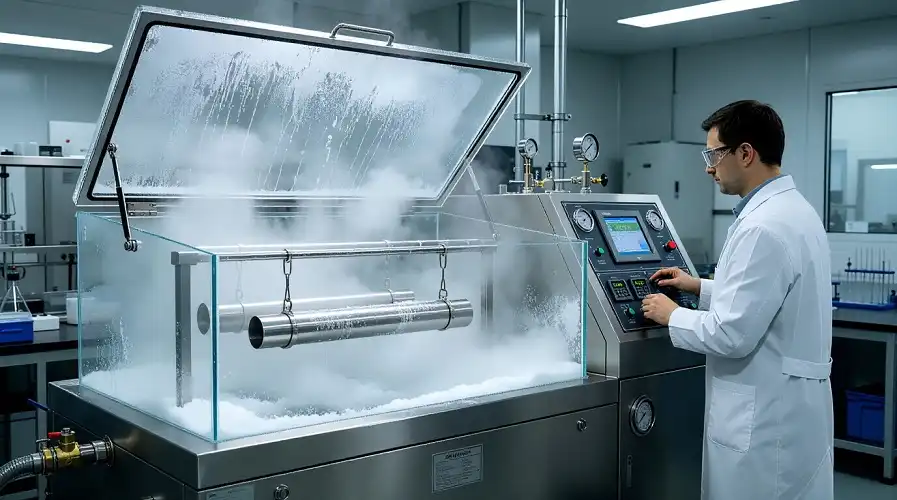
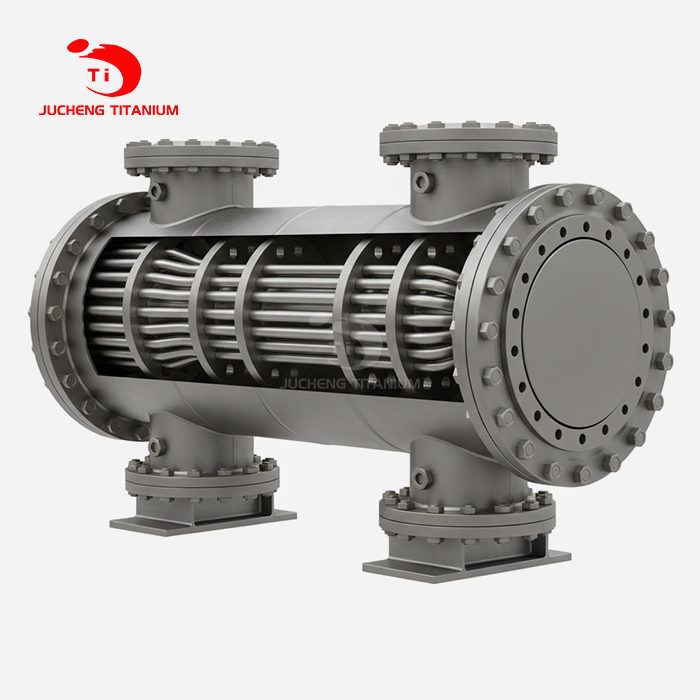
Chemical processing facilities handling chlorine production exclusively specify GR1 seamless tubes for heat exchanger bundles. The material withstands wet chlorine gas at elevated temperatures without stress corrosion cracking—a failure mode that can affect higher-strength alloys under specific conditions.
Marine applications benefit from both grades depending on structural requirements. Offshore platform corrosion resistant titanium pipe systems in splash zones favour GR1 for cost-effectiveness, while mooring hardware utilises GR5 where load-bearing capacity supersedes budget considerations.
If you need tubing for petrochemical reactors with mixed acid exposure, GR1 provides superior longevity. For subsea drilling equipment facing mechanical stress and saltwater, GR5 offers the necessary toughness.
Mechanical Properties: Strength, Flexibility, and Application Matching
Understanding load-bearing characteristics guides proper material selection for safety-critical applications.
Comparative Mechanical Data (ASTM B338 Standard):
- Yield Strength: GR1 delivers 170 MPa; GR5 achieves 828 MPa
- Modulus of Elasticity: Both maintain 103-107 GPa, providing similar stiffness
- Fatigue Strength: GR5 endures 510 MPa at 10⁷ cycles; GR1 reaches 290 MPa
- Impact Toughness: GR1 absorbs 95J at room temperature; GR5 absorbs 25J
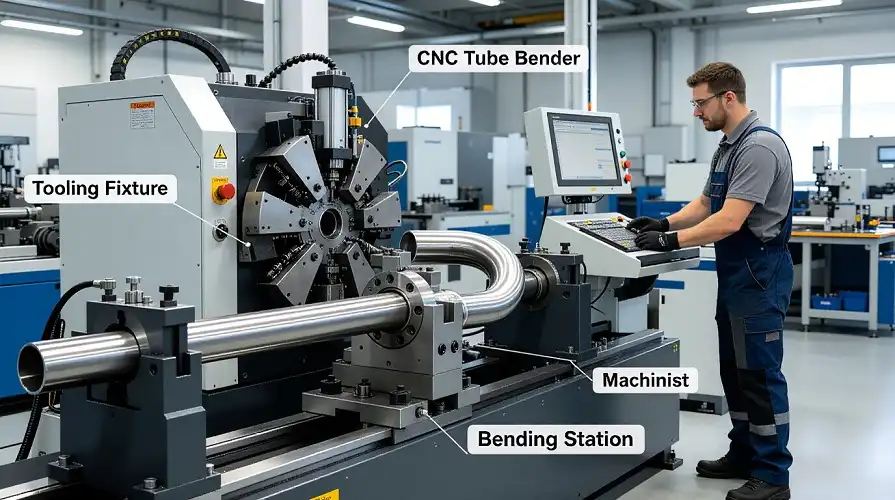
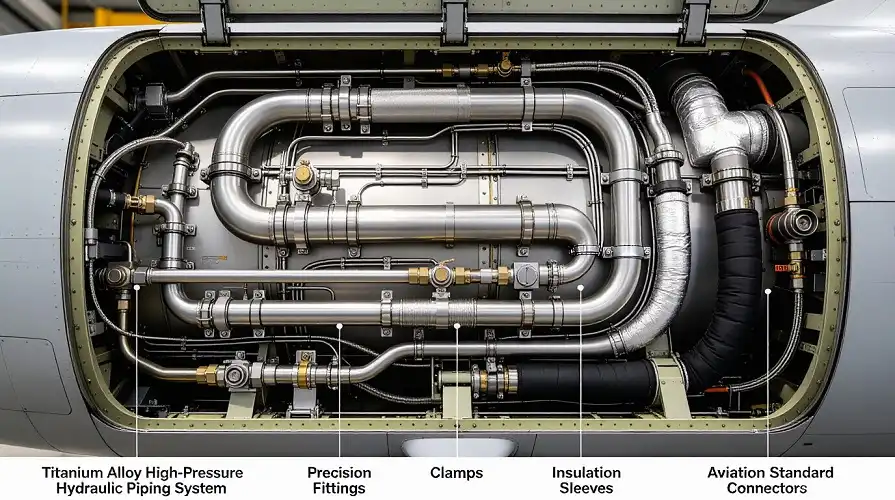
Because pure titanium tubing is flexible, it can be bent in complicated ways without breaking. This shapeability is used for tube coiling in condensers and medicinal heat exchangers. Aerospace hydraulic lines that need to be able to bend around airframe structures with small radii need to be flexible while still being able to handle up to 3,000 psi of pressure.
Because GR5 is strong, it can hold up structural tubes in landing gear systems, fuselage frames, and engine mounts. The material can handle repeated loads over the life of an aeroplane and meets the requirements set by AMS 4942 for wear resistance. Defence companies want wall thicknesses to be 30–40% thinner than GR1 options. This saves weight without lowering safety standards.
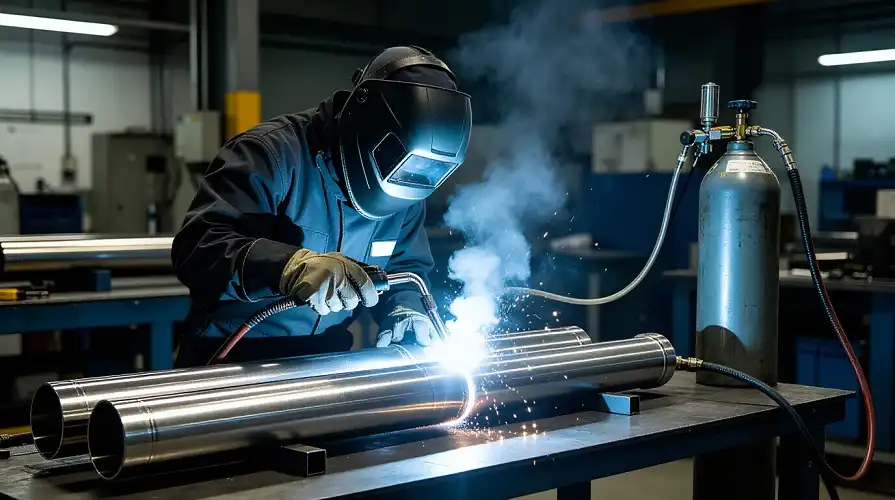
Different sizes are not all compatible for welding. Gas Tungsten Arc Welding (GTAW) makes it easy to put GR1 pieces together without preheating. The joints are 95% stronger than the base metal. To keep GR5 from becoming weak, it needs controlled heat input and a heat treatment after the weld. This makes the manufacturing process more difficult.
For LNG systems, GR1 keeps its flexibility at -196°C if you need a pressure tank tube for cryogenic uses. For racing car exhaust pipes that need to be as light as possible, GR5 is strong at temperatures above 400°C.
Industry-Specific Applications: Matching Grades to Requirements
Based on their practical needs, different sectors put different material traits at the top of their lists.
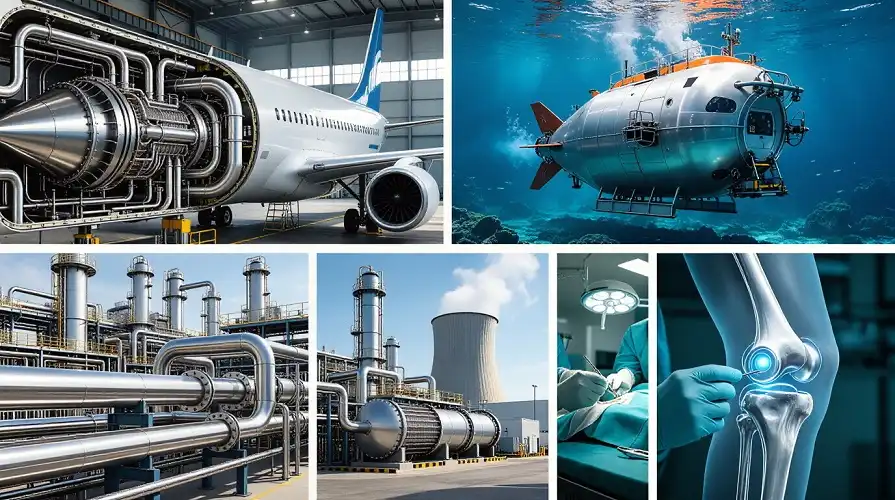
- Aerospace and Defence: 40% of the world's GR5 production is used to make structural parts for aeroplanes. The fatigue strength of the metal is important for parts like wing spars, hydraulic tubes, and fasteners. GR5 is often required by military standards for armour-piercing projectile cases and rocket bodies where strength-to-weight ratios are very important.
- Chemical Processing: GR1 is the material of choice for 85% of uses at petrochemical plants that are building titanium pipe systems. Pure titanium is harmless, which is good for heat exchanges used in making ammonia, chlor-alkali, and pharmaceuticals. With 20 years of experience making things, Baoji Jucheng Titanium Industry has given over 500 sets of special titanium tools to chemical plants.
- Medical Device Making: Surgical implant makers only use GR1 and medical-grade versions for bone plates, tooth fixings, and hip joints. Biocompatibility makes sure that the tissue can integrate without an inflammatory reaction. Implant surfaces can have errors of less than 0.05 mm thanks to precision grinding.
- Marine engineering: GR1 seamless tubes are used by shipbuilders in systems that remove salt from water, treat bilge water, and cool the propulsion system. Offshore wind farms use both grades: GR1 is used to filter seawater, and GR5 is used to strengthen turbine towers that are exposed to wind speeds of more than 200 km/h.
- Industrial Equipment: Titanium tubing is used in condenser bundles in power plants where the cooling water has chlorides or sulphates in it. The material gets rid of the galvanic rust problems that come with copper-nickel options. This makes the product last longer, from 8 years to 25 years or more.
For food preparation equipment that needs to be FDA-compliant, GR1's cleanliness meets sanitary standards. For motorsports where every gram counts, GR5 makes it possible to build lightweight frames.
Manufacturing Standards and Quality Certifications
Compliance with international specifications ensures material traceability and performance consistency.
Applicable Standards:
- ASTM B337: Seamless and welded titanium tubing for condensers and heat exchangers
- ASTM B338: Seamless and welded titanium alloy tubes for condensers and heat exchangers
- ASTM B861: Seamless titanium and titanium alloy pipe
- AMS 4942: Aerospace material specification for GR5 tubing
- ASME SB338: Boiler and pressure vessel code requirements
Baoji Jucheng Titanium Industry keeps its ISO 9001:2015 certification and can track all of its materials from where the raw materials come from to where they are inspected at the end. Chemical analysis reports, mechanical test certificates, and measurement inspection records are sent to each batch of tubes. The company's 41 utility model patents and 4 idea patents show that it is always coming up with new ways to handle information.
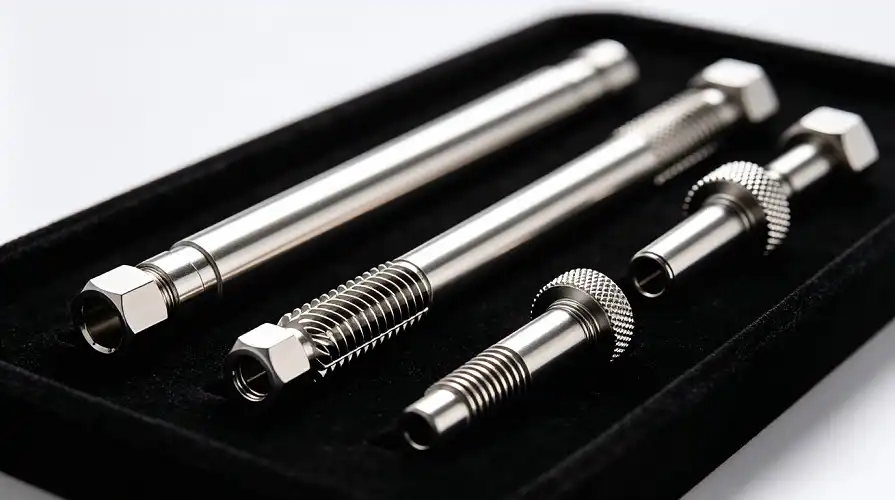
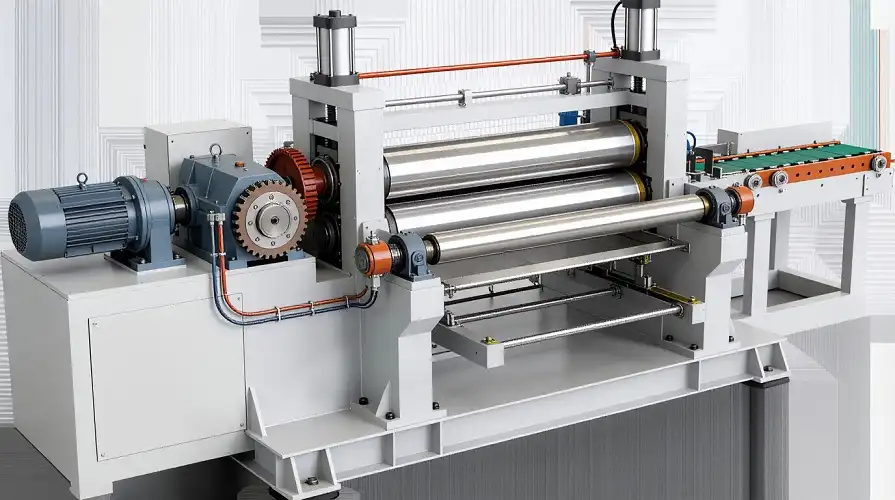
Extrusion, cutting, cold rolling, annealing in controlled atmospheres, and multi-stage pickling are some of the methods used to make Gr1 Titanium Tube. Bright annealing is used in medical settings, and polished finishes are used for threaded joints. For precise uses, wall thickness limits can reach ±0.1mm, which meets the needs of aircraft contractors.
Third-party testing labs check the ASTM E213 requirements for tensile qualities, smoothing performance, flaring behaviour, and nondestructive examination. Every shipment comes with a material test report, which gives buying teams proof for regulatory checks.
The company's 3,000-ton inventory lets them deliver quickly for projects that need to be done right away. Custom size can handle wall thicknesses ranging from 0.5 mm to 20 mm and outer widths ranging from 3 mm to 219 mm. This freedom is useful for both making prototypes and making a lot of them.
If you need to certify materials for use in nuclear power, full tracking meets NQA-1 standards. Product paperwork meets the standards of the Pressure Equipment Directive for markets in the European Union that need CE approval.
Jucheng Titanium's Gr1 Titanium Tube Advantages
Our two decades of specialised experience in China's Titanium Valley—Baoji- deliver unmatched value for industrial procurement:
Manufacturing Excellence:
- 120,000 square meter production facility with integrated processing capabilities
- Annual capacity exceeding 1,500 tons of titanium products across all grades
- Seamless tube production using advanced extrusion and cold rolling technology
- State-annealed, pickled, and bright finish options for diverse application needs
- Wall thickness precision within ±0.1mm tolerance for critical aerospace components
Quality Assurance:
- National High-Tech Enterprise certification with specialised "little giant" recognition
- Full ASTM B337, B338, B861 compliance with batch traceability documentation
- Professional quality inspection team conducting 100% dimensional and metallurgical testing
- Partnership with the Northwest Institute for Nonferrous Metal Research, ensuring cutting-edge metallurgy
- ISO 9001:2015 certified processes from raw material receipt through final shipment
Technical Capabilities:
- Custom fabrication from engineering drawings with CAD/CAM integration
- Welding, bending, and end-forming services reduce customer processing requirements
- R&D collaboration with Tsinghua University advancing titanium alloy development
- 45 total patents applied to production methods improving cost efficiency
- Technical consultation supporting material selection and application engineering
Supply Chain Reliability:
- 3,000-ton standing inventory enabling same-week delivery for standard sizes
- Global export experience serving Europe, North America, and Southeast Asia markets
- OEM/ODM cooperation with custom packaging and branding options
- Stable pricing structures protecting customers from commodity market volatility
- Established logistics partnerships ensuring damage-free international shipping
Customer-Centric Service:
- Dedicated account management for aerospace, chemical, and medical sector clients
- After-sales support team addressing installation and performance questions
- Flexible minimum order quantities accommodating prototype and production volumes
- Multi-language technical documentation, including material data sheets and welding procedures
- Annual supply agreements with volume discounts for strategic partnerships
Industry Recognition:
- 70% market share in hydrometallurgy titanium anode applications
- 90% market share in the coking industry, titanium equipment
- Listed on the National Equities Exchange and Quotations (2017)
- Three consecutive years of 30%+ revenue growth demonstrating market confidence
- Trusted supplier to Jiangxi Copper Group and major defence contractors
Application Expertise:
- Proven performance in chemical reactors handling mixed acid environments
- Successful installation in Luoyang Petrochemical heat exchanger systems
- Medical-grade tubing supporting implant manufacturers' regulatory requirements
- Marine-grade products certified for offshore platform and shipbuilding use
- Aerospace-certified materials meeting AMS specifications for structural applications
Competitive Advantages:
- Vertically integrated production reduces lead times and costs
- Direct manufacturer pricing, eliminating distributor markups
- Custom alloy development for specialised application requirements
- Small-batch capability serving research institutions and material developers
- Environmental compliance with responsible manufacturing practices
Conclusion
To choose between GR1 pure titanium tubes and GR5 alloy tubes, you have to weigh the needs of the product against rust resistance, mechanical strength, and cost. Pure titanium works best in chemical settings that need it to be flexible and biocompatible, while alloyed tubing is best for high-stress structural jobs that need it to be strong for its weight. When properly matched to working situations, both grades have very long service lives. Understanding changes in makeup, mechanical qualities, and industry-specific needs helps people make smart choices about what to buy. In the aerospace, chemical, medical, and industrial sectors, projects are more likely to succeed when they work with experienced makers who provide full certification paperwork and expert support.
Source Your Gr1 Titanium Tube from a Trusted Manufacturer
Baoji Jucheng Titanium Industry stands ready to support your next project with precision-engineered corrosion-resistant titanium pipe solutions, including our certified Gr1 Titanium Tube. As a National High-Tech Enterprise with over 20 years of manufacturing expertise, we deliver certified seamless tubes meeting ASTM B338 and AMS 4942 standards. Our engineering team provides technical consultation, ensuring optimal grade selection for chemical processing, aerospace, and marine applications. Whether you require standard inventory items or custom specifications, our 3,000-ton stock and flexible production capabilities meet urgent deadlines. Contact our procurement specialists at s4@juchengti.com to discuss your GR1 or GR5 titanium tubing requirements and receive detailed quotations within 24 hours.
References
1. American Society for Testing and Materials. Standard Specification for Seamless and Welded Titanium and Titanium Alloy Tubes for Condensers and Heat Exchangers. ASTM B338-19. West Conshohocken: ASTM International, 2019.
2. Boyer, R., Welsch, G., and Collings, E.W. Materials Properties Handbook: Titanium Alloys. Materials Park: ASM International, 1994.
3. Donachie, Matthew J. Titanium: A Technical Guide, 2nd Edition. Materials Park: ASM International, 2000.
4. Lutjering, Gerd and Williams, James C. Titanium: Engineering Materials and Processes. Berlin: Springer-Verlag, 2007.
5. Schutz, R.W. and Watkins, H.B. "Recent Developments in Titanium Alloy Application in the Energy Industry." Materials Science and Engineering A 243, no. 1-2 (1998): 305-315.
6. Zhang, L.C. and Chen, L.Y. "A Review on Biomedical Titanium Alloys: Recent Progress and Prospect." Advanced Engineering Materials 21, no. 4 (2019): 1801215.