
Gr9 Titanium Tube vs Gr5 Titanium Tube Differences
When buying things for industry, picking the right type of titanium tubing can mean the difference between a successful job and one that fails and costs a lot of money. Titanium tubes are used in naval engineering, aircraft, chemical processing, and the production of medical devices because they are stronger and lighter than other metals and don't rust. But not every titanium alloy is used for the same thing.Gr9 Titanium Tube and Gr5 Titanium Tube represent two distinct approaches to engineering challenges. Gr9 (Ti-3Al-2.5V) is perfect for complex hydraulic systems and corrosive environments because it is both strong and easy to shape. Gr5 (Ti-6Al-4V), which is called the "workhorse" of titanium alloys, is used in situations where strength and resistance to fatigue are very important. Knowing these differences has a direct effect on the cost of materials, the efficiency of production, and the long-term dependability of equipment. This thorough comparison walks procurement teams through the technical specs, performance traits, and applications that work best with both grades. This helps them make decisions that are in line with operational needs and budget limits.

Understanding Gr9 Titanium Tube: Properties and Specifications
Chemical Composition and Alloying Elements
Ti-3Al-2.5V is the formal name for Gr9 Titanium Tube, which is made up of about 3% aluminium and 2.5% vanadium. Gr9 is an alpha-beta titanium grade that fits between commercially pure titanium and higher-strength alloys because of the way the combination is made. The aluminium makes the metal stronger and denser, and the vanadium makes it easier to harden and expands the beta phase area during heat treatment.

When these elements are added in a controlled way, they make a material that can be cold-formed easily and has tensile strength that is much higher than commercially pure grades. This quality is very useful when making tubes, because smooth production through cold rolling and extrusion methods needs materials that can be shaped without losing their structural integrity.
Mechanical Properties and Performance Characteristics
The minimum tensile strength of Gr9 Titanium Tube is 620 MPa (90 ksi), and the minimum yield strength is 483 MPa (70 ksi). This is when it is supplied in the Cold Worked Stress Relieved (CWSR) condition. The material can stretch between 10 and 15 percent, which makes it flexible enough for bending and complex routing geometries. Gr9 is much lighter than stainless steel options because it has a mass of 4.48 g/cm³.

The alloy stays the same size at service temperatures up to 315°C (600°F), which means it can be used in applications that do some thermal cycling. Its modulus of elasticity lets you control how much it bends when it's loaded. This is a useful feature for hydraulic tubing and sports equipment that needs to reduce vibrations for better performance and longer life.
Manufacturing Standards and Dimensional Specifications
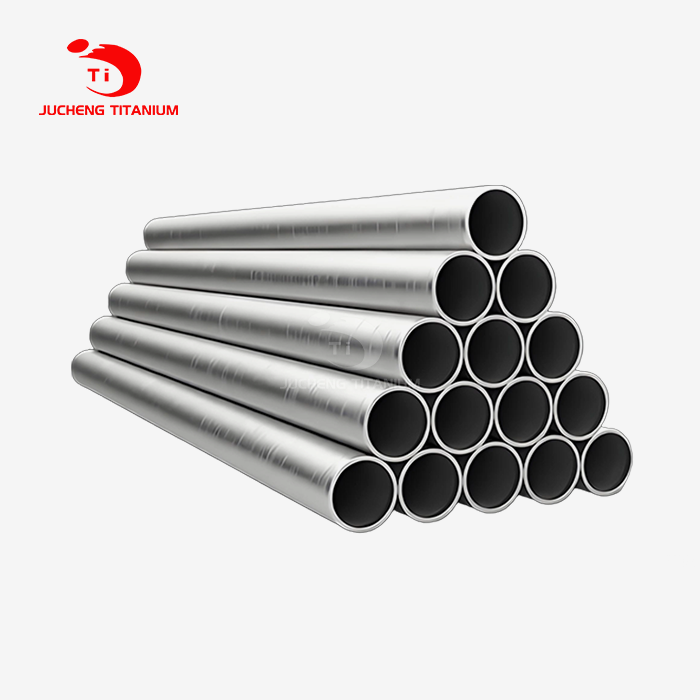
We make Gr9 Titanium Tube that meets strict international standards like AMS 4943, ASTM B338, and ASTM B861. These rules say what the base standards are for mechanical properties, chemical composition limits, and the quality of the manufacturing process. Outside widths range from 3 mm to 219 mm, and wall thicknesses range from 0.5 mm to 20 mm. Custom sizes can also be made to fit specific project needs.
Some ways to process metal are by extruding, piercing, cold rolling, annealing, pickling, and straightening. Surface processes include machined, polished, and acid-pickled finishing. The shipping state can be annealed, pickled, or bright. This production freedom lets tube specifications be perfectly matched to the needs of an application.

Corrosion Resistance in Challenging Environments
Gr9 Titanium Tube receives titanium's ability to form a passive oxide layer, which makes it very resistant to pitting and crevice rust caused by chloride. Compared to 316 stainless steel, this material works better in seawater situations, especially when temperatures are high. The alloy doesn't rust in oxidising acids, mildly reducing conditions, or industrial settings with a lot of chlorine.

You can email our expert sales team at s4@juchengti.com to talk about the needs of your project, ask for material approvals, or get competitive quotes. Get to know the dependability and skill that have helped Jucheng Titanium become a top maker in China's Titanium Valley and drive 30%+ yearly growth.
In chemical processing plants, Gr9 tubing is used in heat exchangers and condensers that deal with corrosive media. The combination of its mechanical strength and resistance to corrosion lowers the number of times it needs to be replaced and the cost of maintenance. The material is resistant to stress corrosion cracking under long-term loading conditions, which is useful for underwater uses.
Primary Application Sectors
Aerospace companies use Gr9 for hydraulic and fuel system tubes because it can be shaped in complicated ways without microcracking and can withstand high pressures inside. The bicycle industry thinks that Gr9 is the best titanium frame tubing because it can absorb road shock vertically while still being stiff laterally for efficient power transfer.
Desalination heat exchangers, subsea equipment housings, and chemical reactor parts are all industrial uses. Manufacturers of medical devices use Gr9 in specialised tools that need to be resistant to rust and biocompatible. Marine engineering projects define the grade for parts that will be used in saltwater settings and where long-term reliability is worth the cost of the materials.
Overview of Gr5 Titanium Tube: Key Features and Uses
Alloy Composition and Structural Characteristics
The most common titanium metal in the world is Gr5 Titanium Tube, which is officially called Ti-6Al-4V. It is made up of 6% aluminium and 4% vanadium. This mix makes an alpha-beta microstructure that has the best strength-to-weight ratio of all the titanium grades that are sold in stores. The higher amount of aluminium compared to Gr9 makes the tensile strength much higher, and the vanadium keeps the beta phase stable.

This metal is the standard for high-performance uses, and it makes up more than half of all the titanium used in the world. The material's successful use in demanding aerospace and defence uses has led to a lot of information about how to make it and a lot of suppliers who can provide it.
Mechanical Strength Profile
In the annealed state, Gr5 Titanium Tube has a minimum tensile strength of 895 MPa (130 ksi) and a minimum yield strength of 828 MPa (120 ksi), which are much higher than Gr9's strength specs. With solution treatment and ageing heat processes, which can raise the tensile strength above 1100 MPa, this performance edge grows even more. These qualities stay the same in materials that are heated to 400°C (750°F).
Gr5 is essential for parts that are loaded and unloaded many times because it has a high resistance to wear. This property is used to make aerospace structural sections, rotating parts, and pressure tanks last longer under stress conditions that would cause lower-strength metals to break down early.
Heat Treatment and Processing Considerations
Gr5 Titanium Tube is less flexible at room temperature than Gr9 Titanium Tube, so it usually needs to be hot-formed for complicated shapes. After solution treatment at 900–950°C and ageing at 500–600°C, the microstructure is at its strongest. This heat treatment sensitivity needs careful processing control, but lets properties be changed to fit the needs of a specific application.
Hot extrusion is used to make Gr5 seamless tubing, which is then cold purged or pierced by a rotary tool. Because of how quickly the material hardens, it needs to go through several cooling processes during cold reduction, which makes production more difficult than with Gr9. These working traits affect wait times and the cost of making things.

Dominant Application Fields
Most of the Gr5 that is made goes to the aerospace and defence industries for things like aircraft frames, engine parts, landing gear, and fasteners. Gr5 is used in racing, high-performance exhaust systems, and light suspension parts, according to the auto industry. The alloy's stiffness and durability are used in high-performance sports goods like golf club heads and racing bicycle parts.
Chemical processing equipment that needs to be very strong, marine propulsion shafts, and offshore drilling parts are all industrial uses. Gr5 is used in the medical field for surgery implants, especially orthopaedic devices that need to be biocompatible and strong.

Direct Comparison: Gr9 Titanium Tube vs Gr5 Titanium Tube
Mechanical Strength Analysis
When it comes to tensile strength, Gr5 is about 45% stronger than Gr9 (895 MPa vs. 620 MPa), which makes it the clear choice for applications that need to hold the most weight. This strength advantage also applies to yield strength, where Gr5's 828 MPa is much higher than Gr9's 483 MPa. These differences have a direct effect on design calculations, letting Gr5 wall sections be smaller or giving more safety gaps in serious situations.
In high-cycle loading situations, fatigue performance is better for Gr5, but Gr9 has a good fatigue life for intermediate stress amplitudes. The fact that Gr9 can stretch 15% more than Gr5 (10%) makes it much more useful during manufacturing, especially for tasks that need to be able to be cold-bent or stretched without cracking.
Corrosion Resistance Comparison
Both classes are very good at resisting rust in most situations, but Gr9 works a little better in some situations. In situations where liquid oxygen and chlorides are present in seawater, Gr9's slightly lower strength reduces the number of stress concentration points that can cause crevice corrosion. When working with hot, concentrated acids in chemical processes, there isn't much difference between the types.
The main difference is how likely they are to crack from stress corrosion. The lower strength level of Gr9 makes it easier for cracks to spread when it is under long-term tension stress in corrosive media. Gr9's safety margin is best for situations with high stress and aggressive chemistry, while Gr5 works well in less harsh conditions.
Weight and Density Considerations
At about 4.5 g/cm³, the density of both alloys is very close to the same. This means that they are 40% lighter than steel and 60% lighter than nickel alloys. Because Gr5 has a different strength, it can have thinner walls with the same pressure ratings. This could lead to even more weight savings in applications that depend on thickness. Designers have to weigh this benefit against Gr9's better shapeability in designs with limited geometry.
Cost and Availability Factors
Gr5 Titanium Tube usually costs 15–25% more than Gr9 because it has more alloying elements and needs to be processed in a more complicated way. However, the world production volume for Gr5 is much higher than that for Gr9, which means that there are more suppliers to choose from and standard wait times are faster. Custom sizes usually come with the same extra cost for both grades.
Jucheng Titanium keeps a large stock of both types. They have about 3,000 tonnes of titanium in stock, which allows them to serve quickly. Compared to multi-tier supply chains, our combined production capability, which includes processing raw materials and making finished tubes, saves money.
Application-Specific Recommendations
Choose Gr9 Titanium Tube if your project needs to be resistant to corrosion in harsh settings, has complicated cold forming, or has modest mechanical loads. This grade works really well in hydraulic systems, heat exchangers, equipment for processing chemicals, and marine uses where resistance to the environment is more important than absolute strength.
For applications that need the most strength, such as aerospace structural parts, high-pressure systems, and rotating equipment that can't handle fatigue, choose Gr5 Titanium Tube. The grade works best when applications can handle hot forming needs, and weight loss through thinner walls justifies higher material costs.
Procurement Guide: How to Choose Between Gr9 and Gr5 Titanium Tubes for Your Business
Defining Performance Requirements
Quantifying practical factors is the first step to choosing the right materials. Write down the maximum working pressure, the temperature range, the make-up of the corrosive media, and how long you think it will last. The suitability of a grade is directly affected by mechanical loads such as long-term stress, the regularity of pressure cycles, and vibration exposure.
Think about the needs for fabrication, like welding, bending radius, and forming. Applications that need to bend with a small radius or expand when cold are good for Gr9's flexibility. On the other hand, straight-run tubes used in high-stress situations may benefit from Gr5's higher strength, even though it is harder to shape.
Supplier Qualification and Certification Verification
You should ask for full certifications of the materials you're interested in, such as reports on their chemical make-up, their mechanical properties, and their heat treatment history. Check to see if it meets standards like ASTM B338, AMS specifications, and needs related to the business. Our quality management system is ISO-certified, so you can follow everything from the raw materials to the final inspection.
Check the manufacturing skills of the provider, such as their in-house testing centers, non-destructive testing tools, and dimensional checking resources. Baoji Jucheng Titanium Industry Co., Ltd. has advanced testing labs with spectrometers, tensile testers, and ultrasonic inspection tools. This means that they don't have to wait for third-party approval delays.

Pricing Structure and Volume Considerations
The price of titanium tubes changes depending on how much the raw materials cost, how much is made, and how complicated the specifications are. Custom extrusions, which need special tools, are more expensive than standard measurements from an existing collection. When you make a volume commitment, you can negotiate prices that lower the cost per unit while still making sure you have a steady supply.
Consider the total cost of ownership, which goes beyond the price of the item itself. Gr9's resistance to rust may mean that it doesn't need to be replaced as often, which could make up for its higher initial cost in harsh settings. Gr5 is strong, so it can be used to make lighter designs that require less installation work and support structures.
Lead Time and Inventory Management
Standard tube forms that are in stock can be shipped within days. Custom specs, on the other hand, need 6 to 12 weeks for planning production, extrusion, and finishing. Long-term supply deals with planned releases keep inventory costs in check by taking into account production wait times and changes in demand.
We can make more than 1,500 tonnes of different types of titanium tubes every year. This scale can be used for both one-time purchases and long-term partnerships, and technical support is available throughout the process. Building ties with providers that are vertically integrated, like Jucheng Titanium, makes the supply chain simpler and more reliable.
Real-World Case Studies Highlighting the Differences Between Gr9 and Gr5 Titanium Tubes
Aerospace Hydraulic System Application
A big company that makes aeroplane parts had to meet weight reduction requirements for the next generation of regional jets. In the beginning, standards called for Gr9 Titanium Tube to be used in hydraulic distribution systems because it had been reliable in similar situations before. An engineering study showed that the complicated path through the wing structures needed many tight-radius turns that would release too much stress on Gr5.
The company used Gr9 continuous tubing that met AMS 4943 standards and was able to be cold-bent to a 3D radius without breaking. The CWSR state allowed hydraulic systems to work with enough pressure (3,000 psi) and kept the wear life at more than 50,000 flight cycles. Compared to steel tubing, the total weight of the system went down by 12%, which helped meet fuel efficiency goals. The decision proved that Gr9 is better when formability requirements are higher than absolute strength requirements.
Chemical Processing Heat Exchanger Project
A petrochemical plant needed heat exchanger tube bundles for a system that takes in seawater at 90°C and exposes it to hydrogen sulphide on a regular basis. The first material choice was 316L stainless steel because that's what had been used before, and it was cheaper. Because the tubes broke early from crack rust, they had to be replaced right away, after only 18 months.
After an engineering study, Gr9 Titanium Tube was chosen as the best alternative material. The moderate strength and resistance to chloride made it work well in the conditions, and cold rolling made it easy to make cheap tube bundles. When Gr9 tubes were installed, corrosion problems went away totally. Units have now been running nonstop for over five years without any degradation. Even though the cost of materials went up three times compared to stainless steel, the savings in unexpected shutdowns and upkeep labour paid for themselves in 18 months, showing Gr9's value in corrosive conditions.
Conclusion
When deciding between Gr9 and Gr5 Titanium Tube, you need to carefully look at the mechanical needs, the environment, and the limitations of the fabrication process. When corrosion protection, cold formability, and middling strength all come together, Gr9 does very well. This is especially true in chemical processing, hydraulic systems, and marine uses. Gr5 is the most common material used in high-strength applications, such as aerospace structures and fatigue-critical parts, where the best performance justifies the complexity of the processing.
Partnering with experienced sellers who offer technical know-how, quality certifications, and reliable service is key to successful procurement. Knowing these important differences lets you make smart choices that improve performance, lower lifecycle costs, and guarantee project success in a wide range of industrial settings.
FAQ
1. What are the main corrosion resistance differences between Gr9 and Gr5 Titanium Tube?
Both grades are very good at resisting corrosion in general, but Gr9 is slightly better in high-chloride conditions and is less likely to crack from stress corrosion. The lower strength level of Gr9 reduces the amount of leftover loads that can cause cracks to spread in corrosive media when they are loaded for a long time. In real life, the main areas where there are differences are in harsh chemical processes and seawater use.
2. Can Gr9 Titanium Tube be welded as easily as Gr5?
Gr9 is very easy to weld with TIG processes and either matching ERTi-9 filler or commercially pure fillers, depending on the strength needs of the joint. Gr5 also welds well, but because it has more alloying, it needs stricter shielding gas processes. Both types need to be protected by an inert atmosphere to keep the weld zones from getting contaminated and to keep their rust resistance.
3. Which grade offers better value for aerospace applications?
The most common type of aircraft structure part that needs the highest strength-to-weight ratio is Gr5. Gr9 works better for hydraulic lines and devices that need to be bent in complicated ways. There is no clear winner between the two grades; the choice relies on the specific loading conditions, forming needs, and safety factor estimates.
Partner with Jucheng Titanium for Your Gr9 Titanium Tube Requirements
Picking the best titanium grade is only the first step in a good buying process. Baoji Jucheng Titanium Industry Co., Ltd. has been making high-quality Gr9 Titanium Tube and Gr5 alternatives for demanding global applications for more than 20 years. As a specialised "little giant" business on a national level, we keep 3,000 tonnes of titanium in stock so that we can serve quickly. Our 41 utility model patents show that we are always coming up with new ways to process titanium.

Our manufacturing process includes extrusion, cold rolling, heat treatment, and precise finishing. This way, we can keep an eye on quality throughout the whole production process. Strict testing procedures make sure that the products meet the requirements of ASTM B338, ASTM B861, and AMS, giving you the licenses your projects need. Our engineering team works with your procurement specialists to make sure that the materials you choose and the specs you give them are the best they can be. This is true whether you need standard seamless tubing or measures that are specific to your needs.
As a reliable provider of Gr9 Titanium Tube to aerospace companies, chemical plants, and companies that make industrial equipment all over North America, we know how important it is to find the right mix between performance needs and business facts. You can email our expert sales team at s4@juchengti.com to talk about the needs of your project, ask for material approvals, or get competitive quotes. Get to know the dependability and skill that have helped Jucheng Titanium become a top maker in China's Titanium Valley and drive 30%+ yearly growth.
References
1. Boyer, R., Welsch, G., & Collings, E.W. (1994). Materials Properties Handbook: Titanium Alloys. ASM International, Materials Park, Ohio.
2. Donachie, M.J. (2000). Titanium: A Technical Guide, 2nd Edition. ASM International, Materials Park, Ohio.
3. ASTM International. (2021). ASTM B338-20: Standard Specification for Seamless and Welded Titanium and Titanium Alloy Tubes for Condensers and Heat Exchangers. West Conshohocken, Pennsylvania.
4. SAE International. (2019). AMS 4943G: Titanium Alloy Tubing 3Al-2.5V Welded or Seamless Cold Worked Stress Relieved. Warrendale, Pennsylvania.
5. Lütjering, G., & Williams, J.C. (2007). Titanium, 2nd Edition. Springer-Verlag, Berlin Heidelberg.
6、 Peters, M., Kumpfert, J., Ward, C.H., & Leyens, C. (2003). Titanium Alloys for Aerospace Applications. Advanced Engineering Materials, Volume 5, Issue 6, Pages 419-427.