
Introducing titanium plate types, applications, and processing methods
Titanium plate represents flat-rolled mill products with thickness exceeding 4.75mm, offering exceptional corrosion resistance and strength-to-weight ratios that solve critical challenges traditional metals cannot address. Available in grades ranging from commercially pure (Gr1, Gr2) to high-strength alloys (Gr5, Gr9), these materials meet stringent standards like ASTM B265 and AMS 4911. Through hot rolling, annealing, and precision surface treatments, titanium plates deliver reliable performance across aerospace, chemical processing, medical device manufacturing, and marine environments where material failure carries catastrophic consequences.
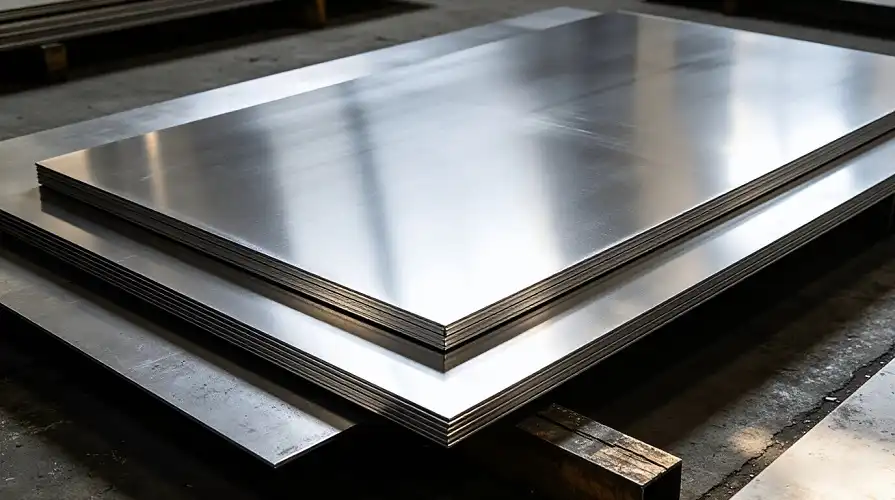
Understanding Titanium Plates: Types and Properties
What Defines a Titanium Plate
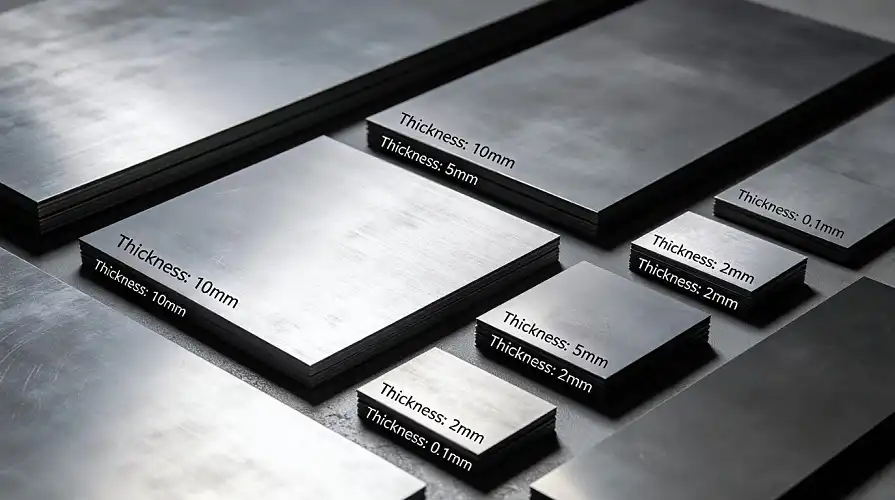
Thickness is what makes titanium plates and sheets different from each other. Plates are usually between 4 mm and 80 mm thick, while sheets are always less than 4.75 mm thick. Widths run from 950mm to 2500mm, and lengths can be up to 10,000mm or made to fit the needs of the job. This range of sizes lets producers make the best use of materials and cut down on waste during the manufacturing process.
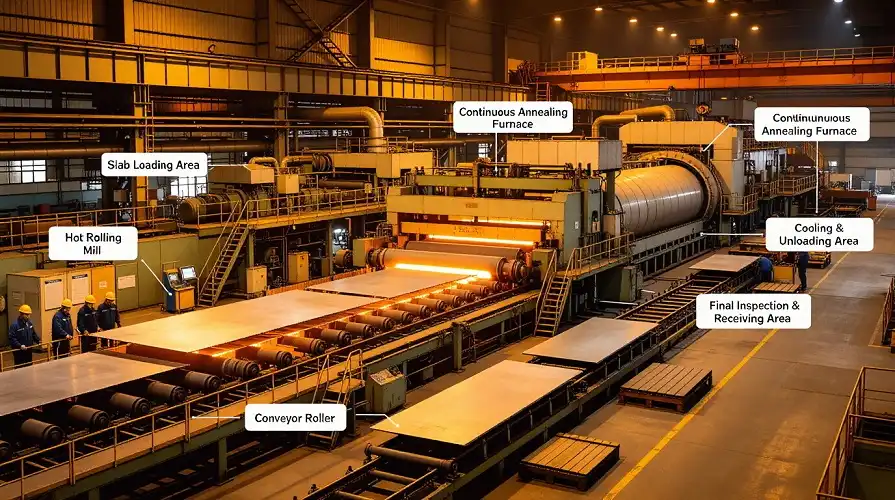
The first step in making something is vacuum arc remelting, which makes sure the material is pure by getting rid of impurities that hurt its mechanical qualities. The next step is hot rolling, which turns bars into flat goods while keeping the grain structure intact. Then, annealing heat processes lower internal stresses and make the material more flexible, getting it ready for further processing.
Commercially Pure Titanium Grades
Grades 1 through 4 are commercially pure titanium with different amounts of oxygen that change how strong and easy it is to shape. Grade 1 has the best corrosion protection and ductility, which makes it perfect for chemical handling equipment that needs to fit complicated shapes. As the most common grade for industrial uses, Grade 2 strikes a good mix between strength and workability. Grade 4 is stronger than lower grades because it has more interstitial material, but it is less flexible than lower classes.
These commercially pure types don't crack when exposed to chloride, which is a problem for austenitic stainless steels in chemical and marine settings. When they get broken, their passive oxide layer grows back on its own, protecting them from harsh media. Because of this feature, severe pitting failures that require early equipment replacement in standard metal systems don't happen.
Titanium Alloy Grades
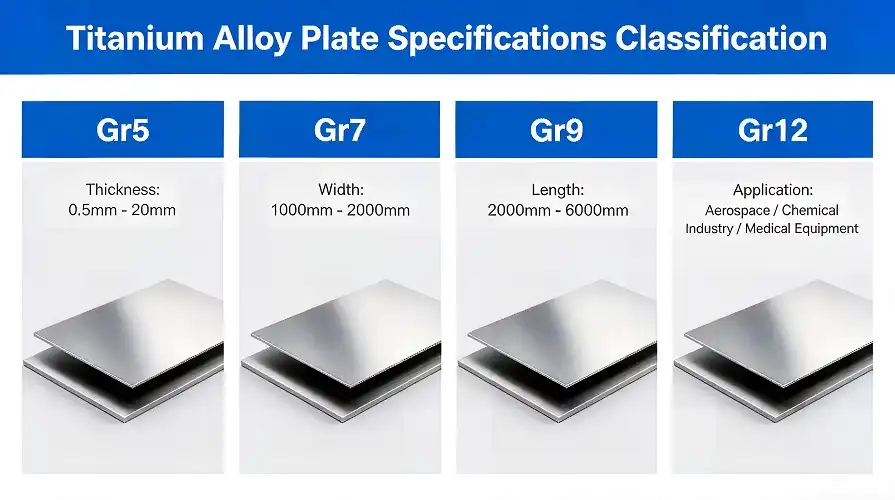
Grade 5 (Ti-6Al-4V) is the most common type used in aircraft and high-performance uses. It has tensile strengths of over 900 MPa and a density 40% lower than steel. This metal has the wear resistance that is needed for structural parts that will be loaded and unloaded many times over many years of service. Palladium additions in Grade 7 make it more resistant to reducing acids. This helps with chemical processing problems that even fully pure titanium can't solve.
Grade 9 (Ti-3Al-2.5V) is a cheap option to commercially pure grades that need to improve strength by a small amount. With the additions of molybdenum and nickel, Grade 12 is useful in certain acidic conditions. Each alloy has its own performance needs that buying teams must match up with operating conditions in order to make the best material selection choices.
Physical and Mechanical Properties
Titanium has a density of 4.5 g/cm³, which means it is about twice as strong as aluminium and has the same strength-to-weight ratio as high-strength steels while being half as heavy. This feature solves the problem of the "weight penalty" in aircraft systems, where each kilogram affects how much fuel is used and how much weight can be carried. The material's mechanical qualities stay the same at temperatures ranging from very cold to 600°C, making it useful for a wide range of uses, from moving liquid gases to high-temperature chemical reactors.
Low thermal expansion factors keep changes in size to a minimum during thermal cycles, which is important for precision equipment that needs to keep tight tolerances. The thermal conductivity is lower than that of steel or aluminium, so the welding settings need to be changed to avoid flaws. A Young's modulus of about 105 GPa gives the material enough hardness for structural uses while still letting it bend enough to handle impact loads without breaking.
Core Applications of Titanium Plates in Industry
Aerospace and Defense Manufacturing
Titanium's resistance to fatigue makes it possible for aircraft structure parts to last for decades and millions of load cycles. Material tracking certifications must be kept for wing spars, landing gear parts, and engine mounts. These certifications must show the chemistry, mechanical qualities, and processing history for each heat lot. Following the rules set out in AMS 4911 and other related aerospace material standards guarantees uniform quality that meets strict safety margins.
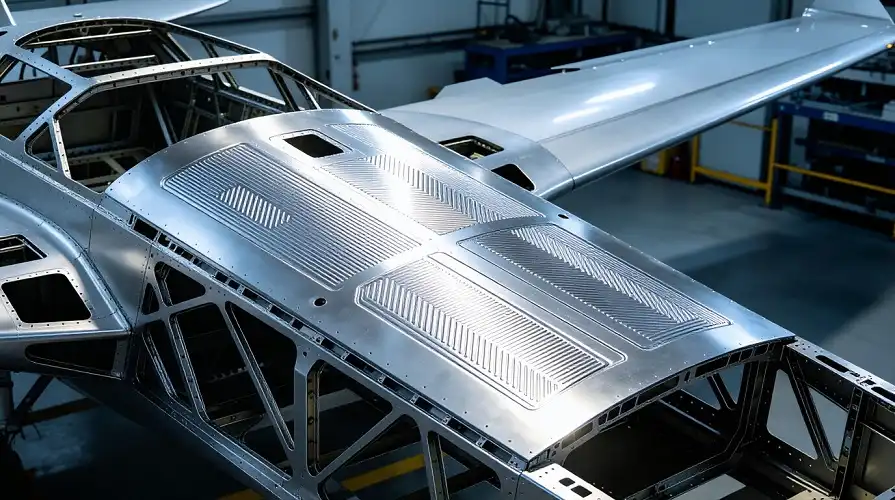
Defence companies use titanium plates for defensive protection and parts of submarine hulls that need to be resistant to corrosion in saltwater. The non-magnetic qualities of the material keep it from interfering with sensitive navigational equipment and keep the structure strong during battle. For these uses, procurement processes last between 12 and 36 months, so sellers need to have stable production capacity and strict quality systems.
Chemical and Petrochemical Equipment
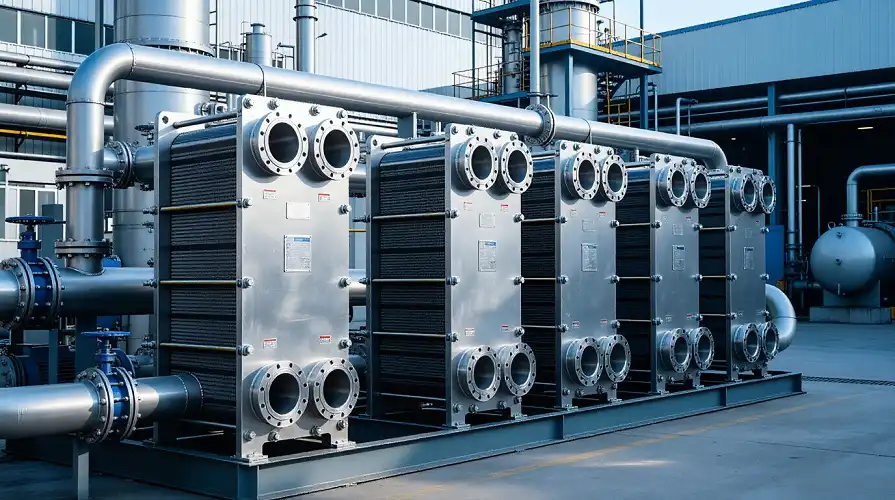
The corrosion issues that affect stainless steel units dealing with chlorides, organic acids, and oxidising media are eliminated by heat exchangers made of titanium plate. At Jucheng Titanium, we've successfully put titanium-based composite tubes to use at Luoyang Petrochemical and given WUGANG Group the biggest titanium spiral plate heat exchanger in China. These placements show that titanium improves material performance, making tools last longer from 5 to 7 years with stainless steel to 20 years or more with titanium.
When reducing acids are present, chemical reactions that work with acidic intermediates need to meet Grade 7 or Grade 12 standards. Titanium-clad steel plates save money because they only use corrosion-resistant titanium on the sides that come into contact with the process. The cheaper carbon steel backing provides structural support. When compared to a solid titanium building, this combination method cuts the cost of materials by 40–60% while still providing full corrosion protection.
Medical Device Manufacturing
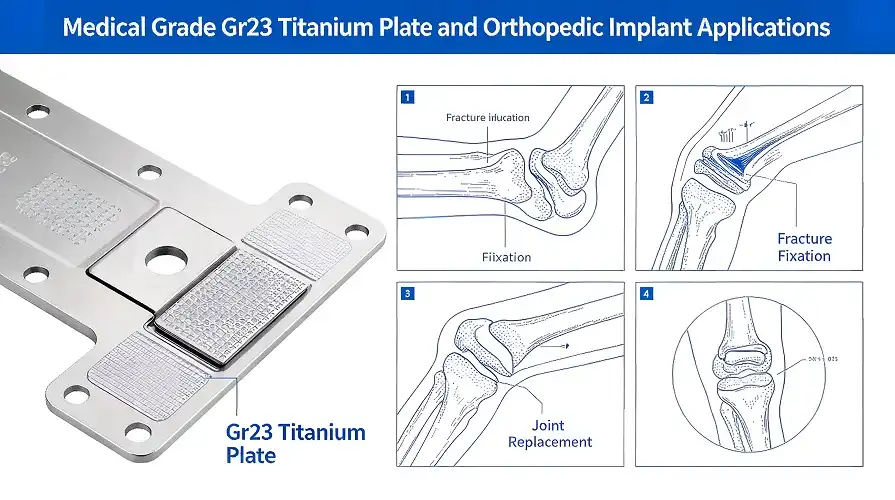
Biocompatibility means that human flesh doesn't react negatively to surgical implants and bone plates. Grade 23 (Ti-6Al-4V ELI) has an extra-low interstitial percentage that ensures the material is pure enough to be implanted for a long time without causing any bad biological effects. The material is strong enough to be used in load-bearing uses like hip and knee replacements, and it doesn't break down even after millions of walking rounds over the life of an implant.
For medical-grade standards, work environments must be kept under control so that industrial processes don't contaminate the environment. Surface finishes must meet strict cleanliness standards. Uneven surfaces that could harbour germs or cause inflammatory reactions must be removed using machined or acid-pickled methods. Certification paperwork shows every step of the process and gives medical device makers the proof they need to show they are following the rules for FDA submissions and foreign market approvals.
Marine and Offshore Applications
Seawater is the most active place for rust that industrial equipment has to deal with because it has chloride attack, biofouling, and cathodic protection problems. When combined with different metals in marine systems, titanium plates get rid of the problem of galvanic rust. Titanium is used for important parts in desalination plants, offshore oil platforms, and military ships, where failure could cause environmental damage or loss of life.
In the deep ocean, where pressure tanks must survive hydrostatic loads and avoid crevice corrosion in tight shapes, the material keeps its structural integrity. Titanium is not easily damaged by hydrogen, which makes it reliable in sour gas service, where high levels of hydrogen sulfide would make high-strength steels useless. Lifecycle cost analysis, which takes into account maintenance intervals and replacement prices, shows that these performance traits are worth the higher material costs.
Processing Methods and Handling of Titanium Plates
Cutting Technologies
Laser cutting is accurate for complicated shapes and reduces the number of heat-affected areas that could change the qualities of the material. Waterjet devices don't use any heat, so they don't cause heat-sensitive metal to work harder or change phases. CNC plasma cutting is a cheap way to cut bigger titanium plates, where the need for high-quality edges means that extra machining processes are needed.
To keep work hardening from happening, which increases tool wear and makes later forming processes more difficult, cutting factors need to be carefully optimised. The choice of coolant must keep salt from getting into it, which can cause stress corrosion cracks during later service. For tool materials, carbide or polycrystalline diamond types are usually recommended because they have the hardness needed to make titanium, which is abrasive, and keep their edges during production runs.
Forming and Bending Operations
Due to its higher yield strength and lower flexibility, titanium plate cold forming needs more force than a steel plate of the same thickness. To get to the end size goals, springback formulas need to take titanium's elastic qualities into account. When you hot form at temperatures between 650°C and 850°C, the metal is easier to shape, but you need controlled atmosphere ovens to keep air from absorbing and weakening the top layers.
With incremental forming methods, you can make complicated three-dimensional forms without having to spend a lot of money on special tools that are needed for low-volume production. Hydroforming uses fluid pressure to make the flow of material constant, so parts are made with little shrinking or cracking. These advanced forming methods cut down on waste and give designers more freedom than standard pressing methods can with titanium's mechanical properties.
Welding and Joining Methods
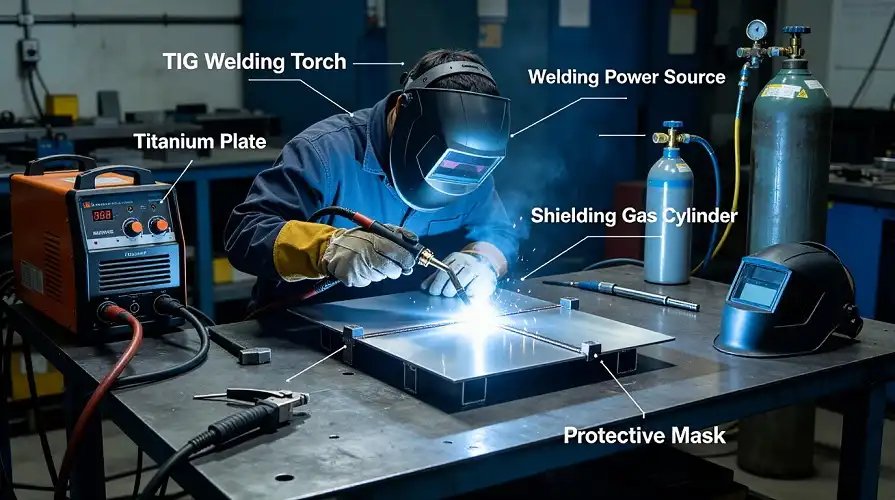
Gas tungsten arc welding (GTAW/TIG) is the most common way to make titanium parts because it can precisely control the heat and shield the liquid metal from airborne contaminants. Trailing shields keep argon from leaking past the weld zone, which stops oxidation that would weaken corrosion protection during cooling cycles. Backing gas cleans the inside of pipes and tanks, making sure that no air can get in during the welding heat cycle.
Post-weld heat treatments can be requested to reduce remaining loads in thick-section joints or improve rust resistance in areas that were damaged by the heat. Friction stir welding is a solid-state way to put things together without melting. It gets rid of problems like porosity and hot breaking while making joints that are close to the strength of the base material. With these joining methods, it's possible to make complicated parts that meet the quality standards for pressure vessels and aircraft.
Surface Finishing Treatments
Acid pickling removes oxide scales from hot-rolled metal, making it weldable or coatable. Polishing decreases surface hardness to less than 0.4 Ra micrometres, which helps clean pharmaceutical and food processing equipment. Machining achieves smoothness and physical tolerances that rolling cannot.
Rolling, annealing, levelling, pickling, and finishing are all possible at Jucheng Titanium. We provide annealed, machined, polished, and acid-pickled material. Customers don't have to deal with many subcontractors with integrated processing, which reduces wait times and maintains quality. Our quality checking team verifies specs at each stage and records them according to ASTM B265, ASTM F67, and ASME SB265 standards.
Procurement Considerations for Titanium Plates
Understanding Market Dynamics and Pricing
Global titanium prices change based on changes in aircraft demand, the supply of raw material sponges, and the cost of energy, all of which affect the economics of production. Buying in bulk takes advantage of economies of scale, and orders over 10 tons can get savings of 15 to 25 per cent. Long-term supply agreements keep prices stable and make sure that materials are available when the market is tight, and spot buyers have to deal with limited supplies and higher prices.
Lead times range from 4 to 8 weeks for normal sizes and grades to 12 to 16 weeks for unique sizes or alloys that aren't commonly used. Keeping a surplus stockpile helps keep the supply chain running smoothly, but because titanium plates are so expensive, keeping too much stock is expensive. Strategic relationships with vertically integrated suppliers that offer mill-direct prices get rid of markups for distributors and make sure that materials can be tracked from the time they are made into ingots until they are delivered to the customer.
Supplier Certifications and Quality Assurance
ISO 9001 and AS9100 aerospace certifications demonstrate fundamental quality management systems and tight tracking and documentation standards, respectively. To ensure materials satisfy technical requirements, the ASTM B265 and ASME SB265 standards outline chemical, mechanical properties, and testing processes. MTRs reveal each heat lot's actual test findings. They provide buying teams with verifiable data to ensure compliance.
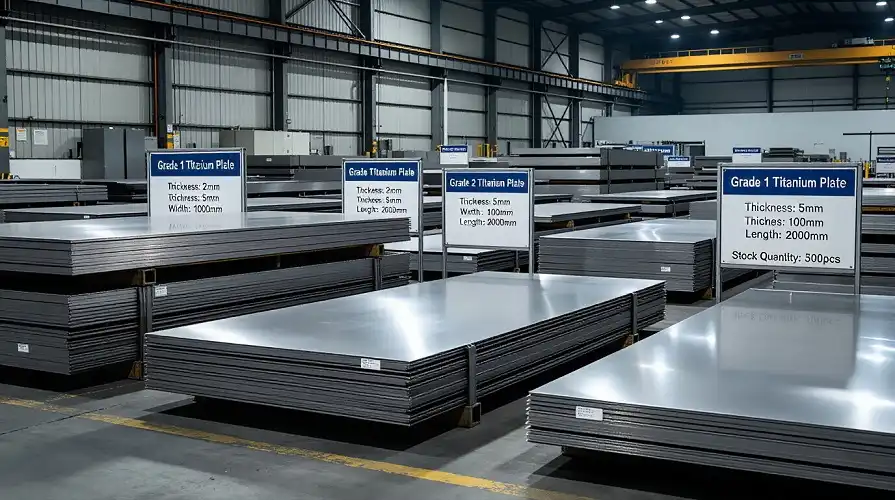
You evaluate a supplier's reputation by looking at their prior work, talking to past clients, and seeing how often they produce on time. Jucheng Titanium's 20 years of expertise, national high-tech status, and "little giant" status prove we can deliver. Our 3,000-ton stockpile and 500+ equipment pieces per year production capabilities allow us to manage urgent jobs and large requests.
Custom Order Capabilities
Cutting perfectly to client specifications reduces garbage and processing costs. Size flexibility allows you to satisfy project demands that mill dimensions can't. Custom surface treatments prepare materials for joining processes or service settings, speeding up manufacturing.
Global logistics expertise provides reliable delivery to North America, Europe, and Asia through freight forwarding contacts and export documentation understanding. Our collaboration with the Northwest Institute for Nonferrous Metal Research, Tsinghua University, and Northwest University helps us develop new materials and solve technical issues that arise when consumers need to go beyond what is achievable. Our research infrastructure distinguishes us from commodity vendors that sell catalogue products without technical support.
Conclusion
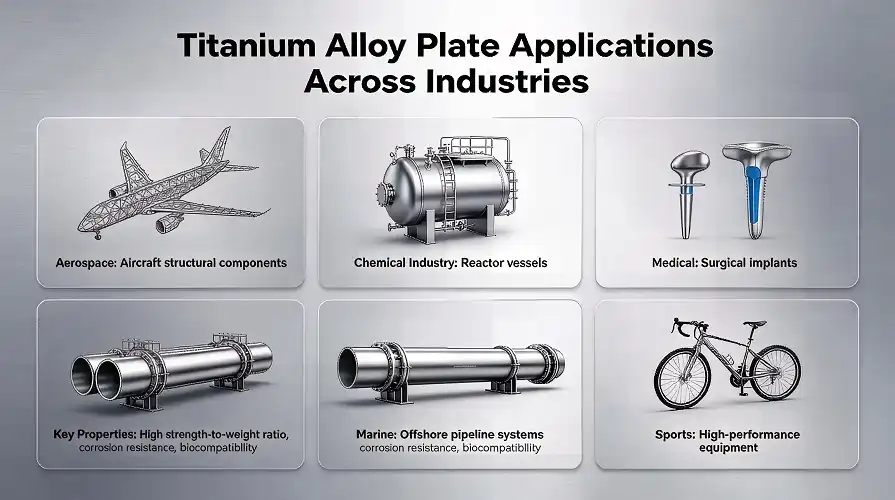
Titanium plates are perfect for aircraft, chemical, medical, and marine uses because they don't rust, are strong for their weight, and don't harm living things. Knowing the grade standards, processing methods, and how well a material compares to other materials lets you make smart purchasing choices that balance technical needs with budget limitations. Strategic relationships with suppliers that offer material certifications, custom manufacturing, and expert support lower the total cost of ownership by making equipment last longer and lowering the cost of repairs. When choosing a material, it's important to match the grade's properties to the real service conditions. This way, you can avoid both under-specification, which can cause failure early on, and over-specification, which raises costs for no reason.
FAQ
Q1: What advantages do titanium plates offer over stainless steel?
Titanium plates are 40% lighter than equal-sized stainless steel plates, but they have the same or better strength qualities. This means that they can be used in aircraft and mobile equipment to reduce structural mass. Even the best types of stainless steel are not as resistant to corrosion in chloride, acidic, and oxidising environments. This means that pitting failures that cause unexpected shutdowns don't happen. Because they are not magnetic, they don't mess up sensitive electronics, and because they are biocompatible, they can be used in medical implants, which isn't possible with nickel-containing stainless metals.
Q2: Can titanium plates be customised for specific project requirements?
You can make it exactly the way you want it by choosing thicknesses from 4mm to 80mm, changing the width and length, and treating the surface in a variety of ways, from acid-pickling to polishing. For specific uses, custom alloy specs can be found, and manufacturing services make finished parts that match the requirements of the drawing. Lead times for special orders are usually between 6 and 12 weeks, but can be longer or shorter based on the specifics.
Q3: How does Grade 2 compare to Grade 5 for industrial applications?
Grade 2 commercially pure titanium is more resistant to rust and easier to shape, and it costs less. This makes it perfect for chemical processing equipment and other industry uses. Grade 5 Ti-6Al-4V alloy is 50% stronger and has great resistance to fatigue, which is why it costs more for aircraft systems and high-stress mechanical parts. Which one to use relies on whether the product needs corrosion protection or mechanical strength.
Partner with a Trusted Titanium Plate Supplier
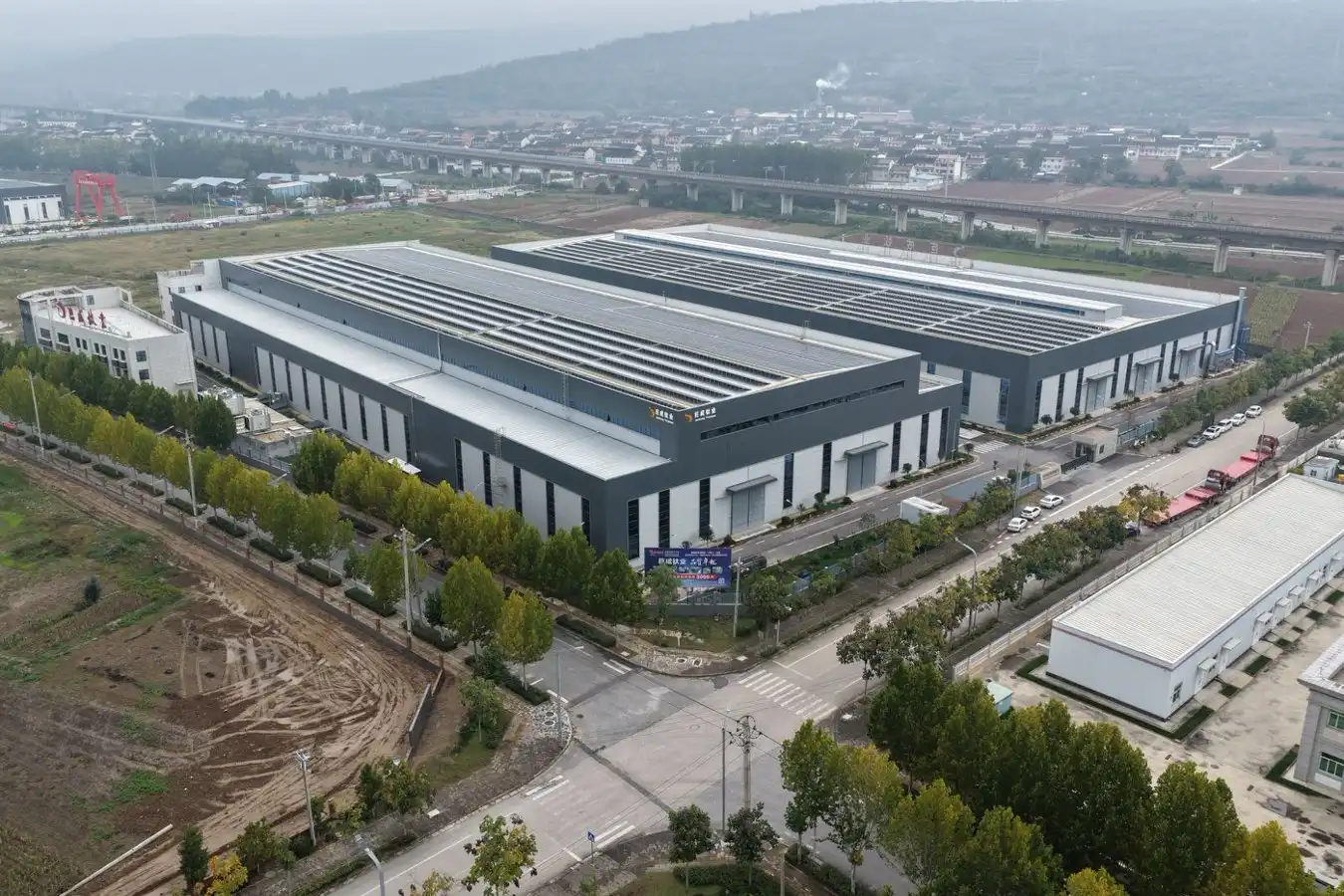
Jucheng Titanium brings over 20 years of specialised expertise to your titanium plate procurement needs, backed by our position as a national-level "little giant" enterprise and high-tech industry leader. Our 3,000-ton inventory spanning Gr1, Gr2, Gr5, Gr7, Gr9, and Gr12 specifications ensures immediate availability for urgent project requirements, while custom processing capabilities deliver precisely machined, pickled, or polished surfaces ready for your fabrication workflows. Every shipment includes complete ASTM B265 and ASME SB265 material certifications with full traceability documentation meeting aerospace and medical device quality standards.
Working directly with our technical team at s4@juchengti.com, you'll receive engineering support optimising grade selection, processing methods, and cost efficiency for your specific application challenges. Our global export infrastructure serves North American markets with reliable logistics and responsive communication, eliminating the supply chain uncertainties that disrupt production schedules. Whether sourcing standard plate dimensions or developing custom titanium solutions for breakthrough applications, Jucheng Titanium delivers the material quality, technical expertise, and supply reliability your projects demand.
References
1. Boyer, R., Welsch, G., & Collings, E.W. (1994). Materials Properties Handbook: Titanium Alloys. ASM International, Materials Park, Ohio.
2. Donachie, M.J. (2000). Titanium: A Technical Guide, 2nd Edition. ASM International, Materials Park, Ohio.
3. Schutz, R.W. & Thomas, D.E. (1987). Corrosion of Titanium and Titanium Alloys. Metals Handbook, Volume 13: Corrosion, ASM International.
4. Peters, M., Kumpfert, J., Ward, C.H., & Leyens, C. (2003). Titanium Alloys for Aerospace Applications. Advanced Engineering Materials, Volume 5, Issue 6.
5. ASTM International. (2020). ASTM B265-20: Standard Specification for Titanium and Titanium Alloy Strip, Sheet, and Plate. West Conshohocken, Pennsylvania.
6. Lutjering, G. & Williams, J.C. (2007). Titanium, 2nd Edition. Springer-Verlag, Berlin Heidelberg.