
Titanium Grade 5 Seamless Tube for Medical Device Manufacturing
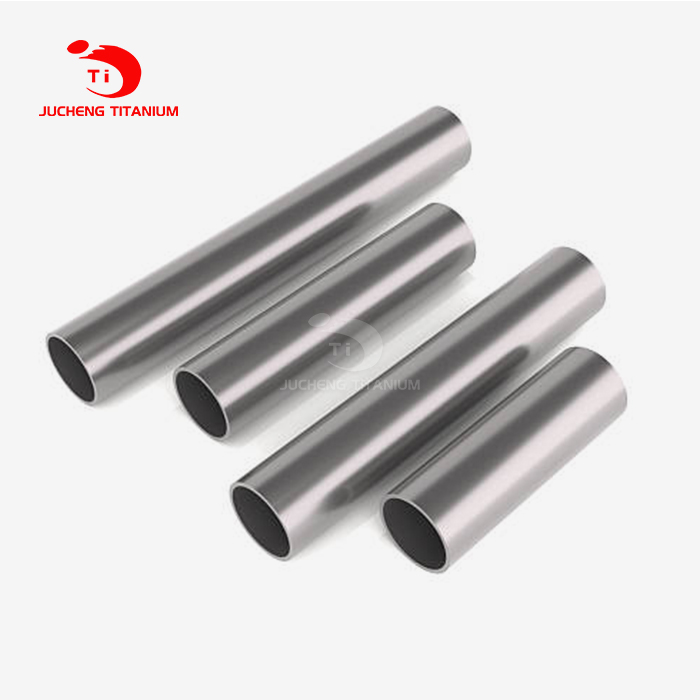
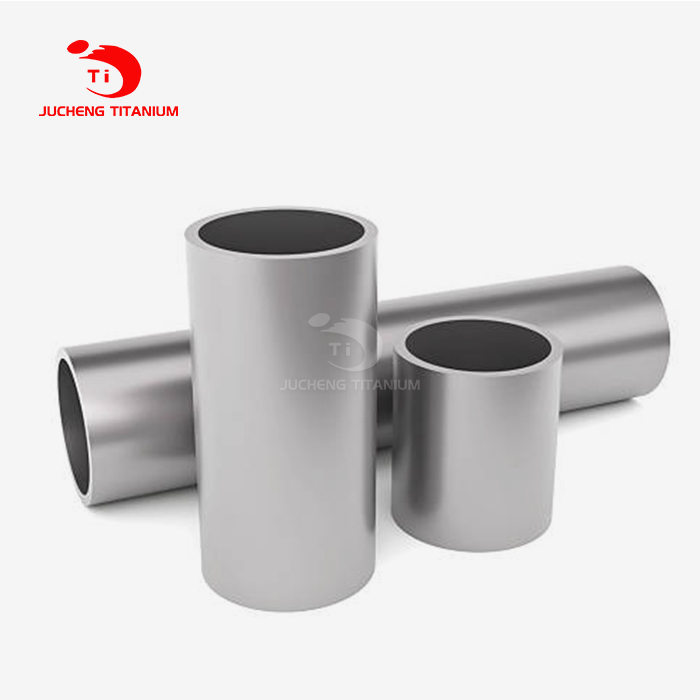
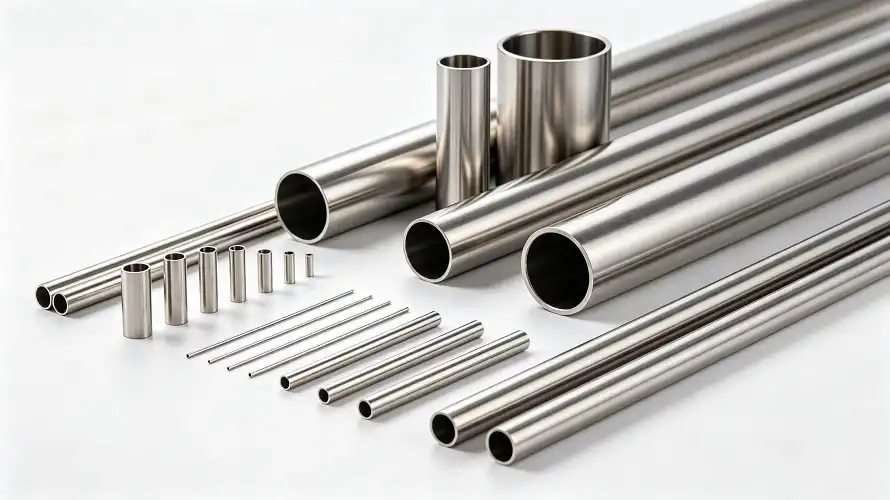
Reliability is important when purchasing life-saving device materials. The gold standard in medical device manufacture is titanium grade 5 seamless tube, which combines strength and biocompatibility with Ti-6Al-4V alloy. These tubes are extruded and pierced without welded seams to avoid structural weaknesses that might affect patient safety. A titanium grade 5 seamless tube is essential for precision instruments, orthopedic implants, and critical surgical components because it provides consistent mechanical performance, resists corrosion from body fluids and sterilization cycles, and maintains structural integrity under demanding surgical conditions.
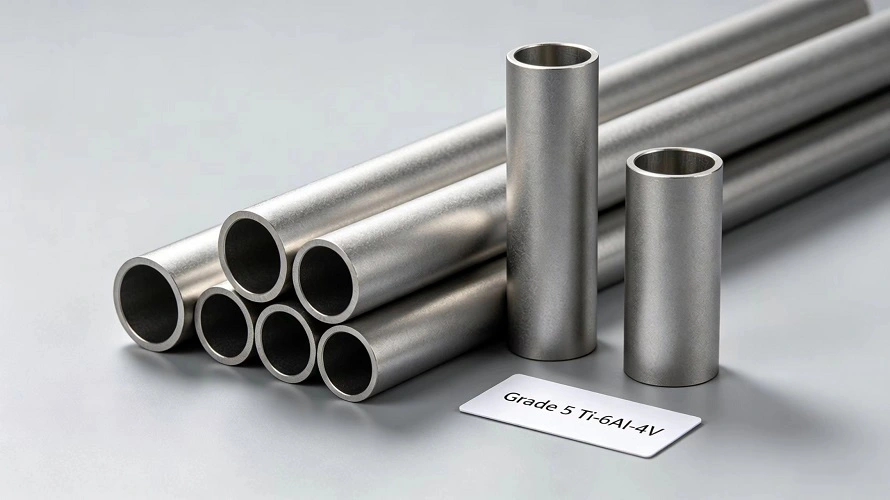
Understanding Titanium Grade 5 Seamless Tube: Properties and Composition
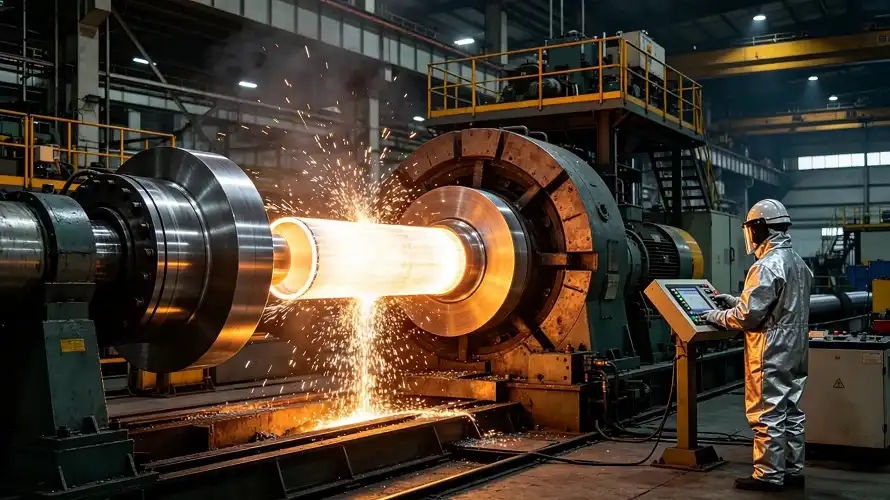
Precision extrusion or cross-roll piercing starts titanium grade 5 seamless tube production. Our seamless manufacturing avoids seam junction weak sites, unlike welded alternatives. We produce homogeneous grain structure across the tube wall by controlled hot forming and vacuum annealing, which is crucial for medical applications where material consistency affects patient outcomes.
Chemical Composition and Mechanical Excellence
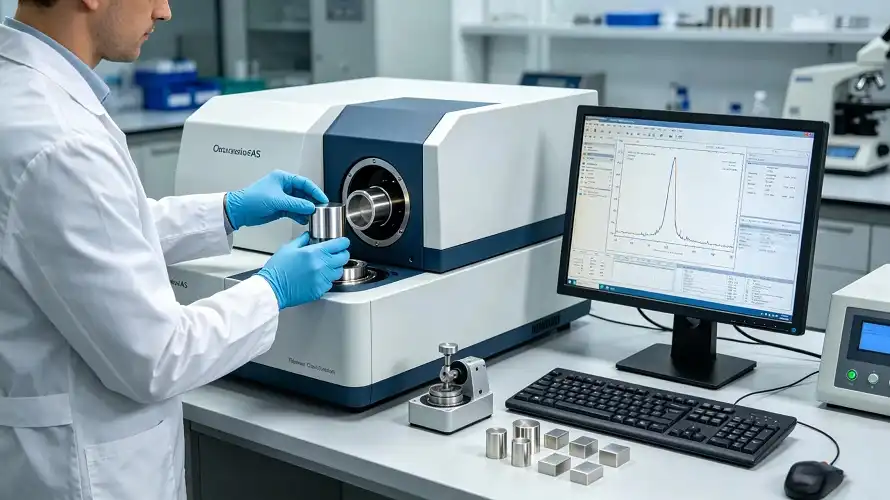
A well-managed alloy composition of 6% aluminum and 4% vanadium with pure titanium gives titanium grade 5 its outstanding characteristics. This composition achieves tensile strength over 895 MPa and yield strength of about 828 MPa, with a density of 4.43 g/cm³, half that of stainless steel. At our Titanium Valley plant in Baoji, China, inert gas fusion analysis confirms that the oxygen level is kept below 0.20% to prevent embrittlement.
Mechanical parameters impress. These tubes can survive numerous stress cycles without structural deterioration due to their 113.8 GPa elastic modulus and 36 HRC hardness. Our seamless tubes have survived thousands of sterilization cycles without surface damage or dimensional changes.
Biocompatibility and Corrosion Resistance
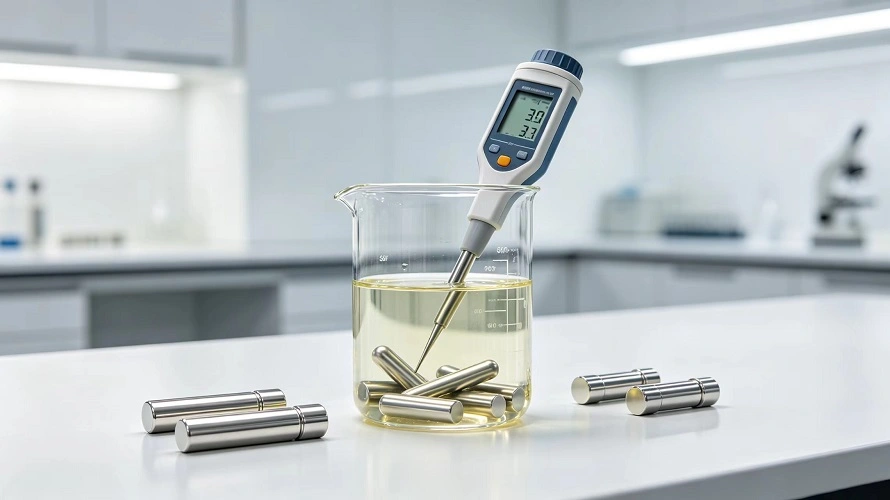
Titanium grade 5 seamless tube handles medical problems well. The naturally formed oxide layer prevents corrosion from chloride-rich bodily fluids, sterilization acids, and strong cleaners. This passive film self-heals when damaged, extending gadget lifespan beyond traditional materials.
Biocompatibility testing verifies titanium grade 5's high tissue tolerance; permanent implants commonly use Grade 23 ELI (Extra Low Interstitial) because of its slightly lower interstitial concentration. However, titanium grade 5's strength and biological acceptance aid surgical instruments, temporary implants, and reusable medical tools greatly.
Advantages of Titanium Grade 5 Seamless Tube in Medical Device Manufacturing
Medical device developers must increase performance, weight, and patient comfort. Titanium grade 5 seamless tubes' 2.5-times greater strength-to-weight ratio than surgical stainless steel addresses these issues. This means lighter portable surgical devices that reduce physician fatigue during long procedures and orthopedic components that lessen patient burden without compromising structural integrity.
Superior Performance Under Stress
High-cycle fatigue resistance distinguishes seamless titanium grade 5 from welded. Without weld-affected zones, stress concentration areas where cracks start are eliminated. We evaluated our tubes through millions of loading cycles imitating surgical tool use and found fatigue performance that exceeds industry requirements by a comfortable margin.
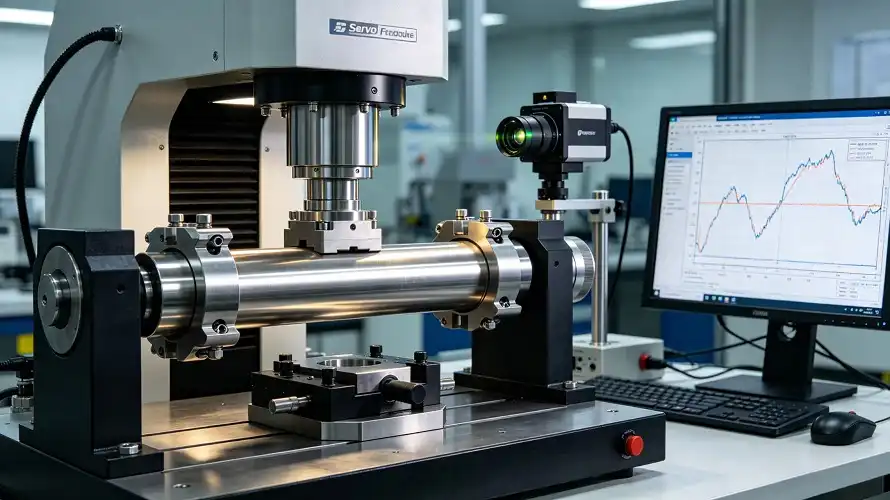
Titanium grade 5's heat resistance makes it useful in high-temperature applications. Steam sterilization and thermal surgery are possible with the alloy's structural qualities up to 350-400°C. Surface treatments add performance customization. Acid-pickled surfaces improve biological compatibility, whereas polished finishes minimize friction in articulating components. Machining improves the instrument handle grip.
Material Comparison and Selection Criteria
Comparing titanium grade 5 to alternatives shows its benefits. Grade 2 commercially pure titanium has higher corrosion resistance but just one-third the tensile strength, making it unsuitable for load-bearing surgery. Although strong, stainless steel 316L weighs roughly twice as much and has poor chloride corrosion resistance. Despite weight advantages, aluminum alloys are not biocompatible.
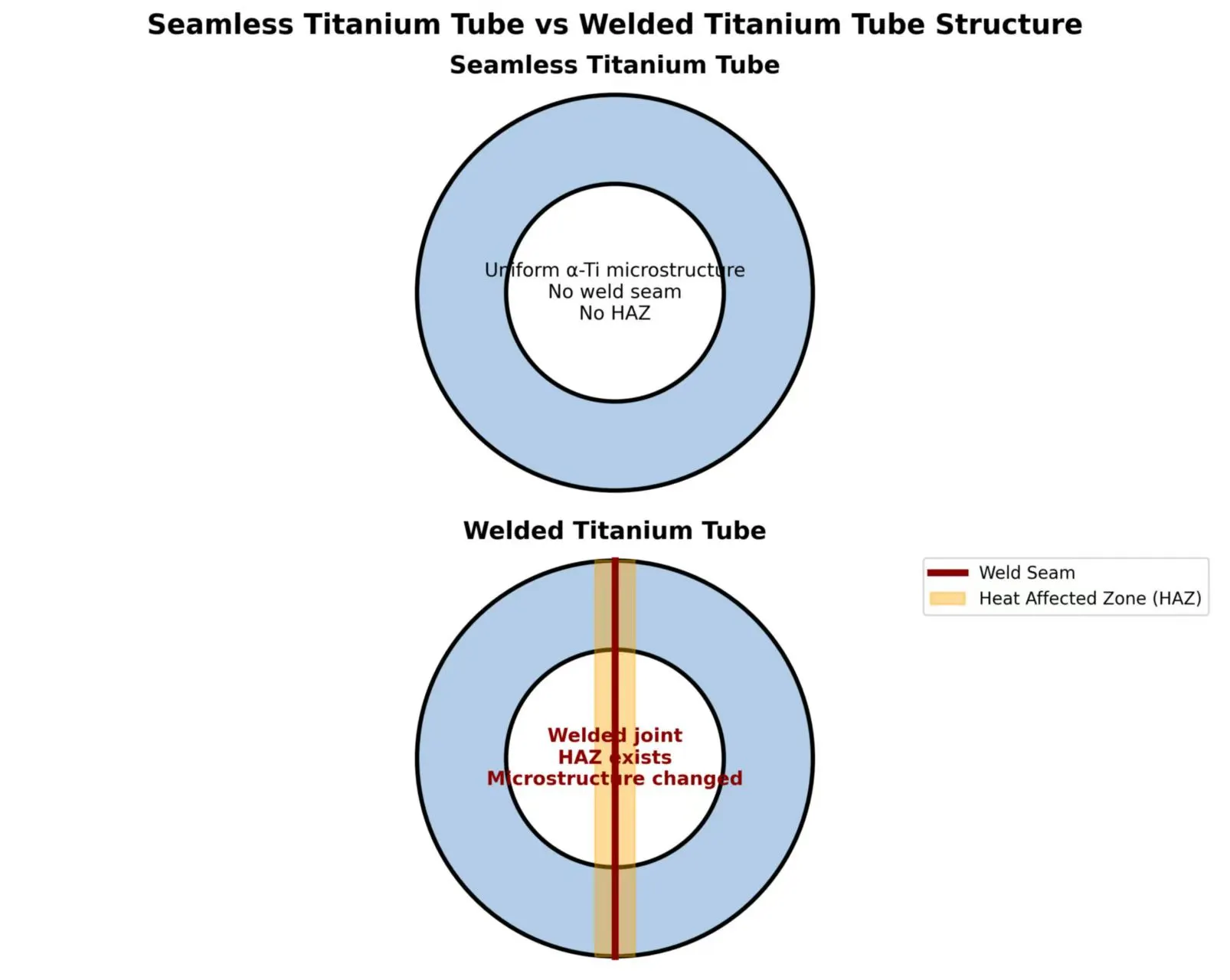
Seamless vs. welded demands special attention. Heat-affected zones in welded tubes may cause failure. Their characteristics differ from base metal. For medical devices that can't fail, our seamless production technique eliminates this worry and ensures homogeneous qualities across the tube circumference.
Procurement Guide: How to Choose and Buy Titanium Grade 5 Seamless Tubes for Medical Devices
Purchase success starts with proper specification. Depending on use, medical-grade titanium grade 5 seamless tubes must meet ASTM B861, B338, or AMS 4943 requirements. We make tubes from OD3mm to OD219mm with wall thicknesses from 0.5mm to 20mm, but medical applications demand smaller sizes and tighter tolerances.
Critical Specification Parameters
Medical device assembly requires dimensional precision. Our cold-rolling and straightening techniques provide precise tolerances of ±0.05mm for outer diameter and ±0.02mm for wall thickness, enabling automated assembly and constant device performance. Surface finish needs vary by application. Our polished finishing method meets the requirement for Ra values below 0.4μm in surgical tool components.
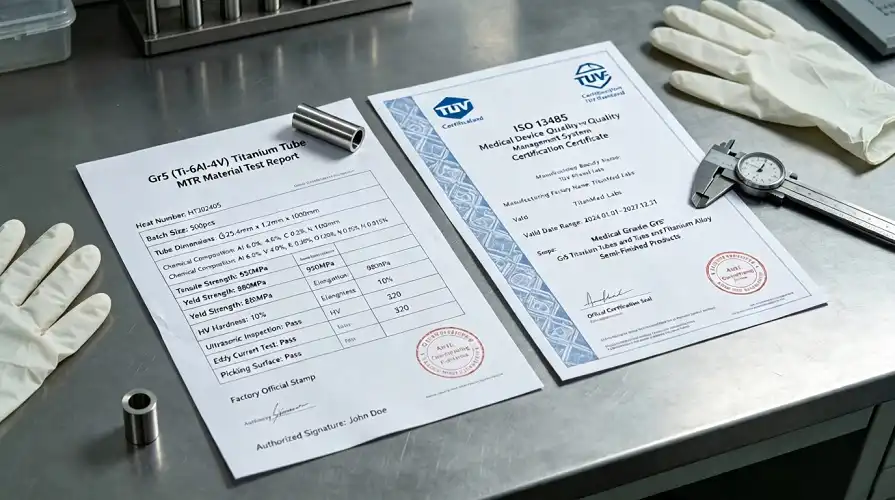
Certification documents are crucial for traceability. Material test reports for every production batch include chemical composition, mechanical qualities, and dimensional compliance. Our ISO 13485 and ASTM compliance certificates validate the medical device manufacturing quality management system and material specification compliance.
Supplier Evaluation and Logistics
Assessing technical competency, quality systems, and supply chain stability helps choose a provider. With over 20 years of titanium processing experience, we have 3,000 tons of material and can supply in two weeks for normal standards. We manufacture about 500 equipment sets yearly, supporting emerging medical device firms.
Our flexible production allows research volumes for prototype development, although minimum order quantities vary per specification. Price depends on material, processing, and order quantities. Custom measurements or heat treatments cost more but function better. Customized specs needing specialized production runs take 4-6 weeks.
Application Showcase: Titanium Grade 5 Seamless Tubes in Medical Device Manufacturing
Medical applications showcase the titanium grade 5 seamless tube's flexibility. Reamers, drill guides, and retractor shafts made from our tubes sustain heavy mechanical stresses and maintain perfect dimensions during long operations for orthopedic surgeons. The material's fatigue resistance makes these reusable tools durable for hundreds of sterilizing cycles and surgeries.
Surgical Instrument Innovation
Minimally invasive surgery has special criteria. Endoscopic instrument shafts made of thin-wall titanium grade 5 seamless tubes must be flexible for anatomical navigation and strong for mechanical stresses. Our tubes with outer diameters from 3mm to 12mm and wall thicknesses from 0.5 to 1.0mm provide this perfect balance, allowing instrument designers to construct more advanced surgical instruments.
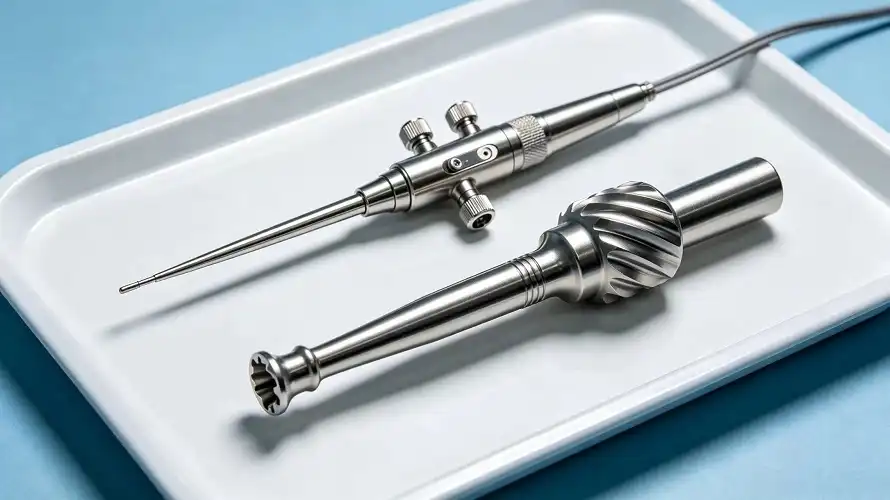
Fluid handling uses titanium grade 5's corrosion resistance. Suction tubes, irrigation channels, and medicine distribution systems benefit from the material's pharmaceutical and biological fluid inertness. Our processing processes reduce flow resistance and deposit formation by smoothing interior surfaces.
Regulatory Compliance and Quality Assurance
FDA medical device material standards need strict quality control throughout manufacturing. Our production plant performs in-process inspection at numerous stages—incoming material verification, dimensional checks during forming, and product validation before export. Non-destructive testing, like ultrasonic inspection, finds internal faults that might affect performance, but our seamless production approach reduces such issues.
Our ISO 13485 accreditation shows our systematic quality management. Medical device manufacturing requires documentation systems to track every production lot from raw material receipt to final product delivery. This documentation assists FDA regulatory filings by medical device makers using our tubes.
Comparing Titanium Grade 5 Seamless Tube with Other Materials in Medical Manufacturing
Material choice greatly affects device performance, manufacturing efficiency, and dependability. Understanding comparative advantages helps procurement managers balance technical needs and budget restrictions.
Mechanical Property Analysis
In heat-treated circumstances, titanium grade 5's tensile strength approaches 950 MPa, surpassing Grade 2 titanium's 345 MPa and rivaling 316L stainless steel's 485 MPa. The density advantage wins. At equal strength, titanium grade 5 components weigh 45% less than steel at 4.43 g/cm³ compared to 8.0 g/cm³. This enhances surgical instrument ergonomics and reduces orthopedic implant patient burden.
The corrosion behavior of titanium alloys differs from that of stainless steel. Although 316L stainless steel is resistant in many conditions, chloride-rich biological fluids can cause pitting corrosion. Titanium grade 5's passive oxide layer eliminates corrosion throughout device life. We've shown that seamless tubes can stay clean after five years of simulated bodily fluid exposure.
Seamless Versus Welded Construction
The structural benefits of seamless construction are noteworthy for corrosion resistant titanium pipe. In longitudinal seams, base metal thermally cycles during welding, causing microstructural differences that may cause cracks. Our seamless production avoids these issues, resulting in tube-wide uniformity. This homogeneity is especially useful in medical applications where component failure might jeopardize patients.
Conclusion
Medical device manufacture requires high-quality, reliable materials. Titanium grade 5 seamless tube satisfies these high criteria due to its biocompatibility, mechanical characteristics, and structural homogeneity, which removes welded seam weaknesses. Titanium grade 5 seamless tubes underpin innovation in surgical tools, orthopedic implants, and precision diagnostic equipment. The material's strength-to-weight advantage, corrosion resistance, and fatigue performance improve device capabilities and patient safety during prolonged service life.
FAQ
Q1: What makes Grade 5 seamless tubes suitable for medical devices?
Biocompatible and strong, titanium grade 5 seamless tubes have a tensile strength of approximately 895 MPa and great tissue tolerance. The seamless design meets strict medical device safety standards by eliminating weld gaps that might house germs or weaken structures.
Q2: How does pricing compare between Grade 5 and other titanium grades?
Titanium grade 5 seamless tubes cost more than commercially pure grades owing to alloy content and production complexity. The increased strength justifies expenses for mechanically demanding applications. Standard dimensions and bulk purchases optimize price, but bespoke requirements need tooling.
Q3: What certifications should I verify when sourcing medical-grade tubes?
Material test reports showing chemical composition and mechanical qualities, ASTM or AMS standard compliance certificates, and ISO 13485 quality management system certification are essential. The audit chain of completed tubes to raw material heat batches supports medical device regulatory filings.
Q4: Can Grade 5 seamless tubes be further processed after delivery?
Absolutely. We provide annealed material for machining, drilling, and forming. However, titanium grade 5's strength needs proper tools and methods. We assist customers in improving secondary processing parameters for their applications with expert guidance.
Partner with Jucheng Titanium for Your Medical Device Material Needs
Medical device makers need a titanium grade 5 seamless tube supplier with knowledge and quality. From China's Titanium Valley, Baoji Jucheng Titanium Industry has produced medical materials to the highest standards for over two decades. Our 120,000-square-meter facility has 3,000 tons of titanium inventory for fast delivery to meet manufacturing deadlines. Our 45 titanium processing patents and National High-Tech Enterprise and "little giant" status demonstrate technological leadership.
Our engineers work with medical device makers to create bespoke solutions for application issues. We make seamless tubes to ASTM B861, ASTM B338, and AMS 4943 standards with OD3mm to OD219mm and wall thicknesses from 0.5mm to 20mm, or we may modify specifications. Our ISO 13485-certified quality management systems fulfill medical device industry standards for regulatory documentation and traceability. Ask us about project needs, technical specifications, or sample assessment at s4@juchengti.com. Bring your medical device inventions to market with confidence with our help.

References
1. ASTM International. (2021). ASTM B861-21: Standard Specification for Titanium and Titanium Alloy Seamless Pipe. West Conshohocken, PA: ASTM International.
2. Boyer, R., Welsch, G., & Collings, E.W. (2019). Materials Properties Handbook: Titanium Alloys. Materials Park, OH: ASM International.
3. FDA Center for Devices and Radiological Health. (2020). Use of International Standard ISO 13485:2016 Medical Devices - Quality Management Systems - Requirements for Regulatory Purposes. Silver Spring, MD: U.S. Food and Drug Administration.
4. Lütjering, G., & Williams, J.C. (2018). Titanium: Engineering Materials and Processes (3rd ed.). Berlin: Springer-Verlag.
5. Rack, H.J., & Qazi, J.I. (2022). "Titanium Alloys for Biomedical Applications." Materials Science and Engineering C: Biomaterials, 128, 1-45.
6. Semlitsch, M.F., & Willert, H.G. (2017). "Titanium Alloys in Medical and Dental Applications: A Review of Properties and Processing." Journal of Materials Science: Materials in Medicine, 28(4), 1-18.