
What Are Sheets of Titanium Used for in Industrial Manufacturing?
Sheets of titanium are now an important part of industrial manufacturing. They are high-quality flat-rolled mill products that are usually between 0.5mm and 4.75mm thick. These man-made materials solve the important "weight-strength-corrosion" problem that regular metals can't. Industrial manufacturers use titanium sheets for things that need to be very resistant to corrosion, have high strengths-to-weight ratios, and last a long time in harsh environments. These things include aerospace structural parts, chemical processing equipment, and medical implants where failure of the material is not an option.

Understanding Titanium Sheets: Properties and Benefits
The unique properties of sheets of titanium come from the amazing science behind them. With a density of 4.51 g/cm³, which is about 60% of steel, and a melting point of 1668°C, these sheets work better than any other material in harsh industrial settings.

Material Composition and Grade Selection
Sheets of titanium come in different sizes, each designed to meet the needs of a particular industry. Commercially Pure (CP) grades like Gr1 and Gr2 are great for deep drawing because they are very flexible and easy to shape. The most widely used titanium alloy, Gr5 (Ti-6Al-4V), has a tensile strength of over 895 MPa and can still be shaped fairly easily. Palladium is added to some grades, like Gr7 and Gr12, to make them more resistant to corrosion in reducing acids.

Superior Corrosion Resistance Mechanism
Titanium sheets are special because they form an inactive film of titanium dioxide (TiO2) on their own. This layer of protective oxide grows back right away if it gets hurt. Wet chlorine, nitric acid, and metal chlorides can't hurt the material because of this. The part won't need any safe covers because it can fix itself. This means it will need much less maintenance over its lifetime.

Manufacturing Standards and Quality Assurance
Very strict international standards are used to make titanium sheets for industry. These standards include ASTM B265 for general industrial needs, AMS 4911 for aerospace structural needs, and ASME SB-265 for use in pressure vessels. The production method includes rolling, heating, levelling, cleaning, and finishing the surface to make sure the sizes are right and the quality of the material is the same all over. In general, hot-rolled sheets are between 4 mm and 80 mm thick and 950 mm to 2500 mm wide. However, they can be made in any size to fit the job.

Industrial Applications of Titanium Sheets
Sheets of titanium are useful in many different industries, which shows that their worth goes beyond the cost of the material itself. Manufacturers appreciate how these materials solve problems that keep coming up in harsh environments and applications where weight is important.
Aerospace and Defense Manufacturing
Sheets of titanium are used by companies that make aerospace parts for aircraft structures, engine parts, and landing gear systems. The material's higher strength-to-weight ratio directly leads to better fuel economy and longer component life. Defense contractors use titanium for armor plating and missile casings because it is light and helps with mobility without sacrificing safety. Manufacturers of airplanes have found that swapping aluminum parts with sheets of titanium structures of the same size can cut fuel use by up to 15% in some situations.

Chemical Processing Equipment
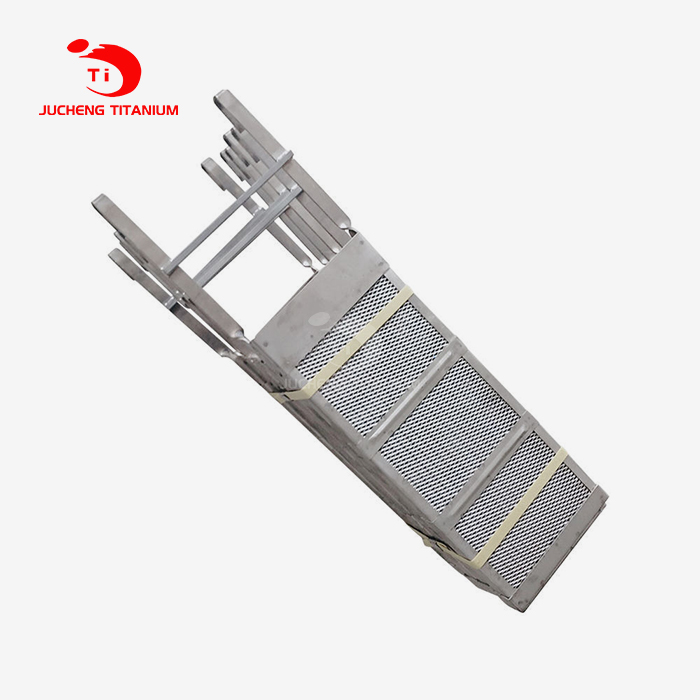
Aggressive media are always breaking down equipment for chemical plant contractors. Sheets of titanium get rid of the stress corrosion cracking caused by chloride that happens in stainless steel when it is used to make chlor-alkali, bleach pulp, or process seawater. Sheets of titanium are used to make heat exchangers, reaction vessels, and distillation columns that work reliably for decades in places where other materials need to be replaced every few years. Every year, Baoji Jucheng Titanium Industry makes more than 1,500 tons of titanium anode plates, which is more than 70% of the market in hydrometallurgy uses where corrosion protection is very important.

You can email our aerospace materials experts at s4@juchengti.com to talk about your needs
for a titanium sheet AMS4900 supplier and get full approval paperwork for review.
Medical Device Manufacturing
Sheets of titanium are the only thing that can be used to make medical implants because they are biocompatible. Manufacturers of surgical implants use types of CP titanium and Ti-6Al-4V ELI (Extra Low Interstitial) that meet ASTM F67 and ISO 5832 requirements. The material is non-toxic, so it doesn't cause cellular rejection, and it's radiolucent, so it's easy to see after surgery. Titanium is a popular metal for surgical instruments because it can be sterilized many times without breaking down or changing color.

Marine and Offshore Engineering
Sheets of titanium are used by shipbuilders and offshore platform builders for parts that will rust in salt water. Titanium propeller shafts, heat exchangers, and piping systems don't have the galvanic corrosion problems that copper-nickel alloys do. The material works really well in distillation plants, even tho the high temperatures and high salt levels make the working conditions very bad. Naval architects have found that titanium heat exchangers last 30 years, while copper-nickel equivalents only last 5 to 7 years.

Power Generation and Industrial Machinery
Manufacturers of power generation equipment use sheets of titanium to make cooling systems and condenser tubes. The material doesn't get dirty from dirty cooling water, so it keeps its thermal efficiency over time. Titanium is used by companies that make heavy tools to make structures lighter while keeping their load-bearing ability. These uses show how choosing the right materials can affect both how well they work and how much they cost to own.
How to Choose and Procure Titanium Sheets for Industrial Use
When buying sheets of titanium, you need to carefully look at the technical specs, the supplier's abilities, and the total costs over the product's entire life. Knowing about these things helps people who work in manufacturing make smart decisions about where to get their materials.

Grade Selection Criteria
When you match the titanium grade to the needs of the application, you avoid over-specification and keep costs down. Gr2 is cheaper than alloy grades and can be used for most general corrosion tasks. When the needed mechanical strength is higher than what CP grade can provide, Gr5 is needed. Gr7 and Gr12 are designed to deal with specific corrosion problems that come up in less acidic environments. Purchasing managers should ask for test results on materials to make sure that their chemical make-up and mechanical qualities meet the requirements spelled out in the specifications.
Dimensional and Surface Finish Requirements
The thickness, width, and length of the sheets of titanium must match the way it is made and the shape of the end part. Annealed condition sheets can be shaped in the best way for printing and making. Surface processes, like polishing, milling, or acid pickling, change both how something looks and how it is processed next. Custom dimensions help cut down on material waste, which improves the economics of the project.
Supplier Evaluation and Certification
Reliable suppliers have thorough quality control systems and give full paperwork for tracking. For important uses, you must have certifications that show you meet the requirements of ASTM B265, AMS 4911, and ASME SB265. Value-added services like precise cutting, edge preparation, and custom packaging from suppliers make it easier to integrate their products into industrial processes. Established suppliers keep a lot of stock on hand, which lets them send quickly to support just-in-time manufacturing plans.
Cost-Benefit Analysis
Titanium is more expensive than other materials at first, but lifecycle analysis often shows that it is cheaper in the long run. Higher purchase costs are balanced out by fewer protective coatings, longer service life, and fewer repair shutdowns. When comparing options, people who work in procurement should look at the total installed cost instead of just the price of the materials.
Comparison Insights: Titanium Sheets vs Competing Materials
Knowing how sheets of titanium stack up against other materials can help you make decisions about what to buy and set reasonable goals for performance.
Titanium vs Stainless Steel
It's cheaper to buy stainless steel types at first, but titanium sheets are better at resisting rust in places with a lot of salt. Because it doesn't crack under stress, titanium can be used in places where stainless steel would fail terribly. Titanium sheets are 40% lighter than stainless steel parts of the same size and shape. This is a big plus for moving things around and using machines that spin things.
Titanium vs Aluminum Alloys
If you need stronger parts that are the same mechanically as titanium, then aluminum's density advantage doesn't matter. Titanium sheets are better than aluminium sheets for work that needs to be done at high temperatures because titanium stays strong at high temperatures while aluminium gets soft. When it comes to rust in salt water, titanium is much more resistant than aluminium. Aluminium needs protective layers that make upkeep harder.
Titanium vs Specialty Alloys
For uses in high temperatures and acids, nickel alloy sheets are like titanium sheets. However, they are denser and cost as much or more to make. Medical devices made of cobalt-chrome metals are biocompatible, just like titanium ones. But they aren't as flexible, which means they aren't as good for arthritis. These comparisons show that what qualities are needed for a job determine the choice of material.
Best Practices for Using Titanium Sheets in Industrial Manufacturing
Handling and manufacturing methods that are done correctly protect sheets' natural properties and make sure that the parts will work as expected.
Fabrication Considerations
Compared to steel or aluminum, sheets of titanium need to be formed in a different way. When bending, the springback is higher than with other materials, so the tools need to be adjusted. Lower speeds and flood cooling help cutting processes keep the work from hardening and the tools from wearing out. For welding, both the front and back surfaces must be shielded with inert gas to keep the air from contaminating them and weakening them.
Maintenance and Service Life Optimization
Protocols for regular inspections should check the integrity of the surface and look for any signs of mechanical damage. Cleaning with gentle chemicals keeps the surface looking good without hurting the protective oxide film. Staying away from carbon steel tools keeps you from getting iron on your skin, which can start localized rusting. These care methods make the very long life of sheets of titanium parts last even longer.
Sustainability and Recycling
Sheets of titanium can be recycled over and over again, which is good for environmental responsibility. Titanium that has been recycled keeps all of its original qualities, which means that junk is valuable instead of waste. Cutting down on trim scrap in manufacturing processes is good for both the economy and the environment. Titanium parts last longer, so they don't need to be replaced as often as shorter-lasting alternatives. This means that fewer resources are used over the course of their life.
Conclusion
Sheets of titanium are an important material choice for industrial manufacturers that work in harsh conditions. Their special mix of resistance to rust, high strength-to-weight ratio, and biocompatibility solves important problems in the chemical processing, medical device, naval, and industrial equipment industries. Even tho titanium costs more to buy at first than other materials, it is always cheaper in the long run because it doesn't need to be maintained and can be serviced more often. To get the most out of the material, you need to know how to choose the right grade, the best ways to make it, and what your seller can do.
FAQ
1. What advantages do titanium sheets offer over stainless steel in industrial applications?
Sheets of titanium resist rust better than stainless steel in chloride conditions, where stress corrosion cracking happens. The material's strength-to-weight ratio is higher than that of stainless steel, which means that the same amount of strength can be achieved with about 40% less weight. Titanium doesn't need any protective coatings and has a 3–5 times longer service life in corrosive environments. This means that the higher initial costs are more than offset by the lower costs of repairs and replacements.
2. How do I select the appropriate titanium grade for my manufacturing application?
The grade you choose will depend on your specific operational needs. Commercially Pure Gr2 is good for most general rust tasks that don't need a lot of power. Gr5 (Ti-6Al-4V) is the strongest material for structural parts in aircraft and cars. Gr7 and Gr12 are designed to deal with specific corrosion problems that arise in environments with less acidity. Look at the datasheets for the materials and talk to the technical teams at the suppliers to make sure that the mechanical properties and corrosion resistance are right for your application.
3. What should I look for when sourcing high-quality titanium sheets in bulk?
Make sure that sellers give you full material certifications that show they meet the relevant ASTM, AMS, or ASME standards. Make sure that the material shipments can be tracked by using heat lot numbers to connect certifications to specific shipments. Check out the quality control systems of your suppliers and ask for customer examples for similar projects. Check the quantity of inventory and wait times to make sure the supply chain works well. Think about adding value to your manufacturing processes with services like custom cuts and surface treatments.
Partner with Jucheng Titanium for Your Industrial Titanium Sheet Requirements
Baoji Jucheng Titanium Industry Co., Ltd. has been processing titanium for more than 20 years and can help you with your industrial production needs. As a company that makes sheets of titanium and keeps 3,000 tons of stock on hand all year, we can quickly fulfill projects that need to be done by a certain date. Our production capabilities span Gr1, Gr2, Gr4, Gr5, Gr7, Gr9, and Gr12 grades conforming to ASTM B265, AMS 4911, and ASME SB265 standards, with custom dimensions from 4mm to 80mm thickness. Located in China's Titanium Valley, our facility holds 4 invention patents and 41 utility model patents applied directly to our manufacturing processes. Contact our engineering team at s4@juchengti.com for technical consultation and project quotations tailored to your specifications.

References
1. American Society for Testing and Materials. (2020). Standard Specification for Titanium and Titanium Alloy Strip, Sheet, and Plate (ASTM B265-20). West Conshohocken, PA: ASTM International.
2. Boyer, R., Welsch, G., & Collings, E.W. (1994). Materials Properties Handbook: Titanium Alloys. Materials Park, OH: ASM International.
3. Donachie, M.J. (2000). Titanium: A Technical Guide (2nd ed.). Materials Park, OH: ASM International.
4. Lutjering, G., & Williams, J.C. (2007). Titanium (2nd ed.). Berlin: Springer-Verlag.
5. Peters, M., Kumpfert, J., Ward, C.H., & Leyens, C. (2003). Titanium Alloys for Aerospace Applications. Advanced Engineering Materials, 5(6), 419-427.
6. Schutz, R.W., & Thomas, D.E. (1987). Corrosion of Titanium and Titanium Alloys. In Metals Handbook (9th ed., Vol. 13, pp. 669-706). Materials Park, OH: ASM International.