
How to Verify AMS4900 Titanium Sheet Certification and Traceability
Verifying titanium sheet AMS4900 certification begins with requesting comprehensive documentation from your supplier—specifically the Mill Test Report (MTR) that includes heat numbers, chemical composition analysis, and mechanical property test results. Cross-reference this MTR against the official AMS4900 specification to confirm compliance with titanium alloy Ti-6Al-4V requirements, then validate the certification body's accreditation through NADCAP or ISO registries. Traceability hinges on matching batch identifiers throughout the supply chain, from raw ingot to finished sheet, ensuring every processing stage is documented and auditable for aerospace-grade reliability.

Introduction
In aerospace and defense manufacturing, material integrity isn't just a preference—it's a non-negotiable requirement. When your aircraft components or high-performance industrial systems depend on titanium alloy sheets, knowing exactly what you're purchasing becomes mission-critical. The AMS4900 standard, which governs Ti-6Al-4V titanium sheets, sets rigorous benchmarks for chemical composition, mechanical strength, and processing quality. Yet, counterfeit materials and certification fraud continue to pose serious risks in global supply chains.

We've seen firsthand how certification gaps lead to project delays, regulatory rejections, and costly rework. Purchasing managers and engineers face mounting pressure to validate authenticity while maintaining competitive lead times. This guide walks through the practical steps we use daily to verify AMS4900 certifications and establish end-to-end traceability, protecting your operations from compliance failures and performance issues.
Understanding AMS4900 Titanium Sheet Certification and Traceability
What the AMS4900 Standard Requires
The AMS4900 standard calls for commercially pure and alloyed titanium sheet material with a composition of Ti-6Al-4V, where the aluminum content is between 5.50 and 6.75% and the vanadium content is between 3.50 and 4.50%. The sheet must have a tensile strength of at least 130 ksi and certain elongation characteristics. As part of the requirements for this aircraft material, strict chemical purity limits must be met. These limits control intermediate elements like oxygen (maximum 0.20%) and iron (maximum 0.30%), which have a big impact on the material's ability to bend and break. Certification shows that the material has been through controlled hot rolling, solution treating, and annealing processes and meets standards for both composition and mechanical properties.

Certifications like NADCAP (National Aerospace and Defense Contractors Accreditation Program) and ISO 9001/AS9100, which are linked to the AMS4900 standard, add another level of quality security. NADCAP certification covers specific process controls like heat treatment, non-destructive testing, and chemical processing that standard ISO certifications might not fully cover in aerospace settings.
Why Traceability Matters in Aerospace Supply Chains
Traceability makes a written record of the material's journey from being made into a titanium sponge to being turned into an ingot, processed in a rolling mill, and finally made into a sheet. There are different heat numbers and batch identifiers for each production lot. These numbers must appear on Mill Test Reports, packing lists, and material labels. When a part fails during service or inspection, tracking lets you find the affected inventory right away. This way, you can be sure that the problem is caused by a flaw in the raw materials, a mistake in the processing, or damage during handling.

Many businesses have lost a lot of money because they couldn't find the materials that they thought were dangerous all the way back to the suppliers. Regulatory bodies, such as the FAA and international aerospace authorities, require that all materials that go into certified aircraft structures can be fully tracked. You can't show compliance during checks or probes without it.
Essential Certification Documents You Should Expect
Several important documents are part of a full certification package for titanium sheet AMS4900. The Mill Test Report is still the most important document because it has information on chemical analyses (usually using optical emission spectrometry), tensile test results, and heat treatment records with exact temperature and time details. You should also get a Certificate of Conformance that says the material meets the standards and has been signed by authorized quality staff.

Ultrasonic testing reports according to ASTM E1001 are common extra paperwork that show the absence of cracks, seams, or contamination, and surface inspection certificates confirm that there are no defects on the outside. Heat treatment charts that show temperature changes during annealing cycles show that the titanium ingot was properly heated and processed, and material pedigree documentation shows that it can be traced back to the company that made it.
You can email our aerospace materials experts at s4@juchengti.com to talk about your needs for a titanium sheet AMS4900 supplier and get full approval paperwork for review.
Step-By-Step Process to Verify AMS4900 Titanium Sheet Certification
Collecting and Reviewing Official Documentation
To begin, ask for the full approval package for the titanium sheet AMS4900 before the material is shipped. The MTR should show clear heat numbers that are the same as those that are stamped or etched on the titanium pieces. Make sure that the test date makes sense with the production schedule. Certifications that are dated months after the claimed production date could mean that the papers were fake or backdated.
Check the credentials of the testing labs listed on the MTR. For chemical research and mechanical tests, reliable mills use labs that are certified by ISO/IEC 17025. You should be able to check the granting mill's contact information in business directories or by searching directly on the web. We've seen clever fakes that were only found by carefully checking the mill's contact information.
Cross-Checking Against AMS Specifications
To make sure you're comparing to the right standard, download the most recent version of AMS4900 from SAE International. Check the values of each chemical element in the MTR to make sure they are within the allowed ranges. Pay close attention to the amount of oxygen in the material. Too much oxygen makes the alpha case layers brittle, which damages the pressing die and causes cracks to form during bends.

The same care should be taken with mechanical qualities. Make sure that the minimums for ultimate tensile strength, yield strength, and elongation percentage are met or surpassed. Tensile strength tests at room temperature should show that annealed Ti-6Al-4V sheet has a normal range of 130 to 145 ksi. If the results fall suspiciously close to the exact minimum values or stay the same across multiple heats, this may mean that more research needs to be done.
Validating Heat Treatment and Processing Records
Heat treatment has a big effect on the microstructure of titanium and, as a result, on its mechanical performance. Records of annealing should show temperature ranges of 1300°F to 1450°F and the right holding times for the thickness of the sheet. Cooling rates are also important. If cooling happens too quickly, it can make microstructures that aren't desirable and make it harder to shape.

Ask for furnace calibration certificates that show that methods for measuring temperature stay accurate to within ±10°F. Extra care should be taken with production lots that were worked on during times when equipment maintenance or calibration expired. We confirm that stress-relief annealing took place after cold rolling, which got rid of any remaining stresses that could make the dimensions unstable during cutting.
Comparing AMS4900 Titanium Sheet Certifications with Other Grades
Distinguishing AMS4900 from Similar Titanium Specifications
The Ti-6Al-4V composition is the same in AMS4911, but it applies to annealed sheet goods that are different thicknesses and have slightly less strict mechanical property standards. Understanding these subtleties keeps procurement from being confused about specifications. AMS4910 works with solution-treated and old conditions. It makes the material stronger but less flexible, so it can't be used in situations that need a lot of shaping for the titanium sheet AMS4900.
The commercial types of pure titanium (ASTM B265 types 1-4) are better at resisting corrosion than the alloyed mixture in AMS4900, but they are not nearly as strong. There have been times when buyers accepted Grade 2 commercially pure titanium sheets when their application needed the strength that only Ti-6Al-4V metal can provide. Verification of certification must show not only that quality standards are met but also that the right material grade was chosen.

How Titanium Certification Differs from Stainless Steel
The standards for titanium certification put more emphasis on controlling interstitial elements than the standards for stainless steel. While standards for stainless steel mostly look at the main alloying elements (chromium, nickel, and molybdenum), specifications for titanium strictly limit oxygen, nitrogen, carbon, and hydrogen, which are elements that aren't meant to be alloys but are present as imperfections. Even small changes in oxygen can have a big effect on the ductility of titanium, but these changes may not have much of an effect on stainless steel.
Traceability needs are also different. Titanium used in aerospace needs to be tracked at specific temperatures throughout the working process. Stainless steel, on the other hand, can be tracked by lot and at multiple temperatures that are mixed during production. Because of the costs involved, titanium certification scams could bring in more money for bad people, which makes it even more important to be careful when verifying information.
Practical Tips for Ensuring Traceability Throughout the Procurement Process
Selecting Certified Suppliers and Distributors
Qualification of suppliers is the basis of reliable procurement. We give more weight to manufacturers who have current AS9100 certification, which shows that their quality systems meet the needs of the aerospace industry. Direct purchases from mills offer the safest tracking, but authorized distributors can also do a good job as long as they separate materials properly and keep good records.
Ask for proof of seller qualification programs that let dealers check out the mill sources they use. Choosing a seller based on where they are located can have effects. For example, local suppliers can often do the verification process faster, while foreign suppliers may be cheaper if their certification processes are just as strong. Baoji Jucheng Titanium Industry Co., Ltd. is in China's Titanium Valley and has been working with aircraft materials for over 20 years. They have full traceability systems and foreign certifications that meet global aerospace standards.
Managing Custom Orders and Lead Times
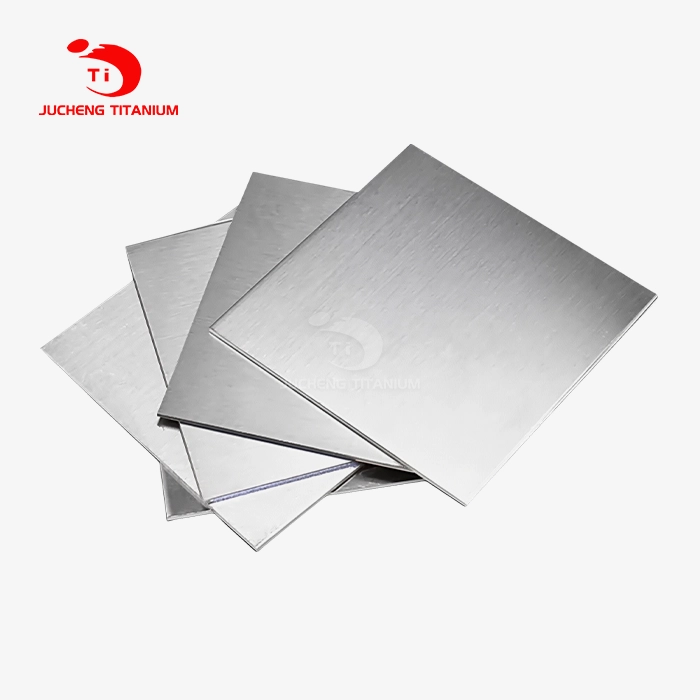
Requests for custom sizes, like thickness ranges from 4mm to 80mm or width ranges from 950mm to 2500mm, need more careful approval for a titanium sheet AMS4900. It is important to keep track of the process settings and inspection results for each processing operation, such as rolling, heating, leveling, pickling, and surface finishing. Custom surface treatments like polishing or milling may add extra steps of handling that need to be recorded for traceability.
Due to time constraints, people may sometimes try to cut corners when verifying certifications. We now know that accepting incomplete paperwork to meet deadlines always leads to bigger problems down the road. Plan for time for certification review in your project plans. It usually takes three to five business days to thoroughly check orders that are complicated.
When you order materials that meet more than one standard at the same time (ASTM B265, AMS 4911, and ASME SB265), make sure that the testing meets the strictest requirements for all of them. If testing includes all the important factors, one MTR can meet more than one standard.
Leveraging Digital Traceability Tools
New blockchain-based systems keep records that can't be changed of how things move through supply chains. This makes it very hard to insert fake certificates. Some forward-thinking mills now put QR codes on the labels of their materials that lead directly to safe databases that hold full certification packages and production records.
By comparing document serial numbers to mill databases, digital certificate verification services can check the accuracy of MTRs in real time. These systems have caught complex fakes that would have been missed by the naked eye by finding differences in watermarks, signature patterns, or report formatting.

Supply chain transparency platforms collect certification data from many levels of suppliers, showing where raw materials come from in a way that individual MTRs might not. Putting money into these technologies pays off because they cut down on proof work while making it easier to spot scams.
Case Studies: Successful Verification of AMS4900 Titanium Sheet Certification
Aerospace OEM Navigates Complex Certification Requirements
A big company that makes parts for airplanes came to us and asked for Ti-6Al-4V sheet material for building solid bulkheads. Their quality department set up a multi-step proof process that started with reviewing documents before shipping. They found differences in the MTR's reporting of oxygen content compared to a third-party analysis they hired. This helped them find material that would have failed their initial inspection.
Setting up backup proof processes was the most important thing I learned. Instead of depending only on MTRs given by suppliers, they regularly did their own chemical analysis on representative samples. This extra check caught a case where the heat number on the actual material didn't match the number on the certification papers. This was a red flag that meant the material might have been switched out.
Industrial Distributor Builds Trust Through Transparent Traceability
A titanium distributor that works with companies that make chemical processing equipment set itself apart by providing better traceability services. They bought inventory management systems that kept full records of the chain of custody by taking pictures of labels as soon as they were received and connecting those pictures to digital certification files.
When a customer questioned the authenticity of a product months after buying it, the seller quickly found the original MTRs, inspection reports, and storage location records. Because of this openness, a possible dispute turned into stronger customer loyalty. Their method shows that traceability gives businesses a competitive edge that goes beyond just following the rules.
Small Engineering Firm Streamlines Documentation Management
A precision engineering company had trouble with filing certifications on paper, which made them hard to find during customer checks. They switched to cloud-based document management, scanned all the MTRs, and made accessible databases that were organized by project name, buy order number, and heat number for every titanium sheet AMS4900.
Within months, the system paid for itself because it got rid of the need to spend hours looking for certificates for compliance checks that were done in the past. When an aerospace customer needed to resubmit certification three years after delivery, it only took minutes to get it back instead of days. The company also set up automatic reminders to make sure that seller certifications were still valid before making repeat orders.
Conclusion
Verification of titanium sheet AMS4900 certification and traceability keeps your business safe from problems with materials, breaking the law, and supply chain fraud. The process needs a thorough look at all the paperwork, a comparison with current standards, and confirmation of heat treatment records that have a direct effect on how well the material works. It is important to tell the difference between AMS4900 standards and related grades so that you don't make mistakes that cost a lot of money. Your first line of defense should be to choose qualified sources with strong traceability systems.
The aircraft and industry sectors can't cut corners when it comes to checking materials. The structured methods described here, from MTR authentication to digital traceability tools, help procurement teams lower risk while keeping lead times competitive. Real-life examples show that spending money on checking methods pays off by preventing problems and making relationships with suppliers stronger.
FAQ
1. How can I verify the authenticity of an AMS4900 Mill Test Report?
Never rely on the contact information written on the MTR alone; instead, use phone numbers from the giving mill's official website that have been checked by a third party. Ask them to check that the production records for the titanium sheet AMS4900 match the heat number and approval date. Reliable mills have customer service offices whose sole job is to handle calls for verification. Check for security features that more complex fakes might not have, such as watermarks, unique serial numbers, or digital signatures.
2. What certifications are the most reliable for aerospace titanium procurement?
AS9100 certification shows that suppliers meet the quality management standards for aerospace, and NADCAP certification proves that suppliers have the right special process controls for processing titanium. Getting ISO/IEC 17025 certification for testing labs makes sure that chemical and mechanical analyzes are accurate. The highest level of trust in purchasing is shown by materials that have all three certifications.
3. How do I mitigate risks when sourcing from overseas suppliers?
Ask a third-party inspection service to check the materials and paperwork at the source before they are shipped. Set up trust payment terms so that funds are only released after an independent approval check. Before making big purchases, start with smaller test orders to see how reliable the seller is. Work with suppliers who have international aerospace certifications that show their quality systems meet global standards, no matter where they are located.
Partner with Certified AMS4900 Titanium Sheet Suppliers
To get aerospace materials certified, you need people who know both the technical standards and the facts of the supply chain. Baoji Jucheng Titanium Industry Co., Ltd. has been processing titanium for more than 20 years and provides aerospace manufacturers with fully traceable Ti-6Al-4V sheet material that meets the requirements of AMS4900, ASTM B265, and ASME SB265. With a 3,000-ton inventory, we can quickly produce standard and custom shapes with thicknesses ranging from 4 mm to 80 mm and widths up to 2500 mm for your titanium sheet AMS4900. All of our products come with full MTR paperwork and heat-specific tracking.

As a National High-Tech Enterprise with 4 invention patents and 41 utility models, we've helped aerospace OEMs, defense contractors, and industrial equipment manufacturers all over the world with their certification problems. During the procurement process, our quality team gives you expert advice and makes sure that the material specs match your application needs. You can email our aerospace materials experts at s4@juchengti.com to talk about your needs for a titanium sheet AMS4900 supplier and get full approval paperwork for review.
References
1. SAE International. Aerospace Material Specification AMS4900: Titanium Alloy Sheet, Strip, and Plate 6Al-4V Annealed. Warrendale: SAE International, 2021.
2. Donachie, Matthew J. Titanium: A Technical Guide. 2nd ed. Materials Park: ASM International, 2000.
3. Performance Review Institute. NADCAP Audit Criteria for Heat Treating Aerospace Metals. Warrendale: PRI, 2022.
4. Boyer, Rodney, Gerhard Welsch, and E.W. Collings. Materials Properties Handbook: Titanium Alloys. Materials Park: ASM International, 1994.
5. Federal Aviation Administration. Advisory Circular 21-49: Certification Procedures for Products and Parts Compliance Findings. Washington: Department of Transportation, 2019.
6. Lutjering, Gerd and James C. Williams. Titanium. 2nd ed. Berlin: Springer-Verlag, 2007.